Early in 1940 an article appeared in the magazine Australia. National Journal entitled ‘Ballet Business’. It was commissioned by the magazine’s editor Sydney Ure Smith, a great patron of Colonel de Basil’s touring Ballets Russes companies, and was written by Olga Philipoff. Philipoff came to Australia on the Ballets Russes tours as secretary to her father, Alexander Philipoff, executive manager for de Basil. She also acted as a kind of publicity agent for the de Basil companies and her articles and features about the Australian tours appeared in a variety of Australian newspapers and magazines and in England in the Dancing Times.
In ‘Ballet Business’ Philipoff sets out to inform the Australian public of the mechanics of moving a large company of dancers and other personnel around the world. She discusses, for example, the various lists that needed to be presented to customs and immigration officials on arrival in a foreign country and the procedures that were necessary when leaving the country.
She describes the kind of containers used for different items and notes that the de Basil companies carried their own library of ‘several hundred volumes, mostly Russian classics’. She discusses finances, including salaries and advances, taxes, royalties and costs of productions. And she notes day to day expenses including the laundering and repair of costumes and the supply of shoes to the dancers:
‘The next important question concerns the ballet shoes. It is always a point of disagreement between the assistant regisseur, who distributes them, and the dancers. Ballet shoes are very expensive and very difficult to get. In a performance that includes two or three ballets on toes the leading dancers require two pairs per night, between 50 and 60 per month – and then they often claim for more. The spinning, the fouettes and tours especially are very severe on shoes.’
Reading the letters of dancers on the tours provides an interesting counterpoint to Philipoff’s business account. Most collections of letters that relate to the Australian tours by the Ballets Russes, and that survive in public collections, begin by talking of the weather, company gossip and shipboard activities and shore excursions on the long journey to Australia from the northern hemisphere. Elisabeth Souvorova, a corps de ballet dancer with the Monte Carlo Russian Ballet on its tour to Australia in 1936-1937, gives a graphic account in one letter to her mother of a dramatic falling out between two of the company’s principal dancers:
‘There has been a terrific to do,’ Souvorova writes from Adelaide in October 1936. ‘[Valentina] Blinova has finally left [Valentin] Froman – he tried to throw her into the sea from the boat, but Léon [Woizikowsky] stopped him. He then went to her cabin and threw all her clothes out of the porthole, silver foxes, jewels and all’.
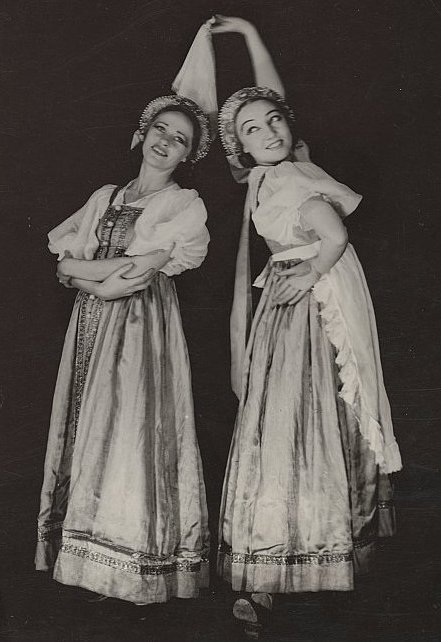
From Australia the dancers wrote home of their successes on stage, the trials of finding lodgings in the cities they visited, the local flora and fauna and the behaviour of Australians, which was often perceived to be alternately gauche and generous.
In another letter from Adelaide written in October 1936 Souvorova describes a picnic excursion:
‘Sunday we went on a picnic, about fifteen people in six cars, with various people I had never met! We went to the most lovely place in the mountains, and I have never seen so many fruit trees and wild flowers – and even paraqueets [sic] flying about. We had a marvellous lunch. They built fires and grilled chops and sausages, and [we] ate until we nearly died’.
She also recalls a business dispute over salaries and contracts, and suggests to her mother that the ‘management’ was attempting to underpay the dancers. She wrote a little later that ‘the financial question is finally settled – with the aid of Miss Deane we are to receive new contracts this afternoon [25 October 1936] with the correct amount (₤28.15.0 in Australian pounds) definitely stipulated’.
Letters from another dancer, Harcourt Algeranoff, cover similar topics. But Algeranoff also had his own distinctive interests and focus. He carried a typewriter and a gramophone (with a collection of vinyl recordings) with him as he set off for Australia in August 1938 for the tour by the Covent Garden Russian Ballet. He used the typewriter for many of his letters home, but he no doubt also used it for many of the articles and broadcasts on dance he was constantly preparing. Algeranoff regularly sent money to his mother in London and was always looking for extra work teaching, writing and broadcasting to supplement his salary as a dancer.
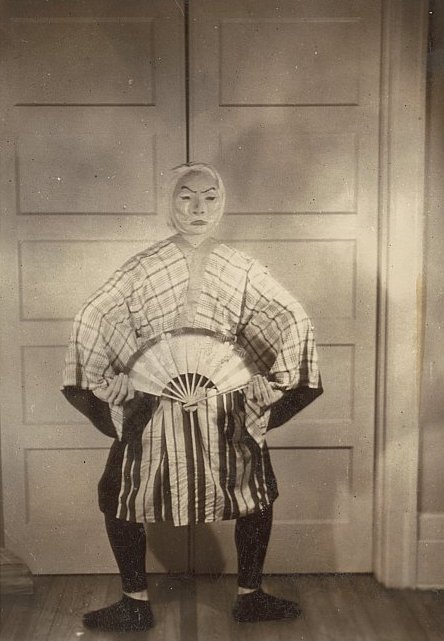
Algeranoff also used his typewriter to further his interests in Japanese and Indian dance forms. In another letter written from on board the ship to Australia he writes to his mother: ‘I’ve got all my notes typed out from the Indian Myth and Legend – an awful job – and so that book will now be able to be returned to it’s [sic] owner (the first inroad on the cardboard box)’.
As for his gramophone, he writes:
‘Please tell Julia the gramophone is a great blessing. Had I not had it with me I should probably [have] forgotten completely the Japanese dance Ūguré which I learnt the year before last. I’m also doing some improvization to the other records, although there’s not much space in my cabin.’
Even Algeranoff’s accounts of shore visits often relate to his intensive focus on dance matters. While he writes of the colour and bustle of bazaars, the need to fend off pedlars and guides, the heat of the Red Sea and so on, on many of his shore visits he particularly notes local dance activities. While on an excursion to Kandy from Colombo where the ship was docked in September 1938 he writes:
‘Further on on our journey we met the most lovely procession, elephants in coloured trappings and gold, musicians, and dancers who thrilled me more than anything I’ve seen since Elektra. I don’t know how I managed to restrain myself from dancing with them…I remember some of the steps so shall be able to show you when I come home.’
Olga Philipoff’s article paints a straightforward picture of company life beyond what she describes as the ‘harmony and beauty’ of the performance. Souvorova and Algeranoff remind us of the individual personalities behind the ‘harmony and beauty.’
© Michelle Potter, 13 October 2009
BIBLIOGRAPHY
- Olga Philipoff, ‘Ballet Business’. Australia National Journal, Autumn issue, No 4 (March-May, 1940), pp. 40-46; 94.
- Maroussia Richardson Collection, National Library of Australia, MS 9915, Series 1, Items 31-33. http://nla.gov.au/nla.ms-ms9915
- Papers of Harcourt Algeranoff, National Library of Australia, MS 2376, Series 1.1, Folder 15, Items 564, 568, 572. http://nla.gov.au/nla.ms-ms2376