Rachel Cameron Parker (1924-2011)

Rachel Cameron Parker, dancer and dance teacher who has died in London just a few weeks short of her 87th birthday, worked all her life to maintain the classical basis of ballet.
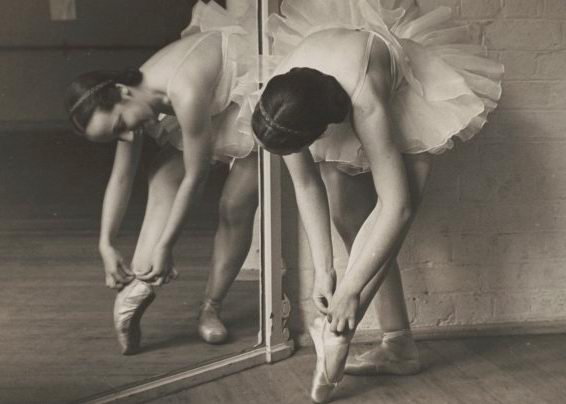
Rachel Cameron adjusting her ballet shoe, 1940s. Geoffrey Ingram Archive of Australian Ballet. With permission of the National Library of Australia. Photo by S. Alston Pearl [?]

On a trip to Australia in 1976 Cameron told oral historian Hazel de Berg:

‘I want the pure classical basis of the ballet to continue. I want it to continue in England, the whole of Europe, America, and Australia, so that we can extend and continue to build on this basis. I feel that out of 200 pupils maybe only one will grasp the real significance of this basic work. But out of 200 or 300, one person is enough for it to be handed down to future generations. I don’t want it to be lost.’

Cameron was born in Brisbane but spent her early childhood in Townsville in northern Queensland before moving to Sydney aged about 5 or 6. In Sydney she began dancing lessons with Muriel Sievers who had studied in London with Phyllis Bedells and who taught the syllabus of the Royal Academy of Dancing, as it was then called. It was with Sievers that Cameron first began teaching as Sievers quickly had her helping teach the youngest classes on Saturday morning. Sievers also insisted that Cameron take piano lessons and also lent her Tamara Karsavina’s book Theatre Street.

In the early 1940s Cameron danced with the Borovansky Australian Ballet Company, which later became the professional Borovansky Ballet and then with the Kirsova Ballet in Sydney, a company led by former star of the Monte Carlo Russian Ballet, Hélène Kirsova. There were also opportunities for Cameron to develop her teaching skills in Kirsova’s school, which was firmly grounded in what Kirsova referred to as the ‘Russian method’.

Cameron was given major roles in a number of Kirsova’s works including Revolution of the Umbrellas, Faust, A Dream…and a Fairy Tale, Harlequin, and Hansel and Gretel. She has recalled that her happiest days as a dancer were with Kirsova:

‘She was a woman who tried to mould her company in the Diaghilev tradition where music, the scenery, the dancers became part of one whole, and there it was I think that the true beginnings of Australian ballet lie.’

Moving to England with her husband Keith Parker, Cameron danced in Song of Norway and in a company directed by Molly Lake. She also studied in Paris with former stars of the Russian Imperial Ballet, Lubov Egorova and Olga Preobrajenska, and with many notable English teachers including Anna Northcote.

By her own admission one of the most exciting periods of her life came when she was asked to demonstrate for two great teachers and former ballerinas—Lydia Sokolova and Tamara Karsavina. With Karsavina she also developed a teaching syllabus for the Royal Academy of Dance.

‘Sokolova was absolutely marvellous,’ Cameron once recalled. ‘She was not content with near being good enough, it had to be exact or else.’

Of Karasavina, she has recalled: ‘I found for the first time that what I had always dreamed of was true, and that’s why, now, I am such a stickler for perfection of technique.’

Cameron was guest teacher for many companies around the world including the Australian Ballet. In December 2010 she was awarded the Queen Elizabeth II Coronation Award for a lifetime of services to dance. Rachel Cameron is survived by her brother Alister and nieces Alison, Fiona and Christine.

Rachel Cameron Parker: born 27 March 1924, died 6 March 2011

Michelle Potter, 13 April 2011

Postscript: One of the images of Cameron that has fascinated me, as much for its 1940s glamour as anything else, is that of her with her colleagues from the Kirsova Ballet, Peggy Sager and Strelsa Heckelman, posing outdoors at Taylor’s Bay close to Kirsova’s home on the northern shores of Sydney Harbour.
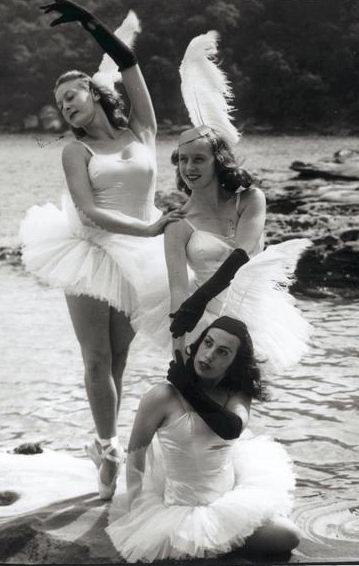
Clockwise from top: Peggy Sager, Strelsa Heckelman, Rachel Cameron, Taylor’s Bay, Sydney, 1943. With permission of the National Library of Australia.

Added 28 April 2011: Maina Gielgud studied with Rachel Cameron at various points in her life and they remained close friends until the end of Rachel’s life. Maina  shared this recollection:

Memories of Rachel from when she gave me private lessons when I was nine years old:   Passionate, outspoken, knowledgeable. I believe she was an excellent dancer with lots of personality and mammoth technique.

I always remember her coming to see me in Newcastle (UK) performing Swan Lake with Festival Ballet. I thought I was dancing quite well (for once!)—she said nothing, but wrote me a long letter which quite disillusioned me, but certainly made me rethink what I was up to and how I went about my work and my dancing…

She knew I knew that she only bothered because she thought I was worth it…
 

Tatiana Stepanova (1924-2009)

Tatiana Stepanova, who arrived in Australia in December 1939 with the third of Colonel de Basil’s touring Ballets Russes companies—the Original Ballet Russe—died late last year in Florida. The company’s Australian debut was in Sydney on 30 December 1939 and on that night Stepanova danced in Les Sylphides and was partnered by Serge Lifar. Her performance was noted as an ‘astonishing debut’ by ‘a sixteen-year old girl, who had never before had a leading part’. One reviewer applauded her ‘floating serenity’ and ‘technical fearlessness’.

But even before she had set foot onstage in Australia, news of a potential star was being reported by the Australian press. The Orcades, on which a large contingent of company members had travelled from London, docked first in Fremantle, Western Australia, and The Argus newspaper reported from there that Stepanova was said ‘to show promise of surpassing Pavlova’.  De Basil was recorded as saying ‘She is the kind of dancer one finds once in 50 years. She has created a sensation in Europe’.

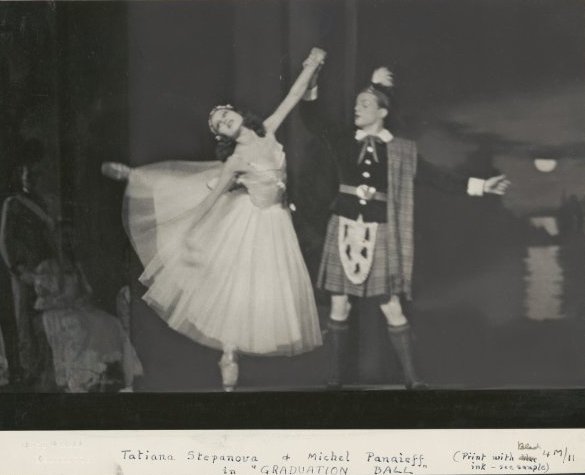
Stepanova also appeared in early performances of David Lichine’s Graduation Ball, which had its world premiere in Sydney on 1 March 1940. She danced the Sylphide in the divertissement ‘The Sylphide and the Scotsman’ partnered by Michael Panaieff. She did not created this role—opening night was given to Natasha Sobinova and Paul Petroff, but cast sheets indicate that Stepanova danced it at least as early as 5 March. A number of photographs of her as the Sylphide were shot by Melbourne-based photographer Hugh P. Hall and many show the expressiveness of her upper body and her long and exquisite line.

Hugh P. Hall, Tatiana Stepanova and Michael Panaieff in ‘The Sylphide and the Scotsman’, Graduation Ball, Original Ballet Russe, Melbourne. National Library of Australia.

An obituary of Stepanova appeared earlier this month on the ballet.co.uk site. It was written by Renee Renouf Hall who had also been working with Stepanova on her memoirs.

UPDATE: Unfortunately the link to this obituary is no longer available

©  Michelle Potter, 28 January 2010

Discover more on Trove.

Merce Cunningham (1919-2009)

Merce Cunningham’s death on 26 July 2009 in Manhattan brings to a close an astonishing life in dance. Cunningham once said, ‘I didn’t become a dancer, I have always been dancing.’ His remarkable career is a testament to a man who has not only always been dancing, but who has always been pushing the boundaries of dancing, including the boundaries of how it is perceived, fashioned and presented.

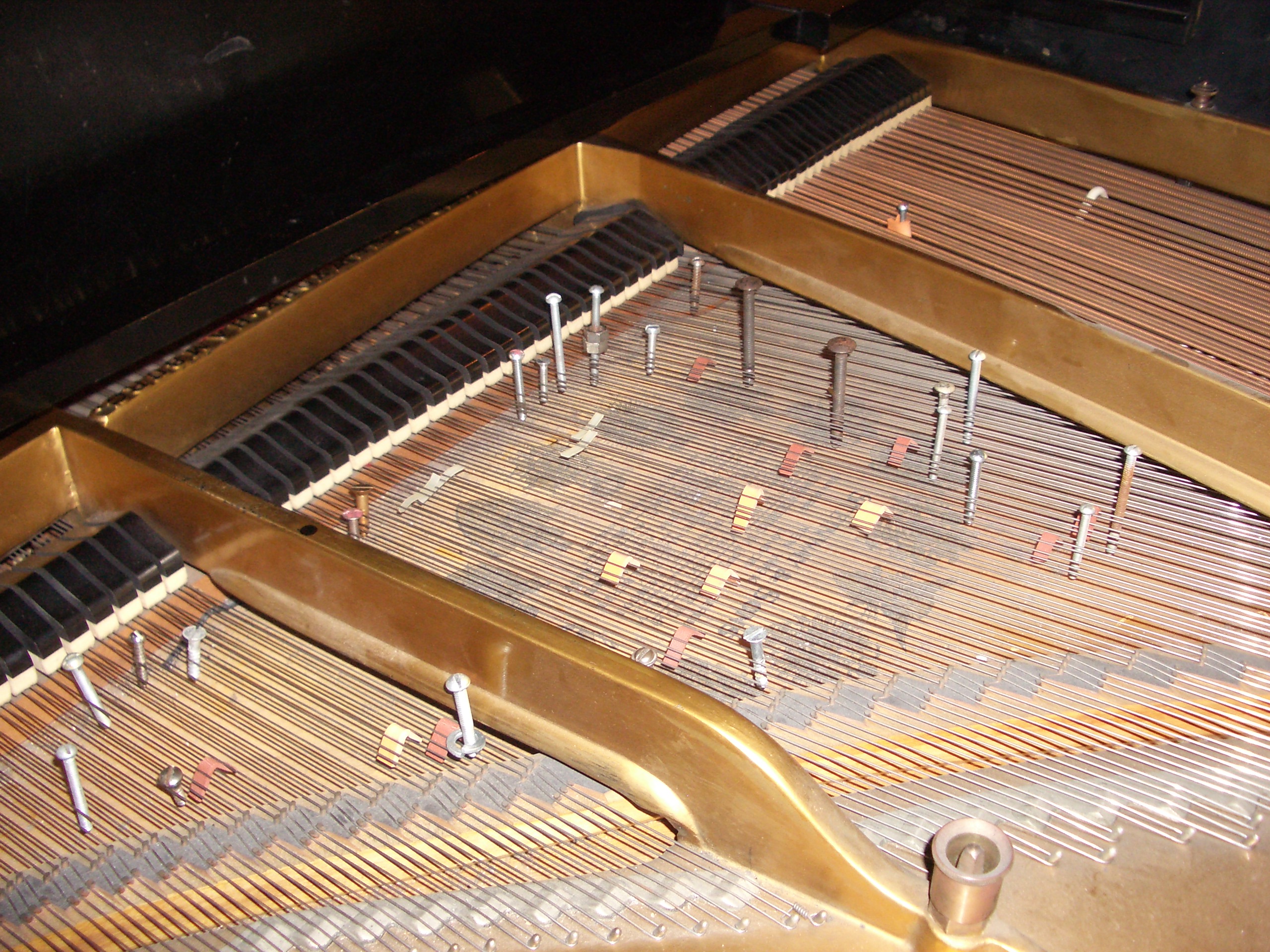
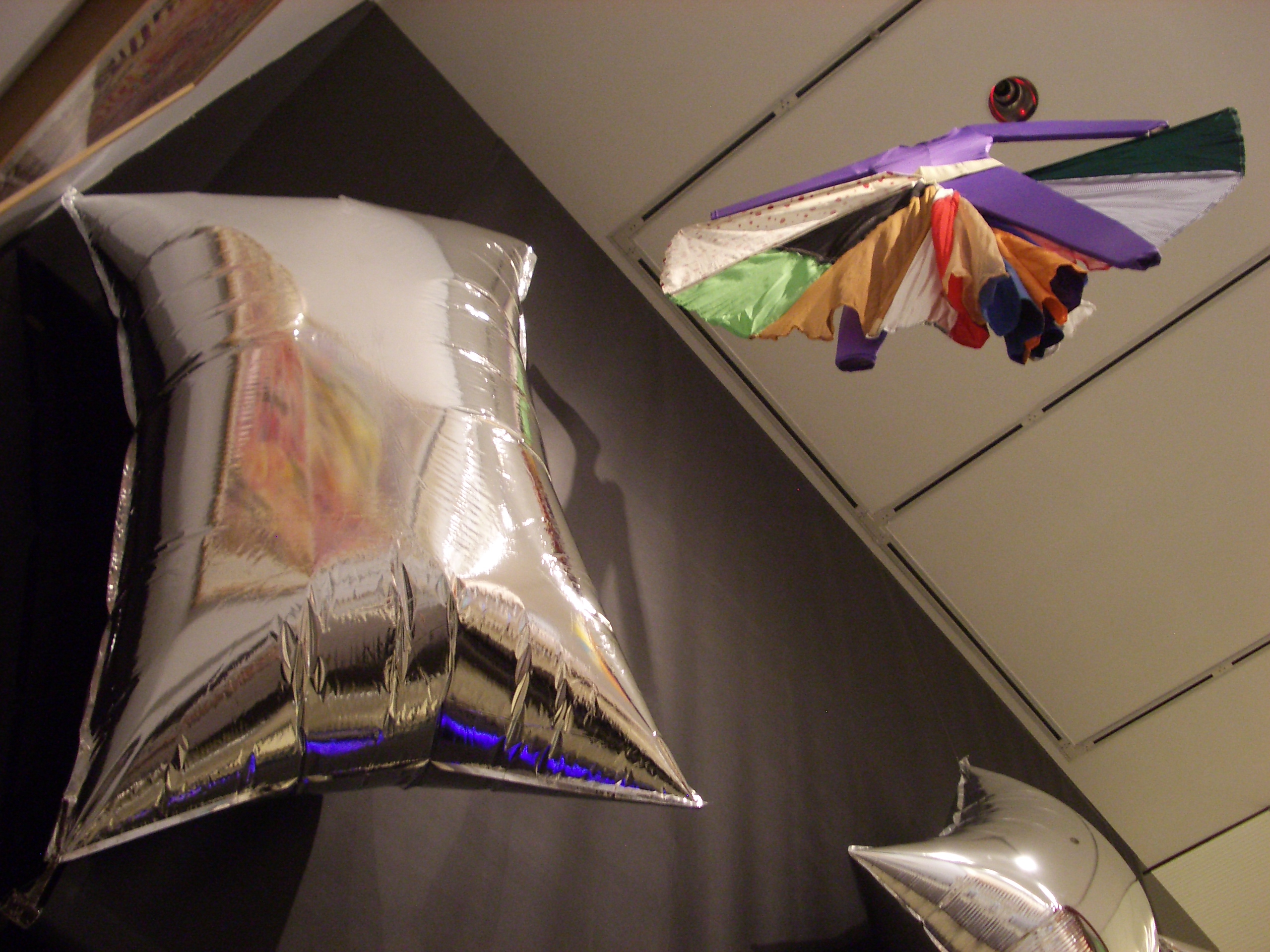
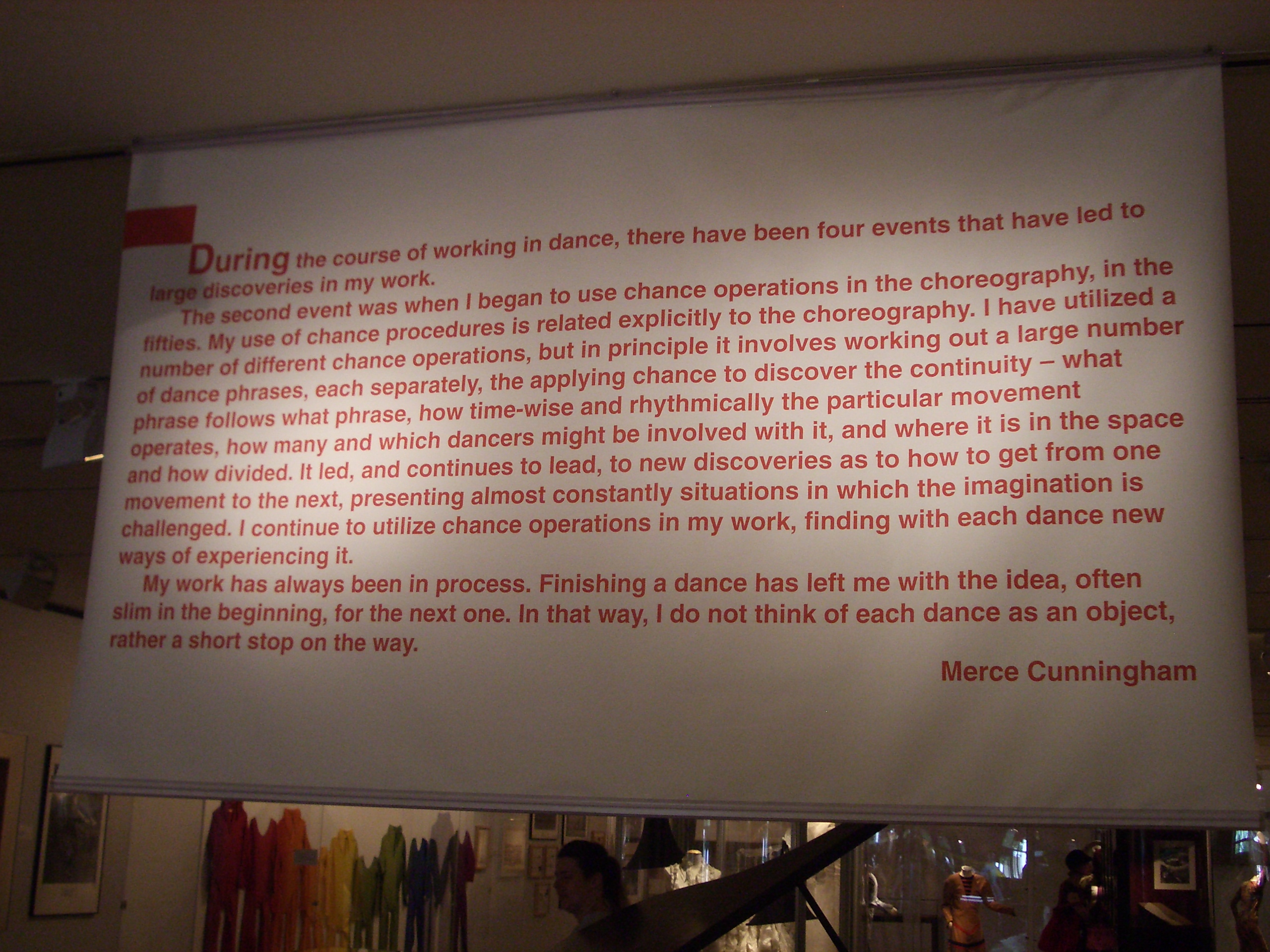
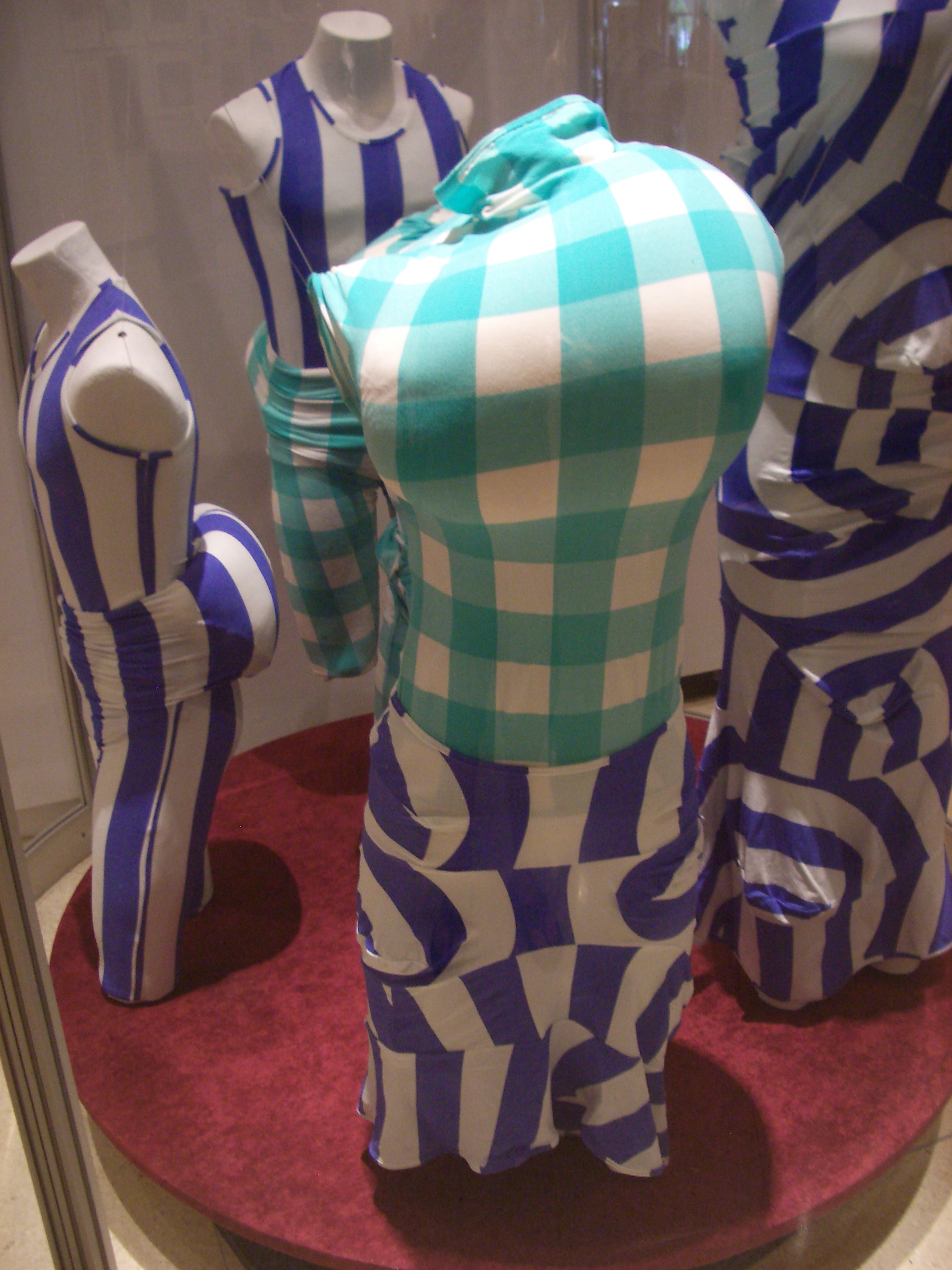
In 2007 I was in the exceptionally fortunate position of being co-curator of an exhibition, ‘INVENTION: Merce Cunningham and collaborators’, for the New York Public Library for the  Performing Arts. I was able to work with David Vaughan, revered archivist of the Cunningham company, to liaise with others in the company over selection of items, media activities and the creation of a new work to be performed as part of the exhibition. I also participated with Cunningham, Vaughan and the third curator, Barbara Cohen-Stratyner, in the media call, presenting to the audience on the key concepts behind the exhibition.

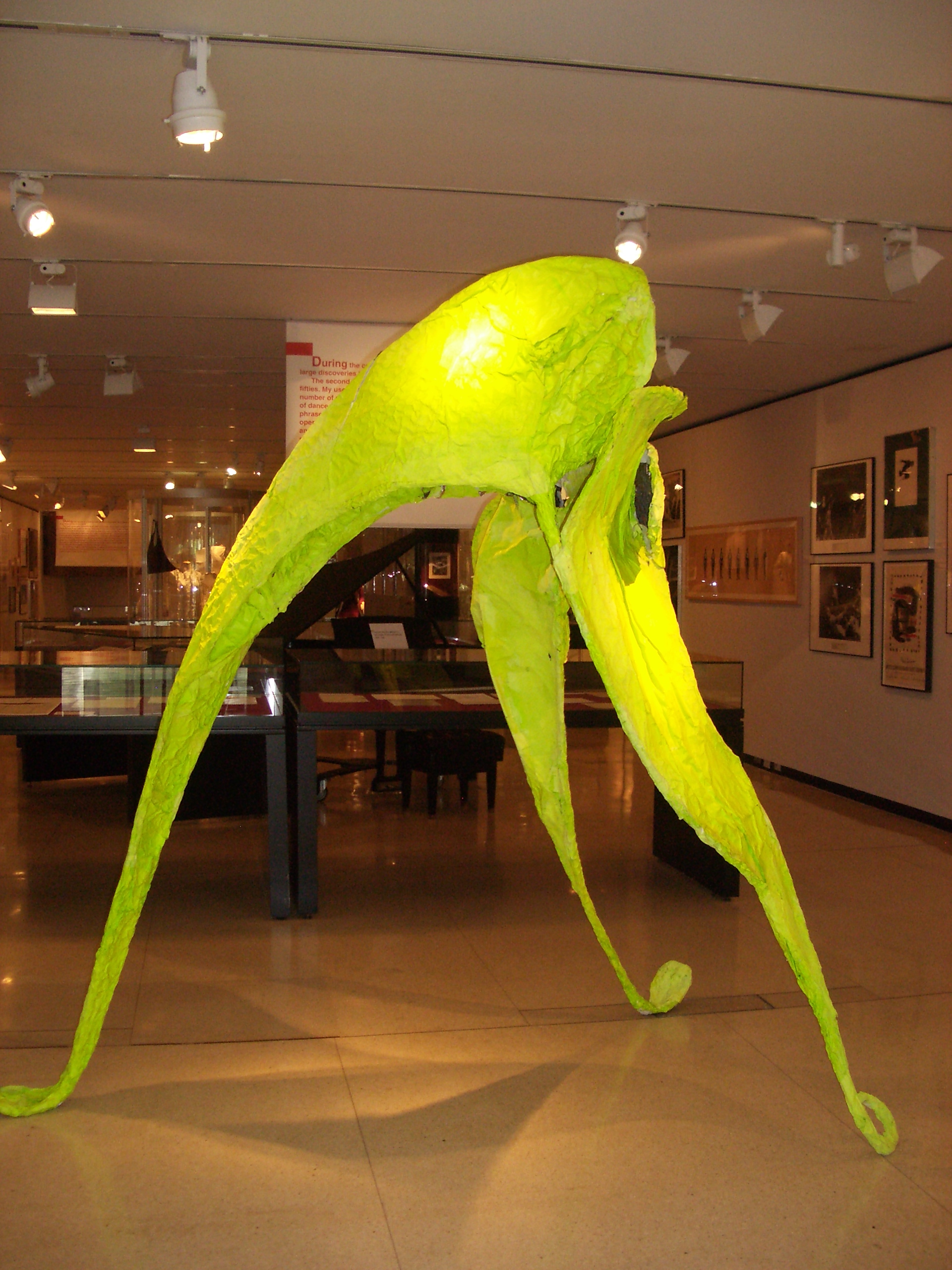
The following images are from INVENTION. They indicate in just a small way the extent of Cunningham’s engagement with artists from across a wide creative spectrum as he went about his daily activity of dancing.

Michelle Potter, 29 July 2009

Photos: Neville Potter, 2007

Valrene Tweedie ca. 1952. Photographer unknown

Valrene Tweedie (1925–2008). The fire and the rose

‘The fire and the rose‘ is a tribute to and obituary for Valrene Tweedie, Australian dancer, teacher and choreographer who died in August 2008. Tweedie danced with Colonel de Basil’s and Sergei Denham’s Ballets Russes companies and with an embryonic National Ballet of Cuba. She choreographed for stage and television in Australia, pioneered dance education programs and founded Ballet Australia in the 1960s to encourage Australian choreography.

‘The fire and the rose’  first appeared in Brolga. An Australian journal about dance in December 2008.

Michelle Potter, 7 July 2009

Featured image: Portrait of Valrene Tweedie ca. 1952. Photographer unknown

Portrait of Valrene Tweedie ca. 1952. Photographer unknown