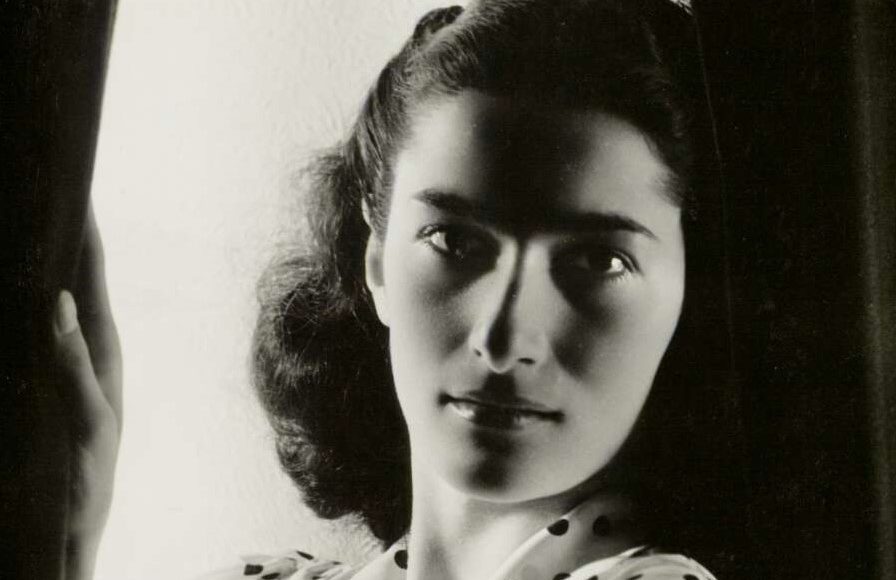
Tamara Tchinarova and friends, Christchurch 1939

Russell Kerr lecture, February 2019

The Russell Kerr lecture for 2019 was delivered in Wellington, New Zealand, on 10 February 2019 by Dr Ian Lochhead. Lochhead is dance critic for The Press, Christchurch, and formerly Associate Professor of Art History at the University of Canterbury. His lecture focused on the tours to New Zealand by the Monte Carlo Russian Ballet in 1937 and the Covent Garden Russian Ballet in 1939.

While the lecture as a whole opened up a number of issues that perhaps have not been fully considered in previous writings about the Australasian Ballets Russes tours, for me the most fascinating moment of all came when Lochhead flashed up the image used as the featured image on this post. It is well known to most Australians interested in the tours of the Ballets Russes and shows (l–r) Serge Ismailoff, Anna Volkova, Oleg Tupine, and Tamara Tchinarova (later Tamara Finch) with bicycles. Paul Petroff stands to the right, hands in pockets. It belongs in the Papers of Tamara Finch (MS 9733) and it has always been considered to have been taken somewhere in Australia. But Lochhead showed convincingly that the image was shot in Christchurch in 1939 during the visit to that major South Island city by the Covent Garden Russian Ballet.

Lochhead introduced us (or certainly me) to Olivia Spencer Bower, an English-born artist who lived a large part of her life in New Zealand. Spencer Bower, it seems, was taken with the dancers of the Covent Garden Russian Ballet and the Spencer Bower collection at the Christchurch Art Gallery includes an album of photographs, which she may have taken herself, of the Covent Garden Russian Ballet during its 1939 visit. One, reproduced below, shows a row of at least seventeen dancers holding bicycles and lined up in front of a theatre identified by Lochhead (a Christchurch resident) as Christchurch’s Theatre Royal. It has a large poster advertising the Covent Garden Russian Ballet across its entrance and to the side of the line-up is the tobacconist and hairdresser shop seen in the featured image above. Ismailoff, Volkova, Tupine, and Tchinarova are wearing the same clothes in both images. There is no doubt that the featured image above is not from Australia but from Christchurch.
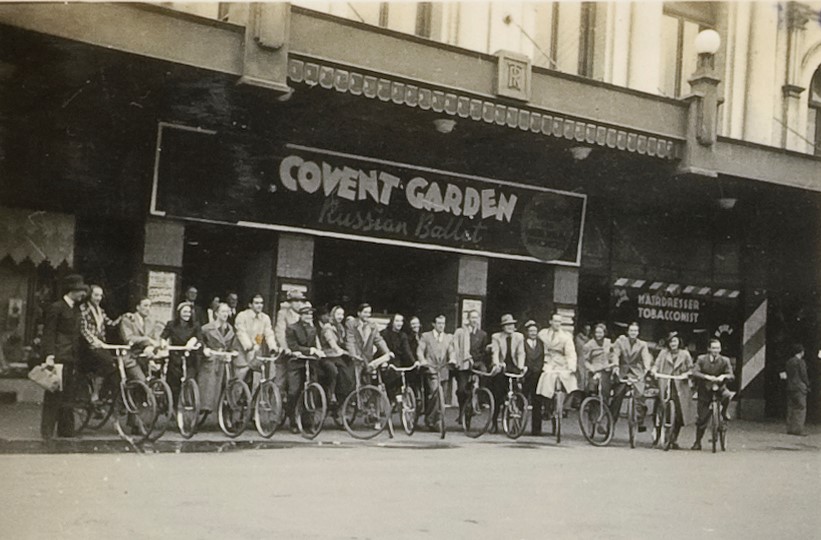
Covent Garden Russian Ballet, Her Majesty's Theatre Christchurch, 1939. Olivia Spencer Bower photo album, Christchurch Art Gallery
Covent Garden Russian Ballet, Theatre Royal, Christchurch, 1939. Olivia Spencer Bower photo album, Christchurch Art Gallery. Reproduced with the permission of the Olivia Spencer Bower Foundation

It is always a thrill to discover new information about material in archival holdings. And it is even better when new information allows us to revise previous assumptions. The featured image in this post celebrates Christchurch as a venue for the visiting Ballets Russes companies that had such an influence on the growth of dance in the southern hemisphere.

Ian Lochhead’s lecture was preceded by two danced items: a performance of the Prelude from Les Sylphides danced by Taylor-Rose Frisby, a second year student of the New Zealand School of Dance; and The Dying Swan performed by Abigail Boyle from Royal New Zealand Ballet. Frisby showed beautiful control and I look forward to seeing more of her work. Abigail Boyle has featured on this website on several occasions. Live music, and it was exceptional, came from pianist Hamish Robb and cello player Inbal Megiddo, both from the New Zealand School of Music, Te Koki.

It is with a certain regret that I add that Boyle will shortly retire as a performer. Recent news from Royal New Zealand Ballet indicates that Boyle will dance in RNZB’s forthcoming New Choreographic Series and will then pursue a teaching career.

A note on the first Russell Kerr lecture held in 2018 is at this link

Michelle Potter, 15 February 2019

Featured image: Serge Ismailoff, Anna Volkova, Oleg Tupine, and Tamara Tchinarova, Covent Garden Russian Ballet, Christchurch, 1939. Photographer not identified. Papers of Tamara Finch, National Library of Australia
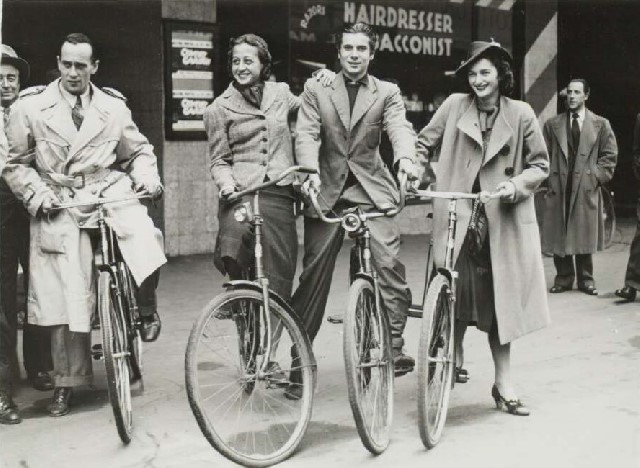
Tamara Tchinarova and friends, Christchurch 1939

Xenia Borovansky & Tamara Tchinarova Finch

My recent tribute to Tamara Tchinarova Finch brought to light a letter Tchinarova wrote to Xenia Borovansky in 1980 in which she discussed, amongst other things, her thoughts on Xenia Borovansky’s contribution to the growth of ballet in Australia. With permission from the various stakeholders, I am publishing the letter in this post.

Tamara Tchinarova in costume for the Mazurka in Coppelia with Xenia Borovansky before curtain up, Borovansky Ballet, ca. 1946. Photo Jean Stewart
Xenia Borovansky and Tamara Tchinarova on stage before a performance of Coppélia by the Borovansky Ballet, ca. 1946. National Library of Australia, Papers of Tamara Tchinarova Finch, MS 9733. Photo: Jean Stewart

It is an interesting letter from many points of view and was written just before the tribute to Borovansky, which I am assuming means the program that Marilyn Jones devised during her brief term as artistic director of the Australian Ballet in 1980. It was a triple bill and consisted of Pineapple Poll, Schéhérazade and Graduation Ball, with Les Sylphides being substituted in place of Graduation Ball in Adelaide and Perth.*

Gary Norman and Sheree da Costa in Scheherazade. The Australian Ballet 1980. Photo Walter Stringer
Gary Norman and Sheree da Costa in Schéhérazade. The Australian Ballet, 1980. Photo: Walter Stringer. National Library of Australia

It also mentions the lecture tour by Tchinarova and Irina Baronova, which apparently had been discussed (but initially dismissed) long before it actually occurred in 1994.

*Details of the program are on AusStage at this link.

Michelle Potter, 29 September 2017

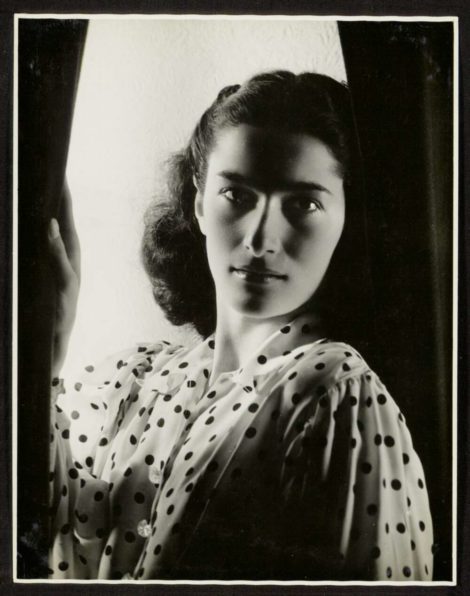
Portrait of Tamara Tchinarova, 1941. Photo Fred Breen

Tamara Tchinarova Finch (1919–2017)

I was saddened to learn of the death of Tamara Tchinarova Finch on 31 August 2017 in Spain at the age of 98. Her story is told in her autobiography Dancing into the unknown and this post is simply a short, belated tribute to her, which includes details of a rather amazing occurrence with which I was fortunate enough to be involved.

Tchinarova’s Australian connections include performances with the Ballets Russes companies during their Australasian tours in the 1930s; with the Kirsova Ballet in the early 1940s; and with the Borovansky Ballet in the mid-1940s. She was also briefly engaged to Australian press photographer, Fred Breen, who took the photographic portrait of her that I have used as the featured image for this post. Breen joined the Air Force during World War II but was killed in 1942. In 1943 Tchinarova married actor Peter Finch in Sydney and a few years later moved to London with him, but they divorced in 1959. She continued, however, to use his name for the rest of her life, although in most cases in this post I have opted to use Tchinarova only.

In later life, Tchinarova came to Australia in 1994 as a guest of the Australian Ballet. Along with her colleague from the Ballets Russes, Irina Baronova, Tchinarova gave a series of lectures in various places and, during the Canberra leg of that visit, I was able to record a short oral history with her for the National Library. Here is a two minute excerpt from that interview in which Tchinarova talks about Hélène Kirsova. The complete interview and transcript is available online at this link.*

I met Tchinarova again, and her daughter Anita, in New Orleans at a Ballets Russes conference/reunion in 2000 but in 2004 a remarkable event occurred. I was dance curator at the National Library at the time and in that capacity I received an enquiry from Moscow via the now defunct website, Australia Dancing. The enquiry culminated in the discovery that Tchinarova had a half-brother and a second family in Moscow. The story is told in the November 2004 issue of National Library of Australia News, available via this link. Tchinarova met her half-brother in Spain in 2006 and in her autobiography she talks about that meeting. Below is a brief extract from her discussion of the meeting:

I am now 87. On a sunny day here in Spain last week, my half brother Alexander and I met for the first time. He is 77 and came from Moscow with his daughter Ludmila, to meet the sister he had for 60 years been searching for … This stranger, Alexander, had all the qualities I love in a man—intelligent, articulate, interested in everything … How wonderful that we were able to meet towards the end of our lives. One has to wonder about Fate.**

Tamara Tchinarova Finch was a beautiful, intelligent, caring woman. It was such a privilege to have had a hand in that meeting. Vale Tamara.

Tamara Tchinarova Finch: Born Bessarabia, Romania, 18 July 1919. Died Marbella, Spain, 31 August 2017.

Michelle Potter, 26 September 2017

*The transcript was never corrected. It contains a number of spelling errors.

**Tamara Tchinarova Finch, Dancing into the unknown. My life in the Ballets Russes and beyond (Alton, Hampshire: Dance Books, 2007) pp. 207–208.

Featured image: Portrait of Tamara Tchinarova, Sydney 1942. Photo: Fred Breen. National Library of Australia, Papers of Tamara Finch, MS 9733.

Alexander Levitoff. Impresario

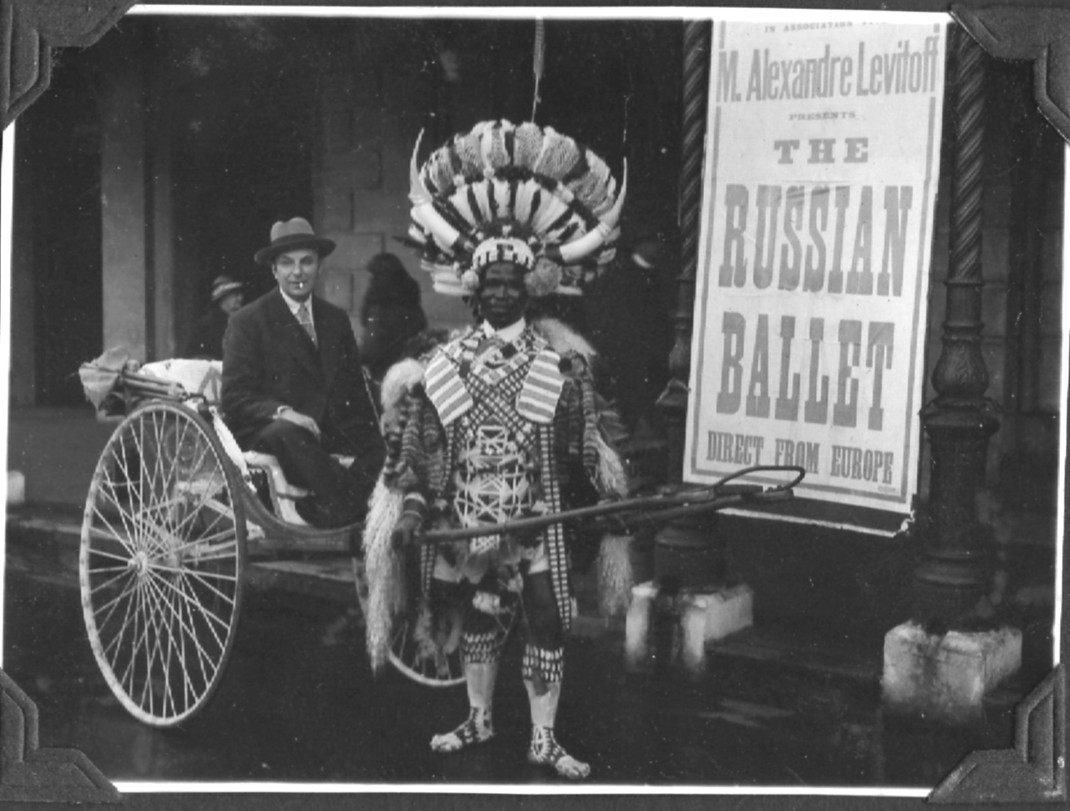
During my research into the year-long tour by the Dandré-Levitoff Russian Ballet between 1934 and 1935, the name Alexander Levitoff loomed large. Unlike Victor Dandré, who did not join the tour until the company had reached Java in mid September 1934, Levitoff sailed from Southampton with the Russian Ballet dancers on the R. M. S. Kenilworth Castle on 27 April 1934. His name appears on the passenger list when the Kenilworth Castle arrived in Cape Town on 14 May 1934 for the beginning of the South African leg of the tour. Throughout South Africa the Russian Ballet was promoted as being presented by Levitoff, as the poster in the photograph below, taken in Durban in June 1934, indicates. Yet information about Levitoff and his activities, both during the tour and beyond it, has proved elusive, as has the exact professional relationship between him and Dandré.

Alexander Levitoff in Durban, June 1934. Anna Northcote (Severskaya), Personal Archive. Private Collection

Recently, however, information about Levitoff has come to light in files held by the National Archives of Australia, some of which were made accessible only in January 2011. Combined with some correspondence between Levitoff and the English dancer Algeranoff, and the personal archive of Anna Northcote (Severskaya), another English dancer who performed with the Dandré-Levitoff company, it is possible to begin to piece together some biographical information about Levitoff. Although some reports refer to him as ‘a native of Moscow’, documents completed by Levitoff when he arrived in Australia on a number of occasions from 1934 onwards as an ‘alien passenger’ indicate that he was born in 1891 in Tiflis (present day Tbilisi, Georgia). On these documents he gives his profession as ‘impresario’ and this description also appears on his personal stationery immediately underneath his name. The immigration documents also record, where ‘nationality’ is requested, that he was ‘stateless’ and that both his parents were born in Russia.

Levitoff lived in Paris from at least the early 1930s at 5 rue de Boudreau. It was from Paris that he issued Northcote (and presumably other dancers) with a contract for the Dandré-Levitoff tour. But he appears to have led a peripatetic life as an impresario following the Dandré-Levitoff tour, working between the northern and southern hemispheres. His personal stationery during the 1940s and early 1950s gives his address as ‘formerly 5 rue de Boudreau’ and lists his places of business as ‘Sydney, Auckland, Paris’. He brought a number of artists and companies to Australia and New Zealand during the late 1930s and into the 1940s including the Don Cossack Choir, pianist Isador Goodman, and soprano Ninon Vallin. He announced many other theatrical plans although a significant proportion of those plans appear not to have been realised. In the mid 1940s he was involved in a legal dispute with a Sydney sponsor and was eventually ordered to repay monies advanced to him.

In Sydney, at least for part of 1939, he lived in what Tamara Tchinarova Finch describes in her memoirs as ‘chic poverty in a small back room of the Hotel Australia’. Finch also records that Levitoff persuaded her and some of her colleagues who had remained in Australia in 1939 at the end of the tour by the Covent Garden Russian Ballet to give some matinee performances in the city of Newcastle, north of Sydney. She writes:

‘He made an agreement with us that he would pay us each ten pounds a performance and keep the rest of the box-office himself. It was a roaring success; the theatre was chock-a-block with wide-eyed youngsters. At the end of the three days, Levitoff, now a few hundred pounds richer, was easily able to pay off his pressing bills.’

He may also have had connections with Ballet nationale, a company founded in Sydney in the late 1930s by Leon Kellaway, another dancer with the Dandré-Levitoff company. Kellaway joined the Dandré-Levitoff company when they arrived in Brisbane in October 1934 and danced under the name Jan Kowsky (Kowskiy). He remained in Australia when the company left for Ceylon in January 1935.

By 1942, however, Levitoff had moved to Melbourne where he lived in the salubrious suburb of Toorak. Between 1942 and 1945 he worked as Canteen Manager with the Department of Munitions at the High Explosives and Ordnance Factory, Marybrynong, and in 1945 he applied for, and was granted, Australian (Commonwealth) citizenship. In one document he intimated that, as a stateless person, travelling overseas was not easy and that having citizenship would allow him to travel more easily in the ‘Dominions’. In support of his citizenship application he noted his good character while working at Marybrynong and noted that as an impresario it was his practice to require the artists whom he engaged to give two charity concerts for some worthy cause. A clipping from an unidentified New Zealand newspaper notes that a concert by Isador Goodman in Wellington raised £1020 for the Metropolitan Patriotic Fund.

Levitoff was still at his Toorak address in May 1950 but by the mid 1950s he was back in Paris where he died in 1957. His obituary in Dance News notes that he was survived by his wife about whom I have as yet been unable to find information.

© Michelle Potter, 21 January 2011

BIBLIOGRAPHY

  • Anna Northcote (Severskaya), Personal Archive. Private Collection
  • Papers of Harcourt Algeranoff, MS 2376, National Library of Australia
  • Various documents relating to Alexander Levitoff, National Archives of Australia
  • Tamara Finch, Dancing into the unknown (Alton: Dance Books, 2007)
  • ‘Obituary: Alexander Levitoff’, Dance News, February 1958, p. 7