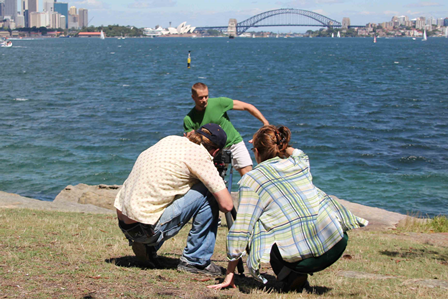
Sue Healey filming Sarah Jayne Howard for 'Virtuosi'

Virtuosi. Sue Healey

Sue Healey has been making dance films since 1997. However, her latest production, Virtuosi, is different in a very major way. At around 80 minutes in length Virtuosi is a documentary, whereas until now Healey has focused on making short films. Virtuosi is eight stories in one, dance portraits of eight New Zealanders, ‘artists from the edge of the world’, who have made careers beyond their homeland: Mark Baldwin, Craig Bary, Lisa Densem, Raewyn Hill, Sarah-Jayne Howard, Ross McCormack, Jeremy Nelson and Claire O’Neil. And of course both Healey and the composer of the film’s music, Mike Nock, fall into the same category. They too are New Zealanders whose careers have taken them well beyond their homeland.

Healey says when the opportunity arose she was ready to take on the challenge of a full-length film. She says she always enjoyed making short films, using what she refers to as ‘the distillation approach, honing the idea to its essence’, but that it was time for her to investigate ‘a different duration and its inherent qualities and demands’. Not that it was all smooth sailing, apparently. Healey says that finding a structure for the documentary was a huge challenge and that she was more than fortunate to work with an expert editor in Lindi Harrison and with Judd Overton as director of photography. Of Overton, Healey says: ‘Judd’s shooting style is extremely improvisatory—he is willing to solve problems in the here and now, rather than having pre-conceived notions of shot and frame. This is an extremely exciting way of making film and art’. This approach fitted nicely with Healey’s own strategies.

‘As a filmmaker’, she says, ‘I am still very much influenced by the choreographic approach, preferring to allow the structure to find itself organically through the process. Now, this goes against the usual film canon and can land you in very hot water when you realise you don’t have the necessary shots and logic to fully render an idea. However, I was extremely confident that I had more than enough material to create a range of outcomes’.

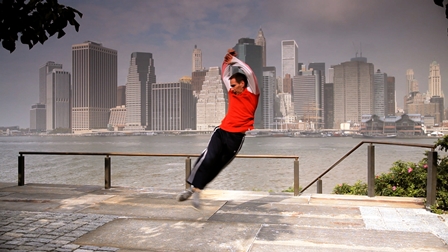
Specifically, Healey set a range of tasks for her eight subjects asking them, for example, to create movement sequences in iconic locations in their ‘new’ homes. Each of the artists created an outdoor ‘public’ dance (stills and production shots from some of these dances are in the mosaic below). Each also created a ‘still life’ solo in an interior location. And each created an intimate, close-up hand dance.
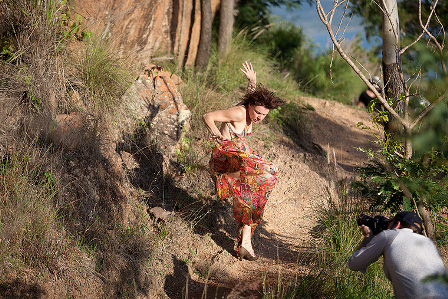
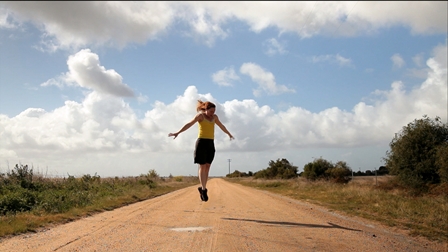
Scenes from the filming of Virtuosi. Images courtesy of Sue Healey

Virtuosi has already been shown at festivals from New York to Tasmania (and of course in New Zealand where it premiered in 2012). Healey has recently heard that is in competition in the Golden Prague International Television Festival, and also that it will get a theatrical release throughout New Zealand. In addition, Virtuosi exists as a 3 channel installation for gallery spaces.

Canberra audiences have the opportunity to see Virtuosi as part of Scinema: Dance science and dance memories, a week-long program of dance films at the National Film and Sound Archive. Virtuosi screens on Thursday 15 August at 7 pm in the ARC cinema at the National Film and Sound Archive and is preceded by one of Healey’s short films called Once in a blue moon.

Virtuosi is short listed at the 2013 Australian Dance Awards in the category Outstanding Achievement in Dance on Film or New Media. Recipients of awards will be announced in Canberra on 5 August 2013.

Michelle Potter, 19 July 2013

Featured image: Film maker Sue Healey with performer Sarah-Jayne Howard. Courtesy Sue Healey
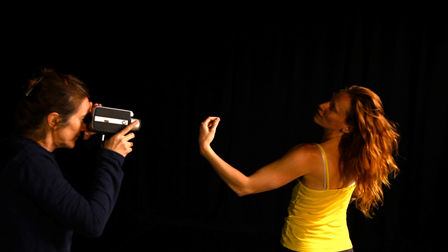
Sue Healey filming Sarah Jayne Howard for 'Virtuosi'

Let’s dance. Various Australian companies

16 June 2012, State Theatre, Victorian Arts Centre, Melbourne

Let’s dance is the program that the Australian Ballet commissioned to cover the time while the main company was busy ‘taking Manhattan’. It is, on the surface, a commendable venture giving subscription audiences the opportunity to see the array of dance styles being created and performed across Australia—there’s more to dance than the Australian Ballet. But as a program I am not sure that it worked as well as we might have hoped. It turned out to be a bit of a mish-mash and there was also some choreography that I found lamentable. Perhaps the program needed some overarching curatorial plan to give it at least some thread of cohesion?

What follows is not so much a review as a series of thoughts on various aspects of the show.

  • Choreography

I really liked Natalie Weir’s choreography for Don’t made on Expressions Dance Company. Weir’s particular strength, I think, lies in her skills in working on partnerships, whether for two people or more. For Weir a body held upside down has as much value as one held the right way up and what results has always taken the eye, slowly and calmly, in new directions. It’s a shame, I think, that the Australian Ballet has never restaged Weir’s Dark Lullaby, which is definitely worth another look. Too close to Ross Stretton perhaps?

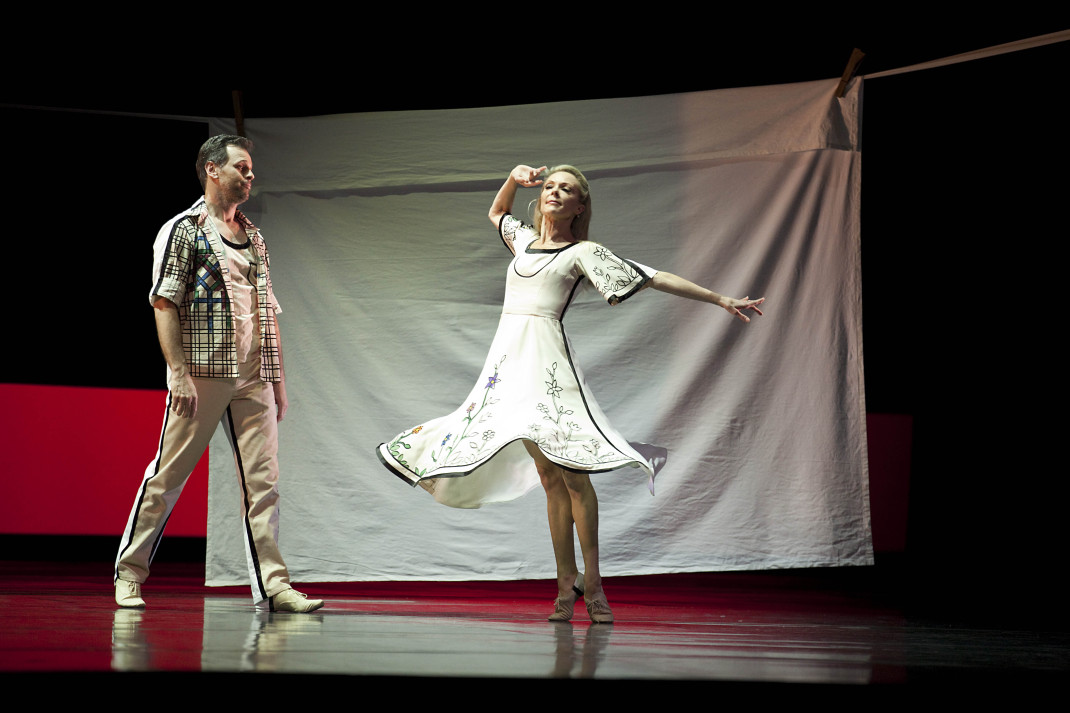
Tim Harbour’s choreography for Sweedeedee was another highlight, not because it was hugely innovative but because he found a way to make two older dancers (‘stars’ is a better word probably for Justine Summers and Steven Heathcote), and two emerging younger dancers (Mia Heathcote and Lennox Niven from the Australian Ballet School) appear together and look as though they all belonged in the work. It was simple, clear movement that told the homey, folksy story well.

Steven Heathcote and Justine Summers in Tim Harbour’s Sweedeedee, 2012. Photo: © Lynette Wills. Courtesy the Australian Ballet

I honestly could have done without Dance North’s Fugue, which was choreographed by Raewyn Hill and which I thought looked like nothing more than a clump of limping dancers engaged in the same moves over and over again. If you read the program notes there is a reason behind the choreography looking the way it did as the work reflects, apparently, a 16th century European ‘dancing plague’. But it was certainly not to my taste, neither aesthetically nor theatrically (despite the Sass & Bide costumes).

  • Dancers

I love watching Sydney Dance Company’s dancers, on this program dancing an excerpt from Rafael Bonachela’s recent work, 2 one another. His dancers have such clean lines in their movements. Nothing is murky or foggy, each tiny aspect of a movement is clear. Chen Wen particularly stood out for me in this program, although he often does. I love so many technical things about how he dances, especially the way his legs, so straight, stretch into infinity, and the way that, when he tilts the body forward, he maintains the strength of his back as he does so.

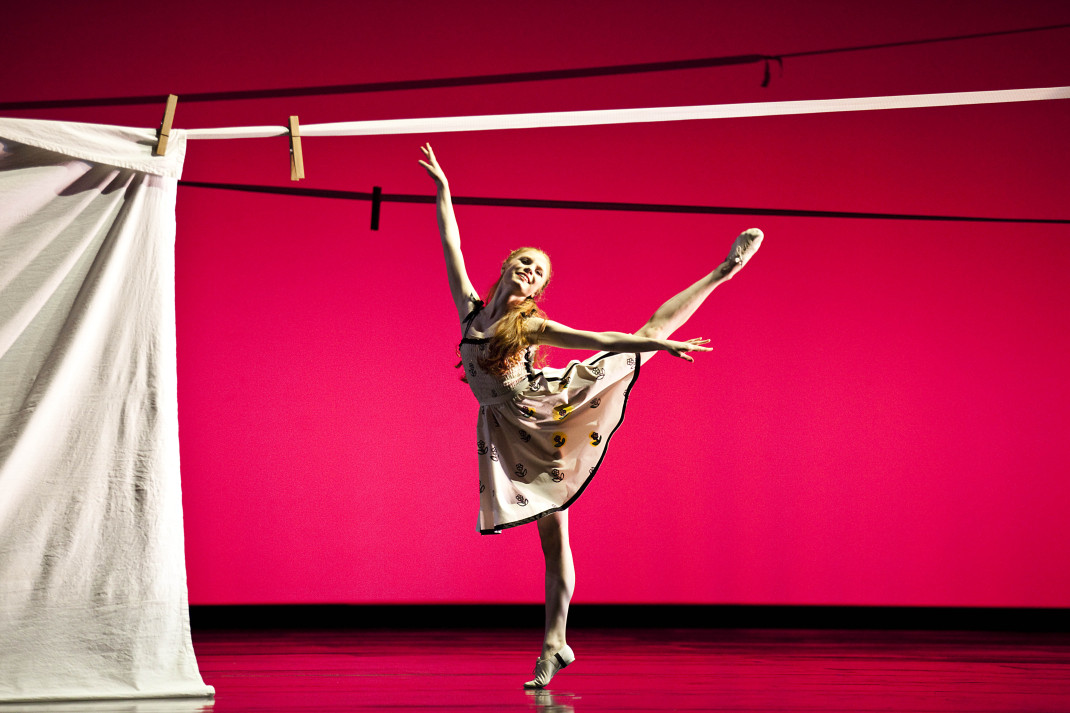
As for Mia Heathcote who played the Girl in Harbour’s Sweedeedee, if things go well for her as I hope they do, she has all the makings of a future star. It has been a long time since a dancer has given me goose bumps, but this member of the Heathcote family did before she had even danced a step. I look forward to following her career.

Mia Heathcote in Tim Harbour’s Sweedeedee, 2012. Photo: © Lynette Wills. Courtesy the Australian Ballet
  • Design

The designer whose work I most admired was Lexi George whose simple, white costumes, patterned with black designs, for Sweedeedee were so appropriate for the piece. Their simplicity belied their elegance. I also liked Bill Haycock’s black and white dresses for the women in Don’t with their variations in length, fitting and general style. Again Natalie Weir is moving in a well-considered direction with her ongoing commissioning of Haycock.

As for lighting I enjoyed Benjamin Cisterne’s designs for both 2 one another and Sweedeedee. Like much else that I liked about this show, his lighting designs were spare and clear. I especially admired the changing, neon-style, vertical columns of light that accompanied the Bonachela piece. Very smart and modernistic and in keeping with Bonachela’s choreography.

  • Appeal

Two works had appeal that invited little analysis: Ivan Cavallari’s Ombra leggera danced by two artists from West Australian Ballet, and Francois Klaus’ excerpt from Cloudland, danced by two artists from Queensland Ballet. Both were charming, if light pieces and were nicely executed.

  • What else?

Tasdance contributed a short film, Momentary, with choreography by Anna Smith, and Australian Dance Theatre was represented by an excerpt from Garry Stewart’s Be your self. Neither really fitted well into the program. Which goes back to my original comment: the program needed a curator. This is not to say that the works had no merit. Stewart, as ever, gave something that required intellectual as much as dancerly input and his dancers, like those of Sydney Dance Company, have extraordinary physical capacity. But Stewart, to his credit I have to say, is out on his own really and looks best by himself.

Michelle Potter, 17 June 2012