Dance diary. April 2026

  • Dance week opening event—Ausdance ACT

The opening of 2026 Dance Week from Ausdance ACT took place on top of Canberra’s Mount Ainslie on 29 April, international Dance Day. Founded in 1982 by the International Theatre Institute, International Dance Day takes place annually on the birthday of Jean-Georges Noverre (1727-1810). Noverre is generally regarded as the founder of modern ballet.

The Canberra event began with a Welcome to Country delivered by Ngunnawal elder Aunty Serena Williams, who also prepared and administered the smoking ceremony. The International Dance Day message for 2026 was written by Canadian choreographer Crystal Pite. It was read to the assembled audience on Mount Ainslie by Elizabeth Dalman. Follow this link to read the message.

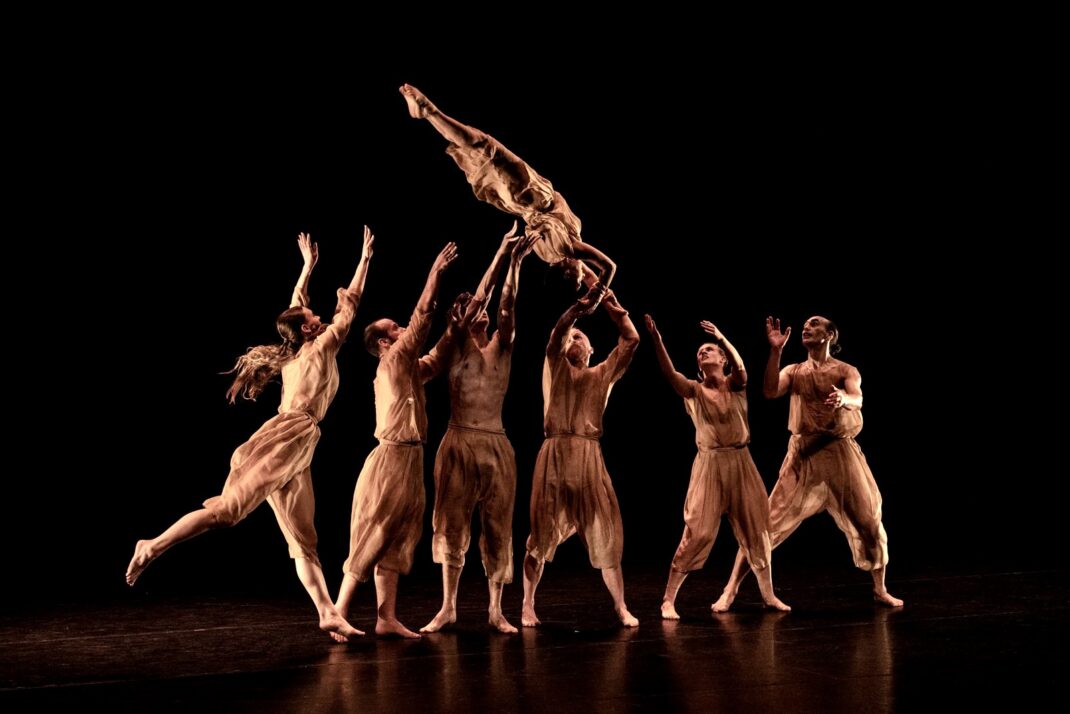
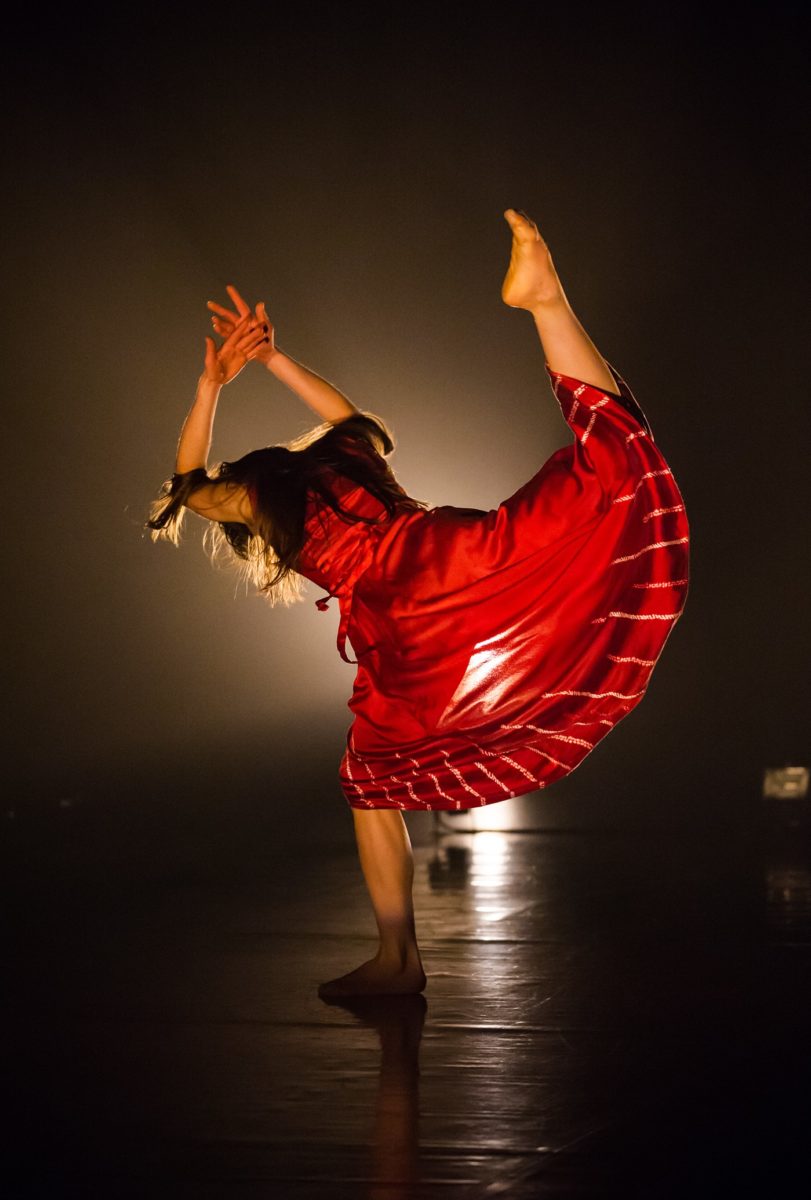
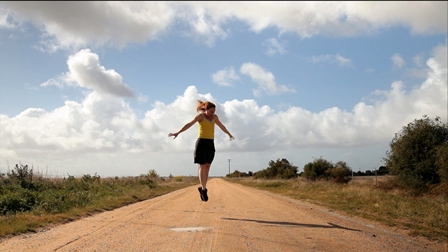
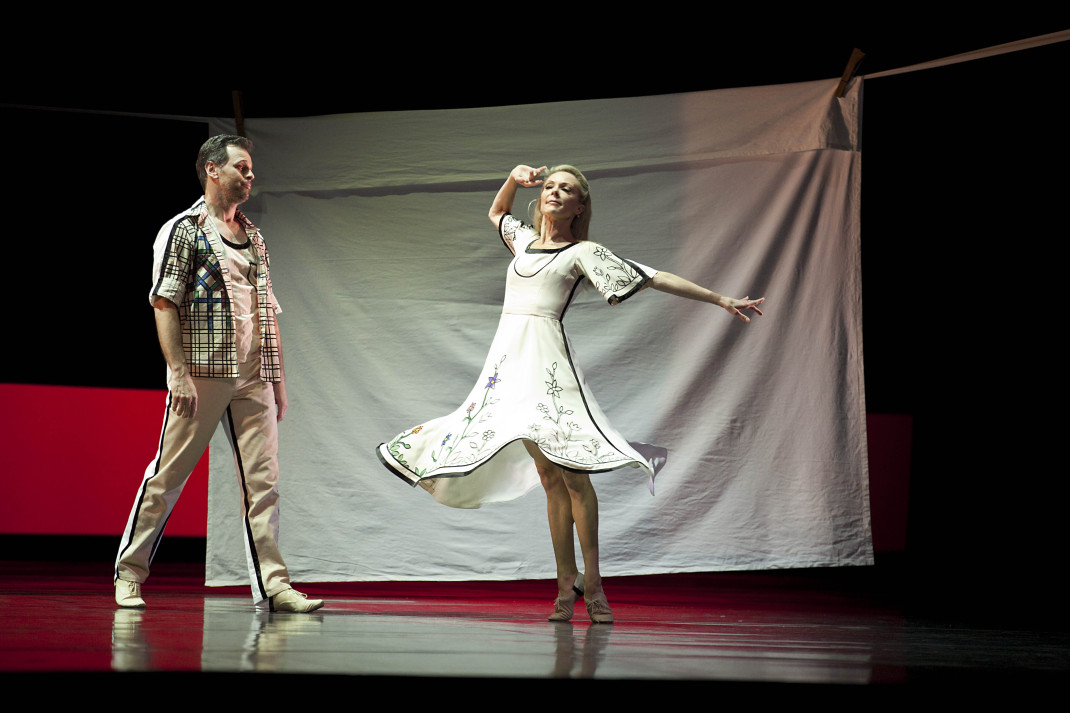
The official introductory messages, which also included a welcome from ACT MLA Caitlin Tough, were followed by a solo dance by Liz Lea from her forthcoming production Diamond, and then a group dance by a range of Canberra-based performers, also a sneak peek at what the Diamond presentation might look like. All dancers were spectacularly dressed and Diamond, due to take the stage in August, promises much!

  • A few changes …

April was filled with news of changes to the careers of several leading figures in the Australian dance world. A move by Callum Linnane, exceptional principal artist with the Australian Ballet, was the first to be brought to my attention. Linnane will leave the Australian Ballet in June to take up a role as principal artist with Hamburg Ballet.

Callum Linnane in rehearsal for Alice Topp’s Aurum. Photo: © Jeff Busby

I have admired Linnane’s dancing for some time. For more about him, and my thoughts on his dancing on this website, see this link.

Raewyn Hill is moving on from her position as artistic director of Perth’s Co3 Contemporary Dance, a company she has led since its inception in 2014. She will remain with the company, which is presently searching for a new director, until the end of 2026. It is not yet clear how Hill’s future will unfold.

Then Kyle Page and Amber Haines, co-directors of Townsville-based Dancenorth, will also leave the company at the end of 2026. Their futures are also not clear at this stage.

  • Vale

It was sad to hear that Ben Stevenson had died in Fort Worth late in March.

In Australia Stevenson’s choreography has been brought to our attention by Li Cunxin, who worked with Stevenson after arriving in America from China when Stevenson was directing Houston Ballet (1976-2003). Li brought Stevenson to Australia on occasions to stage several of his works for Queensland Ballet. Stevenson’s productions of Nutcracker and Cinderella were especially popular.

Ben Stevenson in the Queensland Ballet studio with Li Cunxin. Photo: © David Kelly

From a personal point of view I continue to recall walking down a street in Dallas, Texas, one Sunday afternoon in 2011 and seeing two tutu-clad dancers walking along the same street. They were on a mission to advertise Stevenson’s then forthcoming presentation of Nutcracker for Texas Ballet Theater, which he directed after leaving Houston Ballet.

Texas Ballet Theater dancers, 2011. Photo: © Michelle Potter

  • Another book from Brisbane

After my visit to Archives Fine Books in Charlotte Street, Brisbane, in October last year (2025), when I discovered their range of second hand dance books, I had another opportunity to visit the shop after seeing Queensland Ballet’s presentation of Messa da Requiem in March this year (2026). I headed, of course, straight to the dance section and was pleased to find another book that was not part of my collection: Diaghilev. Creator of the Ballets Russes, edited by Ann Rodicek with an extensive prologue by Rodicek and contributions from six authors. It was a book published to accompany an exhibition held at the Barbican Art Gallery in London in 1996.

Page of costume designs by Nikolai Roerich for The Rite of Spring. 1913

Without wanting to diminish in any way the strength of the prologue and written articles, what especially attracted me were the many images of the items that had been on display in the exhibition. In particular there were a number of costume designs that I had not seen before (see above). It was also fascinating to see portraits of those associated with the company (not necessarily dancers although they were there of course). A fascinating new look at Diaghilev and the work of his collaborators! And such a great second hand bookshop.

  • Press for April 2026

 ‘Aladdin retold through a ‘minimalistic’. Review of Aladdin. Victorian State Ballet. CBR City News, 24 April 2026. Online at this link.

 ‘Elegant dancing that was hard to see’. Salut! Baroque. CBR City News, 25 April 2026. Online at this link.

Michelle Potter, 30 April 2026

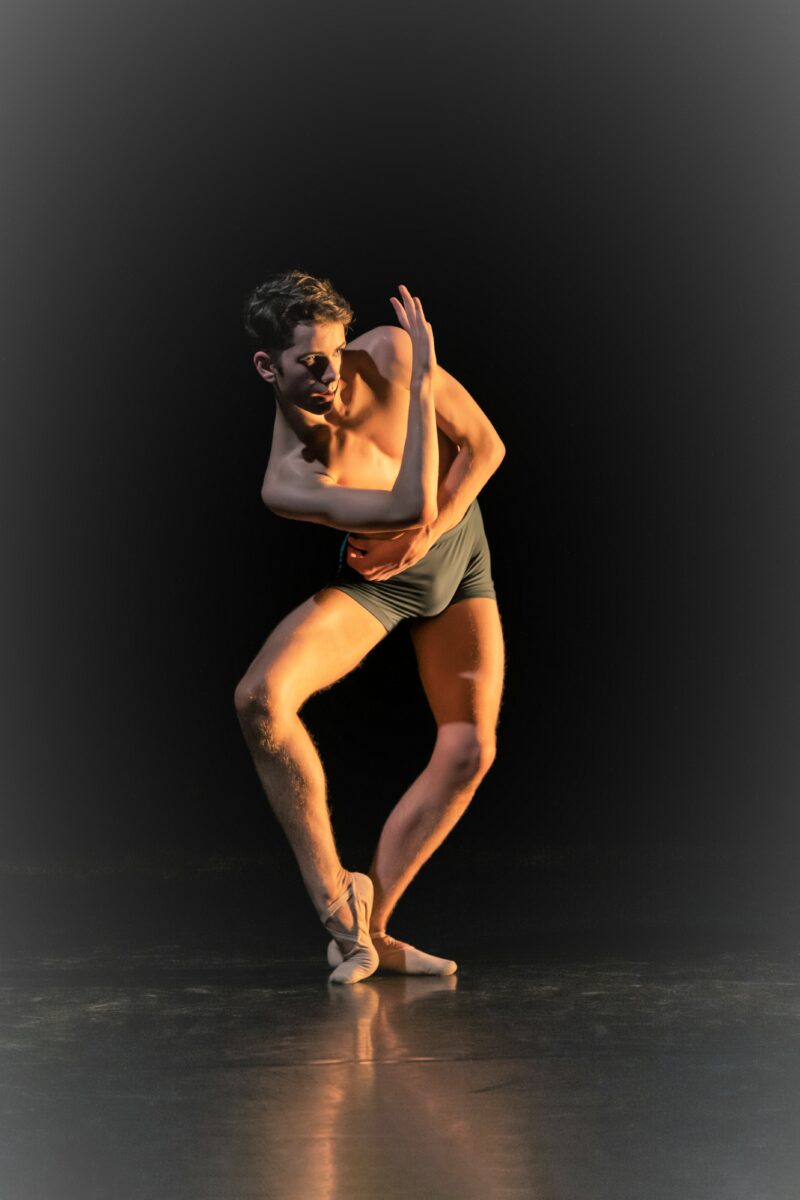
Featured image: Liz Lea in a solo moment from her forthcoming production Diamond. Photo: © Michelle Potter

Gloriaa triple bill. Co3 Contemporary Dance Australia & New Zealand Dance Company

13 March 2026. St. James Theatre, Wellington, Aotearoa New Zealand Festival of the Arts
reviewed by Jennifer Shennan

The program opens with Lament, by Moss Te Ururangi Patterson, performed by New Zealand Dance Company. Shayne Carter’s music has fragments of the traditional chant, E Pã Tõ Hau, commemorating an historic battle between Maori and British forces. during mid-19th century Land Wars. The dance movement alludes to Maori haka, not as narrative but in a relentless pace throughout, conveying the fear involved in that notorious encounter—less a slow lament, more a shared panic and remembered grief.    

A Moving Portrait is by Raewyn Hill, celebrated New Zealand dancer now artistic director of Co3 dance company in Perth. The dance achieves a perfect symbiosis with the music of Arvo Pärt—mesmerising, mysterious, dream-like, slow-motion movement, unceasing in the passing of time, unfolding, retreating, descending, recoiling, ascending, ageing, supporting, accepting, sharing—sympathetic, empathetic. The meditative work weaves a deliciously spooky spell inviting the audience to feel as though they are part of the cast. It’s sculpture on the move, finally finding the deep strings of double bass as if coming home, or moving on.

A moment from Raewyn Hill’s A Moving Portrait. Aotearoa New Zealand Festival of the Arts, 2026. Photo: © John McDermott

Gloria was choreographed in 1990 by Douglas Wright. He died in 2018 but will always be remembered as New Zealand’s leading and visionary dance-maker. From his extensive repertoire of full-length and one-act works, Gloria is rated the masterpiece. How fitting then that the country’s finest musicians—the New Zealand Symphony Orchestra and Voices New Zealand, are performing Vivaldi’s sacred and soaring music. The conductor is Joseph Nolan.   

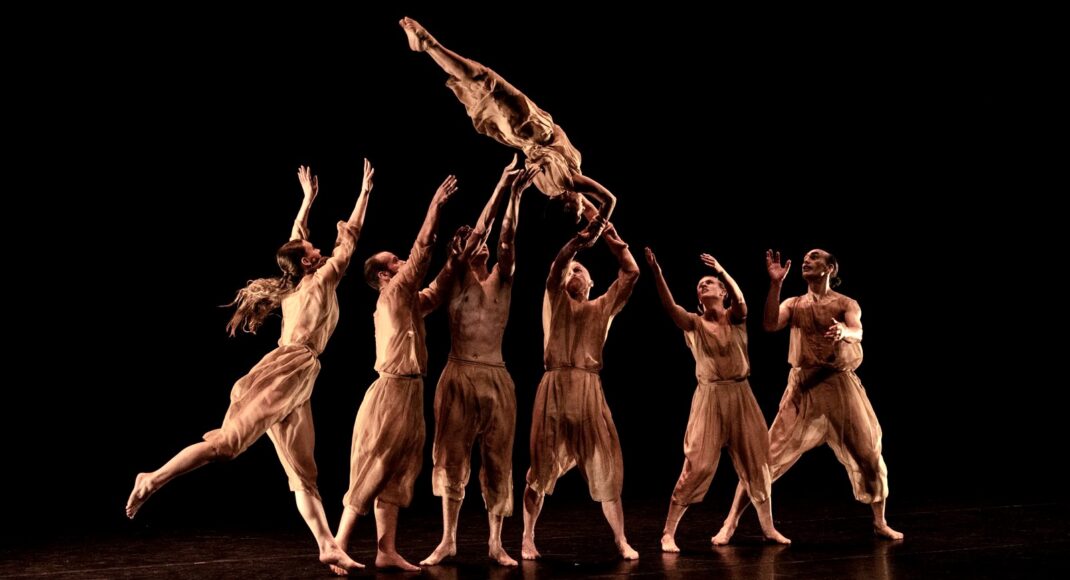
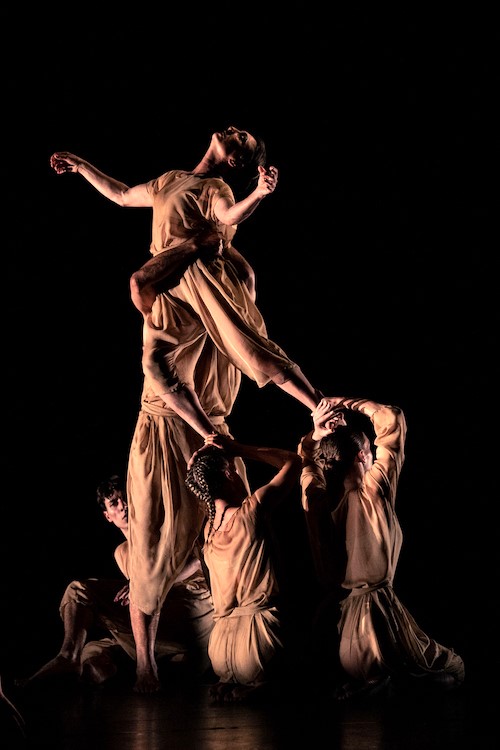
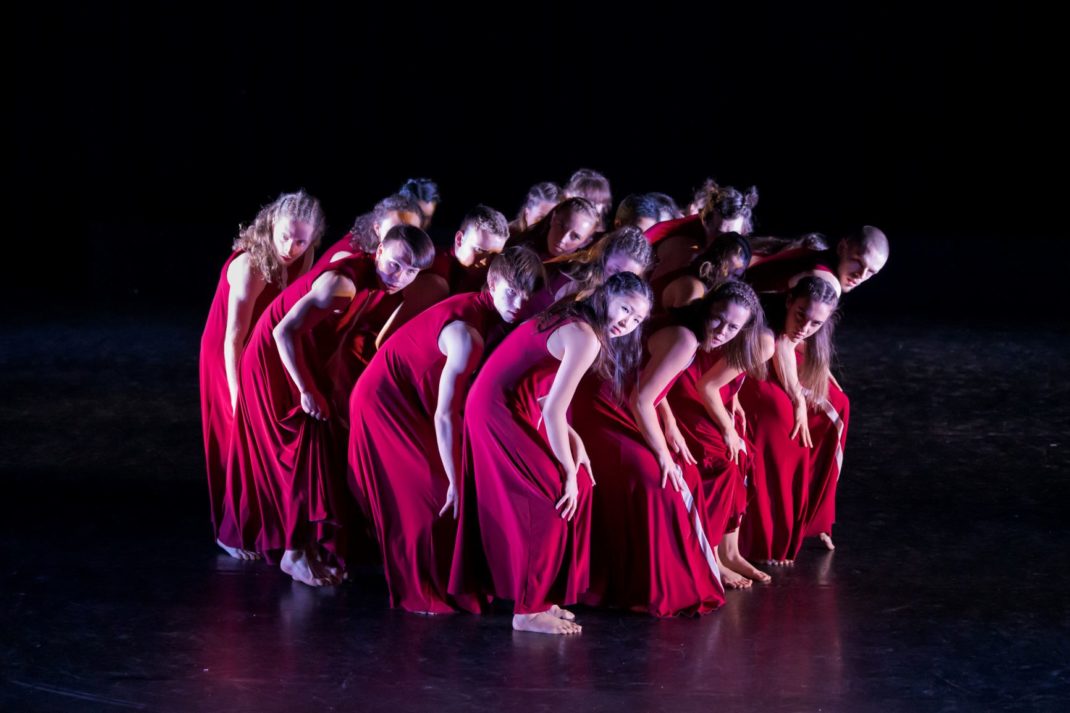
The opening, in silence, sees a set of dancers lit in a warm rose light, holding hands in a perfect circle upstage centre, in a prayer-like invocation. Their soft flowing tunics only lightly cover the body’s lines. They move calmly forward into two clean straight lifelines, slowly kneel then lie face down, arms widespread. Suddenly Vivaldi bursts them awake, dancers rise and run, they dash across the stage, they leap for life, they embrace, climb up, over and down the bodies of fellow performers, make chains of flying leaps, astonishing skipping ropes of dancers tossed and caught. Images of Matisse, Picasso, Bruegel and da Vinci are fleetingly evoked. Glory and ecstasy, heady and heavenly, sacred and now playful, cheeky, boisterous, then so deeply beautifully erotic. Life in which spirit and body are one. Heaven must be close.

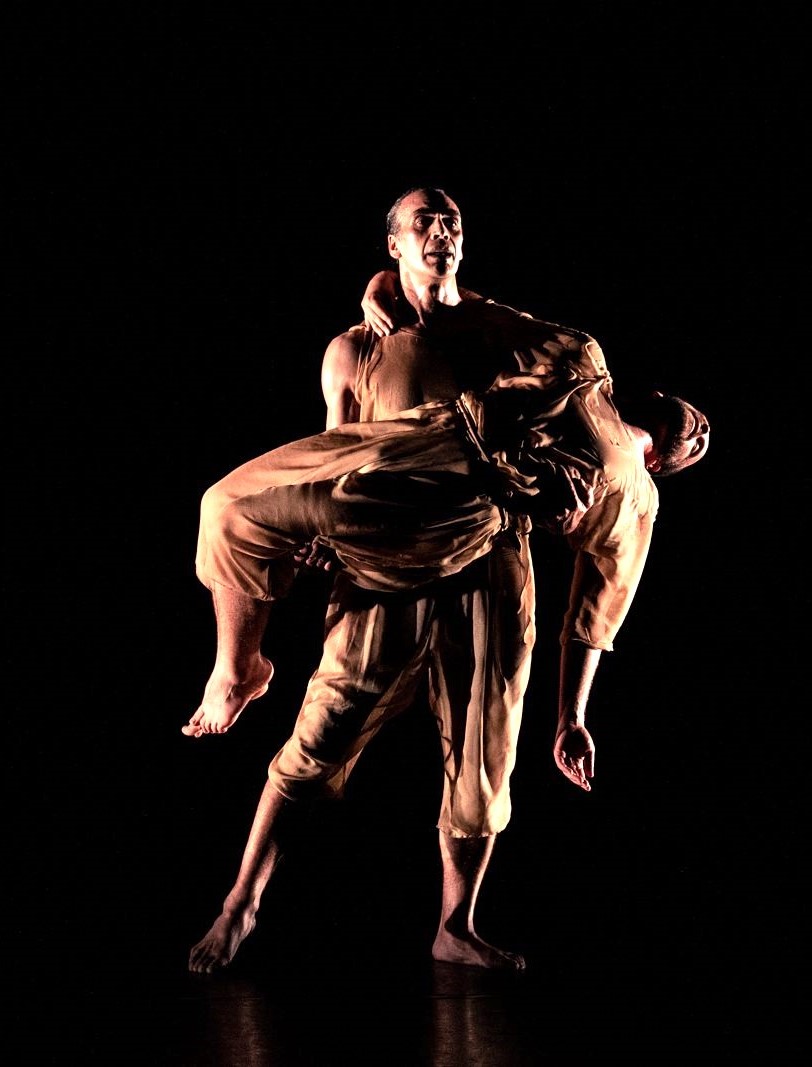
Two scenes from Douglas Wright’s Gloria. Aotearoa New Zealand Festival of the Arts, 2026. Photos: © John McDermott

Douglas’ program note:

In moving the body IS, the mind ISour whole being participates to make something that wasn’t there before, and this is something larger than us. This “something” is what we’re dancing with, for and in, holding our death in our bodies like a sleeping childcareful as we move not to wake it.

Deirdre Mummery, Douglas’ friend, died young. This is no elegy for her death but an exhilarating affirmation and celebration of her life. If you can defy gravity you can beat death. To Domine Deus, Rex Caelestis, exquisitely sung by Pepe Becker soprano, with Donald Armstrong on legato violin, Francesca Fenton dances a loving solo that brings Deirdre momentarily back to life. Miracles happen if you let them.

Top honours to Raewyn Hill for embracing this Festival commission, bringing her own exceptionally interesting company and inviting NZDC to join them. Likewise to Megan Adams and Ann Dewey in restaging the radiant Gloria. and for involving many dancers from the original and other early casts in the life-affirming revival of this sublime choreography.

While in Wellington Raewyn presented the Russell Kerr Lecture in Ballet & Related Arts, tracing her illustrious career in New Zealand, Australia, Paris, Moscow, New York, Japan, and back to Australia. Archives of Humanity, her hugely moving full-length work for Co3 that managed to survive, even thrive, through the Covid crisis, was viewed in video, and brought many of those watching close to tears. An articulate philosopher of dance can do that.

So, a great weekend for New Zealand dance, both new and legacy works, and vision from the Festival directors in making this Gloria season such a triumphant success.  

Jennifer Shennan, 16 March 2026

Featured image: A scene from Douglas Wright’s Gloria with (left to right) ‘Isope ‘Akau’ola, Ella-Rose Trew, Francesca Fenton and Anya Down. Aotearoa New Zealand Festival of the Arts, 2026. Photo: © John McDermott

New Zealand School of Dance Performance Season, 2025

19 and 20 November, Te Whaea, Wellington
reviewed by Jennifer Shennan

The NZSD end of year performance season has reverted to separate classical and contemporary programs alternating across a ten-day period.

The first night, classical program, opened with a suite of dances from La Sylphide, staged with care by Nadine Tyson (a former graduate of the School, dancer with RNZB, and a classical tutor on the faculty). The Sylph was danced by Kaiserin Darongsuwan (Mook) flirting gently with James, Hui Ho Yin (Mike) who performed with lively elevation. The 12 lyrical sylphs gave the realm of spirits in the forest at night a gentle atmosphere.

A moment from La Sylphide, Act II. New Zealand School of Dance. Performance Season 2025. Photo: © Stephen A’Court.

The Bournonville legacy from Denmark is a longstanding one in this country, thanks to Poul Gnatt’s founding of New Zealand Ballet in 1953 and the repertoire he introduced. It remains a vivacious and distinctive style within the balletic canon, challenging performers to harness the striking energy contained within the body, rather than striving for an extended alignment common to other styles of ballet. (A number of New Zealanders rose to international recognition for their mastery of the Bournonville styleJon Trimmer, Patricia Rianne, Adrienne Matheson and Martin James leading them).

The second work, Curious Alchemy, is by Loughlan Prior (now a free-lance choreographer, following his earlier career dancing with RNZB, and also a graduate of the school). The style of movement in this piece is quirky with torsos and limbs moving in segmented isolations that certainly earn the first part of the work’s title. The choice of Beethoven and Saint-Saens compositions, set at unusually loud volume, made further contrast to the staccato moves of the four performersLiezl Herrera, Ella Marshall, Lin Xi-Yuan (Ian) and Hiroki So.   

Façade, choreographed by Jeffrey Tan, staged by Robert Mills, and set to Samuel Barber’s Adagio for Strings, is a pas de deux of emotional connection between the two performers, Ella Marshall and Lin Xi-Yuan (Ian). The rapport between them was strongly forged yet built to an unusual ending where the distance between them was emphasised and well-captured.

Esquisses, by Christopher Hampson, staged by Turid Revfeim, (also a graduate of the school, with a long and substantial career at RNZB and subsequently as director of Ballet Collective Aotearoa) is set to an energising (mainly piano) composition by Valentin-Alkan. Costume design is by Gary Harris, former director of RNZB who shared a spirited rapport with Hampson back in the day (Hampson’s Romeo & Juliet remains one of the strongest memories of the company’s powerful theatrical repertoire from that time).  

Eleanor Bond & Patrick Nawalowalo McCrory in Esquisses. New Zealand School of Dance. Performance Season 2025. Photo: © Stephen A’Court

The tutu design by Harris is striking and cleverly used, there is élan, cheeky humour and whimsy in the choreography throughout, designed specifically for young dancers, until the male solo adagio by Hui Ho Yin (Mike) emerges and becomes quite the most beautiful, musical and poetic highlight of the evening, an embryo of the art of dance.

The contemporary program the next evening had five works, all world premieres, so an altogether different energy in the venue. The opening piece titled You Cannot Make a Deal with a Tiger, choreographed by Riley Fitzgerald, should be renamed You Can Make a Deal with a Tiger, since that’s what the dancers seemed to achievefacing the fear, finding support from another, putting up the fight and surviving, with an ending that echoed the opening image.

A scene from You Cannot Make a Deal with a Tiger. New Zealand School of Dance. Performance Season 2025. Photo: © Stephen A’Court.

God is in the Room, by Tristan Carter, had a loopy zany vibe with smiling and playing games, making like animals, then moving to a frenetic sequences of shouting  and group movement but not involving all individuals equally. Deliberate non-sequiturs in the movement, and quite random dress for individual dancers, underlined the program note ‘Energy never dies, it only transforms’.

Crybabies never Pelu, by ‘IsopeAkau’ola, draws on Tongan themes of resilience and support within a community. Pele is Tongan for ‘fold’ and the title here implies folding rather than breaking. The opening guitar sounds brought aural clarity to the line-up of black clad martial artists who used the discipline of stylised moves to get the dance up and running. The late great Futa Helu said that the Tongan definition of dance is ‘keeping time’in that wonderful pun we can recognise here features of hand and foot movements from old Tongan ways of dancing, welded in to the new sequences for this focussed group dance that had gravitas, dignity and a contemplative quality to support a theme both contemporary and timeless.

A moment from Cry Babies Never Pelu. New Zealand School of Dance. Performance Season 2025. Photo: © Stephen A’Court.

Anatomy of Entanglement by Aitu Matsuda for a group of dancers clad in matching light and darker grey, explored the theme of the many moving parts within a larger entity, and had a compelling quality.

The Space Between, by Raewyn Hill, to an original score by Eden Mulholland, gave this two-program season the cadence and resolution it needed. A driving triple time beat was used as grounding for the sizeable group of dancers to build and grow beautiful waves of movement throughout the dance which became the great Waltz of Time. Some bars and some dancers alternated that waltz with a sarabande rhythm, still in triple time but with the accent instead on the second beat in each bar, keeping us mesmerised throughout…where will it go? where will it take us?  

A moment from Raewyn Hill’s The Space Between. New Zealand School of Dance. Performance Season 2025. Photo: © Stephen A’Court

The work builds its strength as the entire cast stays on stage throughout. They became an entire community garbed in glorious colours, a dancer here and another there lifted aloft, to float or fly, then safely lowered to join the group, irresistibly happy dancers smiling, not because they’d been told to smile but simply because the work offered them such an uplifting quality of hope, and who’s to say that isn’t what graduating dancers need and deserve. It’s no surprise that Raewyn Hill, herself an illustrious graduate of this school in earlier times, came up with this treasure and it’s very good to see it sitting so well on these dancers.   

******************

I am certainly not alone in the audience thinking that a single program combining classical and contemporary works, rather than setting them apart as separate realms, would allow the audience to see the fullness of the NZSD’s strengths, the range of professional opportunities awaiting the graduates, and enhance rather than isolate the ways in which all choreographers and dancers share the same goals of communicating themes and expressing moods and emotions through movement, albeit of differing styles.

It is clear that many of the graduates can look forward to fruitful and rewarding careers in dance, and we wish them all the very best in that. 

Jennifer Shennan, 25 November 2025

Featured image: Eleanor Bond & Patrick Nawalowalo McCrory in Christopher Hampson’s Esquisses. New Zealand School of Dance. Performance Season 2025. Photo: © Stephen A’Court

Farewell to a year of dance, 2023

by Jennifer Shennan

In Maori custom an address or oratory always opens with acknowledgment of those recently deceased, recognising ‘the mighty totara trees that have fallen.’ That puts Jon Trimmer right up there in the first line since he is/was unarguably the hero of New Zealand dance. Knighted for his unmatched artistry, and the longevity of his fabled performance career, Jon was loved by so many—for all the roles he danced but also for the plain common decency in the man. Fastidiously professional about his own work, he was always interested in the work of others, ever standing by to help should that be needed. Jon may have passed (26 October 2023, aged 84) but the memories of his mighty performance career will never be forgotten, never. Nor will we see his like again, ever. Jon carried the mantle from Poul Gnatt and Russell Kerr to safeguard the Company for decades. That now passes to those performers and directors who lead RNZBallet. One can only wish them courage.  [The Company’s public tribute to Jon will be held in Wellington on Friday 2 February, 2024. See Company’s website for details and reservations. The next Russell Kerr lecture in Ballet & Related Arts, on Sunday 25 February 2024, will be devoted to Jon. Presenters include Turid Revfeim, Anne Rowse, Kerry-Anne Gilberd, Michelle Potter. For details and reservations, email jennifershennan@xtra.co.nz). Links to my obituaries for Jon are at this link and at www.stuff.co.nz
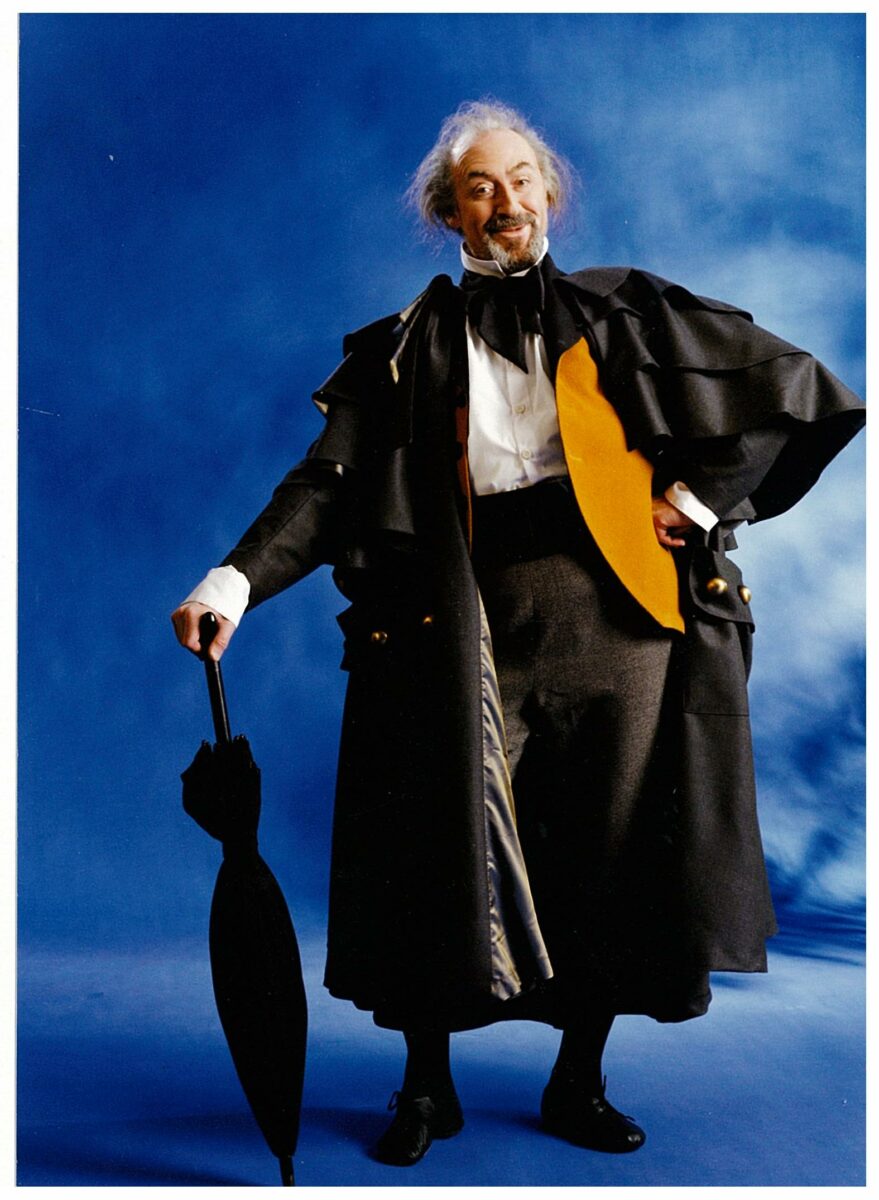
Jon Trimmer as Dr Coppélius in Coppélia. Royal New Zealand Ballet, 1996. Photo: © Stephen A’Court

……………………


The Auckland Arts Festival began the year with two striking productions—Revisor, stunning dance-theatre choreographed by Crystal Pite, with dancers playing actors playing dancers. Scored in Silence was a deeply moving film-dance testament to the experiences of the profoundly deaf community of Hiroshima 1945.  

Royal New Zealand Ballet’s mid-year season Lightscapes, had four works with for me the standout Requiem for a Rose by Annabella Lopez-Orcha—a beautiful mysterious meditation, and the powerfully atmospheric Logos by Alice Topp (an RNZB alumna). Their single performance Platinum, was a tribute to 70 years achievement. My enduring memory is of Sara Garbowski dancing exquisitely in the excerpt from Giselle Act II. Sara has since retired from her 15 year performance career, and I for one am sorry we did not see her in the complete ballet. (Perhaps if she finds retirement over-rated she could come back as a guest artist to perform it in a year’s time?). The Company’s year ended with a romping return season of Loughlan Prior’s Hansel & Gretel which the rejuvenated company performed with great gusto.
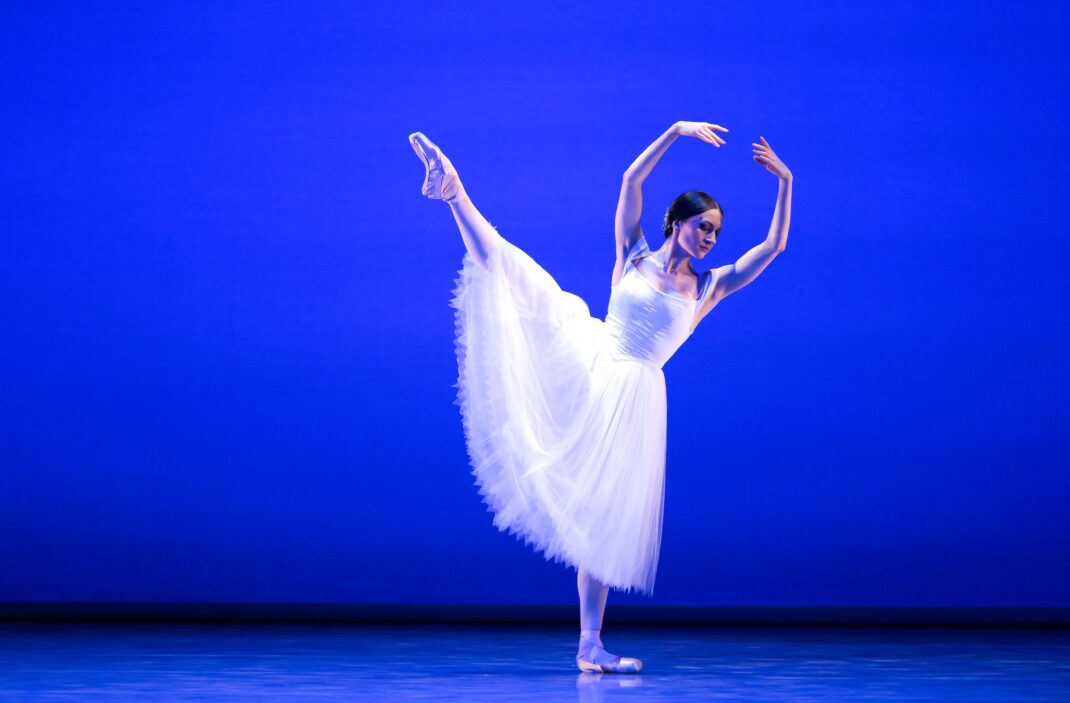
Sara Garbowski in Giselle, Act II. Platinum season, Royal New Zealand Ballet, 2023. Photo: © Stephen A’Court

Mary-Jane O’Reilly’s Ballet Noir, a contemporary treatment of Giselle Act II, was a phenomenal achievement—independent dancers who nevertheless performed as a seasoned company, with flawless technique, integrated design and powerful dramatic effect. We don’t do Dance Oscars, thank goodness, but if we did, this work would probably score. Another memorable season was the dance opera, (m)Orpheus, with direction and choreography by Neil Ieremia of Black Grace dance company. The dancers combined seamlessly with the singers who found nobility in a contemporary urban setting.

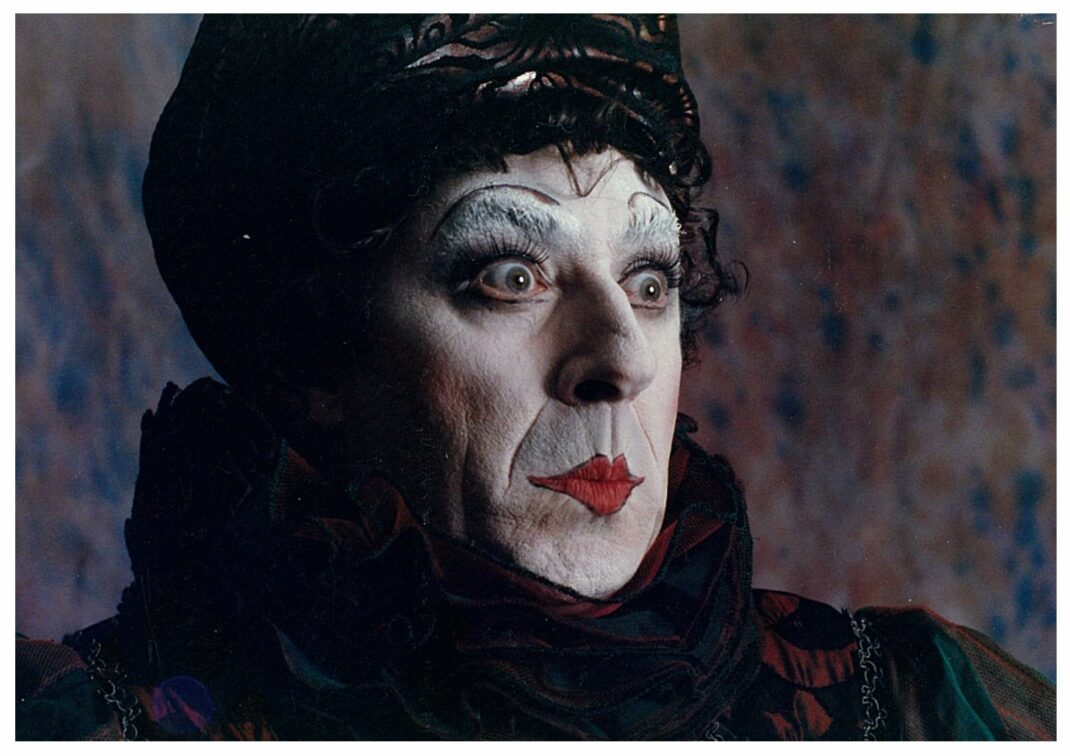
It was terrific to hear of Raewyn Hill’s staging Douglas Wright’s exquisite Gloria on her Co3 in Perth. Rumours of other works by Douglas in their planning for re-staging, mean I’d better be saving for an airfare. In Wellington an exhibition, Geist, of Tessa Ayling-Guhl’s photo portraits of Douglas Wright from 2015, was a moving experience. Björn Aslund choreographed a solo, geist dance, accompanied by Robert Oliver on bass viol, in the gallery. It’s always special when a dance enhances an art gallery space, uniting both art forms. A gathering was held at The Long Hall on October 14 to mark Douglas’ birthdate — and an archival screening of The Kiss Inside made compelling viewing. We plan to host a similar event every year on that date, and are grateful to Megan Adams who maintains the Douglas Wright archive with fastidious care.

A capacity audience attended the Russell Kerr lecture, this time focussing on Patricia Rianne’s celebrated career, and viewing her 1986 ballet, Bliss, based on the Katherine Mansfield short story. 2023 marks the centenary of Mansfield’s death and I was honoured to present a paper KM and Dance, at the VUW conference held to mark that.

2023 also marked the centenary of the tragic incident in which a young dancer, Phyllis Porter, was performing in the Opera House in Wellington, when her tarlatan skirt caught on the gaslight in the wings and she was horribly burnt, and died four days later. Shades of Emma Livry in Paris, though no-one here makes a pilgrimage to Phyllis’ resting place.

2023 offered several memorable dance videos—the Arts channel had a repeat screening of the splendid Cloudgate in Lin Hwai Min’s Rice. Firestarter about Bangarra Dance Theatre again made compelling viewing. A doco, The Boy Who Couldn’t Stop Dancing told of Tom Oakley, a young Liverpool boy with serious cystic fibrosis yet who had danced his way to win a scholarship to Rambert Dance school. The outstanding force in German dance, Susanne Linke, sent me an intriguing video of her dance project, Inner Suspension, in which she shares her pedagogy and technique. (Anyone interested to receive the link could email Inge Zysk at info@susannelinke.com).

Several dance books of interest featured in my year. David McAllister was appointed Interim Artistic Director at RNZBallet. His two books, Ballet Confidential and the earlier Solo, provide access to the backstage life of the ballet and proved popular among local readers. The book Royal New Zealand Ballet at Sixty which Anne Rowse and I co-edited back in 2013, was released in a digital edition by Victoria University Press.

If I had to signal the hour and a half of the year that offered the purest dance pleasure, it would be the RNZB Company class I observed taught by David McAllister. Clarity of physics, and the miracle of anatomy, combined with music and poetry from each dancer, reveals the art, unmarked by choreography, casting, costumes and champagne—all the things we go to the ballet for. Here by contrast is the forge and the chapel where the art of the dancer is daily honed and made good. It’s my favourite thing.

Season’s greetings to all—in happy anticipation of 2024 which will see Akram Khan’s The Jungle Book Reimaginedand mid- year an intriguing project, Bismaya, in which Chamber Music New Zealand are bringing musicians from India to combine with Vivek Kinra’s Mudra dance company in a national tour and workshops. Russell Kerr’s pedigree production of Swan Lake from RNZB comes up in May, and later their mixed bill, Solace which includes a new work by Alice Topp. A return season of Liam Scarlett’s magical Midsummer Nights’ Dream is the work that keeps his talent alive.

Jennifer Shennan, 30 December 2023

Featured image: Jon Trimmer as a Stepmother in Cinderella. Royal New Zealand Ballet, 1987. Photo courtesy Royal New Zealand Ballet
My year, 2022

by Jennifer Shennan

My year’s list of dance highlights seems thinner than usual since a number of productions didn’t make it to curtain-up. There are no lowlights though (why would you write about lowlights?) so I’ll just call them lights.

From a screen viewing I followed with interest the choreographic venture, Journey, by Lily Bones. I remember Lily’s serene sense of line as an unusual individual dancer at both NZSchool of Dance and later in RNZBallet.  After a time performing in Europe she is now based in Sydney and is a colleague there of Martin James. Her resilience in surviving serious illness, and her determination to make dances despite zero external resources has given her a maturity and quiet confidence to choreograph themes that speak and that we can hear. No glamour or glitz, just her truth. Refreshing.  

It was a treat indeed to see again an Arts Channel broadcast of Cloud Gate Dance Theatre in Rice. Choreographed by Lin Hwai Min in 2013 (and toured to Auckland in 2017), it is talisman to their repertoire, with typically perfect proportion in shaping the cycle of rice growth and harvesting. Like all Lin’s work, there is pacing and spacing through the episodes that deliver at one level of nature at work in the titled theme, and also allegorical layers of reference to human and personal experience. The erotic sensuality in a single central duet in Rice defines the original power of creation. I own a dvd of this work but choose not to watch it alone—so how is that different from sitting alone and watching a broadcast? just a sense that there will be others out there watching ‘with me’, a feeling of being in the audience that is shaped by a performance in time. Cloud Gate’s repertoire has a strength in its Chinese legacy and vocabulary that is yet accessible to the wider world. Riveting.   

Another memorable experience on screen was the final sequence by the young boy in the studio, as epilogue to the film The White Crow, the dramatisation by Ralph Fiennes of Nureyev’s defection to the west.  Overall I was not as transported by the film as others seemed, but was certainly moved by how that final dance was allowed to speak for itself. Poignant.

Pump Dance Studio’s Roll the Dice also transformed the commitment of young performers  into something more than the sum of its parts. Infectious.

From NZSchool of Dance, Loughlan Prior’s Verse, a solo to the Folies d’Espagne played by the consummate ensemble Hesperion XXI, shone with the clarity of a beacon, both in choreography and performance. Luminous.

Joshua Douglas in Loughlan Prior’s Verse. New Zealand School of Dance, 2022. Photo: © Stephen A’Court.

Two books—by Michelle Potter on Graeme Murphy, and by Ashley Killar on John Cranko—offered insights into those prolific choreographic careers, with welcome reminders of the live performances we have seen by their companies. Revelatory.

Not from this year, but nevertheless shaped by the pandemic term we are still experiencing, the tour de force of Strasbourg 1518 by Lucy Marinkovich and Lucien Johnson, remains the total standout dance season of recent times. Their earlier work, Lobsters, also holds its place on the list of memorable works of the decade. Indelible.

It has been indeed moving to follow the heroic project by Raewyn Hill, artistic director of Co3 Contemporary Dance in Perth, where she re-staged Gloria, the celebrated work by the late Douglas Wright, New Zealand’s visionary choreographer. Immortal.

A dance lives for as long as it is remembered, and can cheat death by a measure. Russell Kerr died earlier this year, and for many people the memory of his production of Petrouchka in which he cast Douglas in the title role, also stands as an indelible milestone in this country’s dance history. Legendary.

We are looking forward to the fifth in the series of the Russell Kerr Lecture in Ballet & Related Arts, in Wellington, late February. The subject will be Patricia Rianne, celebrated dancer, teacher and choreographer whose long career spans years both in New Zealand as well as UK, Europe and Asia. A delight.

Season’s greetings and good wishes to all those who watch dance, who create dances, who perform, who write and who read about dancing. Sprezzatura.

Jennifer Shennan, 21 December 2022

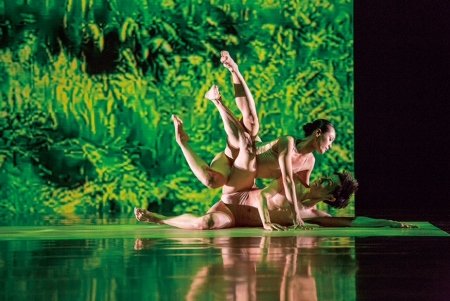
Featured image: Huang Pei-hua and Tsai Ming-yuan in Rice. Cloud Gate Dance Theatre, 2021. Photo: © Liu Chen-hsiang

Gloria. Co3

Digital screening, December 2022 (filmed during a September season from the Heath Ledger Theatre, Perth)

I first saw Douglas Wright’s Gloria in 1993 in Sydney when it was performed by Sydney Dance Company. Then it was a relatively new piece from Wright with its world premiere having taken place in Auckland in 1990. In 1993 I was the Sydney reviewer for Dance Australia so I am in the fortunate position of being able to look back at my reactions to that early production. In fact, a copy of that review appears on this website at this link.

The features of Gloria that thrilled me in 1993 are also powerful features of the Co3 production —its life affirming message, the witty choreography, the unusual and challenging connection (or not) between music and dance, and in general the vigour and vitality of the work. But on this occasion I saw it as a streamed event and, generously from Co3, the Perth-based contemporary company led by Raewyn Hill, I was able to watch it over a 48 hour period. This meant that I had time to go back and look more closely at certain sections. While every section had its highlights, two sections and one particular moment stood out for me.

The one particular moment came at the end of the first movement of Vivaldi’s Gloria, to which the work is danced. The dancers began with quite slow, unison movement that turned into energetic leaps, turns and fast running down the diagonal. As the dancers left the stage, and as the first movement was coming to an end, a single male dancer, Sean MacDonald whose connections with Gloria go back to a 1997 production, was left alone on the stage. His final jump ended with him lying on his back, legs and arms moving slowly as if he was running in that prone position. He rolled over, slowly stood up, and lifted his arms to the front, palms facing upwards. The lights faded but the music continued and the power of MacDonald’s final, simple movement was breathtaking.

Another section that moved me immensely was performed to the ‘Domine Deus’ section, sung (according to the credits that ended the stream) by soprano Sabra Poole Johnson from St George’s Cathedral Consort, the group that provided the vocals for the Vivaldi score. This section began with a group of five dancers moving slowly in a sculptural formation but eventually separating with four sliding off leaving one dancer (Francesca Fenton I believe) alone. She began her solo on the floor but slowly assumed a standing position and, in so doing, seemed to be exploring her physical existence before she broke into a waltz-like dance full of grace and fluidity. Like MacDonald before her, as her dance came to and end she lifted her arms, stretching them forward with palms facing upwards as if to announce she had discovered her identity, her existence, herself.

I also enjoyed the section danced to the movement ‘Et in terra pax’. It featured Claudia Alessi who had danced in Gloria in 1991 when it was staged for the Perth Festival by Chrissie Parrott. What made this section so appealing to me was the sculptural qualities of the choreography, which in fact were noticeable throughout the work, although perhaps not to the same extent as in ‘Et in terra pax’.

There were of course many other moments that continue to resonate: the joyous quality of the dance to ‘Laudamus Te’ and the duet between two male dancers (Sean MacDonald and Scott Galbraith I think) in which we witnessed the changing nature of human relationships. Also great to watch were those moments when a dancer was held and swung back and forth by two other dancers as others ran underneath and around the activity. But I guess I go back to my original review for Dance Australia and confirm more than anything that Wright’s Gloria is life-affirming whatever one might think of specific sections. Wright uses dance to convey a message about humanity. Simple but astounding.

I was lucky to be able to keep going back to watch sections of Gloria but I am sure I missed a lot by not seeing it live, especially as the music was played live by a chamber group from the West Australian Symphony Orchestra and sung live by the St George’s Cathedral Consort, with the whole conducted by Dr Joseph Nolan. Nevertheless, the sound quality of the streamed version was just beautiful and I absolutely loved being immersed in this production from Co3 of Douglas Wright’s spectacular Gloria.

Michelle Potter, 25 December 2022

Featured image: Scene from Gloria. Co3, Perth, 2022. Photo: © Shotweiler Photography

At the time of writing, the streamed Gloria is still available to watch for the small price of AUD 19. The offer is available until mid-January. See ‘Watch at home’ at this link.

Dance diary. August 2022

  • Cranko. The Man and his Choreography. A new book

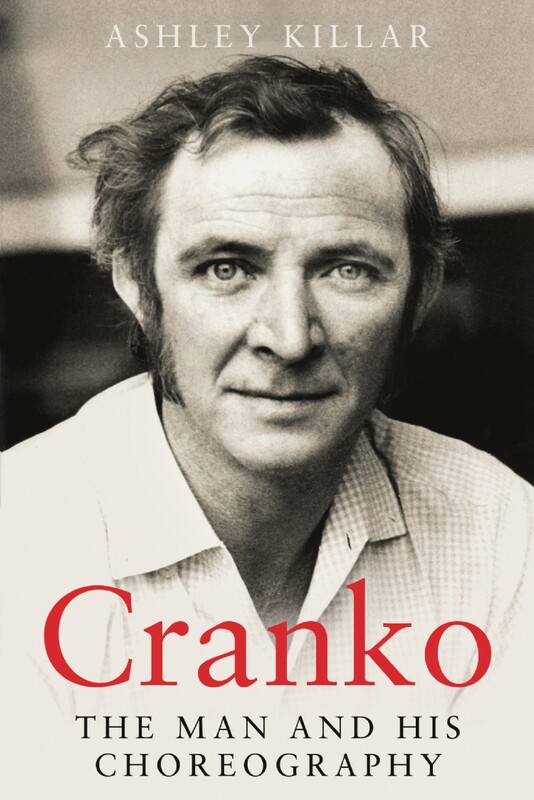
A new book, Cranko. The Man and his Choreography by Ashley Killar is due to be released in London next month. Killar, who danced extensively with Stuttgart Ballet when John Cranko was the company’s artistic director, presents a detailed and extensively researched analysis of the life and career of Cranko, going right back to his childhood in South Africa. The book will also have an Australian launch in December, coinciding with the production of Cranko’s Romeo and Juliet as part of the Australian Ballet’s Sydney season. At present the book can be pre-ordered from Book Depository or from the British publisher at this link. In Australia it will initially be available through Bloch Dance stores.

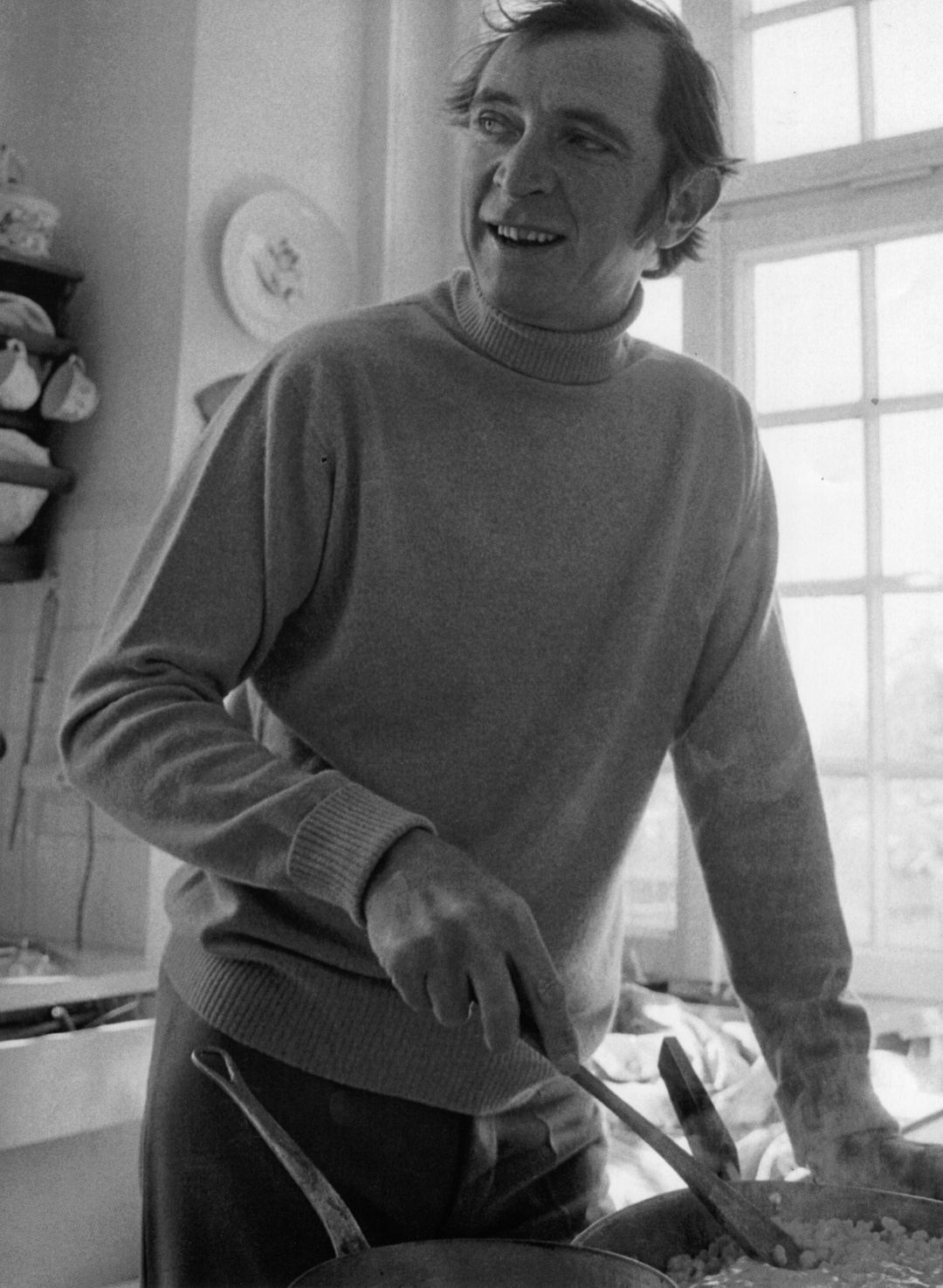
Read more about the book at this link, where you’ll find some unexpected items, including recipes (and see above an image of Cranko as chef).

  • Douglas Wright’s Gloria

The latest news from CO3, the Perth-based contemporary company led by Raewyn Hill, is that the company will be staging Douglas Wright’s Gloria in September.

Douglas Wright (centre) performing in his Gloria in 1990. Photo: © Patrick Reynolds

Here is what Jennifer Shennan wrote about Gloria in 2004, which she updated for Raewyn Hill just recently:

Gloria—by Douglas Wright & Antonio Vivaldi

To Vivaldi’s exuberant music, Douglas Wright made Gloria, the best dance ever choreographed in New Zealand. It affirms and celebrates life as it is on Earth. Dancers clad in gold silk launch themselves into the air and seem to stay there, flying over each other in twists and plaits, bodies somehow freed from gravity, aiming for the stars, hitting the sun.

Douglas was commissioned by his friend Helen Aldridge to choreograph a work commemorating the life of her daughter, and also his friend, Deirdre Mummery, who had died of an accidental drug overdose.

Helen did not know what might result—a lament? an elegy? commiseration? She could scarcely have imagined the ecstasy and expression of life’s force as these exquisite dancers walk then run, lean then leap, lift then fall, roll then rise, turn then hold, shimmer then fly.

The physical stamina required is phenomenal but not for a moment do we sense any struggle. The choreography is woven of exquisite lines and loops, allowing the dancers to embrace every baroque quaver in the light and shade of Vivaldi’s Gloria. It affirms and celebrates life as it is in Heaven, where Deirdre and Douglas now live.

Written by Jennifer Shennan in 2004, for BEST—a New Zealand compendium [AWA Press 2004]; reworked for Raewyn Hill, August 2022

My review from 1993, when Gloria was staged by Sydney Dance Company along with Graeme Murphy’s Protecting Veil, is at this link. See also the tag Douglas Wright for more about Wright’s work as it appears on this website.

Further information about the CO3 staging is available on the company’s website.

  • News from James Batchelor

Short Cuts to Familiar Places, James Batchelor’s latest work, will receive its world premiere in Düsseldorf, Germany, in October. The work investigates the concept of ‘body lineage’ and, in his media release, Batchelor describes it as exploring ‘the idea of the body as a site of inscription, a morphing map or text that is continuously re-drawn and re-written’.

Batchelor has been researching the background for this work for a year or so now and he has given particular focus to the work of his teacher at Canberra’s QL2, Ruth Osborne, and her connections through her own teacher, Margaret Chapple. Chappie, as she was familiarly known, was a student of and dancer with Gertrud Bodenwieser and, after Bodenwieser’s death, directed (with Keith Bain) the Bodenwieser Dance Centre in Sydney. Batchelor has also worked with, and considered the heritage of others with connections to Bodenwieser including Eileen Kramer and Carol Brown.

James Batchelor in a study for Short Cuts to Familiar Places. Photo: © Morgan Hickinbotham

With luck Short Cuts to Familiar Places will eventually be shown in Australia. Stay tuned.

Production credits (from the media release):
CHOREOGRAPHY, PERFORMANCE James Batchelor DRAMATURGY, PRODUCTION Bek Berger COMPOSITION Morgan Hickinbotham PERFORMANCE Chloe Chignell LIGHT DESIGN Vinny Jones COSTUME DESIGN Juliane König CHOREOGRAPHIC CONSULTATION Ruth Osborne, Eileen Kramer, Carol Brown RESEARCH CONSULTATION Michelle Potter

  • The end of an era?

It was something of a shock to learn that the world renown dance magazine Dancing Times will publish its very last issue next month, September 2022. The London-based magazine with an international reach was established in 1910 when its predecessor, a house magazine of the Cavendish Rooms, was bought by founding Dancing Times editor P. J. S. Richardson. Since then it has had other editors with the present holder of the position being Jonathan Gray. Current production editor of the magazine, Simon Turner, writes:

Sadly, since 2020, the tremendous economic impact of the coronavirus pandemic, as well as the rapid increase in costs over the past year, means that the magazine is no longer financially viable in its current form.

The news has shocked the international dance world of course and we have to hope that the same fate does not occur with Dance Australia, which already has reduced its schedule from a print version every two months to one every three months.

*********************

But on different although related issue, dance reviews and articles in print outlets in Australia (and elsewhere?), especially those by knowledgeable contributors, seem to be slowly disappearing. Another end to an era? I was struck by a recent notification from the Sydney Opera House of an event due to take place in September called ‘How do you solve a problem like the media?’ Despite the clear allusion in the title to a well-known song and by extension to the arts, this event appears to be focusing on politics, with which I have no issues of course. But the opening remark in the advertisement for the occasion, ‘The media has gone through a huge upheaval in recent decades. Now we’re starting to see the effects …’, applies equally to the arts, and to dance in particular, which scarcely ever gets an informed and in depth mention, even in online outlets associated with newspapers.

  • Liz Lea at the Edinburgh Fringe

As mentioned in the July dance diary, Liz Lea’s RED was set to be part of this year’s Edinburgh Fringe and RED took the stage from 16-28 August. Read Helen Musa’s review of the Edinburgh show for Canberra City News at this link. And in the light of my comments above re the disappearance of the arts from print outlets, we are lucky in Canberra that City News, which has a weekly print edition as well as an online presence, still sees fit to carry news and reviews about the arts, including dance.

  • Glimpses of Graeme. Another new book

My next book is currently being designed, although a release date is not yet available. Called Glimpses of Graeme. Reflections on the work of Graeme Murphy, it consists of a selection of reviews and articles I have written about Murphy and his works. Rather than gathering the pieces together chronologically, as is often the case with such collections, I have arranged them in chapters that reflect themes that I believe characterise Murphy’s oeuvre. More later.

Michelle Potter, 31 August 2022

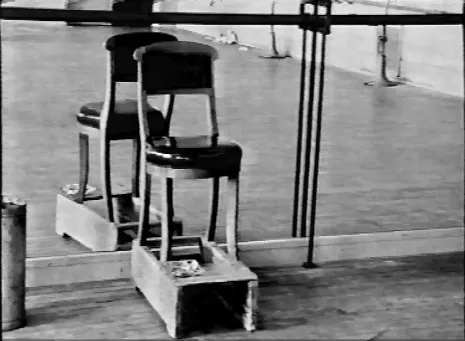
Featured image: The chair Cranko used for rehearsals in Stuttgart. From Ashley Killar’s website regarding his book.

Helen Moulder and Sir Jon Trimmer recreating a moment from 'Petrouchka' in 'Meeting Karpovsky', Willow Productions 2019. Photo: © Stephen A’Court

2019–Dance Highlights from New Zealand

by Jennifer Shennan

Happy New Year to all readers of ‘On Dancing’—even though the weeks are passing, the year still feels new … but in saying that, might I add that we have all been following the numerous stories of courage and heartbreak as the summer fires in Australia have been taking such a terrible toll in the loss of life, and wreaking havoc to homes and livelihoods. Kia kaha. Find and take courage.

In reading Michelle’s highlights of her year, it is clear that Liam Scarlett’s Dangerous Liasons for Queensland Ballet was a standout. How disappointing that the earlier path which was set with his ballet A Midsummer Night’s Dream, in co-production between Royal New Zealand Ballet and Queensland Ballet, was not continued with this project. The team of Scarlett, Tracy Grant Lord in design and Nigel Gaynor’s truly wonderful amalgam of Mendelssohn’s score gave our company one of the very best works ever in its repertoire. That notion of collaboration between the companies had so much promise, both in terms of productions but also the possibilities of dancer exchange. All the ways that New Zealand can exchange and strengthen dance ties with Australia make sound common sense from artistic, economic and pedagogic points of view, and could only enhance international awareness of dance identity in our part of the world.
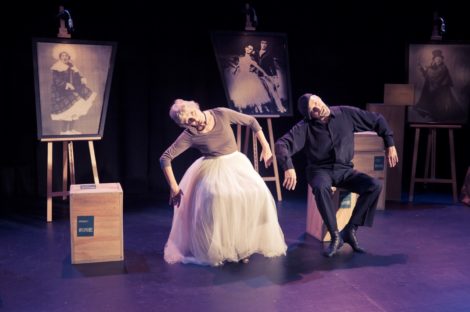
Outstanding memories of 2019 here in Wellington started with the interesting residency of Michael Keegan-Dolan and his ensemble of dancers, working also with local students or free-lance dancers as he began preparations towards the season of Mam, for the International Arts Festival this March. Alex Leonhartsberger in the cast is as compelling a performer as ever, and we welcomed echoes of Loch na h’Eala, the inspired Gaelic take on Swan Lake from this company back in our 2018 festival.

Other 2019 memories would include Andrea Schermoly’s Stand to Reason in an RNZB season; Victoria Columbus’ Fibonacci Series in NZDance Company season; the fresh setting for Orbiculus—NZSchool of Dance choreographic season; Sarah Foster-Sproull’s Orchids at Circa Theatre. Loughlan Prior’s Hansel & Gretel for RNZB showed him in command of all the forces needed for a full-length work and the choreographer/composer collaboration with Claire Cowan worked particularly well. Images of Paul Mathews in his role as The Witch remain impressive.

Kirby Selchow as Gretel, Shaun James Kelly as Hansel and Paul Mathews as the Witch in Hansel & Gretel. Royal New Zealand Ballet, 2019. Photo: © Stephen A’Court

Another performance that lingers in the memory was that by NZSD student Rench Soriano, in Five Variations on a Theme, in their Graduation program. His career, unfortunately not local, will be one to watch. On that same program Raewyn Hill’s choreography Carnival.4, had a very strong presence. It is heartening to see earlier graduates from the School returning to mount works in the mature stages of their careers.

If I must choose my single personal highlight, it would be the last of the year—Meeting Karpovsky—the play by Helen Moulder and Jon Trimmer. Just the two of them in the cast but between them they offer a poignant and profound depth-sounding of what dance can be and mean to an audience. The work continues to hold its power and will not be forgotten by those who were drawn in to its mystery and alchemy.

The upcoming Festival will have a broad dance program, with high expectations for the Keegan-Dolan work, as well as the visiting Lyon Ballet in Trois Grandes Fugues—(three distinct choreographies to the same music, an intriguing idea) and Lucy Marinkovich’s Strasbourg 1518.

Happy New Year to all.

Jennifer Shennan, 13 January 2020

Featured image: Helen Moulder and Sir Jon Trimmer recreating a moment from Petrouchka in Meeting Karpovsky. Willow Productions, 2019. Photo: © Stephen A’Court

Helen Moulder and Sir Jon Trimmer recreating a moment from 'Petrouchka' in 'Meeting Karpovsky', Willow Productions 2019. Photo: © Stephen A’Court
Rench Soriano in 'Five Variations on a Theme'. New Zealand School of Dance, 2019. Photo © Stephen A'Court

New Zealand School of Dance Graduation Season, 2019

20-30 November 2019. Te Whaea Theatre, Wellington
reviewed by Jennifer Shennan

NZSD’s Graduation season always displays the talent and enthusiasm of graduating dancers who, after three years’ training, are poised to venture forth and seek ways to make a professional career. Commitment and courage are needed in equal measure. Selected first and second year students are included in the casting, which is credit to them and their tutors since no dancer is less than fully prepared and present.

This year’s season combines classical ballet and contemporary dance works, eight in all, on the same program. (Last year’s had alternate nights for classical and contemporary works). Either formula offers the chance for us to consider how the two dance lineages as taught in the School, contrast with, or relate to, each other in the professional dance world—in technique, movement vocabulary, choreographic themes, aesthetic choices, relationship to music.

While many aspects of each are distinct, dances labelled ‘classical’ or ‘contemporary’ are not the opposites of each other. My take is that it’s the individual choreographer who places a work where it lies on the spectrum. If it’s good, then dance is the winner on the night. Memories of a masterpiece by Jiří Kylián in a  recent Grad. program combined performers from both streams of training and demonstrated that truth (as also did a recent film viewing of Douglas Wright’s masterpiece from Royal New Zealand Ballet repertoire, rose and fell—truly superb contemporary choreography being performed by ballet dancers. QED.)
O body swayed to music, o brightening glance,
how can we know the dancer from the dance?    
William Butler Yeats

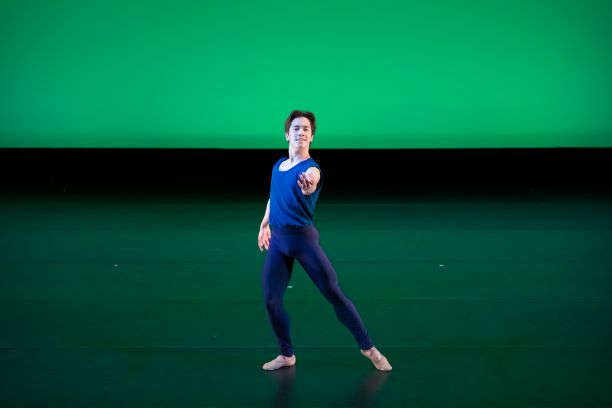
The performance opens with Concerto Barocco by George Balanchine, to the Double Violin concerto by Bach. The clarity of music is matched in dance line, alignment and groupings. It is luminous, timeless, time less, time more.

My verses cannot comment
on your immortal moment or tell you what you mean;
only Balanchine
has the razor edge and knows that art of language         
Robert Lowell

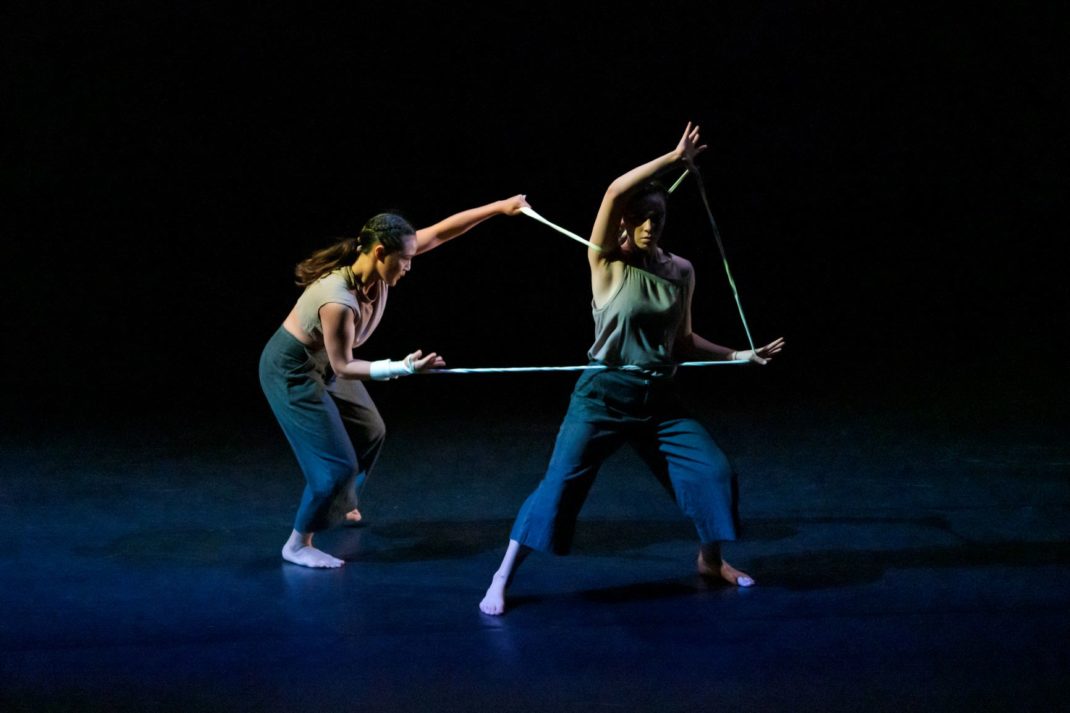
Velociraptor, by Scott Ewen, to music by Kangding Ray, is a premiere. The opening section is swift and driven. Among the cast of nine, we notice a wrist bandage on one dancer. Have the rehearsals come at a cost? We notice another. Soon the bandages unravel and become strings that tie and bind, forming mesmerizing tensions between groupings, and becoming cats’ cradles for bodies lifted horizontally.

Mind is music…
Invisible dancer who dances quicksilver vision
 
James Schevill

Courtney Lim and Tessa Redman in Velociraptor. New Zealand School of Dance, 2019. Photo © Stephen A’Court

Not Odd Human, by Sam Coren, to music by Richard Lester, recently premiered at Tempo Dance Festival. It’s a manic mediaeval mayhem, its sardonic humour propelling characters from long ago and faraway into our midst. Mad Joan and Dull Grethe are there, Joan of Arc, Lady Godiva perhaps? You could credit Breugel with its design. 

Such rollicking measures, prance as they dance
In Breugel’s great picture, the Kermess.
William Carlos Williams

Five Variations on a Theme, by David Fernandez, to a Bach Violin Concerto, is a solo danced by Rench Soriano. Everything about this phenomenally gifted dancer, a second year student, combines precision with poetry, and is a joy to witness. His dancing is redolent of his tutor Qi Huan, who has rehearsed him in this work. For many years Huan was the leading dancer in Royal New Zealand Ballet, where his peerless command of technique gave him the expressive freedom that dance at its soaring best can offer. Before him, Ou Lu, before him Martin James, before him Jon Trimmer, before him Poul Gnatt. Soriano is clearly profiting from his teacher and this pedigree heritage, and will make a fine career for himself.

The dancer dances. The dance does not dance…
The saved world dances, and the dance dances.     
Jacques Audiberti

 Re:Structure, by Ross McCormack, to music by Jason Wright, was another premiere work. A 5 metre long pole is the central prop around which the cast of 8 dancers  manipulate and explore its positioning. One dancer vertically atop the pole makes a striking image to which you could supply your own narrative, but there is deliberately no denouement to the work overall.

Your props had always been important:…
Things without a name you fell upon

Or through …
Richard Howard

Round of Angels, by Gerald Arpino, from 1983, to music of Mahler, has a cast of six males, then joined by a single female. As a couple, Brittany-Jayde Duwner and Jordan Lennon dance with secure command and lyrical expression, becoming the central tender core  of the work.

I said that she had danced heart’s truth 
W.B Yeats

Brittany-Jayde Duwner and Jordan Lennon in Round of Angels. New Zealand School of Dance, 2019. Photo © Stephen A’Court

Handel—A Celebration by Helgi Tomasson, to excerpts by Handel, has a large cast of spirited movers who rise to the spirit of the celebratory music. Rehearsed by Christine Gunn and Nadine Tyson, the staging had enthusiasm and style in equal and full measure.               

Dancer: O you translation
Of all transiency into action, how you made it clear!
And the whirl of the finish, that tree of motion,
Didn’t it wholly take in the hard-won year
Rainer Maria Rilke

Carnival.4, by Raewyn Hill, was anything but carnivalesque in its mood. Its effect was percussive, tight, driven, insistent, urgent, pulsing. It evoked youth in support of each other, demanding to be listened to.

What is the hardest task of Art?
To clear the ground and make a start …
To tell the tale…
That when the millions want the few
Those can make Heaven here and do.
John Masefield

New Zealand School of Dance Contemporary Students in Carnivale.4, 2019. Photo © Stephen A’Court

Nothing about dancing is easy—it’s just meant to look that way, and the quality of sprezzatura, nonchalance, while delivering virtuosic choreography is the one you’d aspire to. The most outstanding dancer of the evening is for me the personification of that gift of grace, and will surely make the world a better place wherever he dances. We all need to consider and study that quality, and pray for a bit of it in our lives, dancing and all the rest.

Come to the edge.
We might fall.
 Come to the edge.
It’s too high!
Come to the edge.
And they came,
and he pushed,
And they flew.
Christopher Logue

Jennifer Shennan, 22 November 2019

Featured image: Rench Soriano in Five Variations on a Theme. New Zealand School of Dance, 2019. Photo © Stephen A’Court

Rench Soriano in 'Five Variations on a Theme'. New Zealand School of Dance, 2019. Photo © Stephen A'Court
Nick Jachno in 'Falling on succession' from the ONCE season. New Zealand School of Dance, 2017. Photo:© Stephen A'Court.

Once. New Zealand School of Dance

Te Whaea, Wellington, 8–16 September 2017
Reviewed by Jennifer Shennan

This year is the 50th anniversary since the founding of New Zealand School of Dance (formerly National School of Ballet). It is an inspired idea to mark that by inviting 10 graduates from across the decades to choreograph solos for current students in the contemporary dance stream. The program, Once, is being performed for a season 8–16 September.

To open, all ten performers stand to frame the space, they depart into the shadows, and only the first performer is left. Between items the last dancer links with the next one, in a metaphorical handing on of a baton across the generations.

The rectangular stage space has side seating in four sections, which suits some of the dances well, but does pose a real challenge for lighting design. Sixteen floor level lights are used in the majority of pieces, which means that some lights will be shining straight into the audience’s eyes. Whenever strobe light (none of that here) or other light is shone into my eyes, my instinct is to close them—which is of course not a great way to review a dance performance. The program’s three little masterworks adopted different sources of light and the difference that made for me was exponential.

The program notes for a dance always interest me. I’m happy if there are none, and happy if there are some that help in some way to illuminate the choreographer’s thinking. Not so happy if there are notes but they don’t help at all as that’s usually a sign that the structure of the dance is less well shaped than might be. It’s an opportunity to communicate parallel to the dance, and should not be wasted, ahakoa iti, he pounamu.

Craig Bary made a strongly physical work for Nick Jachno, who gave a committed performance and it was good to be reminded of Craig’s own stellar dancing across the years. Sacha Copland, known for her quirky sense of humour and brilliant handling of props, had Ella Williams dancing with a bowl on her head to fabulous music by Lajko Felix and Boban Markovic. Eliza Sanders’ piece has a sleepwalking and muttering dancer, Holly Brogan, in a study of troubled introversion. Raewyn Hill switched off the footlights and put strong corridors of light around the edge into which stepped Toa Paranihi to dance a strong and beautiful celebration of himself, the moving body, light on skin, him, Raewyn, and us all.

Emma Murray has been working in Europe for some years now and the influence shows. Her piece, for Georgia Van Gils, sits within dance-theatre that follows theme and thought rather than display ‘beautiful’ movement for its own sake. It’s not an attractive or easy theme, to witness a young woman in desperate need of help, thinking of asking for it, but not actually asking in case we are not going to help her. It was a poignant piece, and had the best program notes of the night.

Taiaroa Royal knew well the strengths of his performer, Kent Giebel-Date, and made the dance accordingly—with his hallmark wit of engaging with the audience then inviting us to follow to an intimate place where the male body moving could speak without words. Light on human skin, my favourite thing. Mary Jane O’Reilly made Valhalla, for Jill Goh, strong presence of woman, flying pennants, boots and strop, stripping to prove it, suggesting the burlesque style she has recently focussed on. (This year is also the 40th anniversary of Limbs Dance Company, an enterprise that, thanks primarily MJ and Sue Paterson, brought such joy and fun into so many lives).

Janessa Dufty made a work for Isabella Coluccio that was at the same time strong and lyrical, and Lauren Langlois in the final slot set a dance for Christina Guieb that presented a woman in meditative involvement in her thoughts. It might have been better to place Daniel Belton’s well-styled work, XYZ, last, since his preoccupation with astral scale and energies lifts our focus up to astronomical places, where we find a perspective and proportion for all our endeavours—in scale as well as detail.

So, though this is not a contest, my three strong front runners were Raewyn Hill, Emma Murray and Taiaroa Royal. Well done all.

Jennifer Shennan, 11 September 2017

Featured image: Nick Jachno in Falling on succession (choreographer Craig Bary) from the Once solo season. New Zealand School of Dance, 2017. Photo: © Stephen A’Court.

Nick Jachno in 'Falling on succession' from the ONCE season. New Zealand School of Dance, 2017. Photo:© Stephen A'Court.