Ballet and books in Brisbane

Dangerous Liaisons. Queensland Ballet
4 October 2025 (evening). Talbot Theatre, Thomas Dixon Centre, Brisbane

I was not invited to review Liam Scarlett’s Dangerous Liaisons in its 2025 revival by Queensland Ballet so I felt no reason to stay when I disliked what I was watching. I left at interval. It was just the third time in about 35 years of reviewing dance performances across Australia and around the world that I have left a dance performance before it was over. Why on this occasion?

The work Dangerous Liaisons is based on the 1782 novel Les Liaisons dangereuses by Pierre Choderlos de Laclos. But on the whole this 2025 presentation reminded me of a musical comedy item with an emphasis on sexual activities. The movements and gestures indicating sexual desire were obvious and a highly dominant feature throughout (the first act at least).

Fine re the sexual emphasis. That’s part of the story! But who were all those characters? With one or two exceptions it was not at all clear, as the complex narrative unfolded, who individual dancers were representing. Understanding the action and the multitude of characters taking the stand, as it were, was made more difficult by the lack of any form of easily available written material. We all know that explanations and descriptions of works these days are available online via a QR code, but in the olden days of Queensland Ballet a sheet of paper with brief but vital information of cast and storyline was always available. Even a full printed program was also there for those who wanted one. And how frustrating it is when the person sitting next to you turns on a mobile phone to check something out in the middle of the performance.

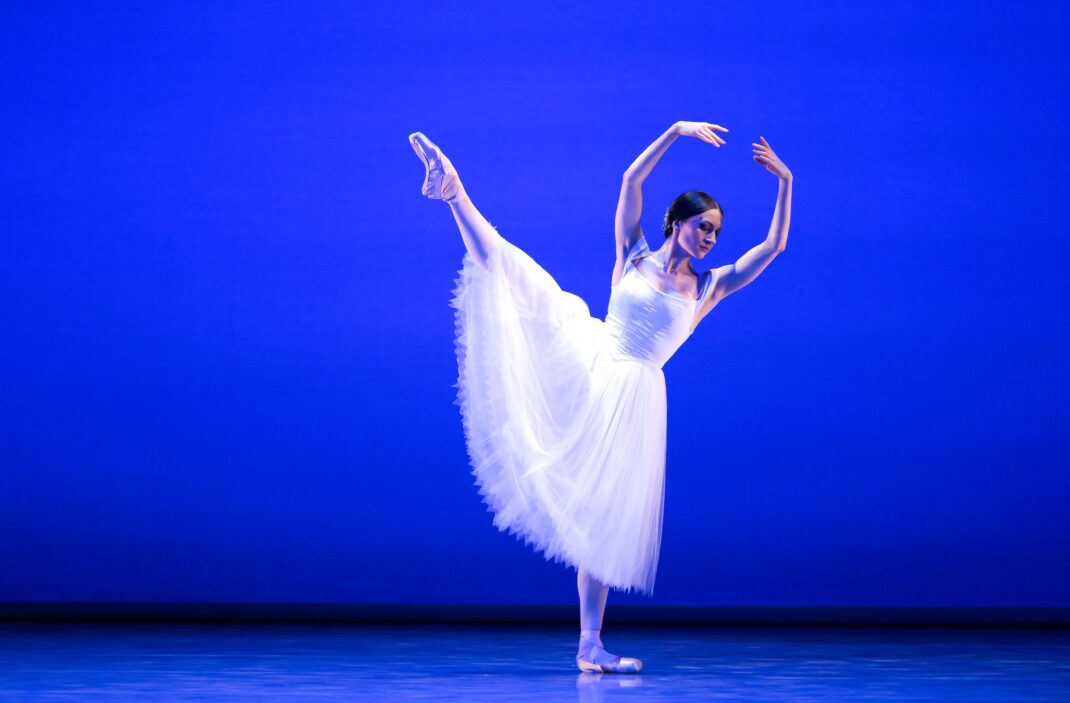
I have to mention that there was some excellent dancing being presented, including some group scenes even if it wasn’t clear what was being celebrated or criticised. In particular Georgia Swan was outstanding as the leading female character, the wealthy widow, the Marquise de Merteuil. There was also a male dancer who did not have a major role but whose performance attracted my attention. His technique was excellent but it was his onstage presence, including the manner in which he connected with the audience, that was thrilling to watch. But who was he? I can’t recall having seen him before but I had no way of knowing immediately who he is as there were no photographs of the dancers that were easily available. I should add here that, as I was waiting for a taxi to take me back to my hotel, several people came to the desk in the foyer—it was interval—asking for a printed item of information. They were advised to go and open the QR code!

Georgia Swan in Liam Scarlett’s Dangerous Liaisons. Queensland Ballet, 2025. Photo: © David Kelly

It was also, I believe, a really bad move by Queensland Ballet to use recorded music. Someone surely must realise that resident conductor Nigel Gaynor has always had a major input into performances he conducts. He works with what is happening onstage, including how the dancers are performing, in a way that no recording can do (even though the recording used in the 2025 presentation was a recording conducted by Gaynor, it’s just not the same). To make matters worse Gaynor is leaving his post as conductor at the end of 2025. Although I am not entirely clear about the reasons for the move, it apparently has something to do with the financial situation in which Queensland Ballet finds itself. (Happy to be corrected here if I am totally wrong re the reason).

I attended Dangerous Liaisons as a member of the general public. My ticket cost $127. Read my review of the 2019 production of Dangerous Liaisons, to which I was invited and which I thought was exceptional. Here is the link.

See below for a list of publications in which my dance writing and reviews have been published (in addition to the material I have posted on this website since I set it up in 2009).*

The books

But all was not lost. While in Brisbane I visited that amazing second hand book shop, Archives Fine Books in Charlotte Street in the city’s CBD. I have never really been in a second hand bookshop that has such a wealth of items on every imaginable subject. I ended up buying four dance books, three of which were previously unknown to me, and one of which was a book about an exhibition that had a major impact on our understanding of the activities of Serge Diaghilev. The books are:

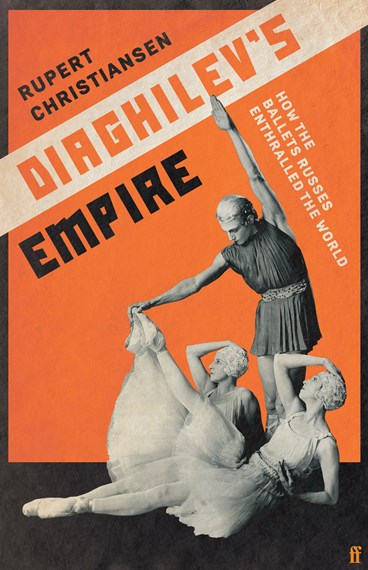
  • Buckle, Richard. In Search of Diaghilev (London: Sidgwick and Jackson, 1955)
    Collins, Richard. Behind the Bolshoi Curtain (London: William Kimber, 1974)
    Dodd, Craig. The Performing World of the Dancer (London: Breslich & Foss, 1981)
    La Fosse, Robert (with Andrew Mark Wentink). Nothing to Hide (New York: Donald I. Fine Inc., 1987)

I started my reading with Behind the Bolshoi Curtain and was instantly taken by the personal manner in which Englishman Richard Collins, who spent four years working in Moscow with various sections of the Bolshoi school and company, interacted with his Russian colleagues and vice-versa. There were some issues that were a little concerning (if interesting in a particular way) but it was a ‘can’t put down’ book in the way it showed a side of ballet and dancers that we don’t usually read about in other Bolshoi-focused publications. I am looking forward to moving on to Richard Buckle’s work on his 1950s exhibition on Diaghilev’s contribution to our understanding of the Ballets Russes.

Michelle Potter, 6 October 2025

Featured image: Cover of Richard Collins’ Behind the Bolshoi Curtain.


*Here is a list of the magazines, newspapers and journals in which my reviews have appeared:

The Australian, Australian Art Review, Australian Book Review, Ballet News, Brolga, The Bulletin, Canberra CityNews, The Canberra Times, Choreography and Dance, Current News from the Library for the Performing Arts, Dance Australia, Dance Chronicle, Dance Forum, Dance Research, DanceTabs (formerly ballet.co.uk), The Dancing Times, Jahresmitteilungen von Tanzplan Deutschland, Journal of the Australian Society of Archivists, Limelight, Muse, Museum National, The National Library of Australia Magazine, National Library of Australia News, The Sydney Morning Herald and Voices.

There are other lists of books I have written as well as lists of chapters in books and theatre programs in which my writing has appeared. In addition, there are hundreds of posts on this website, which this year has, according to Google Analytics, already received 105,000 visits from Australia and across the world. I’m just not sure why Queensland Ballet no longer regards me as a critic worthy of an invitation to review.

Dance diary. September 2025

  • Nutcracker … again

I was a little taken aback on receiving information about the 2026 Australian Ballet season to see that Peter Wright’s Nutcracker will again feature in that season. As usual it will be part of the end of year activities and will be performed in Sydney from 28 November until 16 December.

I fully understand that Nutcracker, in its traditional format, is a much-loved Christmas show—as a young person I used to look forward to it at Christmas time—and it is a great money-maker for ballet companies across the world. But subscribers to the Sydney season saw it last in December 2024. In December 2026 it will be just a two year break between showings and in my opinion it shouldn’t become (as seems to be happening) a regular feature of the subscription season.

As an added complaint, why does it always have to be the Peter Wright version—as strong and entertaining as that production is?* The Australian Ballet has in its repertoire a great version of Nutcracker, a very different, very Australian production from Graeme Murphy. While the Murphy production is not as uniquely Christmas-oriented as the traditional versions, it does have links to Christmas. Why can’t we have it occasionally? And there are other productions of Nutcracker that could also take the place of the Peter Wright version, as much as anything else for some variety.

Perhaps the Australian Ballet might reconsider the timing of its performances of Nutcracker—not put them just two years apart for example, or even alternate the Peter Wright version with another, or others? Perhaps they might even consider removing Nutcracker from subscription packages and making it a stand-alone Christmas event?

And just as an aside, my ticket for the 2026 Nutcracker cost me $245 as part of my subscription package. That seems like a lot to see something that was shown just two years ago.

  • Isabelle Stoughton

I heard from a reliable source just recently that Isabelle Stoughton had died in August 2025. She was the author of a truly charming book, At the Sign of the Harlequin’s Bat, in which she wrote about her career as an assistant to London-based dance historian and book seller Cyril Beaumont. The news sent me back to the book, which I reviewed in 2012, shortly after it was first published in 2011. The reread was a worthwhile activity and gave me much pleasure.

My review is at this link.

  • Contact form

I am very pleased to be able to inform users of this website that the contact form, which has been out of action for months and months, is now back in operation. I can vouch for its positive renewal as a number of contact comments have arrived since its reinstatement and have been successfully addressed.

  • Press for September 2025

 ‘Untouching dancers bring Superposition to life.’ Review of Superposition. Gabriel Sinclair and Jazmyn Carter. CBR City News, 14 September 2025. Online at this link.

MIchelle Potter, 30 September 2025

*A review of the 2019 Wright production is at this link. It indicates quite clearly that I am not intrinsically opposed to the Wright version.

Featured image: Yuumi Yamada as Clara in The Nutcracker. The Australian Ballet, 2019. Photo: © Daniel Boud

Dance diary. April 2025

April is the middle month of Autumn in the southern hemisphere. Spectacular colours abound in nature as dance for 2025 continues, despite a disheartening approach to funding for the art form.

The difficult financial situation that Queensland Ballet is facing, for example, is more than disheartening, although the exact changes that are being made to the company are yet to be fully revealed. To date, Brett Clark, Chair of QB Board, is reported as saying (amongst other remarks on the situation): Over the years, we have worked hard to leverage our base grants from State and Federal Governments and have unapologetically advocated loudly for parity of Federal funding to bring us in line with our peers in New South Wales and Victoria. To date we have been unsuccessful.  

In 2025, to ensure our ongoing sustainability, we have made the difficult decision to re-vision our organisation across our Artistic and Business teams which will see us farewell some of our artists and arts workers.

It is also thoroughly frustrating that in the lead-up to the federal election in Australia on 3 May no political party appears to have made any mention of the arts.

  • New books

Elizabeth Dalman’s book, Nature moves, was launched in Canberra on 27 April 2025 with a short opening performance from Vivienne Rogis and Peng Hsaio-yin. The performance was followed by a launch speech from Cathy Adamek, executive director of Ausdance ACT.

The performance was danced on a lawn that fronts a particular shopping area in Canberra, and under a large and very old tree—appropriate of course given that Dalman’s book examines dance and nature. When the dance came to an end, the audience simply crossed the road for the launch function, which was held in, and sponsored by, the local bookshop, The Book Cow.

Vivienne Rogis (standing) and Peng Hsaio-yin dancing at the launch of Nature Moves, Canberra 2025. Photo: © Michelle Potter

Under the heading ‘Press for April 2025’ (see below) is my short article, which was published in CityNews on 28 April 2025, and which expands a little on how the launch unfolded.

Nature Moves is available from The Book Cow, via this link.

I also discovered, quite accidentally, news about the latest publication by Jill Rivers, whose generosity to reviewers I remember clearly from a period, some years ago now, when she was media director for the Australian Ballet. Her current publication, The Genius of Nijinsky, is an interesting read as Rivers had spent much time speaking to the present-day family of Vaslav Nijinsky. Her presence with, and thoughts about, those family members in a range of situations, sometimes quite personal, are embedded within the story.

The Genius of Nijinsky can be bought via a link to the site Art-full Living.

  • David Hallberg at Jacob’s Pillow, 2012

The latest playlist from Jacob’s Pillow has a short clip of David Hallberg, currently artistic director of the Australian Ballet, performing Nacho Duato’s Kaburias. Watch at this link.

A still showing David Hallberg in a moment from Kaburias, Jacob’s Pillow 2012

Just a year or two prior to the performance at Jacob’s Pillow, I had the pleasure of seeing Hallberg perform solo in New York in the series Kings of the Dance. Read my review here.

  • International Dance Day 2025

International Dance Day, 29 April, is always celebrated with a message from a major figure in the dance world. This year, 2025, the message came from Mikhail Baryshnikov whose comment read:

It’s often said that dance can express the unspeakable. Joy, grief, and despair become visible; embodied expressions of our shared fragility. In this, dance can awaken empathy, inspire kindness, and spark a desire to heal rather than harm.

Especially now—as hundreds of thousands endure war, navigate political upheaval, and rise in protest against injustice—honest reflection is vital. It’s a heavy burden to place on the body, on dance, on art. Yet art is still the best way to give form to the unspoken, and we can begin by asking ourselves: Where is my truth? How do I honor myself and my community? Whom do I answer to?

Latvian-born, Baryshnikov defected from the USSR in 1974. He has performed in Australia on various occasions, including in 1975 when he appeared with Ballet Victoria.

Mikhail Baryshnikov as Albrecht. Giselle, Act Ii. Ballet Victoria, 1975. Photo: © Walter Stringer/National Library of Australia

  • Press for April 2025

Michelle Potter, 30 April 2025

Featured image: Autumn colours in Canberra, April 2025. Photo: © Michelle Potter


Dance diary. March 2025

  • Norton Owen. Director of Preservation, Jacob’s Pillow

Norton Owen is Director of Preservation at Jacob’s Pillow, an exceptional centre for dance that includes a school and a performance space in Becket, Massachusetts, in the beautiful mountainous region of the Berkshires. Norton has been awarded the 2025 Jacob’s Pillow Dance Award. It is in celebration of his 50th year of being on the staff of Jacob’s Pillow and carries a cash award of $25,000, to be used however the awardee wishes. It also includes a custom-designed glass sculpture by Berkshire-based artist Tom Patti. The award is financed by an ongoing annual gift from an anonymous donor.

I have great memories of Norton and his work, including the ‘Pillow Talk’ I did with Gideon Obarzanek at Jacob’s Pillow way back in 2007. The invitation for me to participate came from Norton and since then I have enjoyed following the work he does. In particular I love receiving the monthly playlist of excerpts from footage preserved at Jacob’s Pillow, which reflects the works that have been presented over the years at the Pillow.

From the March 2025 playlist, whose title is ‘Ailey Connections’, I especially enjoyed Pas de Duke, created originally for Judith Jamison and Mikhail Baryshnikov by Alvin Ailey in 1976 to ‘Old Man Blues’ by Duke Ellington. The footage of Pas de Duke on the March 2025 playlist is from a 2024 presentation, performed on that occasion by two alumni of Jacob’s Pillow school—Jacquelin Harris and Patrick Coker. Watch the 2024 Pas de Duke here.

But the playlist is but one aspect of a wider online platform for which Norton is responsible—Jacob’s Pillow Dance Interactive. It can by accessed at this link.

Norton’s award is so well-deserved. He is an exceptional curator of dance matters.

  • Recent reading

Again from my collection of dance books that either I didn’t get around to reading when I first acquired them, or that have generated new interest for one reason or another, I have just finished reading Carolyn Brown’s autobiography, Chance and Circumstance. Twenty Years with Cage and Cunningham, and am in the middle of Jann Parry’s biography of Kenneth MacMillan, Different Drummer. The Life of Kenneth MacMillan.

Chance and Circumstance is surprising in its honest account of Brown’s attitude to her career and contains many, many insights into the personalities with whom she worked. Different Drummer is no hagiography! Parry gives a startling account of MacMillan’s mental issues, his alcoholism, and his bouts of anxiety, all of which explain to a certain extent the nature of the subjects he chose for his works. Both are well worth reading.

  • Some statistics for ‘on dancing’

I am always interested to read, via Google Analytics, which posts on this website are the most popular and which cities login to the site most frequently. In the last week of March, Sydney, London, Brisbane, Melbourne, and Wellington were the top five cities (in numerical order). Everything changes of course, even from day to day, and popularity reflects the timing of posts in most cases. In the last week in March, the top five posts in order were ‘RNZB with Scottish Ballet’; ‘Romeo and Juliet. Queensland Ballet’; ‘Essor. Yolanda Lowatta’; and ‘Choros (I dance). Coralie Hinkley’.

I am sometimes curious when an older post pops up and, just recently, my obituary for philanthropist, Anne Bass, published in April 2020, kept appearing on the top ten list. I did a bit of research and discovered that her apartment on 5th Ave, New York, had been sold in January 2025. Clearly there had been interest in what had appeared online about her. And, as a matter of particular interest, her beautiful statue by Degas, ‘Little dancer aged fourteen’, sold separately two years earlier for a record price of $41.6 million.

I continue to think of her often. My 2020 obituary is at this link,

Michelle Potter, 31 March 2025

Featured image: Norton Owen at Blake’s Barn, Jacob’s Pillow. Photo: © Bill Wright

Dance diary. January 2025

  • Queensland Ballet. The news is out

Queensland Ballet has announced that its new director, following the retirement of Li Cunxin and the sudden departure of Leanne Benjamin, will be Spanish-born Ivan Gil-Ortega who will take on the role in February this year. Gil-Ortega is a celebrated ballet professional with over 25 years in the field. He has held roles with companies and creatives around the world, and has worked as a principal dancer, assistant director, artistic consultant, freelance rehearsal director, stager, and coach. The media release noted Queensland Ballet’s enthusiasm for the appointment. In part the media release says:

We are thrilled to welcome Ivan to the Queensland Ballet family following a stellar career on stage, in studio and working alongside some of ballet’s leading lights. Throughout the recruitment process, Ivan articulated his vision very clearly with a particular focus on our dancers of today and our dancers of tomorrow, through the work of our Academy.

He is also brimming with ideas around nurturing home-grown talent here in Australia as well as exploring world-stage collaborations and exchanges which will see him leaning into his international peers and networks. Ivan and his family are very much looking forward to calling Queensland home and we cannot wait to see them here very soon, Brett Clark AM, Board Chair said.

Gil-Ortega has worked with Queensland Ballet previously when he assisted Derek Deane on the production of Deane’s much admired Strictly Gershwin. Follow this link to a fuller biography of Gil-Ortega provided by Queensland Ballet.

  • News from Paul Knobloch

For the past several years Paul Knobloch has been the Australian Ballet’s Ballet Repetiteur. Things appear to be changing, however. A recent media release announced that in February Knobloch will be returning to Canberra, where he was born and educated and where he had his initial dance training. He will be working with Jackie Hallahan’s Dance Development Centre (DDC) on a series of events to celebrate the school’s 40th anniversary. The media release states, ‘As DDC gears up to celebrate its monumental 40th anniversary, Knobloch’s involvement promises to elevate the festivities and inspire the next generation of dancers.’

Paul Knobloch. Photographer not identified

I can’t help wondering, however, whether or not Knobloch will return to the Australian Ballet? Here is a link to the media release.

  • Dancing and Fatboy Slim

During January I was sent a Youtube link to some dancing being performed (back in the 1990s) to Fatboy Slim’s song Praise you. I have to admit that I had never heard of Fatboy Slim—not really part of my general interests I’m afraid especially not during the 1990s when I was rather busy with various other matters (mainly watching children growing into adults, writing a PhD thesis, and working in a range of casual jobs).

Here is the footage, which I found to be an interesting variety of community dance. It reminded me a little of an unexpected performance at a wedding of one of my sons (back around the same date as the footage). Quite out of the blue (I thought anyway) the guests assembled and danced in a similar fashion. It was somewhat different from the traditional celebratory wedding waltz!

  • Oral histories

I had the immense pleasure in January of recording an oral history for the National Library of Australia with Megan Connelly, currently director of the Australian Ballet School. As part of the NLA’s COVID responses project, Connelly talked about managing the pandemic at the Australia Ballet and the Australian Ballet School before talking at length about her extraordinary dance career to date.

This interview was the 169th oral history I have recorded for various organisations (mostly the National Library). Here is a link to the updated list of those interviews (arranged alphabetically).

  • Reading in December

My December reading included Barbara Newman’s Striking a Balance. Dancers Talk about Dancing. My edition was published way back in 1992, although the talks were recorded mostly in 1979 and published in the original edition in 1982. I was especially interested in the format since over the past several decades I have recorded oral history interviews with dancers, choreographers and artistic directors. Two of Newman’s essays stood out for me—those with Moira Shearer and Bruce Marks. What made them especially interesting to me was the extensive comments they made about how they approached particular roles. Shearer spoke at length about how she perceived the character of Giselle and where she fitted into the overall storyline of Giselle. Bruce Marks spoke in a similar fashion about Siegfried in Swan Lake. Others also reminisced about particular roles they had taken on but Shearer and Marks seemed, to me at least, to be especially analytical in their thoughts.


  • Vale Carolyn Brown (1927 –2025)

I was deeply saddened to hear that American dancer Carolyn Brown had died in January at the age of 97. Brown had a truly remarkable career with Merce Cunningham Dance Company over many years. But I remember her in particular because she helped me with my doctoral thesis, which concerned the designs made for the Cunningham company by Robert Rauschenberg and Jasper Johns during the 1960s and 1970s. We met for the discussion in New York in a cafe close to Lincoln Center Plaza. Brown was incredibly generous and honest in her recollections of the years of Rauschenberg and Johns.

Never forgotten for many reasons. Try this link for an obituary from The New York Times.

Carolyn Brown: Born 26 September 1927; died 7 January 2025

  • Press for January 2025

 ‘Critics Survey. Michelle Potter’. Dance Australia, January/February/March 2025, pp. 32-33.

Michelle Potter, 31 January 2025

Featured image: Portrait of Ivan Gil-Ortega. Photo: © Karine Grace

Dance diary. December 2024

  • Karen van Ulzen and Dance Australia

After 35 years as editor of Dance Australia, Karen van Ulzen is moving on. She has been a strong and successful editor and her retirement is a particular loss to the dance community. In a Facebook post, Karen wrote:

Dance is my lifelong love but it is time to hang up the keyboard. I am looking forward,k to indulging my other loves: visual art (specifically painting) and writing. However, dance is still my love and I hope to continue to contribute to the artform in some other way.

Portrait of Karen van Ulzen. From Yaffa/Dance Australia online. Photographer not identified


Taking over from Karen is Olivia Weeks whose dance background includes teaching and an extensive background with the Royal Academy of Dance. Of her plans she told Dance Australia:

As Editor, I’m excited to contribute to our ever-evolving dance landscape. My goal is to continue to champion the incredible talent Australia has to offer, celebrate the stories that make our industry so unique, and ensure Dance Australia remains a vital platform for our community in 2025 and beyond.

Read more about Olivia Weeks at this link.

I wish Olivia every success and give my sincere thanks to Karen for all she has achieved for dance in Australia, and for her support of my writing over many years.

  • More on books and reading

After the death of Eileen Kramer I thought it was time to read her autobiography, Walkabout Dancer, a copy of which she kindly gave to me but which I had never taken the time to read. It was published in 2008 in North America and I honestly can’t believe that there was a professional editor at work on the text prior to publication. The text is rife with spelling errors and inconsistencies and inaccuracies in names and places throughout. Perhaps the inaccuracies extend even to aspects of the story itself? To tell the truth, I wish I had never taken on the reading of it. It does nothing to advance the image of Eileen Kramer.

I did, however, enjoy Derek Parker’s 1988 publication, Nijinsky. God of the dance, a copy of which I found in the Harry Hartog Bookshop at the ANU. (That HH bookshop again!). Apart from the fact that it revealed some interesting personal information about ‘the God of the Dance’, it contained some photographs of Nijinsky and his colleagues that I had never seen before. It’s a shame though that some of the photographs on certain pages were positioned very close to the binding and were not always easy to see in full. Well worth a read however.

  • Vale Arlene Croce (1934-2024)

Renowned American dance critic, Arlene Croce, died in New York in December. She was 90 years old. I never met her, despite having spent some time in New York on various occasions over the past thirty years or so. But I had always enjoyed her writing for various outlets including The New Yorker, Ballet Review, which in fact she co-founded, and other publications. Her background knowledge was wide and very apparent in her dance writing, and I especially admired her exceptional and always appropriate use of descriptive words and her highly analytical approach to her writing.

As part of an obituary, the following words appeared in The New Yorker, issue of 19 December 2024:

Croce took dancing seriously, pulled dances apart and analyzed them rigorously, and her clarity and imagination, her stunning insights, and even her glaring flaws—all this was there on the page. This passion and discipline made her a kind of alter ego of—or perhaps a ministry to—the art. She had an unrelenting determination to say what she had seen.

It is interesting to reread what is one of her best known articles, ‘Discussing the Undiscussable’, which appears in her collection of reviews and articles, Writing in the Dark, Dancing in The New Yorker. In this article she talks about her reasons for refusing to go to, let alone review, a performance of Still/Here by choreographer Bill T. Jones, a work he created involving terminally ill people who speak about the issue of dying. The article caused something of a stir when it was published in The New Yorker in 1994. It still raises many issues about dance and how it is, or has been, perceived.

The original article appears to be available online without a New Yorker subscription. Try this link

  • Some statistics for 2024

Over the course of 2024 this website received slightly more than 75,000 views. The top five countries making use of the website were (in order) Australia, United States of America, New Zealand, Canada and United Kingdom. Top five cities from which people logged in were Sydney, Melbourne, Auckland, Brisbane and New York. During 2024, the top post on a northern hemisphere production was Joy Womack: The White Swan; the top Australian-related post was Etudes/Circle Electric. The Australian Ballet; and the top New Zealand post was Swan Lake. Royal New Zealand Ballet.

*************************

A very happy 2025 to all. May the year be filled with dancing.

Michelle Potter, 31 December 2024

Featured image: A young Canberra dance student performing as Triton in a ballet school production of The Little Mermaid, 2023. Photographer not identified

Dance diary. November 2024

  • Vale Roz Hervey

It was sad news to discover that Roz Hervey had died early in November. She made a huge contribution to dance in Australia, especially in South Australia. But she also made a huge impact in Canberra where she danced with the Meryl Tankard Company. The National Library has a selection of images taken by Régis Lansac of the works in which she performed in Canberra. Two are below. Nuti on the left was one of Tankard’s most visually beautiful productions and was presented in 1990 at the National Gallery of Australia in conjunction with an exhibition of works on loan from the British Museum. Pile Up on the right was a work by Graeme Watson, which shared a double bill with Tankard’s Kikimora also in 1990.

Read an acknowledgment of Roz Hervey’s contribution to dance in Australia at this link.

  • Coralie Hinkley: a manuscript collection

The National Library of Australia has completed the cataloguing of the Papers of Coralie Hinkley, which were sorted beautifully and donated to the NLA by Coralie’s daughter after her mother’s death. Here is a link to the catalogue details, including the finding aid. Coralie had an astonishingly varied dance career as the finding aid indicates.

Coralie Hinkley in a study for the Bodenwieser Ballet production, Indian Boy, ca. 1952. Photo: © Margaret Michaelis. National Library of Australia

  • Some reading news

Harry Hartog Bookshop at the Australian National University always has an interesting collection of secondhand dance books. ‘Oh they come from all over the place,’ a sales person once told me. The most recent addition to my book collection from that bookshop was The Helpman Family Story by Mary Helpman, which covers the period 1796 to 1964. While it probably isn’t the most analytical discussion of that story I have come across, it was full of surprises especially about the extent of the theatricality that characterised the lives of many of the family. It was not just Bob (as Robert Helpmann is referred to throughout the book) but other family members as well.

  • Press for November 2024

 ‘Tale of a turtle engages children—and adults (Bangarra Dance Theatre)’. CBR CityNews, 7 November 2024 . Online at this link. (And in a slightly enlarged form here.)

 ‘Community dancing with an Olympic theme’. CBR CityNews, 23 November 2024. Online at this link. (And in a slightly enlarged form here.)

Michelle Potter, 30 November 2024

Featured image: Roz Hervey (centre) and dancers from the Meryl Tankard Company in a scene from Kikimora, Canberra 1990. Photo: © Régis Lansac

Dance diary. June 2024

  • Remi Wörtmeyer

Former Australian Ballet dancer (and a graduate of the Australian Ballet School), Remi Wörtmeyer, has been appointed artistic director of BalletMet in Columbus, Ohio. The press from BalletMet has further information and some online examples of his dancing and choreography. Follow this link.

Wörtmeyer’s career has been diverse to say the least. In addition to his dance-related activities, which include the creation of some 30 ballets for companies around the world, he established Maison Remi, an organisation that produces some incredible fashion accessories, including handbags, rings and more.

An item from Maison Remi.


For mentions of Wörtmeyer on this website see this tag.

  • News from Queensland Ballet

Queensland Ballet goes from strength to strength as an organisation. The company recently announced it had taken another step towards its ‘Three Sites: One Vision’ concept by purchasing land in Brisbane on Montague Road close to the Thomas Dixon Centre. The new site will eventually house the company’s sets and costumes. ‘Three Sites’ includes the Thomas Dixon Centre with its exceptional small theatre and administration and classroom areas. The second site is the housing of the Queensland Ballet Academy at the Kelvin Grove State College Campus. The new site to house costumes and sets will be the third.

In another recent announcement, the company advised that it had become the first performing arts company in the world to become WELL CertifiedTM at the Platinum level. This recognition came as a result of the restoration of Queensland Ballet’s home, the Thomas Dixon Cente. The media release reads, in part:

The WELL Building Standard is an evidence-based performance certification system hat marries best practices in design and construction with policy and operational strategies. The Thomas Dixon Centre earned the distinction based on ten concepts—Air, Water, Light, Nourishment, Movement, Thermal Performance, Sound, Materials, Mind and Community.

  • Isadora Duncan

In last month’s dance diary I mentioned a 2001 publication, Isadora. A sensational life, by Peter Kurth, which I had just read. The book encouraged me to read some more of the books about Isadora, which have been languishing on my bookshelves—it has been years since I looked at them. Isadora’s autobiography, Isadora: My life originally published in 1928, was hugely personal (as I guess is typical of any autobiography). But it gave a clear picture of her approach to dance, and of her distaste for ballet as a style, although there were times when it seemed she was simply making sweeping generalisations. But it looked at events in her life from a different perspective from the way Kurtz described those occasions. The book I enjoyed most was The search for Isadora. The Legend and Legacy of Isadora Duncan by Lillian Loewenthal, published in 1993. It was the most analytical and perhaps divorced from hysteria of one kind or another.

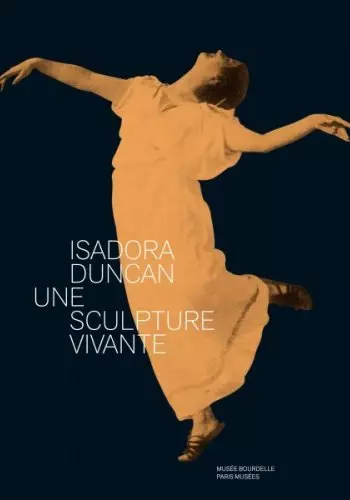
Three very different approaches! It made very clear how much of a person and his/her/their background is revealed in a publication. Now I have Isadora Duncan. Une Sculpture Vivante, to examine. Published in 2009, it an exhibition catalogue, with some essays, from the Musée Bourdelle in Paris.

My comments on Kurth’s book are in the dance diary for May at this link.

  • Press for June 2024

Bangarra’s ‘Horizon’. Dance Australia, 17 June 2024. Online at this link.
SDC ‘Momenta’. Dance Australia. 24 June 2024. Online at this link.

Michelle Potter, 30 June 2024

Featured image: Remi Wörtmeyer, 2024. Photo: © Jennifer Zmuda/BalletMet

Dance diary. May 2024

  • Kristian Fredrikson Scholarship

Given the publication of my book, Kristian Fredrikson. Designer by Melbourne Books in 2020, I am always interested in the winners of the biennial award of the Kristian Fredrikson Scholarship. My book would never have been published without the generous donations I received via the Australian Cultural Fund, and from royalties owing to Fredrikson during the year I was struggling to assist financially with the book’s publication. The committee that administers the scholarship was hugely supportive throughout all aspects of the book’s production.

The 2024 winner of the Kristian Fredrikson Scholarship is Charles Davis who graduated from NIDA in 2014, and who has also studied architectural design at Monash University. He has designed for Sydney Theatre Company, West Australian Opera, Opera Queensland, Pinchgut Opera and other theatrical groups. As far as his input into dance productions goes, Davis was set designer for the Australian Ballet’s recent production of Stephanie Lake’s Circle Electric. Incidentally, another recipient of an earlier Kristian Fredrikson Scholarship, Paula Levis, designed the costumes for that same production.
  • Frank van Straten (1936–2024)

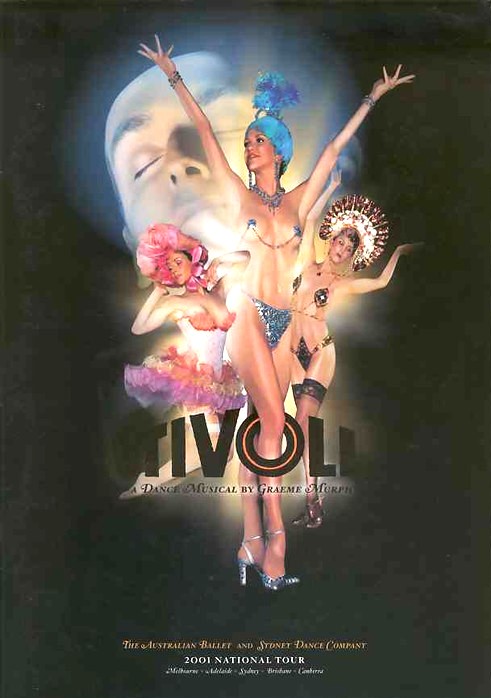
This is a somewhat belated comment on the death of Frank van Straten, who died in Melbourne in April 2024. Van Straten was an amazing historian of the theatre across a range of genres and was the first archivist at Melbourne’s Performing Arts Museum (now the Australian Performing Arts Collection). I remember him particularly for his hugely valuable contribution to Graeme Murphy’s Tivoli, a joint production between the Australian Ballet and Sydney Dance Company, which premiered in 2001 to commemorate Australia’s Centenary of Federation. Van Straten acted as historical consultant for the work, which honoured and celebrated the Tivoli circuit and the remarkable nature of its repertoire. His input helped make Tivoli an exceptional ‘dance musical’.

Cover image for Tivoli national tour 2001

Van Straten’s knowledge of theatrical history in Australia was vast and I recall a post on this website in which, in a comment, he helped with identifying a particular Sydney-based teacher working in the 1930s named Richard White. His books on Australian performing arts history, too, have often given me information that I had struggled to find elsewhere. He was a truly generous person.

I can’t call this comment an obituary, but for what I would call an obituary see the article in Stage Whispers. Listen, too, to van Straten discuss the nature of Tivoli performances as recorded by Philippe Charluet on film at this link. Oral historian Bill Stephens has also recorded an interview with van Straten for the National Library of Australia’s oral history program. It currently requires written permission for access, but that may change in the near future following van Straten’s death. Here is the current catalogue link.

  • Backstage notes

Jennifer Shennan drew my attention to a recent article in The Guardian called Wings, Wigs and Wonder. It takes the reader backstage during a performance by Birmingham Royal Ballet and is called a ‘photo essay’. It has some interesting backstage images included within the text, which was written by Katie Edwards. Read at this link.

  • Recent Reading

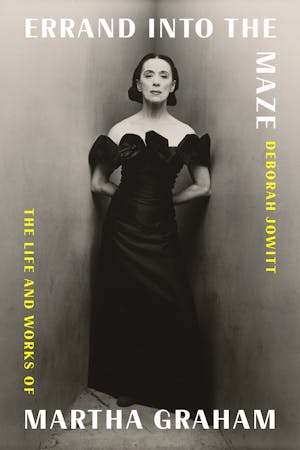
In my dance diary for April 2024 I wrote about Deborah Jowitt’s recent publication Errand into the Maze. The Life and Works of Martha Graham, which to my mind was not always the easiest of reads, despite Jowitt’s extensive research and very strong dance background. As fate would have it, however, while mulling over Jowitt’s publication I came across an interesting article by Marina Harss, whose work I much admire, called On Point: Martha Graham’s Perfect Partnership with Isamu Noguchi. It’s available (at least for the moment) at this link.

Currently I am reading another of the books I bought at the recent Canberra Lifeline Book Fair—Isadora. A sensational life by Peter Kurth (Paperback edition, 2003). In an early page entitled ‘Press for Isadora‘, one comment is, ‘There is never a dull moment in Peter Kurth’s action-packed biography…’. True! Much of what is mentioned does not appear in other books about Isadora, or not nearly to the same extent. Nevertheless, with its different focus it provides another perspective on her life, perhaps with the word ‘sensational’, which appears in the book’s subtitle, emerging as characterising that different focus. Dance is probably not the major focus!

  • Press for May 2024

‘Dancers perform strong farewell to Ruth Osborne.’ City News (Canberra), 17 May 2024. Online at this link

Michelle Potter, 31 May 2024

Featured image: Cameron Holmes and Maxim Zenin in Circle Electric. The Australian Ballet, 2024. Photo: © Daniel Boud

Dance diary. April 2024

This month’s dance diary is distinguished by two appointments to major dance organisations—the Australian Ballet School and the Royal Academy of Dance—and one major move by a dancer from Queensland to Switzerland.

  • Megan Connelly appointed as director of the Australian Ballet School

Megan Connelly has been announced as the next artistic director and head of school at the Australian Ballet School. She takes over from Lisa Pavane, who will retire shortly. Connelly will begin her role at the end of May 2024 and will initially work alongside Pavane so that a smooth transfer can occur.

The Australian Ballet School announcement reads in part:

The Artistic Director & Head of School is a strategic and creative leadership role responsible for artistic and educational excellence and student wellbeing. This key role requires deep experience within the art form, an understanding of ballet trends, strong national and international networks and expertise in elite ballet instruction and performance.

Connelly’s career to date has been extraordinarily diverse and her qualifications and experience, as set out in the media release from the Australian Ballet School, suggest she is the ideal person to take on the role.

  • Alexander Campbell appointed to lead RAD

Sydney-born Alexander Campbell, who received his early dance training at Academy Ballet in his home town, and who then went on to dance with Birmingham Royal Ballet and the Royal Ballet, has been appointed to lead the Royal Academy of Dance in London. He succeeds Gerard Charles who retired in 2023. Campbell began his tenure this month, April 2024.

Read more from the Royal Academy at this link.

  • Joel Woellner to join Ballet Zürich

Joel Woellner, principal dancer with Queensland Ballet since June 2021, has accepted a contract with Ballet Zürich, which is currently directed by Cathy Marston. He will start with his new company in August 2024 and will give his last performance with Queensland Ballet in Greg Horsman’s Coppélia in June. In a contribution to the just-released media statement Woellner comments, ‘It’s with mixed emotions I make this career change, but I look forward to the new challenges. This is not goodbye, but rather see you again soon.’

Portrait of Joel Woellner. Photo: © David Kelly

Woellner’s work with Queensland Ballet has always been eminently watchable. I especially enjoyed his recent performance as Oberon in A Midsummer Night’s Dream. But there are lots of other roles where he has shone. See this tag for my comments on Woellner’s work over several years.

  • International Dance Day 2024. The Message

Marianela Nuñez, principal dancer with the Royal Ballet, delivered this year’s message for International Dance Day. See this link for the English version of the short message and this tag for comments about Nuñez on this website.

  • Recent Reading

The latest dance book I have read has been Deborah Jowitt’s biography of Martha Graham—Errand into the Maze. The Life and Works of Martha Graham, published early in 2024. I couldn’t fail to be impressed by the extensive research that went into this book. Jowitt, as a former dancer, understands the technical side of dance and describes so well each of the many dances that she includes in the book. But I have to admit that I found the going hard. Somehow the descriptions started to get tiresome to read as one followed another, followed another, followed another, and I longed for more about Graham’s personal life. That life made an appearance now and then but it just wasn’t a strong component. It could have added a less technical note to what is quite a long book.


Michelle Potter, 30 April 2024

Featured image: Portrait of Megan Connelly. Photo: © Pierre Toussaint