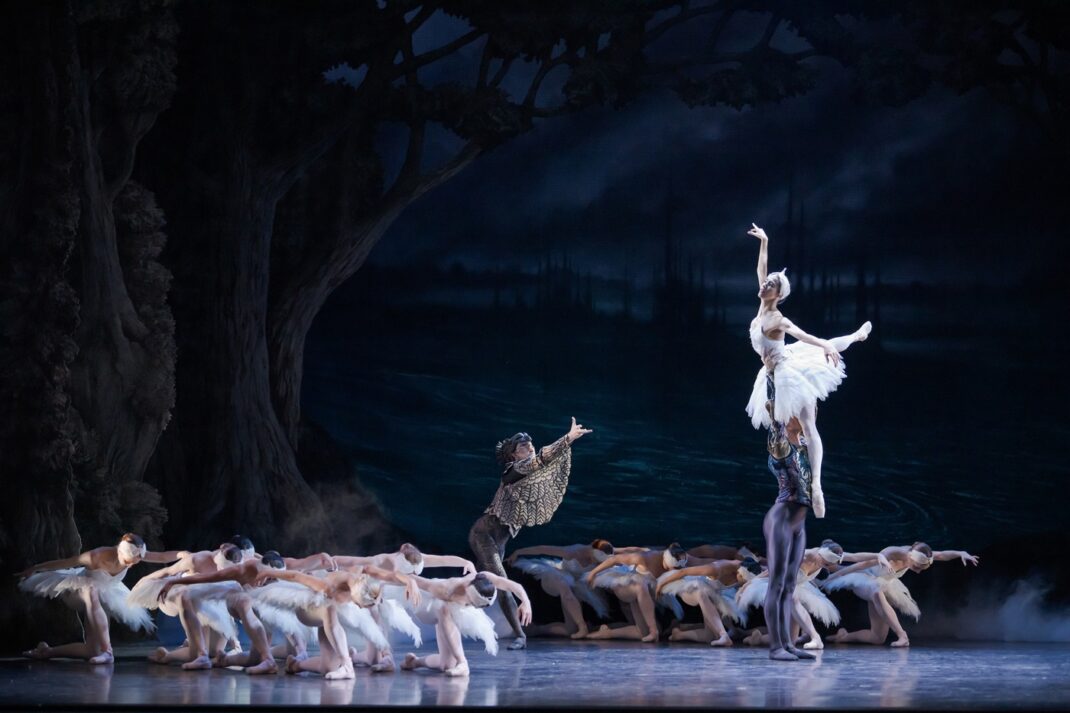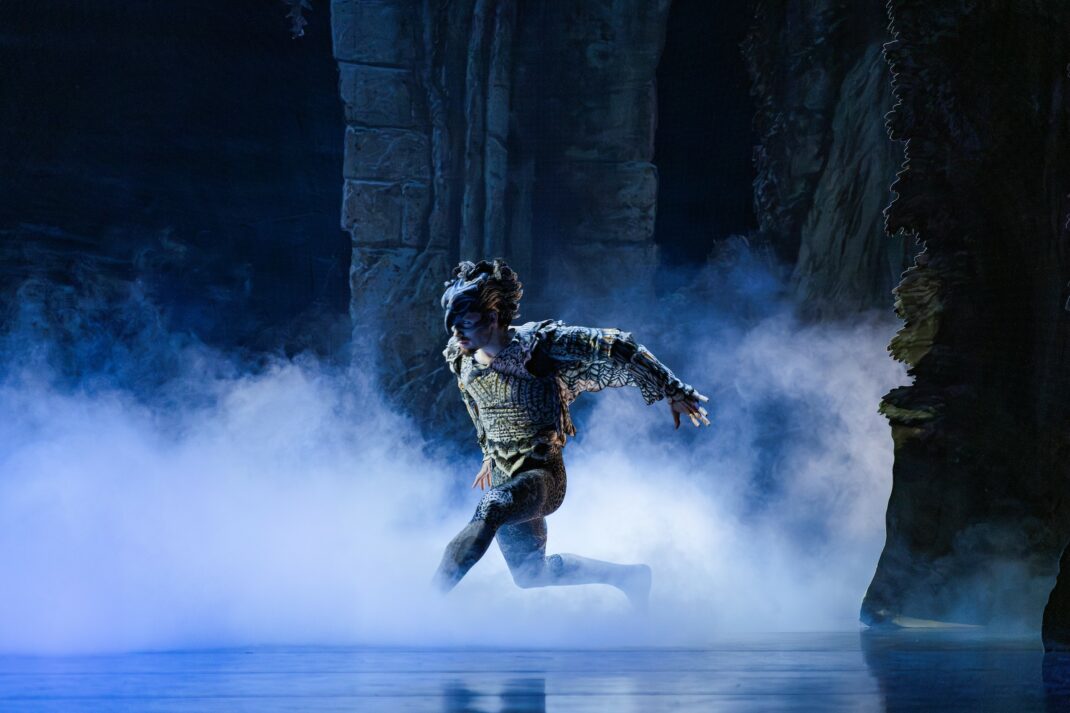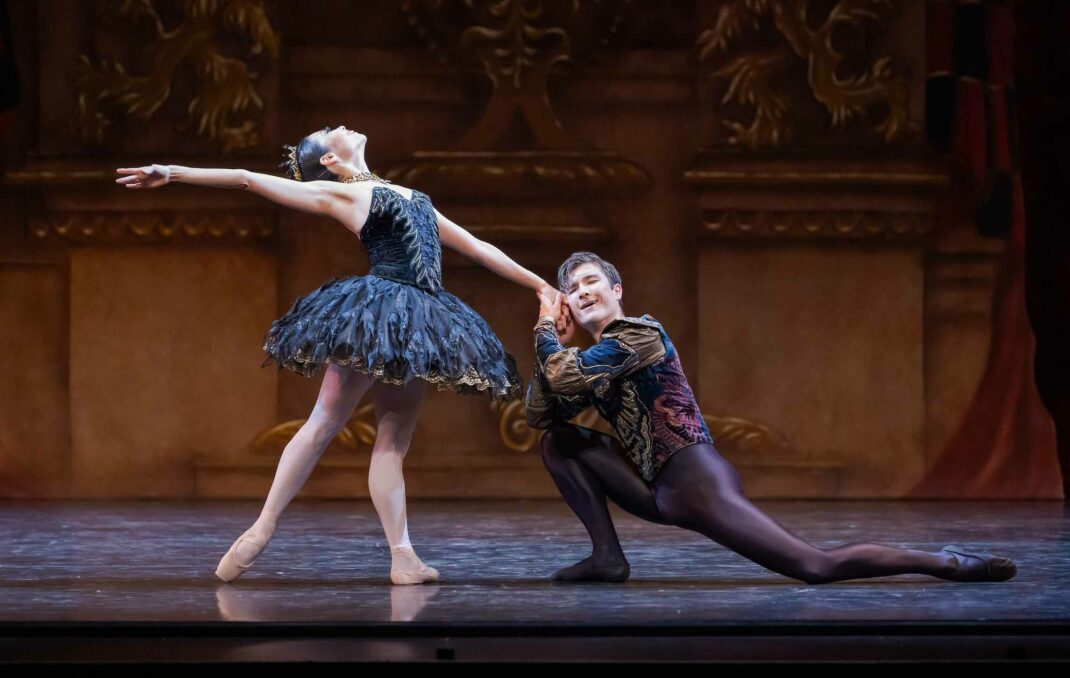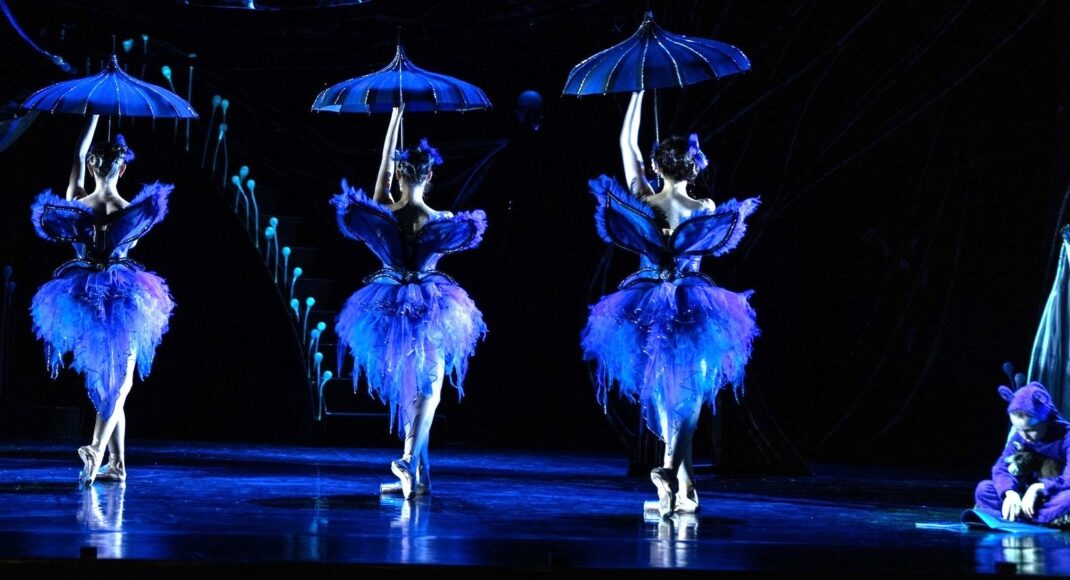
Dance diary. November 2025

  • Liz Lea: the latest

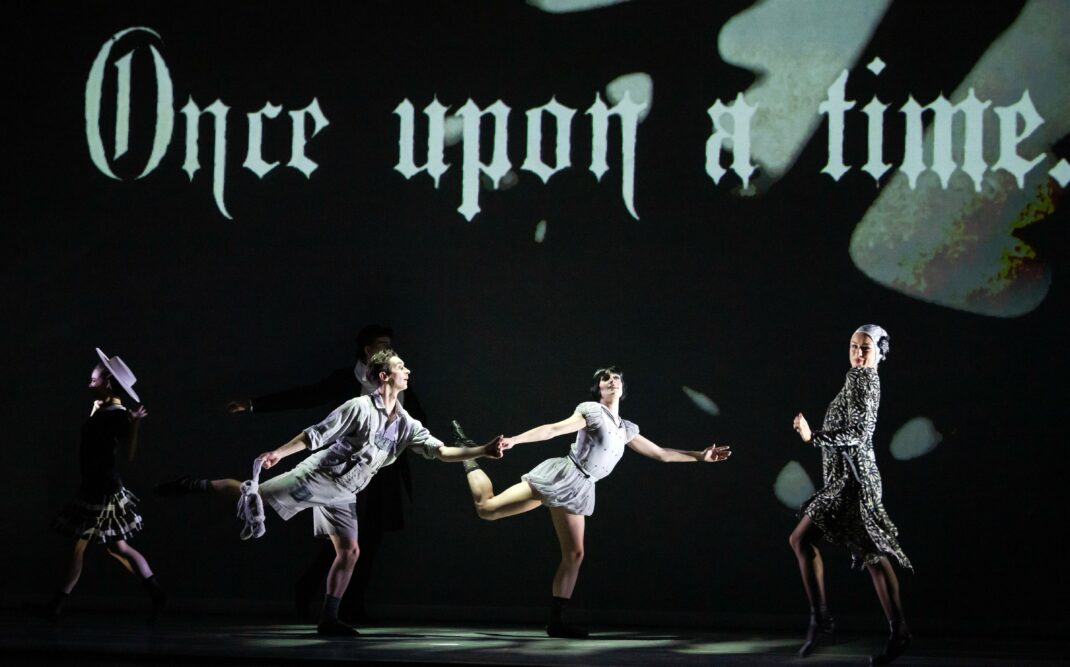
Liz Lea , ever engaged in new projects, has been commissioned by the Sydney-based AMPA (Academy of Music and Performing Arts) to create a new work for the dance students of the Academy for their upcoming end of year show, Euphoria. Lea’s work is called Promenade and will premiere on 5 December 2025.

Dancers from AMPA rehearsing for Promenade. Still from a rehearsal video

Watch below for an insight into the work.

  • Creative Australia Awards

Two dance artists, choreographer and director Kate Champion and dancer-choreographer Rosalind Crisp, have been honoured at the 2025 Creative Australia Awards held in Brisbane in November. Kate Champion received the Theatre Award and Rosalind Crisp the Dance Award.

Kate Champion, currently artistic director of Black Swan State Theatre Company in Perth, Western Australia, was honoured for ‘three decades contributing to Australian Performance’. Those decades include the founding of the much admired contemporary dance-theatre company Force Majeure in 2002, which she directed until 2015. Her credits extend across a variety of theatrical genres in addition to dance including opera, film, theatre and circus.

Rosalind Crisp was the recipient of the Dance Award. She founded Omeo Dance Studio in Sydney in 1996 and was invited to Paris in 2002, where she became Associate Artist at Atelier de Paris (2004–2014). She was awarded a Chevalier de l’Ordre des Arts et Lettres by the French Ministry of Culture in 2015, and her work has toured nationally and internationally. She is currently commissioned by the Dresden Frankfurt Dance Company.

Brief videos focusing on the awards are available online: Kate Champion at this link, Rosalind Crisp here.

  • Honouring Ana Gallardo Lobaina

My colleagues in Wellington, New Zealand, have let me know that on 19 November, His Excellency Luis Ernesto Morejón Rodríguez, Ambassador of Cuba to New Zealand, Cook Islands and Niue, was welcomed into the Royal New Zealand Ballet studios to honour principal artist Ana Gallardo Lobaina. His Excellency presented Ana, born and trained in Cuba, with an artwork by Cuban visual artist Yosvany Martínez Pérez. It is, I understand, a tradition in Cuba to honour artists who have made a significant input into the company with which they work. In presenting the award the Ambassador said:

Today, we are delighted to see a dancer born and trained in Cuba take her place among the principal figures of the Royal New Zealand Ballet, bringing her talent, sensitivity, and energy to this company. The recognition we are presenting to Ana today is a testament to her tireless work, unwavering perseverance, and artistic excellence.

I have greatly admired the dancing of Ana Gallardo Lobaina, in particular in Loughlan Prior’s production of The Firebird (2021), and the award is well deserved. For posts that feature the work of Ana Gallardo Lobaina on this website see this tag.

The Firebird, Royal New Zealand Ballet, 2021. Photo: © Stephen A’Court
Ana Gallardo Lobaina in the title role of Loughlan Prior’s The Firebird. Royal New Zealand Ballet, 2021. Photo: © Stephen A’Court

  • … and then there’s Elizabeth Dalman

A similar honour will shortly be bestowed on Dr Elizabeth Dalman, AM. Elizabeth will be awarded the insignia of Chevalier of the Order of Arts and Letters by the Ambassador of France to Australia, His Excellency M. Pierre-André Imbert on 2 December at the Embassy of France in Canberra.

The award was established in 1957 to recognise eminent artists who have contributed significantly to furthering the arts in France and throughout the world. More after 2 December.

MIchelle Potter, 30 November 2025

Featured image: Liz Lea speaking to the public in 2021 Source: CBR CityNews, 01 February 2021 Photo: © Helen Musa

New Zealand School of Dance Performance Season, 2025

19 and 20 November, Te Whaea, Wellington
reviewed by Jennifer Shennan

The NZSD end of year performance season has reverted to separate classical and contemporary programs alternating across a ten-day period.

The first night, classical program, opened with a suite of dances from La Sylphide, staged with care by Nadine Tyson (a former graduate of the School, dancer with RNZB, and a classical tutor on the faculty). The Sylph was danced by Kaiserin Darongsuwan (Mook) flirting gently with James, Hui Ho Yin (Mike) who performed with lively elevation. The 12 lyrical sylphs gave the realm of spirits in the forest at night a gentle atmosphere.

A moment from La Sylphide, Act II. New Zealand School of Dance. Performance Season 2025. Photo: © Stephen A’Court.

The Bournonville legacy from Denmark is a longstanding one in this country, thanks to Poul Gnatt’s founding of New Zealand Ballet in 1953 and the repertoire he introduced. It remains a vivacious and distinctive style within the balletic canon, challenging performers to harness the striking energy contained within the body, rather than striving for an extended alignment common to other styles of ballet. (A number of New Zealanders rose to international recognition for their mastery of the Bournonville styleJon Trimmer, Patricia Rianne, Adrienne Matheson and Martin James leading them).

The second work, Curious Alchemy, is by Loughlan Prior (now a free-lance choreographer, following his earlier career dancing with RNZB, and also a graduate of the school). The style of movement in this piece is quirky with torsos and limbs moving in segmented isolations that certainly earn the first part of the work’s title. The choice of Beethoven and Saint-Saens compositions, set at unusually loud volume, made further contrast to the staccato moves of the four performersLiezl Herrera, Ella Marshall, Lin Xi-Yuan (Ian) and Hiroki So.   

Façade, choreographed by Jeffrey Tan, staged by Robert Mills, and set to Samuel Barber’s Adagio for Strings, is a pas de deux of emotional connection between the two performers, Ella Marshall and Lin Xi-Yuan (Ian). The rapport between them was strongly forged yet built to an unusual ending where the distance between them was emphasised and well-captured.

Esquisses, by Christopher Hampson, staged by Turid Revfeim, (also a graduate of the school, with a long and substantial career at RNZB and subsequently as director of Ballet Collective Aotearoa) is set to an energising (mainly piano) composition by Valentin-Alkan. Costume design is by Gary Harris, former director of RNZB who shared a spirited rapport with Hampson back in the day (Hampson’s Romeo & Juliet remains one of the strongest memories of the company’s powerful theatrical repertoire from that time).  

Eleanor Bond & Patrick Nawalowalo McCrory in Esquisses. New Zealand School of Dance. Performance Season 2025. Photo: © Stephen A’Court

The tutu design by Harris is striking and cleverly used, there is élan, cheeky humour and whimsy in the choreography throughout, designed specifically for young dancers, until the male solo adagio by Hui Ho Yin (Mike) emerges and becomes quite the most beautiful, musical and poetic highlight of the evening, an embryo of the art of dance.

The contemporary program the next evening had five works, all world premieres, so an altogether different energy in the venue. The opening piece titled You Cannot Make a Deal with a Tiger, choreographed by Riley Fitzgerald, should be renamed You Can Make a Deal with a Tiger, since that’s what the dancers seemed to achievefacing the fear, finding support from another, putting up the fight and surviving, with an ending that echoed the opening image.

A scene from You Cannot Make a Deal with a Tiger. New Zealand School of Dance. Performance Season 2025. Photo: © Stephen A’Court.

God is in the Room, by Tristan Carter, had a loopy zany vibe with smiling and playing games, making like animals, then moving to a frenetic sequences of shouting  and group movement but not involving all individuals equally. Deliberate non-sequiturs in the movement, and quite random dress for individual dancers, underlined the program note ‘Energy never dies, it only transforms’.

Crybabies never Pelu, by ‘IsopeAkau’ola, draws on Tongan themes of resilience and support within a community. Pele is Tongan for ‘fold’ and the title here implies folding rather than breaking. The opening guitar sounds brought aural clarity to the line-up of black clad martial artists who used the discipline of stylised moves to get the dance up and running. The late great Futa Helu said that the Tongan definition of dance is ‘keeping time’in that wonderful pun we can recognise here features of hand and foot movements from old Tongan ways of dancing, welded in to the new sequences for this focussed group dance that had gravitas, dignity and a contemplative quality to support a theme both contemporary and timeless.

A moment from Cry Babies Never Pelu. New Zealand School of Dance. Performance Season 2025. Photo: © Stephen A’Court.

Anatomy of Entanglement by Aitu Matsuda for a group of dancers clad in matching light and darker grey, explored the theme of the many moving parts within a larger entity, and had a compelling quality.

The Space Between, by Raewyn Hill, to an original score by Eden Mulholland, gave this two-program season the cadence and resolution it needed. A driving triple time beat was used as grounding for the sizeable group of dancers to build and grow beautiful waves of movement throughout the dance which became the great Waltz of Time. Some bars and some dancers alternated that waltz with a sarabande rhythm, still in triple time but with the accent instead on the second beat in each bar, keeping us mesmerised throughout…where will it go? where will it take us?  

A moment from Raewyn Hill’s The Space Between. New Zealand School of Dance. Performance Season 2025. Photo: © Stephen A’Court

The work builds its strength as the entire cast stays on stage throughout. They became an entire community garbed in glorious colours, a dancer here and another there lifted aloft, to float or fly, then safely lowered to join the group, irresistibly happy dancers smiling, not because they’d been told to smile but simply because the work offered them such an uplifting quality of hope, and who’s to say that isn’t what graduating dancers need and deserve. It’s no surprise that Raewyn Hill, herself an illustrious graduate of this school in earlier times, came up with this treasure and it’s very good to see it sitting so well on these dancers.   

******************

I am certainly not alone in the audience thinking that a single program combining classical and contemporary works, rather than setting them apart as separate realms, would allow the audience to see the fullness of the NZSD’s strengths, the range of professional opportunities awaiting the graduates, and enhance rather than isolate the ways in which all choreographers and dancers share the same goals of communicating themes and expressing moods and emotions through movement, albeit of differing styles.

It is clear that many of the graduates can look forward to fruitful and rewarding careers in dance, and we wish them all the very best in that. 

Jennifer Shennan, 25 November 2025

Featured image: Eleanor Bond & Patrick Nawalowalo McCrory in Christopher Hampson’s Esquisses. New Zealand School of Dance. Performance Season 2025. Photo: © Stephen A’Court

The Nutcracker. Royal New Zealand Ballet

30 October 2025. St. James Theatre, Wellington
with New Zealand Symphony Orchestra
reviewed by Jennifer Shennan

Royal New Zealand Ballet’s Artistic Director, Ty King-Wall, has created a new production of The Nutcracker, a fun-filled frolicking entertainment set among images of New Zealand landscape, flora and fauna, childhood summer holidays in the bach, games on the beach, with sweets and treats for a major sugar rush and lashings of nostalgia.

The choreography is more than that though, and stitches in themes and sequences from the traditional story and productions as it traces the family context for the coming of age of Clara, the young girl growing to sense and glimpse the adult world. There are poignant undertones as the present is braided with an older family member’s memory of the past, the younger one’s glimpse of the future, and parents’ moment of danger when a child goes missing.  

A key figure is Aunt Drosselmeyer, a famous dancer who returns from abroad with mysterious powers plus gifts for the family, including a Nutcracker doll for Clara, and a snow globe for brother Fritz. She also brings a film projector to show the children a cameo of a Commedia dell’Arte performance, which opens a door away from the everyday and into the faraway, wherever a child’s imagination will take us. The power and colour of Tchaikovsky’s large scale orchestral score, conducted by the invincible Hamish McKeich, feeds these forces and fills the theatre with atmosphere.  

Inventive design by Tracy Grant-Lord and POW studios begins with the overture—a front curtain of a 1950s postcard (you possibly still have one in the attic?) a painting of native flowers and trees—kōwhai, mānuka, pōhutukawa, rātā, harakeke, tī and ponga. But wait, that kōwhai blossom moves in the gentlest of breezes, and then a mānuka flower shimmers. Now from behind a bush, a creature, part honey-bee part buzzy-bee, emerges in search of nectar. Better keep an eye on that as later in the ballet it will become a ski-plane to transport you to a mountainous kingdom of snow in our very own Southern Alps. It’s an inspired visual effect to show the country’s landscape from the plane’s windows as we travel.

There are numerous other design transformations—small tree grows into a giant forest, complete with red-eyed predators, possums, stoats and weasels to be exterminated. Smart soldiers from the Nutcracker army need additional help from Clara as she fires a weapon that exterminates the biggest bully Mouse King (I’d have called him a Rat as he falls into the foundations of the ballroom he was planning to build).

A ruru sounds a convincing call of warning, and gives me the shivers.

Catarina-Estevez-Collins in The Nutcracker. Royal New Zealand Ballet 2025. Photo: © Stephen A’Court.

There are a number of standout performances on opening night, though it’s noteworthy that several alternative soloist casts are billed for the extended Wellington season and following national tour—testament to the company’s strengths. Caterina Estevez-Collins plays a charming and sensitive Clara. Laurynas Vejalis as the Nutcracker-turned-Prince dances with remarkable virtuosic technique but is able to overlay that with a lyricism that rides the music with meaning. Mayu Tanigaito as the Sugar Plum Fairy makes a most welcome return to the stage, and the pas de deux she and Vejalis dance is of rich quality and harmony, an act of love, and the highpoint of the evening.

Mayu-Tanigaito and Laurynas Vejalis in The Nutcracker. Royal New Zealand Ballet 2025. Photo: © Stephen A’Court.

Character roles include Kirby Selchow as Aunt Drosselmeyer, carrying that with great style. Shaun James Kelly as a drunken kereru makes an amusing mess of trying to fly. Kihiro Kusukami as the powerful Storm Master dances up an impressive wind in the Land of Snow.  

I have recently read The Dreaming Land—a memoir by Martin Edmond of his childhood in Ohakune in the 1950s. He writes of ‘the existence of a world of Maoridom about which most Pakeha knew nothing … there was simply no awareness among the people I knew that we lived cheek by jowl with a strong, coherent and richly complex culture. It is a lack I profoundly regret.’ This new choreography poignantly encompasses that notion by including the small but noteworthy role of Koro, the Maori grandfather of Clara, with Moana Nepia and Taiaroa Royal alternating in the part. Koro gifts a blanket to his granddaughter, and comforts her when she needs that.  He dances for a fleeting moment with the memory of his late wife, a kind of ghost of Christmases past.

There is much energy in the band of children, and the ensembles of snowflakes, flowers and somewhat over-dressed confectionery, to make this a production that will draw enthusiastic crowds as it tours the country. Haere rā to them all.

Jennifer Shennan, 1 November 2025

Featured image: Characters from The Nutcracker. Royal New Zealand Ballet 2025. Photo: © Stephen A’Court.

Dance diary. July 2025

  • Sydney Dance Company in Athens

A recent article, written by Madison McGuinness and published on 9 July 2025 in The Greek Herald, had the following two introductory paragraphs:

The Sydney Dance Company captivated a crowd of 5,000 at the Odeon of Herodes Atticus last week, performing Impermanence as part of the Athens Epidaurus Festival 2025.

Set against the historic backdrop beneath the Acropolis, the emotionally charged performance explored the fleeting nature of existence through movement and music.

The featured image on this month’s dance diary (see above) shows SDC dancers taking a ‘curtain’ call in front of that ancient building. It is the image that leads into the Herald article, an image that is credited to Australia’s ambassador to Greece, Alison Duncan, who according to the article ‘hailed the performance as a personal milestone’.

While it was excellent news to hear of the success of Sydney Dance Company, Duncan’s image from Greece reminded me of those wonderful images dating back to the 1960s showing the Australian Ballet dancing at the Baalbek International Festival in Lebanon in 1965 when, for a few nights, they performed in the precinct of the ruined Temple of Bacchus.

I remember seeing images of the dancers in Baalbek but have not been able to find any for this post. The SDC image now takes the place of those 1965 shots, for me at least.

My review of Impermanence (onstage, Sydney 2021) is at this link.

  • Mandolina Ballerina (Tessa Karle)

Canberra’s Mandolin Orchestra has an interesting show coming up with the evocative title of ‘Mandolina Ballerina’. It features a Canberra-trained dancer, Tessa Karle, who currently performs with Royal New Zealand Ballet. The image below shows Karle in a recent production by RNZB, The Way Alone choreographed by one of Australia’s most admired choreographers, Stephen Baynes.

Kihiro Kusukami and Tessa Karle in Stephen Baynes’ The Way Alone. Royal New Zealand Ballet. Photo: © Stephen A’Court, courtesy Royal New Zealand Ballet

The image below is an advertising poster for ‘Mandolina Ballerina’, for which Karle has created original choreography, and in which she will perform. The music includes sections from Swan Lake and Nutcracker.

I am hoping to see the show, which will have just two performances on 16 August at the premises of Folk Dance Canberra in the suburb of Hackett. Potentially a review will follow.

  • The Panov tour … a little more

After reporting in last month’s dance diary on the death of former Russian dancer Valery Panov, I went in search of a little more detail on the 1976 tour to Australia and New Zealand by Ballet Victoria in which Valery Panov and his then wife, Galina Panov, were guest artists. I was able to gain access, via the National Library of Australia, to the program for the Canberra season of the tour, which consisted of three shows at the Canberra Theatre, 21–22 June 1976.

The Canberra program began with Petrouchka, which was the major work presented across venues in Australia and New Zealand.

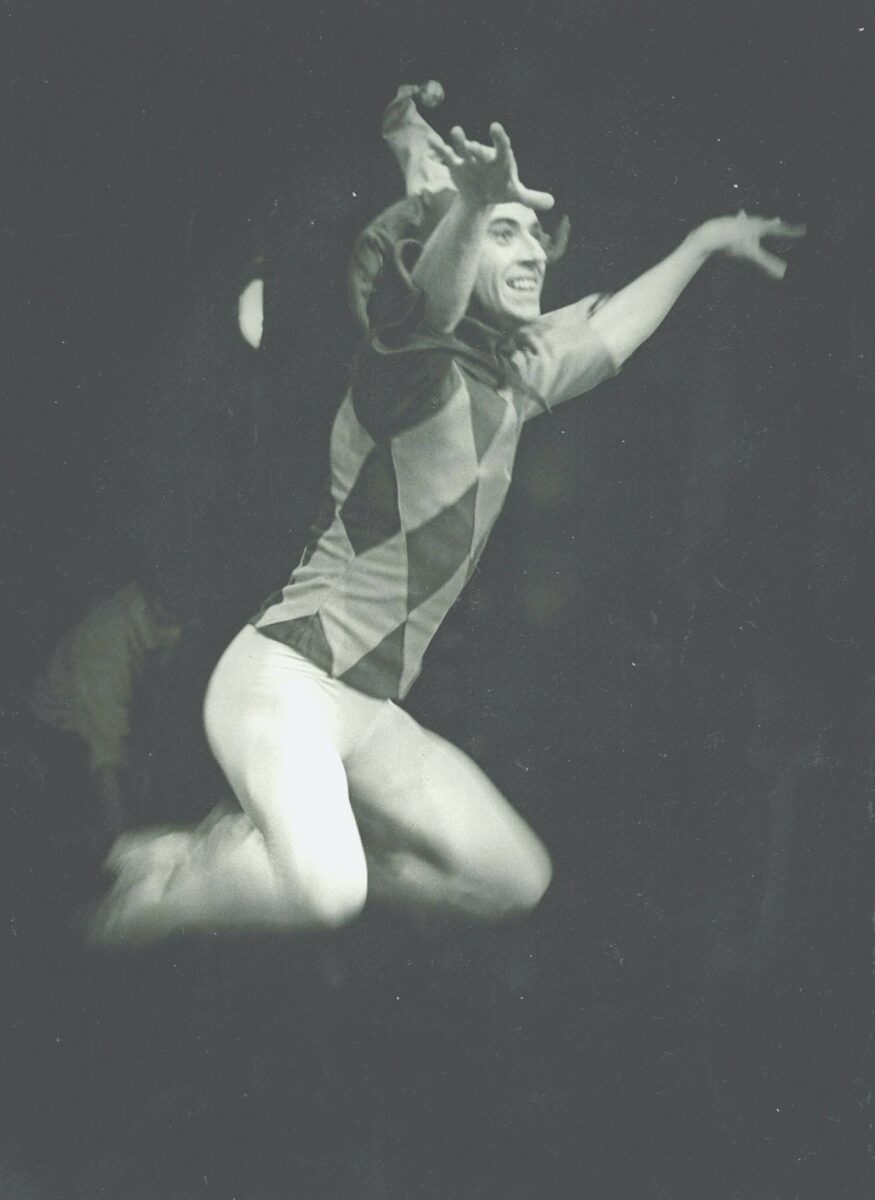
Valery Panov as Petrouchka. Ballet Victoria, 1976. Papers of Laurel Martyn, MS 9711, Series 1, Item 222, National Library of Australia. Photo: © Robert McFarlane

Petrouchka was followed by Concerto Grosso, a work choreographed by Charles Czarny to music by Handel. It had designs by Joop Stokvis and was originally choreographed for Nederlands Dans Theater in 1971 and given its Australian premiere by that company on tour in 1972. Re-choreographed especially for Ballet Victoria by Czarny it was in seven sections: Warm-up, Boxing, Tightrope, Obliquatory [sic], Skating, Football, and Karate. The Canberra program also included Jonathan Taylor’s Stars End, which was created especially for Ballet Victoria to music by David Bedford. Program notes discuss the work briefly, noting that ‘[It] depicts people meeting people … parting … ultimately everyone is alone.’

The audience also saw two pas de deux choreographed by Panov and danced by him and his wife. One was Adagio célèbre to music by Tomaso Albinoni for which program notes state:

This is a prayer to the dream inside Man. Unfortunately, life cannot keep dreams forever and tension takes the beauty of it away. Man prays to keep this dream forever but remains only with the prayer of his dreams.

The other pas de deux seen in Canberra was Harlequinade to music by Riccardo Drigo with choreography by Valery Panov ‘after Fokine’ and with input from Alexander Gorsky who choreographed Galina Panov’s variation. Program notes read that it concerns, ‘The classic involvement of the two prime characters of the commedia dell’arte, Harlequin and Columbine [in which] Harlequin pays court to the demure soubrette, Columbine.’

Programs for other cities included Les Sylphides and various other pas de deux.

  • News from James Batchelor

James Batchelor has received funding from artsACT to present his new work Resonance in Canberra. Resonance, which is a response to material Batchelor has been investigating in relation to Tanja Liedtke, will open in Sydney in September before travelling to Melbourne and then to Canberra where it will play on 10-11 October.

In addition, Batchelor has been successful in an application to undertake a Master of Philosophy degree at the Australian National University (ANU). His research proposal is entitled ‘Echoes of the Expressive Dance’ and will pursue further his interest in the growth of the expressive dance technique of Gertrud Bodenwieser. The proposal earned him a full scholarship at the ANU and he will begin work on it shortly.

Michelle Potter, 31 July 2025

Featured image: Dancers of Sydney Dance Company taking a curtain call following a performance in Greece, July 2025. Photo: Alison Duncan

Home, Land and Sea. Royal New Zealand Ballet (with guests from New Zealand Dance Company)

24 July 2025, St James Theatre, Wellington
reviewed by Jennifer Shennan

The Way Alone—Stephen Baynes/P. Tchaikovsky
Chrysalis—Shaun James Kelly/Philip Glass
Home, Land and Sea—Moss Te Ururangi Patterson/Shayne Carter

This triple bill hits the mark in more ways than three. Production values and galvanised performances reveal the company in high morale, with the artistic management in steady yet adventurous command. The dancers and the audience are stimulated by the contrasts of aesthetics, musicality and substance of the three works.

Choreographer Stephen Baynes has a career-long association with Australian Ballet, although his works are also in repertoires of companies worldwide. The Way Alone was commissioned in 2008 by Hong Kong Ballet for an all-Tchaikovsky program, and uses excerpts from lesser known compositions of choral, organ and piano forces that create a meditative atmosphere. 13 dancers form the ensemble, which divides into duos and trios and an occasional solo, where Katherine Minor has a notable role. The theme is clued in the title—members may be part of a large group but at the same time remain as individuals, as in a church congregation for example, or a theatre audience, together alone. There is a lyrical and serene quality to the movement, all effort is hidden, with lifts and upreaching gestures suggesting that gravity has no hold here. Eye contact is made with the audience only at the end. The work is beautifully danced throughout, and the lighting design by Jon Buswell shines beams of soft light from on high, to heavenly effect.

Dancers of Royal New Zealand Ballet in a scene from The Way Alone. Photo: © Stephen A’Court.

Shaun James Kelly is a dancer and resident choreographer at RNZB. In this premiere, Chrysalis, he collaborates with designer Rory William Docherty to explore the metaphor of layered clothing, what that might say of a person wearing it, or be revealed as layers are removed. The work opens with a tribute to Shaun’s parents and the longevity of their relationship. Hats and coats are styled for 1950s, soon removed then placed on coathangers that are raised high above the stage—suggesting the passing of time and changing of fashions. Party attire is worn and enjoyed … these layers too are removed and lifted away, revealing bodytights in various shades of nacreous lustre. The work is set to piano music by Philip Glass, with minimalist motifs repeated to build effect. Several short passages are danced in silence which suggests that sound too can be layered. Danced connections between couples and friends reference the value in personal freedom and the confidence to express gender identity. The cast of ten dancers move with style and commitment in the combination of familiar and new ballet vocabulary, and Shaun will have been rightly pleased that his work is delivered with such aplomb.

Katherine Minor and Kihiro Kusukami in Chrysalis. Photo: © Stephen A’Court

Home, Land and Sea, another premiere, brings the choreography of Moss Patterson to a new level of urgency. Shayne Carter, highly regarded for his performing and composing in a wide-ranging musical scene, has created a richly evocative music score with natural landscapes and Maori cultural references drawn in. His strong composition drives this highly successful collaboration, and his program notes on the experience of working with dancers are among the best you will read.

The cast comprises six RNZB dancers with six members of New Zealand Dance Company in a combination that melds their classical and contemporary dance trainings. These were never opposite techniques but the give and take between them can produce versatility in some dancers, most notably seen here in the intensely invested performances by Zacharie Dun, Kirby Selchow and Ana Gallardo Lobaina.

Dancers from Royal New Zealand Ballet and New Zealand Dance Company in a scene from Home, Land and Sea. Photo: © Stephen A’Court.
Stella Clarkson from New Zealand Dance Company and Ana Gallardo Lobaina from Royal New Zealand Ballet in a moment from Home, Land and Sea. Photo: © Stephen A’Court.

At times the dance pace is relentless but its effect is always controlled and tempered. It is maintained not because shouting achieves anything but rather, because momentum is everything and there’s important work to be done. There is in the choreography an aspect of polemic against the country’s current troubling political shifts that demote Maori needs, that lessen respect accorded to the Treaty of Waitangi as the nation’s founding reference, that downgrade the status of te reo (language), that disestablish positions of government historians, and more besides.

Politicians we could name should see this work and reflect on the divisive and mean-spirited ways they are trying to attract support for policies that move us backwards not forwards in the essential quest for intercultural respect and connection. It’s doubtful of course if they’d get anything out of it since folk mostly hear only what they want to hear, so better to save the resources and ensure instead that a quality film is made of this work. Alun Bollinger or Chris Graves on camera would know how to capture that. This is choreography that offers dialogue and conversation. Film can reach far beyond a company’s touring itinerary, and ours is not the only country that needs to raise and pursue awareness of such challenges.

Ka nui te aroha mo tēnei tūtaki. (Let’s recognise this title work as an important bi-cultural encounter). The power of haka and the poetry of ballet are complementary and it’s Patterson’s and Carter’s shared triumph to have presented a template for mutual exchange, not confrontation or competition. Jon Buswell’s design uses a set of panels onto which are first projected harakeke/flax weaving patterns, then grasses in the wind, to scenes of the sea, with its foam rising, which discreetly but miraculously slowly turns into a long white cloud, and there you have it, Ao-tea-roa, the name of the country we live in.

There is an interesting list of the times, starting in 1953, that New Zealand’s ballet company has looked for echoes between ballet and Maori dance, but that account lies outside the scope of this review.

I found it very affecting that Patterson uses a dynamic range of movement harnessing at times the power of haka and merging it with the clarity of alignment in classically trained dancers. He waits till near the end to include stylized versions of ringa (hand and arm movement) that characterise Maori dance, delivered in miniature with carved clarity by all the dancers. He then moves towards the work’s peace-making denouement by using the exquisite wiri (the shimmering quivering of arms and hands) that signal the life force in Maori worldview.

The curtain call remains in character—a linked line of dancers rippling as waves of the sea. Such a cadence is worth more to me than perhaps it sounds, and I wish that happened more often. It in turn evokes Wislawa Symborska’s famous poem, Theatre Impressions, in which, despite any preceding scenes of heroic struggle or battle, it’s the curtain call that grabs you by the throat.

Dancers from Royal New Zealand Ballet and New Zealand Dance Company taking a curtain call in Home, Land and Sea. Photo: © Stephen A’Court

Home, Land and Sea, with that talisman curtain call, shows a way that ballet can do its work, in a relevant time and place. Hei konei rā (For here, there).

Jennifer Shennan, 26 July 2025

Postscript: In the interval I learned in a text of the passing of Philippa Ward, well-known and much-loved Wellington pianist and dance aficionado. (She had been rehearsal pianist for the Stravinsky Pulcinella I choreographed 40 years ago, and remembered details of that production all these decades since. Such appreciation of an ephemeral art is rare.) No choreographer could synchronise this timing but Baynes may be moved to learn that Philippa quietly departed as Tchaikovsky piano music was being played in The Way Alone. This is another of the ways ballet can do its work. JS

Featured image: Ana Gallardo Lobaina and Zacharie Dun in The Way Alone. Photo: © Stephen A’Court

Royal New Zealand Ballet with Scottish Ballet

14 March 2025. St James Theatre, Wellington

What is ballet?

In what was a joint program of four works, two from Royal New Zealand Ballet (RNZB) and two from Scottish Ballet, I imagined there would be some curiosity from audience members (or some people anyway) about the nature of ballet. I certainly was curious. Both companies have the word ‘ballet’ in their name for a start, but the details of the program sounded unusual.

Opening the program was Schachmatt (Checkmate in English translation) from Spanish/international choreographer Cayetano Soto, who was also responsible for the set, costumes and lighting. The work was based, notes tell us, on Soto’s admiration for and interest in the songs of people such as Joan Rivers as well as the choreography of Bob Fosse.

There was an exceptional, short and shadowy opening sequence. It was attention-grabbing and at first some of the dancers towards the back of the group looked almost like shadows rather than people.

Scottish Ballet dancers in the opening section of Cayetano Soto’s Schachmatt. Photo: © Andy Ross

But as the lighting became less shadowy, we could see the cast dressed in light blue-grey costumes, wearing black stockings that at first looked like knee-high boots, and with black caps as head gear. They danced often with the pelvis pushed back so the spine never looked straight; with arms often making geometric shapes; and with emphasis on hands often stretched flat; and with fingers twisted and curled. The dancers’ movements were fast and furious and bodies were bent and twisted. It made me think how different the movement was from the technique we assume is balletic. It seemed like a quirky novelty rather than a ballet. In fact the whole thing looked anti-balletic to me, although nothing could take away from a powerful performance from every dancer.

Scottish Ballet dancers in Cayetano Soto’s Schachmatt. Photo: © Andy Ross

Schachmatt, which received an exceptional audience response at its conclusion, was a short piece, just 20 or so minutes, and was followed by a brief, spoken introduction from the stage by RNZB’s Artistic Director, Ty King-Wall, who was accompanied onstage by Director of Scottish Ballet, Christopher Hampson, dressed in a Scottish-style kilted outfit.

After thinking constantly during the unfolding of Schachmatt, especially about choreographic expression and its relationship to balletic concepts, it was an exceptional experience to watch the second item on the program, Prismatic from RNZB Choreographer in Residence, Shaun James Kelly. Kelly played with movement without removing so many balletic essentials as seemed to happen in Schachmatt. Kelly’s choreography showed fluidity; detailed interaction between dancers without that interaction being frenzied; smooth and curving shapes from the arms; lifts that were quite spectacular and that demonstrated a remarkable manner of moving through space; and a great use of the stage area, often in unexpected ways.

We were watching a particular choreographic voice, but one that was not removing what makes dance balletic. Prismatic gave me goose bumps and it was a pleasure to watch the dancers performing to an audience, to us. That’s a personalised approach and was not something I got from the first item. To me Prismatic was theatre.

Soloist Kirby Selchow, Artist Ema Takahashi, Principal Ana Gallardo Lobaina, Soloist Jemima Scott in Prismatic. Royal New Zealand Ballet, 2025. Photo: © Stephen A’Court

After interval we watched another short work, Limerence, this time from Annaliese Macdonald, former dancer with RNZB, now freelancing. Performed to music by Franz Schubert, it was made for four dancers who interacted with each other, displaying different emotions at different times.

The leading role was danced strongly by Joshua Guillemot-Rodgerson but we were never completely sure of exactly where his emotions were directed. What was he thinking? What were the others thinking as well, especially when they were trying to guide him through an event? In fact, a quote from Austrian poet Rainer Maria Rilke was written in the program notes: ‘Let everything happen to you: beauty and terror. Just keep going. No feeling is final.’ That quote gave a strong indication of the nature of Limerence.

Principal, Joshua Guillemot-Rodgerson and Soloist, Katherine Minor in a moment from Limerence. Royal New Zealand Ballet, 2025. Photo: © Stephen A’Court

Choreographically Limerence had a beautifully strong contemporary feel but it was clearly based on an understanding of balletic technique. The bodies of all four dancers were used as expressive tools to transmit emotions.

The final work Dextera (a play on the word ‘dexterous’) came from Franco-British choreographer Sophie Laplane. It was danced by a large cast to excerpts from various compositions by Mozart. Laplane mentions in program notes that she was interested in ‘portraying the complexity of human nature through dance’ and complexity of movement (large and small, individual and group) was clearly on display.

Red gloves were a feature. In the beginning one fell through the air from the flies. Then dancers entered, all wearing red gloves. Sometimes one set of dancers ripped the gloves away from the group wearing them. The gloves were then ripped back. In the final moments a swathe of gloves fell again from the flies. I am assuming that the gloves referred to the fact that dexterity usually indicates skill involving the hands.

Scottish Ballet dancers in in Sophie Laplane’s Dextera. Photo: © Andy Ross

Another feature of Dextera was that red ‘handles’ had been added to some costumes and dancers (mostly the women) were picked up, (mostly by the men) using the handles, and the bodies manipulated in some way.

Choreographically Dextera teetered towards seeming suitable for inclusion in a program by a company with the word ‘ballet’ in its name. It was clearly pushing movement boundaries but, at least to me, the dancers looked like human beings and the choreography looked as though there was a balletic background that was being used in the ‘pushing’. But the work seemed so long, which was not made to feel shorter when many sections of the work appeared not to relate to each other. I was relieved when the work eventually concluded.

The outstanding feature of the program, over all four works, was the strength of the dancing. Whatever movement ideas the choreographers chose to investigate, the dancers rose to the challenge and performed with gusto. And all my congratulations to the staff of both companies for creating a program that put forward a challenge. In fact, as I left the theatre I had the feeling that it would be hard to find a performance that could give rise to so many varying thoughts about the nature of ballet.

.Michelle Potter, 16 March 2025

Featured image: Scottish Ballet dancers in a moment from Sophie Laplane’s Dextera. Photo: © Andy Ross


UPDATE: This post has been the subject of a series of scam messages and comments have, therefore, been closed.

Dance diary. December 2024

  • Karen van Ulzen and Dance Australia

After 35 years as editor of Dance Australia, Karen van Ulzen is moving on. She has been a strong and successful editor and her retirement is a particular loss to the dance community. In a Facebook post, Karen wrote:

Dance is my lifelong love but it is time to hang up the keyboard. I am looking forward,k to indulging my other loves: visual art (specifically painting) and writing. However, dance is still my love and I hope to continue to contribute to the artform in some other way.

Portrait of Karen van Ulzen. From Yaffa/Dance Australia online. Photographer not identified


Taking over from Karen is Olivia Weeks whose dance background includes teaching and an extensive background with the Royal Academy of Dance. Of her plans she told Dance Australia:

As Editor, I’m excited to contribute to our ever-evolving dance landscape. My goal is to continue to champion the incredible talent Australia has to offer, celebrate the stories that make our industry so unique, and ensure Dance Australia remains a vital platform for our community in 2025 and beyond.

Read more about Olivia Weeks at this link.

I wish Olivia every success and give my sincere thanks to Karen for all she has achieved for dance in Australia, and for her support of my writing over many years.

  • More on books and reading

After the death of Eileen Kramer I thought it was time to read her autobiography, Walkabout Dancer, a copy of which she kindly gave to me but which I had never taken the time to read. It was published in 2008 in North America and I honestly can’t believe that there was a professional editor at work on the text prior to publication. The text is rife with spelling errors and inconsistencies and inaccuracies in names and places throughout. Perhaps the inaccuracies extend even to aspects of the story itself? To tell the truth, I wish I had never taken on the reading of it. It does nothing to advance the image of Eileen Kramer.

I did, however, enjoy Derek Parker’s 1988 publication, Nijinsky. God of the dance, a copy of which I found in the Harry Hartog Bookshop at the ANU. (That HH bookshop again!). Apart from the fact that it revealed some interesting personal information about ‘the God of the Dance’, it contained some photographs of Nijinsky and his colleagues that I had never seen before. It’s a shame though that some of the photographs on certain pages were positioned very close to the binding and were not always easy to see in full. Well worth a read however.

  • Vale Arlene Croce (1934-2024)

Renowned American dance critic, Arlene Croce, died in New York in December. She was 90 years old. I never met her, despite having spent some time in New York on various occasions over the past thirty years or so. But I had always enjoyed her writing for various outlets including The New Yorker, Ballet Review, which in fact she co-founded, and other publications. Her background knowledge was wide and very apparent in her dance writing, and I especially admired her exceptional and always appropriate use of descriptive words and her highly analytical approach to her writing.

As part of an obituary, the following words appeared in The New Yorker, issue of 19 December 2024:

Croce took dancing seriously, pulled dances apart and analyzed them rigorously, and her clarity and imagination, her stunning insights, and even her glaring flaws—all this was there on the page. This passion and discipline made her a kind of alter ego of—or perhaps a ministry to—the art. She had an unrelenting determination to say what she had seen.

It is interesting to reread what is one of her best known articles, ‘Discussing the Undiscussable’, which appears in her collection of reviews and articles, Writing in the Dark, Dancing in The New Yorker. In this article she talks about her reasons for refusing to go to, let alone review, a performance of Still/Here by choreographer Bill T. Jones, a work he created involving terminally ill people who speak about the issue of dying. The article caused something of a stir when it was published in The New Yorker in 1994. It still raises many issues about dance and how it is, or has been, perceived.

The original article appears to be available online without a New Yorker subscription. Try this link

  • Some statistics for 2024

Over the course of 2024 this website received slightly more than 75,000 views. The top five countries making use of the website were (in order) Australia, United States of America, New Zealand, Canada and United Kingdom. Top five cities from which people logged in were Sydney, Melbourne, Auckland, Brisbane and New York. During 2024, the top post on a northern hemisphere production was Joy Womack: The White Swan; the top Australian-related post was Etudes/Circle Electric. The Australian Ballet; and the top New Zealand post was Swan Lake. Royal New Zealand Ballet.

*************************

A very happy 2025 to all. May the year be filled with dancing.

Michelle Potter, 31 December 2024

Featured image: A young Canberra dance student performing as Triton in a ballet school production of The Little Mermaid, 2023. Photographer not identified

From New Zealand: Dance in 2024 

by Jennifer Shennan  

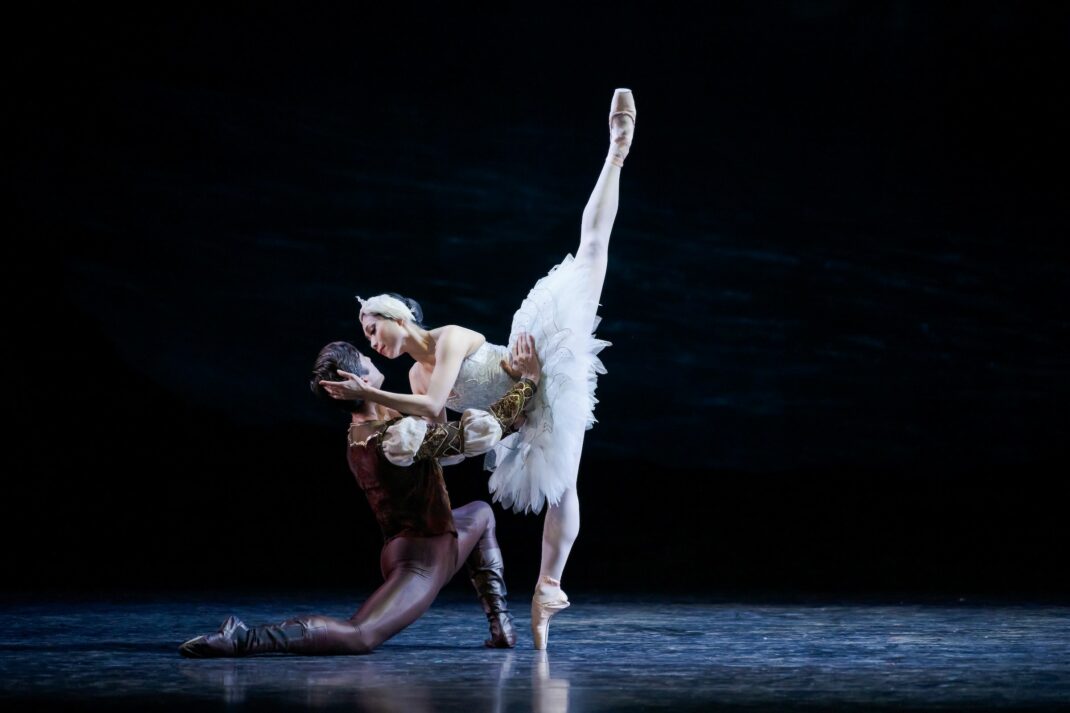
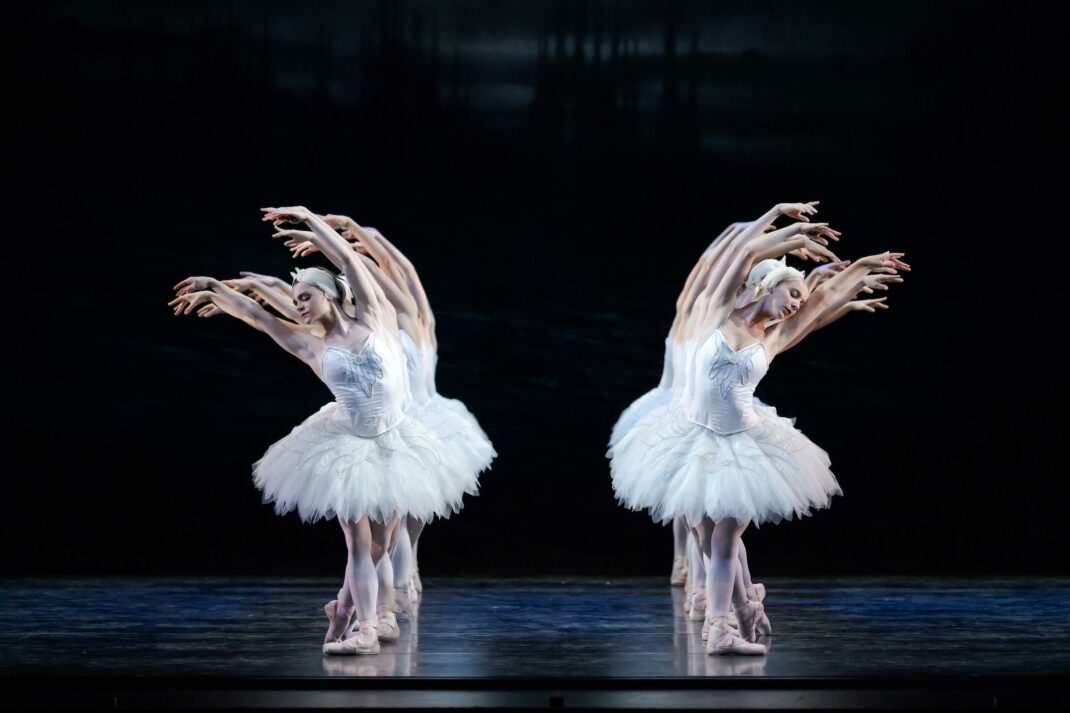
It’s always a pleasure to mark the end of the year with a rear vision reminder of the dance highlights we saw. 2024 had the best of the old and the new, with RNZB delivering a triumphant trio of seasons. After some important readjustments into new directions in management, the Company’s year opened with Tutus on Tour’s national itinerary of small venues that Poul Gnatt established back in 1950s. In May, Russell Kerr’s pedigree production of Swan Lake was memorably staged with respect and sensitivity by Turid Revfeim.   

Their mid-year triple bill included Wayne MacGregor’s Infra, which I found deeply humane and appreciated very much. Sarah Sproull’s spirited To Hold, and Alice Topp’s High Tide had striking choreography and design, and each proved very popular with audiences. 

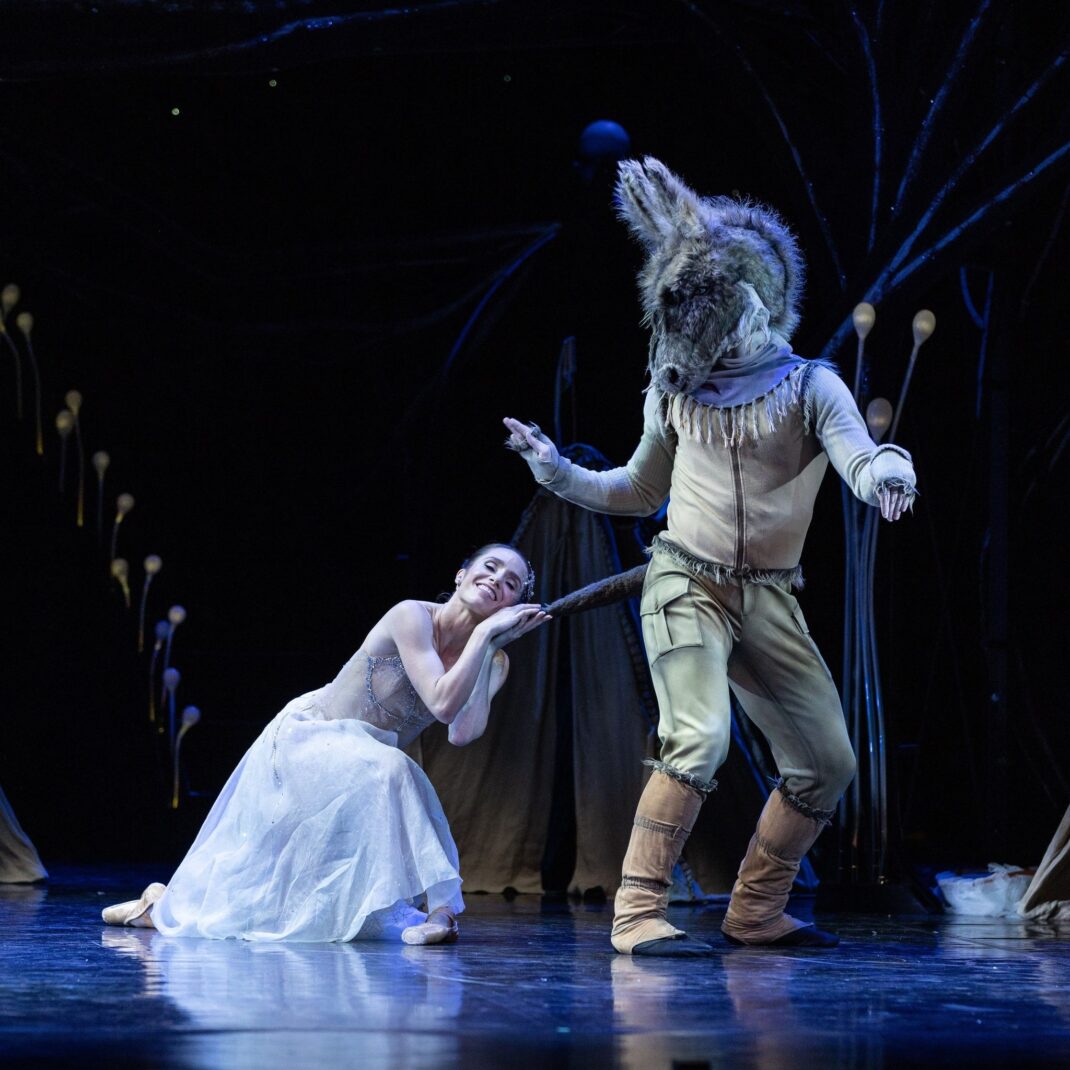
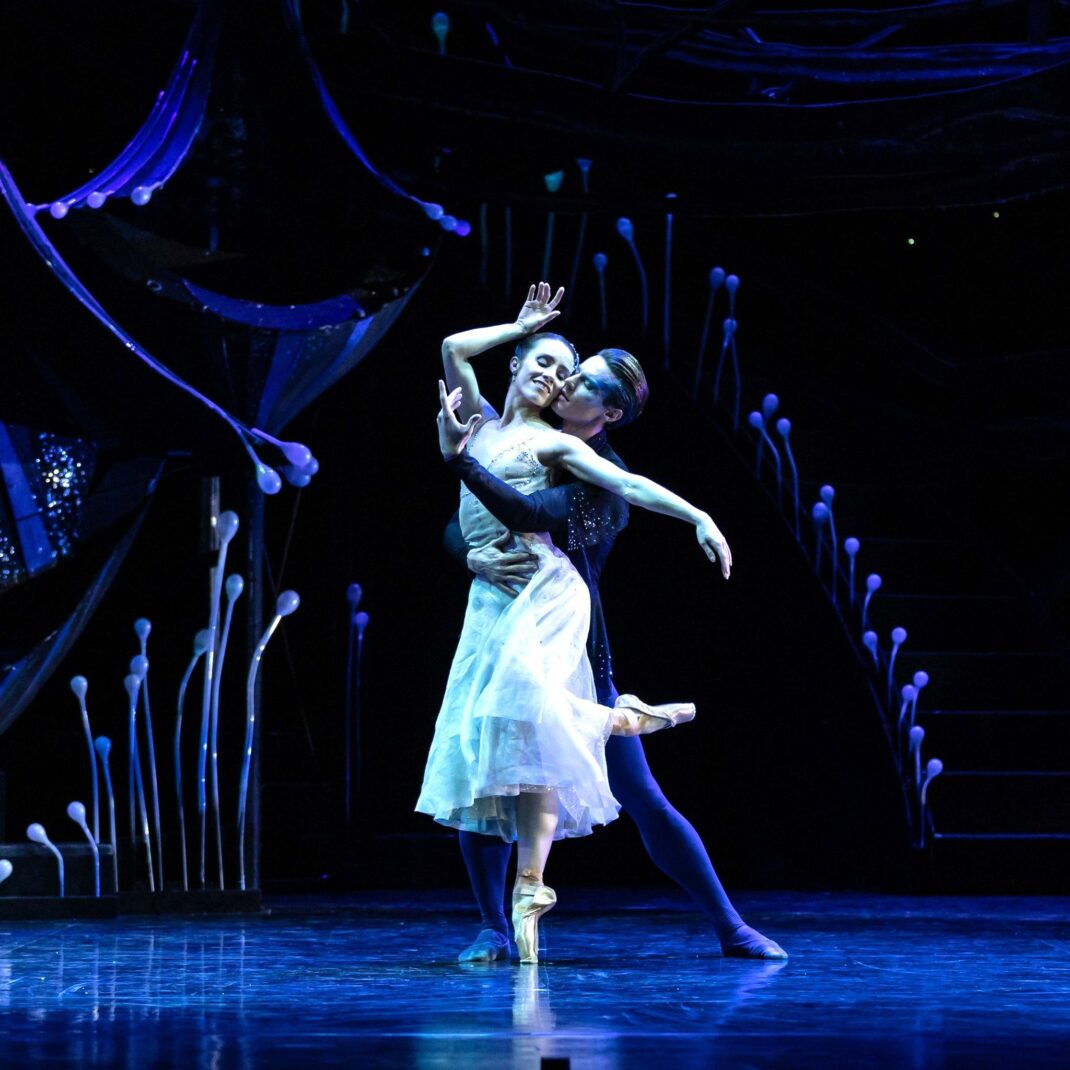
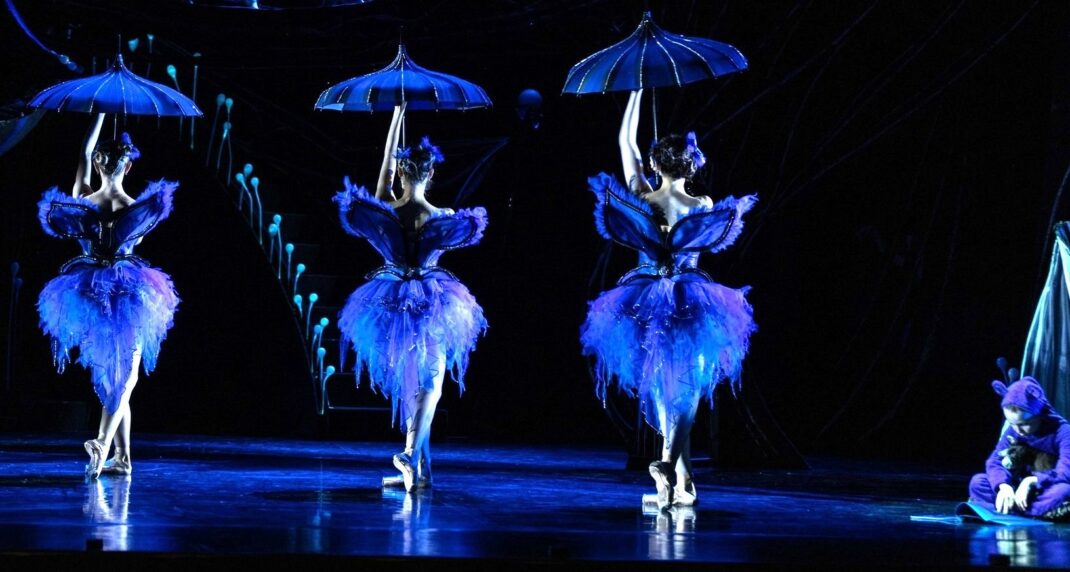
The Company’s end-of-year season—a return of Liam Scarlett’s A Midsummer Night’s Dream—showed yet again what a brilliant concept the 29-year-old choreographer brought to this company back in 2015.  His loss will reverberate for years, but this production, shared with Queensland Ballet, and Tracy Grant Lord’s stunning design, ensures that we hold him tight.   

New Zealand School of Dance continued to display high performance standards in both Liminal, mid-year, and end of year seasons, when students from both classical and contemporary streams gave committed programs. The highlight for me remains NZSD alumnus Taane Mete’s All Eyes Open.  

Dancers Aylin Atalay, Trinity Maydon, Anya Down and Lila Brackley in A/EFFECT. Choreography by Audrey Stuck. New Zealand School of Dance Choreographic Season 2024. Photo: © Stephen A’Court.

In Homemade Jam the ever enterprising Turid Revfeim combined her Ballet Collective Aotearoa with the local Tawa College dance group to energised effect.   

Visiting companies to Wellington for the International Arts Festival included a dramatically different Hatupatu, a fusion of Maori legend into a contemporary love story from Tānemahuta Gray. Malia Johnston’s Belle offered striking airborne beauty combining aerialists and dancers. From afar Akram Khan’s company gave a sophisticated The Jungle Book which astonished many first-time dance-goers.   

Later in March, Neil Ieremia of Black Grace staged a production of striking dramatic effect and design, under the title Paradise Rumour. It referenced missionary presence in the early settlement of the Pacific. 

Jan Bolwell’s impresssive season of Crow’s Feet, Woman, Life, Freedom, to Gorecki, was a moving witness to the struggles of women in Iranian and migrant communities.  

2024 was a special year for Vivek Kinra’s Indian dance company Mudra, beginning with an arangetram (astonishingly, by a mature age Pākeha woman of Irish descent. The world can live as one if we want it enough). 

In a later season Vivek choreographed a poetic and colourful Vismaya, the seven emotions of nanikas, with a quartet of stunning visiting musicians, in a national tour under the auspices of Chamber Music New Zealand. We could hope for more seasons of music and dance from these adventurous entrepreneurs. 

My subscription to Sky Arts channel is always good value—and this year’s film of Dona Nobis Pacem, Neuemeier’s farewell to Hamburg Ballet, was an exquisitely poignant piece in a combination of J S Bach and John Lennon that I will never forget. It was a masterstroke to also screen the documentary of Neumeier’s dancing life in the same week.   

Another very striking film was the Royal Ballet production of Christopher Wheeldon’s Like Water for Chocolate. I have family connection to Mexico and it is always welcome to encounter art from that extraordinary country. 

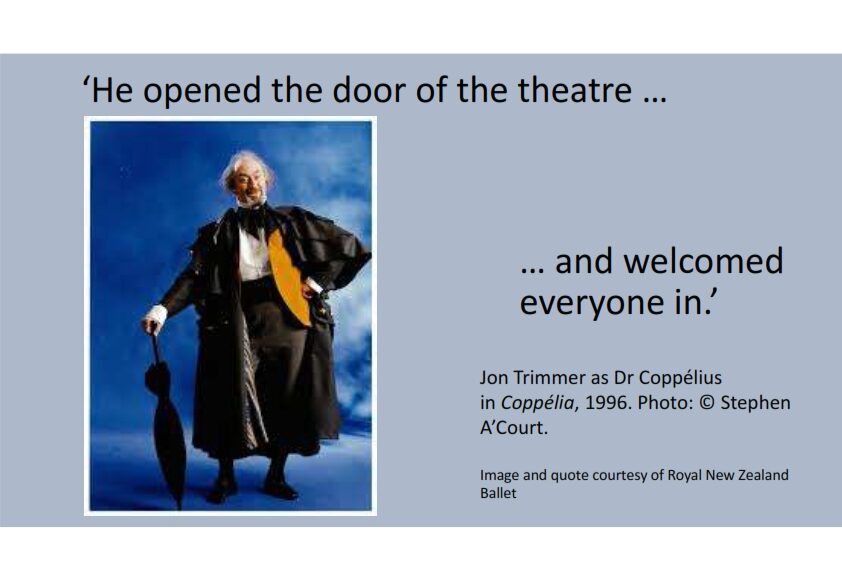
This year’s Russell Kerr Lecture in Ballet & Related Arts was a tribute to the late and much lamented Sir Jon Trimmer, following an earlier memorial for him staged by Turid Revfeim in the Opera House. Rowena Jackson’s death was another sad event, but an opportunity to recognise her outstanding personal qualities alongside her celebrated performance and teaching career. I join Michelle Potter in lamenting the passing of Joan Acocella, dance writer of highest calibre, and my valued mentor.  Edith Campbell, a stalwart arts and community leader, will be much missed in Wellington, and it was an honour to perform French and English baroque dances at her Memorial Service. Edith would have appreciated the Auld Alliance between Scotland and France that these referenced, as she had an admirable knack of contextualising all art events. She taught Scottish Country Dance for 75 years, up until the fortnight before her passing. Requiescant in pace.  

I found myself involved in another performance (who says you’re too old to dance? certainly not Eileen Kramer…) in a piece composed by Alison Isadora for The First Smile Indonesian gamelan, and included on the album we have just recorded to mark 50 years of gamelan in Aotearoa New Zealand. (See Rattle Records website). Keep up the good dancing everyone—and you’ll certainly have a Happy New Year. 

Jennifer Shennan, 30 December

Featured image: Katherine Minor and Kihiri Kusukami in an excerpt from Swan Lake. Tutus on Tour, Royal New Zealand Ballet, 2024. Photo: © Stephen A’Court

Solace. Royal New Zealand Ballet

1 August 2024. St James Theatre, Wellington

Below is a slightly enlarged version of my review of Solace published online by Dance Australia on 5 August 2024. The Dance Australia review is at this link.

Solace, the recent triple bill from Royal New Zealand Ballet (RNZB), offered audiences a thought-provoking look at the approach of contemporary choreographers who work with ballet companies. They are often inspired by abstract ideas rather than by a narrative line. Such was the case with the three works that made up Solace: Wayne McGregor’s Infra, To Hold by Sarah Foster-Sproull, and Alice Topp’s High Tide.

First up was Infra, danced to a score by Max Richter. I first saw Infra in an Australian Ballet season back in 2014 and I was not really thrilled with what I saw then. But I felt quite differently watching the RNZB production. In his RNZB program notes McGregor remarked that ‘Infra has become simply about people’. Two people stood out in the cast I saw—Branden Reiners and Kate Kadow. Their duet, one of several in Infra, was filled with emotion as a result of the magnificent contact they made with each other. The connection they created was not simply a result of the physicality they developed through McGregor’s choreography but in other ways as well, including through their constant and engaging eye contact. But eventually Reiners left the stage, walking off without acknowledging Kadow. Her reaction continued the momentum that the duet had generated. Kadow seemed stricken by anxiety and pain as she reacted to Reiners’ departure. It was heart-stopping. Despite exceptional dancing by the entire cast, nothing could match the performance of Reiners and Kadow.

Branden Reiners and Kate Kadow in Infra. Royal New Zealand Ballet, 2024. Photo: © Stephen A’Court
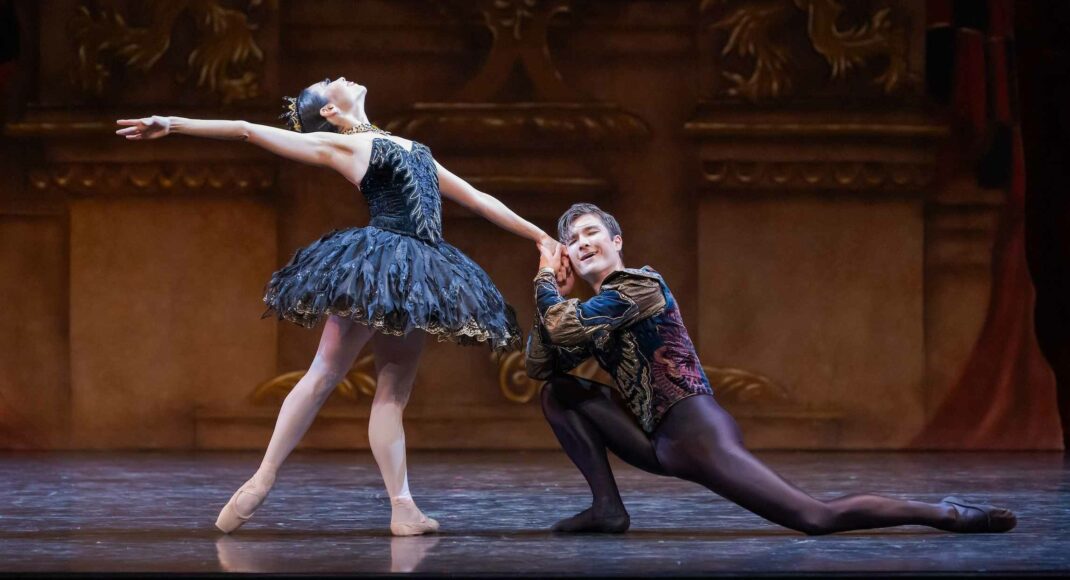
Apart from being moved by the Reiners/Kadow connection, it was interesting to watch the unfolding of McGregor’s choreography. With Infra he worked within the classical medium but pushed that medium to exceptional lengths. In particular, his choreography moved away from the classical notion that the body is centred on an erect spine. In Infra it was quite noticeable that the spine was often curved with the dancers pushing the pelvis backwards and forwards to remove and then reinstate the straight line of the spine. Great work from RNZB.

Next was Sarah Foster-Sproull’s newly-commissioned work, To Hold, again dealing with an abstract idea, ‘ways of holding and being held’. This idea was constantly made clear by the groupings Foster-Sproull created throughout the piece. Often the dancers gathered together in large, tightly-held arrangements. Often too they joined arms to create various groupings. Frequently the hands, often with fingers spread wide apart, were very prominent. To my mind this focus on joining hands in various ways meant that other choreographic moves seemed of secondary importance. I would have loved to have seen more variation rather than the work being overburdened by ‘togetherness’.

A moment from Sarah Foster-Sproull’s To Hold. Royal New Zealand Ballet, 2024. Photo: © Stephen A’Court.

The bright blue costumes by Donna Jefferis moved beautifully as the choreography, and the score by Eden Mulholland, unfolded. The costumes added a visually impressive element to the work.

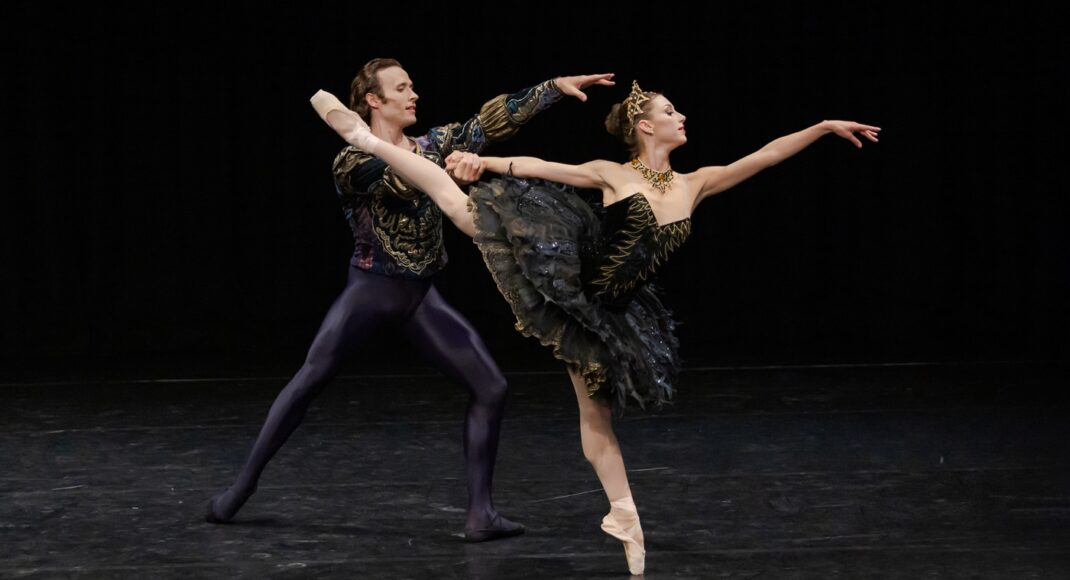
The evening ended with another new work, High Tide, created by Australia’s Alice Topp to music by Icelandic composer Ölafur Arnalds. Topp writes that the work is ‘a tender look at the isolating experiences of fear and our ever-changing shadows’. High Tide consisted largely of duets, a dance format that is a specialty of Topp’s choreographic approach. Topp showed off her skill at developing lifts and partnership moves that were often quite spectacular in the way bodies linked up. Dancers were, for example, often held upside down or in twisted positions, and they frequently pulled away from each other while still maintaining a physical connection. Topp’s choreography is firmly classically based but is demanding in its complexity and there were moments when I felt a little anxious about some of the performers. High Tide probably needs more time for the dancers to develop greater confidence and fluidity with Topp’s choreography.

Ana Gallardo Lobaina and Branden Reiners in Alice Topp’s High Tide. Royal New Zealand Ballet, 2024. Photo: © Stephen A’Court
While visually all three works had an impact, the most outstanding collaborative contribution was designer Jon Buswell’s huge and domineering orb that accompanied High Tide. It reflected, on its changing surface and with its movement within the performing space, much of what Topp hoped to express about human experiences.

Solace was a demanding triple bill and RNZB rose skillfully to the occasion. It was an evening to be savoured and enjoyed for what it demonstrated about ballet today.

Update on request. An oral history interview with Alice Topp, recorded for the National Library of Australia, is available at this link. (MP 7/8/24)

Michelle Potter 5 August 2024

Featured image: A scene from Alice Topp’s High Tide showing Jon Buswell’s orb at the back. Royal New Zealand Ballet, 2024. Photo: © Stephen A’Court
Dance diary. July 2024

  • Looking ahead …

As August approaches I am looking forward to a number of dance performances beginning in Wellington with Royal New Zealand Ballet’s triple bill program Solace. Solace opens on 1 August and consists of Wayne McGregor’s Infra and two new works, To Hold by Sarah Foster-Sproull and High Tide by Alice Topp. Infra was seen in Australia in 2017 when it was performed by the Australian Ballet in a season called Faster. It is not my favourite McGregor work and it suffered somewhat in 2017 by being programmed alongside an absolutely brilliant work, Squander and Glory, by Tim Harbour. But I am very much looking forward to seeing the new works by Foster-Sproull and Topp.

I interviewed Topp in November for the National Library of Australia’s oral history program. It is available to listen to online at this link.

Then, in mid-August, the fifth Ballet International Gala begins a series of one night stands in Perth, Brisbane, Melbourne and Canberra. Annoyingly it is not clear which works will be presented in Australia. Nor is it clear which dancers will be performing. I guess we just have to wait and see! Here is the website, which may eventually include some specific information.

Iana Salenko and her husband and dance partner Marian Walter in a moment from Swan Lake. Photo: © Carola Hoelting

  • News from James Batchelor

James Batchelor was recently funded by artsACT to develop a new work ‘inspired by the late choreographer, Tanja Liedtke.’ This follows on from his Shortcuts to familiar places, which examined the influence of Gertrud Bodenwieser on those who were close to her and those who followed her methods of dancing and teaching.

Liedtke’s career was relatively short. She tragically died when quite young (she was just 29) and, while she was definitely an influential choreographer, she was, as a result of her early death, without the extended connections Bodenwieser had developed over many decades. So, it will be interesting to see how Batchelor develops this new work.

  • News from QL2 Dance

Late in July, at the invitation of the Australian Embassy in Thailand, some dancers from Canberra’s youth group QL2 Dance performed in Bangkok as part of a large-scale event to celebrate the birthday of His Majesty King Maha Vajiralongkorn Phra Vajiraklaochaoyuhua. Two First Nations’ dance artists, Julia Villaflor (Wagiman) and Jahna Lugnan (Bundjalung, Gumbaynggirr) were part of the celebration and performed Connected, a duet they had created that acknowledges and explores their connection to the land and each other. Villaflor and Lugnan were accompanied on their journey to Bangkok by Alice Lee Holland, incoming director of QL2 Dance.
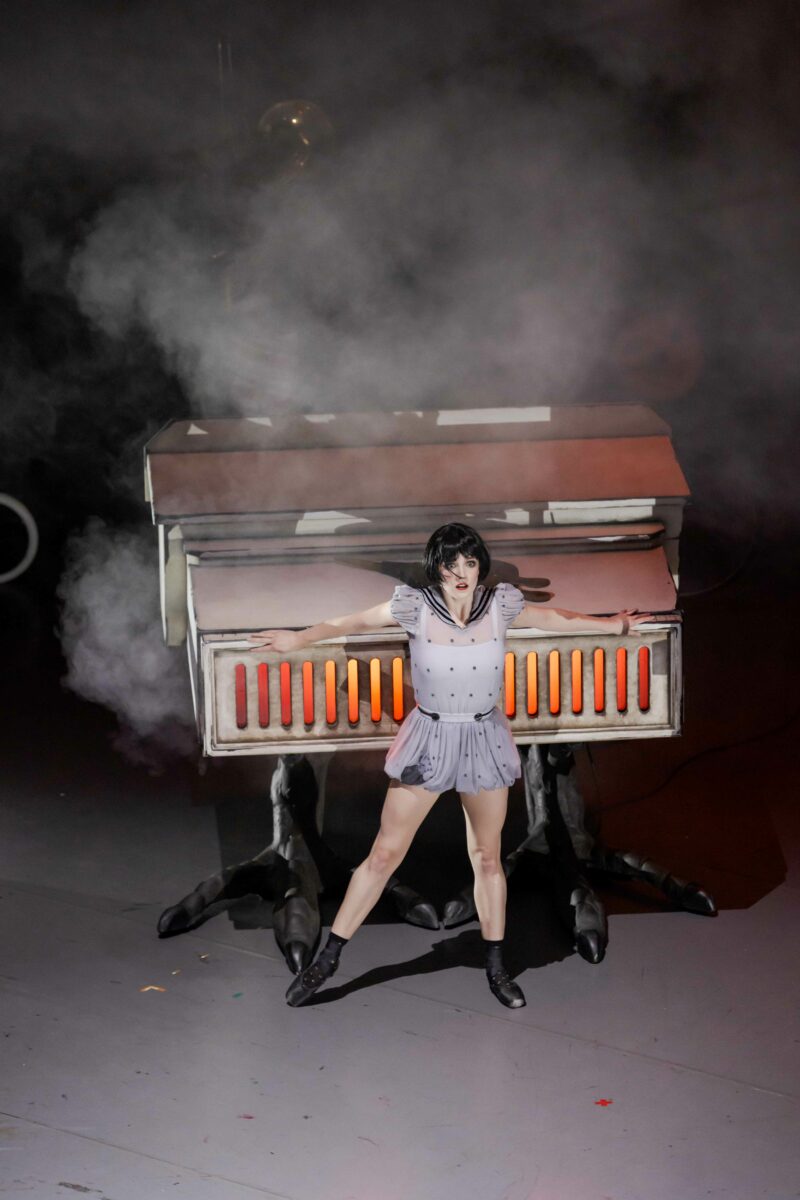
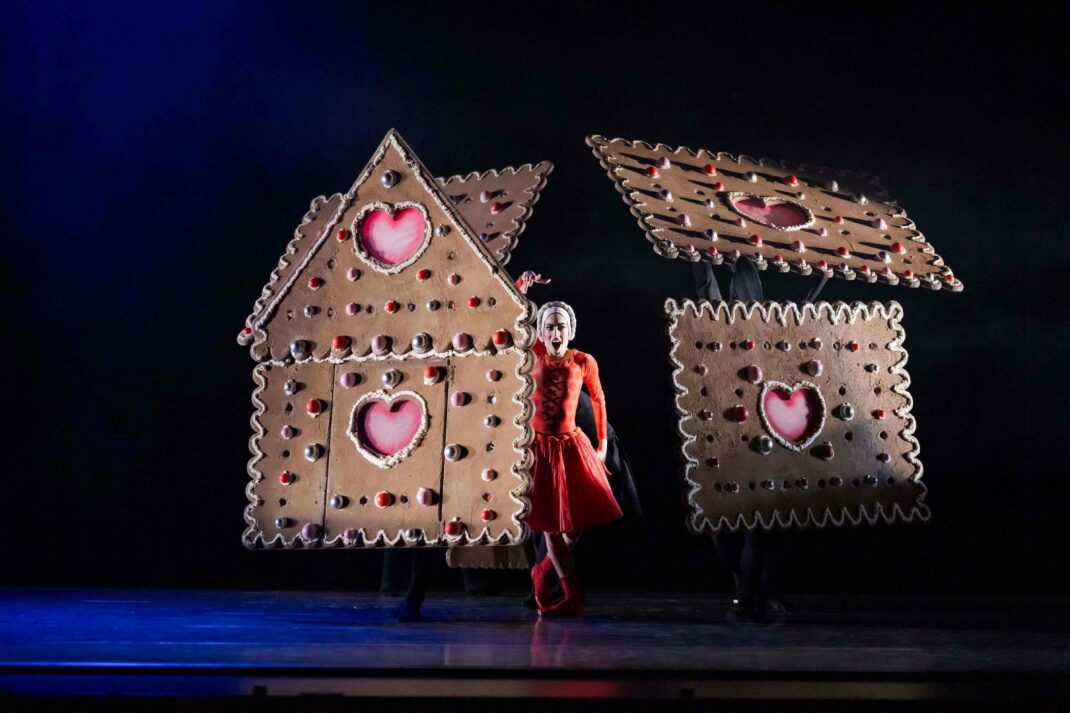
Jahna Lugnan and Julia Villaflor working in the QL2 Dance studio, Canberra. Photo: © O&J Wikner Photography

  • Last minute July news.

Leanne Benjamin is to leave her role as artistic director of Queensland Ballet. Read the media release at this link.

  • Press for July 2024

‘Bangarra shares the dance stage to great effect.’ City News (Canberra). Online at this link.

MIchelle Potter, 31 July 2024

Featured image: Ana Gallardo Lobaina and Branden Reiners in Alice Topp’s High Tide. Royal New Zealand Ballet, 2024. Photo: © Ross Brown