We Come Together to Dance. Quantum Leap Australia

My review of We Come Together to Dance was published online by CBR CityNews on 17 October 2026, following its premiere performance on 16 October. The review below is a slightly enlarged version of the CityNews post. Follow this link to the CityNews review.

******************

16 October 2026. Belconnen Arts Centre, Canberra

We Come Together to Dance is the 2026 production for Quantum Leap Australia’s Chaos project. Chaos has been an annual event for Quantum Leap Australia for many years now and the 2026 production sets out to show different aspects of why and how the art of dance engages aspiring artists of various genders and ages.

Four professional dancers and choreographers, including Pat Hayes Cavanagh, Gabriel Sinclair and Isabella Stone, worked with a cast of 40 dancers of various ages. The choreographers, with input from the dancers as is the usual process, created an opening and a closing piece along with five sections in between. These mid-sections focused on different reasons for coming together: To Dance ‘Til We Drop, To Grow, To Come Together, To Be Who We Are, and To Belong. 

Choreographically, I thought We Come Together to Dance was quite repetitive. My impression was that the hand and arm movements were quite sharp and geometric in pretty much every section. There was also a lot of running across the stage space and several occasions when gymnastic movements, such as hand stands, cartwheels and forward rolls, were inserted. In addition, in the past I have always enjoyed the way Chaos projects have created various arrangements of dancers in appealing groupings. Sometimes these groupings have been stationary: at other times they have moved around the stage. But they have mostly been well maintained over a period of time and thus always became an impressive choreographic addition. There were efforts to do this at various stages of We Come Together to Dance, but the appeal was lost when the dancers had not been rehearsed sufficiently to hold the groupings together in an adequate manner. The entire program appears to have been created in just 10 or so days (as mentioned in the program). This is not enough time, in my opinion, to put together an hour long production when working with young people, some of whom have hardly any performance experience..

Lighting by Owen Davis (and the choreographers as the program notes state) was a highlight. It often took in the audience in a small but not overly annoying manner, which perhaps suggested that we too had come together if not to dance but at least to watch others dance. Sound, as mastered by Kimmo Vennonen, was contemporary and varied and came from composers from around the world, including from Belgian musician Stromae and the English band Spandau Ballet. Costuming was attractive at times, especially in parts of To Be Who We Are where black, gold and sparkly items were apparent.
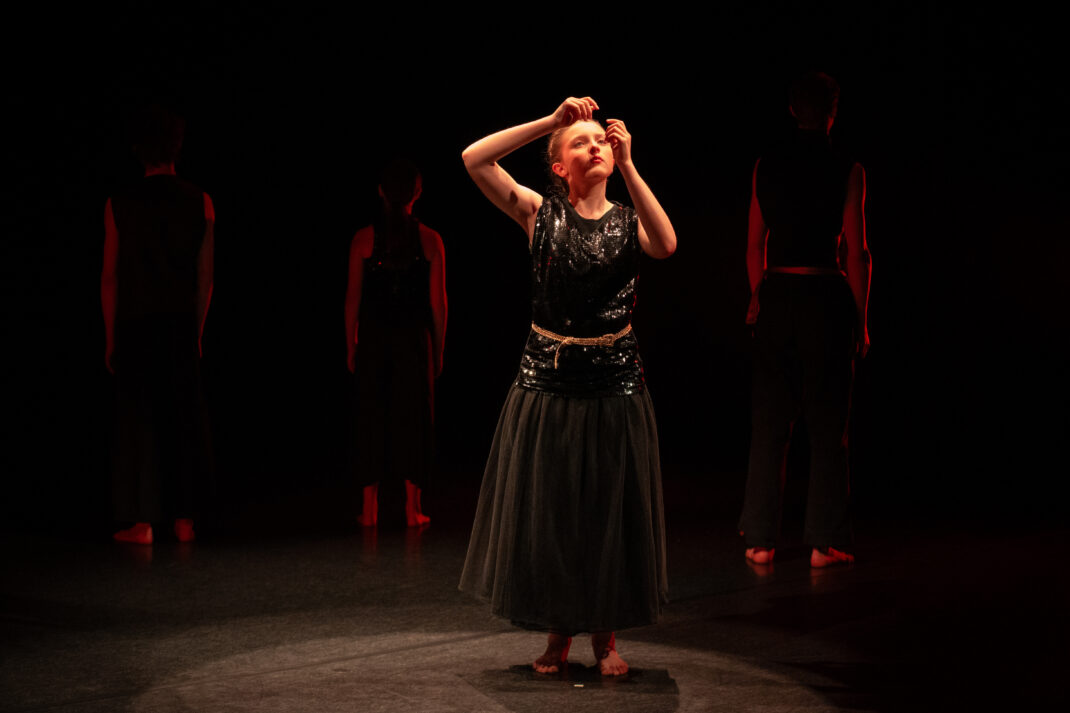
A moment from To Be Who We Are from We Come Together to Dance, Quantum Leap Australia, 2026.Photo: © Olivia Wikner, O&J Wikner Photography


But in many sections the costuming was overly varied in colour and style. Simplicity and similarity are often better as was very clear with the simple jackets for Gabriel Sinclair’s We Dance to Come Together. They added so strongly to the idea behind his work that environments develop that may mean that dance is forgotten.
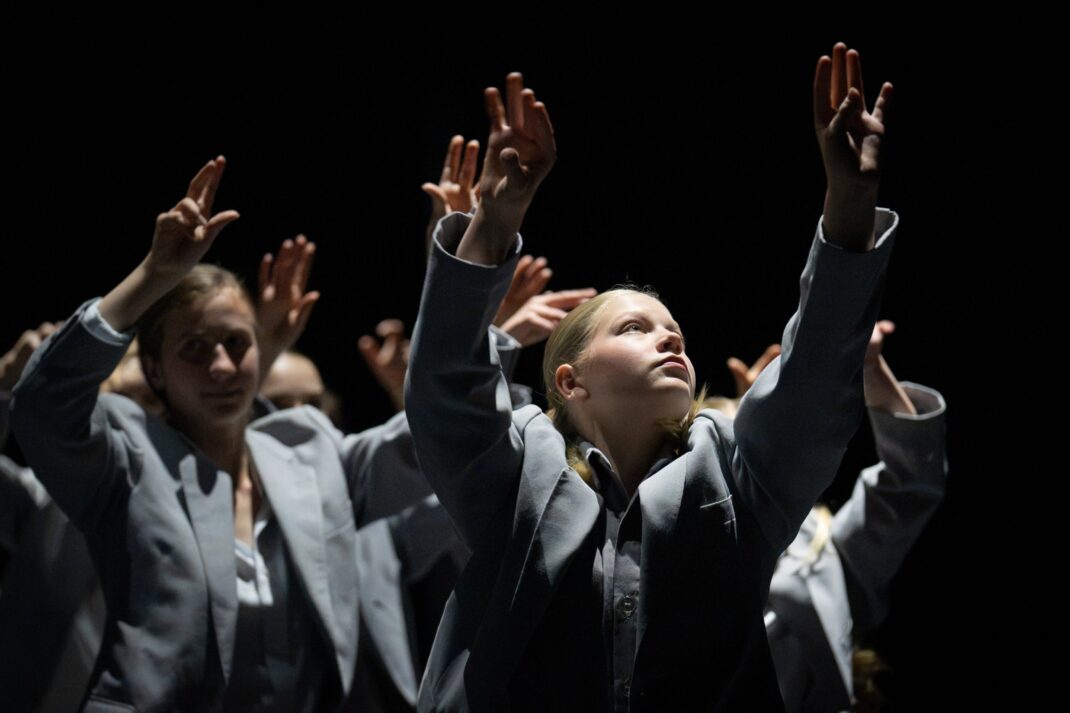

A moment from We Dance to Come Together from We Come Together to Dance, Quantum Leap Australia, 2026.Photo: © Olivia Wikner, O&J Wikner Photography
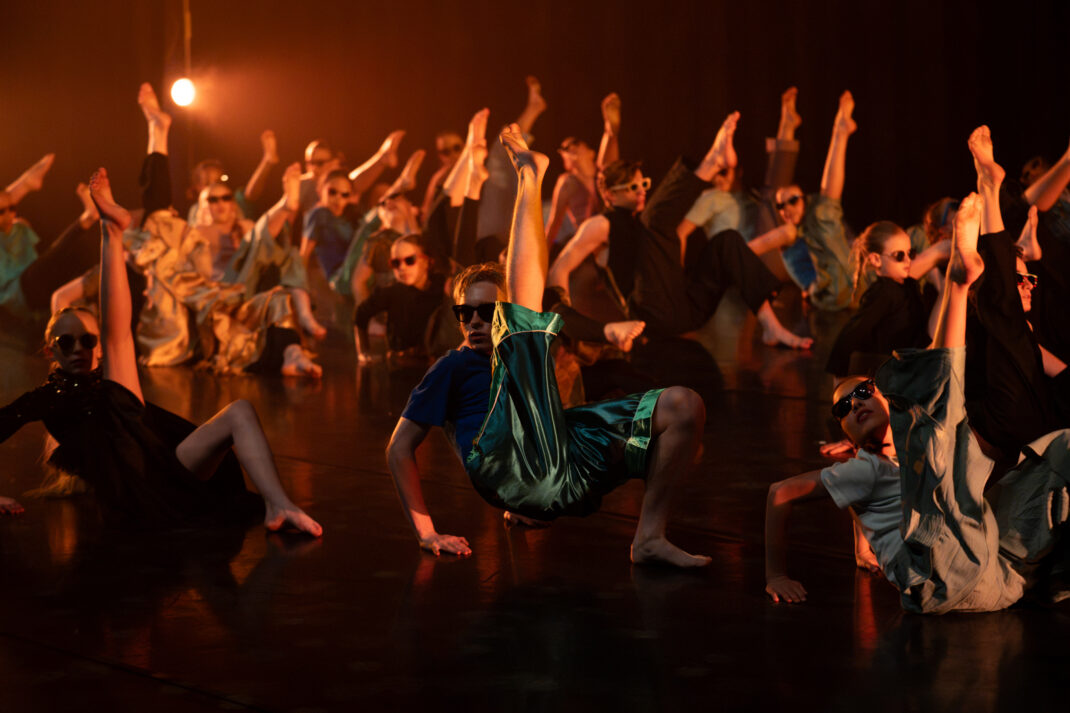
The opening section, in which all 40 dancers occupied the performing space, and in which all 40 of them were wearing sunglasses (as they were in the closing moments as well), was definitely a somewhat startling beginning. But We Come Together to Dance was far from my favourite Chaos project from the many I have seen over the years.

The use of the word chaos as the title for an ongoing production idea has always made me think of the development process. But for me this 2026 Chaos project was chaotic on stage as well. I’m hoping that next year’s Chaos project will feature a stronger overall appearance and less repetitive movement.

Michelle Potter, 18 October 2026

Featured image: A closing moment from We Come Together to Dance, Quantum Leap Australia, 2026.Photo: © Olivia Wikner, O&J Wikner Photography


I was a guest of Quantum Leap Australia at this performance.
Dance diary. September 2025

  • Nutcracker … again

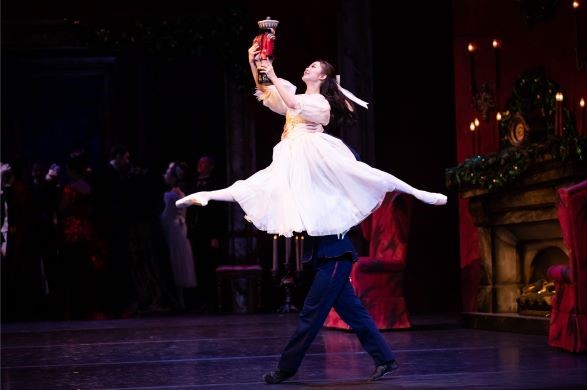
I was a little taken aback on receiving information about the 2026 Australian Ballet season to see that Peter Wright’s Nutcracker will again feature in that season. As usual it will be part of the end of year activities and will be performed in Sydney from 28 November until 16 December.

I fully understand that Nutcracker, in its traditional format, is a much-loved Christmas show—as a young person I used to look forward to it at Christmas time—and it is a great money-maker for ballet companies across the world. But subscribers to the Sydney season saw it last in December 2024. In December 2026 it will be just a two year break between showings and in my opinion it shouldn’t become (as seems to be happening) a regular feature of the subscription season.

As an added complaint, why does it always have to be the Peter Wright version—as strong and entertaining as that production is?* The Australian Ballet has in its repertoire a great version of Nutcracker, a very different, very Australian production from Graeme Murphy. While the Murphy production is not as uniquely Christmas-oriented as the traditional versions, it does have links to Christmas. Why can’t we have it occasionally? And there are other productions of Nutcracker that could also take the place of the Peter Wright version, as much as anything else for some variety.

Perhaps the Australian Ballet might reconsider the timing of its performances of Nutcracker—not put them just two years apart for example, or even alternate the Peter Wright version with another, or others? Perhaps they might even consider removing Nutcracker from subscription packages and making it a stand-alone Christmas event?

And just as an aside, my ticket for the 2026 Nutcracker cost me $245 as part of my subscription package. That seems like a lot to see something that was shown just two years ago.

  • Isabelle Stoughton

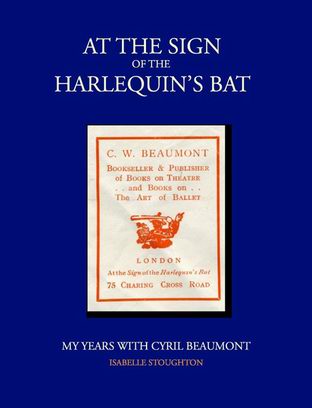
I heard from a reliable source just recently that Isabelle Stoughton had died in August 2025. She was the author of a truly charming book, At the Sign of the Harlequin’s Bat, in which she wrote about her career as an assistant to London-based dance historian and book seller Cyril Beaumont. The news sent me back to the book, which I reviewed in 2012, shortly after it was first published in 2011. The reread was a worthwhile activity and gave me much pleasure.

My review is at this link.

  • Contact form

I am very pleased to be able to inform users of this website that the contact form, which has been out of action for months and months, is now back in operation. I can vouch for its positive renewal as a number of contact comments have arrived since its reinstatement and have been successfully addressed.

  • Press for September 2025

– ‘Untouching dancers bring Superposition to life.’ Review of Superposition. Gabriel Sinclair and Jazmyn Carter. CBR City News, 14 September 2025. Online at this link.

MIchelle Potter, 30 September 2025

*A review of the 2019 Wright production is at this link. It indicates quite clearly that I am not intrinsically opposed to the Wright version.

Featured image: Yuumi Yamada as Clara in The Nutcracker. The Australian Ballet, 2019. Photo: © Daniel Boud

Superposition. Gabriel Sinclair and Jazmyn Carter

My review of Superposition was published online by Canberra CityNews on 13 September 2025. The review below is a slightly enlarged version of the CityNews post. Here is a link to the CityNews review.

***********************************

12 September 2025. Courtyard Studio, Canberra Theatre Centre

A new event on the calendar of the Canberra Theatre Centre, a two-week season of new creations across the field of the performing arts, began on 12 September 2025. Called The Independents—Festival of New Work, its first week included a dance duet called Superposition from independent artists Gabriel Sinclair and Jazmyn Carter.

I have to admit that the word ‘superposition’ was not previously part of my vocabulary, but I was curious to know what it might mean in relation to a new dance work with that word as its title. With a little research, I discovered that superposition was basically a scientific term, common in physics and mathematics. It referred to the combination of two distinct physical phenomena of the same type so they coexist with each other. But in a simpler description it might mean placing one object in the position of another to show that the two coincide.

The dance concept was brought to life by Sinclair and Carter. They began their performance in a circle of light projected onto the floor of the Courtyard Studio of the Canberra Theatre Centre by lighting designer Rhiley Winnett. At first the dancers remained in the centre of this small circle of light but, as the work progressed, they began moving to the edges of the circle and back again, with the circle of light expanding and contracting as necessary. Aspects of the lighting design changed slightly on occasions throughout the piece with coloured light briefly shining down on the dancers and affecting the colour of their costumes (and their skin). But the circle remained.

As the work began, the movement showed the dancers’ arms and hands twisting and turning around and across each other. It was small but complex movement done with arms and hands remaining close to the body but never touching. Slowly, very slowly, the movement of the arms became broader and more expansive and the interaction became more intense. But the dancers continued to perform without physical contact. Here was the superposition of the title—two figures coexisting but not actually connecting.

While the movement was somewhat varied in the speed at which it was performed, and while the complexity of the movement continued throughout without any physical contact, perhaps what gave the performance a particular interest in relation to the concept of superposition was that the dancers were human beings rather than inanimate objects. Occasionally, very occasionally, it seemed that the movement involved a human emotion. This was especially the case with Sinclair’s performance when there were occasions when his face and upper body seemed to be showing some kind of emotion. I got the feeling that he was actually engaging with Carter in a way that was beyond physicality. This doesn’t happen with rocks, waves and other aspects of nature that are often involved in scientific superposition.

A score, created I understand by Gabriel Sinclair, was basically background sound rather than a musical accompaniment. Media notes describe it as a ‘reactive, cybernetic soundscape’. It consisted of a wide variety of sounds, sometimes soft, sometimes loud, sometimes grinding or crashing, but with pretty much everything recalling day to day noises.

For me the work, at approximately 60 minutes, was a little too long. I think the point was made quite early on, although it was quite fascinating to speculate on the remarkable complexity of the movement, and the even more remarkable fact that the dancers never touched each other despite that complexity. But my mind wandered. 

It was the costumes by Leanne Carter that kept me interested. They consisted of long skirts that moved beautifully, and close-fitting, long-sleeved tops that never got in the way of the movement of the hands and arms. Made from an assortment of materials of different patterns and colours, with a strong presence of red, they were a highlight. Thankfully!


Michelle Potter, 13 September 2025.

All images show Gabriel Sinclair and Jazmyn Carter in performance. Photos: © Andrew Sikorski

I was a guest of Canberra Theatre Centre at this performance.