30 October 2025. St. James Theatre, Wellington with New Zealand Symphony Orchestra reviewed by Jennifer Shennan
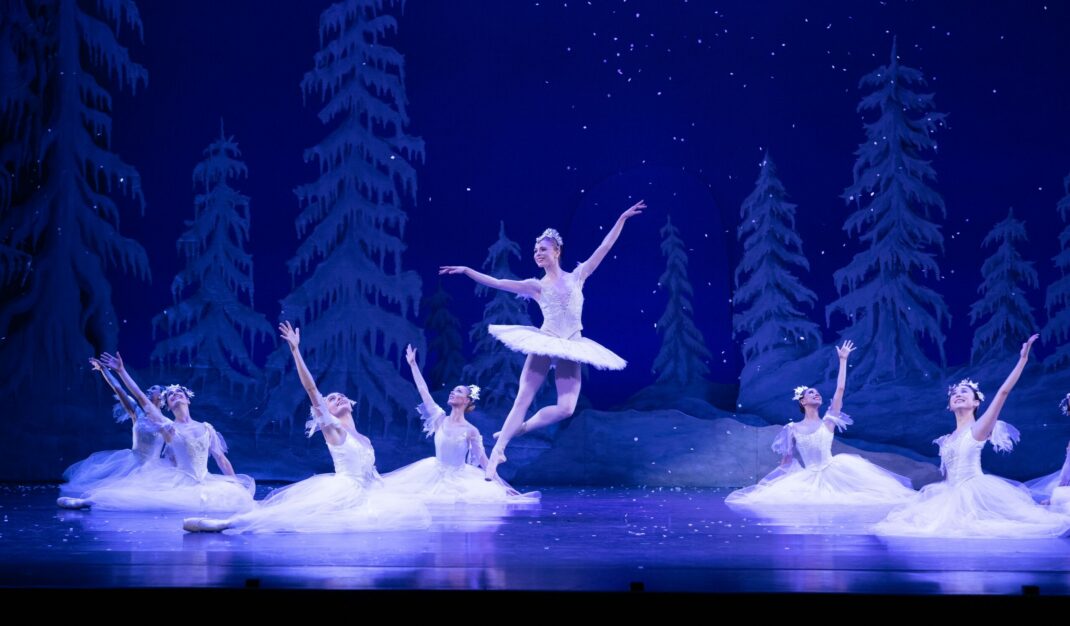
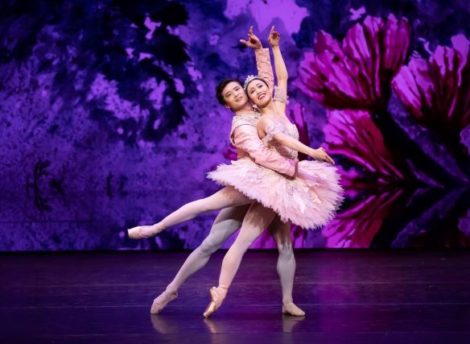
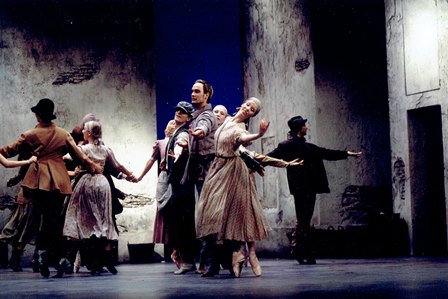
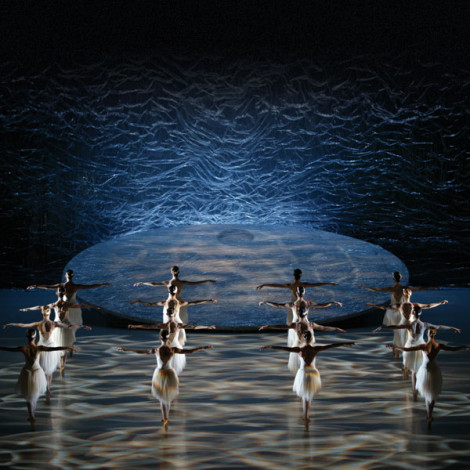
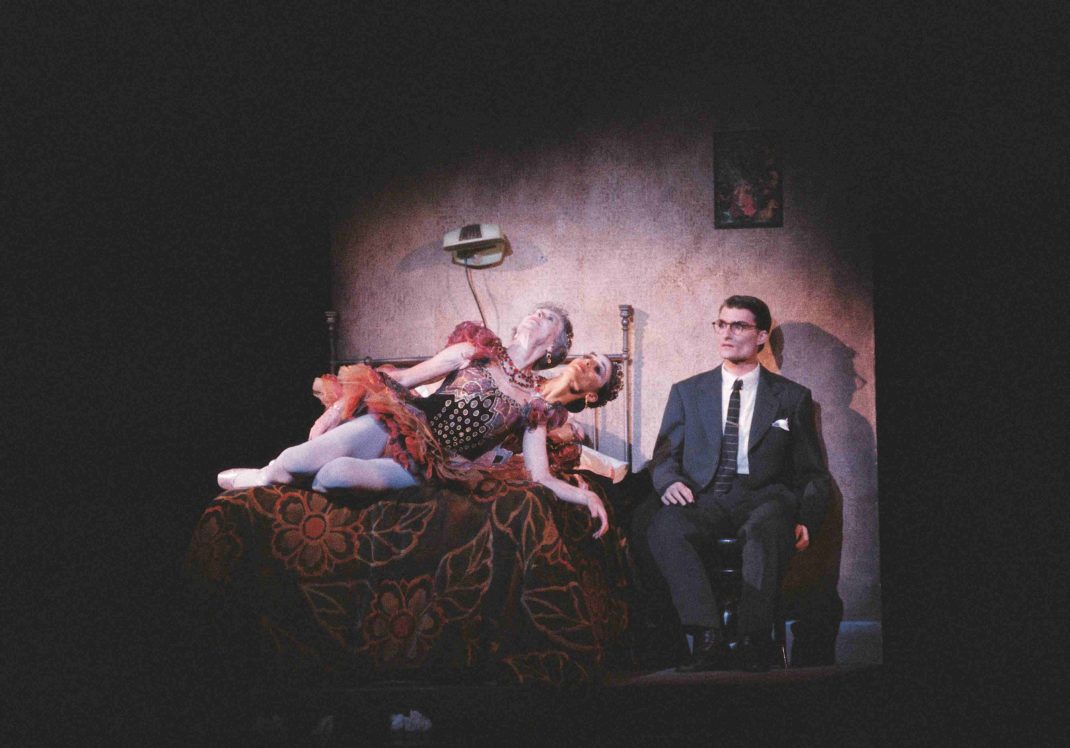
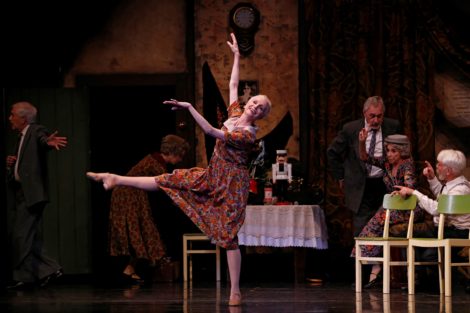
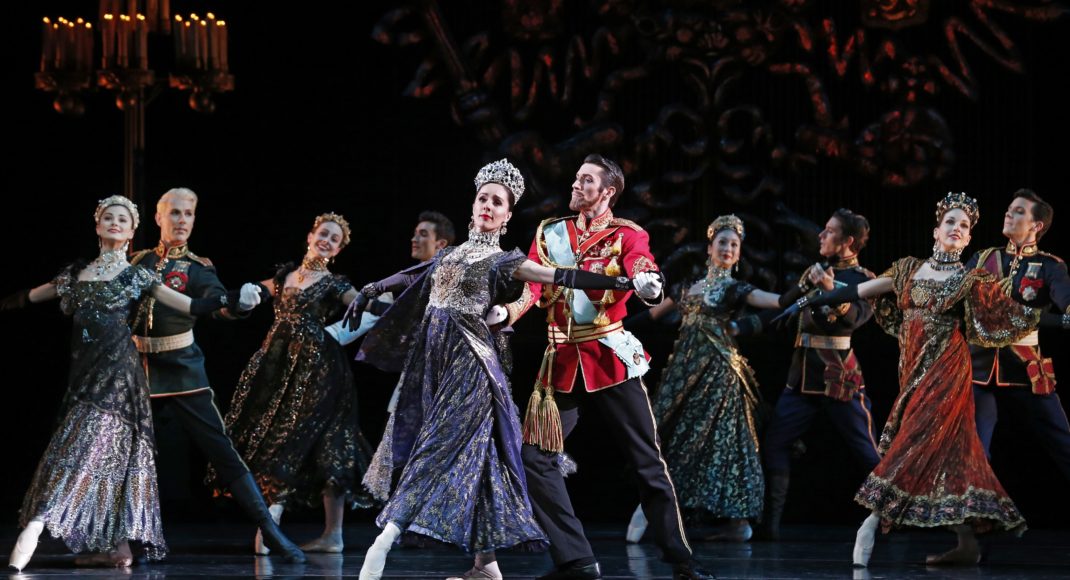
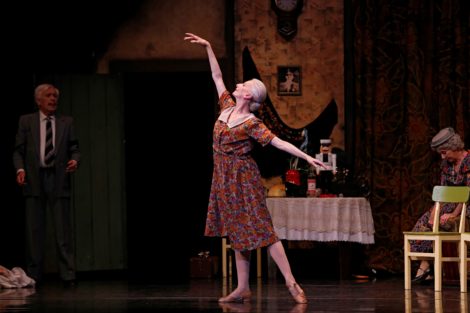
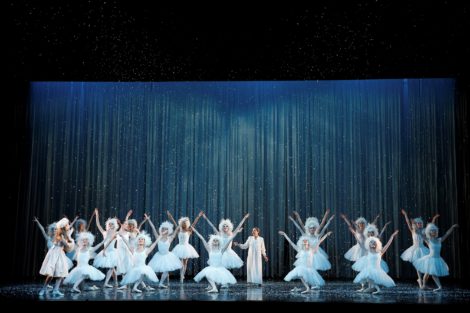
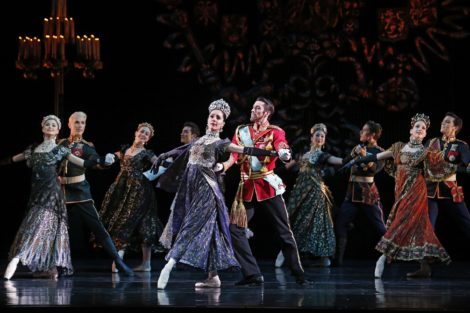
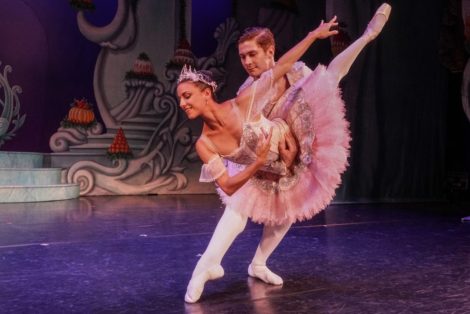
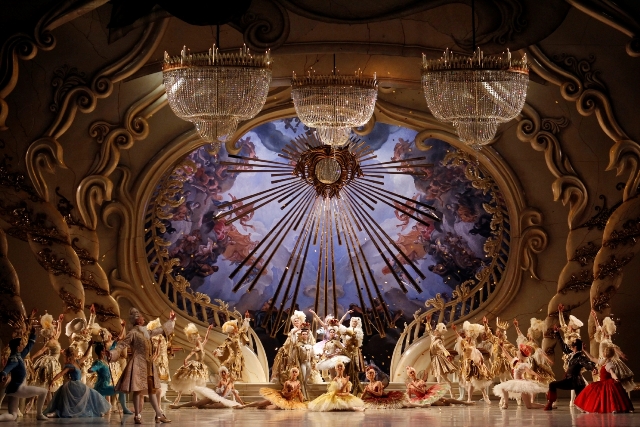
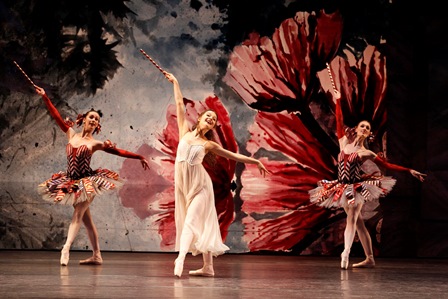
Royal New Zealand Ballet’s Artistic Director, Ty King-Wall, has created a new production of The Nutcracker, a fun-filled frolicking entertainment set among images of New Zealand landscape, flora and fauna, childhood summer holidays in the bach, games on the beach, with sweets and treats for a major sugar rush and lashings of nostalgia.
The choreography is more than that though, and stitches in themes and sequences from the traditional story and productions as it traces the family context for the coming of age of Clara, the young girl growing to sense and glimpse the adult world. There are poignant undertones as the present is braided with an older family member’s memory of the past, the younger one’s glimpse of the future, and parents’ moment of danger when a child goes missing.
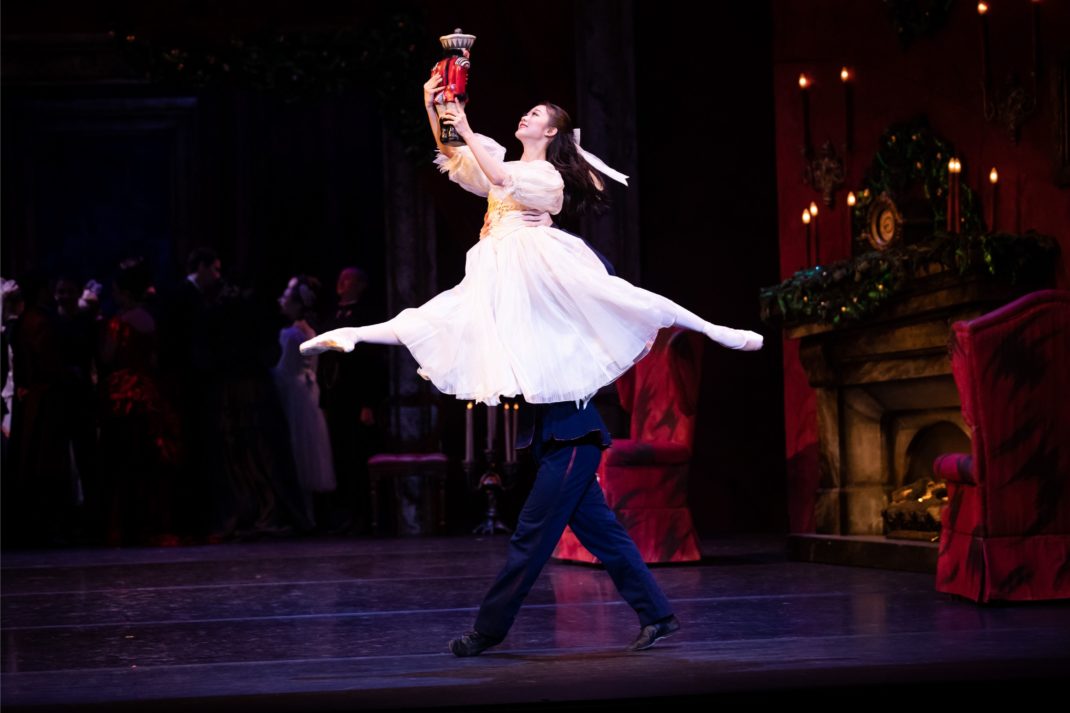
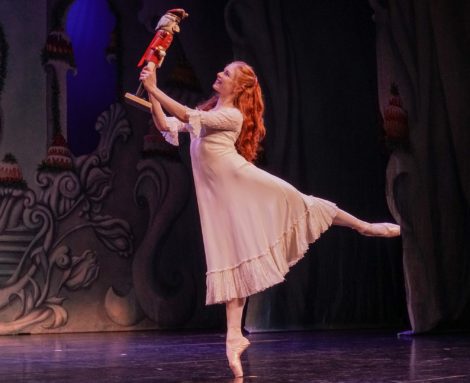
A key figure is Aunt Drosselmeyer, a famous dancer who returns from abroad with mysterious powers plus gifts for the family, including a Nutcracker doll for Clara, and a snow globe for brother Fritz. She also brings a film projector to show the children a cameo of a Commedia dell’Arte performance, which opens a door away from the everyday and into the faraway, wherever a child’s imagination will take us. The power and colour of Tchaikovsky’s large scale orchestral score, conducted by the invincible Hamish McKeich, feeds these forces and fills the theatre with atmosphere.
Inventive design by Tracy Grant-Lord and POW studios begins with the overture—a front curtain of a 1950s postcard (you possibly still have one in the attic?) a painting of native flowers and trees—kōwhai, mānuka, pōhutukawa, rātā, harakeke, tī and ponga. But wait, that kōwhai blossom moves in the gentlest of breezes, and then a mānuka flower shimmers. Now from behind a bush, a creature, part honey-bee part buzzy-bee, emerges in search of nectar. Better keep an eye on that as later in the ballet it will become a ski-plane to transport you to a mountainous kingdom of snow in our very own Southern Alps. It’s an inspired visual effect to show the country’s landscape from the plane’s windows as we travel.
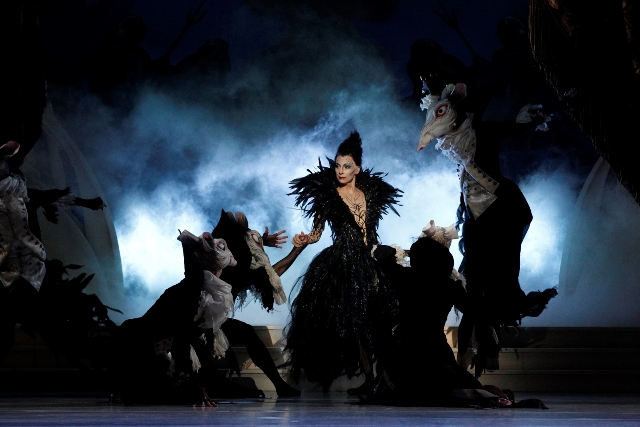
There are numerous other design transformations—small tree grows into a giant forest, complete with red-eyed predators, possums, stoats and weasels to be exterminated. Smart soldiers from the Nutcracker army need additional help from Clara as she fires a weapon that exterminates the biggest bully Mouse King (I’d have called him a Rat as he falls into the foundations of the ballroom he was planning to build).
A ruru sounds a convincing call of warning, and gives me the shivers.
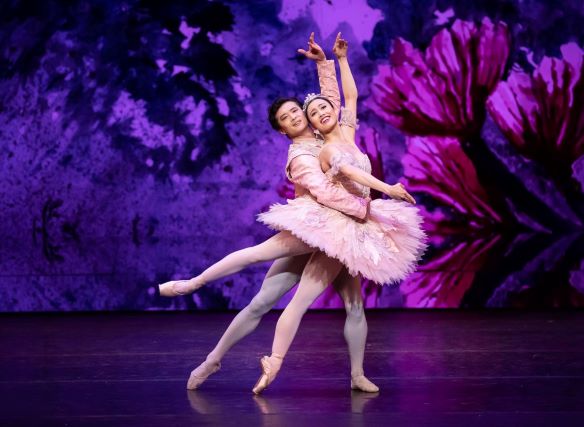
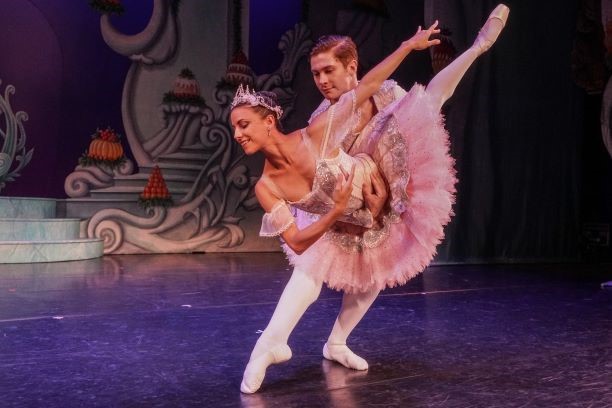
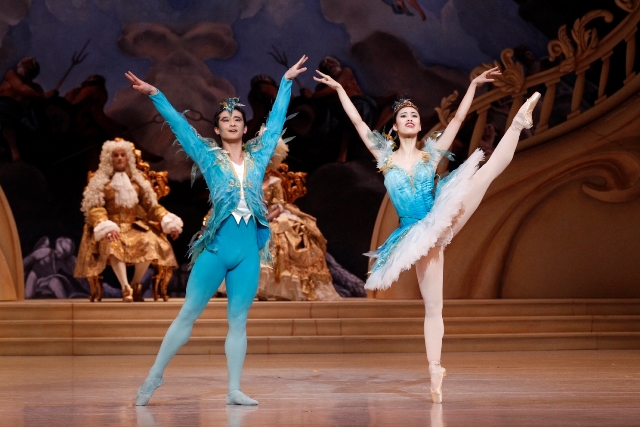
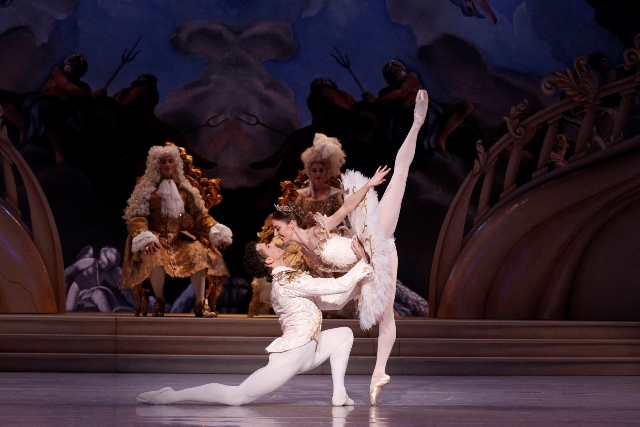
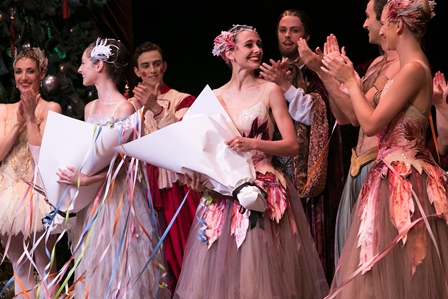
There are a number of standout performances on opening night, though it’s noteworthy that several alternative soloist casts are billed for the extended Wellington season and following national tour—testament to the company’s strengths. Caterina Estevez-Collins plays a charming and sensitive Clara. Laurynas Vejalis as the Nutcracker-turned-Prince dances with remarkable virtuosic technique but is able to overlay that with a lyricism that rides the music with meaning. Mayu Tanigaito as the Sugar Plum Fairy makes a most welcome return to the stage, and the pas de deux she and Vejalis dance is of rich quality and harmony, an act of love, and the highpoint of the evening.
Character roles include Kirby Selchow as Aunt Drosselmeyer, carrying that with great style. Shaun James Kelly as a drunken kereru makes an amusing mess of trying to fly. Kihiro Kusukami as the powerful Storm Master dances up an impressive wind in the Land of Snow.
I have recently read The Dreaming Land—a memoir by Martin Edmond of his childhood in Ohakune in the 1950s. He writes of ‘the existence of a world of Maoridom about which most Pakeha knew nothing … there was simply no awareness among the people I knew that we lived cheek by jowl with a strong, coherent and richly complex culture. It is a lack I profoundly regret.’ This new choreography poignantly encompasses that notion by including the small but noteworthy role of Koro, the Maori grandfather of Clara, with Moana Nepia and Taiaroa Royal alternating in the part. Koro gifts a blanket to his granddaughter, and comforts her when she needs that. He dances for a fleeting moment with the memory of his late wife, a kind of ghost of Christmases past.
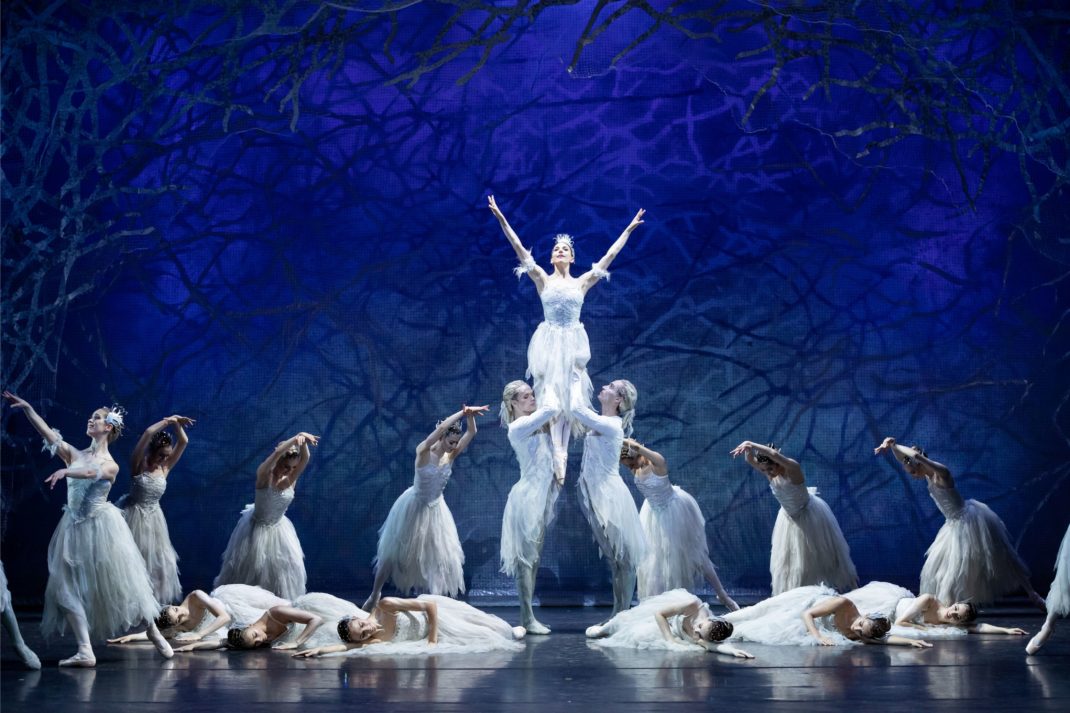
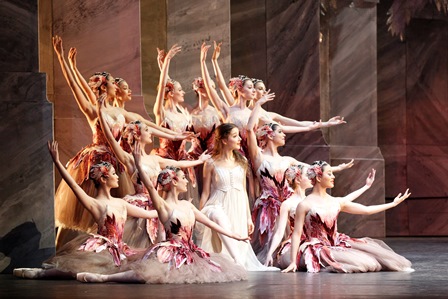
There is much energy in the band of children, and the ensembles of snowflakes, flowers and somewhat over-dressed confectionery, to make this a production that will draw enthusiastic crowds as it tours the country. Haere rā to them all.
It is always interesting to see the impact a change in artistic directorship has on the repertoire of a dance company. Newly appointed director of Queensland Ballet, Spanish-born Ivan Gil-Ortega, has announced a program for 2026 in which Queensland Ballet will perform works from a range of overseas-based choreographers, reflecting Gil-Ortega’s strong European background and dance heritage.
Christian Spuck from Germany, for example, will open the season with a staging of his Messa da Requiem, a collaboration on this occasion with Queensland Symphony Orchestra, Brisbane Chorale and Canticum Chamber Choir. Messa da Requiem will take place in the newly completed Glasshouse Theatre at the Queensland Performing Arts Centre, which I saw just recently as it was nearing completion. It looks spectacular (from the outside anyway).
Scene from Messa da Requiem, Dutch National Opera and Ballet
Further on in the year, Serbian-born choreographer Leo Mujić, who is currently working with the Croation National Theatre and who has created works for companies across Europe, including Dutch National Ballet and Paris Opera Ballet, will stage the Australian premiere of his production of Hamlet. Then Derek Deane from England, whose production of Strictly Gershwin was a huge hit on the two occasions (in 2016 and 2023) when it was performed by Queensland Ballet, will present a new version of Nutcracker. The works of other choreographers from overseas are also being shown during the 2026 season.
But there will be work from Australian choreographers as well, notably from Garry Stewart who directed Australian Dance Theatre in Adelaide for more than 20 years. Stewart’s latest work, Elastic Hearts, will be part of the 2026 season. Set to music by Sia, Stewart describes Elastic Hearts as ‘a creative response to the music of Sia Furler, the celebrated Australian artist, originally from Adelaide and now based in LA.’ It will be a thrill to see Stewart’s highly physical choreography onstage once more.*
For more on the 2026 program, including work for the Academy of Queensland Ballet, follow this link.
Michelle Potter, 16 October 2025
*Elastic Hearts will have a very brief showing on the Gold Coast in November, its world premiere showing, before being part of the 2026 season.
Featured image: Study for Garry Stewart’s Elastic Hearts.
I was a little taken aback on receiving information about the 2026 Australian Ballet season to see that Peter Wright’s Nutcracker will again feature in that season. As usual it will be part of the end of year activities and will be performed in Sydney from 28 November until 16 December.
I fully understand that Nutcracker, in its traditional format, is a much-loved Christmas show—as a young person I used to look forward to it at Christmas time—and it is a great money-maker for ballet companies across the world. But subscribers to the Sydney season saw it last in December 2024. In December 2026 it will be just a two year break between showings and in my opinion it shouldn’t become (as seems to be happening) a regular feature of the subscription season.
As an added complaint, why does it always have to be the Peter Wright version—as strong and entertaining as that production is?* The Australian Ballet has in its repertoire a great version of Nutcracker, a very different, very Australian production from Graeme Murphy. While the Murphy production is not as uniquely Christmas-oriented as the traditional versions, it does have links to Christmas. Why can’t we have it occasionally? And there are other productions of Nutcracker that could also take the place of the Peter Wright version, as much as anything else for some variety.
Perhaps the Australian Ballet might reconsider the timing of its performances of Nutcracker—not put them just two years apart for example, or even alternate the Peter Wright version with another, or others? Perhaps they might even consider removing Nutcracker from subscription packages and making it a stand-alone Christmas event?
And just as an aside, my ticket for the 2026 Nutcracker cost me $245 as part of my subscription package. That seems like a lot to see something that was shown just two years ago.
Isabelle Stoughton
I heard from a reliable source just recently that Isabelle Stoughton had died in August 2025. She was the author of a truly charming book, At the Sign of the Harlequin’s Bat, in which she wrote about her career as an assistant to London-based dance historian and book seller Cyril Beaumont. The news sent me back to the book, which I reviewed in 2012, shortly after it was first published in 2011. The reread was a worthwhile activity and gave me much pleasure.
I am very pleased to be able to inform users of this website that the contact form, which has been out of action for months and months, is now back in operation. I can vouch for its positive renewal as a number of contact comments have arrived since its reinstatement and have been successfully addressed.
Press for September 2025
– ‘Untouching dancers bring Superposition to life.’ Review of Superposition. Gabriel Sinclair and Jazmyn Carter. CBR City News, 14 September 2025. Online at this link.
MIchelle Potter, 30 September 2025
*A review of the 2019 Wright production is at this link. It indicates quite clearly that I am not intrinsically opposed to the Wright version.
I have admired, for many years now, the activities of Philippe Charluet and his company Stella Motion Pictures. His activities with dancers and dance companies, in particular the companies and work of Graeme Murphy and Meryl Tankard, have been extraordinary and of major historical significance. Of particular importance is his Heritage Collection, which documents the career of Murphy and Janet Vernon and the artists they worked with over the years.
But just yesterday he contacted me to let me know that he had made three short videos as tributes to three dancers who had just recently died: Garth Welch, Colin Peasley and Louise Deleur. I have his generous permission to use them.
Below is a link to the tribute to Garth Welch. Included are some exceptional sections showing him in the role of Aschenbach in Graeme Murphy’s After Venice and a delightful final image of Welch as a very young dancer.
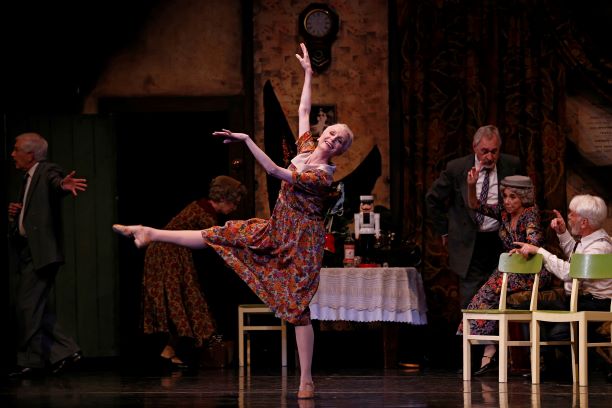
The Colin Peasley tribute has some wonderful footage from Graeme Murphy’s Nutcracker for the Australian Ballet showing Peasley as one of Clara the Elder’s friends, as well as some great material from the Nureyev production of Don Quixote in which Peasley played the role of Gamache, also with the Australian Ballet.
A recent article, written by Madison McGuinness and published on 9 July 2025 in The Greek Herald, had the following two introductory paragraphs:
The Sydney Dance Company captivated a crowd of 5,000 at the Odeon of Herodes Atticus last week, performing Impermanence as part of the Athens Epidaurus Festival 2025.
Set against the historic backdrop beneath the Acropolis, the emotionally charged performance explored the fleeting nature of existence through movement and music.
The featured image on this month’s dance diary (see above) shows SDC dancers taking a ‘curtain’ call in front of that ancient building. It is the image that leads into the Herald article, an image that is credited to Australia’s ambassador to Greece, Alison Duncan, who according to the article ‘hailed the performance as a personal milestone’.
While it was excellent news to hear of the success of Sydney Dance Company, Duncan’s image from Greece reminded me of those wonderful images dating back to the 1960s showing the Australian Ballet dancing at the Baalbek International Festival in Lebanon in 1965 when, for a few nights, they performed in the precinct of the ruined Temple of Bacchus.
I remember seeing images of the dancers in Baalbek but have not been able to find any for this post. The SDC image now takes the place of those 1965 shots, for me at least.
My review of Impermanence (onstage, Sydney 2021) is at this link.
Mandolina Ballerina (Tessa Karle)
Canberra’s Mandolin Orchestra has an interesting show coming up with the evocative title of ‘Mandolina Ballerina’. It features a Canberra-trained dancer, Tessa Karle, who currently performs with Royal New Zealand Ballet. The image below shows Karle in a recent production by RNZB, The Way Alone choreographed by one of Australia’s most admired choreographers, Stephen Baynes.
The image below is an advertising poster for ‘Mandolina Ballerina’, for which Karle has created original choreography, and in which she will perform. The music includes sections from Swan Lake and Nutcracker.
I am hoping to see the show, which will have just two performances on 16 August at the premises of Folk Dance Canberra in the suburb of Hackett. Potentially a review will follow.
The Panov tour … a little more
After reporting in last month’s dance diary on the death of former Russian dancer Valery Panov, I went in search of a little more detail on the 1976 tour to Australia and New Zealand by Ballet Victoria in which Valery Panov and his then wife, Galina Panov, were guest artists. I was able to gain access, via the National Library of Australia, to the program for the Canberra season of the tour, which consisted of three shows at the Canberra Theatre, 21–22 June 1976.
The Canberra program began with Petrouchka, which was the major work presented across venues in Australia and New Zealand.
Petrouchka was followed by Concerto Grosso, a work choreographed by Charles Czarny to music by Handel. It had designs by Joop Stokvis and was originally choreographed for Nederlands Dans Theater in 1971 and given its Australian premiere by that company on tour in 1972. Re-choreographed especially for Ballet Victoria by Czarny it was in seven sections: Warm-up, Boxing, Tightrope, Obliquatory [sic], Skating, Football, and Karate. The Canberra program also included Jonathan Taylor’s Stars End, which was created especially for Ballet Victoria to music by David Bedford. Program notes discuss the work briefly, noting that ‘[It] depicts people meeting people … parting … ultimately everyone is alone.’
The audience also saw two pas de deux choreographed by Panov and danced by him and his wife. One was Adagio célèbre to music by Tomaso Albinoni for which program notes state:
This is a prayer to the dream inside Man. Unfortunately, life cannot keep dreams forever and tension takes the beauty of it away. Man prays to keep this dream forever but remains only with the prayer of his dreams.
The other pas de deux seen in Canberra was Harlequinade to music by Riccardo Drigo with choreography by Valery Panov ‘after Fokine’ and with input from Alexander Gorsky who choreographed Galina Panov’s variation. Program notes read that it concerns, ‘The classic involvement of the two prime characters of the commedia dell’arte, Harlequin and Columbine [in which] Harlequin pays court to the demure soubrette, Columbine.’
Programs for other cities included Les Sylphides and various other pas de deux.
News from James Batchelor
James Batchelor has received funding from artsACT to present his new work Resonance in Canberra. Resonance, which is a response to material Batchelor has been investigating in relation to Tanja Liedtke, will open in Sydney in September before travelling to Melbourne and then to Canberra where it will play on 10-11 October.
In addition, Batchelor has been successful in an application to undertake a Master of Philosophy degree at the Australian National University (ANU). His research proposal is entitled ‘Echoes of the Expressive Dance’ and will pursue further his interest in the growth of the expressive dance technique of Gertrud Bodenwieser. The proposal earned him a full scholarship at the ANU and he will begin work on it shortly.
Michelle Potter, 31 July 2025
Featured image: Dancers of Sydney Dance Company taking a curtain call following a performance in Greece, July 2025. Photo: Alison Duncan
I am thrilled to publish, on behalf of former student of Xenia Borovansky, Elizabeth Kennedy, this tribute to Joy Dalgliesh (1936-2024). As a result of her long friendship with Joy Dalgliesh, Elizabeth is able to reveal to us an image of Madame (as Xenia Borovansky was known to her students and others) that is quite different from what has been written elsewhere. Along the way she introduces us to other little known features of the world of the Borovanskys and I am sure readers will enjoy learning more about the Borovansky family, of which Joy Dalgliesh was clearly a member. Michelle Potter, 27 August 2024.
*****************************************
Remembering Joy Dalgliesh Elizabeth Kennedy
I first encountered Joy Dalgliesh in 1968 when I began lessons at the Borovansky Ballet Academy in Melbourne with Madame Xenia Borovansky. I cannot offer a completely dispassionate account: Joy and I shared many opinions on ballet matters and were bound to share biases as well.
In 1970 I received the first of what would become several invitations to accompany Madame on her annual summer holiday in Daylesford, initially staying at the Villa Camellia, the property of the Russian singer Mara de Renroff.
The author (centre) with Madame and her brother V.R. Smirnoff at Daylesford railway station
Shortly afterwards, Madame bought a holiday house of her own in Daylesford, and on and off over the next ten years I would visit her there or at her house at Grandview Grove where Joy, when not visiting her parents for the weekend, would sometimes be present.
The author at Madame’s with her two dogs Mushchka and Sharek
In 1980 I left Australia to live and continue my university studies in Scotland. On departure Madame gave me a signed photo of herself.
Madame’s apparent pessimism in this dedication was not justified
In the 1990’s Joy and I resumed contact, albeit from different continents, and from the early years of 2000 were in frequent communication. Our last contact was at the end of 2023, shortly before she died.
In 2013 Joy sent me some hand copied excerpts from some of the cards she received from Madame:
Joy arrived in Melbourne from Wodonga in the early 1950’s to work at a solicitors’ office, in the city of Melbourne, first training in book-keeping and subsequently as a paralegal. She worked in that capacity into her 50’s and then worked at the head office of The Age in Melbourne. She initially lived with an elderly Polish lady called Mrs Krause, a client of her employers, first at Kew and then in Burke Road, East Hawthorne, Melbourne. Joy was destined to live in that part of Melbourne for the next thirty years.
Through her work connections and in conjunction with those of the lady called Mrs Mackay, an invitation was extended to Joy to go and stay at 14 Grandview Grove, East Hawthorne, the Borovansky residence in Melbourne. Madame Xenia Borovansky had just been widowed, was effectively on her own, and inevitably vulnerable to the dubious characters who batten onto rich old widows. Madame Borovansky had no extended family in Australia who could give her security and comfort. Mrs Mackay, a close friend, called on Joy to lend what support she could. Joy accepted the invitation to stay with Madame—a short distance from where she was living at the time with Mrs Krause, just the other side of Burke Road. She became Madame’s family, her extended family, a shield, a rock and—in the final years—her carer.
Joy taken by V.R. Smirnoff, Madame Borovansky’s brother, at Grandview Grove sometime in the 1970s
Joy’s love of ballet started in her childhood when she had private lessons while still in Wodonga. Once in Melbourne, for a long time outside her day job hours, she trained mostly with Martin Rubinstein who took her under his wing. When he was absent, examining, he nominated her to step in for him and take his classes—as an associate or, as Joy would say, his ‘sidekick. There was an occasion once for Boro to be present—always on the lookout for potential Borovansky Ballet candidates—so the critical eye of the dancing master did behold Joy briefly! But it was not to be—Joy’s great merit lay elsewhere, unbeknown at the time.
Edouard and Xenia Borovansky were great celebrities, moving in exalted circles on the Australian scene at the time. They had exceptional connections prior to their arrival in Australia: Pavlova, Fokine, Colonel de Basil, Picasso (the last two particularly well known to Boro): the whole world of beauty and glamour that classical ballet stood for in those days.
Joy attended many of the spectacular shows put on in Melbourne by the Borovansky Ballet Company and had many fond memories of these, including seeing Barry Kitcher dance in Graduation Ball. Through the good offices of Michelle Potter, Joy was able to make contact with Barry in recent years and get news of Martin Rubinstein and reminisce and exchange some ballet secrets. Of course, Joy well remembered seeing Boro himself perform in ballets such as Carnaval and Coppélia. She considered the Borovansky Nutcracker productions absolutely ‘the best’, compared to others she had been able to see in different formats over the years: the Borovansky ones, in her opinion, were ‘particularly true to the original conception of this Christmas ballet as actual childrens’ world of magic’. Joy also particularly observed that, unlike with ‘ballet companies these days where there’s a stream of directors Boro did everything himself’—not to mention the fact that ‘he spent all of his earnings on his dancers’ salaries and company costumes’, while his wife Xenia had to foot the entire purchase price of the matrimonial home at Grandview Grove herself. (The house was in her name alone).
A Borovansky Australian Ballet Christmas card. On the inside the pre-printed message reads, ‘With all Good Wishes for a Merry Christmas and a Happy New Year from Edouard and Xenia Borovansky, 14 Grandview Grove, Hawthorn E. 3., Melbourne, Australia, Photography by: Allen Studios’
Over many years, part of the inner sanctum of Madame’s private world, Joy was able to observe and hear much that went on in Madame’s life, both prior to arriving in Australia and after Boro’s early death at the end of 1959. For that, Joy was envied and maligned in equal measure—albeit nothing would deflect her from what became her life’s mission. She knew the back stories to the gossip and trouble alluded to by Frank Salter in his book on the Borovansky phenomenon in Australia. She would relate with amusement or deliberation, as the case may be, many anecdotes. One such goes back to the time of Anna Pavlova when she was in Monte Carlo with her ballet company. The dancers were not greatly remunerated in those days, in fact, they were all quite poor and at times had to scrape around to feed themselves. On this particular occasion somebody came up with a solution: they pooled all their current resources and sent Feodor Shevlugin off to the Casino to gamble in order to secure the necessary funds for some provisions. Off he went and a while later returned with stacks of baguettes and onions. The onions were duly fried, spread out inside the baguettes and eaten with relish; they did all this self-catering in the part of the hotel which was at the other end to where Madame Pavlova had her rooms, but the feast was sufficiently fragrant for her easily to detect.
Another of Joy’s anecdotes concerned Robert Helpmann and Rudolf Nureyev. When Nureyev staged Don Quixote for the Australian Ballet Company, during the Arts Festival held in Adelaide in 1970, he and Helpmann had been staying at a house belonging to Mrs Mackay’s family. Whereas Nureyev graciously paid the rental for his share of the accommodation, Helpmann did not. Apparently, Joy said, ‘he considered himself entitled’.
With Madame’s influence over the world of ballet for many years it was natural that Joy would look for beauty and perfection in the Vaganova Method. In recent years she would spend hours on her iPad watching YouTube videos and purchasing DVDs of some of the latest fabulous dancers representing that school. She adored Svetlana Zakharova, Ulyana Lopatkina and Svetlana Lunkina. Joy considered Lunkina ‘the best Giselle’ and that Zakharova ‘had the best feet’. In contrast, watching Margot Fonteyn in Ondine and the Rose Adagio in The Sleeping Beauty she noticed how Fonteyn, ‘sickled her foot when doing the retiré and développé,’ and ‘sickled her left foot behind the leg in pirouettes’. Of the male dancers in more recent times, Joy adored Roberto Bolle and referred to him as ‘the most beautiful chap’.
In contrast, she would say of Robert Helpmann ‘Helpmann couldn’t dance’. Indeed, she reserved her greatest scorn and criticism for this fellow Australian and the mythology that went into overdrive surrounding him. She found particularly distasteful the means Helpmann, van Praagh and other anti-Borovansky fellow travellers, deployed over the decades to undermine the Borovanskys’ achievements, and their attempts to relegate to obscurity the company and its huge contributions to Australia.
Joy was not alone in Australia in casting a jaundiced eye in Helpmann’s direction, as correspondence in The Herald in 1968 makes clear.
Clipping from The Herald with sections marked in red pencil, preserved by Joy. Sent to the author in 2016
The 1980 gala tribute celebrating Borovansky’s work as the founder of ballet in Australia, was held at the Sydney Opera House by the Australian Ballet under the directorship of Marilyn Jones, and attended by Madame Borovansky, her friend Mrs Mackay, Sanderman, and Edna Busse; alas, Joy stayed behind at Grandview Grove looking after the house.
The Australian Ballet 50th Anniversary Gala in 2012 was received by Joy with sadness: ‘There was no scenery, little pieces and it wasn’t classical AND no mention was made of the Borovanskys. For a long time, people called the Australian Ballet Company The Borovansky Ballet Company.’
This was the background against which Joy’s mission in life crystallised. Australia, she felt, owed the Borovanskys a debt of honour and something needed to be done. As a proud Australian, in her own modest fashion, she committed her life to the surviving member of this extraordinary couple, dedicating herself to Madame—at work, in the Borovansky Ballet Academy studio, and (increasingly) at Madame’s home. It was Joy who secured the state pension for Madame, when Madame was told, in no uncertain terms, that none would be forthcoming in her case. It was Joy who was there for Madame when fire ripped through one of the flats forming part of 14 Grandview Grove, through the negligence of a tenant. It was Joy who looked after and kept house for Madame. And when cancer was taking increasing toll over Madame’s ability to look after herself independently, Joy became her constant carer and companion enabling Madame to stay in her own home to the very end.
A Russian Orthodox priest was called the night before Madame died. Mrs Mackay (who lived very close at ‘the grandest place in Burke Road’ and visited regularly in the evenings to play Chinese chequers with Xenia) arrived by taxi an hour before she died. Joy was already there on her knees by the bedside.
Edna Busse arrived from Wagga Wagga to find Joy waiting to set off to the funeral. Joy told me that Miss Busse pointed to her saying to the undertakers ‘Oh, she’s just a tenant’, and demanded that Joy ‘take off those black shoes and those black clothes!’ Some tenant! Although comically snobbish, Joy was hurt and reflected afterwards on what had possibly produced the outburst—her only hypothesis was that Miss Busse was wearing one of her light-coloured, signature vintage ‘Jumper’ dresses of her own making and realised Joy was perhaps more appropriately dressed.
After Joy left Grandview Grove she lived for another 38 years. She remained very loyal to the memory of Madame and Edouard Borovansky.
She died just short of her 88th birthday. A Memorial Service was held on 26 July 2024 in Doncaster, Victoria. Joy was one of those rare Australians—a national treasure.
Edouard and Xenia Borovansky —The Young Australian Pioneers
Books referred to in the text:
Kitcher, Barry. From Gaolbird to Lyrebird—a Life in Australian Ballet (2001 edition now sold out) new eBook edition (BryshaWilson Press, 2016) now with over 340 images compared with around 100 in the 2001 printed book.
Salter, Frank. Borovansky. The Man Who Made Australian Ballet, Wildcat Press, Sydney, 1980.
Elizabeth Kennedy, 25 August 2024
Featured image: Extracted from ‘Joy taken by V.R. Smirnoff, Madame Borovansky’s brother, at Grandview Grove sometime in the 1970s’. (Full image above)
It is just a week since Jon Trimmer died, but his dancing life had been the stuff of legend for decades already. He was the country’s premier ballet dancer, joining New Zealand Ballet in 1959. With only a few short periods abroad, and with Russell Kerr at the Auckland Dance Centre in the early 1970s, he remained with the Company till the age of 79. That has to be a career of unprecedented longevity in the ballet world. We’re not just talking quantity though, it’s the quality that counts.
Jon was knighted in 1999 for his outstanding career, but he nevertheless remained the kind, trusted and modest mentor and friend to many a young or mid-career dancer who ever needed advice or deserved encouragement along the way. Jon chose not to take on the role of Artistic Director, even though there was a vacancy several times, rightly sensing that such positions have a finite term, and he was committed to this company for life.
Early images of Jon Trimmer. Courtesy of Royal New Zealand Ballet
The splendid classical technique and intrinsic musicality in Jon’s early years saw him dance all the noble roles with finesse and sensitivity. He was an intuitive actor as well, so his reading of Albrecht in Giselle, for example, could cover the complex emotions in that role not always explored by everyone who dances it. He was the poet personified in Les Sylphides, a fine prince in Swan Lake and Sleeping Beauty, and a deeply moving James in La Syphide. Poul Gnatt of course had infused that distinctive and vivacious Bournonville style in which the company he founded excelled under his direction.
Jonty, as he became affectionately known, partnered many fine dancers during his long career. Patricia Rianne who danced Giselle,La Sylphide and Sleeping Beauty with him, has written from London:
It is with great sadness that news of Jonty’s passing has reached me. He was a true creature of the theatre giving decades of his artistry to the audiences of New Zealand during his stoic membership of the Royal New Zealand Ballet. We danced together many times but most memorable were our performances of Giselle under Russell Kerr ‘s Directorship for RNZBallet in early 1970. Jon was an attentive, caring, musical and supportive partner but most of all he was fun to share the stage with. Fond memories. RIP dear Jonty.
Patricia in later years would win the London Critics Award for Performer of the Year for her Giselle—and she always credited the pedigree that Russell Kerr brought to his stagings of the classics (which he had learned from Nicholas Beriosov and Stansilaw Idzikowski in his years with Festival Ballet). Russell and Jon could both have followed stellar international careers but instead they opted to dance at home, settling for miniscule incomes maybe, but nonetheless finding deep satisfaction in making calibre productions right here. Jon danced both Petrouchka and the Charlatan across several seasons of Russell’s staging of Petrouchka, which was recognised as good as anywhere in the world. The sense of gratitude I have in writing about these past seven decades is not easy to paraphrase.
When it came time to step back from the highly demanding danseur noble roles, Jon had the dramatic and comedic strengths already in place to draw on for character roles. He gave a masterful reading to the title role in André Prokovsky’s Königsmark; his Royal Swan in Bernard Hourseau’s Carmina Burana involved a stunning performance (a long solo he danced while suspended upside down on a pole). The roles created for him by Gray Veredon—the Entertainer in Ragtime Dance Company, the brooding settler in Tell Me A Tale, the ridiculous Dr Pantalone in A Servant of Two Masters were beyond description and compare. The madcap Widow Simone in La Fille Mal Gardee, the Rake in The Rake’s Progress, the grotesque Matron in Gary Harris Nutcracker, the swashbuckling Captain Hook in Russell Kerr’s fabulous Peter Pan—it’s a very long list of indelible memories for which many are grateful.
They’re all my favourites, but a particular recurring memory is of Christopher Hampson’s stunning Romeo & Juliet. Jonty played both the Friar (a bit doddery but basically a morally flawed figure who should have known better) as well as the Duke of Verona, who strode into the corpse-filled square, trampling on Prokofiev as though the score was carpet, glared down at the Montagues then at the Capulets, wordlessly telling them to stop their futile feuding. Jonty made those dual roles into the centrifugal aspect of what R&J is all about and I’ve never forgotten it.
Some years back I took a friend’s child to a matinée of Petrouchka. Part way through, a fire alarm stopped the show and audience and dancers alike were tipped out of the Opera House. We sat in the sunshine of Pigeon Park opposite the theatre and waited, some half hour as I recall, for the all-clear. It so happened that Jonty was playing Charlatan fully costumed in his finery and made up to the max, he strolled across and sat down beside us, chatting quietly about this and that, the weather as it were … and letting us peer at the make-up on his hands, transformed into those of a 1,000-year-old charlatan. It was spooky and amazing, to the very cuticle, and I’ve never forgotten it—as we will never forget him.
Dani the librarian at Paekakariki, Jon’s home village just north of Wellington, told me yesterday that everyone there knew and loved Jonty. ‘We would vie to offer him a ride home from The Deli after he’d sat there for morning coffee and cake … we would purposely drive very slowly so as to get more stories out of him,’ she confessed. That was Jonty.
Jon Charles Trimmer, KNZM, MBE
born 18 September, 1939, Petone
died 26 October, 2023, Paekakariki
Image courtesy of Royal New Zealand Ballet
Sources: Coral Trimmer, Anne Rowse, Turid Revfeim, Patricia Rianne, Dani the Librarian.
Queensland Ballet has unveiled its plans for 2024 and those plans suggest that the year will be a magnificent parting gift to audiences from outgoing artistic director Li Cunxin AO. The works come from a range of choreographers, including Annabelle Lopez Ochoa, Ben Stevenson and Liam Scarlett, along with the company’s own Greg Horsman and Matthew Lawrence and a number of other Australian artists, including Jack Lister and Wakka Wakka/Kombumerri choreographer Katina Olsen.
Perhaps the most intriguing work in the season is Coco Chanel. The Life of a Fashion Icon, intriguing perhaps because its choreographer, Belgian-Columbian Annabelle Lopez Ochoa, is not so well-known in Australia, despite the fact that she has worked for a myriad of companies in the northern hemisphere. It will be seen in Brisbane from 4–19 October and is described by Queensland Ballet as ‘transporting audiences back to Jazz Age Paris’ and as ‘a full length narrative ballet steeped in realism and beauty.’
Li Cunxin remarks that he has been an admirer of Ochao’s work for some time. He has seen her works in many situations and on many companies and especially recalls being thrilled watching one of her productions in rehearsal in Cuba on a visit there a few years ago. At my suggestion that Chanel was often a controversial figure, he says, ‘I am familiar with how Annabelle shapes and layers her works and Coco Chanel explores more than Chanel’s career as a fashion designer. But it does not glorify her work and is more a reflection of the times in which she lived.’ Li also admires her approach to collaboration saying, ‘She is daring when it comes to collaboration and is always seeking new talent in different areas.’
Coco Chanel is a joint production between Queensland Ballet, Hong Kong Ballet and Atlanta Ballet. Others of the 2024 offerings are also joint productions, including a much-anticipated revival of Liam Scarlett’s astonishing and truly beautiful production of A Midsummer Night’s Dream (12–27 April), ‘brimming with mischief and mayhem’ as the media release rightly says; and Greg Horsman’s Australianised production of Coppélia (7–22 June).
Li is enthusiastic about the advantages of of joint productions. ‘It’s a win/win situation,’ he says. ‘It is a sharing of costs and it also develops the spirit of collaboration with artists being exposed to different practices, different approaches.’
Horsman’s production of Coppélia was first staged in 2014 and is a joint production with West Australian Ballet. I didn’t see it in 2014 but Li tells me it is an innovative work that connects to Australia’s migrant history. Set in Hahndorf, South Australia, in the late 19th century, it tells the story of a German migrant—he represents Dr Coppélius—who has lost his daughter on the boat trip from Europe and who tries to recreate her in Australia. But, Li tells me, ‘Greg is respectful to the Coppélia we all know and keeps a number of the classical parts of the original choreography.’
Queensland Ballet’s seventh Bespoke season will take place 25 July–3 August and will comprise works by Katina Olsen, Milena Sidorova (a Ukrainian-Dutch choreographer), and Jack Lister, while the company’s Queensland Ballet on tour will be expanded to include Queensland Ballet at home. The ‘at home’ season is a new initiative given that the company now has its own home in the Talbot Theatre. It will feature a work by the current ballet master, Matthew Lawrence, with the somewhat surprising title of Tchaikovsky Mash. Lawrence’s work was first shown at the Noosa Alive Festival 2023 and Li speaks enthusiastically about it saying that Lawrence has creative ideas and is very musical. The ‘at home’ show will include Ben Stevenson’s Three Preludes, the pas de deux from Le Corsaire and Horsman’s A Rhapsody in Motion.
The year will conclude with the Christmas favourite Ben Stevenson’s The Nutcracker. But as a bonus extra Queensland Ballet is presenting Derek Deane’s The Lady of the Camellias performed by Shanghai Ballet in Brisbane 5–8 December.
Artists of Shanghai Ballet in The Lady of the Camellias
Li’s replacement as artistic director has not yet been announced but the news of who it will be is likely to be known in the not too distant future. Of the future of Queensland Ballet Li has remarked: ‘I look forward to witnessing the journey of this aspirational company as it continues to share the beauty of dance with as many people as possible throughout Queensland and beyond.’
2 December 2022. Playhouse, Queensland Performing Arts Centre, Brisbane
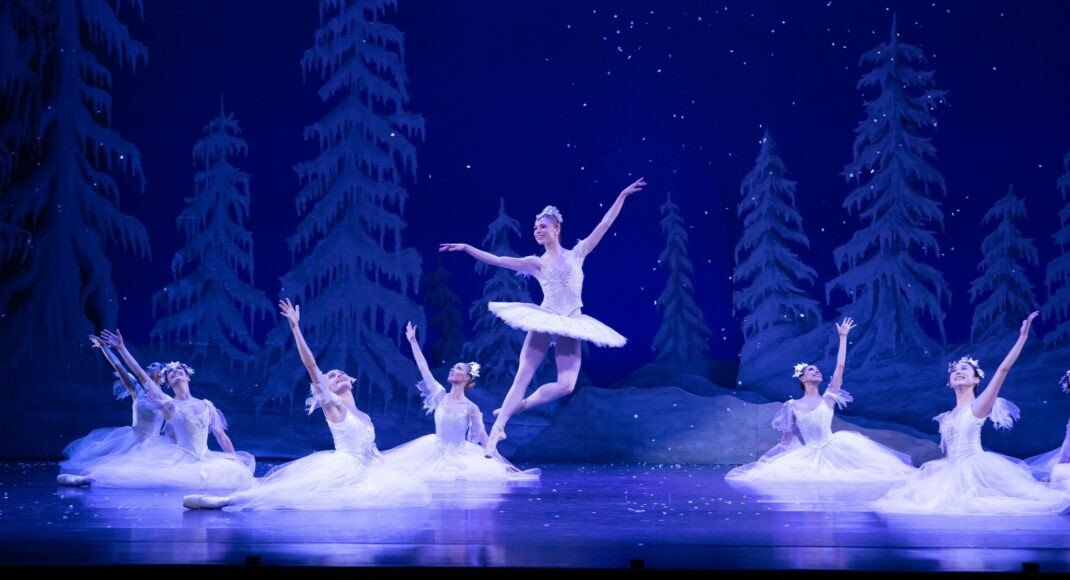
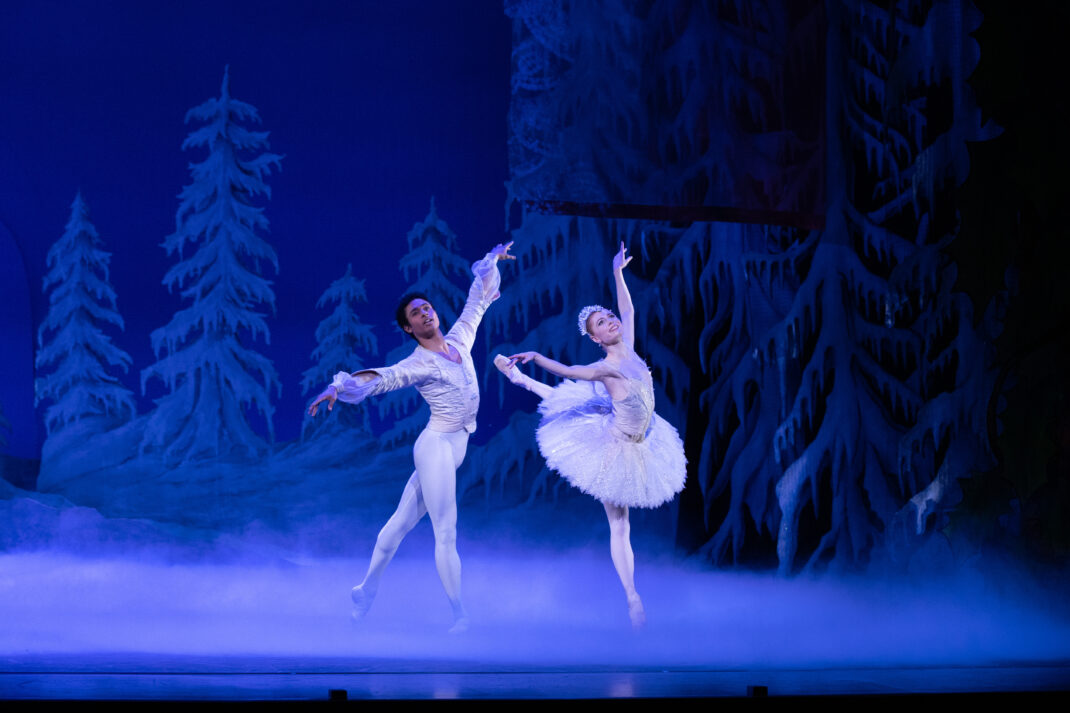
I have fond memories of watching a production of Nutcracker pretty much every Christmas as a young ballet student in Sydney and it is great to see Queensland Ballet making their Nutcracker (choreographed by Ben Stevenson originally in 1976) a Brisbane tradition. Every production has its high points and the highlight for me in this Queensland Ballet performance was the snow scene where Clara (Chiara Gonzalez) is transported, after her encounter with the Nutcracker and his fight with the army of rats, to the Kingdom of the Sweets via a snowy landscape. The appearance of the Snow Queen gave me a frisson of excitement to begin with and as the dancing progressed the goose bumps continued. Mia Heathcote as the Snow Queen and Patricio Revé as the Prince danced exceptionally well both in solos and pas de deux, and the snowflake corps de ballet were also a delight to watch. The set for this section (sets by Thomas Boyd) reminded me of a trip way back in December 2007 through the snowy Kit Carson Forest, in New Mexico.
Then there was the orchestra playing that moving section of Tchaikovsky’s score with the addition of the Voices of Birralee from St Peter’s Lutheran College Choir. It was all just glorious and, to the amazement of everyone (at least those where I was sitting), snowflakes fell on us as the lights went up for interval!*
But to the production as a whole: the opening scenes were filled with action as guests enjoyed themselves at the Christmas party that opens the ballet. The stage space was a little crowded, however, and the action rather too full of pantomime-style behaviour for my liking. It weakened the presence of Dr Drosselmeyer (Alexander Idaszak) and his two sets of dolls, and the other various activities that have prominence in these scenes. There were just too many people trying to dominate the action of the party.
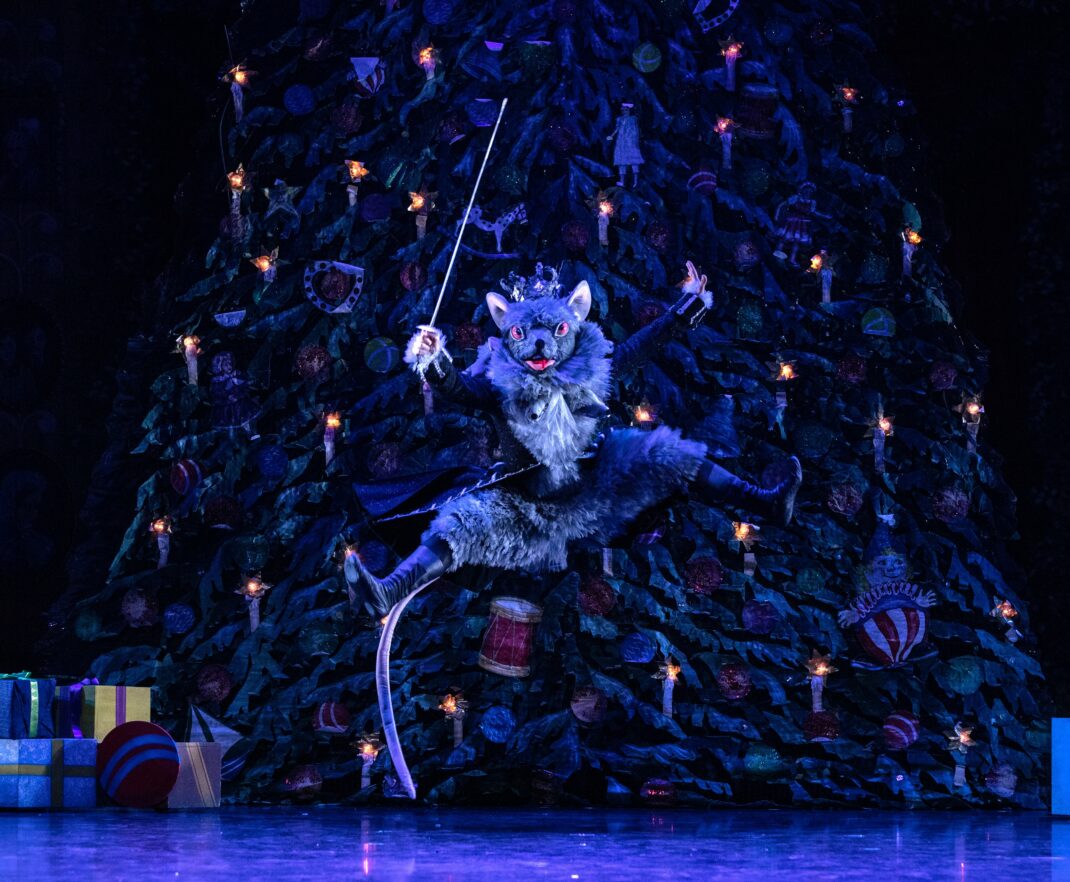
But as Clara retired to bed and the army of rats and the soldiers who fight the rats arrived, the production became easier to watch. There were some lovely humorous moments, including when ‘nurse rats’ arrived, with one waving a white flag and others carrying a stretcher, to carry off the injured body of the King Rat. The King Rat had just a brief role but Vito Bernasconi, who danced the part on opening night, was an outstanding interpreter of Stevenson’s expressive choreography of twists, bends and jumps that gave such character to the role—and Desmond Heeley’s costume was exceptional.
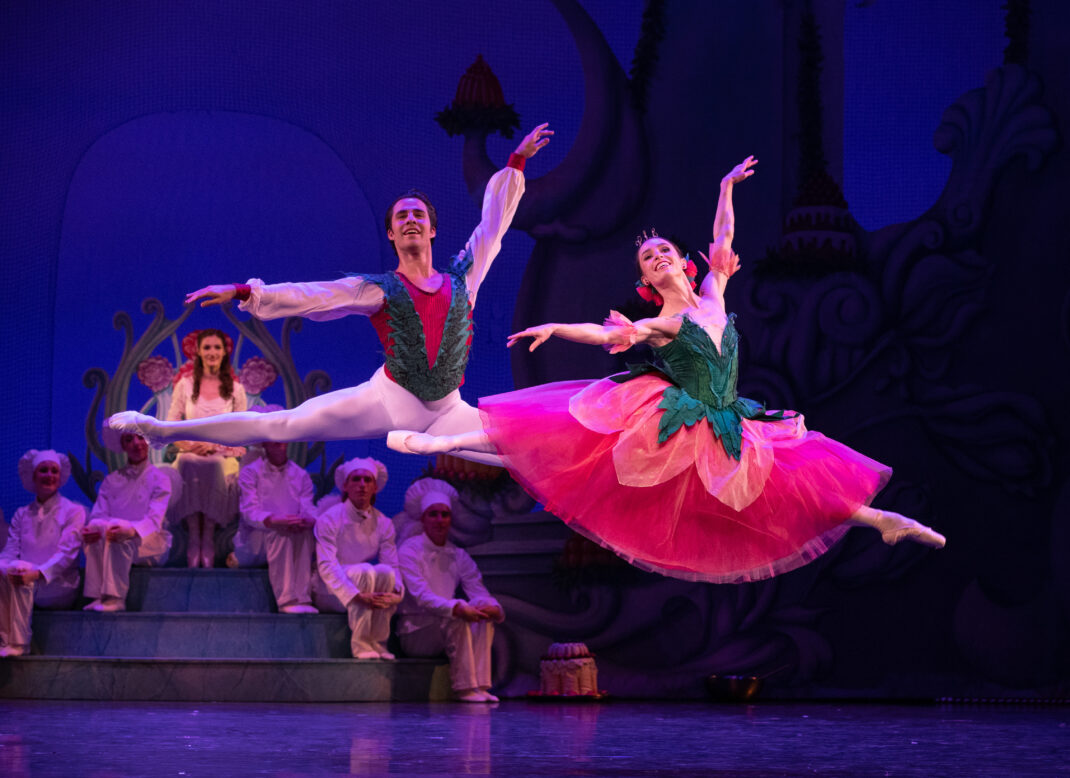
Act II was very ‘sweetish’ with little cakes and other sweet items decorating the set and a bunch of cooks rushing in and out with their items for Clara to taste. Some of the entertainment, watched by Clara and the cooks, was somewhat different in Stevenson’s version from what many older folks might remember. For example, the Russian gopak usually a dance for more than one man, was a solo brilliantly performed by Bernasconi, and the Chinese Dance (Mali Comlecki and Luke DiMattina) was highly acrobatic and was akin to a martial arts demonstration. The always-anticipated Waltz of the Flowers showed Lucy Green and David Power dancing the lead couple with exception fluidity and grace.
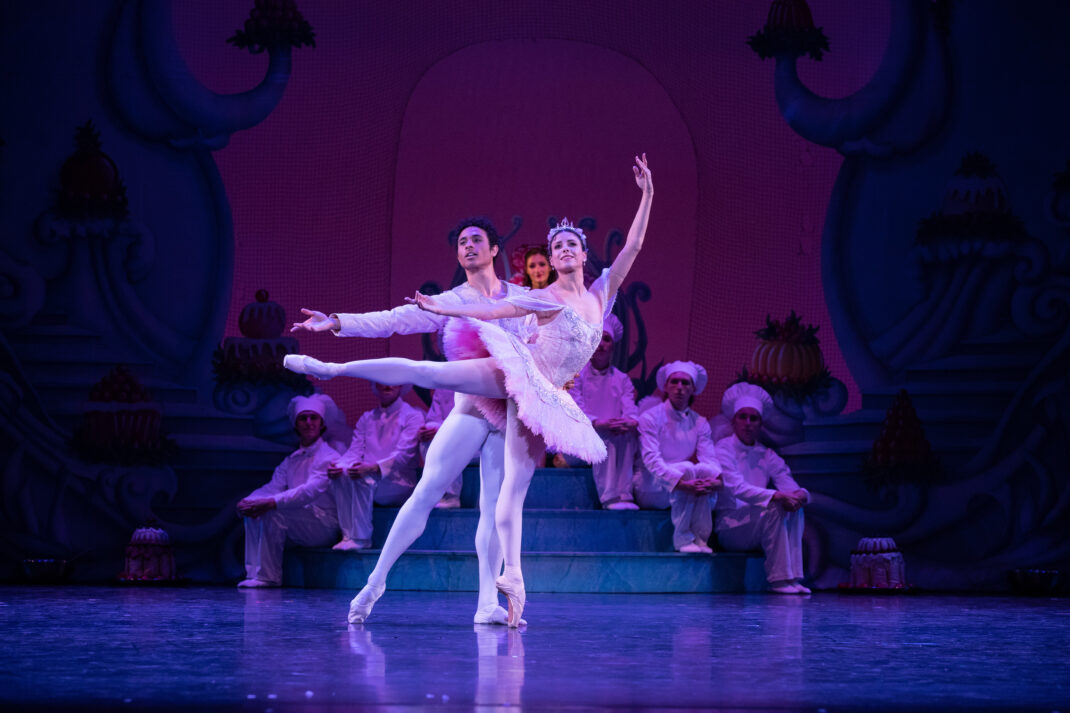
The grand pas de deux was danced on opening night by Yanela Piñera as the Sugar Plum Fairy and Patricio Revé as her Prince and once more I was especially impressed by Revé as a partner. He is completely engaged with whomever he partners, and in whatever role he performs. Watching Piñera was a joy too as from the relatively close seat I had I could see how every tiny move she made filled the space around her. Beautiful dancing from both artists.
From a different point of view, I have much admiration for Nigel Gaynor, Queensland Ballet’s conductor and musical arranger. I have always been impressed by the collaborative way he works and this time I was sitting close enough to see just how he engaged with the dancers, even applauding at various stages (baton still in hand), when a solo or pas de deux was especially spectacular.
Despite my comments on the opening party scenes of this production, it was a treat to see this Nutcracker danced so beautifully across the evening by the hugely talented team that makes up Queensland Ballet these days.
Michelle Potter, 4 December 2022
* I’m not sue what the ‘snow’ was except that it wasn’t bits of white paper. Perhaps water, slightly frozen? But this delightful addition to audience experience has never happened to me before.
My review of The Point was published by Limelight on 30 April 2021. As it is now only available with a subscription, I am posting the full review below minus the images used but followed by a small gallery of images that show some of the costumes and lighting, as well as the projections of Griffin designs, which I have mentioned briefly in the review. Should you have a subscription to Limelight, here is the link to follow.
Liz Lea’s new work The Point begins with a solo from Jareen Wee, an independent contemporary dancer trained in New Zealand and currently working in Australia. The solo is fast paced and, along with its dramatic spotlighting, exciting to watch. Its choreography insists that the body twist itself into a myriad shapes and stretch out into the space that surrounds it. Yet there is something about the occasional turned up feet and the gestures, especially the shapes made by the fingers, that suggests a style that is not entirely within the usual Western contemporary dance mode. And this solo sets the scene for what follows.
Seven of the 12 dancers who make up the cast are essentially exponents of various styles of classical Indian dance, while the other five are Western trained. The title of the work,The Point, refers to the concept of Bindu, the point of creation in Hindu mythology. In essence the work explores connections between Indian dance styles and Western contemporary dance, along with connections between people and place.
Wee’s opening solo is followed by a dance for 11 of the 12 dancers. They are dressed in black costumes of varying design, with subtle use of both plain and decorative fabric. The costume concept is by Lea in consultation with designer Cate Clelland. The dancers’ movements continue the double references seen in the opening solo and what follows over the next 60 minutes, sometimes clearly, sometimes elusively, is a creative blending of movement across dance forms. Towards the end, a separation of styles becomes clearer as the exponents of Indian styles dress in traditional costume and engage more closely with the dance styles in which they were trained. But in the final moments the dancers join together crossing the stage as one but, nevertheless, as two forces connecting together.
At times there is an obvious sense of focus between the dancers, thus setting up the notion of connection that Lea aimed to create. They look into each other’s eyes, they engage in movement that demands physical connection, including complex lifts and the use of grounded, twisting choreography. But connection comes in other ways as well. Lea’s inspiration for ThePoint clearly came from her own diverse training in both Western contemporary dance and in Bharata Natyam, which she studied in India. Now Canberra-based, Lea was also inspired by the work of architects and artists Walter Burley and Marion Mahony Griffin, whose own lives had connections both to Canberra and to India. At various points throughout the work, projections are displayed on the back wall of the new black box theatre space at Belco Arts Centre. They are designs by the Griffins and are beautifully presented and animated by projection designer James Josephides.
The connection to Marion Mahony Griffin was, to my mind, also referenced by the 12th dancer, Ira Patkar, an exponent of the Kathak style of Indian dance. Patkar danced beautifully but remained somewhat apart from the others throughout the work. She appeared essentially as a solo dancer, although, at the end, joined the final moments of connection. But rarely was she required to make contact with the others. She seemed to represent the lack of recognition that has characterised the role and work of Marion Mahony Griffin for so long.
Part of the strength of The Point came not only from the choreography and the concept of connection, but also from a truly remarkable lighting design from Karen Norris. As we entered the black box space a single spotlight shone from above onto the darkened performing space: it clearly represented the title, The Point. Throughout the work Norris lit the space from various positions. Sometimes many spots highlighted the dancing, at others a few judiciously placed spots placed the dancers in semi-darkness. At times the lighting was brightly coloured and at one stage a row of floor level lights positioned close to the back wall shone towards the audience so we saw the dancers from a whole different perspective. We were connected at those moments.
The Point was danced to a collage of music from both Western and Indian composers: Liberty Kerr, dj BC, TaikOz, Malhar Jam, and Harish Sivaramakrishna. It was an audacious soundscape that, like every part of the production, referenced connection and creativity.
Liz Lea has never shied away from using dance to make strong statements. The Point is an extraordinarily courageous work that suggests that no dance style is beyond being looked at creatively.
As I mentioned in my review, I was especially taken by the lighting used to illuminate the action from a different perspective, which you can see in the image immediately above. Without wishing to detract from Karen Norris’ lighting for The Pointe, which was spectacular, with this particular change of perspective I was reminded of a similar use of lighting in Graeme Murphy’s Nutcracker. The Story of Clara. As we watch the final sections of the Murphy production we feel as though we are onstage with Clara as she dances her final performance. Similarly in The Point, with this lighting change we, the audience, became part of the performance.
The Point continues to resonate in the minds (and voices) of those who saw it. There have been calls for it to travel!