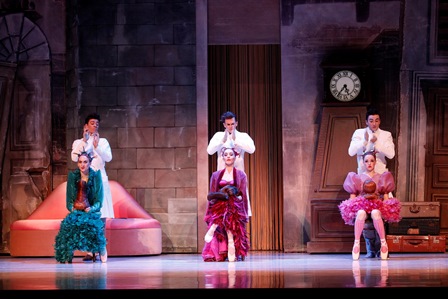
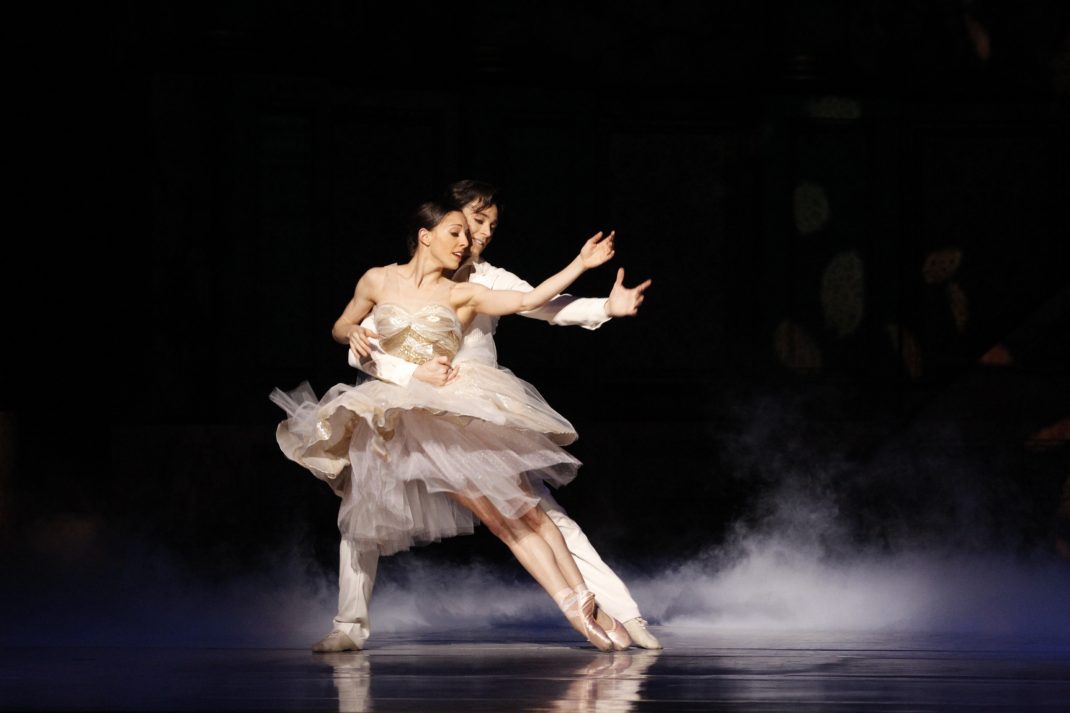
Island. James Batchelor

30 April 2014, Courtyard Theatre, Canberra

James Batchelor’s Island is a fascinating look at what dance can encompass when it becomes an immersive experience. The work is performed by three dancers, Batchelor himself along with Amber McCartney and Rebecca Lee, and it deals largely with perception. I have to admit to feeling slightly frustrated by dance that purports to deal with highly abstract notions. Often it’s only the words on the program that have anything to say on the subject while the dance is just a series of steps. But Island is different.
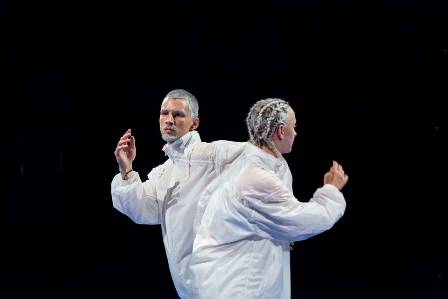
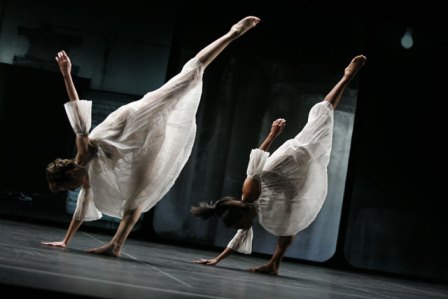
James Batchelor and Amber McCartney in 'Island', 2014. Photo © Lorna Sim
James Batchelor and Amber McCartney in Island, 2014. Photo © Lorna Sim

The first hint that Island might be an interesting work comes early, as we enter the performing space in fact. Architect Ella Leoncio is the designer. She has decorated the small black box space that is the Courtyard Theatre of the Canberra Theatre Centre with bright white tape stretched in lines and geometric patterns across the floor and up the walls. A bank of mirrors is attached to one wall, six movable glass (or perspex?) screens are arranged in the centre of the space in two groups of three and six circles of small bright lights are on the floor. What we don’t know immediately is that some of the screens are slightly convex/concave, a little like those Coney Island-style mirrors that distort the image of those who look into them.

The work itself is in three parts performed without interval. It begins with a solo for Lee, which is followed by a duet for Batchelor and McCartney. All three dancers join together for the final section. Batchelor’s choreography exists in many small movements, sometimes quite subtle, other times forceful in response to Morgan Hickinbotham’s score, which is confronting and yet listenable in its diversity of sounds. I especially enjoyed the performance of McCartney who had absorbed Batchelor’s movement style and added something of her own—a strength of purpose perhaps? Her dancing was certainly strong and well-defined.

But what makes Island so interesting is that the audience is encouraged to walk around the space and see the dance/installation from different viewpoints. Again this is something that I usually find annoying as it is more often than not a meaningless exercise. On this occasion however, the mirrors and screens, which were moved into different positions at the end of each section, came into their own. There were some totally absorbing perspectives on Batchelor’s choreography. Depending on where one went it looked enlarged, minimised, stretched out, and any other number of shape distortions. Occasionally Leoncio’s striped walls and floor became an integral part of the dance when they too were reflected into the screens. Then as a foil there was the clean, precise look of dance undistorted when one moved to other positions. Not everyone in the audience was on the move, which was a real shame because they missed a lot.

Leoncio continued her black and white theme in her costumes and make-up with the white extending beyond the costumes themselves to hair, face and even fingernails in some cases.

I really enjoyed this show. Batchelor has an enquiring mind and his work is definitely worth looking at and analysing.

Michelle Potter, 3 May 2014
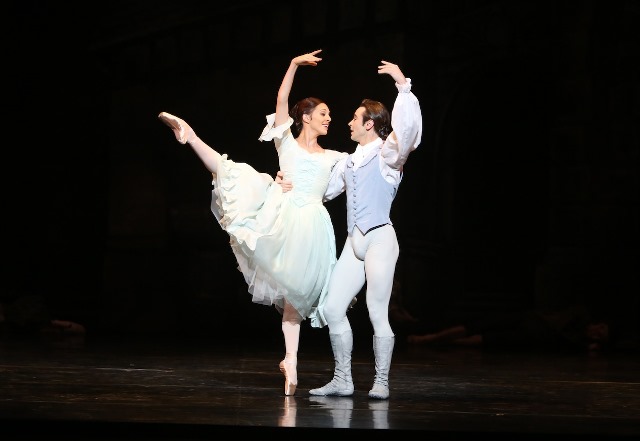
Manon. The Australian Ballet

12 April 2014 (matinee) and 19 April 2014 (evening), Joan Sutherland Theatre, Sydney Opera House

Having an Australian Ballet subscription ticket to a mid season matinee in Sydney has its benefits. Since most shows open in Melbourne by the time any show reaches Sydney early problems have usually been fixed. It is often an occasion too to see younger artists in major roles. I have a very clear memory of seeing Madeleine Eastoe (several years ago now) making her debut in Romeo and Juliet. A wonderful performance.

However, it often also means that I get a lack lustre performance as the season winds to an end. Such was the case with the first performance of Kenneth MacMillan’s Manon I saw this season. Leanne Stojmenov and Daniel Gaudiello danced well enough but struggled, I thought, with a cast that for the most part didn’t seem the slightest bit involved.

Leanne Stojmenov and Daniel Gaudiello in 'Manon'. The Australian Ballet, 2014.
Leanne Stojmenov and Daniel Gaudiello in Manon. The Australian Ballet, 2014

The second show I saw, however, made up for it all. My thoughts on this performance, which featured guest artists Alina Cojocaru and Johan Kobborg as Manon and des Grieux respectively, appear on DanceTabs at this link.

Michelle Potter, 22 April 2014

Lest we forget. English National Ballet

5 April 2014 (matinee), Barbican Theatre, London

Tamara Rojo’s recent mixed bill program, Lest we forget for English National Ballet, was created to commemorate the centenary of the outbreak of World War I in 1914. Having spent the ten days preceding my viewing of Lest we forget researching Ballet Rambert’s wartime experiences as a touring company during World War II, I was very curious to see what this program had to offer. Unfortunately I had to leave without seeing the full program (I didn’t want to miss my plane back to Australia!). However I was particularly pleased that I didn’t miss No Man’s Land, a commissioned ballet from Liam Scarlett, whose work I have never seen before, and whose Serpent will be seen in Sydney in May as part of the program being brought to Australia by BalletBoyz.

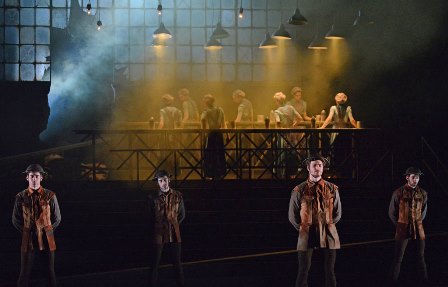
Scene-from-Liam-Scarlett's 'No Mans' Land'.Photo © Dave Morgan
Scene from Liam Scarlett’s No Man’s Land. English National Ballet. Photo © Dave Morgan

Scarlett was moved to create a work that showed how men and women were involved in the war effort and how they related to each other and amongst themselves. A multilevel set (design Jon Bausor) had the women on a raised platform at the back of the stage where they carried out their work in factories making ammunition, explosives and other items. The men occupied the front of stage, the trenches of war, and a ramp linked the two areas. Evocatively lit by Paul Keogan, the work took place in what seemed like the shadow of the past. Although there was a simple storyline of men leaving the women behind as they went off to fight, with only six of the seven returning at the end, the lighting made it seem as though we were watching not a story but a series of hazy vignettes from the past.

I found the choreography, created on seven couples, sometimes complex and acrobatic with the highlight the concluding pas de deux between Tamara Rojo and Esteban Berlanga as her ghostly partner, the man who did not return. Rojo’s body language before the pas de deux even began told it all—the sorrow, the loss, the longing. The three pas de deux that took place in the battlefield area were also powerful. I especially admired that between Ksenia Ovsyanick and Laurent Liotardo with its anguished, flying bodies.

But some of the most hypnotic material was really very simple. The touch of a hand on the face as the men left for the battlefield; the women wrapping their arms over the shoulders of the men, simulating the straps of a burdensome backpack; the toss of dust in the air by the women as they worked at their factory benches, for example. Strong imagery works wonders especially when it contrasts with more complex movements as the men face their battles. Music was an arranged and orchestrated selection of material from Liszt’s Harmonies poétiques et réligieuses.

Second Breath from Russell Maliphant relied on the visual power of strong and ever-changing groupings of the cast of 20. The work was danced to a background score by Andy Cowton drawn from material in the Imperial War Museum. It was basically an audio compilation of voices reciting the numbers of the dead. Quite chilling material to juxtapose against those beautiful, spiralling groups of bodies. The other work that I was able to see on the program was something of an oddity, unrelated it seemed to me to the theme of war—a restaging of George Williamson’s reinvention of Firebird. Unfortunately I had to miss Akram Khan’s Dust,

A persistent thought occupied my mind as I thought about the program. I kept wondering if the Australian Ballet had considered bringing back Stephen Baynes’ 1914, with its original score by Graeme Koehne and those outstanding designs by Anna French? Although it seems not to have been a favourite with many, I really liked it and what a cast it had with Steven Heathcote and Lisa Bolte in the leading roles. I would love to see it again, perhaps with revisions that Baynes might like to make? It might have been more fitting for the 2014 Australian Ballet season than, say, Manon (of which more later).

Michelle Potter, 15 April 2014

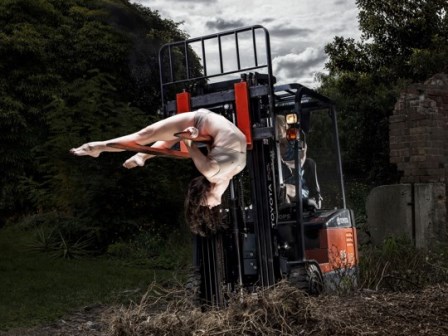
Promotional shot for 'Forklift', Kage

Forklift. Kage

18 January 2014 (matinee), Carriageworks, Eveleigh (Sydney). Sydney Festival 2014

‘More than dance’ the advertising says. And it is indeed difficult to categorise Forklift by Melbourne-based company Kage with anything more specific than that. A work for three performers and a forklift vehicle, it highlights in many respects the tension between the fragility and delicacy of the human body and the solidity and strength of a robust piece of machinery.

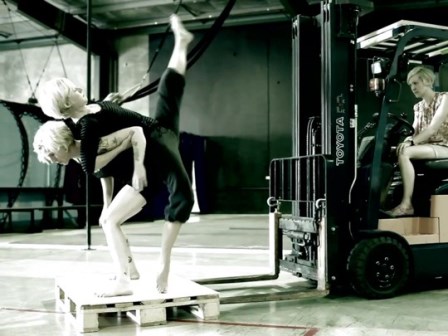
'Forklift' rehearsal
Rehearsal for Forklift

But then does it? The performers, Henna Kaikul, Amy Macpherson and Nicci Wilks, are extraordinary. They had me with my heart in my mouth as two of them moved from one impossible pose to another, balancing, dangling and wrapping themselves around the forklift, changing places every so often with the third performer who drove the vehicle. The skills they exhibited (apart from being able to drive a forklift) ranged from straight circus stunts to acrobatic tricks and occasionally what might be called powerful, perhaps outrageous contemporary dance movement. Each performer often seemed as robust as the machine and it was only that we knew they were human beings that the tension gathered strength and settled inside us as audience members. That kind of emotional tension, rather than the more obvious man versus machine element, was perhaps the strength of Forklift.

I liked the tongue in cheek moments sprinkled throughout the show. Occasionally, whichever performer was driving the forklift would sit back in the cabin with one foot resting on the dashboard, pick up a magazine and nonchalantly start reading as she transported the other two performers, who were on the roof, or the forks, on wooden pallets being lifted upwards, or some other impossible place on the forklift, round the space of Bay 17 at Carriageworks. Then I liked the surreptitious stealing of potato crisps that went on shortly after the opening as two performers, who seemed like anonymous bodies at that stage, crept up behind a startled forklift driver and slowly dipped a hand into her just-bought snack. These moments added a light-hearted element to the piece.

There were one or two aspects of the show that I thought didn’t work so well. I’m not sure there was any sense of coherence pulling together the diverse elements of the piece. The slight narrative line centring on the experiences of a forklift driver as she goes about her business didn’t gel all that well with the more abstract elements of bodies versus machine, or with the straight circus tricks that popped up now and then. Having said that Nicci Wilks’ act with a huge and very heavy hula hoop was spectacular as a demonstration of technique.

Forklift was directed by Kate Denborough whose audacity when it comes to making ‘more than dance’ is becoming clearer with each work she creates. It had a commissioned score by Jethro Woodward, which to my ear sounded suitably industrial and yet at times was slightly mysterious as if we were looking into a world beyond the usual.

Michelle Potter, 19 January 2014

Featured image: Promotional shot for Forklift

Promotional shot for 'Forklift', Kage
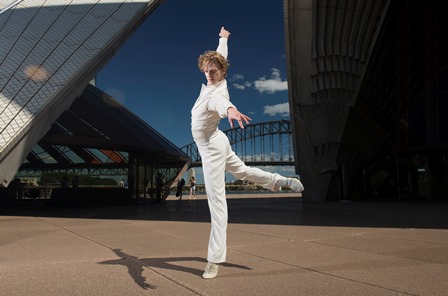
David Hallberg in costume for the Prince in 'Cinderella'. Photo: Wendell Teodoro, 2013

David Hallberg. The charming Prince

14 December 2019, Joan Sutherland Theatre, Sydney Opera House

My thoughts on David Hallberg’s guest appearance with the Australian Ballet in Alexei Ratmansky’s Cinderella were posted on DanceTabs on 16 December 2013. Below is the text. The DanceTabs link is still available and includes 11 comments that were made on the story by readers.

The DanceTabs text (without comments) is reposted below.

When David Hallberg was a child his inspiration to dance initially came from Fred Astaire whose old Hollywood movies Hallberg loved to watch. He admits he was obsessed. In those days he didn’t own a pair of tap shoes so, when Halloween was approaching, he attached coins to his shoes and tapped as a trick or treat act. Hallberg went on to take formal tap and jazz classes but it was not long before ballet drew him into a new dance world. His ballet teacher in Phoenix, Arizona, was Kee Juan Han, who recognised his talent but told him that it needed to be shaped. He was thirteen. There were no other boys in his ballet class but he persisted, nurtured by Han, and now, with his beautifully proportioned body, extraordinary feet, and easy, fluid technique he is the epitome of the danseur noble.

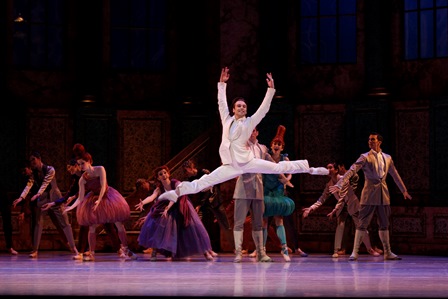
Hallberg has been in Sydney, Australia, guesting with the Australian Ballet as the Prince in Alexei Ratmanky’s new take on Cinderella, a production that was reviewed earlier in 2013 in DanceTabs. In this Cinderella the Prince makes his appearance early on in Act II, the ball scene. There is a huge build up to his entrance. The Prince’s four friends, who are in fact his minders, attempt to clear centre stage of guests; those guests engage excitedly with each other; and the Stepmother and her two daughters, Skinny and Dumpy, try to push themselves forward. The Prince arrives dressed in an elegant white suit with a tuxedo-style jacket worn over a smart vest. His entrance begins with a spectacular diagonal of grands jetés, and Hallberg’s entrance drew gasps and shouts of ‘bravo’ from the audience. His magnificently stretched jetés soared through the air, seemingly without effort. The perfectly placed grands pirouettes that followed whipped around in spectacular fashion, and the entrechats sprinkled throughout his solo were quite the most perfect examples of that step that I have seen. 

Hallberg played the role of the Prince in a very royal manner. He was slightly imperious as he gave orders to his entourage and, while he greeted his guests at the ball in a charming manner, he was regally distant. Similarly, although when he first saw Cinderella, danced by Australian Ballet principal Amber Scott, he was instantly attracted to her, there was still something withdrawn about his reaction to her. There were moments when he seemed to me to be more like the Prince in a traditional Swan Lake Act I rather than a character in a twenty-first century reimagining of an old story.

Hallberg is no stranger to Ratmansky’s work. He has appeared in at least five others of his works and next year he will dance in Lost Illusions with the Bolshoi Ballet. Of working with Ratmansky, Hallberg says: ‘He is so clever. I love the nuances in his work. He has his signatures but he is so relevant, so of his era’. So Hallberg’s choice to play the Prince in a manner that was at odds with how the rest of the cast handled Ratmansky’s creation is a curious one. It is especially so because Hallberg says that when he is not in the theatre he loves to see other art and that his particular taste is for the contemporary. Hallberg’s dancing was, of course, stunning to watch. I especially admired his dancing in the scene where he travels the world looking for the owner of the glitzy shoe. Much of Ratmansky’s choreography for this section is full of lightning-fast moves that often change direction quickly and Hallberg threw himself into it with gusto. And his several pas de deux with Scott had an incredible lyricism. But to do full justice to Ratmansky’s reimagining of the story, this Cinderella needs a less classical reading than the one Hallberg gave us.

As a result the evening fell a little flat, especially as Scott’s portrayal of Cinderella lacked the sparkle and individualism that marked performances by Leanne Stojmenov, on whom the role was created.  There were some stellar performances from others in the cast, especially Amy Harris as the Stepmother who let fly with her tantrums when her hairdresser failed to live up to her expectations, or when the shoe didn’t fit. But the work does need the Prince to be a strong, contemporary character. Despite the fact that he is royalty, his behaviour has to fit the contemporary mood of the ballet.

In many respects it is a shame that Sydney was chosen as the city to host Hallberg, despite the fact that Sydney clearly offers great photo opportunities. The inadequacies of the stage of the Joan Sutherland Theatre in the Sydney Opera House are well known. The stage is small and is short on wing space, and that’s even before we get to the orchestra pit, which is partly underneath the stage and is the bane of musical directors and orchestral players. Ratmansky’s Cinderella looked cramped in Sydney compared with the magical and mesmerising effect it had on the bigger Melbourne stage. However, it perhaps would not have made a difference had Hallberg danced in Melbourne. Space was not the major issue.  

Hallberg gave his last show in Sydney on 14 December and then flew out to Paris to make his debut with the Paris Opera Ballet. I thought he missed the point of Ratmansky’s take on Cinderella. But it will take me a long while to get over those astonishing entrechats.

Michelle Potter, 16 December 2013

Featured image: David Hallberg in costume for the Prince in Alexei Ratmansky’s Cinderella. The Australian Ballet, 2013. Photo: © Wendell Teodoro

David Hallberg in costume for the Prince in 'Cinderella'. Photo: Wendell Teodoro, 2013

Alexei Ratmansky’s Cinderella. A second look

7 December 2013 (matinee), Joan Sutherland Theatre, Sydney Opera House

Taking a second look at Alexei Ratmansky’s Cinderella was something of a swings and roundabouts experience. The gains were special, the losses of course a little disappointing.

Seeing Leanne Stojmenov as Cinderella and Daniel Gaudiello as the Prince after they had performed those roles over and over in Melbourne and again in the first few Sydney shows indicated how well they had grown into their parts. Their pas de deux in particular were seamless, expressive and beautifully executed with hardly a slip anywhere. Gaudiello once again showed what an exceptional artist he is as he fell head over heels for his Cinderella, and what a good technician he is as well.

Daniel Gaudiello in Cinderella. The Australian Ballet, 2013. Photo: Jeff Busby
Daniel Gaudiello as the Prince in Alexei Ratmansky’s Cinderella. The Australian Ballet 2013. Photo: © Jeff Busby

Stojmenov’s dancing showed how much she had absorbed the choreography into her very being. The beautiful way in which she conveyed the subtlety and nuances of Ratmansky’s vocabulary was an absolute delight. In particular she had captured the beauty and fluidty of Ratmansky’s arm movements with their distinctive swing and sway through space, and I also especially enjoyed her solo in the last act where she recalled the time she had with her Prince at the ball in the previous act.

I was also interested to hear David McAllister, in his public program conversation with David Hallberg after the show, that Ratmansky used the word ‘say’ rather than ‘do’ when setting his choreography on the dancers—‘you go over there and say such and such’. His emphasis on expression rather than simply execution is a sure reason why all the cast, but Stojmenov in particular, carry the storyline of Cinderella so well.

Another gain was seeing Eloise Fryer—there was an unexpected cast change announced just before the curtain went up—as the Dumpy Stepsister. She has a terrific sense of comedy and carried off the awkward and often hilarious choreography with great style. It was a huge romp and Ingrid Gow as the Skinny Stepsister really had to work hard to keep up with her.

The biggest loss was having to fit the show onto the stage of the Opera Theatre. I try not to make too many comments in this vein as it does nothing in the end. But in the case of Cinderella it resulted in a real loss I thought. The theatrical trick of a proscenium arch within a proscenium arch that was so clear in Melbourne was scarcely apparent in Sydney and the crammed-up feeling of the domestic scenes was unfortunate. And, while memory plays tricks I know, it seemed to me that Gaudiello’s choreography had been cut in the scenes where he travels the world searching for the owner of the slipper. Maybe I just missed some of those grands jetes in a circle and the spectacular finish where he jumped into the arms of his cortege of male friends. I’d be more than happy to be corrected!

I also missed Lynette Wills as the Fairy Godmother. While Jasmin Durham did a perfectly good job in the role, Wills brought a wide experience to her performance giving the role a strength of characterisation and sense of mystery that was missing in Sydney. I had also been looking forward to seeing once more those characters from the solar system who transport Cinderella to the ball but, while being closer had its advantages, the costumes are quite remarkable, being closer also made the sequence look a little too jumbled—too many characters that were too hard to identify individually.

But more than anything I thought the magical transformations that made the Melbourne opening so spectacular were lessened in Sydney. I was further back in the auditorium in Melbourne so maybe that had an effect but I suspect it was something else.

Nevertheless, Cinderella remains in my mind a very classy, strongly European-looking, beautifully-lit production that I look forward to seeing again and again.

Michelle Potter, 8 December 2013

My original post, and a healthy variety of comments from others, is at this link. See also my comments on David Hallberg’s performance as the Prince published by DanceTabs.

Paquita & La Sylphide. A second look

16 November 2013 (matinee), Joan Sutherland Theatre, Sydney Opera House

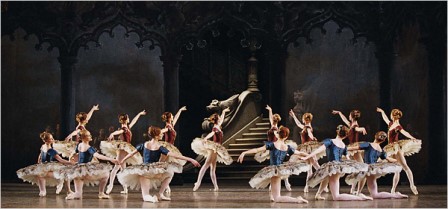
I was startled to see, when looking at the Australian Ballet’s website to check the casting for my Sydney subscription performance of Paquita and La Sylphide, that Paquita was advertised as a Romantic ballet—’the last flowering of the Romantic ballet’. Elsewhere on the website the program was described as ‘the first and last [of the] great Romantic ballets on one double bill’. The original, full-length Paris production of Paquita (1846) might have been in the Romantic tradition, although that is disputed by some, but what the Australian Ballet has been presenting is definitely not a Romantic work. Marius Petipa made additions to the original Paquita when he restaged his version in Russia in 1881 (1882 new style date). Those interpolations with music by Minkus are, I believe, what most companies now perform. The complete ballet was staged relatively recently (2001) by Pierre Lacotte for the Paris Opera Ballet, but not many other companies have a full-length production in their repertoire. Without the rest of the ballet, the Petipa arrangements can scarcely be called Romantic, although the Spanish overtones we see and hear in the Petipa excerpts do allude to the Spanish elements of the full-length ballet.

Artists of the Paris Opera Ballet in 'Paquita'
Artists of the Paris Opera Ballet in Pierre Lacotte’s production of Paquita

That aside, it was a thrill to see Daniel Gaudiello taking the male role in my Sydney viewing of the Australian Ballet’s excerpts from Paquita. What I love about Gaudiello’s dancing (apart from his technical abilities) is his wonderful approach to partnering. He is so attentive to and caring of his partner (Lucinda Dunn on this occasion) without being merely a ‘porteur’. When he stands back from her and lifts his arms to an open fifth position he is not only triumphantly showing her off as the ballerina, but also showing his own polish and charisma as a true ‘danseur noble’. He has great style.

Of the variations I especially enjoyed the second variation, subtly and gently danced by Jessica Fyfe, and the dancing of the two demi-soloists, Vivienne Wong and Benedicte Bemet, the latter certainly a rising personality.

I was pleased too that my previous disappointment with the staging of La Sylphide dissipated somewhat with a second look. This time I thought there was much more feeling for the Romantic style in the second act and a better contrast between the first and second acts.

Artists of the Australian Ballet in 'La sylphide' Photo: Jeff Busby, 2013
Artists of the Australian Ballet in La sylphide. Photo: © Jeff Busby, 2013

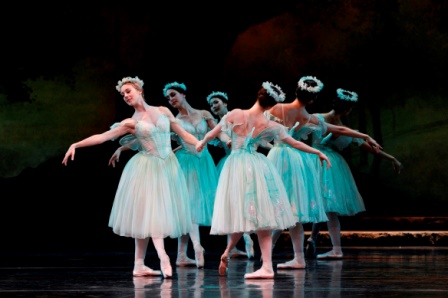
Perhaps it was Reiko Hombo, who gave a strong, individualistic interpretation, beautifully danced, of the Sylph that made the difference. The lightness and height of her jump; her softly unfolding, beautifully controlled arabesques; her lovely rounded arms; and her supple upper body gave the right technical feel to the role. In addition, her interpretation was consistent and well thought through. There was a definite wickedness of intention there under all that charm as she made every effort to convince James of her wish that he join her in her forest realm. It brought home very nicely that ‘beautiful danger’ that respected Danish scholar Erik Aschengreen so perceptively wrote about many years ago as being a defining characteristic of the Romantic era. And Hombo carried this approach through into the second act.

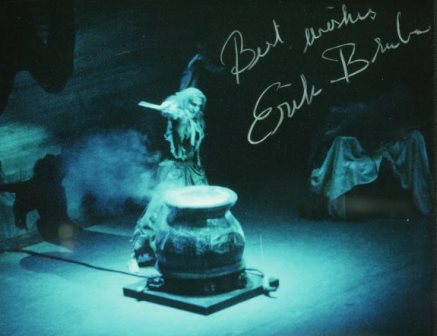
Hombo was partnered by Chengwu Guo as James and he had, I thought, settled well into the role since my previous viewing. Perhaps again it was Hombo who made the difference. She gave him something to respond to, and as technical partners they work well together. Halaina Hills as Effie and Amy Harris as the lead Sylph in Act II also added a certain strength to the overall production. But I regret that the important role of Madge always seems to degenerate into something a little manic. It has been a long time since there has been a really powerful performance in Australia of that role. Without a strong and convincing Madge the ballet loses much of its intent.

Erik Bruhn as Madge in La Sylphide, the Australian Ballet, 1985. Photo: Walter Stringer. National Library of Australia

My earlier post on this program is at this link.

Michelle Potter, 17 November 2013

Darkness is hiding black horses, Glacial decoy, Doux mensonges. Paris Opera Ballet

2 November 2013, Palais Garnier, Paris

Triple bill programs can be mixed experiences. The Paris Opera Ballet’s recent program, with works by Saburo Teshigawara, Trisha Brown and Jiří Kylián, was a case in point: three choreographers from three very different backgrounds dealing in very different ways with the seen and the unseen, the known and the unknown, the spaces in which dance takes place.

The newly created work, Darkness is hiding black horses, by Japanese choreographer Teshigawara opened the program. Made for just three dancers, a female and two males, it was the most difficult to make sense of as it appeared to have no choreographic structure beyond a quite simple floor pattern of straight lines of movement. The dancers very rarely interacted with each other and the movement itself also seemed to have no obvious structure with the dancers moving in a kind of slinky, bendy fashion as if collapsing into and around themselves. An interview with Teshigawara in the printed program noted that the choreographer was interested in surrealism and the act of automatic writing as favoured by some artists of Dadaist bent. Darkness looked a little like a form of automatic choreography.

To tell the truth I have no idea what the work was meant to be about although publicity kept using words like black, obscurity and the like. It was performed in a kind of black box space and little puffs of smoke kept escaping into the air from jets on the floor of the stage. It was mystifying and I think presumptuous. And as for the black horses…?

Trisha Brown’s Glacial Decoy, a work she made in 1979, was welcome relief. Its exploration of the space beyond centre stage, including wing space, was lively and playful and her beautifully exuberant use of dancers picking up phrases from one another was a delight. Robert Rauschenberg’s background projections of his own black and white photographs, mostly of assorted suburban and industrial subjects, seemed to echo the choreography as they slipped across the stage from left to right in groups of four with the far right image constantly disappearing and being replaced by another on the far left.

The dancers of the Paris Opera Ballet handled Brown’s loose limbed, swinging movement and idiosyncratic gestures with style although with perhaps a little too much classicism, a feature of the performance that was more noticeable than it might have been given that Brown’s New York company was performing its own program concurrently at the Théâtre de la Ville.

But it was Jiří Kylián’s exquisite Doux mensonges that was the highlight of the evening. It is a beautifully coherent combination of dance (for four dancers only), film (shot under the stage of the Palais Garnier), song (from the group Les Arts florissants), lighting (Michael Simon) and a fabulous, hanging pinky-orange cloud-like structure that turns, folds and unfolds slowly to display varying facets of its composition (also by Michael Simon).

Doux mensonges was created in 1999 for the Paris Opera Ballet and its title might be translated as Sweet lies, although I prefer Sweet deceits. Kylián has explained that his inspiration for the piece is the duality of our personal world, the world that we show to others and allow them to share and the world that we prefer to keep hidden from others. This is best seen in the work when, after performing onstage, the dancers sometimes disappear from the stage via a trapdoor only to be seen below the stage on film (projected back up onto the stage) where a less pleasant and sometimes quite violent side, perhaps a more honest side, of their relationship is shown.

Choreographically Doux mensonges consists largely of duets, on this occasion between Eleonora Abbagnato with Vincent Chaillet and Alice Renavand with Stéphane Bullion. With its focus sometimes on extended legs and arms stretched fully to the side in lifts, it reminded me a little of the duets from Stepping Stones. But I loved the opening duet executed on the edges of a trapdoor and a later moment when in one lift the woman held her legs straight down in a 5th position and executed a series of quivering beats as she was carried across the stage.

There were so many moments of sheer inventiveness, visually, kinaesthetically and musically. Doux mensonges for me is a work of breathtaking, expressionistic beauty. It is hard to think of anything that equals it.

Michelle Potter, 6 November 2013

'Glacial decoy' Trisha Brown Dance Company Photo © Julietta Cervantes 2009
Trisha Brown Dance Company in Glacial decoy, 2009. Photo: © Julietta Cervantes

Unfortunately I have been unable to convince the Paris Opera Ballet of my bona fides as a writer. The press office has ignored my requests for access to images, which is a shame because Teshigawara’s costumes in particular need to be seen rather than described. C’est la vie I guess. The image above of Glacial decoy is of the Trisha Brown Dance Company and comes from their media site.

Sounds of the soul. Lang Lang Dance Project with Houston Ballet

31 October 2013, Théâtre des Champs Élysées, Paris

It was, apparently, the wish of Chinese concert pianist, Lang Lang, to stage a dance project in which a group of sixteen dancers from Houston Ballet would perform with him in Paris. Lang Lang was credited with the ‘artistic conception’ of the show in which he played a selection of works by Chopin, with all the individualism for which he is renowned, while the dancers performed the choreography of Stanton Welch. At its best it was an evening to enjoy, although there were moments when Welch’s choreography was so complicated, especially in some of the partnering, that the show looked overwrought.

The best moments came when there was a real connection between Lang Lang and the dancers. When that connection was missing, as it occasionally was, the whole concept became a little meaningless. The first section after interval was a real highlight. With Lang Lang playing Chopin’s Waltz no. 19 in A minor and dancer Joseph Walsh performing solo, it was notable for the constant connection between pianist and dancer through gesture and eye contact. Walsh’s solo was also beautifully executed and showed off his lovely line and smooth technique. It was a brief, but clean and classically inspired performance.

The opening section of the show, danced by Derek Dunn as soloist accompanied by the full complement of Houston dancers performing to Ballade no. 1 in G minor opus 23, was another highlight, largely due to an exceptional performance by Dunn. He reminded me of what I imagine Nijinsky might have looked like. Dunn soared across the stage with broad, expansive movements, executed multiple turns with extraordinary ease and showed lovely fluidity in the upper body. I found him quite thrilling with a charisma that matched that of Lang Lang. As a result, a powerful and emotive connection was set up between dancer and pianist.

Other sections that worked for me included that performed to the well-known Waltz no. 1 in E flat major, Opus 18 (Grand valse brilliante) in which Oliver Halkowich and Jim Nowakowski deftly handled the humorous elements Welch introduced into what has never seemed to me to be a humorous piece of music; the closing duet between Karina Gonzalez and Ian Casady, which brought the evening to a beautifully calm end; and a duet for Lauren Strongin and Connor Walsh in which the lovely lightness of the choreography, especially the succession of lifts when Strongin scarcely touched the floor before becoming airborne again, perfectly matched the music (Andante spianato, Opus 22).

One section that didn’t work so well for me was a duet for Jessica Collado and Ian Casady in which Welch’s use of palms facing outwards and feet turned up smacked too much of Nacho Duato. The ‘Duato effect’ was mixed with more classical movements and the whole was, choreographically speaking, a somewhat messy combination.

I have always felt that Welch is at his best when choreographing non-narrative works and, despite some twisted and contorted moments of partnering, there was much to enjoy in Sounds of the Soul. Some effective lighting by Lisa J. Pinkham, including some lovely slow blackouts, added to a pleasant evening.

Michelle Potter, 4 November 2013

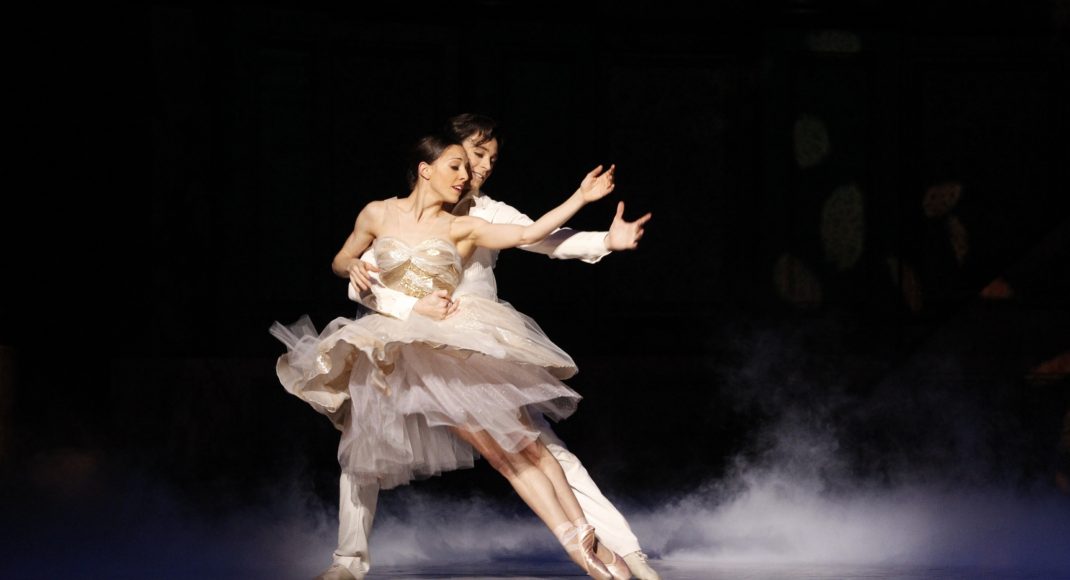
Leanne Stojmenov and Daniel Gaudiello in 'Cinderella'. Photo Jeff Busby

Alexei Ratmansky’s Cinderella. The Australian Ballet (2013)

19 September 2013, State Theatre, Victorian Arts Centre

What a magical, mesmerising and eccentrically beautiful Cinderella Alexei Ratmansky has created for the Australian Ballet. I have to admit to goose bumps on many occasions so thrilling was the storytelling, the choreography, the scenic design and the performance.

The story we know so well is intact in its outlines but Ratmansky has made the work his own, and boldly so. The clues we get to the era in which this ballet is set come largely from the set and costumes by Jérôme Kaplan and from the projection design by Wendall K. Harrington. With their references to surrealist artists such as Salvador Dali and Giorgio de Chirico, and even perhaps to a Dada film, Fernand Leger’s Ballet mécanique, and the Bauhaus work by Oskar Schlemmer, Triadic Ballet, we can place this Cinderella in the 1920s or 1930s. But the universality and theatricality of the visual elements, including the Act I setting of a proscenium arch within the theatre’s own proscenium arch, put it into an era beyond eras.

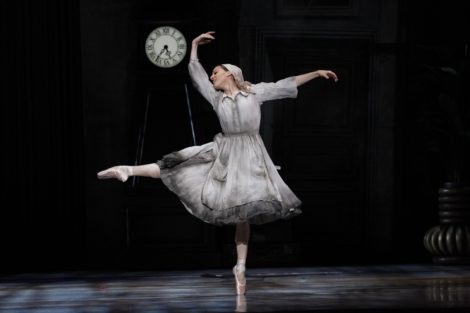
Leanne Stojmenov in Cinderella, 2013. Photo Jeff Busby
Leanne Stojmenov in Cinderella. The Australian Ballet, 2013. Photo: © Jeff Busby

As Cinderella, Leanne Stojmenov brought a range of emotions to the role. She was lost in dreams as she danced alone while the Stepsisters readied themselves for the Prince’s ball; full of sadness when the Stepmother slashed the portrait of her now dead mother; caring as she welcomed the somewhat outlandish Fairy Godmother into her home; shy as she tried out dance steps at the ball; pensive as she wondered whether she would meet the Prince again; and ultimately joyous as she danced the final pas de deux with him. It was a finely sculpted performance.

As the Prince, Daniel Gaudiello also presented us with a well-defined character with a strong personality. Dressed stylishly in a white suit he was the man in charge as he interacted with his guests and as he travelled the world seeking the owner of the slipper left behind at the ball. On this world tour we saw some of Gaudiello’s best dancing. A series of grands pirouettes finishing with multiple turns was beautifully executed. And what a spectacular exit he made as he left the stage at the end of that scene. But with his Cinderella he was a different man, much less hard-edged. And the final pas de deux is such a glorious piece of choreography. Two two bodies move together as one, bending and twisting, making complementary lines with arms and legs, and finishing so softly and gently.

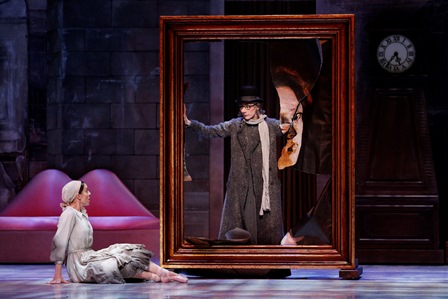
At times the choreography was surprising as is so often the case with Ratmansky. Feet, arms, upper bodies, everything really, moved in unexpected ways. A pirouette had the foot at the cou de pied position, a cabriole appeared from nowhere, bodies bent forward when one expected them to bend back. And Ratmansky is a master at telling the story, creating a character, and giving clues to and motifs for future moments in the story through choreographic and dramatic methods. I wondered why the Fairy Godmother, played with style by Lynette Wills wearing a kind of bowler hat, long dark clothing and black glasses, disappeared into the grandfather clock in Cinderella’s house. But it became clear later. And the beautiful swirl of black-caped figures, holding Roman numerals and circling the stage as the Fairy Godmother advised Cinderella to leave the ball at midnight, was also reprised in a surprising way later.

Leanne Stojmenov and Lynette Wills in 'Cinderella'. The Australian Ballet, 2013. Photo: Jeff Busby
Leanne Stojmenov and Lynette Wills in Cinderella. The Australian Ballet, 2013. Photo: © Jeff Busby

There were some wonderful performances from others in the cast. Ingrid Gow and Hailana Hills as the Skinny Stepsister and the Dumpy Stepsister respectively had some hilarious moments, as did Amy Harris as the rather vindictive Stepmother. I also admired the performances of the celestial bodies who transport Cinderella to the ball (no pumpkin coach in this production), although it was hard to identify the dancers from where I was sitting and another viewing is needed to match some of the various planets represented with their costumes.

Artists of the Australian Ballet in 'Cinderella' 2013. Photo: Jeff Busby
The Stepmother, the Skinny Stepsister and the Dumpy Stepsister have their hair done for the ball. Artists of the Australian Ballet in Cinderella 2013. Photo: © Jeff Busby

As for the scenic transformations, they were astonishing, breathtaking. It was not only the surprise they generated when they happened, but also the way the lighting by Rachel Burke was used to enhance every transformation, as well as the spectacular use of fabric of various kinds to assist the transformations—in fact the use of diverse fabric textures throughout the ballet in costuming and elsewhere gave us yet another magnificent scenic element. And musically, I have never heard the Prokofiev score sound so clear and so distinctive. Without wanting to take away from the orchestral playing, Ratmansky’s choreography is so attuned to the music that it adds a visual element to the sounds that allows me at least to hear the music differently.

I look forward to seeing this remarkable work again during the Sydney season. Let’s hope it remains in the repertoire for a long time to come. It is sheer magic, brilliantly conceived, and a truly immersive experience. All hail Ratmansky and his team.

Michelle Potter, 21 September 2013

Featured image: Leanne Stojmenov and Daniel Gaudiello in Cinderella. The Australian Ballet, 2013. Photo: © Jeff Busby

Leanne Stojmenov and Daniel Gaudiello in 'Cinderella'. Photo Jeff Busby

For my comments after a second viewing in Sydney follow this link. See also my comments on David Hallberg’s performance as the Prince published by DanceTabs.