Diaghilev. A life. Sjeng Scheijen

In 1951 Jacqueline Lee Bouvier, later to become Jacqueline Kennedy, won Vogue magazine’s Prix de Paris for a short essay entitled ‘People I wish I had known’.  She wrote about three men, one of whom was Serge Diaghilev. She described him as an ‘alchemist unique in art history’.  Kennedy is not alone in naming Diaghilev as a man of singular importance in the development of the arts in the West. The Australian-born writer and cultural critic Clive James included Diaghilev in his recent collection of essays, Cultural Amnesia, for example. And one of Diaghilev’s biographers tells the story of the vegetable seller at Covent Garden who said to him, ‘Did you know Daggyleff? He was the greatest dancer that ever lived.’

Neither Jacqueline Kennedy, nor Clive James, nor the unnamed vegetable seller knew Serge Diaghilev personally and yet for each the name Diaghilev resonated in a particularly powerful manner. It is now 81 years since Serge Diaghilev died in 1929, so what was it about this man and his exploits that continues to have an impact across continents, professions and social strata?

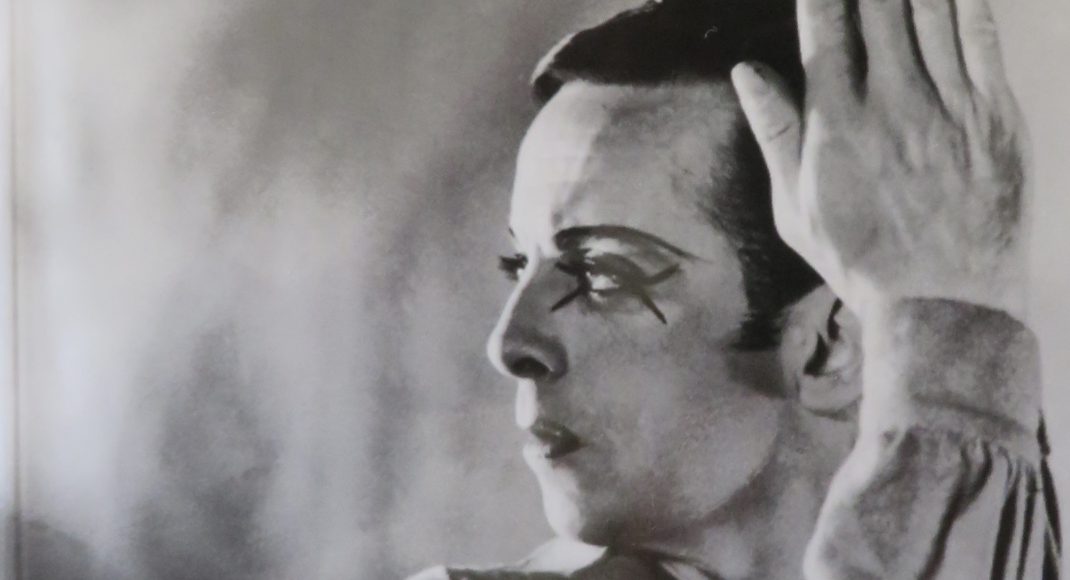
The obvious answer is that Diaghilev changed the face of dance by establishing an aesthetic of collaboration such as the dance world had not previously known, and in so doing surrounded himself with the most innovative thinkers and artists across all fields of endeavour. The year 2009 saw the centenary of the first Paris season of his famed Ballet Russe company and the world has been flooded with exhibitions and publications celebrating that event and its ongoing influence. More are planned for 2010.

But in addition, Diaghilev had personality plus! And it is this aspect of his life that comes out very clearly in Sjeng Scheijen’s biography Diaghilev: a life published in 2009. It is in fact a beguiling book. It places the whole Diaghilev enterprise in a very personal context—the troubles, the strife, the arguments, the sex, the weeping, the dramas, the networking, they’re all there. I probably didn’t learn all that much more about the works in the Diaghilev repertoire and this might be seen as a limitation of sorts. But I did learn much about the social and personal environment in which that repertoire got to the stage and Diaghilev’s personality grew bigger and bigger and more and more complex as the book continued.

My favourite anecdote, however, is a somewhat surreal one. It concerns the persuasive Misia Sert, pianist, patron and one time wife of painter Jose Maria Sert, and her input into Red Cross efforts during World War I. It is surreal in its juxtaposition of art and reality. It reads:

‘Many celebrated artists entered military service, though few fought at the front. Most joined army nursing corps or signed up with the Red Cross. Misia managed to persuade her couturier friends to provide a number of vans, which she converted into ambulances. Manned by artists and socialites, they sped to the aid of troops in northern France. Her nursing staff included Cocteau, sporting a natty little uniform designed by the couturier Poiret. Maurice Ravel also drove an ambulance, though in a regular army unit. Ida Rubinstein, too, worked as a nurse, though her uniform was designed by Bakst.’

The main strength of the book is the depth of research that has gone into its creation. It draws on sources, many of them valuable primary resources from Russia, which have not been and are still not easily available to other researchers. These sources make this biography quite unique. However, the use of personal material is not without its problems and in my opinion any publication that relies heavily on very personal material such as letters, diaries and the like needs to be taken with a grain of salt and its sources considered and reconsidered, checked and rechecked against other material. Scheijen relies heavily on such material and little else, which makes me wonder whether or not the book will in the future be seen as a collection of gossip and anecdote.  Nevertheless, the book is a great read.

One little annoyance: I disliked finding reference to Le Boutique fantasque. The name of the work is beautifully written with the adjective beginning with a lower case ‘f’ as is absolutely correct from a French language point of view. But as far as I know ’boutique’ has always been feminine gender—’la boutique’.

I also puzzled for a while over how Diaghilev could have seen the Olympic Games in Athens during a trip to Europe in 1906, as Scheijen observes, when I had always believed that Athens hosted the Olympics in 1896 and that 1906 was not an Olympic year. But the puzzlement was my ignorance. Eventually I discovered that Athens hosted an ‘Intercalated Games’ in 1906. The argument about whether or not the 1906 Games were really ‘Olympic’ has been an interesting side-step for me.

Michelle Potter, 14 April 2010
Jewels. New York City Ballet

27 February 2010, David H. Koch Theater, Lincoln Center, New York

What a pleasure and a luxury it is to those whose home is not New York to see the full length Jewels. Made by Balanchine in 1967, each of its three distinct sections—’Emeralds’, ‘Rubies’ and ‘Diamonds’—is set to music by three different composers, Fauré for ‘Emeralds’, Stravinsky for ‘Rubies’ and Tschaikovsky for ‘Diamonds’. Many have suggested that Jewels is also in homage to three different countries—’Emeralds’ to France, ‘Rubies’ to Balanchine’s adopted homeland, America, and ‘Diamonds’ to Russia. But in the end, Jewels is an evening of delicious and diverse dancing.

‘Emeralds’ is at once moody and mysterious, romantic and sombre, and sometimes like a whisper in a forest glade. ‘Rubies’ is all sass and neon. ‘Diamonds’ is pure and clean, a dance in an arctic cave filled with cool yet intricate ice carvings.

The structure of ‘Emeralds’ calls for two leading couples. On this occasion Abi Stafford and Jared Angle were a gracious couple, transcendent in their pas de deux, while Sara Mearns and Jonathan Stafford showed breathtaking expressiveness and expansiveness of movement. Robert Fairchild was impressive as the male member of the pas de trois of soloists, showing his courteous partnering without losing his own strong presence.

‘Rubies’ showcased a pert and prancey Janie Taylor and a boisterous Benjamin Millepied. They were more than ably supported by Savannah Lowrey and a strong corps de ballet whipping off the clean, fast footwork, flicking wrists and eye catching head movements of this section.

The big disappointment, however, came with ‘Diamonds’. There were some uplifting moments—a polonaise for the corps de ballet that was just joyous Balanchine, for example. But Wendy Whelan and Philip Neal lacked attack in their pas de deux and so the brilliance and strength that should characterise this act was lost. And Whelan seemed hugely uncomfortable in her 1960s style ‘powder puff’ tutu.

New York City Ballet’s Jewels could well do with a redesign in my opinion. While choreographically it remains as modern as today, as the French ballerina Aurélie Dupont has remarked, both Karinska’s costumes and Peter Harvey’s scenery for New York City Ballet are fussy and look outmoded. Christian Lacroix and Brigitte Lefèvre have made the Paris Opera Ballet’s staging of Jewels a cut above that of New York City Ballet. Lacroix’s scenery verges on the minimalist and his costumes, while they recall those of Karinska, have a more contemporary feel (especially the tutus for ‘Diamonds’), which to my mind allows the choreography to maximise its ‘as modern as today’ image.

Michelle Potter, 13 March 2010

Two by Balanchine. New York City Ballet

20 February 2020, David H. Koch Theater, Lincoln Center, New York
Liebeslieder Walzer; Tschaikovsky Piano Concerto No. 2,

This double bill of works by Balanchine had two highlights for me: Teresa Reichlen’s performance in the leading female role in Tschaikovsky Piano Concerto No. 2 and that of Wendy Whelan in Liebeslieder Walzer.

Teresa Reichlen, whom I remember admiring in a variety of solo roles in 2007, was promoted to principal dancer in 2009. Her dancing is still a little coltish but her limbs are beautifully proportioned in relation to her trunk and she is technically self-assured. But more than anything else she is an artist who understands how to maximise her technical ability and physical capacity. Her dancing shows in particular the expansiveness that can characterise balletic movement. In Tschaikovsky Piano Concerto her grands jetés en tournant provided a breathtaking example. Each time we watched this step unfold on stage, as Reichlen thrust the second leg into the air her chest opened, her neck stretched and her head lifted. Here before our eyes was the broadness of scale, the open and communicative nature of classical ballet.

I continue to think, however, that this ballet, which in an earlier manifestation was called Ballet Imperial, would have more impact with the female dancers in tutus, as was earlier the case. Despite any changes that may have been made to the original 1941 version, the ballet is still structurally and in its vocabulary a Petipa-style ballet and begs to be costumed in the Petipa tradition. Those floating chiffon ‘night-dress numbers’ do nothing for it.

Wendy Whelan, in contrast to Reichlen, has been a principal since 1991 and her maturity as a dancer and an artist is clear. But again she is one of those dancers who is able to use technique as a means to an end. Liebeslieder Walzer, like the Tschaikovsky, also contained some breathtaking technical moments. Perhaps the most moving occurred in the very last pas de deux for Whelan and her partner when a series of posé turns by Whelan suddenly and unexpectedly gave way to a promenade in arabesque with her partner deftly moving into place to take Whelan’s hand and lead her into the promenade. The surprise of this movement was of course partly Balanchine at work, but it took Whelan’s fluid dancing to bring it so beautifully to life.

Both Reichlen and Whelan have that knack of showing an audience what artistry is about. They both are able to take ones breath away with what so often in the hands of lesser dancers looks like just another step.

Michelle Potter, 27 February 2010

Fjord Review. First issue

It is always good to see new dance writing. There are too few outlets for the kind of dance writing that arouses interest and generates debate. That’s why it was a pleasure to see Fjord Review, a new magazine, beautifully designed, make its appearance out of Melbourne at the end of 2009. Shrouded in mystery too! All the articles appear to be written by the one author, who is also the editor/business owner of the publication, it seems. Or at least that’s what one surmises. The initials ‘FR’ appear at the bottom of most articles. No hint of price or frequency though, just a note on the back cover:

Submissions and subscription requests can be made by writing to fjordreview@gmail.com

In terms of content, Fjord Review covers a good, wide field—ballet, contemporary, film, historical writing, works of art on paper, poetry and exhibitions. I disagree with many of the opinions expressed I have to say. The editorial, for example, is called ‘Ballet: a eulogy’. It expresses the opinion that ballet has been in decline for some time and its decline has been exacerbated by the economic downturn. Ballet does have its ups and downs but to my mind they are more to do with the quality of artistic direction and leadership than anything else and a good leader can emerge at any time and in any circumstances. Decline does not necessarily follow an evolutionary pathway either.

I found the reference to how unfortunate it was that Canberra was the sole Australian host of the Degas exhibition gratuitous and unnecessary and simply an example of ‘Canberra bashing’ in which so many Australians love to engage. But I admired the descriptions of what many thought was the highlight of the show, Degas’ Little dancer of fourteen years. FR writes: ‘She waits for something bright and her forehead, nose and collarbones are lustrous.’ Similarly engaging writing surfaced in ‘(Re)Construct: one night in Frankston’, a review of Tanja Liedtke’s work Construct.

I also loved the short piece about Gillian Lacey’s film ‘Play: on the beach with the Ballets Russes’ and look forward to seeing it at some stage. But being more than familiar with the footage that forms the basis of Lacey’s work, I thought it was a shame that the name of the amateur cinematographer who shot the raw footage, and to whom we owe so much, was spelt incorrectly. It was a slight error, and not an uncommon one, but enough to grate.

Which leads on to the editing of Fjord Review. If this magazine wants to be taken seriously, its editor needs to engage a second eye to do a critical copy edit of future issues. There are just too many errors, inconsistencies, awkward use of words and structures and some meaningless sentences in this first issue. I hope the editor wil also apply for an ISSN number, freely available from the National Library in Canberra http://www.nla.gov.au/services/issn.html, so the magazine will be able to be properly catalogued.

But I thank Fjord Review for sending me a copy and I look forward to watching its future growth.

Michelle Potter, 24 February 2010

Kings of the Dance. City Center, New York

19 February 2010, City Center, New York

Christopher Wheeldon’s comment was thought-provoking. In the film sequence that opened Kings of the Dance, Wheeldon remarked that the biggest challenge for choreographers working with the eight exceptional artists performing in this show was managing the different styles in which those dancers had been trained. Of the eight, Jose Manuel Carreño was trained in Cuba, Guilllaume Côté in Canada, David Hallberg and Desmond Richardson in the United States, Marcelo Gomes in South America, Joaquin de Luz in Spain, and Denis Matvienko and Nikolay Tsiskaridze in Russia. Wheeldon continued that it was a particular challenge when the dancers had to dance together in a single work, but noted that it had eventually worked well. In fact, it only worked sometimes.

The highlight of the show for me, as far as works involving more than one dancer were concerned, was Nacho Duato’s Remanso, which comprised Act III of the program. Remanso, a work made for three men in 1997, was performed by Hallberg, Côté, and Gomes on the evening I attended. Duato’s choreography is always distinctive and transcends particular methods of classical training. It allows an individual voice to emerge from the choreography rather than being pasted upon it or sublimated to it. Hallberg, Côté and Gomes responded brilliantly. They brought their undoubted talents to bear to present a thrilling performance that was both amusing and technically absorbing.

This kind of transcendence didn’t happen in Wheeldon’s own work, For 4, that followed the opening film. It was danced by Matvienko, Carreño, de Luz and Côté and, while each danced well, it was not the stylistically coherent piece that Wheeldon was obviously seeking. There were also eight distinct styles on show in the Finale when eight excellent dancers showed off their best tricks—a manège of turns or leaps or a series of grand pirouettes—although coherence was obviously not an aim here.

The middle act consisted of seven solos and one duet. They ranged from the quite cliched work by Igal Perry, Ave Maria, danced by Carreño, to the Mr Universe style of Dwight Roden’s Lament danced by Richardson.

Amongst these solos, however, was the sublimely beautiful short piece made by Frederick Ashton for Anthony Dowell in 1978—Dance of the Blessed Spirits. It began with the dancer, David Hallberg on this occasion, standing on the top of a small platform with a few steps leading down to the stage floor. Hallberg’s body was lit to resemble a piece of sculpture in a gallery and his pose initially clearly recalled Michelangelo’s David. As Hallberg descended the steps and began to dance rather than to pose, the lighting came up to reveal choreography that was simple and yet in no way simplistic. It was an understated display of what constitutes the classical body, how that body moves and how with subtle twists of the arms and turns of the head it can become an innovation. Hallberg danced with classical perfection.

In the end, in a show of this nature it is the choreography that counts. On this occasion it was Ashton and Duato who gave this show its flair.

Michelle Potter, 24 February 2010

Dark Matters. Crystal Pite and Kidd Pivot Frankfurt RM

Dance in performance does not respond easily or well to intellectualising—except in the hands of a truly exceptional choreographer. Dark Matters, a work by Canadian choreographer Crystal Pite shown recently at the Sydney Festival, makes that quite clear.

Dark Matters is in two quite discrete sections. The work opens with a man hunched over a table making something. It turns out to be a marionette, which is then manipulated by a number of people dressed all in black who also double as stage hands moving props and set when required. The marionette eventually turns on his maker, stabs him and proceeds to demolish the set.

The second part is more ‘dancerly’ in a conventional sense, and the six dancers of Kidd Pivot are remarkable movers. They have beautifully fluid bodies and they connect with each other seamlessly. Pite is skilled too at arranging her dancers in the space of the stage to create haunting images of bodies meeting, communicating and parting. An absorbing duet for Pite and partner closes the work.

The connecting thread through the entire work is an extract from Voltaire’s Poem on the Lisbon Disaster, written in 1756, including the lines:

  • What is the verdict of the vastest mind?
    Silence: the book of fate is closed to us.
    Man is a stranger to his own research;
    He knows not whence he comes, nor whither goes. (Translation by Joseph McCabe, ca. 1911)

It is not instantly clear, however, exactly what connection the two sections have to each other, nor how they connect to Voltaire. It’s not clear later on, on reflection, either. And herein lies my issue with Dark Matters. It relies on Voltaire to move its intellectual content forward, not on the choreography. It relies in my opinion on Voltaire to connect the two sections as well. Without Voltaire it is hard to see any connection. I yearn for choreographic exposition.

While the dancers of Kidd Pivot can scarcely be faulted in terms of their mastery of movement, I also yearn to see choreography that is more than a series of movements, each one attempting to be more inventive in where parts of the body are put, more flexible and rubbery, more twisted and contorted than the one before. It’s beautiful and engaging, but what does it mean in the context of a work that purports to be ‘about’ something?

Sydney Festival publicity for Dark Matters invoked the name of William Forsythe, quoting words from the British newspaper, The Independent: ‘Think William Forsythe with a woman’s touch, drawn more to beauty than its opposite.’ Forsythe is one of those exceptional choreographers who is able to intellectualise AND do so choreographically. I don’t think Dark Matters measures up. It did, however, send me to Voltaire.

Michelle Potter, 25 January 2010

Amber Scott as Aurora

When Stanton Welch’s Sleeping Beauty premiered in 2005 Amber Scott was a relatively new member of the Australian Ballet, having joined in 2001. In 2009, as a senior artist with the company, she danced the leading role of Aurora in the Australian Ballet’s revival of Welch’s work. Her appearance in this demanding role was something to be celebrated.

While in my opinion the Welch Beauty is a flawed work, scenically in particular, it nevertheless requires, as does the original version choreographed by Marius Petipa, a dancer of exceptional classical technique to perform Aurora’s solos and the various pas de deux. Welch has in fact largely retained Petipa’s choreography for Aurora’s two key scenes, that in which she dances with four potential suitors at her sixteenth birthday celebration, and that in which she dances with her Prince as the ballet comes to an end.

Scott has a classically proportioned body. Her arms in particular are long and fluid and she has an eloquent neck, which she uses to maximum advantage, and beautifully arched feet. But she also understands the essential features of the classical technique. So, as Aurora, her execution of Petipa’s centred and pure movement was articulate and a joy to behold. Her Rose Adagio was outstanding and in fact at one stage she chose not to lower her hand to one of the cavaliers so secure was her balance. Radiant, she simply stood there in attitude as that particular cavalier retired, having been acknowledged but without having had the pleasure of Aurora’s hand on his! The audience began applauding well before the end and kept it up—something I haven’t seen for some time.

Equally, Scott’s execution of the variations in all scenes showed the same attention to cleanness of execution—such beautiful unfolding of the leg in développé or, in reverse, from à la seconde to retiré, delicate hops on pointe, gorgeous arabesque line, crisp turns. Just glorious really.

What is lacking now from Scott’s interpretation, at least of this role, is maturity. She is still in the last act very much the dewy and beautiful sixteen year old on the cusp of maturity. Her more experienced colleagues in companies around the world are able to differentiate between the beginning and the end of the ballet. But time is on her side and I look forward to seeing her grow into a luminous ballerina, which appears to be her destiny.

Daniel Gaudiello also continues to impress. His Bluebird was airborne and full of idiosyncratic flutters of the arms and hands (perhaps as befits the idiosyncratic costume, especially the racing helmet headdress?). Gaudiello is blessed with a powerful stage presence and an ability to make the most of whatever choreography comes his way. Duato or Petipa—and Welch also retained much of the earlier choreography for the Bluebird—Gaudiello immerses himself into it all in an individualistic manner, which makes engrossing watching for the audience.

Michelle Potter, 14 December 2009

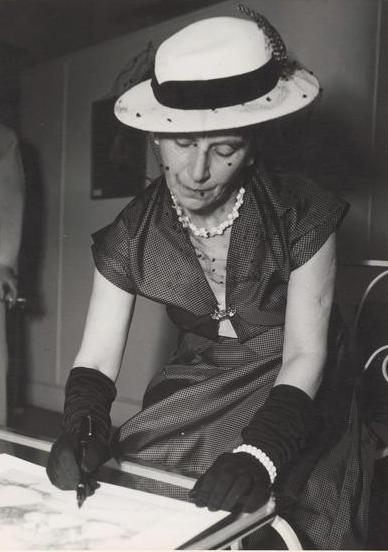
‘Mim’. A personal memoir of Marie Rambert. Brigitte Kelly

‘Mim’. A personal memoir of Marie Rambert: Brigitte Kelly (Alton: Dance Books, 2009). Available in Australia from Footprint Books or any good bookseller.

Marie Rambert, or Mim as she was familiarly known, brought her company, Ballet Rambert, to Australia in 1947. The company stayed until early 1949 and appeared in Adelaide, Brisbane, Broken Hill, Melbourne, Perth and Sydney with a short tour to New Zealand in May 1948. Astonishingly, they gave over 500 performances during those fifteen or so months.

Australian newspapers of the time refer to Rambert as a dynamic and somewhat unusual woman and it is clear that she enjoyed playing to the press. One clipping in a scrapbook held in the National Library of Australia shows her in a balletic pose supported by the entrepreneur Benjamin Fuller. He, somewhat portly, looks a little embarrassed. She is in her element! So it is not surprising to read in Brigitte Kelly’s absorbing memoir, Mim, sentences such as ‘She was a loose canon likely to explode in any direction’.

Marie Rambert in Australia, 1948. Photo: The Courier Mail (Brisbane). Reproduced by permission of the National Library of Australia.

Kelly writes in an easy style. It is anecdotal but full of information and it offers opinions but is not opinionated. Perhaps what comes through most strikingly is the way Rambert’s personality, and that of her husband Ashley Dukes, affected the growth of Ballet Rambert. Kelly writes: ‘The strength and weakness of Mim and Ashley lay in the fact that they wanted complete autonomy over their enterprises, an understandable wish since they could then keep control over the artistic standards they set themselves’. There were serious and ongoing consequences especially of a financial nature according to Kelly.

A jolt to the Australian story is that the company left for Australia hoping to pay off large debts with profits made on tour. They returned from Australia bankrupt. Kelly writes: ‘[T]he manager, Dan O’Connor, had disappeared taking all the money and somewhere along the line lost the costumes and scenery’.

But the book also opens up the story of Rambert in an affectionate way offering many insights that only a dancer who was personally close to the company and its directors can offer. Rambert’s career with Diaghilev is touched upon as well as her ongoing connections with Diaghilev dancers. Her life in France before moving to England makes intriguing reading. And of course the trials and tribulations of the early company from the perspective of someone who performed in those early works of Frederick Ashton, Antony Tudor, Andree Howard, Walter Gore and others of equal note is engrossing.

Mim is a beautifully personal book. A memoir. And well worth the read.

Michelle Potter, 10 December 2009

For more about Ballet Rambert in Australia see my article published in National Library of Australia News, December 2002.

Postscript:

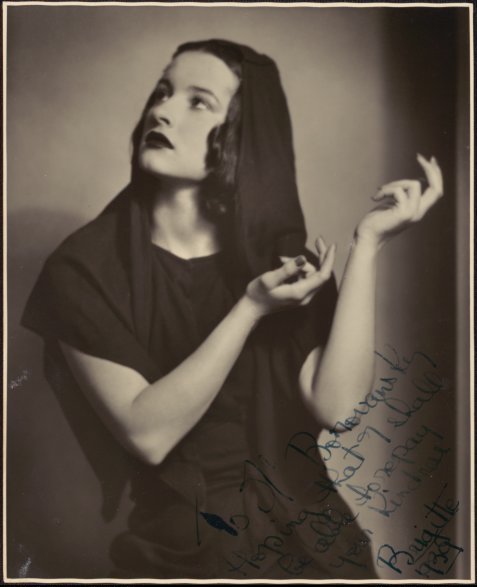
The author of Mim, Brigitte Kelly, came to Australia with the Covent Garden Russian Ballet on its 1938-1939 tour dancing under the name Maria Sanina. She speaks about the photo below, taken by Melbourne-based photographer Spencer Shier, in part three of her memoir ‘Dancing for joy: a memoir’ published in Dance Chronicle, 22, Nos 1, 2 & 3 (1999) saying that it represents her decision to model herself on film star Hedi Lamar. She writes ‘There was a photo call for the souvenir program. I dressed myself in the nun’s costume from the second movement of Choreartium, and when I look at the photograph the “look-alike” effect is really quite good’. (p. 362).

Maria Sanina (Brigitte Kelly) in costume for Choreartium, Covent Garden Russian Ballet, Australian tour, 1938 or 1939. Photo: Spencer Shier. Reproduced by permission of the National Library of Australia

Por vos muero. The Australian Ballet

The Australian Ballet’s triple bill Concord is currently in its Sydney season. It’s at the Opera House until 30 November.

Wayne McGregor’s Dyad 1929 is as startling as ever, although the cast I saw did not manage to achieve the same degree of technical precision and sense of purpose that made the opening night in Melbourne this past August such a brilliant occasion. Alexei Ratmansky’s Scuola di Ballo remains pantomime for those who like their ballet that way. As for Nacho Duato’s sublime Por vos muero, it continues to give and give of itself in a way that only the very best works of art can do.

Por vos in its Australian Ballet production goes back to the directorship of Ross Stretton who introduced it to Australian audiences in 2000. Who can forget the ravishing Felicia Palanca in the leading female role in that first season? Her passion for her role knew no bounds. But then who can forget Daniel Gaudiello on opening night in Melbourne this year with his capacity to show to advantage the intricacies of Duato’s choreography?

On the second matinee of the Sydney season no dancer really stood out, which allowed the opportunity to think more about the work itself, especially its seamless yet choreographically idiosyncratic duets, its use of humour and its delicious sensuousness. In fact it sent me back to the DVD to look more closely at how Duato had structured the work and at his use of props, especially the masks in his dance for six women and his decorative screens at the back of the stage space and the way they were used by the dancers to link each section.

But in addition I turned on the DVD’s subtitles and saw for the first time an English translation of the narrator’s Spanish words. The work stands brilliantly by itself—no translation of the words is necessary to feel that it is about love and passion in their many manifestations. Duato also explains on the DVD that everyone danced in fifteenth and sixteenth century Spain: dance was not thought of as an art but simply as a way of expressing oneself on pretty much any occasion. Such a desire to dance is also inherent in the choreography without our being told. Both the words of the narrator and Duato’s explanation simply confirm what we know. Por vos is an exceptional work.

But the words of the narrator are deeply affecting. As six dancers, clothed in stripped back skin-coloured costumes, move off and give up the stage for a final solo by the leading female dancer, whose consort appears in the closing moment to enfold her in his arms, we are told:

For thee I was born/Through thee I have life/For thee I must die/And for thee I die.

Por vos is an exceptional work.

Michelle Potter, 23 November 2009

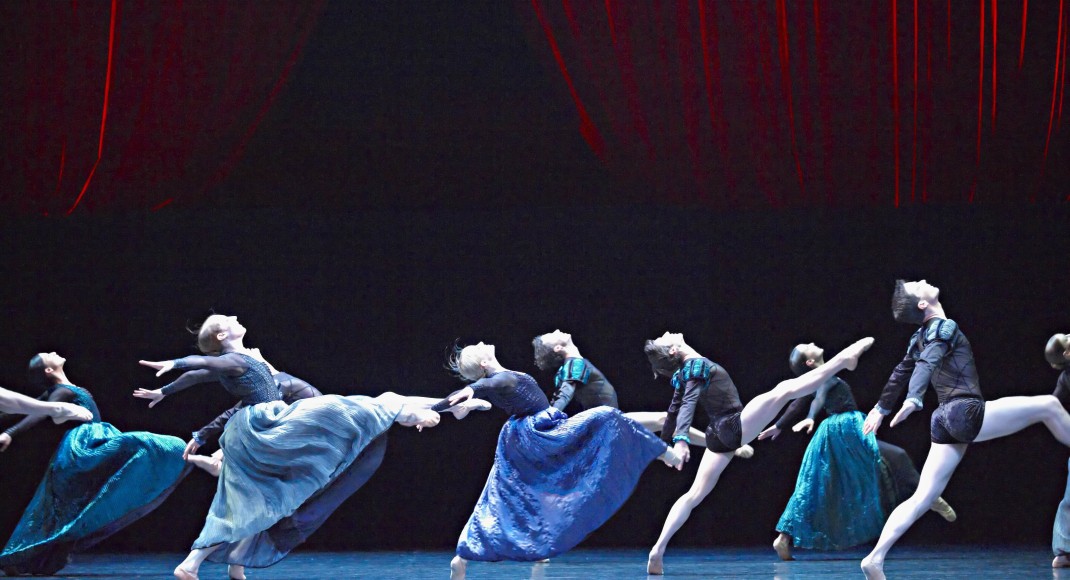
Featured image: Dancers of the Australian Ballet in Por vos muero, 2009. Photo: © Jim McFarlane.

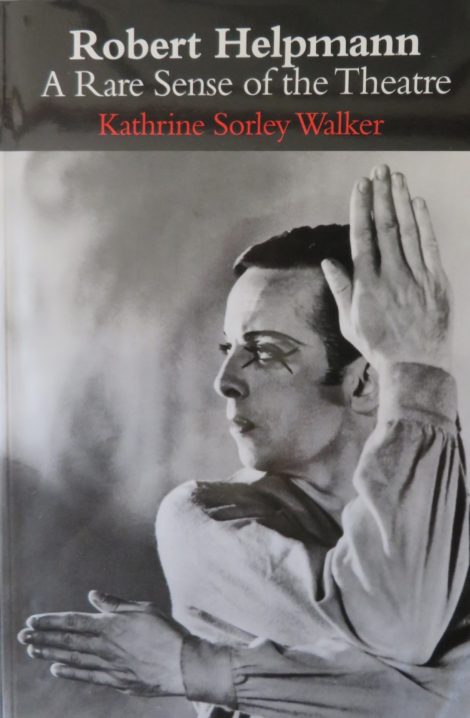
Robert Helpmann: a rare sense of the theatre. Kathrine Sorley Walker

Robert Helpmann: a rare sense of the theatre: Kathrine Sorley Walker (Alton: Dance Books, 2009). Available in Australia from Footprint Books or any good bookseller.

Robert Helpmann is a popular subject for biographical and other writing. Apart from the fact that he was clearly a showman both on and off stage making his exploits a source of fascination, he also was quite meticulous about documenting his career. He kept scrapbooks of his early stage and film appearances and, as he became more influential in the theatrical world, gave countless interviews and appeared in many documentaries. There is much material on which to base books, articles and feature pieces. The bibliography and notes to Anna Bemrose’s biography of Helpmann, published in 2008, give some insight into the amount of material that has already been written about Helpmann. Yet writers continue to be drawn to him and his exploits and undoubtedly this situation will persist. Kathrine Sorley Walker’s Robert Helpmann: a rare sense of the theatre is the latest in this line-up of published works.

The strength of Kathrine Sorley Walker’s book is that she was in the theatre for some of Helpmann’s most significant early productions and performances. Her best writing in this book lies, therefore, in her descriptions of Helpmann’s interpretation of roles whose performances she witnessed, especially when she describes the physical aspects of those interpretations. So, for example, she writes:

‘His Don Quixote, in fact, was an interpretation of dignity and power, a very noble portrait. Speaking for myself, I was awed by his controlled action, his vivid quality of stillness. As in Rake [The Rake’s Progress] and Miracle [Miracle in the Gorbals], he brought into play his ability to convey, without any sense of strain, a tremendous emotional effect. This was done by turns of the head, half-movements, the crook of a hand, a light in the eyes, a slight tremor in the muscles of the face. In contrast, a few swift moments of dancing, a wild beating at the bars of an imaginary cage, were immensely telling’.

This is wonderful observational writing.

Similarly, Sorley Walker reminds us of the qualities of Helpmann’s partnership with Margot Fonteyn. She writes:

‘The magnificent poetry and true Romantic understanding of the Fonteyn-Helpmann partnership in Giselle has been forgotten in the wake of the eulogies about the Fonteyn-Nureyev partnership. In Act II, the dream-like fluency of the dancing, the supernatural inevitability with which they allowed the drama to unfold were so absorbing that no one would have thought of disturbing the mood by applause until the final curtain. There were neither showpiece moments nor any sense of endeavour, merely an eloquent demonstration of skilfully unified music, dance and mime’.

Sorley Walker has also made use of material in her personal collection, as well as material in collections in the United Kingdom not usually quoted or referred to in other writing. So her extracts from an unpublished article by British dance critic A.V. Coton on Helpmann’s theatrical qualities and on his value to the Australian Ballet make interesting reading. So do her comments on an unrealised film production of The Sleeping Beauty largely based on treatment details housed, Sorley Walker records, in the Theatre Museum in London.

But the book also has its frustrating elements. Some relate to the way the book has been edited. It is not an enticing book to pick up randomly for a browse prior to a possible purchase. There are 27 chapters and three appendices but none has a distinguishing heading to it. Thus there is no way of knowing by looking at the list of chapters at the beginning of the book what is contained in the text. Would it appeal to someone without a particular interest in Helpmann? Maybe not.

Other frustrations relate to the way Sorley Walker has written her reminiscence of Helpmann. The book becomes at times an account of what happened next, which sometimes has the effect of encouraging the reader to skip past some sections looking for more of the informed analysis that is the most satisfying feature of the book. More than occasionally there is also a surfeit of quotations from others. In the space of just over a page of writing on The Merry Widow, for example, there are relatively lengthy quotations from four Australian critics – John Cargher, Jill Sykes (two), Leonard Radic and Neil Jillett (two). I would rather know in more depth what Kathrine Sorley Walker as the author of the book thought, or at least as well as what Cargher, Sykes, Radic and Jillett thought.

Robert Helpmann: a rare sense of the theatre deals not just with Helpmann’s dance career, which has provided all my examples in this review. In a slim volume of 162 pages of text it also covers his work as an actor on stage and in film and deals with his personal life as well. On this latter point Sorley Walker’s writing includes references to Helpmann’s long-terms relationship with his partner Michael Benthall, to his work and friendship with Katharine Hepburn and to his relations with his Australian family.

Dance books rarely make much money for their authors or publishers, although Mao’s last dancer may be a recent exception. The advocacy of Dance Books in persisting in publishing in a difficult field is more than admirable. And the gems that Sorley Walker presents at various intervals throughout Robert Helpmann: a rare sense of the theatre, gems coming from an informed standpoint as a result of having ‘been there’, make the book a worthwhile addition to the personal libraries of those interested in the arts.

Michelle Potter, 25 October 2009

Featured image: Book cover (detail). Robert Helpmann: a rare sense of the theatre.

Helpmann book cover

Note: A review of ‘Mim’: a personal memoir of Marie Rambert, also published recently by Dance Books, will appear on this website shortly.