10 November 2023. Regent on Broadway, Palmerston North, Manawatū reviewed by Jennifer Shennan
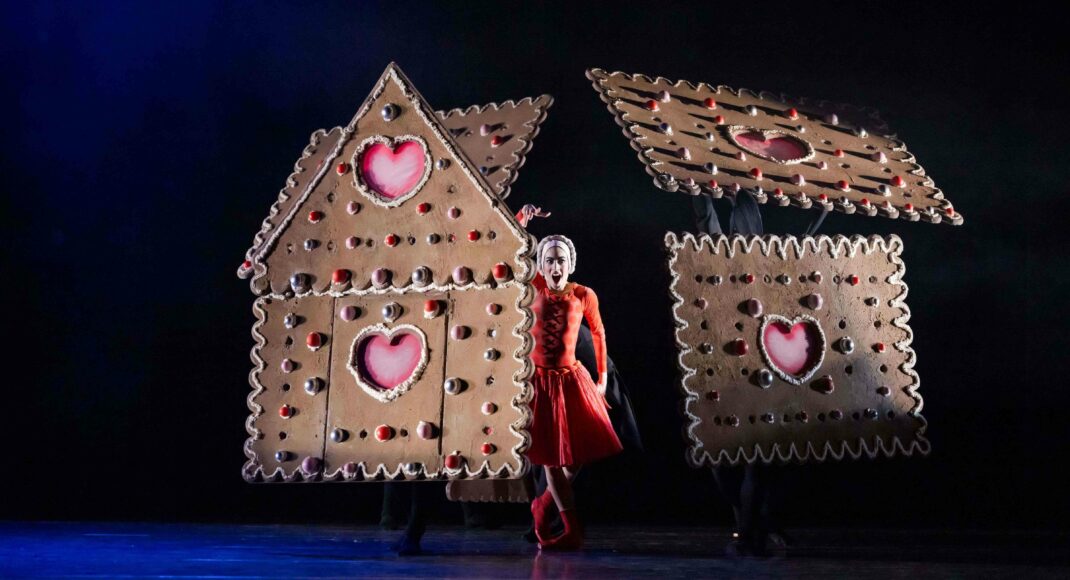
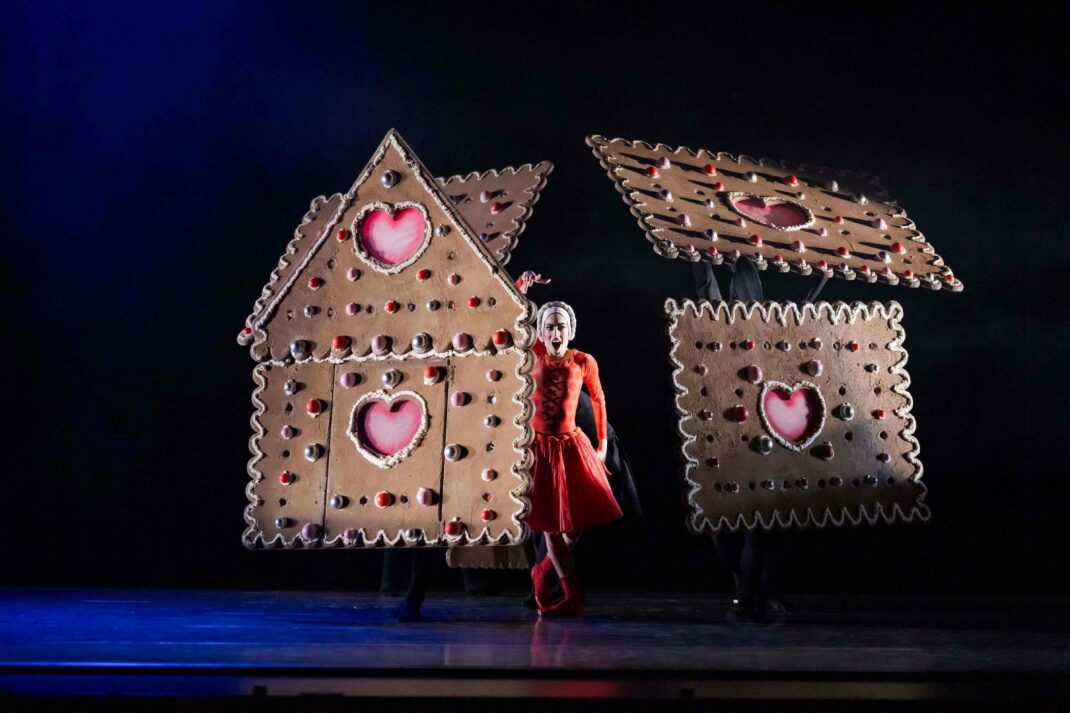
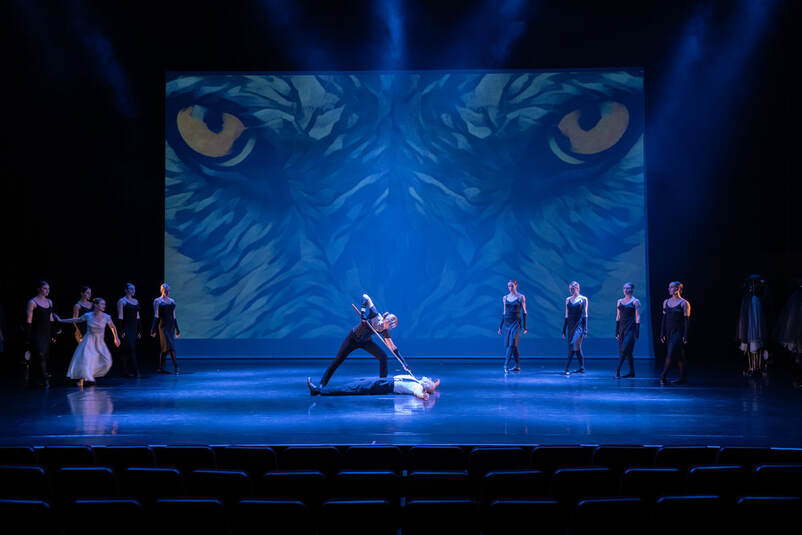
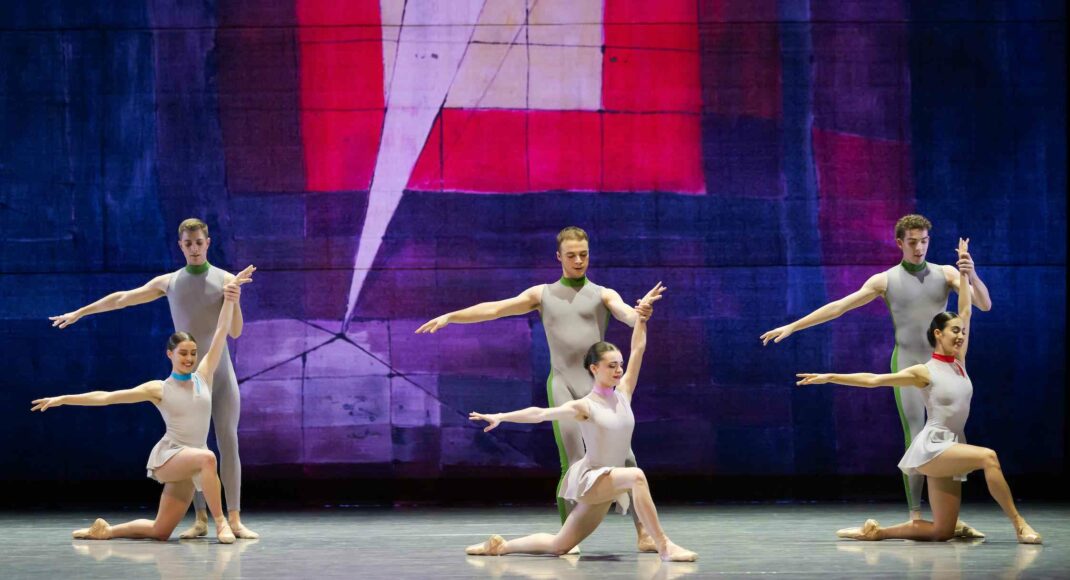
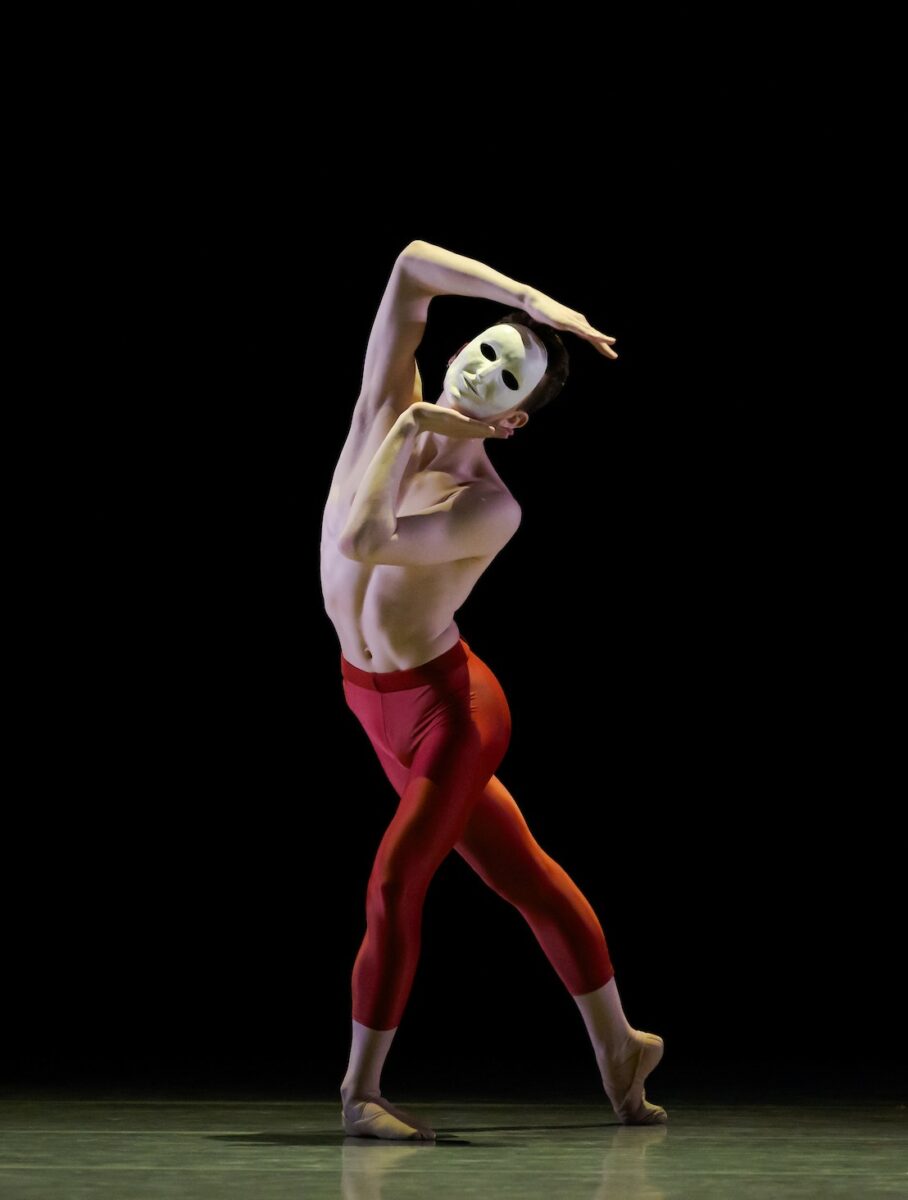
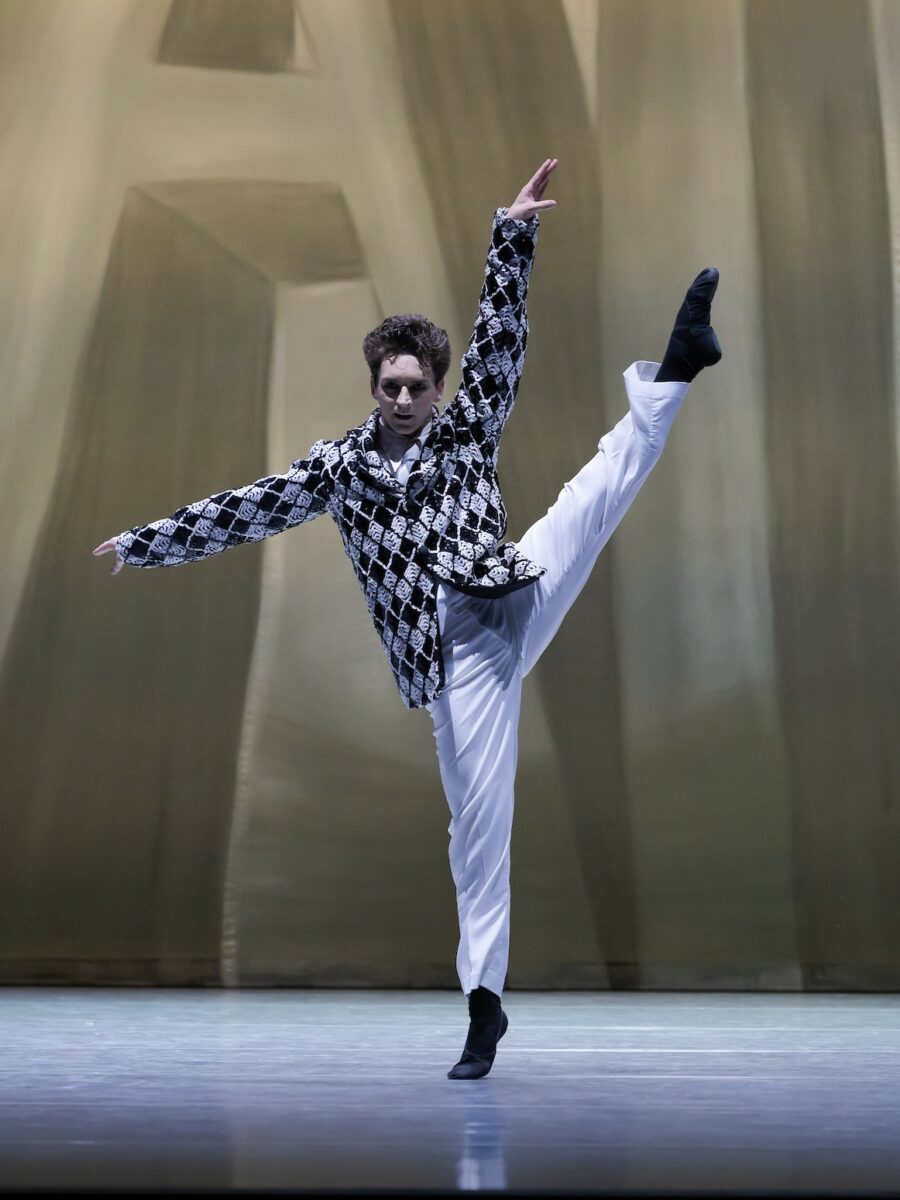
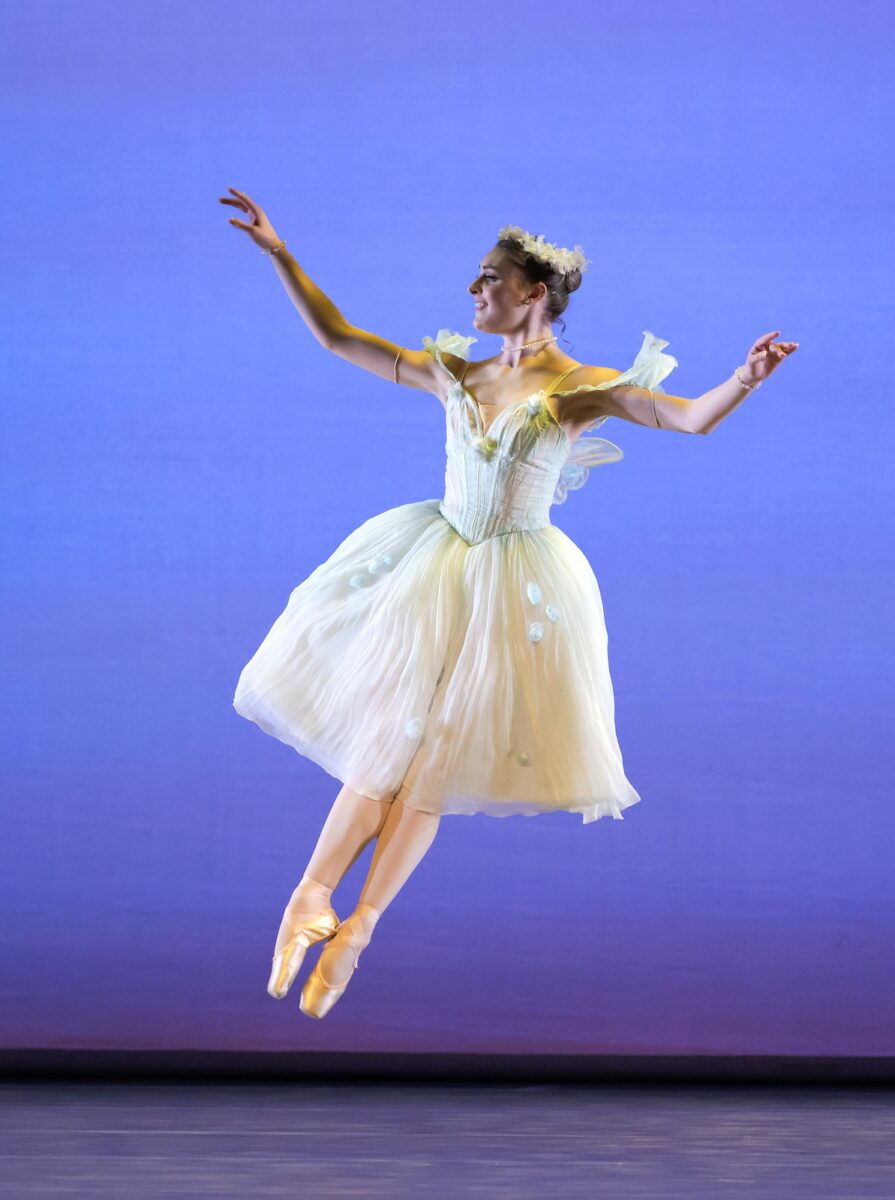
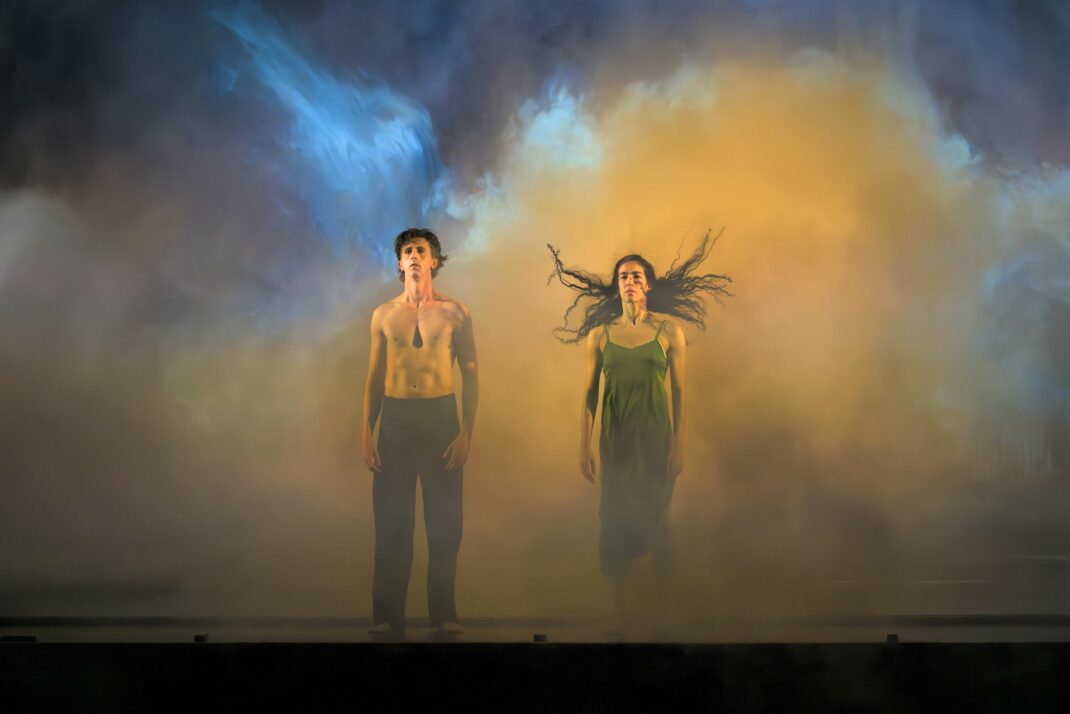
This return season of Hansel & Gretel, from choreographer Loughlan Prior and composer Claire Cowan, is a colourful riot of a pantomime romp that the dancers milk to the max. There are some very skilled comic performers among the soloists who use every moment and centimetre of opportunity to entertain us.
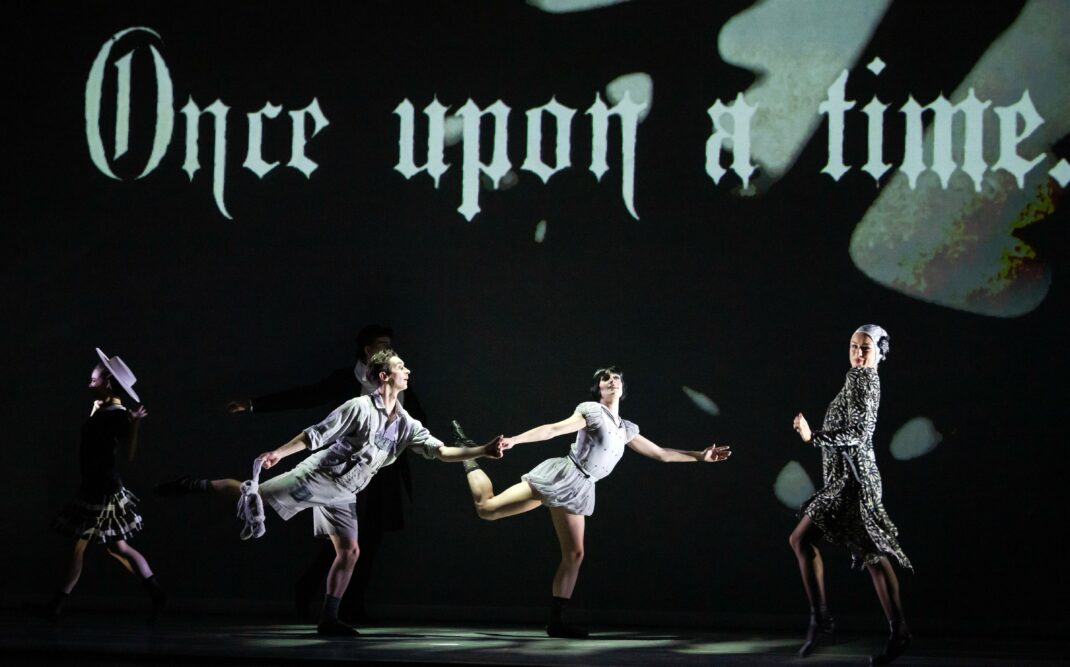
I have come to Palmerston North for the performance in Regent on Broadway, a venue that always offers a sense of occasion. The 1400 seat grand theatre, converted and beautifully restored from the original cinema house built in 1930, is a source of local pride and rightly so. The opening to this production of Hansel & Gretel, designed by Kate Hawley, is cleverly styled as a silent movie, so it’s an echo to the days of Busby Berkeley, Whoopee! and Flying High! I don’t suppose there’s anyone in the audience tonight who saw those movies here first time round, but hey, who’s to say there isn’t?
The folktale as we’ve known it from the Brothers Grimm is not the narrative adopted for this choreography. Instead the opening has fashionable well-to-do folk and their snobbish children striding about, flaunting their wealth and casting scorn on the poor little Hansel and Gretel who have nothing much except a toy rabbit to cling to. Their wicked Stepmother is instead recast here as simply the poor wife of the poor husband whose mischievous children are always hungry, so leave home in search of food. The danger of a cruel Stepmother within the family is thus replaced by two worlds of ‘those who have’ and ’those who have not’ as the scenario.
(I sensed here a poignant hint of Katherine Mansfield’s story, The Doll’s House—where the magnanimous Burnell children allow the working-class kids, the Kelveys, a brief visit to see their prized possession. There’s extra resonance in that, since Prior’s recent choreography, Woman of Words, was made as a tribute to the illustrious KM in her centenary year, though has seen only one performance in an arts festival town in the distant south. Many would love to see that work presented on a national scale, and it would further convert to a film of considerable international interest. Now there’s a gauntlet to the recently welcome new Artistic Director of the Company).
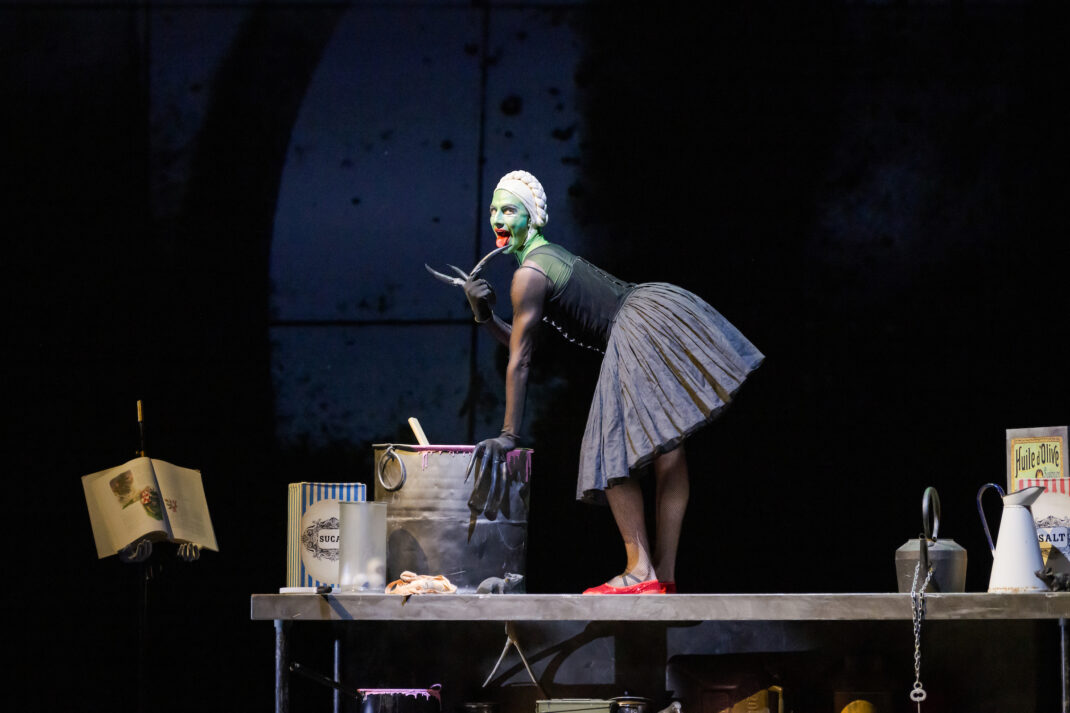
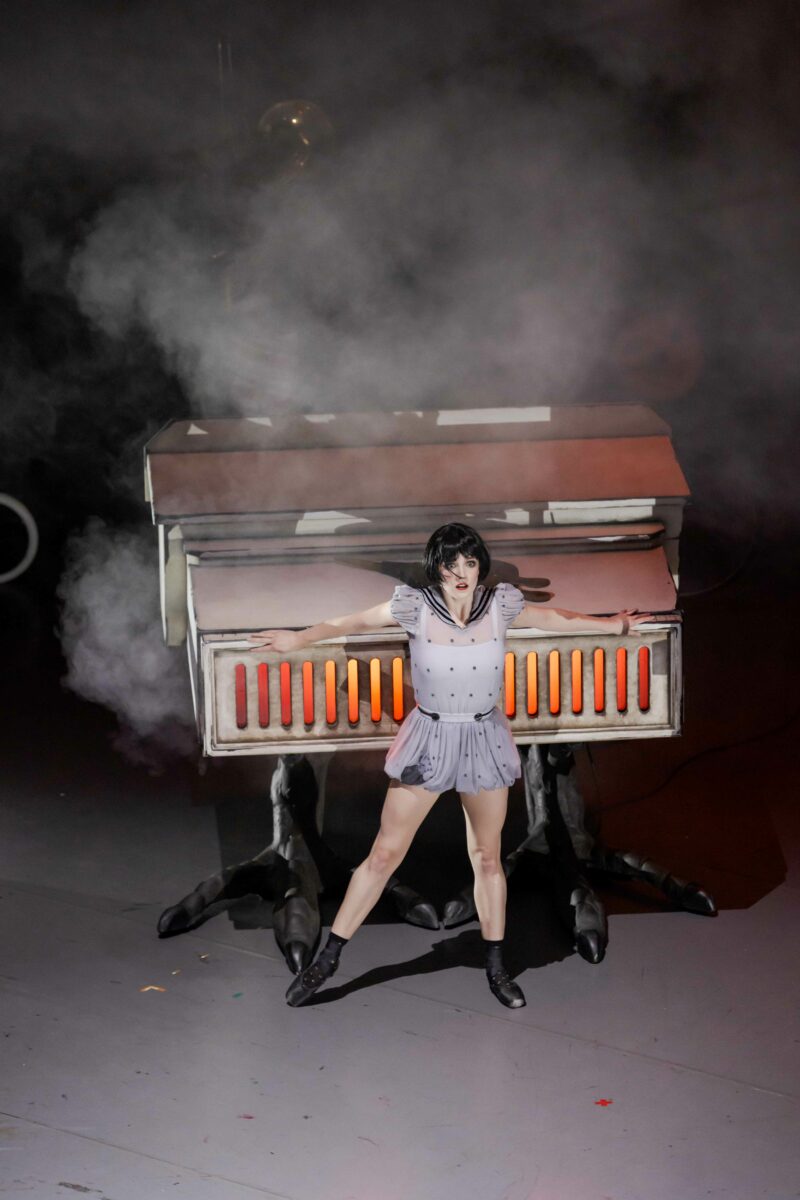
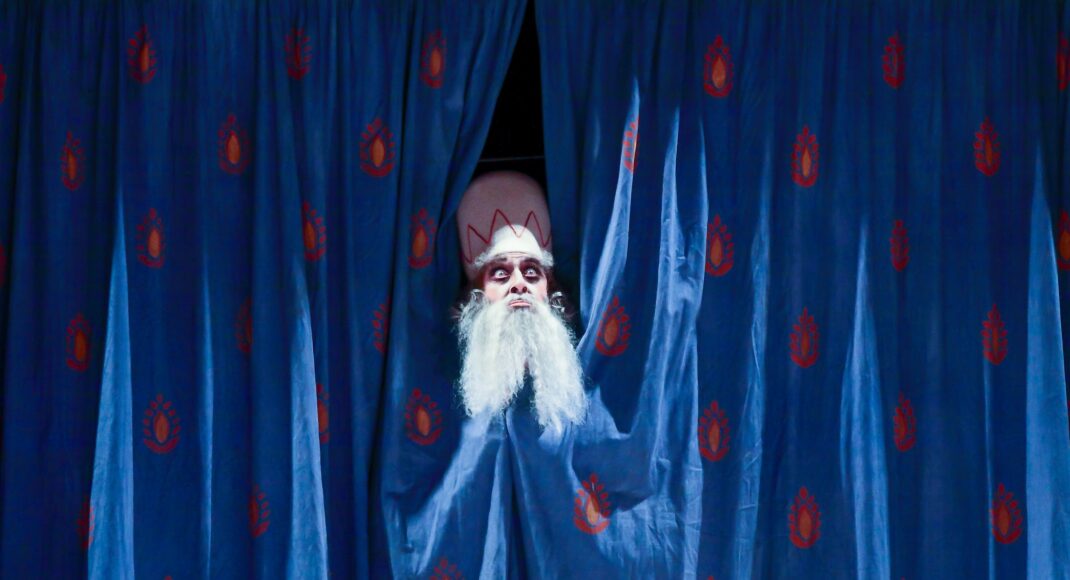
There are fetching scenes of Bird-children, Dew fairies and a Sandman who guide the siblings’ journey, and the gingerbread house of Act Two opens up to fill the stage with the aromas of candy floss, toffee apples and soft-serve ice cream, though with danger lurking in the spokes of a punk-steam bicycle. The role of Hansel was danced with great spirit and comic timing by Shaun James Kelly, and Gretel was fetchingly played by Ella Chambers. Sarah Garbowski dances with a lovely lyricism so the role of gentle Mother suited her well. Ana Gallardo Lobaina, a stunning performer with a magnetic quality that claims your eye whenever she is on stage, was an outrageous Ice Cream Witch, but Luke Cooper as The Transformed Witch probably shares the prize for his high camp and wickedly funny performance, OTT but never out of time.
I like trying to imagine the reinstatement of Hansel and Gretel’s cruel stepmother into a ballet, since that is a trope society still has to deal with, and would bring stronger drama to the somewhat lengthy divertissements in several scenes. But having said that I can also admit to being swept along by a madcap ballet that throws comic opportunities at numerous dancers who relish moving to Claire Cowan’s terrific and lively score. The redoubtable Hamish McKeich conducts three different orchestras for the seasons in the main centres, but it is a recording of the New Zealand Symphony Orchestra that we hear in this performance. It is inspired music that truly motivates the dancers, but has also achieved recognition in its own right.
There’s a new and happy energy in the excellent printed program, with essays from all the main contributors in the team that created this production.
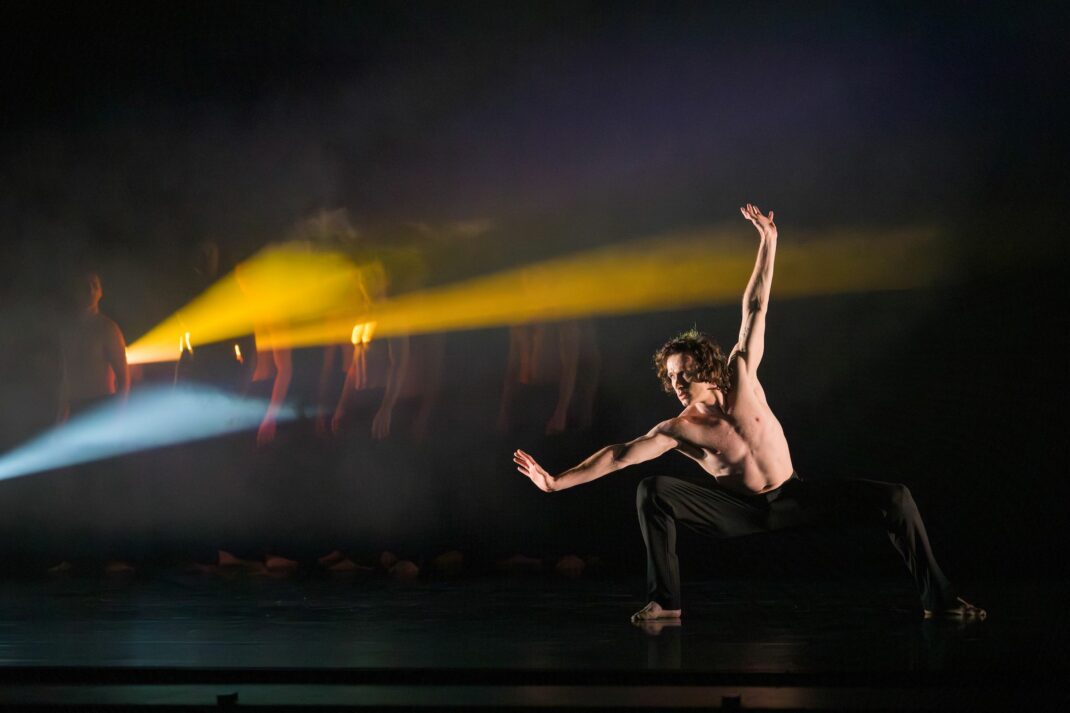
From the program note: ‘Ballet Noir is a meditation on Giselle Act II as viewed though a Film Noir lens.’ We all know Giselle of course—or do we? I certainly found new resonance in this innovative and stylish treatment of the Giselle story, which incorporates both old and new elements—bringing the timeless themes of broken trust and hearts, forgiveness and love, up against the forces of vengeance and cynicism. It’s a contemporary reading less concerned with narrative, more with psychology of personalities, and should move both diehard balletomanes as well as first timers in the audience.
That achievement grows from Mary-Jane O’Reilly’s respectful treatment of ballet, while simultaneously being a force for contemporary dance. She trained at National School of Ballet, now New Zealand School of Dance—also in London—and danced with New Zealand Ballet when Poul Gnatt directed. MJ has choreographed the major work, Jean (about Jean Batten) for RNZB, as well as directing, dancing and choreographing for Limbs Dance Company from late 1970s until 1986, with her colleague, the late Sue Paterson.
It is apparent to anyone who thinks about it that ballet/contemporary dance/dance theatre are no longer useful or discrete categories, and certainly not opposites. Leading American dance writers—Selma Jeanne Cohen, Jack Anderson and Joan Acocella—have discussed these topics for years and their writings help us recognise the ways in which dance styles and techniques evolve and reflect the cultural and social contexts of their respective countries and companies. That’s a much richer complex than the binary of ballet/non-ballet. The really interesting professional dance companies in the world require equal strength and versatility in classical and contemporary techniques and interpretation, with dancers ready for whatever a choreographer might require. Ballet Noir straddles this perceived divide with great aplomb. It’s very clever to stage highly trained classical dancers in a contemporary psychological setting, which in turn for me resonates with how Antony Tudor choreographed his masterpieces.
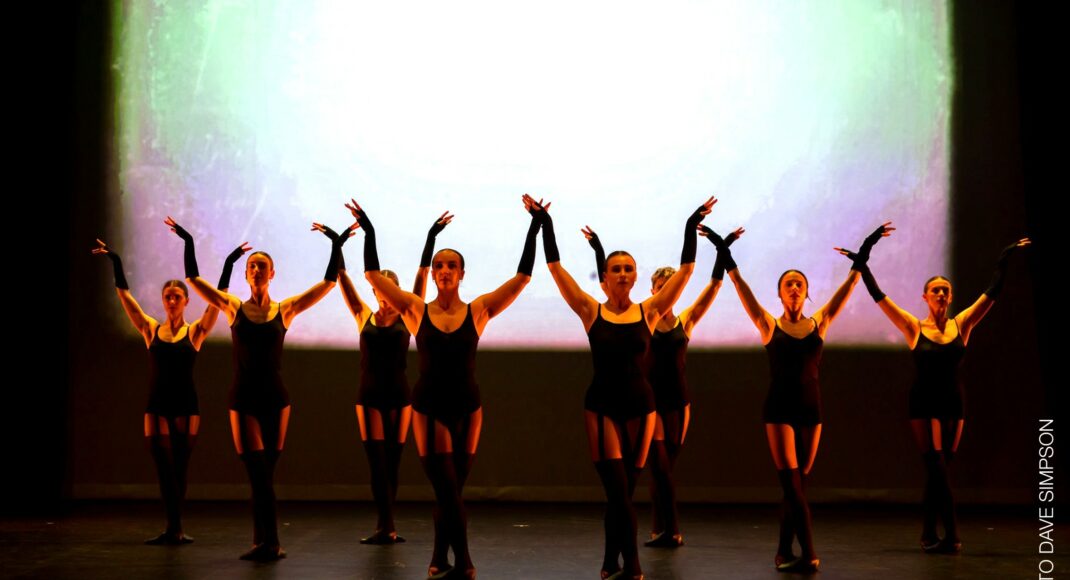
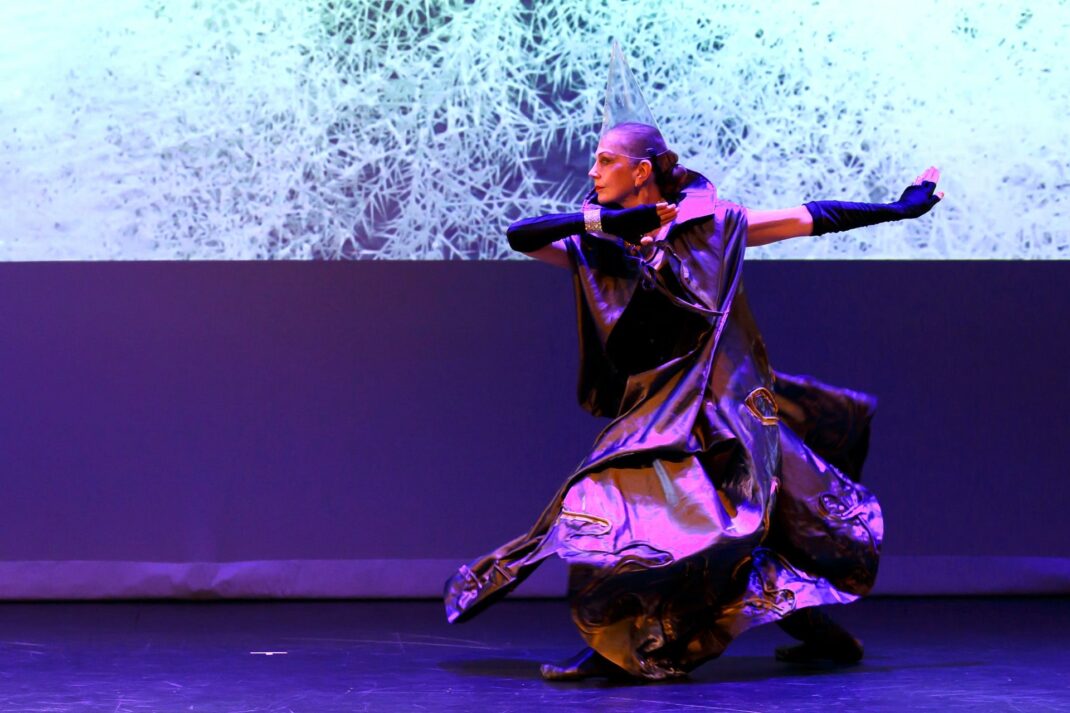
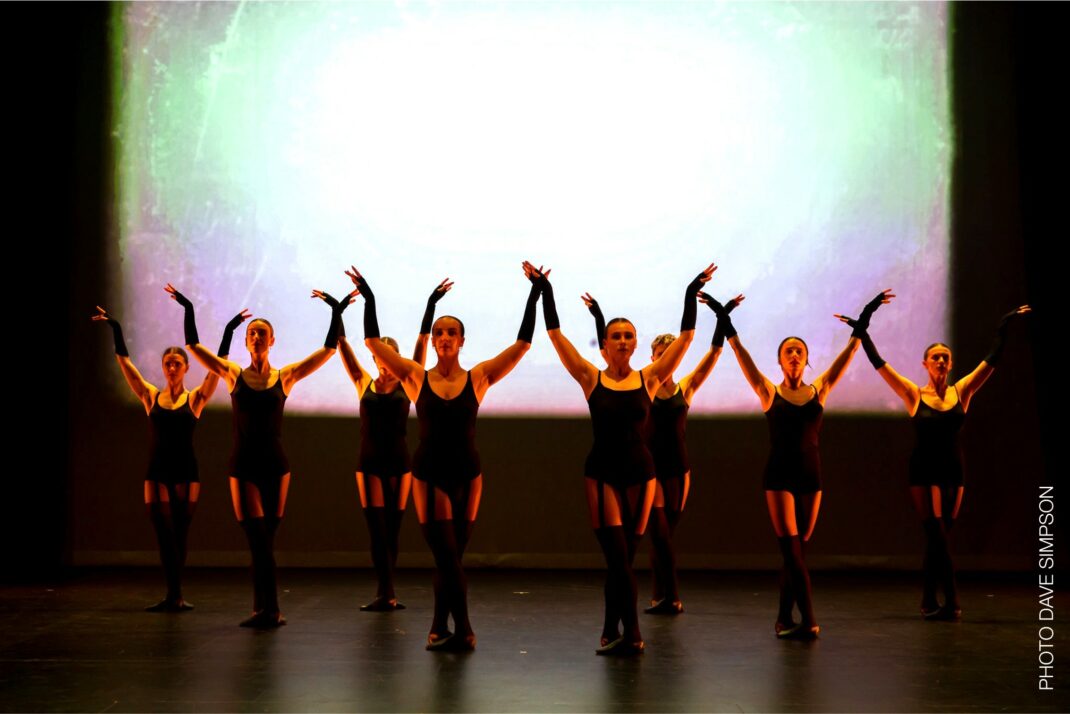
There’s an 8-member troupe of The Cynics, (The Wilis to you), who stride and mince, twist and pose in high style of fashionable black, wearing soft ballet flats but on such high demi-pointe as to stab you with their stiletto heels a mile high. Their temps levé and penchée motifs are timed to the familiar music by Adam, but there are also interpolated soundscapes that take us to new places. Despite their strut, The Cynics are actually in the grip of the devastating Ice Queen, phenomenally played by Shona Wilson, long-time Auckland dance figure from the days of Limbs. We’ve never seen Myrthe dance quite like this before, and there are intriguing flashbacks for us to piece together her own backstory to explain this relentless revenge she holds against men. Shiver me timbers, she gave me the goosebumps.
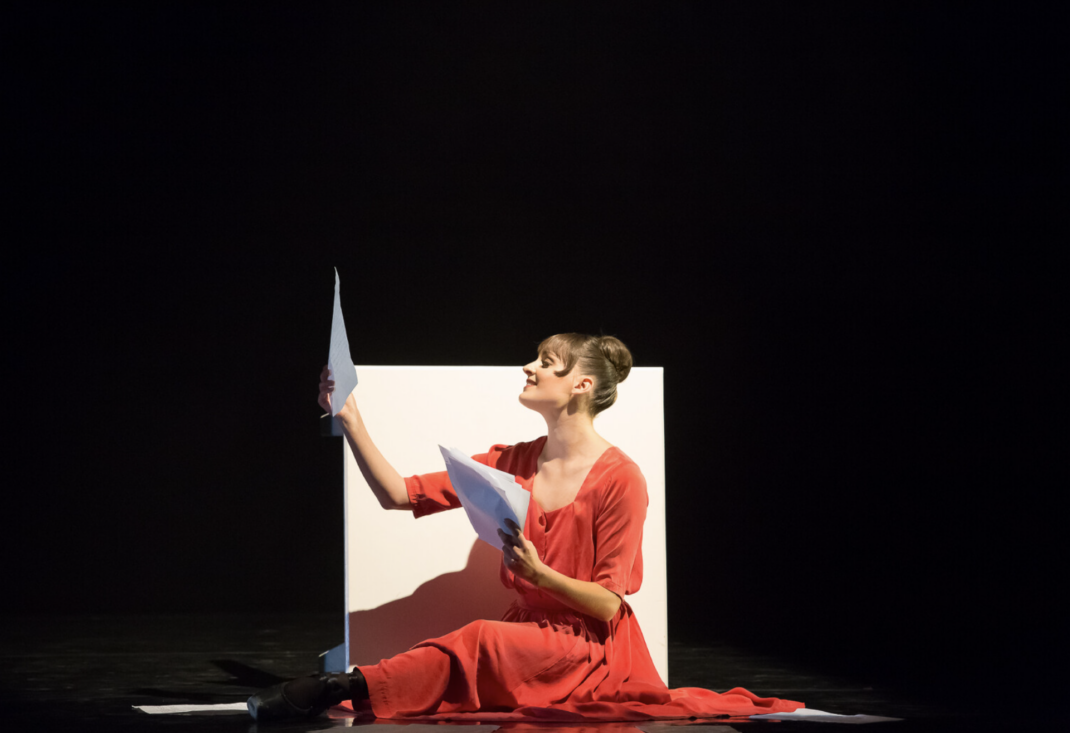
Giselle is a naive and lovely girl, the young bride who never quite makes it to the altar. Her vulnerable character grows in strength as she finds how to stand up to the Ice Queen, and there are poignant sequences in a beautifully shaped role. I saw two performances with a change of cast of soloists—Amy Moxham and Lucy Lynch each giving Giselle a convincing presence.
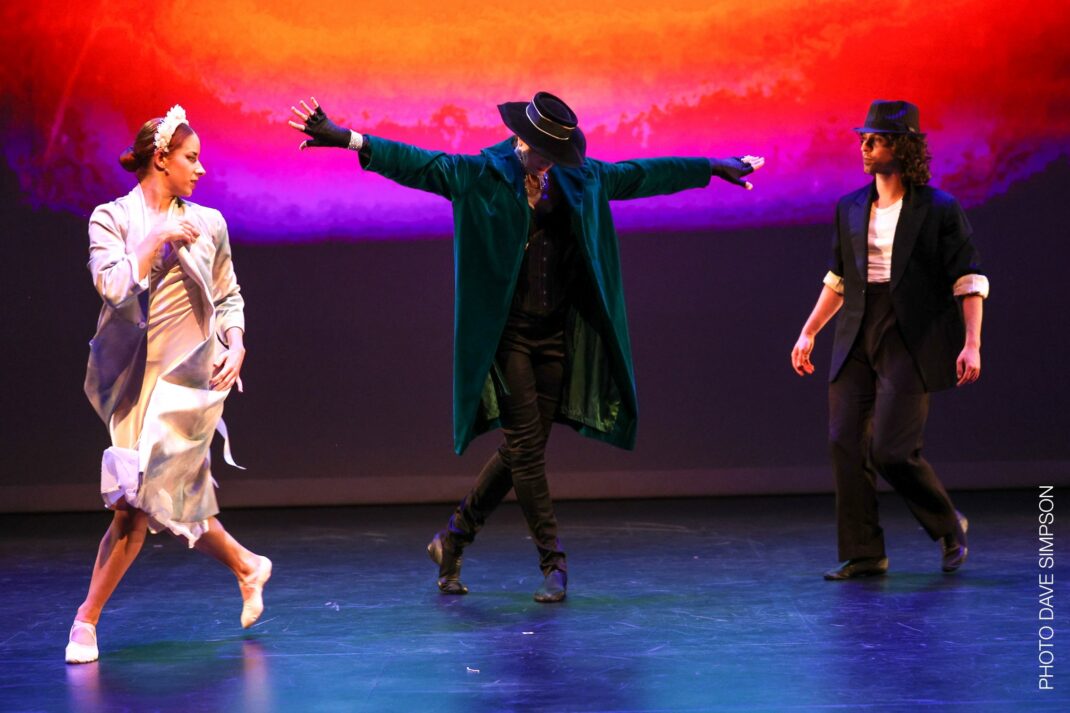
Two young men stray onto the scene—a couple of spivs, let’s call them Hilarion and Albrecht, out for a night on the town. (There’s no Act I in this story). Their dual routines are comic and clever—Jacob Reynolds and Oli Matheison in one cast, Kit Reilly and Thomas Harris in the other—giving as good as they get. Then acid rain starts to fall and they are sucked in to a circle of vengeance not of their own making, as though a nasty scene developed somewhere in the town sometime in the night, and it’s possible they won’t get to see the dawn, though any police will have quite a hard time piecing together what actually happened. We witnessed it though, so we could be interviewed.
Throughout the work there’s a backscreen of film sequences that range from slow and oily raindrops to a slow-motion tear running down a cheek, an exquisite crescent moon and a stormy sky, marauding packs of wild dogs and a silly little skit of a dog in a neck ruff doing tricks at a party, wee toddlers playing, grown men sparring. This all may sound like a distraction but in fact was fully absorbed into the danced work throughout.
The design of costumes, with several quick changes in the shadows sidestage—long tulle skirts flashing around like evil cloth, then as capes of birdwings. The Ice Queen first wears a long pointed (clear perspex) beak facemask, like some Scandinavian mid-winter ritual dress-up, but in one gesture lifts that high onto her head to become a queen’s crown, or is that a unicorn horn. You tell me. I appreciated the way that a number of motifs through the work were open for personal reading, and all of them will be right readings.
This is an impeccable production that deserves to be widely seen, and would do well in a number of arts festivals. It’s emotionally nuanced, tight and spare, savvy and sexy. Albrecht and Giselle dance their lyrical lovemaking and I get the goosebumps yet again.
It is just a week since Jon Trimmer died, but his dancing life had been the stuff of legend for decades already. He was the country’s premier ballet dancer, joining New Zealand Ballet in 1959. With only a few short periods abroad, and with Russell Kerr at the Auckland Dance Centre in the early 1970s, he remained with the Company till the age of 79. That has to be a career of unprecedented longevity in the ballet world. We’re not just talking quantity though, it’s the quality that counts.
Jon was knighted in 1999 for his outstanding career, but he nevertheless remained the kind, trusted and modest mentor and friend to many a young or mid-career dancer who ever needed advice or deserved encouragement along the way. Jon chose not to take on the role of Artistic Director, even though there was a vacancy several times, rightly sensing that such positions have a finite term, and he was committed to this company for life.
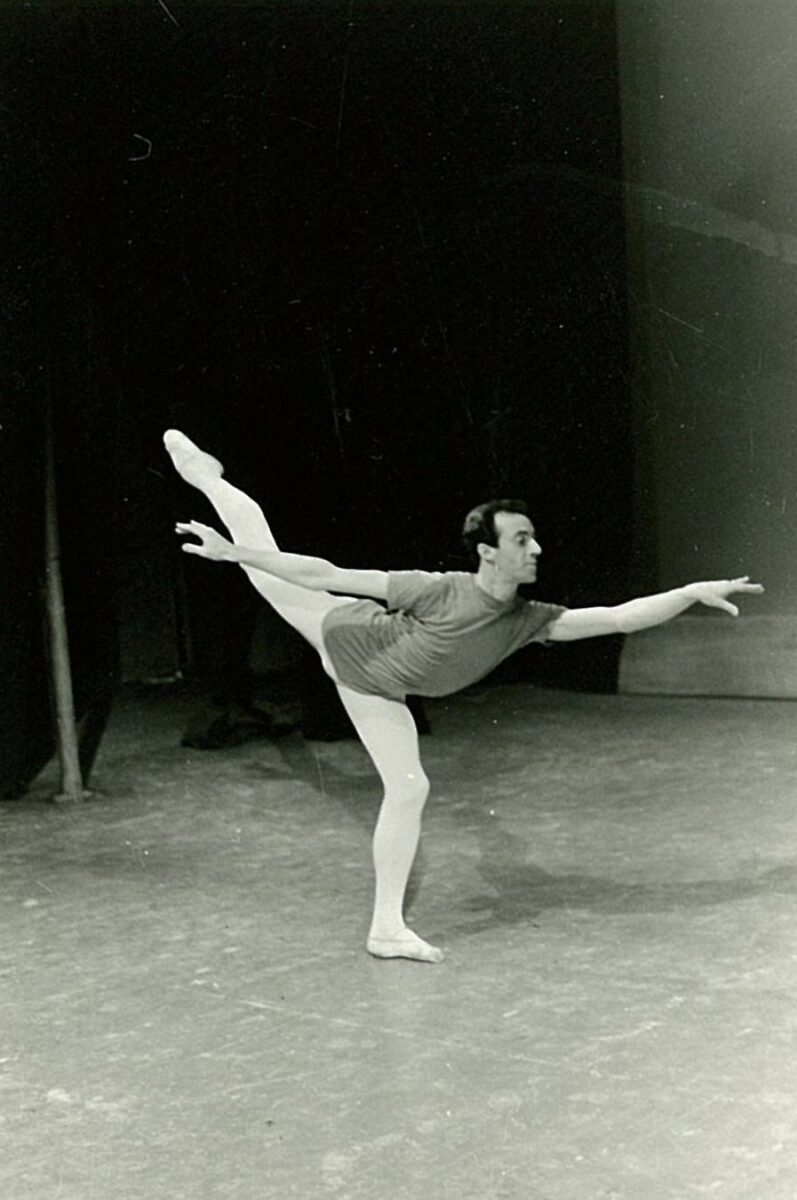
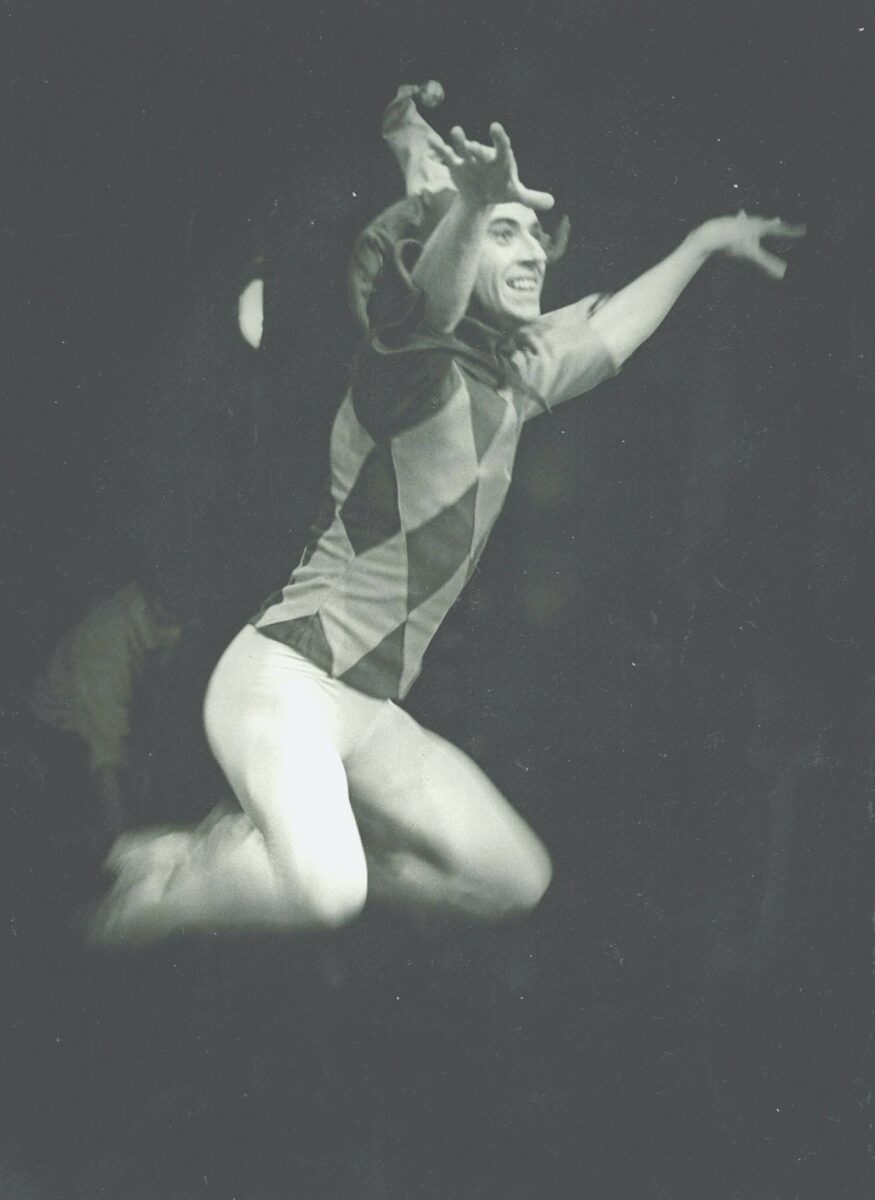
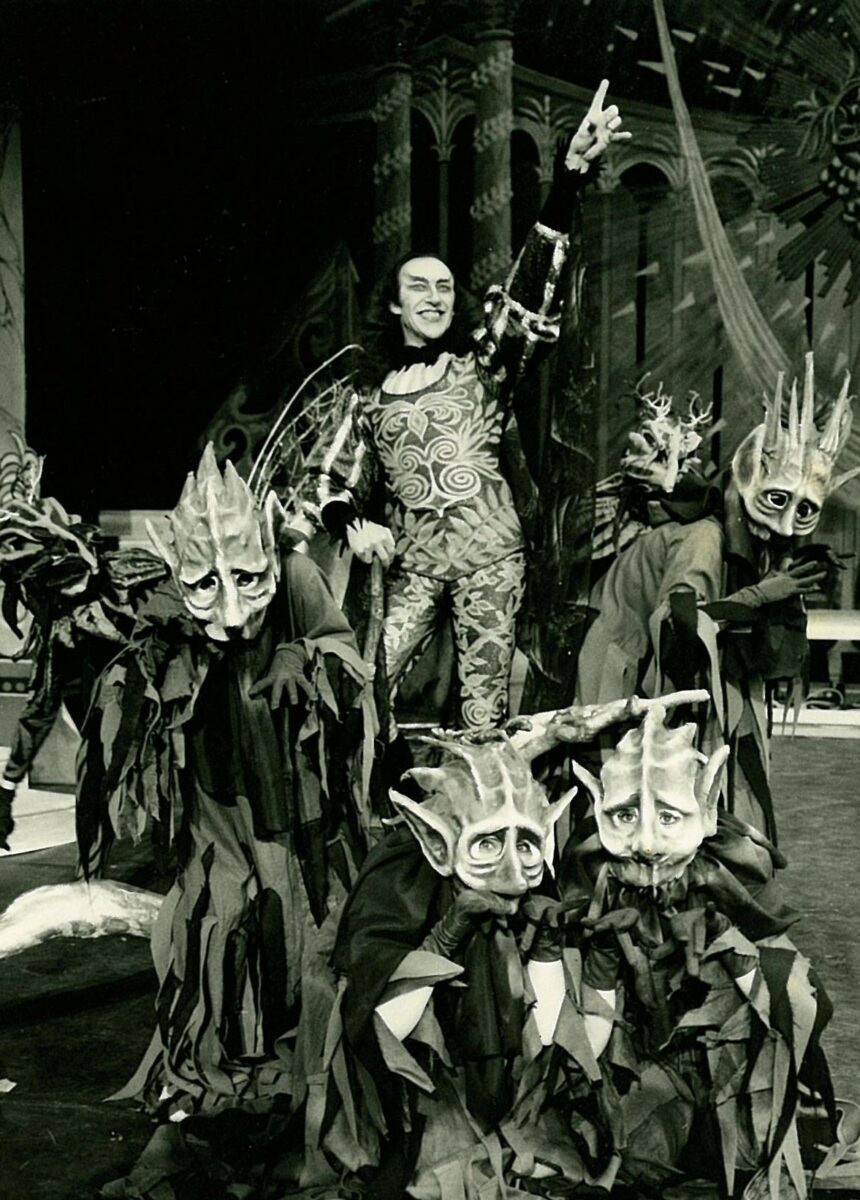
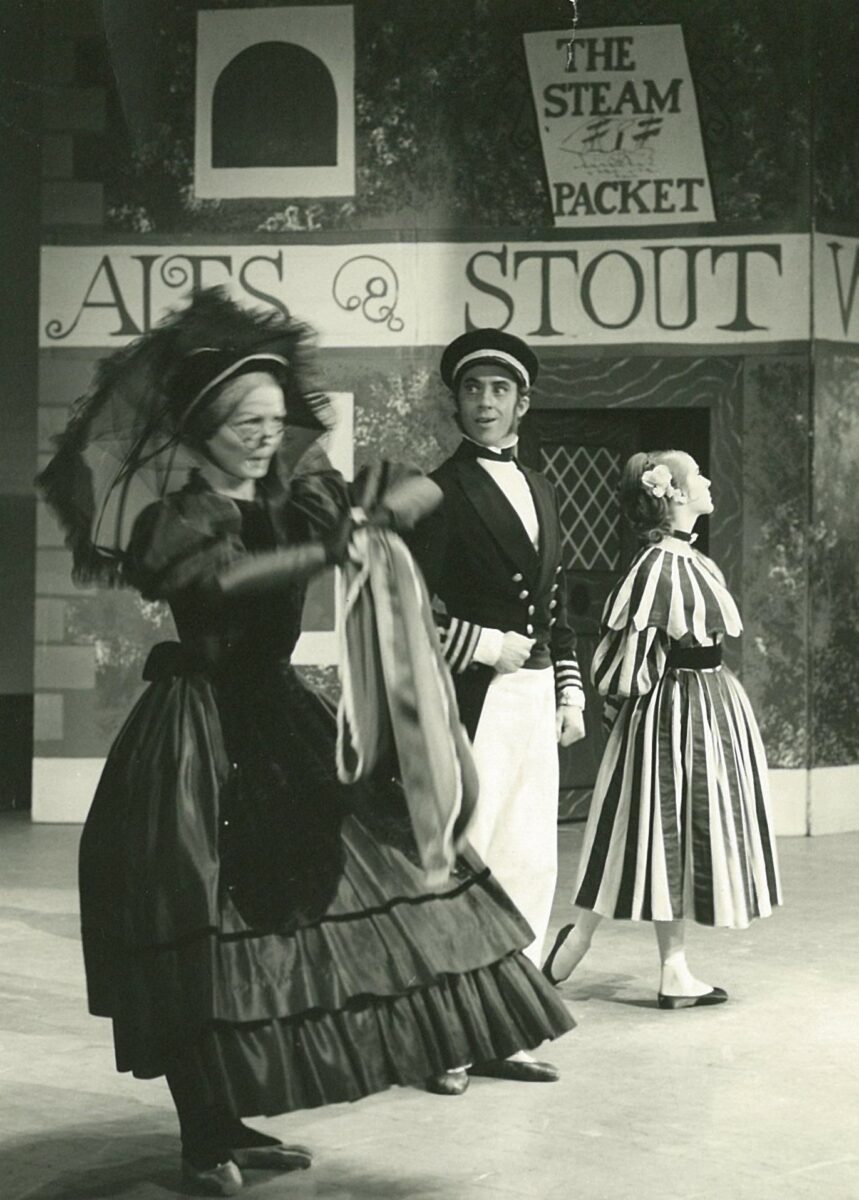
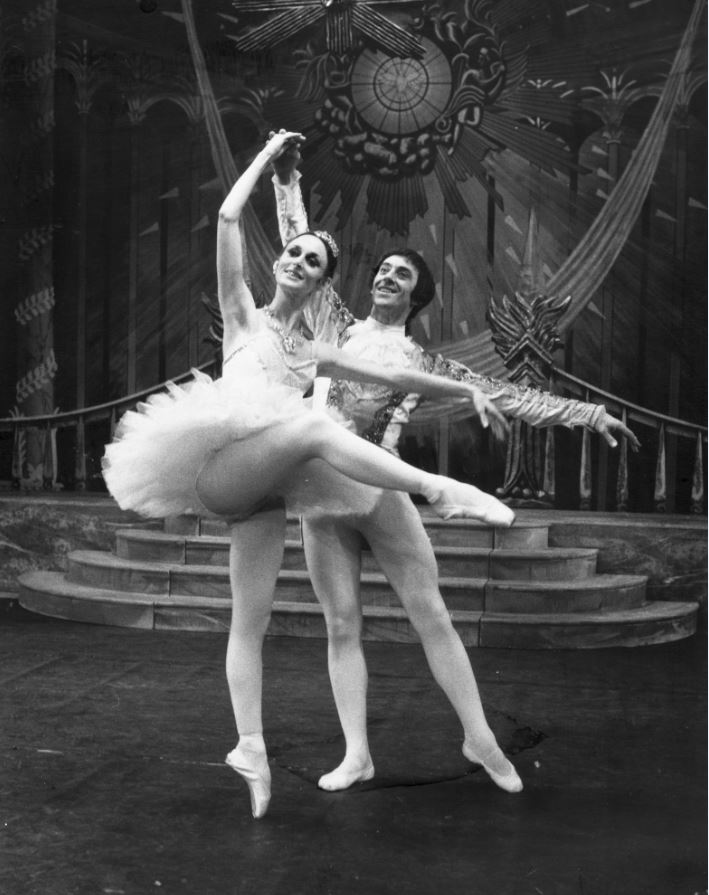
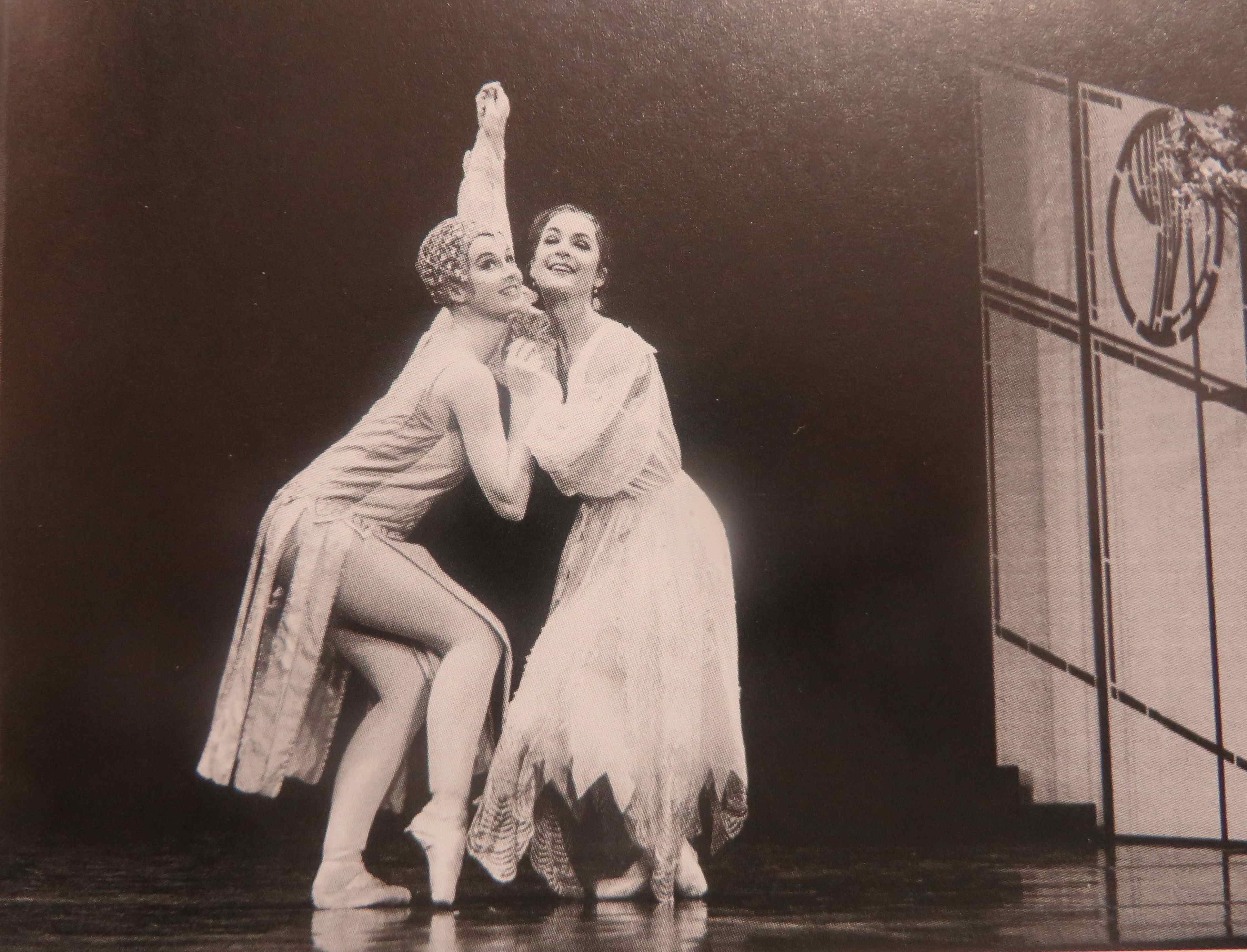
Early images of Jon Trimmer. Courtesy of Royal New Zealand Ballet
The splendid classical technique and intrinsic musicality in Jon’s early years saw him dance all the noble roles with finesse and sensitivity. He was an intuitive actor as well, so his reading of Albrecht in Giselle, for example, could cover the complex emotions in that role not always explored by everyone who dances it. He was the poet personified in Les Sylphides, a fine prince in Swan Lake and Sleeping Beauty, and a deeply moving James in La Syphide. Poul Gnatt of course had infused that distinctive and vivacious Bournonville style in which the company he founded excelled under his direction.
Jonty, as he became affectionately known, partnered many fine dancers during his long career. Patricia Rianne who danced Giselle,La Sylphide and Sleeping Beauty with him, has written from London:
It is with great sadness that news of Jonty’s passing has reached me. He was a true creature of the theatre giving decades of his artistry to the audiences of New Zealand during his stoic membership of the Royal New Zealand Ballet. We danced together many times but most memorable were our performances of Giselle under Russell Kerr ‘s Directorship for RNZBallet in early 1970. Jon was an attentive, caring, musical and supportive partner but most of all he was fun to share the stage with. Fond memories. RIP dear Jonty.
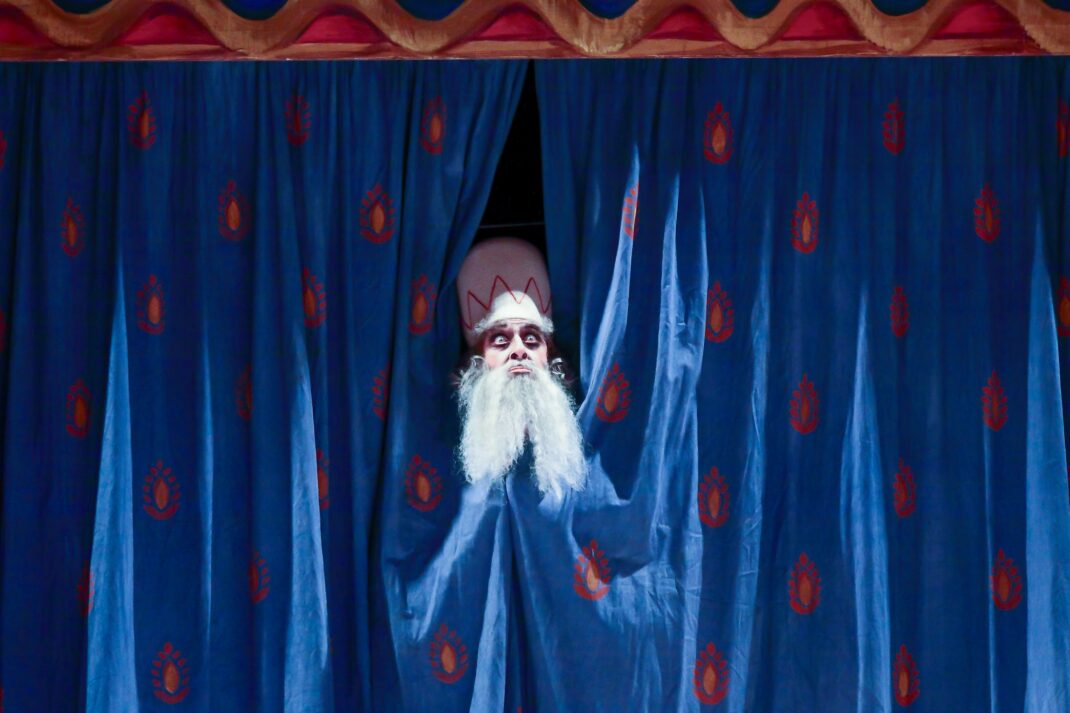
Patricia in later years would win the London Critics Award for Performer of the Year for her Giselle—and she always credited the pedigree that Russell Kerr brought to his stagings of the classics (which he had learned from Nicholas Beriosov and Stansilaw Idzikowski in his years with Festival Ballet). Russell and Jon could both have followed stellar international careers but instead they opted to dance at home, settling for miniscule incomes maybe, but nonetheless finding deep satisfaction in making calibre productions right here. Jon danced both Petrouchka and the Charlatan across several seasons of Russell’s staging of Petrouchka, which was recognised as good as anywhere in the world. The sense of gratitude I have in writing about these past seven decades is not easy to paraphrase.
When it came time to step back from the highly demanding danseur noble roles, Jon had the dramatic and comedic strengths already in place to draw on for character roles. He gave a masterful reading to the title role in André Prokovsky’s Königsmark; his Royal Swan in Bernard Hourseau’s Carmina Burana involved a stunning performance (a long solo he danced while suspended upside down on a pole). The roles created for him by Gray Veredon—the Entertainer in Ragtime Dance Company, the brooding settler in Tell Me A Tale, the ridiculous Dr Pantalone in A Servant of Two Masters were beyond description and compare. The madcap Widow Simone in La Fille Mal Gardee, the Rake in The Rake’s Progress, the grotesque Matron in Gary Harris Nutcracker, the swashbuckling Captain Hook in Russell Kerr’s fabulous Peter Pan—it’s a very long list of indelible memories for which many are grateful.
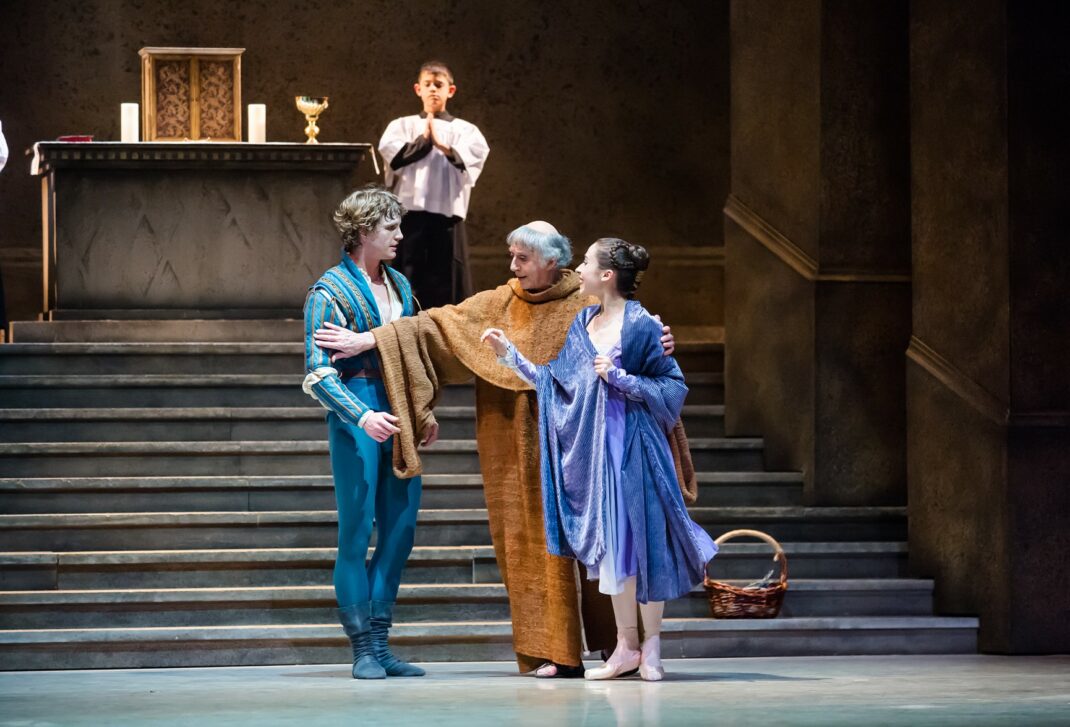
They’re all my favourites, but a particular recurring memory is of Christopher Hampson’s stunning Romeo & Juliet. Jonty played both the Friar (a bit doddery but basically a morally flawed figure who should have known better) as well as the Duke of Verona, who strode into the corpse-filled square, trampling on Prokofiev as though the score was carpet, glared down at the Montagues then at the Capulets, wordlessly telling them to stop their futile feuding. Jonty made those dual roles into the centrifugal aspect of what R&J is all about and I’ve never forgotten it.
Some years back I took a friend’s child to a matinée of Petrouchka. Part way through, a fire alarm stopped the show and audience and dancers alike were tipped out of the Opera House. We sat in the sunshine of Pigeon Park opposite the theatre and waited, some half hour as I recall, for the all-clear. It so happened that Jonty was playing Charlatan fully costumed in his finery and made up to the max, he strolled across and sat down beside us, chatting quietly about this and that, the weather as it were … and letting us peer at the make-up on his hands, transformed into those of a 1,000-year-old charlatan. It was spooky and amazing, to the very cuticle, and I’ve never forgotten it—as we will never forget him.
Dani the librarian at Paekakariki, Jon’s home village just north of Wellington, told me yesterday that everyone there knew and loved Jonty. ‘We would vie to offer him a ride home from The Deli after he’d sat there for morning coffee and cake … we would purposely drive very slowly so as to get more stories out of him,’ she confessed. That was Jonty.
Jon Charles Trimmer, KNZM, MBE
born 18 September, 1939, Petone
died 26 October, 2023, Paekakariki
Image courtesy of Royal New Zealand Ballet
Sources: Coral Trimmer, Anne Rowse, Turid Revfeim, Patricia Rianne, Dani the Librarian.
14 October 2023. The Long Hall, Roseneath, Wellington report by Jennifer Shennan
On Saturday 14 October, this past weekend, a gathering at The Long Hall in Roseneath marked the birthdate of Douglas Wright, arguably the most remarkable dance artist this country has ever known. Douglas died on 14 November 2018. Here is a link to my obituary.
If you google the name Douglas Wright, you find 92 million hits. They’re not all for our Douglas of course—though they could be, so prolific was his choreographic, literary and visual arts output.
Google cites: Douglas James Wright MNZM (14 October 1956–14 November 2018) was a New Zealand dancer and choreographer in the New Zealand arts establishment from 1980.
The arts establishment? It’s s surprise to read that since I doubt many, including Douglas, would see him as a member of The Establishment, whatever that means. (It sort of implies someone on salary in a sinecure job in arts administration, which Douglas certainly never was. All his work lurched from one project to another, and unbelievably his company was never offered secure funding. That was everybody’s loss).
Just as hard to fathom is an ACC listing (that’s Auckland City Council, not Accident Compensation Commission) of rooms for hire: ‘The Douglas Wright Room, which faces onto the carpark at the back of the building, can be booked in combination with the Leslie Comrie room.’
Who is Leslie Comrie, you ask. Born in Pukekohe 1893 (where Douglas was also born, 56 years later), Comrie, a University of Auckland graduate, became an astronomer and pioneering computer engineer. He died in London in 1950, 9 years before Douglas was born, I am not making this up. Perhaps we should hire both rooms for an Auckland party sometime to celebrate both Douglas-es?
The entries for others with the same name include an agricultural researcher, an American playwright, an experienced graduate architect with a passion for narrative design approaches, a commercial cleaner, a professor of medicine at Harvard specialising in Anaestheology and Perioperative Medicine. and a senior lecturer in Actuarial Science and Business Management in London. Perhaps the strangest of all is a 2009 listing in The Times of India ‘Douglas Wright, New Zealand dancer—a surprise seminar for teachers’ (I think the surprise would have been Douglas’), and the linked profile of someone appointed chief judge of a forthcoming Bollywood dance competition.
‘Enough’ I hear you cry. But the best of it is that Douglas would have been quite pleased to be listed alongside these illustrious others, since there’s a little bit of each of them in him, and the themes in his many works covered or referenced each of their callings, well, most of them.
Thanks to the kindness of Megan Adams, fastidious executor of Douglas’ choreographic legacy, we were able to watch video of The Kiss Inside, the last of his full-length works, made in 2015. Recognisable in it are many motifs referencing others of his choreographies so in a sense he is archiving himself as he goes,.
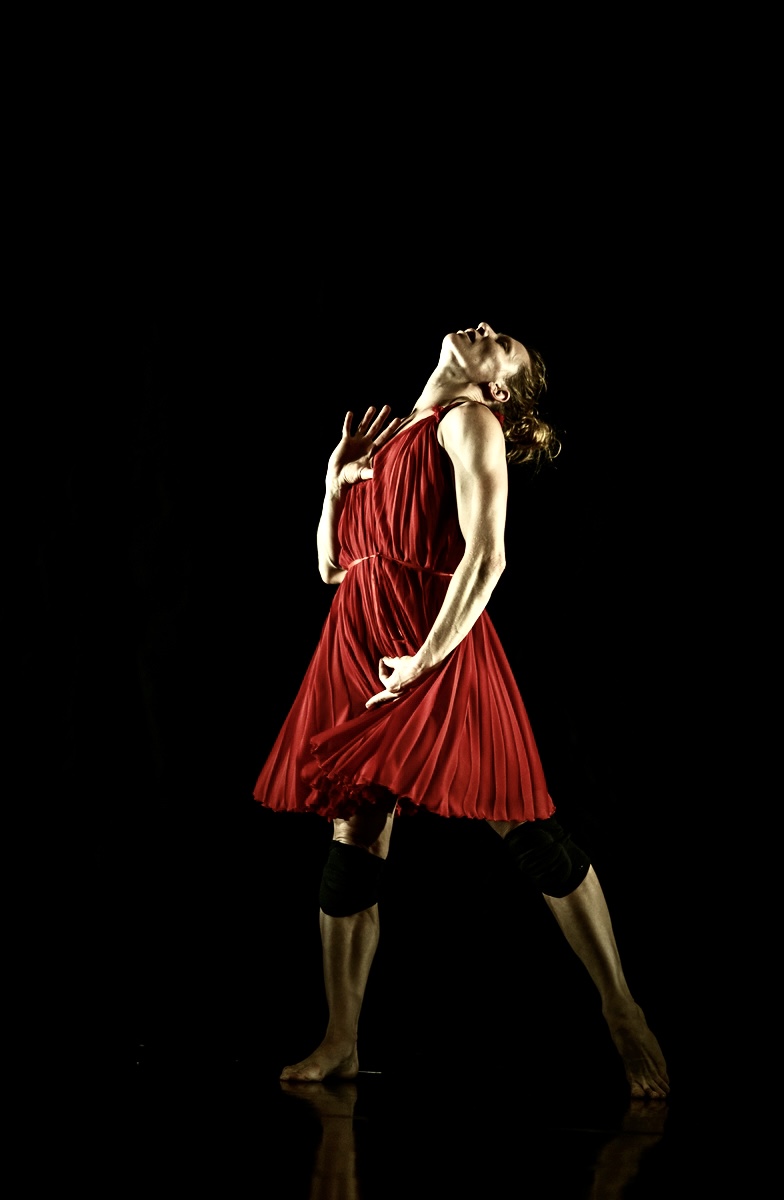
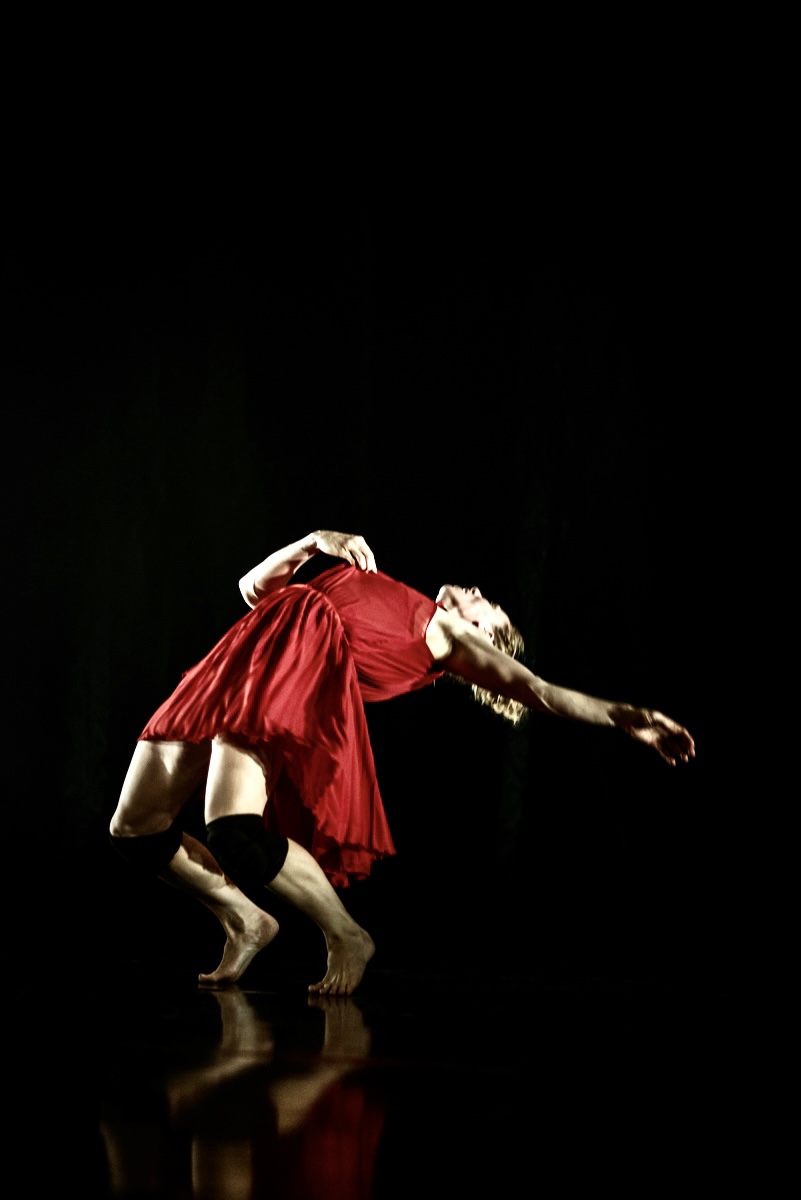
All the cast are knockouts—but Sarah-Jayne Howard, Craig Bary and Luke Hanna, all graduates of New Zealand School of Dance, were just as astonishing as we remember them eight years ago. The film is archival quality only, since there would not have been budget to make that broadcast quality. Here’s where the value of dance reviews come in—after the viewing we read Bernadette Rae’s very fine review from NZ Herald (it’s on line), and my own review at this link. You could also treat yourself to the astonishing photographs by Pippa Samaya of the work. (Two images from Pippa Samaya’s exceptional work are below.)
Leanne Pooley’s documentary, Haunting Douglas, (the word is verb, noun and adjective) is a fine record of Douglas’ life and work to 2003, when it was released. It’s up to us to remember the works made after that date. Black Milk, fortunately for us, is documented by Douglas in his book Terra Incognito, and also in the superb collection of photographs from the work, by the same name in a handsome edition by Potton Burton publishers.
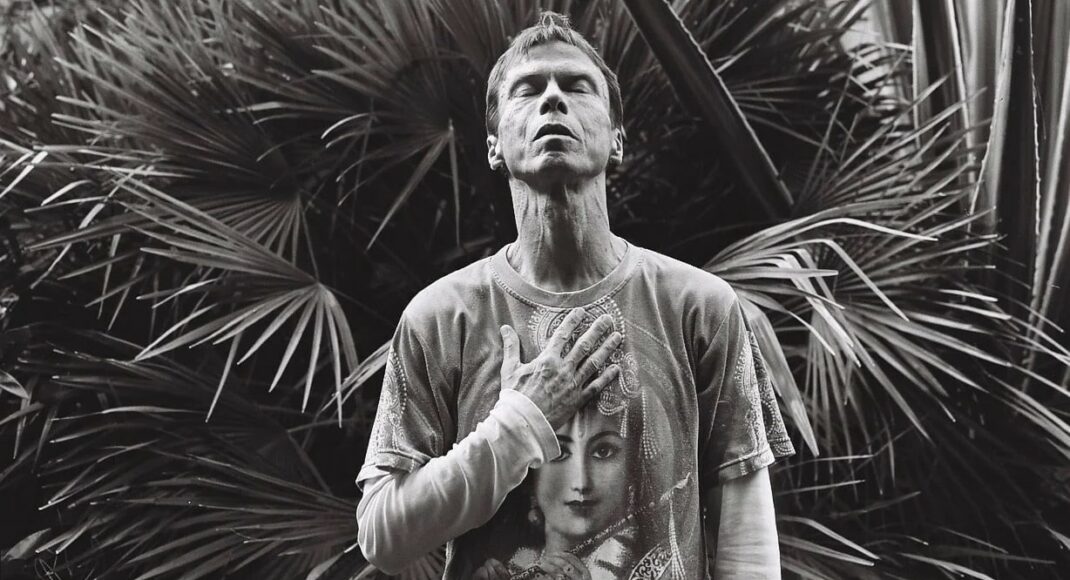
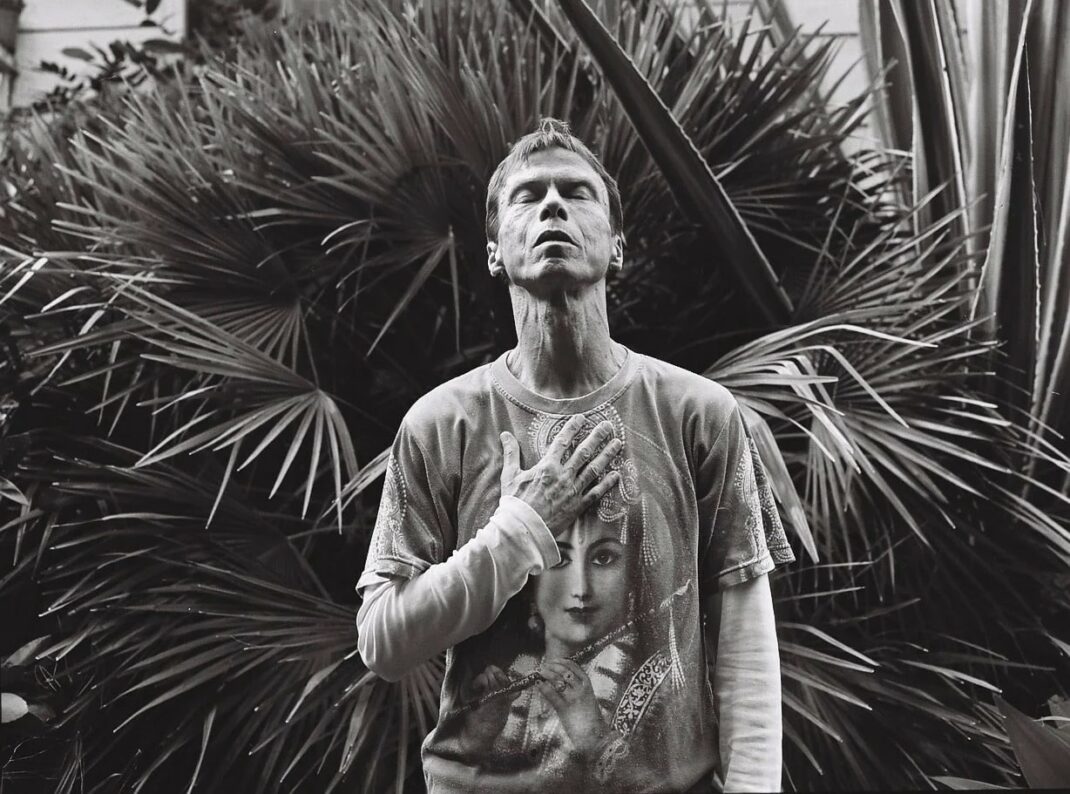
Tessa Ayling-Guhl was smitten by seeing Black Milk as a youngster. Years later, when studying photography in Berlin, she was driven to request of Douglas that she might photograph him. He eventually agreed, and danced for her in the garden of his Mt Roskill home in 2015, the same year The Kiss Inside was made. The resulting images capture his body and his spirit. A set of these photographs were exhibited, as Geist Dance, in Hunters & Collectors shop gallery in Cuba Street, owned by Chrissie O, long-time friend of Douglas from the years before he became a dancer. Tessa’s photographs were again exhibited at The Long Hall so we felt Douglas’ presence at the gathering. We are inviting koha towards the purchase of one of the images for permanent display.
Robert Oliver (viola da gamba) Noelle Dannenbring (piano) and Lucas (violin) made special music, David Long and Prue (mother of Lisa) Densem spoke tributes, and messages were read from Roger Steele, Patricia Rianne, Raewyn Hill, Taiaroa Royal and Sean Macdonald.
It has been an easy decision that we should mark every 14 October from now on with a gathering to explore different aspects of Douglas’ choreographic legacy. We’ll call it Many Happy Returns, Douglas. Please save the date.
13 October 2023. St. James Theatre, Wellington reviewed by Jennifer Shennan
Platinum is a dense, malleable, ductile, highly unreactive, precious, silverish-white transition metal. It has remarkable resistance to corrosion, even at high temperatures, and is therefore considered a noble metal. It is the traditional gift used to mark the 70 year anniversary of a relationship.
That makes Platinum a well-chosen title for this single performance in the Company’s home theatre of St. James, Wellington. The 70 year legacy of this intrepid little troupe of dancers reaches back to the legendary Poul Gnatt, and equally heroic Russell Kerr and Jon Trimmer, among many others. That mantle now falls on younger shoulders to maintain the morale, health and welfare of the dancers, as of us all, for the next 70 years.
The program comprised four group works, six pas de deux and two solos, each of which will have been somebody’s favourite.
The opening work, Te Ao Mārama, by Moss Patterson, on his whakapapa (lineage), seen in the Company’s recent Lightscapes program, maintains its integrity in a strong haka taparahi performance by the all-male cast. Later in the program an all-female cast performed Stand To Reason, Andrea Shermoly’s impressive tribute, as strong as any haka, to the Suffragette pioneers. Two male solos, Val Caniparoli’s Aria, a striking work to Handel, and Mark Baldwin’s Nobody Takes Me Seriously to the rhythmically lively song by Split Enz, were both stylishly performed.
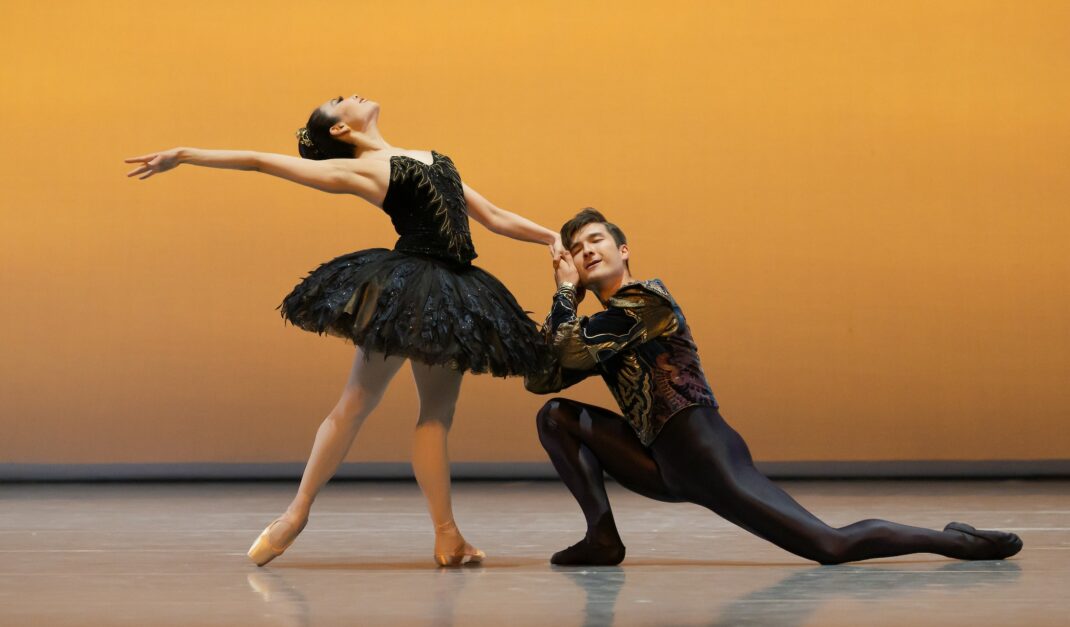
There is real challenge for a pas de deux to capture the style and context of its full-length parent work, though the Don Quixote and Black Swan items did achieve this admirably. We saw Mayu Tanigaito in both, shining as a dancer of highest calibre, her fabulous technique always serving interpretation, never the other way around.
Sara Garbowski in the Act 2 excerpt from Giselle gave an exquisitely poetic performance with beautifully judged dynamics and phrasing of movement. This was from the celebrated production by Ethan Stiefel and Johan Kobborg in 2012, followed by the outstanding feature film directed by Toa Fraser—the best film the Company has ever produced of its repertoire. It’s worth noting that the recording here was by Orchestra Wellington conducted by Michael Lloyd, so the music’s calibre for dancing was guaranteed.
I will confess my concern at the poor amplification of the music accompaniment for several of the other items, however. Does the St. James Theatre need to invest in installation of a better quality sound system?
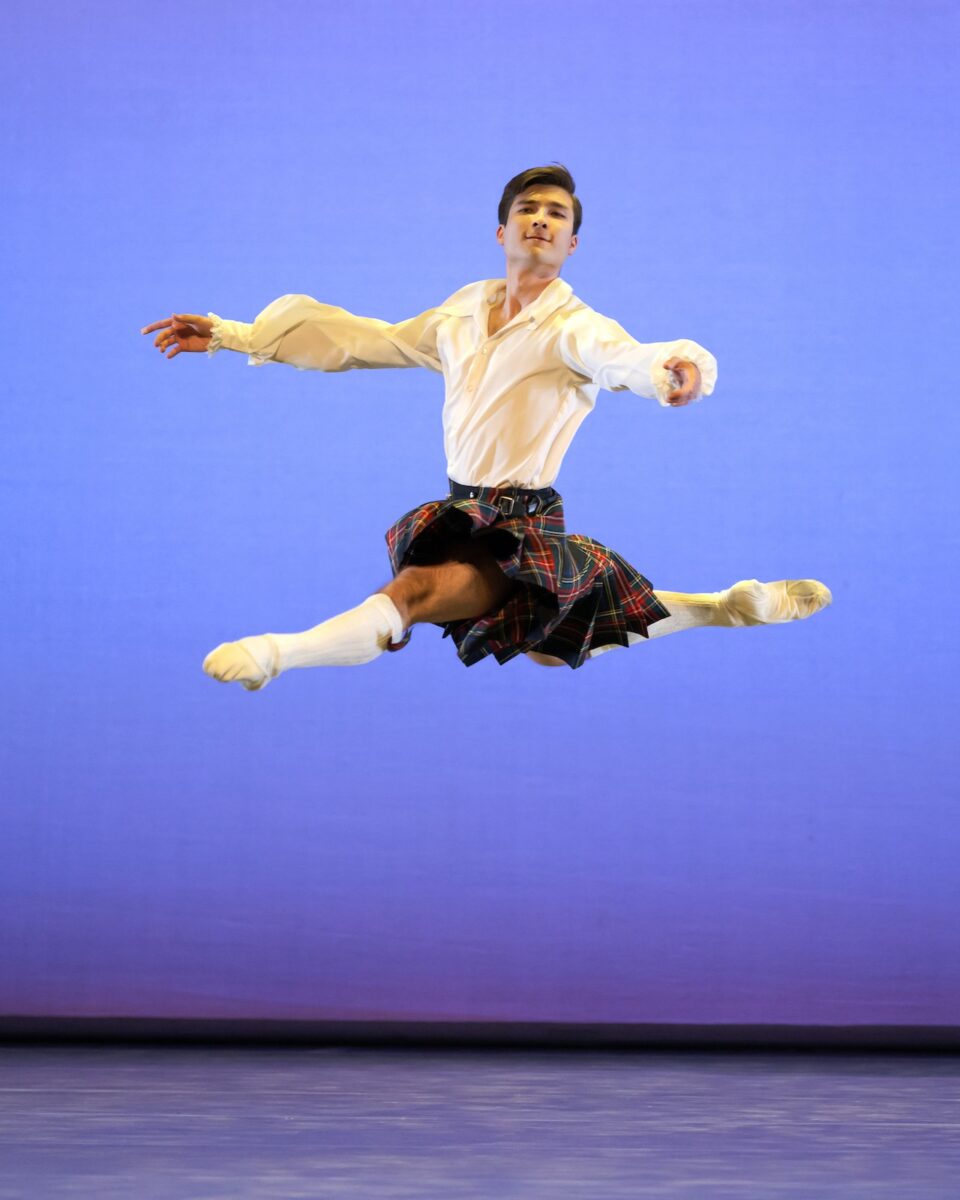
Unusually, none of the items carried a staging credit. The Bournonville works, Flower Festival in Genzano and La Sylphide, were challenged to capture the distinctive technique and vivacious style of the Danish heritage that this company inherited from Poul Gnatt all those decades ago.
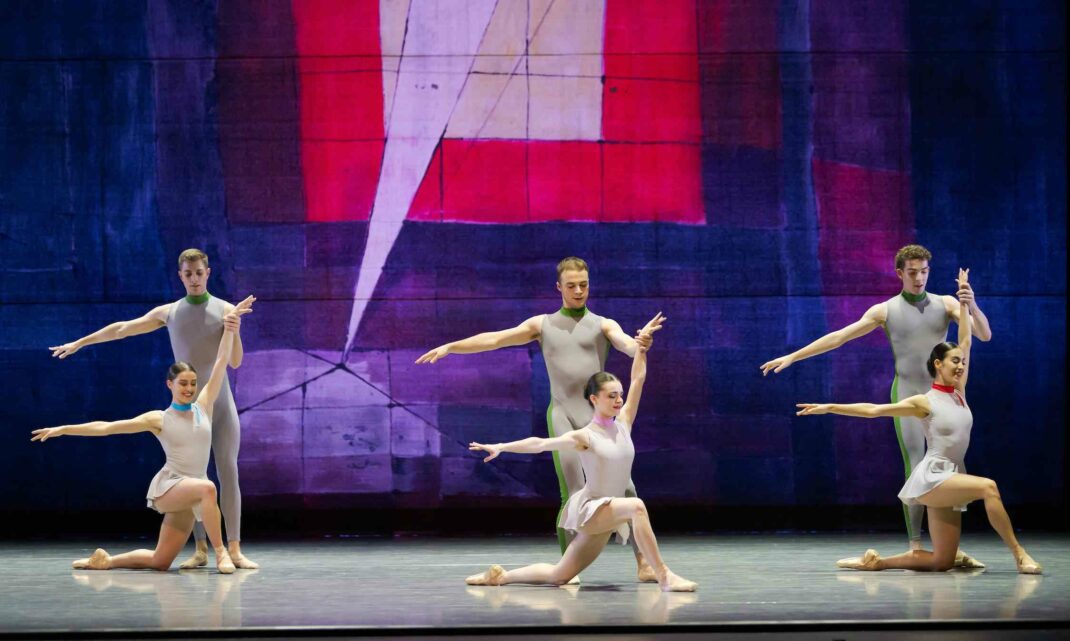
The final work, for full company, was a premiere—Prismatic, choreographed by Shaun James Kelly, a tribute to the Company’s landmark work, Prismatic Variations, made by Russell Kerr and Poul Gnatt in 1959. There was an attractive energy, personality and enthusiasm from this cast, with a spirited final image of a dancer poised aloft high above all the group, suggesting airborne hope. It was in considerable contrast to the original choreography, five couples in a work of abstract, astringent and timeless classicism, echoing the geometric design of backcloth by Raymond Boyce.
The music—Brahm’s Variations on Haydn’s St Anthony Chorale—always seemed to flood the auditorium with joy and elation. Here in a recording by the Berlin Philharmonic, conducted by Herbert von Karajan, you would expect no less, but again the theatre’s amplification seemed unable to offer the exhilaration we remember as an intrinsic part of the choreography.
It seemed a missed moment not to have brought on stage the incoming Artistic Director, Ty King-Wall, and the new Executive Director, Tobias Perkins, so we could welcome them—and also thank the outgoing Interim Artistic Director, David McAllister, for having stabilised the Company during its transition year.
Roses are the traditional flowers to mark 70 years and even one bouquet would have brought a sense of occasion and celebration to the stage full of talent. Instead, I came home and picked at midnight the single rose left in my windswept garden to place in a vase, as gratitude for seven decades of dancers who always gave and give their all.
Three talisman photos grace the printed program—Mayu Tanigaito and Laurynas Véjalis in Black Swan pas de deux; Patricia Rianne and Jon Trimmer in the 1978 production of The Sleeping Beauty; Russell Kerr and June Kerr in Prismatic Variations, 1960. Roses to them all.
20 September 2023. Opera House, Wellington reviewed by Jennifer Shennan
This extraordinary production, (m)Orpheus, by New Zealand Opera & Black Grace, is billed as a re-imagining of Christoph Gluck’s 18th century opera, Orfeo ed Euridice. The program note calls it a dance-opera collision—which it is, but it’s also a great deal more than that.
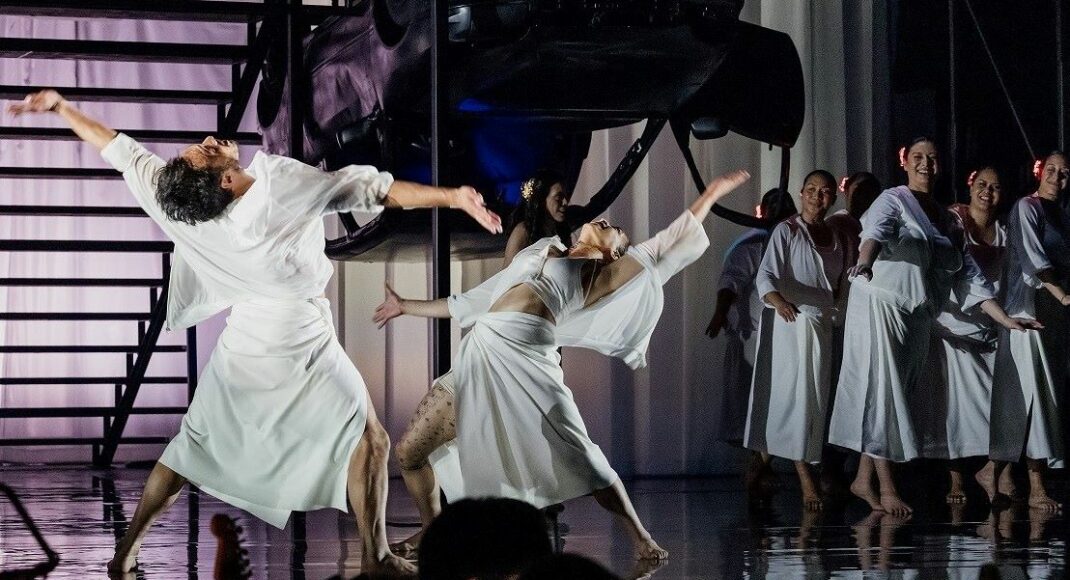
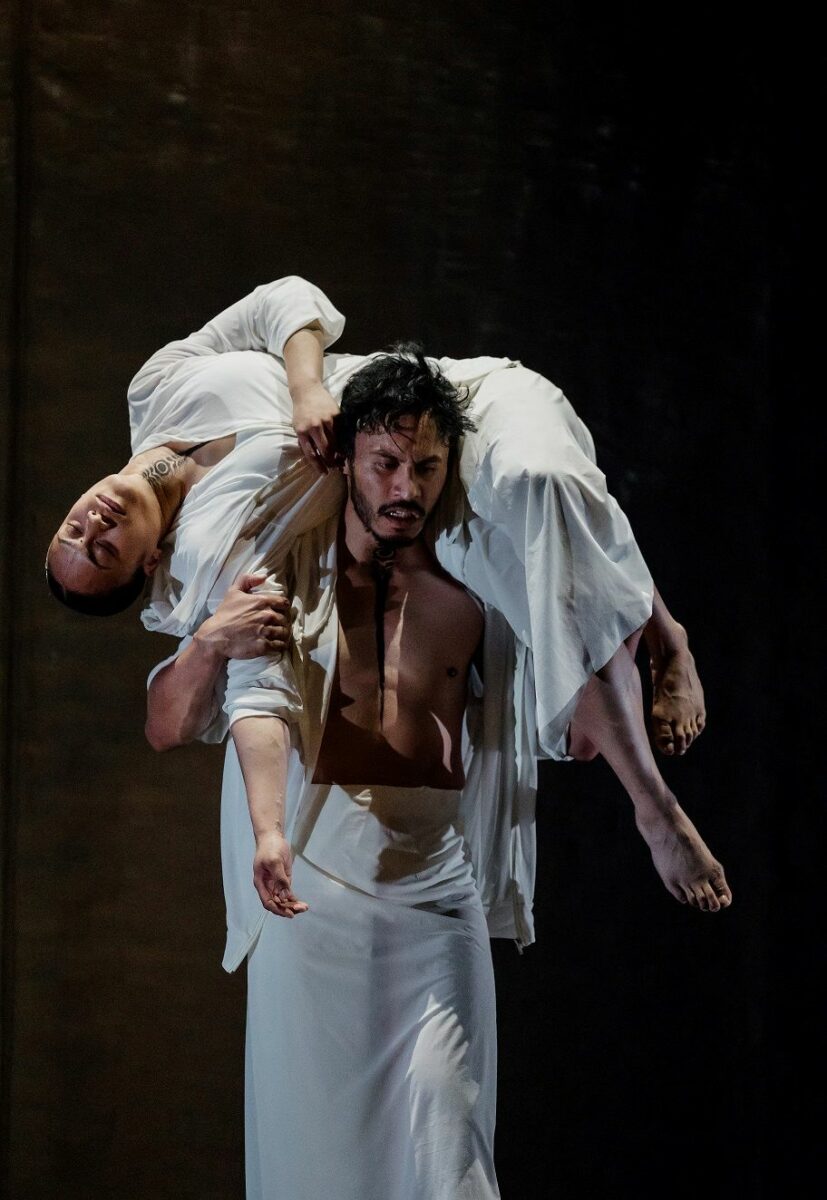
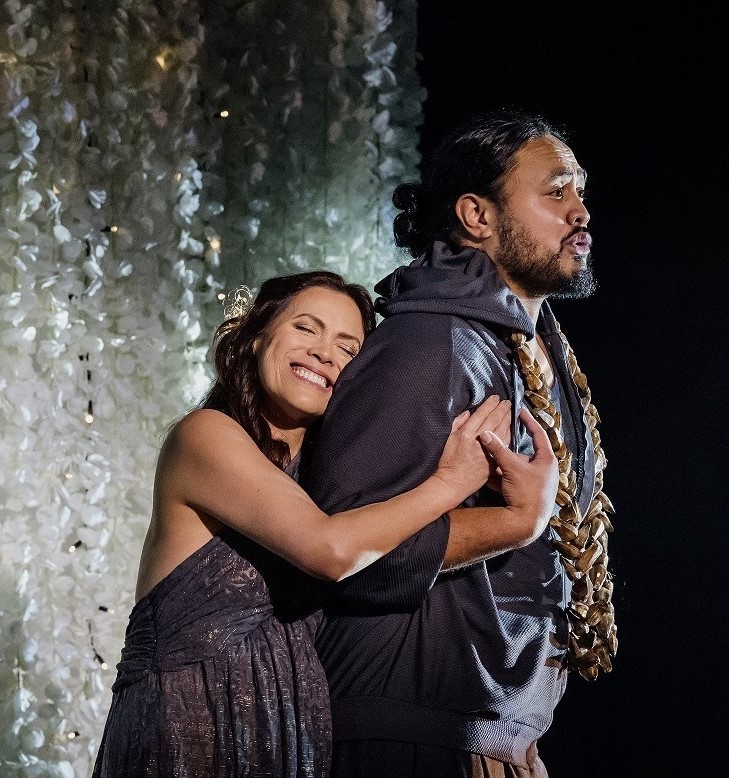
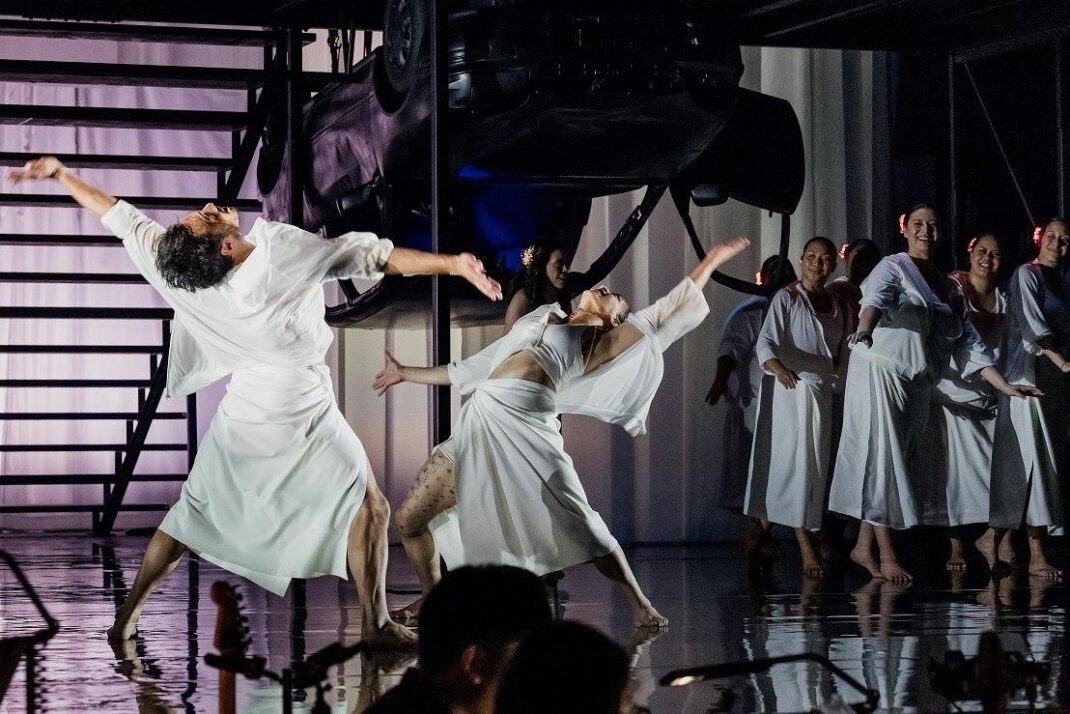
Indeed, the whole enterprise is a five-point star—visionary and innovative direction and choreography by Neil Ieremia, a totally stunning set and costume design by Tracy Grant-Lord, a skilful re-orchestration of Gluck’s original by composer Gareth Farr played by a chamber ensemble conducted by Marc Taddei, beautiful singing delivered by three fine soloists and a wonderful eight member Chorus, and inspired dancing by members of Black Grace contemporary dance company. They all melded into the spirit life of a production that could only have been realised in Pasifika-Aotearoa New Zealand. Some of the text was sung in English, some in Samoan. For us there were shivers, some tears, some laughter, grief, solace, and an alchemy of life and death, not as opposites but as a spectrum to be celebrated. That’s some achievement for a night at the opera. It was then, it is now, it is us, we are here. Manuia lau malaga (Samoan: ‘Farewell in your journey’).*
Farr made much inventive use of unconventional instruments—including marimba, and saxophone in his scoring. Much pizzicato from violins, together with the softened sounds of marimba, lent a subtle percussive effect as suited the Samoan dimension of the production but also honoured Gluck completely. The guitar, beautifully played by Gunter Herbig, was Orfeo’s lyre come to life.
Samson Setu singing Orpheus was a beautifully steady and centred presence throughout, his rich and resonant voice effortlessly delivered as he avoided any operatic extravagance. Deborah Wai Kapohe was perfectly cast as Euridice and reminded me of korimako/bellbird.
Madison Nonoa as Amor totally relished her role and played it to the max, hilarious and poignant by turns. In these three stellar performers the singers were greatly indebted to Tracy Grant Lord’s staggeringly wonderful set design of this world/underworld, but you’ll get no spoiler alerts from me.
A relatively small chorus of eight singers, Samoan and Maori, nonetheless filled the stage with sounds you didn’t want to end. They did Gluck proud, and also ‘morphed’ into Samoan dances of great grace and joy—siva was there, sasa, fa’a taupati and taualuga were there.
The dancers performed enchanting lyrical and impressively rhythmic sequences in and around the Chorus so the two arts were seamlessly joined. (In the Pacific music and dance were never separated anyway). The choreography throughout was layered—sometimes the dancers joining the moving Chorus, at other times dancing a duo to affirm in exquisite duplication the emotional journey of Orpheus and Euridice.
My only quibble for the evening concerned the printed program-no bios for the performers, and very small but shiny typeface on a black background. Impossible to read in the theatre, and quite a challenge at home too.
This production has already had an Auckland season with a different musical team. Here in Wellington is a three show season over four nights. deserves to be seen far and wide. The large audience was hugely enthusiastic, and I think Gluck would have been too
*As the dirt and flowers are tossed into the grave, sentiments of – ia manuia lau malaga; ‘farewell in your journey‘ – are echoed by mourners as they release their beloved member. Samoan people maintain the essential belief that death is not a final ending.
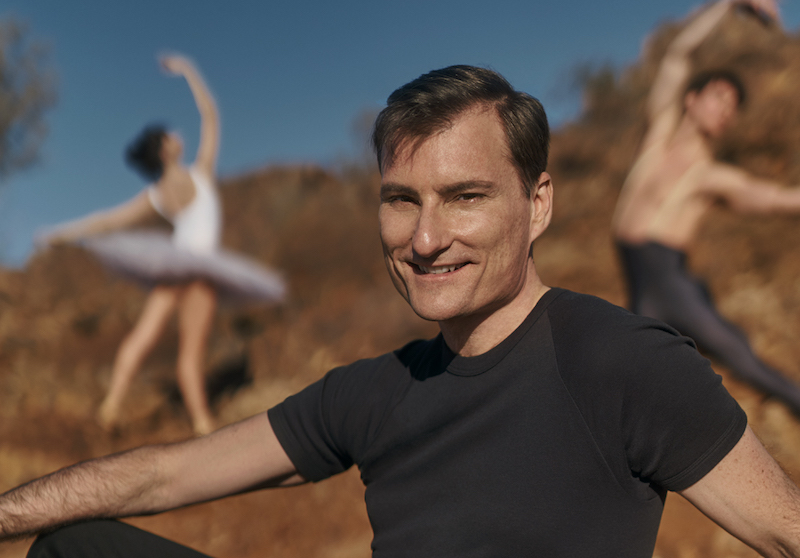
David McAllister has through this year, 2023, been Acting Artistic Director of Royal New Zealand Ballet—to oversee the process of appointing a permanent Artistic Director, and to stabilise the management situation after both the previous directors, Executive and Artistic, had departed suddenly from their positions at Company.
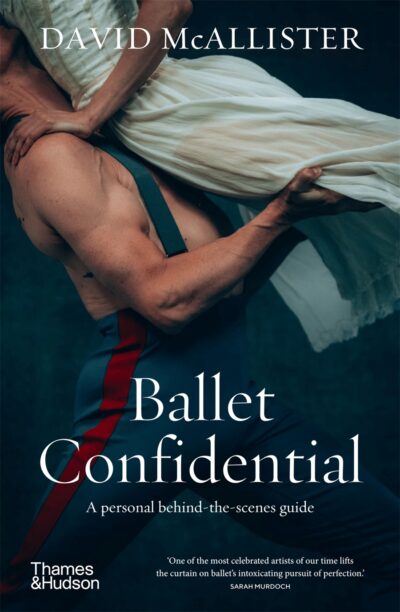
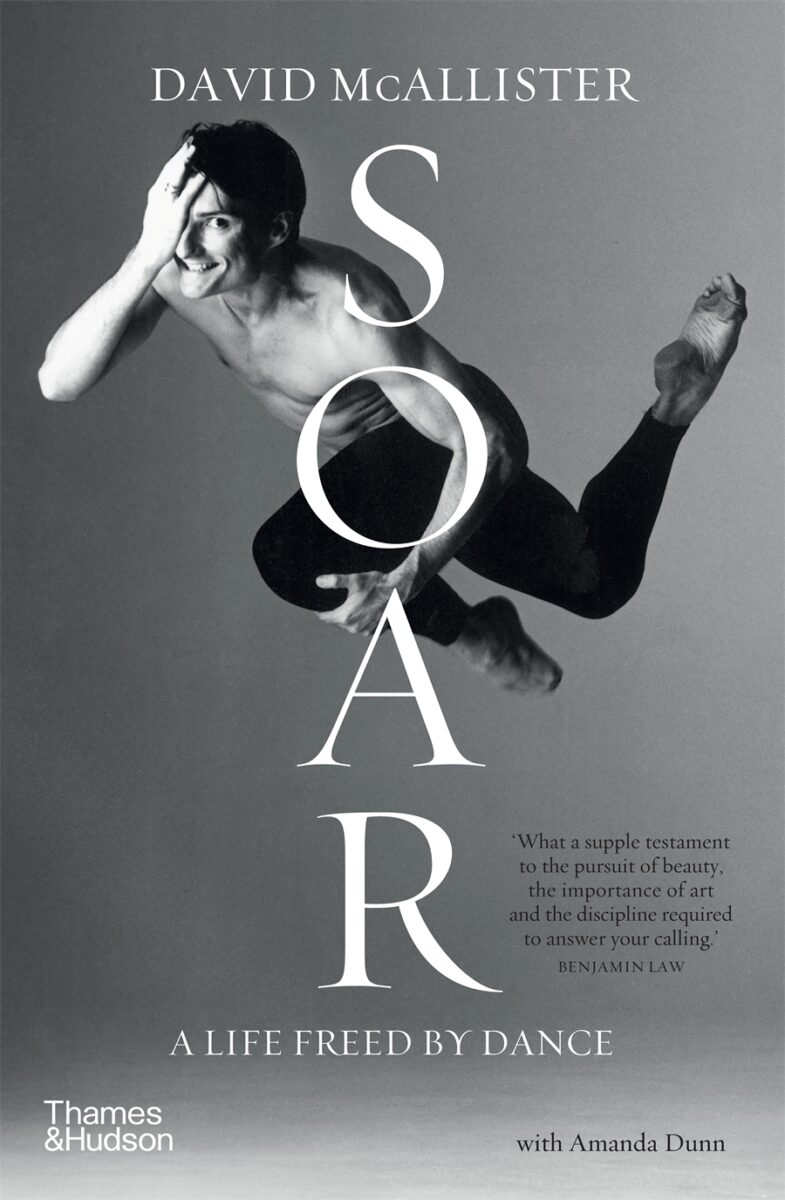
It’s therefore been timely to be reading Ballet Confidential, to learn about McAllister’s own long-term career as a dancer, then his even longer term as Artistic Director, with the Australian Ballet. As well there is his earlier and more personal memoir, Soar, written with Amanda Dunn, both books published by Thames & Hudson.
McAllister’s writing is eminently accessible, conversational in tone, addressing the reader directly. He keeps a friendly, light, honest and humorous touch throughout—giving the welcome impression that he takes his art, but not himself, seriously. There is sincere respect for the dancers whose dedication and discipline is the seminal part of any company’s achievements—as well as insights into the management and governance responsibilities involved in directing that river of talent.
McAllister is out to debunk the reputation of ballet as an elite theatre art that entices only its afficionados, and he offers numerous encouragements to those who think ballet is strictly for the birds, who don’t attend performances because they ‘can’t hear the words’ to instead give it a go.
New Zealand readers who have followed the fortunes of our own national company across its 70 years cannot help but compare the scale of company size and resources for dance between the two countries. The Australian Ballet has become a flagship company for its country with a number of high-profile and successful international tours to its credit. Our own company has not toured internationally for a number of years (not a Covid-related phenomenon) but anyone who pays attention to the fortunes and woes of ballet companies worldwide will nonetheless know ours as a stalwart and determined 7 decades-long endeavour that has served drama, joy, vivacity, solace, style and beauty to its home audiences.
Ballet Confidential is not intended as a scholarly history of ballet—but it certainly contains much of interest as McAllister traces some of the seminal figures who have featured in Australia’s dancing life. (In this regard I’d have valued an Index for the book—since Soar does include a very good one, and has photos of very high quality on dedicated paper).
The reader can also recognise telling comparisons with New Zealand in other areas—particularly in the acknowledgment of First Peoples’ prominence in historical, cultural and social identity. There is also the issue of the resources given to sport across its many codes, with all the touring of teams and spectators alike, and the wealth of domestic and international media coverage beyond compare. Ever positive in his thinking, McAllister nonetheless points out the striking progress across the past few years in elite sports training, injury prevention and management that are such a near and present issue for sportsfolk and dancers alike, and that the relevant medical practitioners have been able to share their approaches to the challenges common to both callings.
It is wonderful to be reminded of AB’s major seasons of commissioned full-length choreographies. Graeme Murphy is the shining star in the firmament there—with his extraordinary Nutcracker: The Story of Clara, and the celebrated Swan Lake. (Lucky those of us who crossed the Tasman to see the latter—and top marks to those who made the feature film of Clara, so we have been able to see that too. It’s available for viewing on Vimeo through AB website).
David tells the story of being a young dancer in his first year at the Company, 1983, cast in Le Conservatoire, the Bournonville work staged by Poul Gnatt on Australian Ballet. (He had earlier staged it on the Australian Ballet School during the 1960s). David enjoys the symmetry and longevity of that association through being Interim AD of the company Gnatt founded here in 1953—’so Poul is still giving me the chance to do something worthwhile all these decades later’.
The announcement just last week of the new Artistic Director of RNZBallet, Ty King-Wall, a New Zealander with many years’ experience in Australian Ballet, is most welcome, and my heart skipped a beat of joy (is that what a cardiologist would say?) to read in King-Wall’s profile that he has danced lead roles in Bournonville choreographies over the years, so he understands the technique and style of our company’s original tradition.
There are other names to slip in here of the ballet links between our two countries and two companies—apart from van Praagh and Gnatt, and Borovanksy before them—that includes sharing Bryan Ashbridge, Jon Trimmer, Jacqui Trimmer, Harry Haythorne, Roy Wilson, Susan Elston, Fiona Tonkin, Graeme Murphy, Jane Casson, Martin James, Adrian Burnett, David McAllister, and now Ty King-Wall with his dancing wife, Amber Scott. These are ties that bind.
Jennifer Shennan, 17 September 2023
Featured image: David McAllister, 2019. Photo: Georges Antoni
27 July, 2023. St. James Theatre, Wellington. reviewed by Jennifer Shennan
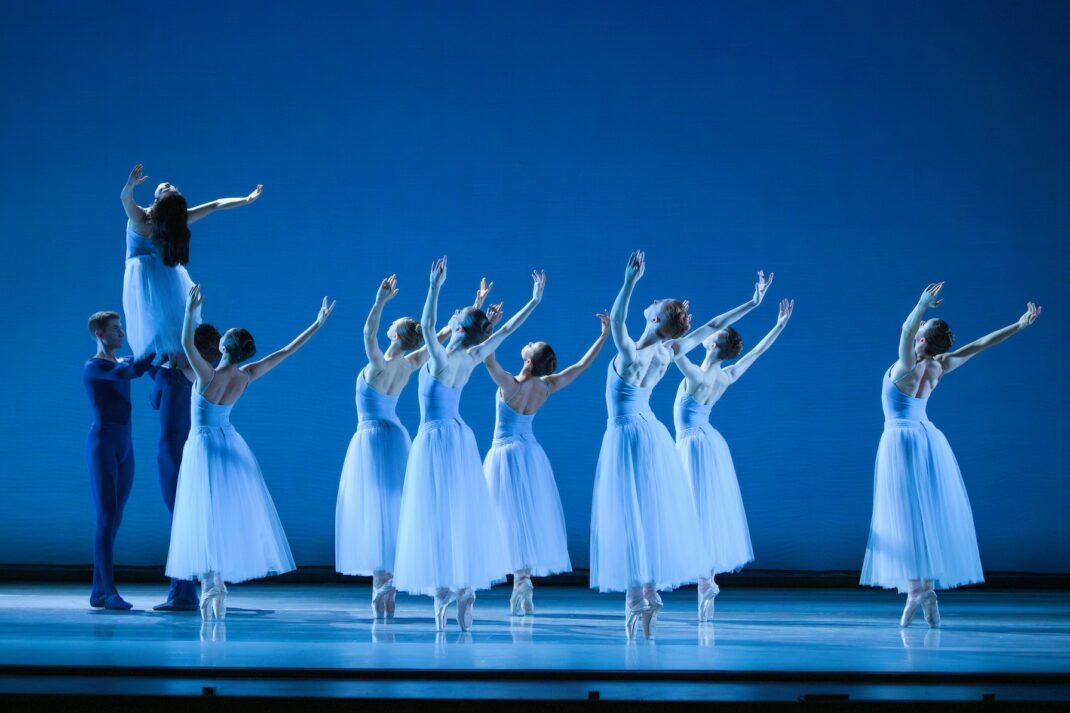
The opening work, Serenade, to Tchaikovsky, is an abstraction of femininity, a favoured topic of Balanchine’s. It was created, in 1934, for students at the School of American Ballet that fed his company, so the memory of several productions at New Zealand School of Dance here across the decades, with the aura of fresh innocence of students at the threshold of their careers, has been special. The work has also been performed a number of times by RNZBallet since the 1970s.
My interest in watching Serenade is always to follow the dancers’ eye and facial expression, which styles the production and invites our response to it. Despite the uniformity of torso movement and port de bras required, some dancers in this cast smiled broadly and looked directly at the audience, whereas others looked into the far or the middle distance, raising the question as to what the performers are thinking about, and how Balanchine himself might originally have styled the work. The twirling pirouettes of tulle skirts always works its special poetry, but the use of token male dancers to lift a female dancer aloft in the closing scene has always seemed anachronistic. Having said that I do know that many balletomanes adore this work, even rate it as their favourite, and I respect that. All the dancers performed with aplomb, but Mayu Tanigaito found a way to invest her abstract movements with a spiritual quality that puts her in a class of her own.
(Harry Haythorne, artistic director here 1982–1993, told me that when a member of Metropolitan Ballet in UK he sustained an injury that put him out of performing for some time. He used the rest period to study Laban’s dance notation, and became fluent enough to score Balanchine’s Serenade, the first notator to do so. Although many versions of the score have since been made, Harry’s was the first, so it is poignant to visit the Dance Notation Bureau in New York and sight the initials HH at the footer of each page of his score.)
The second work, Te Ao Mārama. choreographed by Moss Te Ururangi Patterson, opened with the renowned Ariana Tikau playing pūtõrino, that most distinctive of taonga pūoro (Maori traditional instruments). I would have thought this sound would reach acoustically into every corner of the theatre, since these instruments were traditionally played in open air. I must confess that amplification of it, plus the electric guitar and amplification from Shayne Carter on the opposite side of the stage, made for challenging acoustic contrast. The dance itself explored the theme of moving from Te Kore, the darkness, as though searching for fragments of what would in time grow into haka, traditional dance, into the world of light, Te Ao Mārama. This is an interesting notion, for a choreographer to make a dance about dancing, and the final haka was certainly performed with vigour and intent by the all-male cast. I found various lighting effects, including bright white beams that swept into the audience’s eyes several times, as though to dazzle them, both unpleasant and distracting.
I did welcome the reminders of various incorporations of Maori dance influence into the repertoire of RNZB over their seven decades. Poul Gnatt in 1953 choreographed Satan’s Wedding, which a reviewer at the time (DJCM in The Auckland Star) noted reminded him of the power of haka, which was quite a thrill for Poul to hear. In 1990s Matz Skoog’s and Sue Paterson’s project that combined RNZB with Split Enz music, and Te Matārae ī Orehu on the same program, Ihi FreNZy, made very strong impression—especially when, by way of epilogue, both companies of dancers combined in a rousing haka. By the time that tour ended, Shannon Dawson, one of the strongest character dancers the Company has ever known, seemed to have changed his ethnicity. I doubt if another pākehā has ever performed haka so convincingly. My standout memory though, across all the years, is from Gray Veredon’s Tell me a Tale, set in mid 19th century, in which Warren Douglas led a haka of rage against the young colonial boy (played by Kim Broad), his father (played by Jon Trimmer) and mother (played by Kerry-Anne Gilberd). The boy had dared to fall in love with (Warren’s) sister and that provoked a taparahi never to be forgotten. We could all now haka in rage and sorrow that Warren was taken so young, and we lost a phenomenal dance talent when he lost his life.
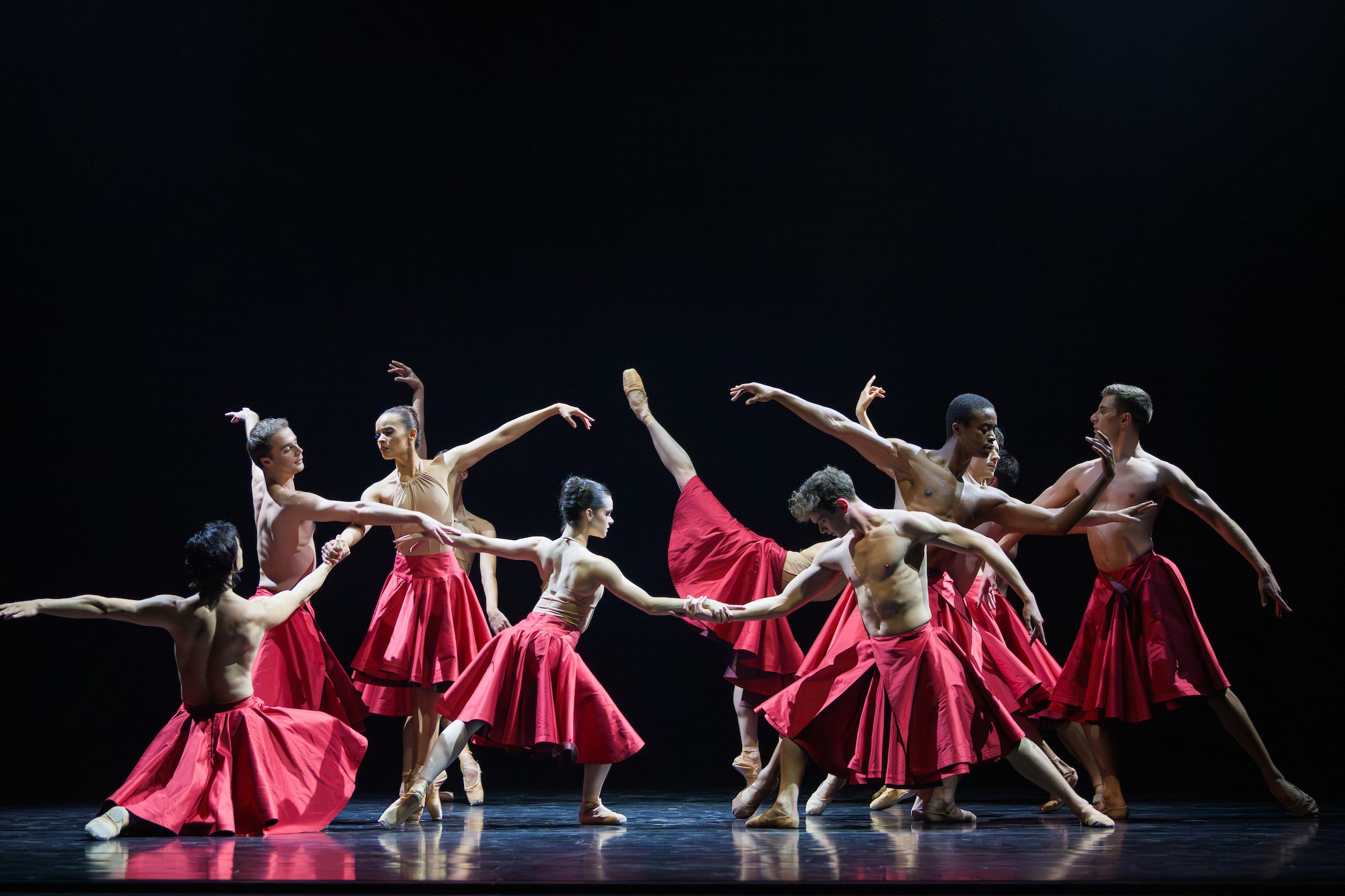
The third work, Requiem for a Rose, is choreographed by Annabelle Lopez Ochoa, to Schubert’s String Quintet in C major. There is a depth, beauty and mystery in this piece that resonates, not only as a flower of romance, but with what the rose has meant as symbol of life and love, to different peoples and cultures in history, across stories, poems and paintings—originally from Persia, China, India, South America, and then worldwide. Twelve dancers, male and female, wear rich red circular skirts that seem almost fragrant when illuminated by Jon Buswell’s outstanding lighting design. They dance a series of four duets and a quartet, all very well cast, and beautifully set to the music. The 13th dancer, Kirby Selchow, wearing the barest of leotards and no skirt, carrying a red rose in her mouth throughout, powerfully sustains the essence and mystery at the heart of this enigmatic and beautiful work.
The fourth work, Logos, choreographed by Alice Topp, is to a very effective commissioned score by Ludovico Einaudi. The opening duet, by Mayu Tanigaito and Levi Teachout—and the closing duet, by Ana Gallardo Lobaina and Matthew Slattery, are equally exquisite though in very different ways. (In later solo sections Teachout seemed to have found an astonishing quality of torso movement that evokes the likes of choreography we have seen from Douglas Wright dancers—which made him a standout in a cast of already strong dancers.) There are a number of quotations oddly laid out in the program notes, but I guess that matters not as simply following and absorbing the dance as it progresses from a dark and troubled beginning to a clearer lighter place was all the guidance we needed. Topp and Buswell collaborated brilliantly in the design for this work. Its apotheosis is a theatrical coup, and one that will stay with all who see it, even as it suggests what some might see as a disturbing harbinger for the planet. A powerful work of theatre with much to admire.
There is an exhibition in the theatre foyer to mark this as the 70th year of the Company. There are many wonderful images that remind us of a rich and varied repertoire across the decades. A National Film Unit documentary, with footage from 1959–1962 performances, is screening within the exhibition, and is a treasure. My favourite vignette in this film has always been of Jacqui Oswald Trimmer dancing in Do-Wack-a-Do, composed by the legendary Dorothea Franchi. Jacqui would have won a role in The Great Gatsby if she had used this as her audition piece. Gloria Young, Sara Neil, Anne Rowse, Patricia Rianne, Terence James, Carol Draper, Christine Smith, Valerie Whyman, Kirsten Ralov and Fredbjörn Björnsson all make striking cameo appearances in the film, and the alumnae gathering for celebrations will have great fun in following them all.
There is much to savour in the storyboards, but one statement cannot go unchallenged. Friends of the New Zealand Ballet was formed by Poul Gnatt in 1953 (not some decades later as stated). Without those subs from Friends in the 1950s, this company would simply not have made it round the country. Poul used to drive the truck with scenery and costumes from town to town to town—pick up every hitch-hiker he spied, and by the time the hikers climbed down from the truck at the end of the ride they were subscribed members of Friends of the Ballet. Poul used the money to buy petrol to drive the truck to the next town. It’s an important story—because when Poul a decade later returned to his native Denmark he taught colleagues at Royal Danish Ballet that they too should set up a Friends—which they named Ballet Appreciation Club. It has survived to this day with a staggering number of audience education and outreach activities. If they remember that Poul showed them how a Friends outfit can work, we should surely remember that too.
Below is a link to a paper I gave on 8 July 2023 as part of a symposium organised under the auspices of the Stout Research Centre and held at Victoria University of Wellington’s Pipitea campus. The symposium, Katherine Mansfield: Last Things & Legacies, took place to mark the centenary of the death of Katherine Mansfield, New Zealand’s most celebrated short story writer.
My paper was inspired by Mansfield’s varied interest in dance as it appeared in her writing and life, in particular by a ballet focusing on that interest: Bliss choreographed by Patricia Rianne and first staged in 1986. The work of choreographers Margaret Barr and Loughlan Prior, who were also inspired by Mansfield’s interests, is also mentioned.
Featured image: (left) Anneliese Gilberd as Pearl and (right) Kerry-Anne Gilberd as Bertha in Patricia Rianne’s Bliss, Royal New Zealand Ballet, 1986. Photographer not identified
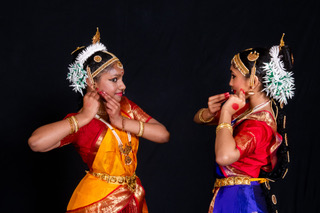
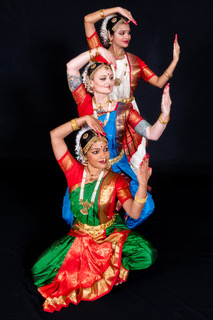
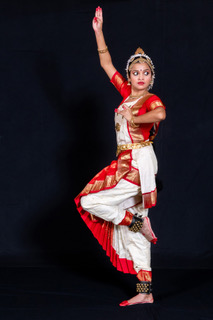
Darpana is a retrospective program of excerpts from the past three decades of seasons choreographed by Vivek Kinra for his company, Mudra. It’s a garden of earthly delights with celestial resonance, story-telling laced with joyous cavorting. There are sudden flashes of fury whenever forces of evil are encountered. Furious stamping, piercing glares and dismissive gestures will rid us of them. Only the good survive, only the safe are free.
This vividly expressive form of Indian dance, Bharata Natyam, runs the gamut of human emotions and motives, portraying figures from the parallel realm of deities whose examples are to be followed. It’s an art form in which singing, instrumental music (mridangam drum, violin, flute) and visual rhythm (dance)—in dramatic, poetic, and abstract patterned aspects—all find equal share in the performers’ finely-tuned detail and precise geometry of the body. And then there’s the dress-ups, further feast for the eyes, with carefully gradated lighting effects from full colour to serene silhouettes, from dawn to day to dusk.
After weeks of balmy mid-winter weather, the afternoon suddenly drops 10o, feels like zero, and icy rain drenches us on the way to the theatre. Never mind, Lower Hutt is closer than India so it’s a small price to pay for the transport of joy awaiting us. Every season of Mudra since the mid 90s has revived memories of my visit to India for dance studies in the previous decade. O India, the country with the world’s richest of dance traditions. Time flies, time stands still, to be here is to be there.
Mudra’s troupe of eight senior performers are all in full flower—joined by 15 junior dancers in bud—(one of them already on the way to stardom, but steady on, no sensible dance teacher wants a prodigy, a meteor that falls and burns out, better a star to last forever. I’ve had my eye on this youngster for 7 or so years now, and she is doing exactly as her teacher and I predicted she would).
Kinra was trained at Kalakshetra, the epicentre of Bharata Natyam teaching, near Chennai. The founder of the school, Rukmini Devi, envisaged a centre of arts and related crafts to thrive alongside community education initiatives. As a theosophist Devi visited New Zealand to connect with the Theosophical Society here, and also devoted time to animal rights’ causes. As a young dancer she had met Anna Pavlova who was touring with her company to India in 1922. Pavlova encouraged Devi in a revitalisation of Bharata Natyam away from the temple, towards the theatre. Her contemporary, Balasaraswati, was the legendary dancer who toured the world’s capitals and showed what heights a solo performer could reach, even towards the age of 70. They say Martha Graham sat in the audience and wept, and she was not alone. (If you don’t believe me, watch Bala, the film about her made by Satyajit Ray. It’s on Youtube). A century later, many cities of the world offer training in Bharata Natyam India’s gift to the world—which takes on intriguing differences depending on each locale.
Kinra’s students are drawn from all the states of India, whether born there and migrated here, or born here. Others are of Sri Lankan or Malaysian Tamil, or maybe Fiji-Indian descent. But wait, there’s a Pakeha of Anglo/Irish line among them—though you only know that from the program note, her dancing is up there with the best of the rest.
Read the BBC news item from a few days ago, a lengthy and fascinating report of the ancient and mysterious folk ritual, Theyyam practised in Kerala—where members of Dalit, the lowest caste, perform in an ancient dance-drama. High caste members are required to attend and revere them. Think about that.
Here with Mudra we watch the daughters of Brahmin neurosurgeons or scientists (so long as under-resourcing of health or academic budgets has not closed down their work places) or of the local corner dairy (so long as ram raiders or armed invaders have not knifed them to death). Many of these dancers hold professional careers in law, education, science, technology, commerce—yet their radiant performances would have you believe they are full-time professional artists.
Each of the nine works is choreographed from the subtle tension between tradition and individual dancers’ personalities, all of whom deserve praise. One dancer leaps high and sideways, lands in ‘first position’ on the half foot, slowly continues down to a deep full plie, leans sideways then slips onto her knee and hip while sliding over the floor, then she comes back into the vertical and slowly returns to standing, all the while smiling. (Don’t try this at home. Well, the smile maybe, but for the rest you’ll need to be in training for years).
Varshini Suresh makes a stunning position flow to the next with great grace and it’s hard to take your eyes off that as she invests her dancing with expressive joy. Banu Siva has a wonderful poetic and rhythmic clarity in every aspect of her movement. Shrinidhi Bharadwaj is the dramatic force who propels the power of story-telling to great effect. The treasured Zeenat Vintiner is most welcome back as she rejoins Mudra after several years break. Her personal life reads like something from the Mahabharata, and echoes the story of the Polish refugee children who were given haven in New Zealand 80 years ago. Her own experience is a triumph for her, her family and her teacher.
My grandchildren were agog at the stamina demanded of these performers—loved the contrasting qualities between them—and were greatly taken with the calm way the dancers managed the tiniest little ‘things’ that happened: a tiny bell from an anklet falls off onto the stage—we can see it glinting and hope that the other dancers can too because you would not want to leap and land on that piece of metal. One dancer’s long black braid plaited with flowers comes loose from the belt which holds it in place as she twirls at speed. With great aplomb she continues dancing but ensures by various miniature twists that it not fly out and hit her fellow dancer in the face. (This is like a pilot realising that one engine is malfunctioning. Nought to do but keep calm, switch it off and use the other engine to make a faultless landing). Another dancer leaps high into a very narrow space between two others and knows her foot might catch in the swathe of silk that she’s wearing—so mid-air she leaps even higher and ever so slightly changes course. Stunning. My grandkids say ‘We love watching how these little things are managed—it makes the dancers seem more human and a little bit like all of us.’
They are equally pleased by the refreshments at intermission — the best samosa and ladoo in town—and a program note that the catering is by Awhina, the impressive New Zealand enterprise that fundraises to help women widowed by war in Sri Lanka, in a range of small scale development projects. I thank the young woman for my spicy masala tea, tell her how well the performance is going and hope she gets to glimpse some of it herself. ‘Oh I was dancing in last night’s cast—I’m just helping out front tonight.’ she smiles.
Poul Gnatt founded our New Zealand Ballet on ingenuity like that, 70 years ago. He’d have loved this performance as much as I did.