My year’s list of dance highlights seems thinner than usual since a number of productions didn’t make it to curtain-up. There are no lowlights though (why would you write about lowlights?) so I’ll just call them lights.
From a screen viewing I followed with interest the choreographic venture, Journey, by Lily Bones. I remember Lily’s serene sense of line as an unusual individual dancer at both NZSchool of Dance and later in RNZBallet. After a time performing in Europe she is now based in Sydney and is a colleague there of Martin James. Her resilience in surviving serious illness, and her determination to make dances despite zero external resources has given her a maturity and quiet confidence to choreograph themes that speak and that we can hear. No glamour or glitz, just her truth. Refreshing.
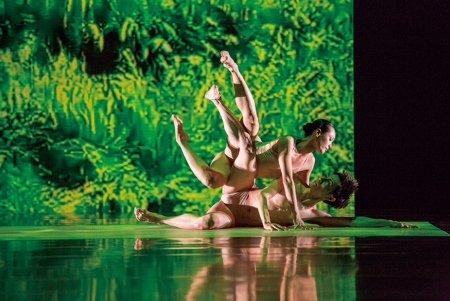
It was a treat indeed to see again an Arts Channel broadcast of Cloud Gate Dance Theatre in Rice. Choreographed by Lin Hwai Min in 2013 (and toured to Auckland in 2017), it is talisman to their repertoire, with typically perfect proportion in shaping the cycle of rice growth and harvesting. Like all Lin’s work, there is pacing and spacing through the episodes that deliver at one level of nature at work in the titled theme, and also allegorical layers of reference to human and personal experience. The erotic sensuality in a single central duet in Rice defines the original power of creation. I own a dvd of this work but choose not to watch it alone—so how is that different from sitting alone and watching a broadcast? just a sense that there will be others out there watching ‘with me’, a feeling of being in the audience that is shaped by a performance in time. Cloud Gate’s repertoire has a strength in its Chinese legacy and vocabulary that is yet accessible to the wider world. Riveting.
Another memorable experience on screen was the final sequence by the young boy in the studio, as epilogue to the film The White Crow, the dramatisation by Ralph Fiennes of Nureyev’s defection to the west. Overall I was not as transported by the film as others seemed, but was certainly moved by how that final dance was allowed to speak for itself. Poignant.
Pump Dance Studio’s Roll the Dice also transformed the commitment of young performers into something more than the sum of its parts. Infectious.
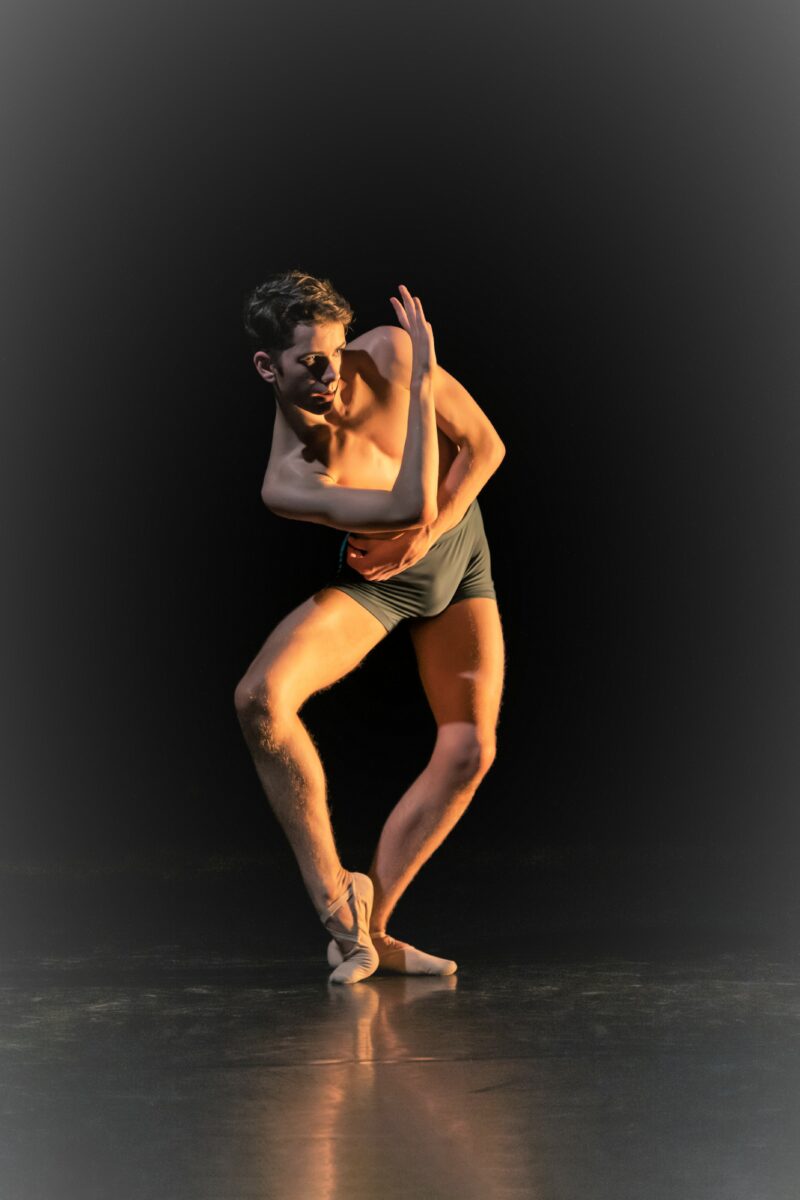
From NZSchool of Dance, Loughlan Prior’s Verse, a solo to the Folies d’Espagne played by the consummate ensemble Hesperion XXI, shone with the clarity of a beacon, both in choreography and performance. Luminous.
Two books—by Michelle Potter on Graeme Murphy, and by Ashley Killar on John Cranko—offered insights into those prolific choreographic careers, with welcome reminders of the live performances we have seen by their companies. Revelatory.
Not from this year, but nevertheless shaped by the pandemic term we are still experiencing, the tour de force of Strasbourg 1518 by Lucy Marinkovich and Lucien Johnson, remains the total standout dance season of recent times. Their earlier work, Lobsters, also holds its place on the list of memorable works of the decade. Indelible.
It has been indeed moving to follow the heroic project by Raewyn Hill, artistic director of Co3 Contemporary Dance in Perth, where she re-staged Gloria, the celebrated work by the late Douglas Wright, New Zealand’s visionary choreographer. Immortal.
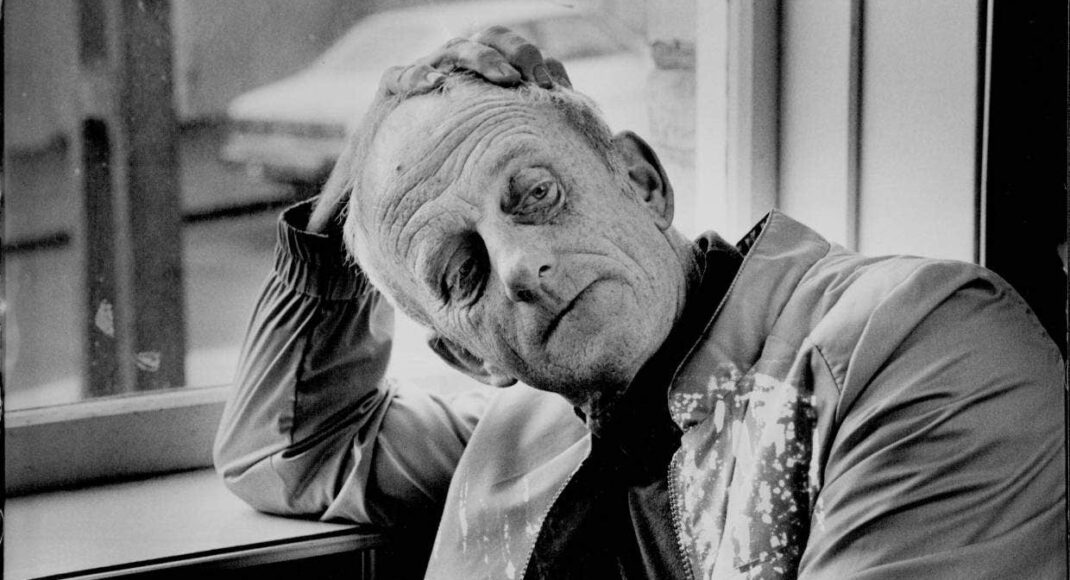
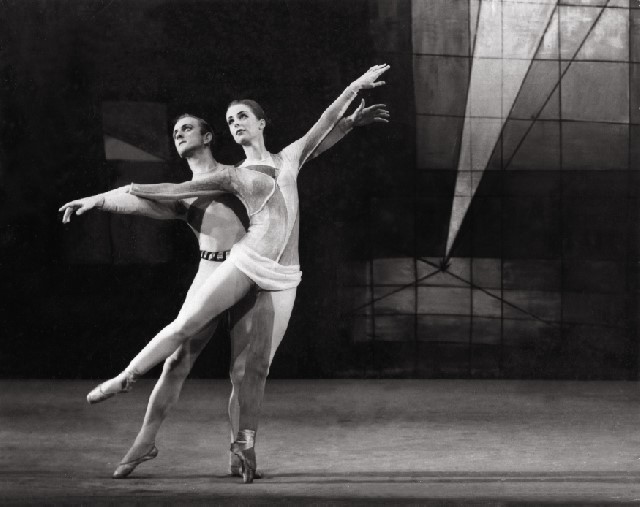
A dance lives for as long as it is remembered, and can cheat death by a measure. Russell Kerr died earlier this year, and for many people the memory of his production of Petrouchka in which he cast Douglas in the title role, also stands as an indelible milestone in this country’s dance history. Legendary.
We are looking forward to the fifth in the series of the Russell Kerr Lecture in Ballet & Related Arts, in Wellington, late February. The subject will be Patricia Rianne, celebrated dancer, teacher and choreographer whose long career spans years both in New Zealand as well as UK, Europe and Asia. A delight.
Season’s greetings and good wishes to all those who watch dance, who create dances, who perform, who write and who read about dancing. Sprezzatura.
This is an expanded version of an obituary written by Jennifer Shennan and published in The Dominion Post online on 2 April 2022.
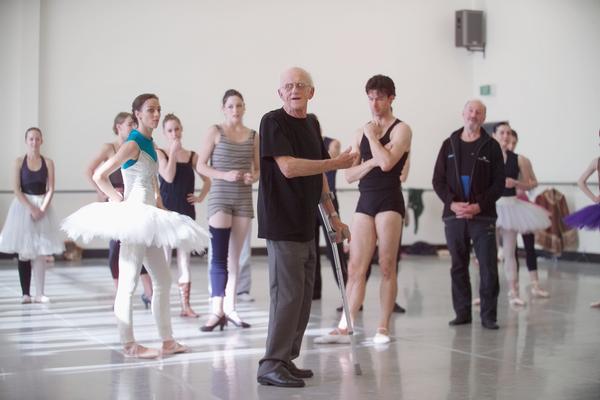
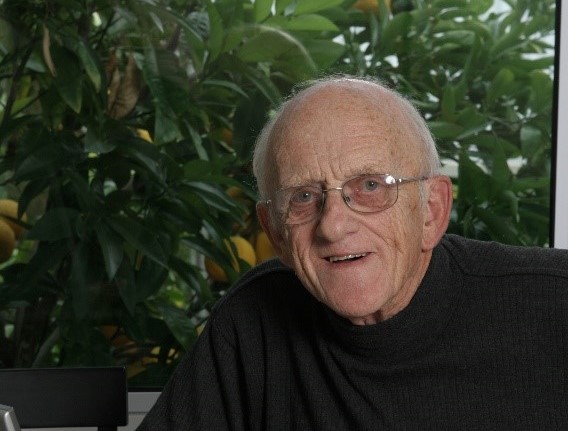
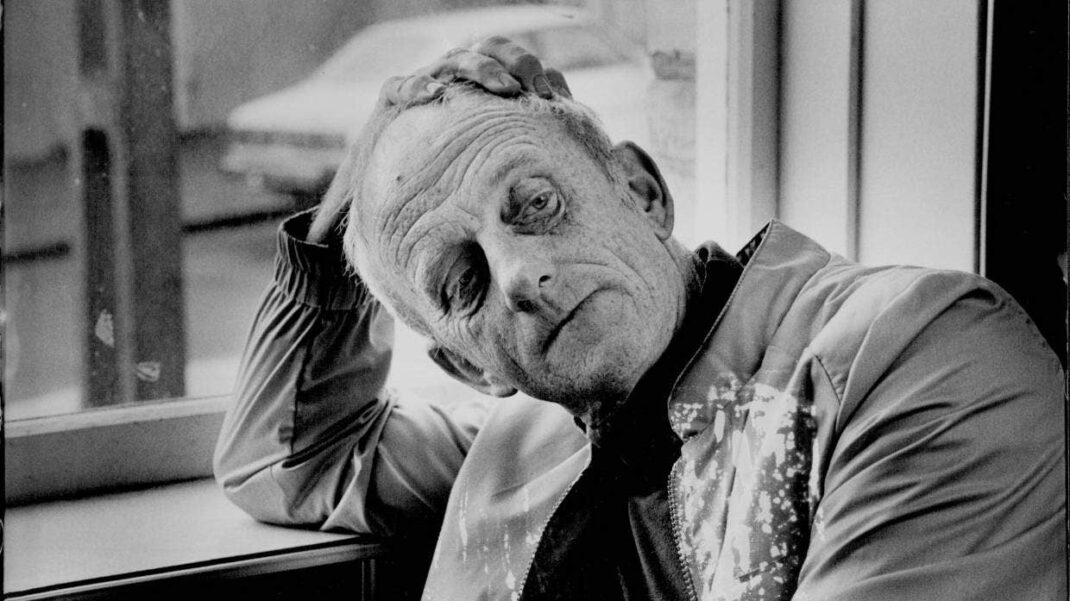
Russell Kerr, leading light of ballet in New Zealand, has died in Christchurch aged 92. The legendary dancer, teacher, choreographer and producer influenced generations of New Zealand dancers. Kerr’s hallmark talent was to absorb music so as to draw out character, narrative, human interest, emotion, poetry and comedy that ballet in the theatre can offer. Thrusting your leg high in the air, or even behind your head, just because you can, is the empty gesture of perfunctory performance that he found exasperating. Shouting and sneering at dancers, telling them they are not good enough, was anathema to him. One dancer commented, ‘Mr Kerr always treated you as an artist so you behaved like one.’
Born in Auckland in 1930, the younger of two sons, Russell was already learning piano from his mother, a qualified teacher, when a doctor recommended dance classes to strengthen against the rheumatoid arthritis that ailed the child. Did that doctor follow the remarkable career that ensued from his advice? Years later Russell was asked if it was difficult, back then, to be the only boy in a ballet school of girl pupils? He chuckled, ‘Oh no, it was marvellous—there I was in a room full of girls and no competition for their attention. It was great fun.’
Kerr made impressive progress both in dancing and piano, achieving LTCL level, then starting to teach. He could have been a musician, but dancing won out when in 1951 he was awarded a Government bursary to study abroad. In London he trained at Sadler’s Wells, with Stanislaw Idzikowski (a dancer in both Pavlova’s and Diaghilev’s companies), and also Spanish dance with Elsa Brunelleschi. Upon her advice and just for the experience, he went to an audition at the leading flamenco company of José Greco. Flamenco would be one of the world’s most demanding dance forms, both technically and musically. Remarkably, he was offered the job, providing he changed his name to Rubio Caro! How fitting that Kerr’s first contract was as a dancing musician. When asked later how he’d managed it he replied, ‘Oh, I just followed the others.’
Russell Kerr in 1951 shortly before leaving for England
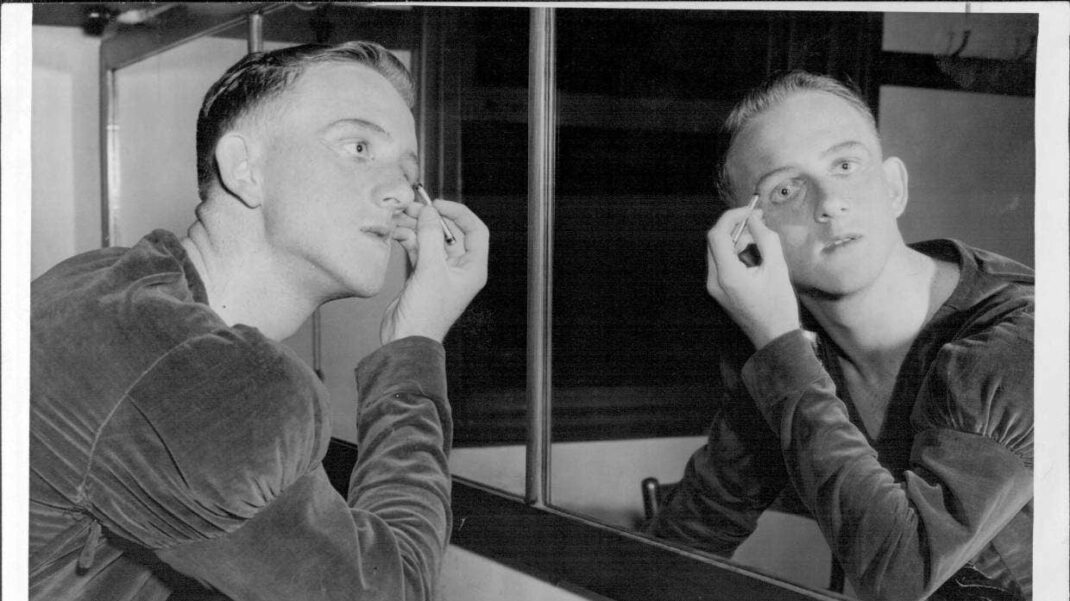
After a time, Sadler’s Wells’ leading choreographer, Frederick Ashton, declared Russell’s body not suitably shaped for ballet. ‘I’ll show you’ he muttered to himself, and so he did. In a performance of Alice in Wonderland, he scored recognition in a review (‘Kerr’s performance as a snail was so lifelike you could almost see the slimy trail he left behind as he crossed the stage.’ As he later pointed out, ‘not many dancers are complimented in review for their slimy trails’). A sense of humour and irony was always hovering.
Kerr danced with Ballet Rambert, and was encouraged towards choreography by director Marie Rambert. Later he joined Festival Ballet, rising to the rank of soloist, earning recognition for his performances in Schéhérazade, Prince Igor, Coppélia, Petrouchka among others. Nicholas Beriosov had been regisseur to choreographer Fokine in the Ballet Russe de Monte Carlo. Kerr’s work with him at Festival Ballet lent a pedigree to his later productions from that repertoire as attuned and authentic as any in the world.
The investment of his Government bursary was exponentially repaid when Russell, now married to dancer June Greenhalgh, returned to New Zealand in 1957. He told me he spent the ship’s entire journey sitting in a deck chair planning how to establish a ballet company that might in time become a national one. Upon arrival he was astonished to learn that Poul Gnatt, formerly with Royal Danish Ballet, had already formed the New Zealand Ballet and, thanks to Community Arts Service and Friends of the Ballet since 1953, ‘…they were touring to places in my country I’d never even heard of. So I ditched my plans and Poul and I found a way to work together.’
Kerr became partner and later director of Nettleton-Edwards-Kerr school of ballet in Auckland. (I was an 11 year old pupil there. It was obvious that Mr Kerr was a fine teacher, encouraging aspiration though not competition. We became friends for life). Auckland Ballet Theatre had existed for some years but Kerr built up its size and reputation, staging over 30 productions. Perhaps the highlight of these was a season of Swan Lake on a stage on Western Springs lake. He produced a series, Background to Ballet, for Television New Zealand in its first year of broadcasting, and also choreographed many productions for Frank Poore’s Light Opera Company.
In 1959, New Zealand Ballet and Auckland Ballet Theatre combined in the United Ballet Season, involving dancers June Greenhalgh, Rowena Jackson, Philip Chatfield, Sara Neil and others. The program included Polovtsian Dances from Prince Igor to Borodin’s sensuous score, and Prismatic Variations, co-choreographed by Kerr and Gnatt, to Brahms’ glorious St Anthony Chorale. Music as well as dance audiences in Auckland were astonished, and the triumphant season was repeated with equal success the following year in Wellington, when Anne Rowse joined the cast.
In 1960 a trust to oversee the New Zealand Ballet’s future was formed, and by 1962 Kerr was appointed Artistic Director. His stagings of classics—Giselle, Swan Lake, La Sylphide, The Sleeping Beauty, The Nutcracker, Coppélia, Les Sylphides, Schéhérazade—were balanced with new works, including the mysterious Charade, and whimsical One in Five. Kerr used compositions by Greig, Prokofiev, Liszt, Saint-Saens and Copland for his own prolific choreographic output—Concerto, Alice in Wonderland, Carnival of the Animals, Peter and the Wolf, The Alchemist, The Stranger. In 1964 he invited New Zealander Alexander Grant who had an established reputation as a character dancer with England’s Royal Ballet, to perform the lead role in Petrouchka, a superb production that alone would have earned Kerr worldwide recognition.
A fire at the company headquarters in 1967 meant a disastrous loss of sets and costumes that only added to the colossal demands of running the company on close to a shoestring budget. Kerr’s health was in an extremely parlous state. In 1969 Gnatt returned from Australia and as interim director, with the redoubtable Beatrice Ashton as manager, kept the company on the road.
Russell had worked closely with Jon Trimmer, the country’s leading dancer, and his wife Jacqui Oswald, dancer and ballet mistress. They later joined him at the New Zealand Dance Centre he had established in Auckland, developing an interesting new repertoire. The Trimmers remember, ‘…Russell would send us out into the park, the street or the zoo, to watch people and animals, study their gait and gestures, to bring character to our roles.’ Kerr also mentored and choreographed for Limbs Dance Company. The NZDC operated until 1977, though these were impecunious and difficult years for the Kerr family. But courage and the sticking place were found, and Russell, as always, let music be his guide.
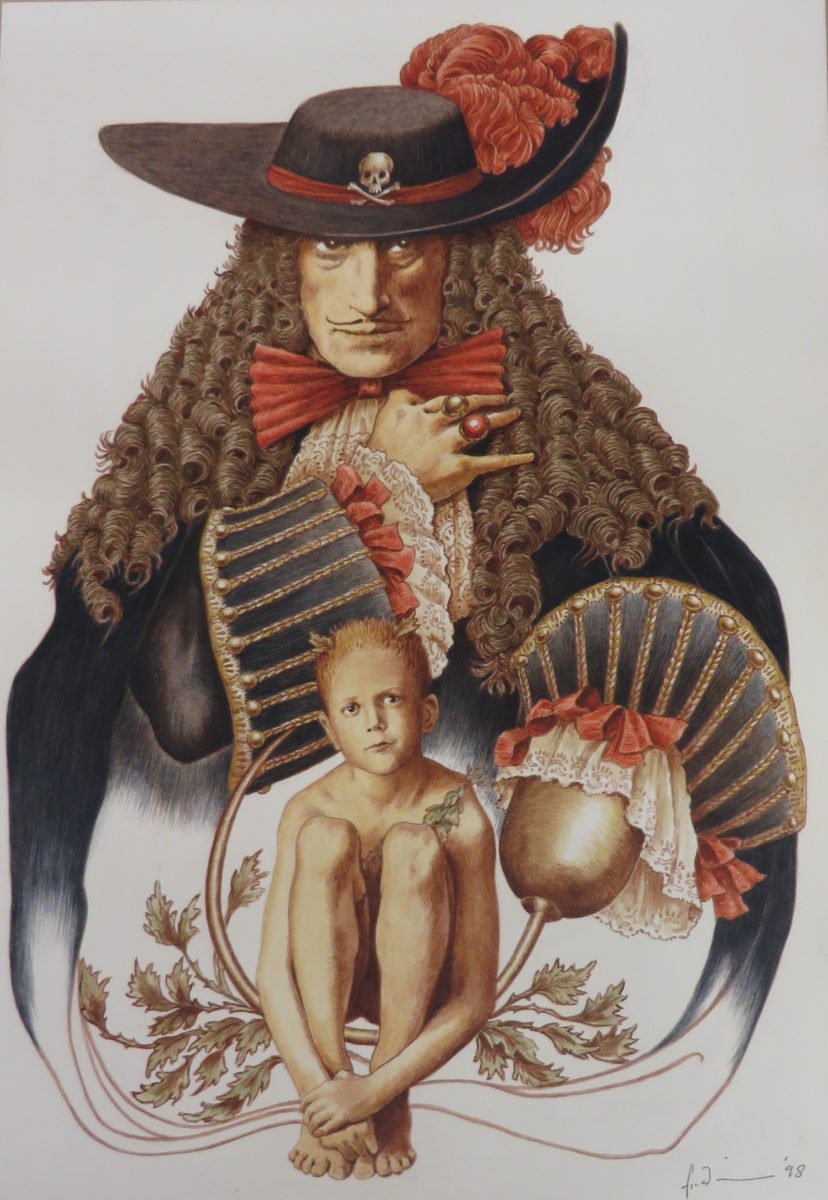
In 1978 he was appointed director at Southern Ballet Theatre, which proved lucky for Christchurch as he stayed there until 1990, later working with Sherilyn Kennedy and Carl Myers. In 1983 Harry Haythorne as NZB’s artistic director invited all previous directors to contribute to a gala season to mark the company’s 30th anniversary. Kerr’s satirical Salute, to Ibert, had Jon Trimmer cavorting as a high and heady Louis XIV.
His two lively ballets for children, based on stories by author-illustrator Gavin Bishop—Terrible Tom and Te Maia and the Sea Devil—proved highly successful, but there was a whole new chapter in Kerr’s career awaiting. After Scripting the Dreams, with composer Philip Norman, he made the full-length ballet, A Christmas Carol, a poignant staging alive with characters from Dickens’ novel, with design by Peter Lees-Jeffries. (The later production at RNZB had new design by Kristian Fredrikson).
Possibly the triumph of Kerr’s choreographies, and certainly one of RNZB’s best, was Peter Pan, again with Norman and Fredrikson, with memorable performances by Jon Trimmer as an alluring Captain Hook, Shannon Dawson as the dim-witted Pirate Smee, and Jane Turner an exquisite mercurial Tinkerbell.
Leading New Zealand dancers who credit Russell for his formative mentoring include Patricia Rianne, whose Nutcracker and Bliss, after Katherine Mansfield, are evidence of her claim, ‘I never worked with a better or more musical dance mind.’ Among many others are Rosemary Johnston, Kerry-Anne Gilberd, Dawn Sanders, Martin James, Geordan Wilcox, Jane Turner, Diana Shand, Turid Revfeim, Shannon Dawson, Toby Behan—through to Abigail Boyle and Loughlan Prior.
An unprecedented season happened in 1993 when Russell cast Douglas Wright, the country’s leading contemporary dancer, in the title role of Petrouchka. He claimed Wright’s performances challenged the legendary Nijinsky.
An annual series named in his honour, The Russell Kerr Lecture in Ballet & Related Arts, saw the 2021 session about his own life and career movingly delivered by his lifelong colleague and friend, Anne Rowse. The lecture was graced by a dance, Journey, that Russell had choreographed for two Japanese students who came to study with him. It would be the last performance of his work, the more poignant for that.
Russell was writing his memoirs in the last few years, admitting the struggle but determined to keep going. He said, ‘Writing about my problem with drink is going to be a very difficult chapter.’ Russell had told Brian Edwards in a memorable radio interview decades back, of the exhausting time when his colossal work commitments had driven him ‘to think that the solution to every problem lay in the bottom of the bottle.’ He eventually managed to turn that around and thereafter remained teetotal for life—but by admitting it on national radio, he was offering hope to anyone with a similar burden, himself proof that there is a way out of darkness.
He viewed the sunrise as an invitation to do something with the day. He would bring June a cup of tea but not let her drink it till she had greeted the sun. Recently he took great joy in seeing photos of my baby granddaughter, rejoicing to be reminded of the hope a new life brings to a family.
Russell concurred with the sentiment expressed in Jo Thorpe’s fine poem, The dance writer’s dilemma (reproduced in Royal New Zealand Ballet at 60):
… the thing… which has nothing to do with epitaph which has nothing to do with stone. I just know I walk differently out into air because of what dance does sometimes.
Russell Kerr was a good and decent family man, loyal friend, master teacher and choreographer, proud of his work but modest by nature, resourceful and determined by personality, honest in communication, distressed by unkindness, a leader by example. A phenomenal and irreplaceable talent, he was a very great New Zealander.
He is survived by son David, daughter Yvette and their families.
Russell Kerr photographed in 2007
Russell Ian Kerr, QSM, ONZM, Arts Foundation Icon Born Auckland 10 February 1930 Married June, née Greenhalgh, one son (David), one daughter(Yvette) Died.Christchurch 28 March, 2022
Sources: David Kerr, Anne Rowse, Jon Trimmer, Patricia Rianne, Rosemary Buchanan, Martin James, Mary-Jane O’Reilly, Ou Lu.
Jennifer Shennan, 3 April 2022
Featured image: Russell Kerr as director of Southern Ballet in 1983
The year everywhere saw curtailment of a number of dance events but the resilience in dancers’ responses still gave us plenty of highlights to savour …
Ballet Collective Aotearoa launched its long-awaited premiere season, Subtle Dances, in the Auckland and Dunedin Arts Festivals early in the year. Artistic direction of BCA by Turid Revfeim, to establish a new national independent ballet enterprise, is supported by her troupe’s pioneering and committed spirit that refuses to let funding challenges affect their vision, as further festival bookings eventuate and new sponsorship initiatives are waiting in the wings. BCA achieved an outstanding professional level of dance and music presentation with this triple-bill that premiered choreographies by Sarah Knox, Cameron Macmillan and Loughlan Prior, in collaboration with the New Zealand String Trio, who played onstage throughout. This was chamber performance of the highest order, and impressive that the two arts could bring such coherence to a triple-bill. It was further affirmation to see Abigail Boyle, nationally treasured dancer, performing at her peak. Young company member Kit Reilly is one to watch out for (he has recently received the inaugural Bill Sheat Memorial Award for a dancer prepared to commit to New Zealand identity in their career).
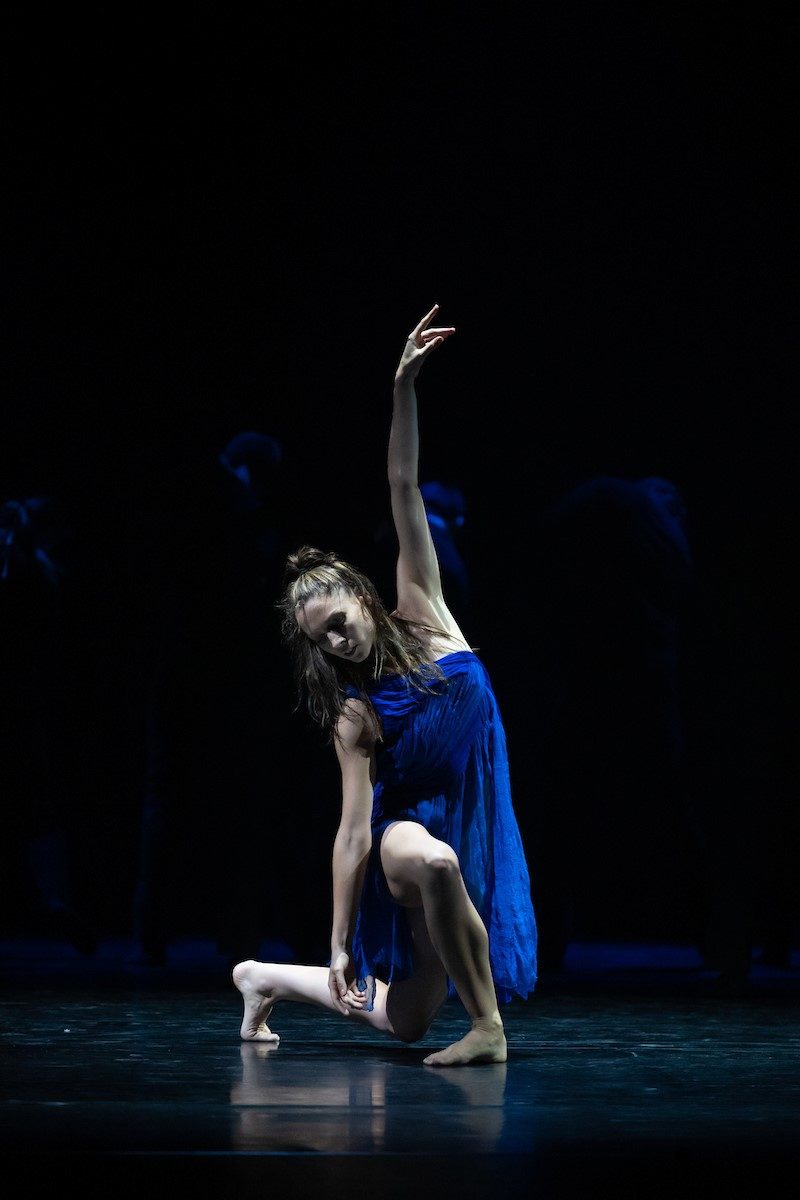
Later in the year Loughlan Prior achieved what is arguably his finest choreography—Transfigured Night, beautifully themed to the Schoenberg score, performed by New Zealand String Quartet in a NZChamber Music national tour, in an impressive staging where musicians and dancers again shared the stage space. The calibre of choreography, fine dancers and fabulous musicians ensured that the totality was greater than the sum of its considerable parts. That doesn’t happen just by cutting the stage into two halves, but grows out of the skill and vision of the choreographer, and willingness of the musicians to take risks (NZSQ have always been up for that). Laura Saxon Jones, another much valued New Zealand dancer, was here in her prime, as Prior, who knows her work well, intuited exactly how to create a searingly memorable role for her. Thanks to inspired set and costume design by William Fitzgerald (who also danced in the work), the unlikely space of the Fowler Centre was transformed into a grail of poignant and poetic beauty. At the end, audience members, primarily music followers, were either on their feet or reduced to tears by this outstanding work, which would hold its strength in any venue worldwide. Perhaps it is music audiences that will enlarge a future following for dance as they find music treated with equal respect as choreography, without distracting interruptions of shouting and whistling that haul balletic virtuosity out of the context of choreography (as though dancers need encouragement to tackle the next entrechat or pirouette).
Lucy Marinkovich brought her remarkable Strasbourg 1518 back to Circa Theatre after its premiere season there was cut short last year. It remains the most powerful experience of dance theatre seen here in a very long time, and its Auckland season also made huge and visceral impact. Lucien Johnson’s sound design plus saxophone drove the performers into the stratosphere. I remember the narrator from the original production, France Hervé, for the remarkable transition within her role that edged its way through the performance. No easy way to turn that alchemy into words.
Bianca Hyslop choreographed and Rowan Pierce designed Pohutu, performed for the Toi Poneke gallery, a highly effective setting for a work of empathy with unfolding references to both geographical landscape and mental inscape.
The New Zealand School of Dance graduation offered a program of interesting contrasts within the classical and contemporary vocabularies, and I felt thrilled to encounter the choreographic instinct and potential of Tabitha Dombrowski’s new work, Reset Run.
Vivek Kinra’s company Mudra presented Navarasa, to his customary highest standard of Bharata Natyam, a consistent contribution to Wellington’s artistic life for decades. One of my favourite things is to observe a dance class, to sight the seeds planted that over time grow into performance. It’s one of the ways to prepare for the privilege of writing about dance in its ephemeral, enduring path. Kinra is one of the most naturally gifted dance teachers across all genres in Wellington, in his command of discipline that is shared with, but not imposed upon, his students. In this Indian dance form there is a wonderful continuity between studio and stage which offers a cleansing and rewarding experience.
I attended a spirited gathering at Parliament, where a book documenting the Irish population resident in New Zealand was launched. Every address was laced with a song, as we are so accustomed to in Maori whaikōrero (oratory) and following waiata (song) but it was especially apparent here that Celtic dance is as readily available as song, poetry, literature, instrumental music—fiddle and pipes—as affirmations in Irish communication. No choreographer to be named here—just dancing from the heart.
The Royal New Zealand Ballet’s restaging of Liam Scarlett’s A Midsummer Night’s Dream brought us many poignant reminders of the premiere season in 2016 and its stellar cast. Previous artistic director Ethan Stiefel had initially proposed and negotiated with Queensland Ballet for the two companies to share a series of productions, which was a truly exciting prospect. Queensland Ballet did mount A Midsummer Night’s Dream in 2016 but after that, unfortunately, the project did not proceed further. But the calibre of choreography and design (Tracy Grant Lord) of Dream remains intact. It was Scarlett’s masterstroke to frame the plot with a prologue of the young child caught between fractious parents yet resolved by the epilogue, hence the genius to telescope a 500 year old theme into contemporary society. That Liam Scarlett died at 35, earlier this year, is something that Shakespeare, in heartbreaking tragedy, would be challenged to account for.
I watched on Sky Arts several sizzling programs of documentary/performance by Flamenco artists, memorably Rocio Molina. The best-made dance films for my eye are those of Cloud Gate Dance Theatre of Taiwan, superb record of the company’s prolific repertoire in perpetuity, and their viewings always prompt me to send a message to everyone in my contacts list to watch if at all possible.
Dance reading helped fill some of the quieter stretches of the year—Michel Meylac on Russian Ballet emigrés was exactly what it claimed—whereas I found totally delightful surprise, when reading the fresh and fabulous Zadie Smith—Feel Free—to happen upon her essay Dance Lessons for Writers, in which she brilliantly couples and compares Fred Astaire & Gene Kelly … ‘aristocracy v. proletariat…the floating and the grounded …’; Harold Nicholas & Fayard Nicholas … ‘propriety and joy, choose joy…’; Michael Jackson & Prince; Janet Jackson, Madonna, Beyoncé; David Byrne & David Bowie; Rudolf Nureyev & Mikhail Baryshnikov… ‘the one dancer faced resolutely inwards, the other is an outward-facing —artist…’. It’s heartening to find such perceptive analysis from a writer who is not exclusively describing dance performances, but who can trace and evaluate how these technical and aesthetic qualities resonate with the rest of our experiences.
For the fourth Russell Kerr Lecture in Ballet & Related Arts, Anne Rowse brought her own 90 years alongside her decades of friendship with 91 year old Russell Kerr to trace their parallel careers—and what fabulously sustained careers those have been. The event was coupled with a celebration of Michelle Potter’s book, Kristian Fredrikson, Designer, generously supported by the Australian High Commission.
The same event also saw the launch of DNA—Dance Needs Attention, a networking enterprise to invite artistic associates to support each other as individuals in independent dance studies and writing projects. Among early tasks was the opportunity for me to read the manuscript of associate Ashley Killar’s forthcoming biography of John Cranko—a fascinating read and one certainly to watch out for.
2022 will see Patricia Rianne, in the fifth lecture of the RKL series, trace her own life and career—including the ballet, Bliss, that she choreographed after a Katherine Mansfield story, for New Zealand Ballet in 1986. There will be several seminars throughout following months in which we will celebrate Poul Gnatt’s arrival in New Zealand in 1952, when he first taught open classes in Auckland as the Borovansky Ballet toured here, before he founded the New Zealand Ballet the following year.
May we all be safe and sound through 2022… 100 years since James Joyce published Ulysees, TS Eliot published The Waste Land, Virginia Woolf is writing, Katherine Mansfield is writing… and Sergei Diaghilev invited Igor Stravinsky, Pablo Picasso, Marcel Proust, James Joyce, Erik Satie and Clive Bell to dine together in Paris at the Majestic hotel. Wonder what was on the menu that night. Choreographic scenario, anyone?
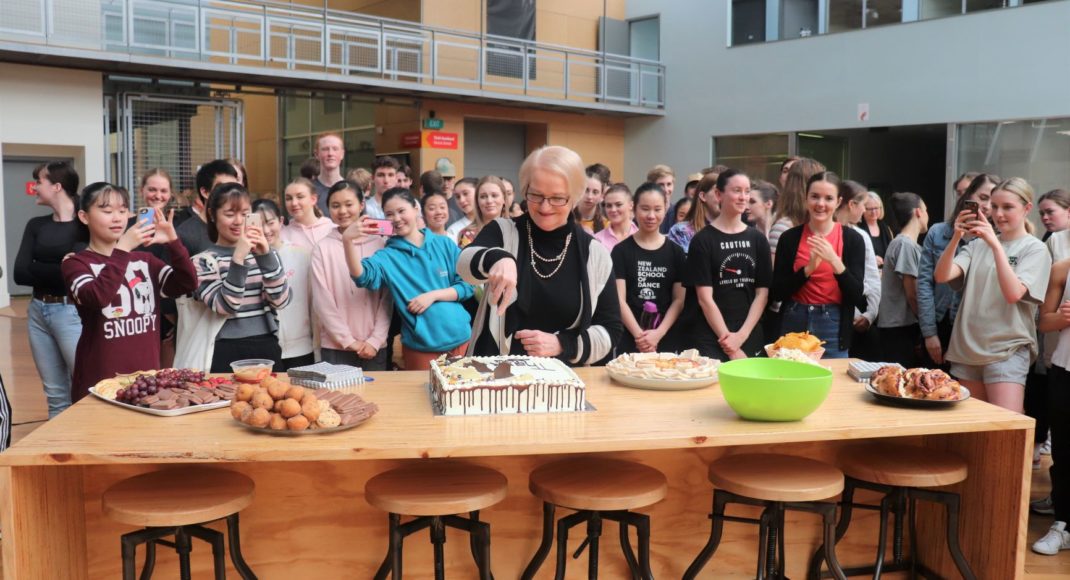
Memories from across 40 years of life and work and people at New
Zealand School of Dance were triggered by a recent gathering.
Christine Gunn has
been on the faculty at New Zealand School of Dance as classical ballet tutor
for 40 years. A celebratory gathering took place at Te Whaea, the school’s
venue, in early September to mark the occasion but no-one is taking that as a
signal of her impending retirement. The opening speech of heartfelt thanks by
director Garry Trinder acknowledged that Christine prefers not to play the diva
but just to get on with the work. He quipped how pleased he was to have found
her the perfect fridge magnet which asks ‘Would you like to speak to the person
in charge, or to the person who knows what’s going on?’ Perhaps they’ll let her
retire after another 40 years?
Christine
masterminded the art of timetabling the
curriculum for both the classical and contemporary dance streams—(this is
tantamount to completing Sudoku puzzles while simultaneously playing two Chess
games). It was not merely the timetabling skills being remembered and
celebrated however, but the dedication to teaching consistent, supportive
classical technique and repertoire classes that have guided many a ballet
student towards their performance careers. Raising her own family of two
daughters must have required further skills of time management on many
occasions.
Anne Rowse was
director of the then National School of Ballet when Christine joined the staff
in 1979. With Anne, plus Dawn Sanders as part-time tutor and secretary, that
made a staff of three. How ever did they do it, in those asymmetric studios
that you had to traverse to gain access to the dressing rooms? Well, you’d
never have guessed from the calibre of the repertoire in annual Graduation
seasons in the Opera House that training conditions were anything less than
perfect. It takes hindsight to recognise pioneering of course, but the list of
graduates from New Zealand School of Dance, then and since, includes major
figures in world dance. Piano accompanists were always the best in town and,
over time, other teaching staff were appointed, new premises found, and
resources grew.
Turid Revfeim (who
has recently written the 50 year history of the School, and is now a tutor
there) was a student in the year Christine arrived, and she reminisced on what
was done despite those meagre resources. Turid later joined Royal New Zealand
Ballet as did many other graduates, Dawn had also earlier been a dancer with
them, and such links ensured a genuinely close rapport between the School and
the Company, at that time directed by Harry Haythorne. Students used to turn up
in droves at the theatre each night to meet the stalwart Company Managers,
Warren Douglas or Brendan Meek, themselves both NZSD graduates, for passes to
every performance of the season which those days spanned a fortnight. Standing
room if need be, but students seized every chance to glean inspiration of what
their training was all about, in the context of the theatre. The resulting
artistic harvest was bountiful, but it only grew from old-fashioned common
sense and the best kind of opportunism.
Christine’s choice
at her gathering was for students to perform an excerpt from Balanchine’s Concerto Barocco which they did with a
commendable clarity of line and musical acuity. Luke Cooper, a recent graduate
now dancing with RNZB, had organized video messages to Christine from former
students living and working afar. All the students then performed a massed
Maori tribute, a waiata with the
talisman wiri of quivering arms and
hands that breathes life into dance. The male students delivered a mightily galvanised haka taparahi that could have given the
All Blacks the shivers.
The large
gathering was a spirited one and no doubt evoked many and varied memories among
former teachers and students of their experiences across those 40 years—of
things trained, learned, rehearsed, performed, triumphed, loved, hoped, danced
and dreamed. I’ll put the (injuries and heartbreaks) into parentheses. Nothing
about dance is easy—it’s only meant to look that way, with the grace of divine
nonchalance suggesting that you, the audience, could be dancing too.
*********
Anne Rowse invited me to join the staff in 1982, to tutor in Dance Studies—Renaissance and Baroque repertoire, Dance notation, History & Library studies, World Dance Traditions including Pacific and Asian cultures—all the interesting things no one else wanted to teach. How lucky was I? I also offered public courses of dance interest through the Centre for Continuing Education of Victoria University of Wellington, so there was some creative accounting as Anne agreed to let the School premises be used in exchange for free places for students. Win-Win. I was also entrusted to build up the School’s library from fairly meagre holdings, so it was surely a stroke of luck that Smith’s Bookshop, the town’s very best second-hand bookshop, run by Dick Reynolds, was in an adjacent building, so I could each week sniff out dance and related arts books for bargain prices. One day, to my astonishment I found David Garnett’s Lady into Fox, a short story that had been famously adapted, by Andrée Howard, into a choreography by the same name, and the one ballet I most wished I could have seen. I consider myself quite old, but not quite old enough to have caught it when Ballet Rambert toured here in 1949. You could search the shelves of bookshops worldwide and not find Garnett’s stories, so this was a glint of gold. I recall cancelling that day’s planned class and telling the students all about Lady into Fox instead.
How poignant it
was some years later at a matinee of the School’s graduation, with the front
rows of the stalls at the Opera House filled with audience from an old folks’
home (another of Anne’s initiatives), to sight Dick Reynolds propped up in a
wheel chair, nodding and faintly clapping along as the students rollicked
through The Lancers’ Quadrille, but I
believe he was wiping away tears when Chopin’s music for the Prelude from Les
Sylphides began.
Another standout memory was a visit from the iconoclast dance-maker Mary Fulkerson from Dartington, an important centre for the arts in Devon. Mary brought her eight hour long performance saga, titled Don’t Tell the Prime Minister I’m coming. The first instalments were performed across two evenings in the BlueRoom at the National Art Gallery, when director Luit Beiringa opened those doors for us, but the third and fourth evenings were across a weekend, posing a problem of access to the NAG. There was no budget. (How ever did we do these things on zero budgets? Well, we just did. You could say they were free because they were priceless, which is of course the opposite of worthless). Anne with typical generosity handed over the school keys for the weekend. That gesture remains as memorable as the dance itself, which ended with Fulkerson tossing each of the eight dresses she had worn through the evenings high up into the air, all the while still dancing, singing, and smiling. But wait, only seven dresses ever came back down to earth. The eighth one caught on a high ceiling beam and dislodged a decade’s worth of dust, glinting in the light as it sent a shaft of golden stars down onto our heads. That was 1983 but I can see that glinting still. And no, we didn’t tell the Prime Minister Mary was coming since Muldoon wouldn’t have known what to do with the information, though nowadays you could tell PM. Jacinda Adern, since she is also Minister for the Arts.
The School moved
to new premises in Cable St., the entrance to which sat between adjacent
doorways—one to Cash Convertors, the other to Abundant Life Spiritual Centre,
daily reminders of the spectrum of possibilities in life as well as art. We
tried to ignore the nine months of deafening pile-driving as Te Papa
construction across the road got under way, and just got on with our work.
Patricia Rianne,
one of New Zealand’s most celebrated expatriate dancers, had returned home and
become Head of Classical Studies at the School, a most valued teacher and
mentor to the students. Her Summer’s Day,
to music by Jenny McLeod, and Bliss,
inspired by Katherine Mansfield’s story, were staged by RNZB and the graduates
dancing there found joy in performing them.
George Dorris and
Jack Anderson, leading New York dance writers, walked in the door one day as I
was teaching Baroque dance. I squealed in delight to recognise them, introduced
them to Anne, we both scolded them for not warning us they were coming, so they
returned a year later and gave a wonderful seminar which we also opened to the
public. We surveyed the many titles of the fabled Dance Perspectives, a series of periodicals edited by our mutual
colleague, Selma Jeanne Cohen. No other dance journal can hold a candle to this
series so I was emboldened to beg our National Library to lend us their
complete run from the Stacks. No-one had ever borrowed them because no-one knew
they were there. They do now. What a weekend we were treated to. I can’t
remember if we thanked Anne, but she will have known that the real rewards
survive in the minds and memories of those who attended. The threads that
weave, and the ties that bind.
Ann Hutchinson, leading authority in dance
notation, visited and gave a workshop in which she mounted from her score
Nijinsky’s l’Apres Midi d’un Faune,
to music by Debussy. Nijinsky was the true pioneer of modern choreography, as
well as a legendary dancer. Sad that he is remembered more for his
schizophrenia than his art, but such is the ephemeral nature of dance. The cast
of Faune calls for seven dancers, one
male and six females. As luck would have it, just 14 students turned up, two
males and 12 females, so Ann set about teaching the work to two casts and the
whole piece was completed by the end of the afternoon, which you would have to
rate a small miracle. The mercurial Warren Douglas was there that day and
danced the Faune, as well as many roles at RNZB in following years. Years later
but still young, he died tragically, of complications from Aids. It was so sad
and so wrong to have to write his obituary. We must never forget the dancers
whose lives that cursed illness snatched away. Warren might well have become a
brilliant director of RNZB, and would have changed the world.
The most treasured
heritage for me throughout my 20 years teaching at the School was undoubtedly the repertoire of
choreographies by Doris Humphrey and José Limon, pioneers of the best of
American modern dance, taught and staged by Louis Solino who had been a member
of their company in New York for years.
It was another of Anne’s courageous moves to appoint Louis to the staff, since
there might have been resistance to the distinctive technique and repertoire,
but he was an unusual and quiet genius and in fact over the years turned up
gold in a repertoire we’d have been lucky to catch in any world capital … Air for the G String, Day on Earth, The Shakers,Two Ecstatic Themes, There is a Time, La Malinche, The Unsung,
Dances for Isadora, Choreographic Offering, The Moor’s Pavane in seminar.
Later the mighty Bach Chaconne was
performed by Louis’ partner, the multi-talented Paul Jenden. Paul has since
died and a broken-hearted Louis returned to the States, but make no mistake,
anyone who ever danced in, or saw rehearsals and performances of those Limon
and Humphrey masterworks will never have forgotten them. Next month’s story
might tell the detail of how that came about.
Everyone present
at Christine’s celebration will have had memories like these, all the same, all
different. The following weekend, large numbers of us gathered at parties
in Paekakariki to help Sir Jon Trimmer
celebrate his 80th birthday, and his 60 years of performing with
RNZB. Jon’s sister, Coral, came from Melbourne with her harmonica in her pocket
and played jazz numbers from the 1920s like a shimmering hummingbird, cavorting
and gliding about, giving total lie to her 89 years. We knew this was her
instrument but hadn’t heard her play. Now we have. That will have to be the next next month’s story.
Between those two
gatherings, our daughter gave birth to her firstborn, a baby girl. I’ll let her
grow a while and then maybe I’ll make for
next next next month, a story about the dance-like movements of a wee,
serious, busy, tiny one as she explores the world around her, learning to latch
on and to change sides, to yawn and to hiccup, to sneeze and to gurgle, to make
frog’s leg kicks that Jeremy Fisher might envy, and, when her arms are
unswaddled, to conduct and wave at symphony orchestras. The baby as dancer—I’m
up to review that.
It was Eugene O’Neill who said, ‘‘There is no present or future—only the past,happening over and over again—now.’ I like that, so think I will help myself to his words.
Jennifer Shennan, 30 September 2019
Featured image: Christine Gunn cutting her anniversary cake. New Zealand School of Dance
This program to open 2019 has four new and contrasting works that will appeal to audiences in different ways. The dancers, as always, give their all, but the production needs to settle down yet, and the lighting effects be reduced by perhaps 50%, if it is to source the power of theatre.
Hine the first work, by Moss Paterson, opens with a strongly rendered haka fronted by males, but the following sequence for females, with the unexpected choices of pointe shoes and scantily clad dancers, is a challenge to reconcile with the evocation of a whare whakairo. The first woman in Maori mythology, Hine ahu one, has been a number of times choreographed—(I think of Louise Potiki Bryant, of Kelly Nash, and of Merenia Gray’s works, and believe they could all be considered for future possible restagings). I found the back projections for this Hine often distracting, and the aural overload a challenge. I am no fan of strobe light in the theatre at the best of times, believing it belongs to the rock concert stage or the disco bar, and often weakens the development of form in a choreography. So Hine was for me, with its various quotes from other dances we have seen recently, a work in progress.
Y(It is decades since this company performed it, but no-one forgets how Gray Veredon harnessed the ihi, wehi and wana of haka into his classic cameo work, Tell Me A Tale. Anyone wishing to choreograph Te Ao Maori onto a ballet stage needs to study that work, and Veredon, a pioneering member of this Company, would be willing to help—right now though he is impressively occupied with staging a new full-length commission at Polish National Ballet. One could also consider bringing back to their home company some of our other ex-pat choreographers and teachers who have made strong careers abroad—Cameron McMillan, Mark Baldwin, Andrew Simmons, Martin James and Patricia Rianne come to mind).
The second work is by James O’Hara, The Sky Is Not So Different From Us, Perhaps… with musician Anita Clark on stage. The work has a layered movement texture I found cumulatively mesmerising. Ceaseless pulses and undulations hint at the physics inside a human body—the rhythms of breathing and of blood circulating, as measures of life, except for one sad Pierrot figure standing in catatonic contrast until the violin vibrations thaw her out. The ever-repeating tape-loop of violin and vocals adds to the work’s atmosphere and mystery. Multi-layered costumes echo the choreographic theme, though for some of them, less would be more (and why a very tall man would wear a constricting mid-calf pink skirt I found impossible to fathom). The best of this work is very good indeed.
Shaun James Kelly’s work, The Ground Beneath our Feet, is a winner. He summons the airborne energy and élan we have always welcomed from the dancers in our Company, whatever the chosen choreographic style or aesthetic. I personally prefer to hear Bach in the scores as left to us, so the doctored treatment of the Violin Concerto, while you can do it, did not seem to me to add anything new. A galvanising pleasure though to see the commitment between partners within each dancing couple. The total frisson of the evening for me was Mayu Tanigaito. The prodigious technique of this dancer allows her to transform to a hummingbird, a diving swallow, a fairy tern. That she can do it all and more, and flash a smile the while, puts her in a class of her own. (Many of us have long wished that the superb full-length work Madame Butterfly, by Australian choreographer Stanton Welch, and stunning design by Peter Farmer, could be re-staged from our Company’s strong and richly defined repertoire, and the title role offered to this dancer as a vehicle for her talent).
This season marks the retirement, after 13 stalwart years dancing, of Abigail Boyle, a much loved and highly versatile performer with classical, dramatic and comic abilities in spades. The work Artemis Rising, choreographed for her by Sarah Foster-Sproull, was effectively a solo, with other dancers as a shadow chorus. It leaves some striking images for us to savour, and acts as tribute to Abigail’s performing, and a blessing on her future career transition (she plans to develop a teaching and coaching career).
The purest combination of technique, phrasing and line was to be seen whenever watching Abigail in class in the studio—an experience I will treasure to the end of my days. Many know and love this dancer, and wish her the very best for the coming years. (Readers may care to read the fine interview with Bess Manson published in The Dominion Post, 2 March 2019, and available online at www.stuff.co.nz—DancerAbigail Boyle, Breaking through the fourth wall).She has been given a spirited and fitting farewell.
A recent Company newsletter advised that they are also currently considering how to honour the significant contribution to ballet and theatre in New Zealand of Sir Jon Trimmer who gave his retirement performance late last year. If that turns out to be an 80th Birthday Benefit Gala in September, say, one can imagine the Opera House dome needing to be opened to let out the tsunami of excitement and gratitude that New Zealanders would want to show him by way of salute and thanks for the legendary 60+ years career with this Company. Kia ora rawa atu, he totara nui o te ao kanikani o Aotearoa. I nga ra o mua, i nga ra inaianei—he wiri mo he takahia —taonga enei. Tena koe, e hoa.
1 March 2018, Aotea Centre, Auckland Reviewed by Jennifer Shennan
Aforethoughts and Afterthoughts.
English National Ballet’s season of Giselle, in an acclaimed new production choreographed by Akram Khan, has just played at the Auckland Arts Festival. The setting has migrant workers stranded after a clothing factory closes down, and the clash between workers and factory bosses echoes the contrast of villagers and nobles in the 19th century ballet by Coralli and Perrot. Dancing is of the highest standard, the set is monumental, costumes inspired, lighting striking and the atmospheric music composed by Vincenzo Lamagna, scored and conducted by Gavin Sutherland, performed by Auckland Philharmonic Orchestra, makes major impact.
Many of us are thrilled by the contemporary relevance of this setting (Khan is Bangla Deshi. He works in the sophisticated milieu of European dance yet does not resort to any conventions and clichés of ballet). The gesture of Giselle’s arms down-stretched, hands slowly, so slowly, turning palms up as she asks Albrecht ‘Why? What is this about? What am I supposed to do? What are you going to do?’ The cast of co-workers repeat her gesture, as well they might. More Asian than European, more baroque than balletic, it is a telling opening to the story about to enfold.
Others are continuing to think about the echoes of the original storyline, the music, the choreography. There are about four fleeting fragments of ‘the old Giselle’ in the ‘new’ one, and they pull at your heart. Good. The ballet is engaging. No one is unmoved, no one denies the power of the production.
In 2016, Tamara Rojo, artistic director of the company, and herself still a performer in the lead role, commissioned this new version of the classic Giselle from Akram Khan, following a one-act work he had earlier made for the company. We have seen some of Khan’s work performed here by Sylvie Guillem several Festivals ago, and there are trailers aplenty on YouTube to give you the strength of his dance-making. It is poignant to learn that just after the Khan premiere season in London, there followed another season of the production by Mary Skeaping of the original ballet. Now that’s imaginative programming.
This is the first ever visit to New Zealand of English National Ballet, formerly known as Festival Ballet. A number of celebrated New Zealand dancers have been members of the company over decades—Russell Kerr, June Greenhalgh-Kerr, Anne Rowse, Ken Sudell, Donald McAlpine, Loma Rogers, Sue Burch, Martin James, Adrienne Matheson, Cameron McMillan among them. The company was for a time directed by Matz Skoog, former artistic director of Royal New Zealand Ballet, with Fiona Tonkin as assistant. Amber Hunt, New Zealand dancer, is currently in the company’s ranks.
Rosemary (Johnston) Buchanan, a leading dancer with New Zealand Ballet in 1960s, is now a patron of the company, and her artistic opinions are valued by ENB. It is poignant to witness the camaraderie and loyalty this company maintains for its heritage and history. The program essays are as good as you’ll find anywhere. It is reassuring that archivist Jane Pritchard writes about original and earlier versions of the ballet in a way that they do not need to be put down for new versions to be put up. In 1959, I slept three nights in the queue in His Majesty’s Arcade to buy a ticket in the Gods to see the Royal Ballet with Margot Fonteyn performing Giselle. The theatre and the arcade have since disappeared but the memory remains. Mindful of the achievements in that title role of such dancers as Margot Fonteyn, Patricia Rianne, Olga Spessivtseva, Carla Fracci, that ballet is not something I’m going to let go lightly. Fortunately, I don’t have to.
Old productions. New productions. There’s room for all. Michael Keegan-Dolan’s Giselle (by the Fabulous Beast Dance Theatre) was staged in Wellington several Festivals back—with Albrecht as a two-timing transgender line-dance teacher. (Well, you know the Irish). This man, whose Petrouchka and The Rite of Spring were staged in Melbourne in 2013 (the music played on two grand pianos on stage), is the fearless mover & shaker you won’t want to miss—though you might need a medicinal whisky, before the show and maybe after as well. He is arguably the best communicator about his choreography I have encountered, and he writes his own program essays. Stand by for his Swan LakeLoch na Neal due in the Wellington Festival mid-March. If you don’t like heat, stay out of the kitchen, but no one should write a feeble-minded review of his work.
There’s always much evidence of the well-to-do among ballet audiences, though we would of course claim that you and I are there for the right reasons. Everyone wishes for fairness in the workplace. There’s always been,and will always be uneven distribution of wealth in the world, no choreography will change that. We should think long and hard about this production of Giselle we have just seen, and maybe also about the time we first encountered it. Ask if any garment in your wardrobe was made in Bangla Desh, or in a sweat factory somewhere else? Also ask ‘Do all ballet companies, worldwide and close to home, treat their dancers fairly?’ since that would be a good place to start, if this remarkable production with its ethos is to be honoured.
19 November 2016, Te Whaea, Wellington Reviewed by Jennifer Shennan
This NZSD Graduation season has all the students performing with a shared confidence and total commitment that offers audiences an energising experience. That is just what Wellingtonians, recently visited by nature’s forces in a major earthquake and subsequent flooding, need for a lift of the spirits.
Meistens Mozart by Helgi Tomasson, from 1991, to seven songs by Mozart and others, is a charming little opener with the enjoyment of youth and friendship shared. Beguiling.
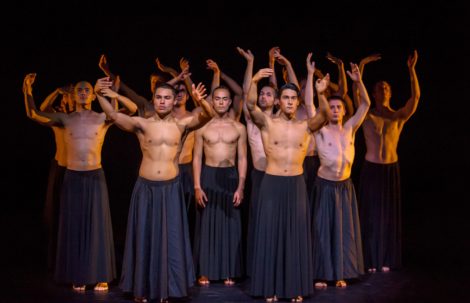
Taiaroa Royal and Taane Mete, both of them NZSD alumnae, first staged He Taonga – a Gift in 2009. This powerful group work for an all-male cast of 14 dancers evokes the strength of haka, the most tense and intense dance on earth, yet here using more freely scaled movements of arms and torso. Potent.
The Pas de Deux Romantique by Jack Carter, from 1977, to Rossini, is staged by Patricia Rianne and Qi Huan. Mayuri Hashimoto and Jeremie Gan perform with a competence and grace that disguises all technical challenges and becomes a joy in motion. Uplifting.
The Wanderer, a solo, was made by Victoria Columbus for George Liang to dance at an international competition. Focussed.
Incant – summoning the lost magic of intuition, by Amber Haines, for an all-female cast, proves an enigmatic work exploring things felt and known in the shadow world. Atmospheric.
Dance Gallantries, by Jiri Bubenicek, to Bach sonatas and partitas, is a sharp and fast highly sophisticated work that pits ballet pairings into fresh territory by having the dancers dissolve into nano-seconds of invertebrate states here and there between their straight moves. Dazzling.
Political Mother, an excerpt from Hofesh Schechter’s work which was in a recent International Arts Festival here, is staged by Sam Coren. It is given a searing, tight and impressive delivery by a galvanized group of dancers who work with remarkable rapport. Urgent.
The final Tempo di Valse, by Nadine Tyson, to Tchaikovsky’s Waltz of the Flowers, is a return to safe haven, where the sequences and formations are carried with aplomb by a large ensemble of graceful movers. Cadence.
The program is one of striking contrasts in choreography old and new, across ballet and contemporary dance, which are kept as two separate streams in the NZSD curriculum. Given the realities of the professional dance world where many a company demands a spectrum of strengths in styles across both traditional and new repertoire, one wonders what a work danced by students from both streams combined, would be like.
It’s just possible that Taonga does that already, but if so, a program note to that effect would offer us great insight towards a bi-cultural dance society, and closer link between NZSD and RNZB. Choreography by José Limon, Jiri Kylian, Michael Parmenter, Douglas Wright, Eric Languet, Cameron Mcmillan, Andrew Simmons, Neil Ieremeia, Daniel Belton, Malia Johnston and Laura Jones all come to mind, and that’s just for starters. Thought-provoking.
One’s every good wish goes to the students striking out for the next stage of their careers. A graduate company where they might test those waters would be a dream destination. Dreams are free, but do also sometimes come true. With respect, I offer this paragraph as a gauntlet.