It is with deep regret that I note that Australia Dancing, the National Library’s dance portal, has ceased to be an active website. ‘Australia dancing leaps into Trove’ we are told when we open the site’s URL www.australiadancing.org. (Update August 2020: This page cannot be found says the link)
Well Trove has its place as a search engine, or discovery service as it is called, and its newspaper service is absolutely brilliant. But it is not the ‘exciting and rapidly expanding service for dance researchers’ it claims to be in the redirection notice. If I look up Giselle for example I get a variety of unwanted items—a photo of someone whose name is Giselle and who recently got married in Canberra; a book called Sweet Giselle available from Amazon for which the description begins:
Giselle thinks she has the perfect life. Her fine and sexy husband, Giovanni, is obsessed with his perfect wife and gives her whatever her heart desires. Giselle thinks her husband can do no wrong. What she doesn’t know is that Giovanni’s seedy dealings put her in danger;
A whole bunch of Giselles under ‘People and Organisations’ who have nothing whatsoever to do with dance; and so on. At least under ‘Maps’ it says ‘No results’, which is better than what comes up for Australian Dance Theatre, which has four results under ‘Maps’ the first of which refers to editions of Rudyard Kipling’s Kim.
Times change and money is short but it is regrettable that the Australian dance community has lost what Alan Brissenden referred to in his book Australia Dances as ‘that essential resource’, especially given that Australia Dancing was established using specifically focussed public money. But then the site has been badly neglected recently. It has needed a redesign for some years. Many of the entries are now out of date and some contain incorrect information. I am not sure whether the material will ever be updated or corrected now that the site has taken a flying leap.
Vale Australia Dancing because moving it to Trove has destroyed its integrity as a dance resource.
To celebrate the start of NAIDOC Week, and in conjunction with its current exhibition of indigenous art, unDisclosed, the National Gallery of Australia invited artist Alick Tipoti and three of his colleagues to perform at the Gallery. Tipoti, a Torres Strait Islander, is a maker of ceremonial masks traditionally worn by a mawa (sorcerer). The performance took place in front of five such larger-than-life masks on show in unDisclosed.
Tipoti is a multi-talented visual artist who also choreographs, dances, sings and plays traditional instruments. He described the performance as ‘short, sweet and simple’, but it was a satisfying experience to see a performance in which so many cultural elements came together so well. ‘I am proud of my culture’, Tipoti said at one stage and the performance brought home very clearly the links between dance and spiritual life in Torres Strait Islander communities.
Alick Tipoti (second from left) and dancers, National Gallery of Australia, NAIDOC Week 2012
Tipoti discusses his work, and in particular the masks on display in unDisclosed, at this link on the National Gallery of Australia’s website.
Michelle Potter, 3 July 2012
*NAIDOC is an acronym for National Aborigines and Islanders Day Observance Committee
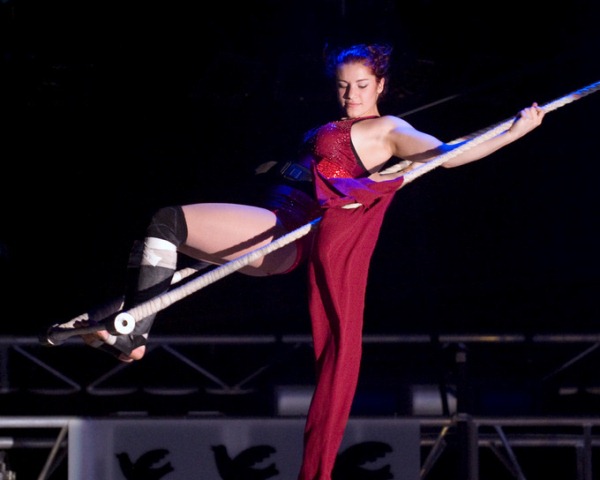
In mid-June I attended a performance by graduating students of the National Institute of Circus Arts (NICA) in Melbourne. Their show, Lucy and the lost boy, was devised and directed by Sally Richardson and I was pleased to see the two NICA students I had interviewed for the Heath Ledger Project, Josie Wardrope and Simon Reynolds, taking major roles in the show. In fact the ‘Lucy’ of the show’s title was Josie Wardrope. Wardrope’s performance on flying trapeze in the closing scene was thrilling, while the variety of skills at which Simon Reynolds excels is remarkable.
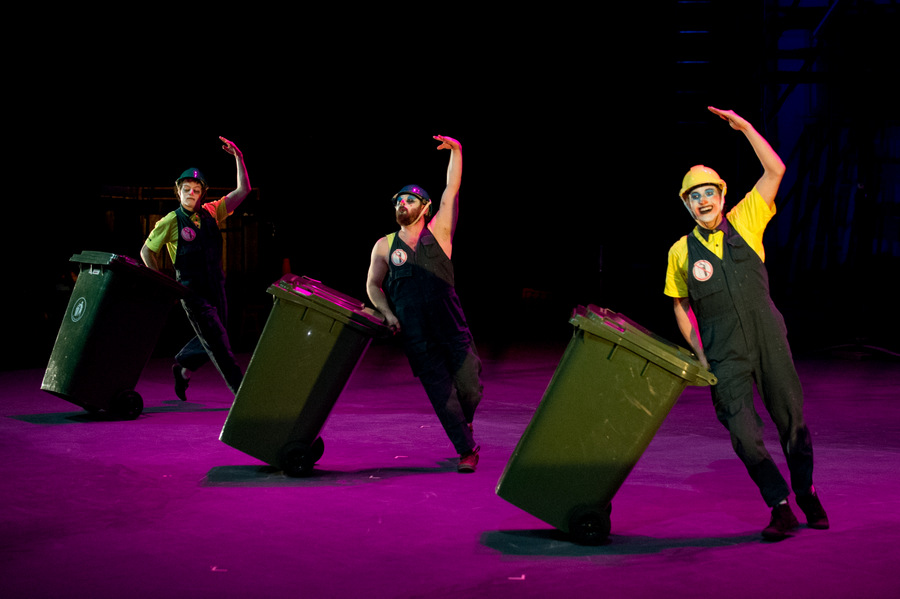
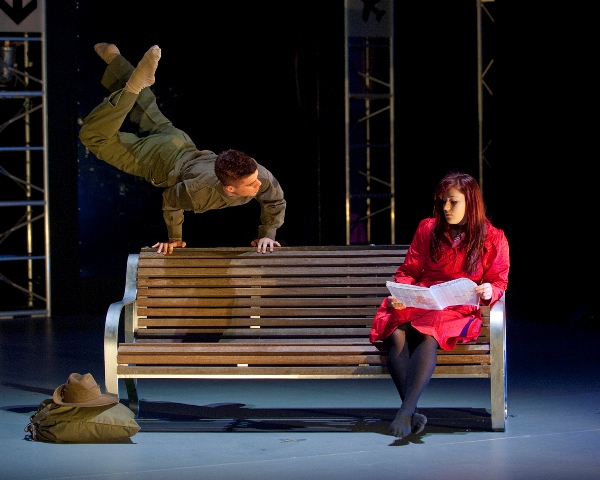
It was, in addition, a pleasure to see other talented students from the graduating year in the show. I especially enjoyed the performance of Skip Walker-Milne, who took the role of the Lost Boy. He was a strong performer and I hope to follow his career in the future. But from a dance perspective I got particular pleasure from a vignette by three clowns, Jamie Bretman, Jack Coleman and Simon Wright, who were named in the show as ‘The Clown Kings’. While they had a role throughout the show, including amusing the people standing in the queue to get into the auditorium, I especially loved a sequence in which they performed to the ‘Little Swans’ music from Swan Lake.
Meredith Kitchen was named as choreographer for the show, so I assume their performance was her doing. I have long been fascinated by the place the ‘Little Swans’ dance has beyond the strict confines of a classical production of Swan Lake. These Clown Kings, with their roller bins, their deliciously clumsy coupé steps, and their innocent expressions, gave me huge pleasure.
I continue to be impressed by Rafael Bonachela’s choreography and the remarkable performances the dancers of Sydney Dance Company give.
Oral history: James Mollison, AO
Also in June I also had the pleasure of recording an oral history interview with James Mollison, whose many achievements include his role as inaugural director of the National Gallery of Australia in Canberra. Mollison was also responsible for acquiring the major portion of the Diaghilev costume collection, of which the Gallery is the envied owner. ‘Why does Canberra have those costumes?’ I have often been asked by people in the northern hemisphere. My reply has always been, ‘It’s because Canberra had a forward-thinking inaugural director of the National Gallery.’ The collection has formed the basis of three exhibitions by the National Gallery of Australia, most recently in 2010-2011.
The Australian Ballet in New York
The question of the New York reviews for the Australian Ballet’s recent visit to Manhattan has been discussed briefly amid comments on the Romeo and Juliet post on this site. Another review that I found especially interesting came from Ryan Wenzel on his website ‘Bodies never lie’. Wenzel appears to have reviewed only the mixed bill, at least at this stage, but his comments on repertoire are worth considering. He writes, for example: ‘The choreography too rarely stretched the mind, entertained, or provided innovative commentary on ballet as an art form’.
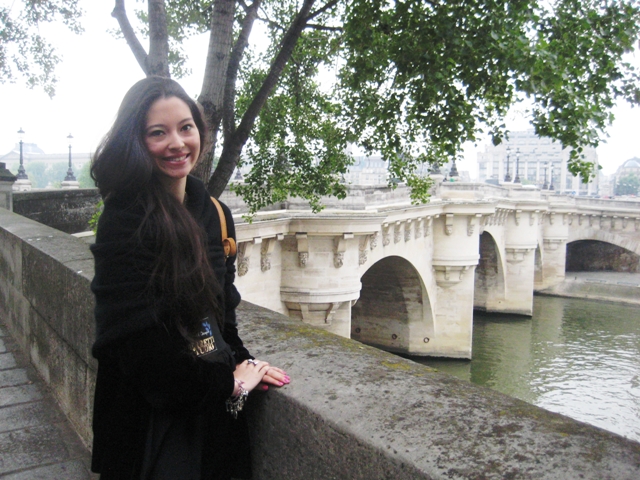
In May, on a very grey Parisian morning, I continued my interviewing for the Heath Ledger Young Artists Oral History Project with an interview with Hannah O’Neill. O’Neill is currently dancing on a seasonal contract with the Paris Opera Ballet, having dreamt of dancing with this company since she was a young child.
Hannah O’Neill at the Pont neuf, Paris, May 2012
O’Neill graduated from the Australian Ballet School in 2011 and in that year she also auditioned for the Paris Opera Ballet. She was placed fourth in a field of over 100 and as a result of the audition received a seasonal contract. Confident and articulate and looking every inch the dancer, she is taking Paris in her stride. She has recently had her contract extended until the end of July when she will have to audition again for a place in the company. In the meantime she is looking forward to a forthcoming season of La Fille mal gardée.
Meryl Tankard at the Cannes Film Festival
Over the past few years Meryl Tankard has been focusing her considerable talents on film making. She graduated from the directing course at the Australian Film Television and Radio School in 2010. It is a testament to her success in this endeavour that a short film she made called Moth was shown in May at the Cannes Film Festival. A glance at the program for the non-competitive Australian and New Zealand section of the Festival, Antipodes, puts her in exceptional company.
Tankard’s website has the following to say about Moth:
Moth is the story of three young women’s determination to be free, and is inspired by the stories from many reform schools in Australia in the 60s and 70s, and the brutal methods used to discipline the girls.
Pablo Picasso’s curtain for Parade
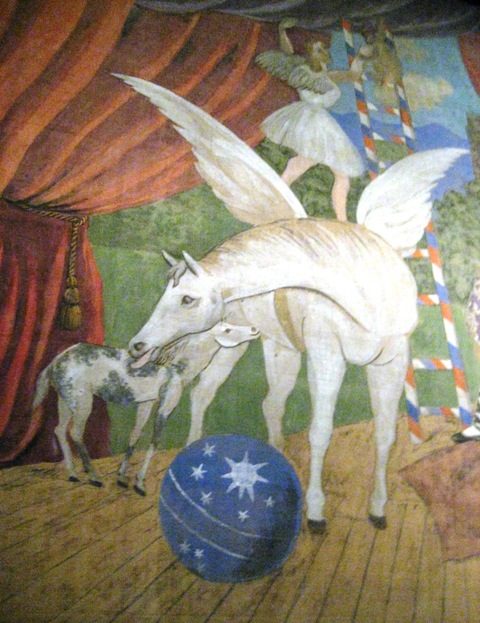
It was a surprise to discover hanging in the still quite new Pompidou Centre in the north-eastern French city of Metz the curtain from the 1917 Ballets Russes production of Parade. Conceived for Diaghilev’s Ballets Russes by Jean Cocteau and first performed in Paris in May 1917, Parade had choreography by Léonide Massine, music by Erik Satie and costumes and settings by Pablo Picasso. The curtain is hanging in an exhibition entitled 1917, which has drawn together an array of visually disparate items, including some associated with war as well as with art in many of its manifestations. 1917 sets out to question the links between destruction, reconstruction and creation in a decisive year of World War I.
Curtain for Parade (detail). Photo: Michelle Potter
The exhibition carries some additional items relating to Parade, including a program and some interesting photographs of the 1917 cast. But it was, of course, the curtain that attracted my attention. Although it is of monumental proportions, it is quite an intimate, even gentle piece of art. Its colours are soft and blend easily with each other and the picture is built on exceptionally complex, allegorical imagery. In gives no clue to the strident characteristics of the performance and the antics of the dancers in Parade whose role is to attract an audience into the circus tent, which we see before us on the curtain.
I was in the fortunate position of being able to see a performance of Parade in 2005 when it was staged by the Ballet of Bordeaux at the Diaghilev Festival held in Groningen, the Netherlands. The article I wrote for The Canberra Times about the Festival was also published online by the magazine of the ballet.co site. Here is what I wrote about Parade:
Leonide Massine’s Parade was one of the most anticipated works of the festival and it did not disappoint as a significant collaborative work of the period. With designs by Pablo Picasso, libretto by Cocteau and music by Erik Satie, which incorporated the assorted sounds of a siren and a typewriter and several pistol shots, Parade was created in response to the well-documented demand from Diaghilev to Cocteau—’Astonish me!’ It was also inspired by the Cubist movement in the visual arts and brought Cubism off the canvas and into the theatre. Set outside a travelling theatre with the slight narrative centring on the attempts of the characters to entice an audience into the show, the work premiered in 1917 in Paris and was recreated by the Joffrey Ballet in the 1970s. In Groningen it was performed by the Ballet de Bordeaux and, while it will perhaps always remain slightly eccentric, its apparently simplistic and unadorned choreography is a perfect foil for its idiosyncratic designs and music.U
Canberra dance
I was not in Canberra in May when Liz Lea presented her latest staging of 120 Birds. It also had a brief showing in Sydney at Riverside, Parramatta, after the Canberra season. Lea has a site that gathers together reviews of 120 Birds, including those for the 2012 Canberra/Sydney staging. In addition, here is a link to a preview piece I wrote for the one-woman version of 120 Birds, made for the National Gallery of Australia early in 2011 in conjunction with its exhibition Ballets russes: the art of costume.
New York Public Library
Over the past two months I have been following with considerable interest the upheavals at the New York Public Library, which have been reported upon in The New York Times and other outlets. The most comprehensive background account of the situation is ‘Lions in winter’ by journalist Charles Petersen and appears in n+1 at this link.
Many have wondered why I left New York in 2008 after eighteen months as curator of the Jerome Robbins Dance Division of the New York Public Library for the Performing Arts, given that it appeared to be the job of a lifetime for me. Well the issues that led to my resignation are complex (and it was not to get married as one report suggested!), but the majority can be grouped under questions of professionalism and accountability (or lack thereof in my opinion) in certain areas of the Library. In addition, I was dismayed by attitudes to curatorial autonomy, which in most cases did not fit with mine. It should, therefore, be fairly obvious where my opinions lie with regard to the present discussions.
Whether the Dance Division, and other research divisions at Lincoln Center, will be affected in the short or long term by the new plans reported upon by Petersen and others is not clear. However, I believe that the Dance Division is now but shadow of its former self and has been heading this way for some time.
In April I conducted two more interviews for the National Film and Sound Archive’s Heath Ledger Young Artists Oral History Project. This time, with cameraman John Parker, I recorded interviews with two emerging circus artists currently in their final year of training at the National Institute of Circus Arts (NICA) in Melbourne.
Josie Wardrope is specialising in hand stands and swinging trapeze—she loves the feeling of flying—and in the group activity of risley. The term ‘risley’ sent me to a dictionary as I was researching for the interview and I discovered it is ‘a circus act in which an acrobat lying on his back juggles barrels or fellow acrobats with his feet’. It is named after a 19th century circus performer, Richard Risley Carlisle. Post-interview, watching Josie in a one-on-one trapeze session with her coach, her words about loving the feeling of flying were made visible. Exhilarating!
Simon Reynolds gave up his childhood dream of an Olympic gold medal in gymnastics after seeing a performance by Cirque du Soleil. Now he aspires to a contract with this company at the end of his training. At NICA he specialises in contortion hand stands, tumbling tight wire and the group act, teeterboard. I have to say he is somewhat outstanding on trampoline as well. Watching him execute a series of mid-air twists and turns as he moved the length of a very long trampoline in a NICA rehearsal space was breathtaking.
A typical day for these two young people is long and arduous but neither can think of anything they’d rather be doing. Both are full of praise for those who coach them, who bring to NICA the skills that they have honed in circus companies from around the world, including China, Russia and Argentina. Both are utterly determined to make a career in circus. Both are also in rehearsal for their 2012 mid-year show Lucy and the lost boy and agree that it is the performance side of their training that spurs them on to perfect their technical skills.
Jacob’s Pillow
My reflections on a visit to Jacob’s Pillow in 2007 elicited a response from Norton Owen, director of preservation at the Pillow. He mentioned, amongst other things, a DVD called Never stand still. It chronicles life at the Pillow and includes material relating to Gideon Obarzanek. The words of the title, ‘Never stand still’, are in fact those of Obarzanek, which he used in an interview for the DVD and which were then taken up and used as the title. Below is a promotional clip for the DVD.
Gailene Stock
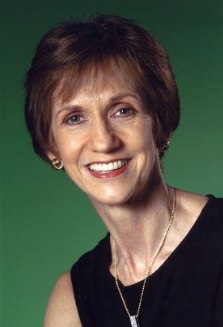
In April I had the huge pleasure of recording an interview with Gailene Stock, currently director of the Royal Ballet School, London. I was inspired to suggest that an interview with Stock be made for the National Library of Australia’s Oral History and Folklore Collection after visiting her in London last year to talk to her about her recollections of working with designer Kristian Fredrikson. There was such a positive work ethic at the Royal Ballet School that I felt there had to be the hand of a strong and committed person behind it all. And there is—a director who cares deeply about what she is doing. And of course Stock had an impressive career in Australia as a performer, teacher and director before taking up her current position in London. Here is the link to the National Library’s catalogue record, although a summary of the interview is not yet available. [Update: The full interview is now available online. Follow this link]
Gailene Stock. Courtesy the Royal Ballet School
Site news
This site now has a search facility located with the tag cloud page.
Having spent the past few days mulling over the latest issue of the New York-based dance journal, Dance Chronicle, which has as its lead article a piece entitled ‘Where are all the women choreographers in ballet’ and whose first sentence is ‘And women artistic directors, we might add’, it was something of a surprise to discover that the English National Ballet has appointed Tamara Rojo as its new artistic director. Ismene Brown’s take on the situation is available on the Arts Desk site. The comments are already interesting.
As for Dance Chronicle, I was immediately reminded of Linda Nochlin’s seminal article ‘Why have there been no great women artists’ written some four decades ago. The Dance Chronicle question deserves comment from an Australian perspective I think, which I am planning.
In March I spent a week in Wellington, New Zealand, looking into the work made by Kristian Fredrikson for the Royal New Zealand Ballet and Wellington City Opera. I have nothing but praise for the staff of the Royal New Zealand Ballet, the Film Archive of New Zealand, the Dowse Art Museum and the National Library of New Zealand (despite the fact that the Library is currently closed to the public due to renovations) for their generous help with my research activities.
I was especially interested to see a recording of Swan Lake (that ballet again) from 1985—a production by Harry Haythorne who was at the time the Royal New Zealand Ballet’s artistic director. It linked up nicely with some designs for this production I had recently been examining in the National Library’s Fredrikson collection and it is always a bonus to see designs transformed into costumes and worn by dancers. Not only that, Haythorne’s production was quite different from anything I had seen before concentrating as it did on the character of Siegfried more than Odette, making something quite different out of von Rothbart and making a strong distinction between reality and fantasy. It was then a further bonus to see some of the costumes themselves, with their quite astonishing layering of fabric to achieve a textured look, at the Dowse.
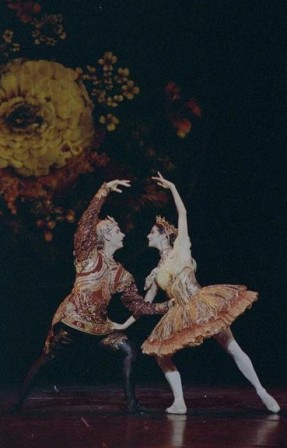
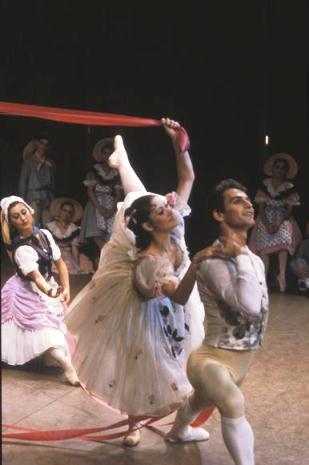
It was also a pleasure to speak to former Australian Ballet principal, Greg Horsman, currently ballet master with the Royal New Zealand. His recollections of working with Fredrikson complemented those I recorded last year with Miranda Coney. Coney and Horsman are pictured below in the pas de deux from Graeme Murphy’s Nutcracker, in its first staging of 1992.
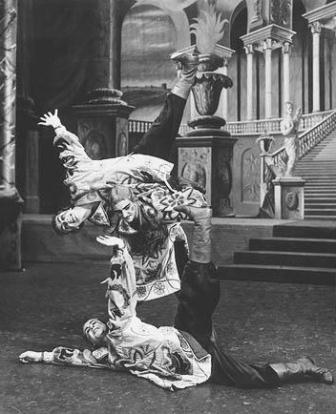
I was saddened to hear of the death in March of Bruce Morrow, whose career included performances with the National Theatre Ballet and the Borovansky Ballet. He danced in some ground-breaking Australian productions, including Rex Reid’s Corroboree and the Borovanksy Ballet’s full length Sleeping Princess. Following his career as a performer he was for many years a highly regarded teacher at the Australian Ballet School and elsewhere. He is seen below as one of the Three Ivans in the 1951 Borovansky production of The Sleeping Princess. I interviewed Bruce in 2000 for the National Library of Australia’s oral history program. Here is the link to the catalogue record.
I have been a fan of Houston Ballet since visiting Houston last year where, as in Wellington, I was treated more than generously by everyone with whom I came into contact. There’s a lovely clip available on YouTube from Welch’s newest work Tapestry.
With Graeme Murphy’s Romeo and Juliet playing a season in Brisbane during March interest has been revived in the posts and comments on this site relating to that production. In addition, Brisbane for the first time was one of the top five cities in terms of numbers of visitors accessing the site. It came in third behind Melbourne and Sydney and was followed by Canberra and London. The top post for March was the review of the Australian Ballet’s Infinity program.
It was good to read that Rafael Bonachela will take on the directorship of Sydney’s Spring Dance program for the next three years. I am sure Bonachela will bring huge enthusiasm not to mention knowledge and understanding of the contemporary dance scene to the job.
Some of my most unusual and rewarding dance experiences in recent years have been at Spring Dance. Philippe Priasso‘s amazing interlude with an earth mover was one. Meryl Tankard’s Oracle another. Here is a link to the Spring Dance tag.
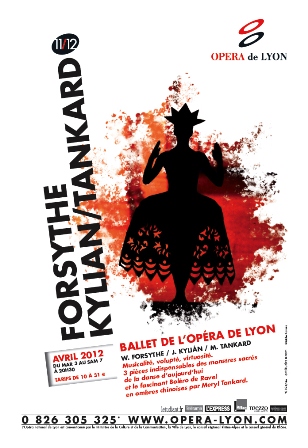
And on the subject of Tankard I have just received publicity for the restaging by Lyon Opera Ballet of Bolero. I wrote aboutBolero in an earlier postand also noted then that the Lyon restaging would be part of a triple bill program that also includes works by Kylian and Forsythe. Do we have to go to Lyon these days to see such a program? Perhaps the company from Lyon is worth considering for Spring Dance? Or another Australian dance festival?
SAR Fellowship
My Fellowship at the National Film and Sound Archive to investigate the film and television commissions of Kristian Fredrikson officially came to a conclusion at the end of February. I gave my staff presentation, ‘Kristian Fredrikson: on screen’, towards the end of February, appeared on 666 ABC Canberra to talk to presenter of Saturday Breakfast, Greg Bayliss, about the Archive and my research, and I will be presenting in Melbourne in April as part of the Arts Centre’s Spotlight series.
A number of surprises emerged from being located at the Archive. On the one hand I had liberal access to the collection held there, which consists not only of film and video material but all kinds of other documentation and, on the other, I had access to the expertise and network of connections of the Archive’s curators. I discovered a design commission that had not been mentioned in any of the sources I had investigated so far: Fredrikson designed the operatic backgrounds for a children’s television series screened by SBS in 1985 called The Maestro’s Company. And I was also put in touch with the director of The Magic Telescope, an unrealised film for which Fredrikson created some designs that are totally unlike anything else I have seen from him to date. In addition I watched all the better known productions on which he worked including the delicious Undercover, which led to a number of other discoveries regarding the origins of the dance scenes that make up the finale to that movie. Through another Archive connection I discovered more about The Lovers of Verona, featuring Kathy Gorham and Garth Welch and produced by the ABC in 1965.
I was also able to relive through film and video some of the best known early Sydney Dance Company works. I was reminded time and time again as I watched productions like Poppy, King Roger, Daphnis and Chloe, After Venice and others what an amazing and versatile performer Janet Vernon was. I watched too a performance of Old Friends, New Friends (1984), the precursor to Nearly Beloved. It wasn’t designed by Fredrikson but happened to be on the same tape as After Venice. What a joy it was to see Vernon in that work and to watch as she worked her way through a whole range of different emotions.
Canberra news: Dimity Azoury and Jasmin Durham
Demographically Canberra is small in comparison to Melbourne, Sydney, Brisbane and other major Australian cities. So it is a pleasure to hear that two Canberra-trained dancers, Dimity Azoury and Jasmin Durham, have made a mark just recently.
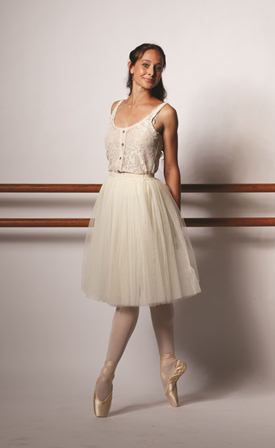
Azoury, a former pupil of Kim Harvey, has been nominated for the Australian Ballet’s 2012 Telstra Awards. The major award is worth $20,000 and having sat on the judging panel on one occasion (the year Lana Jones was the recipient of the $20,000), I know that the year-long assessment process is gruelling, but nevertheless I believe a formative experience for those involved, including the judges. For more on the Telstra Awards, which include a People’s Choice Award worth $5,000, see the Australian Ballet’s website. [Update April 2019: page no longer available].
Dimity Azoury. Photo by James Braund. Courtesy the Australian Ballet
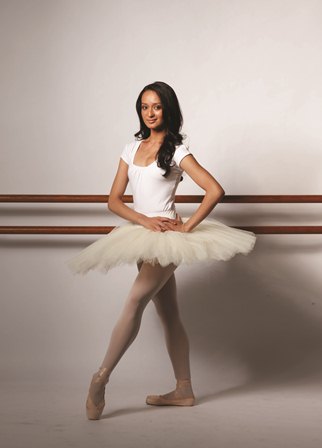
Jasmin Durham, who trained in Canberra with Lisa Clark, has been accepted into the Australian Ballet, and began her professional career in January. I recall watching her several years ago now in a student performance, and a scholarship competition and her talent was absolutely clear. She joins a number of other Canberra-trained dancers in the company including principals Lana Jones and Rachel Rawlins and her corps de ballet companion Dimity Azoury.
Jasmin Durham. Photo by James Braund. Courtesy the Australian Ballet
Paul de Masson as Colas, with artists of the Australian Ballet in La fille mal gardée, ca. 1976. Photo: Walter Stringer. Courtesy National Library of Australia
It was with deep sadness that I noted the death of Paul De Masson in Melbourne on 12 January 2012. In July last year I recorded an extended oral history interview with Paul for the National Library of Australia’s oral history program. It was a real privilege to have him share so many of his thoughts on his dancing life, which crossed continents and crossed paths with so many other renowned artists. Being well aware that his time was limited and thus without fear of any repercussions, Paul was beautifully honest and frank throughout the interview. And his ability to mimic the voices of his colleagues, which he did frequently as we recorded, and his ability to look back and both laugh at himself and be proud of his achievements, make wonderful oral history.
Paul was for a while on the faculty of Hamburg Ballet and held the work of John Neumeier and the dancing of the company in high regard. He thought it was a shame that Australian audiences had not had the opportunity to see much of Neumeier’s choreography and joked that if he were wealthy he would bring the company on tour to Australia. Well, in something of a twist of fate, Hamburg Ballet will visit Brisbane in 2012 bringing two of Neumeier’s best known productions, Nijinsky and A Midsummer Night’s Dream. Paul joined Hamburg Ballet around the time Nijinsky was being created.
I will always admire too the honesty with which Paul commented on posts on this website, especially on the Australian Ballet’s Romeo and Juliet season. He was one of a kind.
Heath Ledger Project
In January I recorded an oral history interview with Joseph Chapman for the Heath Ledger Young Artists Oral History Program. Chapman graduated from the Australian Ballet School in 2011 and, following graduation, was offered a contract with the Australian Ballet. He began work with the company in January. Chapman was nominated for the project by one of the foundation partner institutions in the Heath Ledger Project, the Australian Ballet School.
The Heath Ledger Young Artists Oral History Project is administered by the National Film and Sound Archive and is designed to capture the thoughts, hopes and dreams of the next generation of Australian creative artists across a wide spectrum of the arts. It is named for the late Heath Ledger whose death at a relatively young age left us with little record, in an oral history context, of his life as an actor.
I had the pleasure of working with a cameraman on this occasion with interviews for the Heath Ledger Project being filmed rather than being audio only occasions. Chapman’s interview was recorded in one of the studios of the Australian Ballet School and it was a satisfying collaborative experience to make the bare space look inviting and the interview more than simply a ‘talking head’. Much credit goes to the cameraman, Michael Barnett, for a great visual eye and to Chapman for articulate responses to my questions and being what Barnett referred to as ‘a one take wonder’. No need to double back at all!
The Australian Ballet School was asked to nominate two of its 2011 graduating students to participate in the project and, in addition to Chapman, the School nominated Hannah O’Neill currently performing in Paris with the Paris Opera Ballet. Plans are underway for an interview with O’Neill.
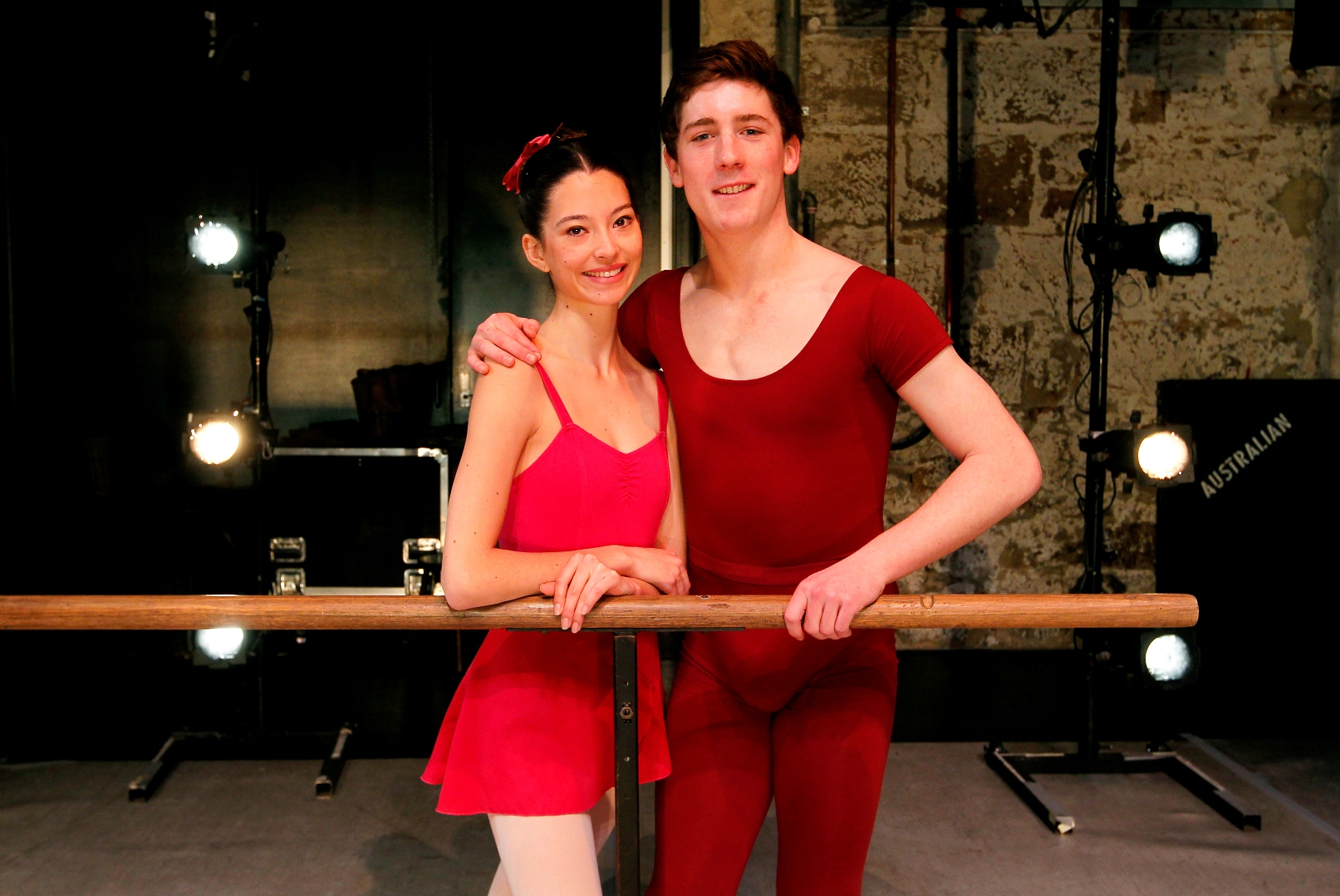
Both O’Neill and Chapman performed leading roles with the Dancers Company on its 2011 regional tour of Ai-Gul Gaisina’s Don Quixote. In Hobart during that tour they were photographed together for The Mercury.
Montgomery Ballet located in Montgomery, Alabama, has annouced that its new artistic director will be Australian dancer and graduate of the Australian Ballet School, Darren McIntyre.