27 March 2019. Roslyn Packer Theatre, Walsh Bay (Sydney)
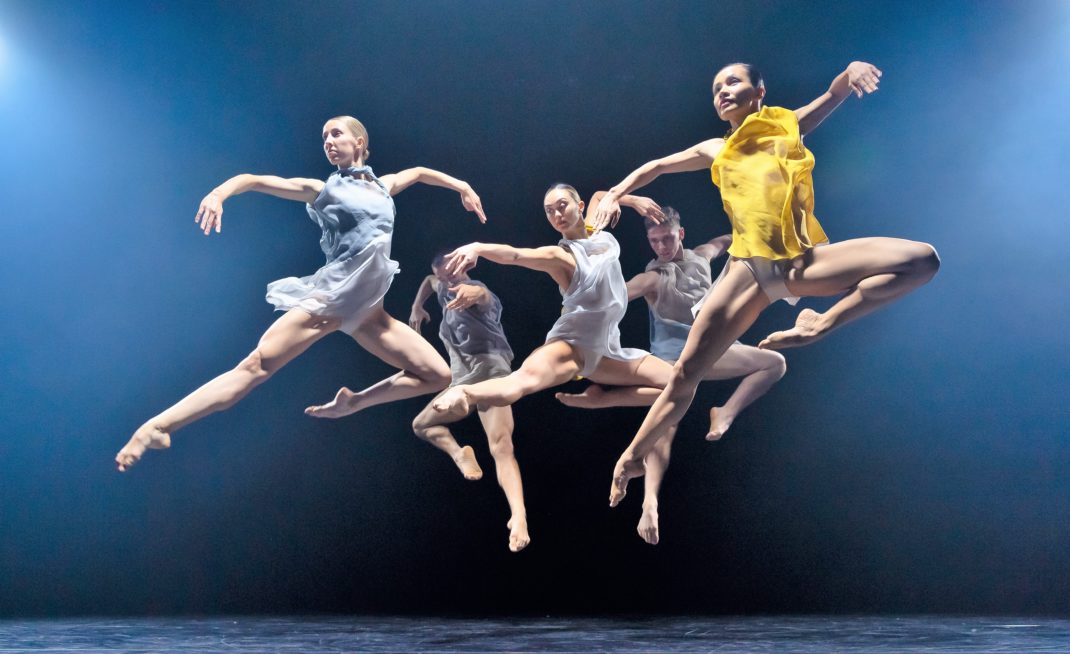
It is 50 years since Sydney Dance Company (under a different name or two in its early years) gave its first performance. The time had come to commemorate the company’s remarkable longevity, and its absolute commitment to contemporary dance. Rafael Bonachela’s first season for this anniversary year celebrated with a triple bill consisting of a brand new work from Bonachela himself, and works from two female choreographers, Gabrielle Nankivell and Melanie Lane.
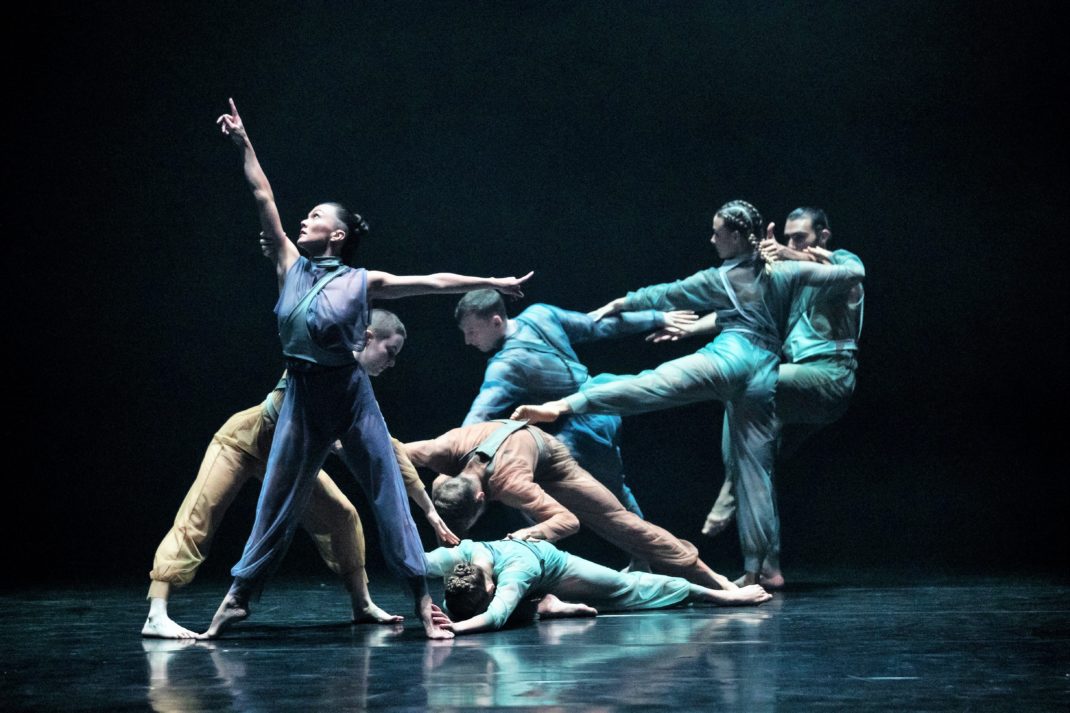
The program opened with Nankivell’s Neon Aether, which to me was not the strongest work of the evening, although it was the loudest and the one that included the most confronting elements. It was difficult to fathom exactly what was going on onstage, what the work was ‘about’. The choreographer’s statement that it was ‘an ode to the burning intangibles that fuel our imagination’ didn’t help, and the most confronting bit was that often there was a sudden, long-ish blackout and a recorded announcement (part of the score by Luke Smiles) could be heard during the blackout. The announcement had something to do with a voyage in space. The blackout bit seemed to me to be a somewhat outmoded way of presenting an idea. This aspect of Neon Aether reminded me of William Forsythe’s Artifact, which goes way back to 1984, when dropping the house curtain at various stages throughout the work, and thus obscuring our view of the dancing, seemed an outrageous step forward that made us question many things. Not any more. I found the blackouts in Neon Aether an annoyance. While the dancing was spectacularly good, as we have come to expect from Sydney Dance Company, the work just left me a little cold.
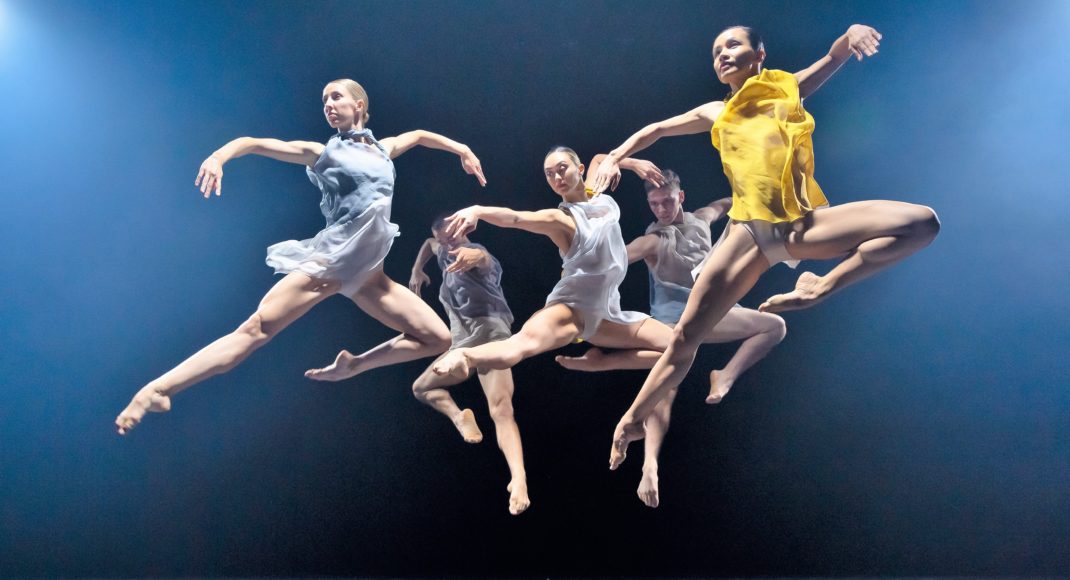
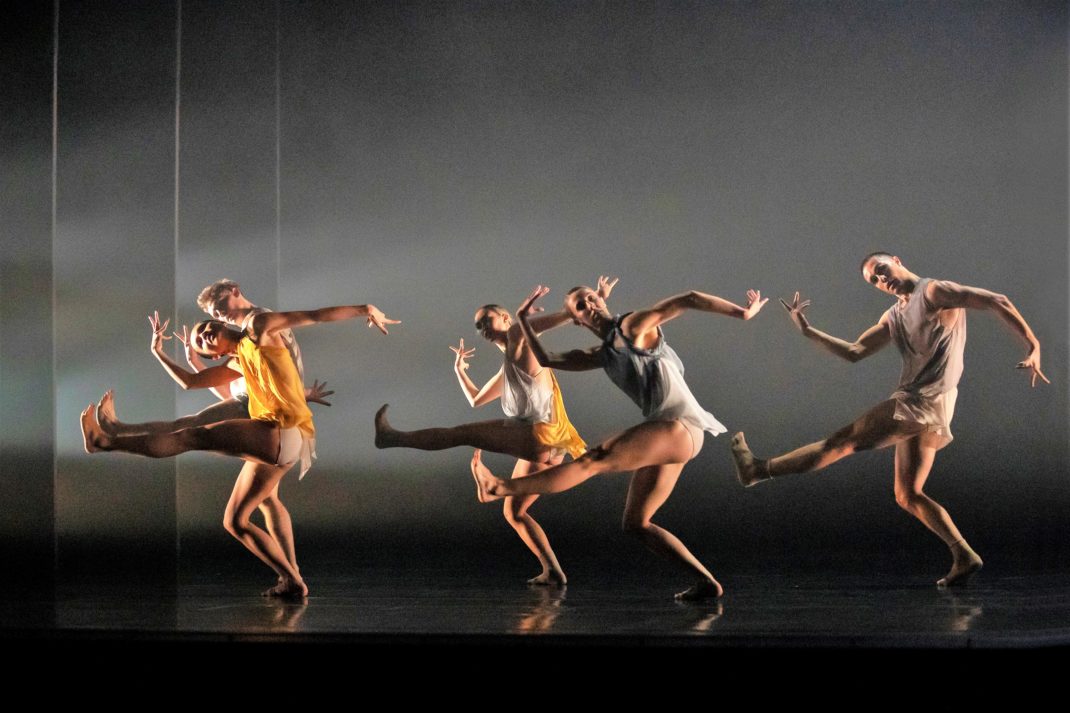
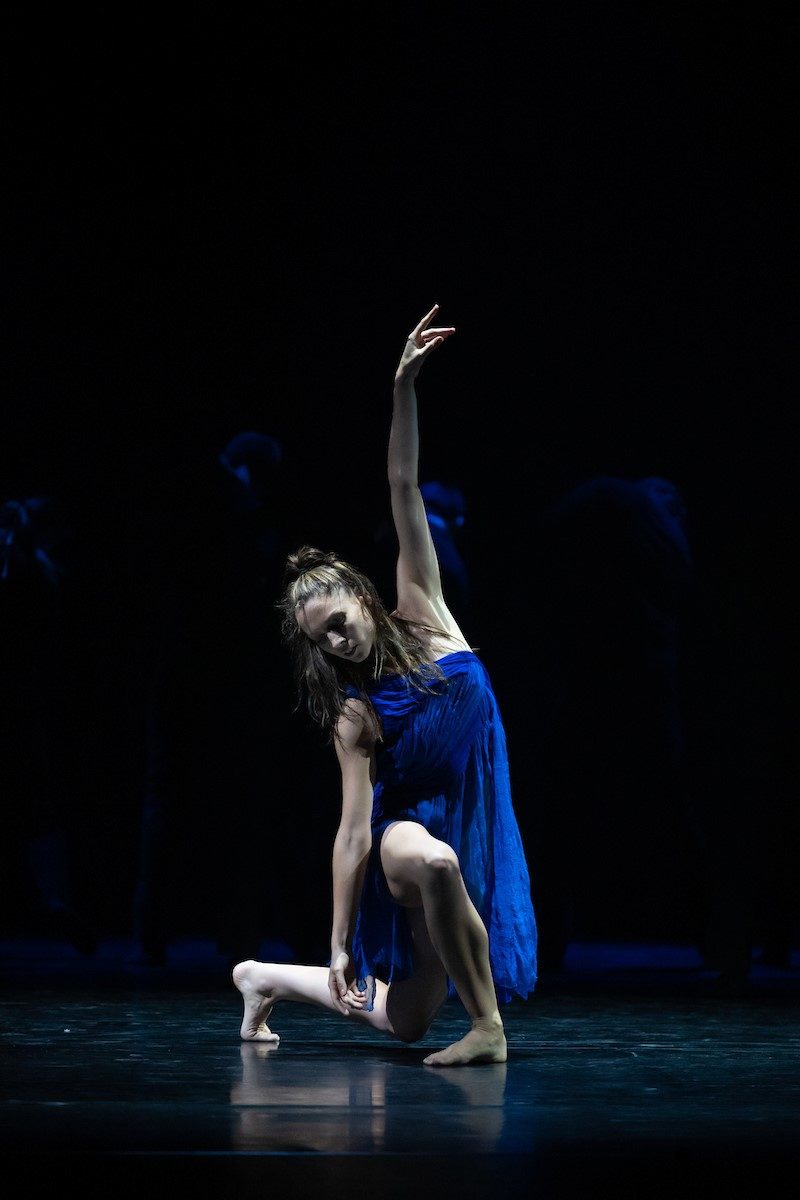
Bonachela’s Cinco followed. Made on just five dancers to five movements of a string quartet by Alberto Ginastera, the number five is of course a reference to five decades of dance from Sydney Dance Company. But, like most of Bonachela’s works, it was inspired not by any narrative idea but by the changing patterns and rhythms of the music. Its combination of solos and unison pieces was often filled with the unexpected, but was always a visual delight. And the silken costumes by Bianca Spender were also visually fascinating, flying around the dancers’ bodies with every move those dancers made.
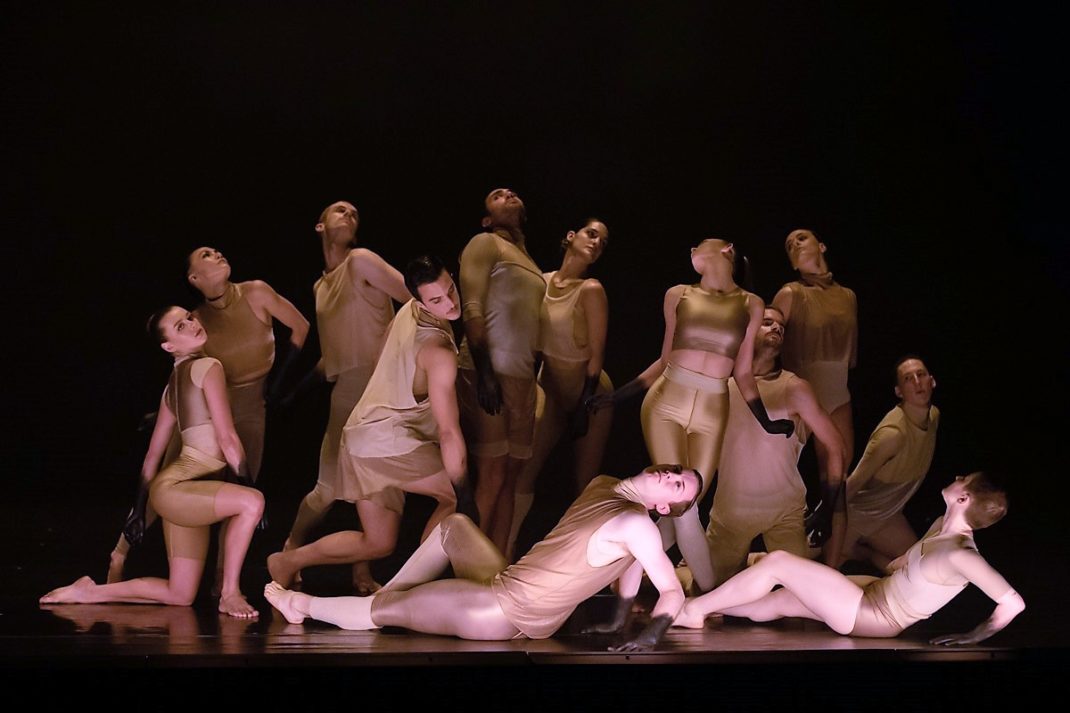
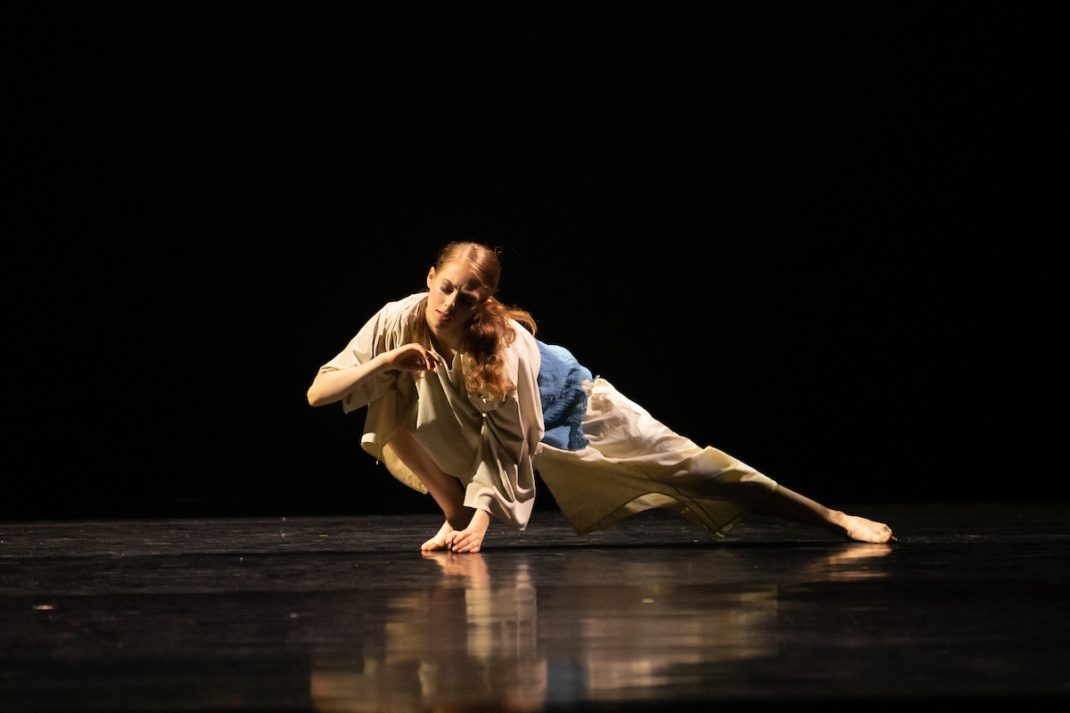
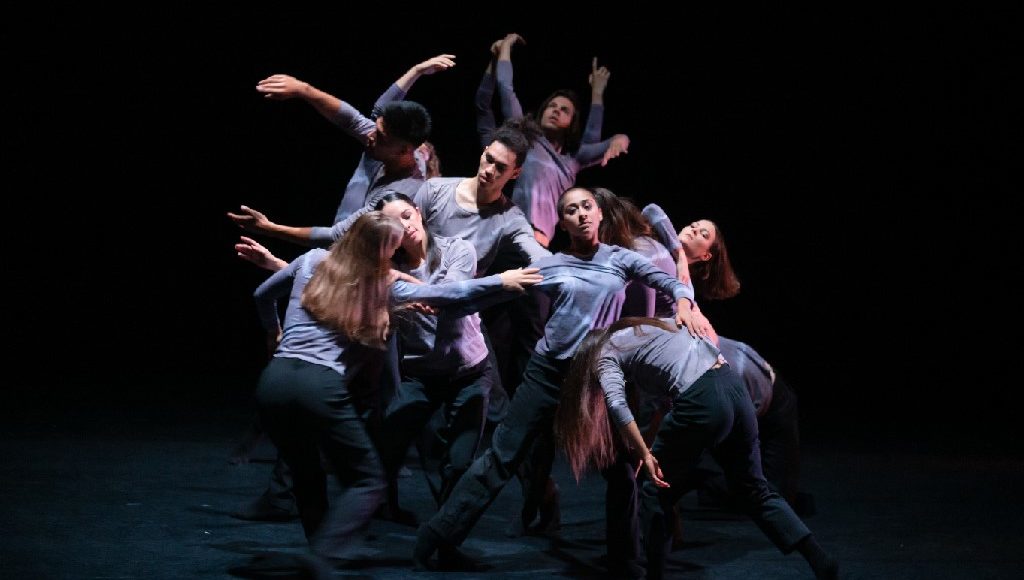
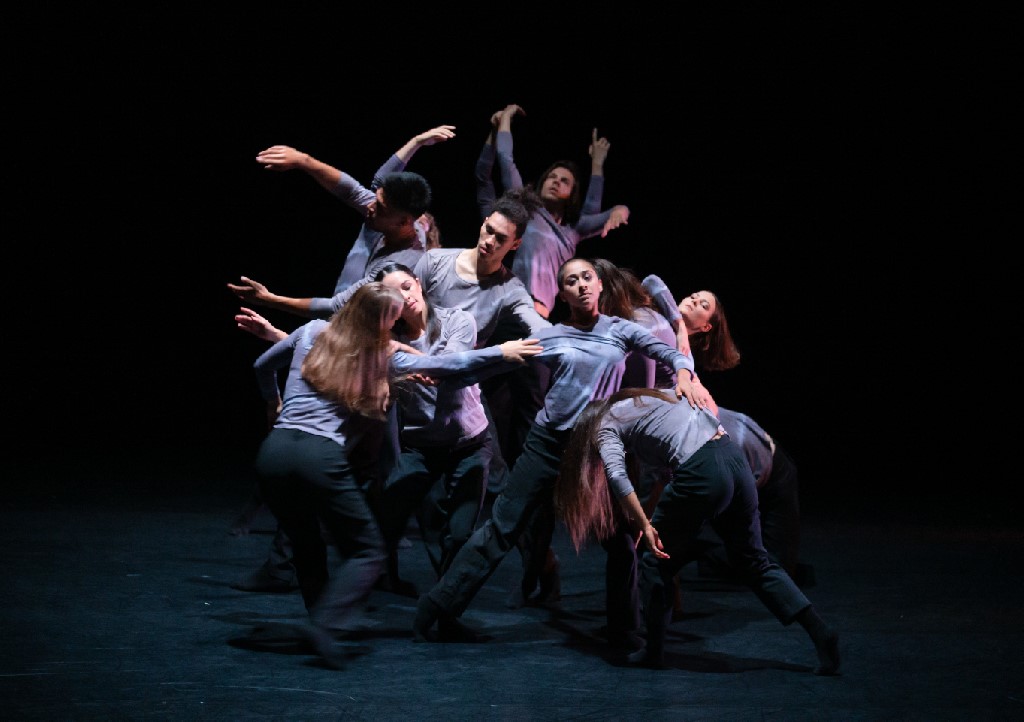
The absolute highlight of the evening for me was Lane’s somewhat eccentric work WOOF. It began with the twelve dancers who made up the cast grouping themselves and holding the pose for a short time, giving us the opportunity to take in the complexity of those group shapes. What was going on between them? Some of the groupings even seemed ferocious with a large group of dancers growling at a much smaller group.
As movement took over from stationary groups, I admired Lane’s awareness of the space of the stage and how to fill it, or leave it empty, for maximum effect, not to mention her juxtaposition of movement and stillness. And her movement vocabulary with its tiny runs on half pointe with bent knees, or its group marching, or its eccentric details of head and arms, was fascinating to the point of being exciting. With its emphasis on groups and their interrelationships, along with the often relentless quality of the work, aided by a commissioned score from composer Clark (who does not use a first name on the program), it reminded me of a contemporary version of Rite of Spring. It was an outstanding work that generated an exceptional audience response.
The diversity of material that the dancers were asked to perform in this triple bill was remarkable and, in their usual fashion, they rose to the occasion and looked stupendous throughout.
22 March 2019. Victoria University of Wellington Reviewed by Jennifer Shennan
A gamelan concert at The Hub, the central arena of Victoria University campus, had long been planned for the evening of Friday 22 March. A combination of two gamelan—Javanese, Gamelan Padhang Moncar, and the Balinese, Gamelan Taniwha Jaya, would play. A dance troupe from Surabaya in Java would join as special guests to the program, and the local Indonesian community choir would also participate. Late in the planning, funding to bring the full dance troupe from Indonesia was not forthcoming so the leader, Sri Mulyani, director of Mulyo Joyo group, travelled to perform as a solo dancer.
One week to the day before the concert, all hell broke loose in New Zealand. Fifty Muslims attending Friday prayers at two mosques in Christchurch were killed by a rabid white supremacist, 50 more were injured. The country came to its knees and the world looked on in disbelief. Jacinda Ardern has been widely praised and thanked for her instinctive and tireless leadership in stepping up to lift the nation out of the mire. Sadly that’s going to be a slow process as we are still stunned by the surreality of it all. Tens of thousands of New Zealanders have been searching for ways to say how saddened we are.
Many speeches have been delivered, opinion
pieces written, uncountable numbers of flowers and messages placed in tribute,
human chains formed around mosques, beacons lit and songs sung, haka performed, messages chalked onto
footpaths and walls and windows the length and breadth of the country. Black
Power and Mongrel Mob gang members have stepped forward and spoken their
thoughts to unify the thinking of hitherto disparate groups. Their public and
spontaneous haka, and their offers to
stand guard outside a mosque while Muslims pray inside, are not expressions I
had expected to see or hear. I feel changed by them.
Should Friday’s concert proceed? Yes it should. Gamelan has a 45 year presence at VUW and will not be easily silenced. More than ever before it seems that listening to and looking at and learning about ‘other’ music and dance is one pathway to understand and appreciate ‘other’ cultures. But what is this ‘other’? The gamelan over these decades is self-evidently a mix of Indonesian, other Asian, Pakeha, Maori and Pasifika players.
New Zealand does not, as many countries do, require proof of percentages and proportions in its official count of ethnicities, but instead invites citizens to register their ethnicity of choice, and apparently we have 200 of those. Intermarriage doesn’t weaken anybody, it strengthens bodies. We are different, we are the same, we are many, we are one might sound like a mantra but it does cover the realities, or at least the possibilities, or it should. (mantra: originally in Hinduism and Buddhism—a word or sound repeated to aid concentration in meditation). It’s the balance, the mix, the layering of what is distinctive about us and what is the same, what can be shared and what can be exchanged, that we could source. We might start with the facts: gravity exists and, mostly speaking, the human body locomotes on two legs, in the vertical. That much is universal.
How we dance, and how we appreciate a dance, is part of who we are. There is work to be done. Dedication to high and lively standards in music and dance is one path to walk. Interpretation and commentary in program notes from performer to audience are welcome challenges, and these were well met on Friday. (No one questions a Chinese professor playing a fabulously furious piano concerto by English composer Benjamin Britten, or the tender breathing of German composer Robert Schumann’s Kinderscenen. OK those composers are European, but the pianist is Chinese, remember. Just let it be good).
No one questions who should play gamelan.
How it’s played is the measure, just let it be good. Sharp and on the beat, or
upbeat or offbeat, quiet or strident, let the cues be clean, the timing tight
and the rhythms secure. Let its ornaments escape and float above the keys of a gatra.
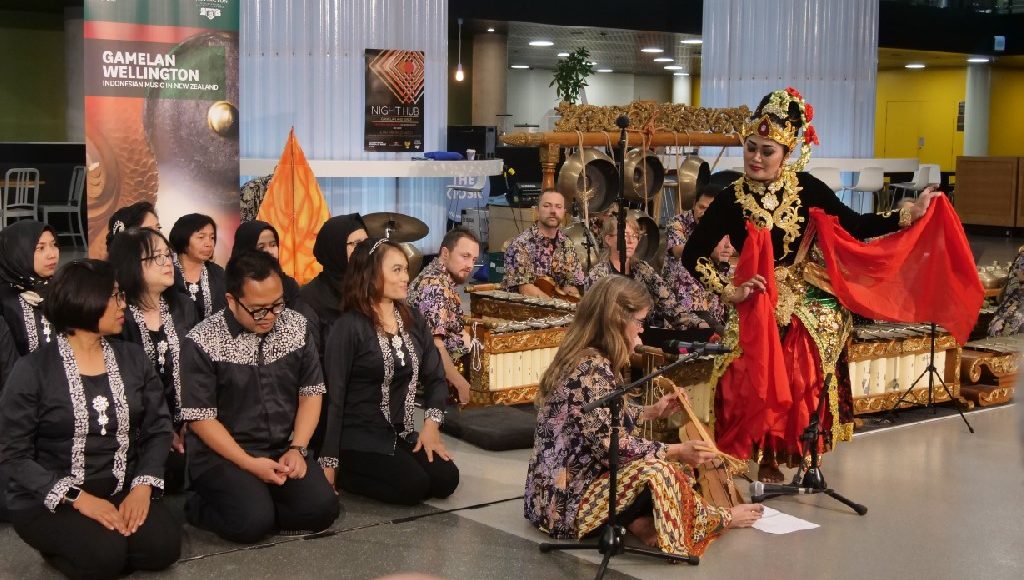
To an audience possibly double the size that might have been originally expected, the program opened with a Muslim greeting followed by a minute’s silence in memoriam. Introductions by Dr Megan Collins, manager of the gamelan, and Professor Sally Jane Norman, Director of NZ School Music, Te Koki, set a dignified yet welcoming tone. The Indonesian Ambassador was absent, attending the 7th day memorial gathering in Christchurch (one of those killed and several of those injured were Indonesians) so the Embassy’s cultural attaché spoke in his place.
The Javanese gamelan’s name, Padhang Moncar, can be interpreted in several ways. Padhang is brightness or daylight. Moncar means growing or developing vigorously. Padhang Moncar can refer to the sunrise (the growing light), and the fact that in Aotearoa we are the first gamelan in the world to see the new day. The Balinese gamelan’s name combines the Maori word Taniwha, a mythical water monster, with the Balinese word Jaya, meaning glorious or victorious, to symbolise the mix of New Zealand and Balinese cultures. Both names seemed freshly relevant on Friday evening.
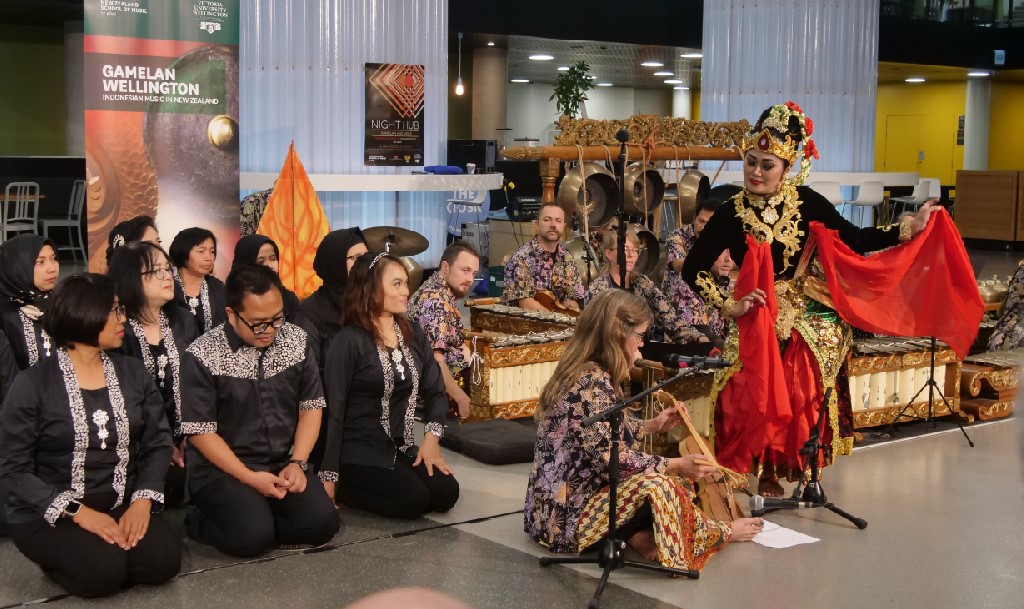
The opening item was a ritual-like dance in which Sri Mulyani carried a large flickering lamp on her head and danced it onto the floor—’to rid the performance space of evil’. Budi Putra, director of Padhang Moncar, who had lost a close friend in the Christchurch attack, had arranged the item to the poem Tembang Macapat Sinom Gedong Kuning, in the particularly striking poetic form of macapat.
A gamelan colleague in Dunedin, Dr Joko Susilo, a 7th generation traditional dhalang/puppeteer from Java, has made a doctoral study of the song poetry macapat, used as a form of exorcism. ‘Martial art’ is too amorphous a term to catch the qualities of strength, clarity and authority in the dancer’s arm gestures and facial expressions that are employed to command and cleanse a space of illness, evil and wrong.
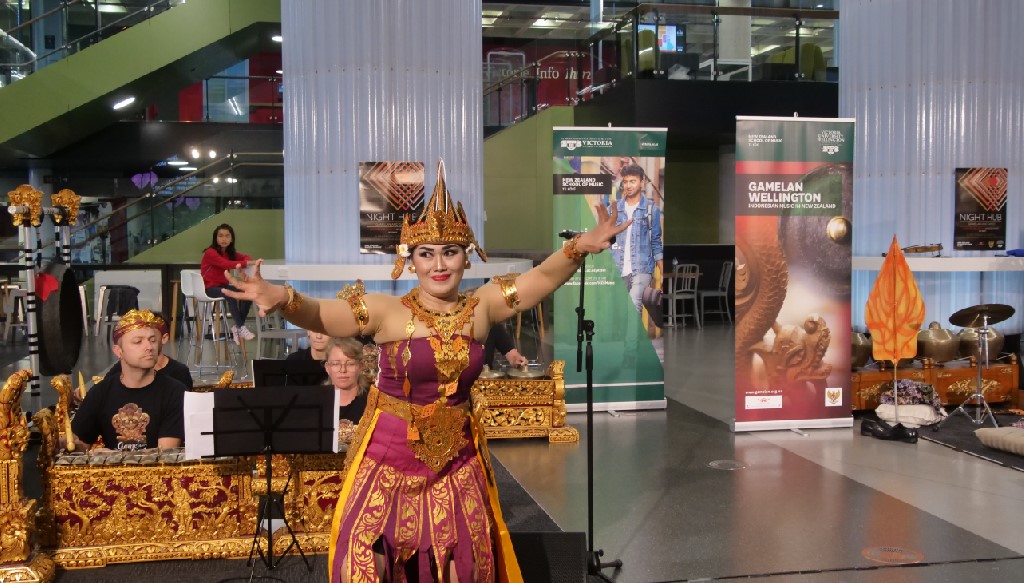
A Balinese gamelan item followed, with the theme referencing the handsome King Arsa Wijaya. It was masterfully led by Rupert Snook as the distinctive sounds of this glistening ensemble were released to fly around in the open acoustic. The intricate rhythmic patterns and connections seemed galvanising. Items from the Indonesian Chorus included themes of the sound of the flute, and other relaxation pleasures, in several songs and dances.
Mulyani’s dance is a Surabaya style fused with the hallmark angularities of Balinese—and elbow, knee and ankle alignments, and mercurial movements of head and neck, hands and fingers, darting eye glances and spontaneous changes of direction—measures to ward off the evil spirits that travel in straight lines. A further item was in striking contrast to her opening macapat, a shimmering affair this, with the solo dancer simultaneously depicting a pair of courting Birds of Paradise. Now that takes skill and we should pay attention to how a dancer can depict two creatures at once, and birds at that.
[Many forms of indigenous dance traditions absorb a people’s long-standing observation of native birds and the detail of their appearance, their nesting and courting behaviour into stylised choreography. Mythological reference to birds, their song-making and ability to fly to distant realms are found in many performance contexts. Most notably in Melanesia the fabled Birds of Paradise are absorbed into ritual and choreographed display as a people locate themselves within the flora and fauna of their surroundings.
Birds of Paradise, after their deaths, had their legs and sometimes wings removed, in mythological re-definition of them as birds that had not needed to land on Earth, nor needed flapping wings to fly, but were simply able to glide and swoop on draughts of air, while visiting their homes in Paradise then returning to the skies above Earth. Their feathers worn in dancers’ body decoration connected humans with the avian and celestial realms.
Banabans dance as the frigate bird flies.
Their connection to their former Central Pacific homeland, long destroyed by
mining for phosphate, is evoked through talisman dance forms that incorporate frigate
feathers into their costume and ornaments. That’s about as close to home as
Banabans are able to reach.
Margaret Orbell in her beautiful book, Birds of Aotearoa, documents how Maori
incorporated birds into their lives and lore. It’s a book for every library in
the country. Her evocations of the ancient Dawn Chorus include description of
the little piopio, now extinct, that
used to continue singing solo for one hour after all the other birds had
ceased. We might have a birdsong broadcast each morning on Radio New Zealand
but for a minute not an hour, and never the piopio].
Swathes of silk attached to the dancer’s fans are thrust and tossed, reminders of other incorporation of textiles into Asian— Chinese silk sleeves, ribbons and banners, of Indian and Japanese elaborate costumes. These are not just arbitrary dress-ups, but are images and characters from stories, and we will always need stories if we are to make sense of our lives and ourselves.
A Javanese gamelan item then referenced a character from the Mahabharata, the evil King Rahwana a multi-headed demon-king who wrought wholesale carnage. A resonant theme indeed this evening, but it also evoked for me the monstrous Puputan events in Bali, 1906 and 1908, when armed Dutch invaders headed into the crowds of Balinese priests and performers who had donned ceremonial garb and processed their way into mass suicide, over 1000 of them it is said, since they had no other weapons to use. It’s not a good story but it’s not an ancient one, dramatised into epic literature either. It’s only just over a century old. The themes of The Mahabharata involving huge and violent clashes and ongoing battles between forces of Good and of Evil, were never more apparent than at this concert.
A few days ago we were hearing, amid anguished tears from those who were there, reports of the river of blood that flowed out the doors and down the steps in front of the Christchurch mosques. Police, ambulance staff and medical colleagues had to work to identify 50 bodies within that scene of carnage, a challenge that required five days and nights of dedication to unimaginable tasks. After that the mosques had to be cleaned in readiness for the return to prayer.
Themacapat in Wellington will have helped spiritually albeit from a distance. King Rawhana stepped from the pages of The Mahabharata, came to Christchurch uninvited and wrought unspeakable carnage. He has since been banished by the stronger forces of courage, compassion and care, by police, emergency staff, medical personnel, leaders and citizens, media, and by musicians and dancers.
If this review reads as ‘over the top’, that is precisely as intended.
22 March 2019. The Playhouse, Queensland Performing Arts Centre, Brisbane
It was a brave move by choreographer Liam Scarlett even to think of making a ballet out of the 18th century French novel Les liaisons dangereuses by Pierre Choderlos de Laclos. The storyline is complicated to say the least. It follows the tale of a wealthy widow, the Marquise de Merteuil, and her former lover, the Vicomte de Valmont, and their vindictive exploits centring on other, innocent players in their circle. It is filled with the less than honest means used by Valmont and Merteuil to move their tawdry plans forward. It takes a real expert to get across, via the wordless art form of dance, a narrative with so many characters involved in so many clandestine activities.
So how did Scarlett do it, and do it so sensationally?
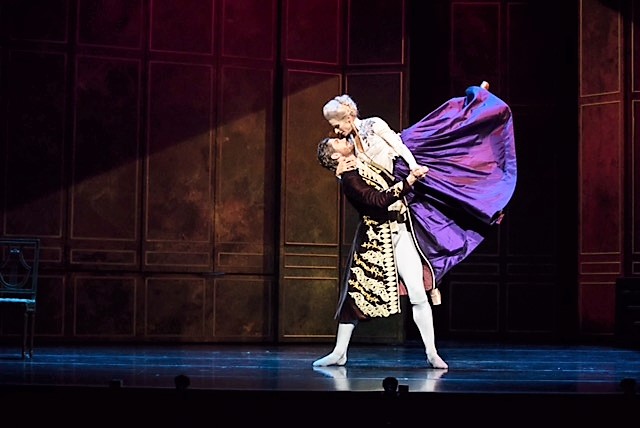
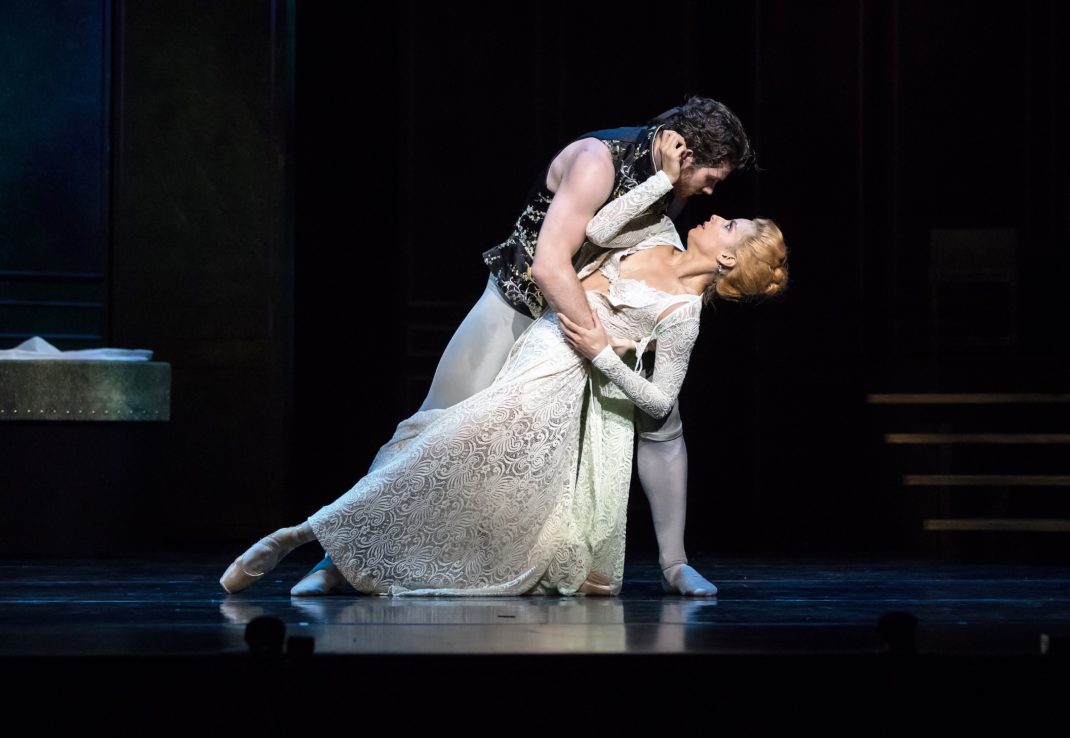
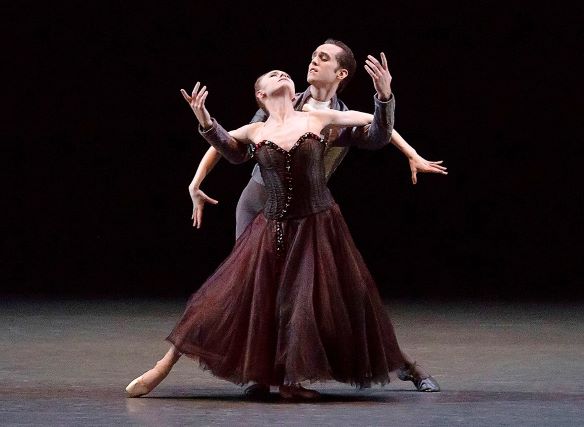
Firstly, Scarlett has a knack for compressing detail without losing the basic elements of the narrative. So, while I am sure that second and third viewings would make the relations between characters clearer for the viewer, there was no difficulty following who was exploiting whom and in what way. The image below shows Cécile Volanges (Yanela Piñera), a young virgin engaged to be married to the Comte de Gercourt (Jack Lister), being seduced by the Vicomte de Valmont (Alexander Idaszak). Valmont’s prize for carrying out the seduction (one of the more insidious acts dreamt up by Merteuil and Valmont) will be a one night stand with Merteuil (Laura Hidalgo).
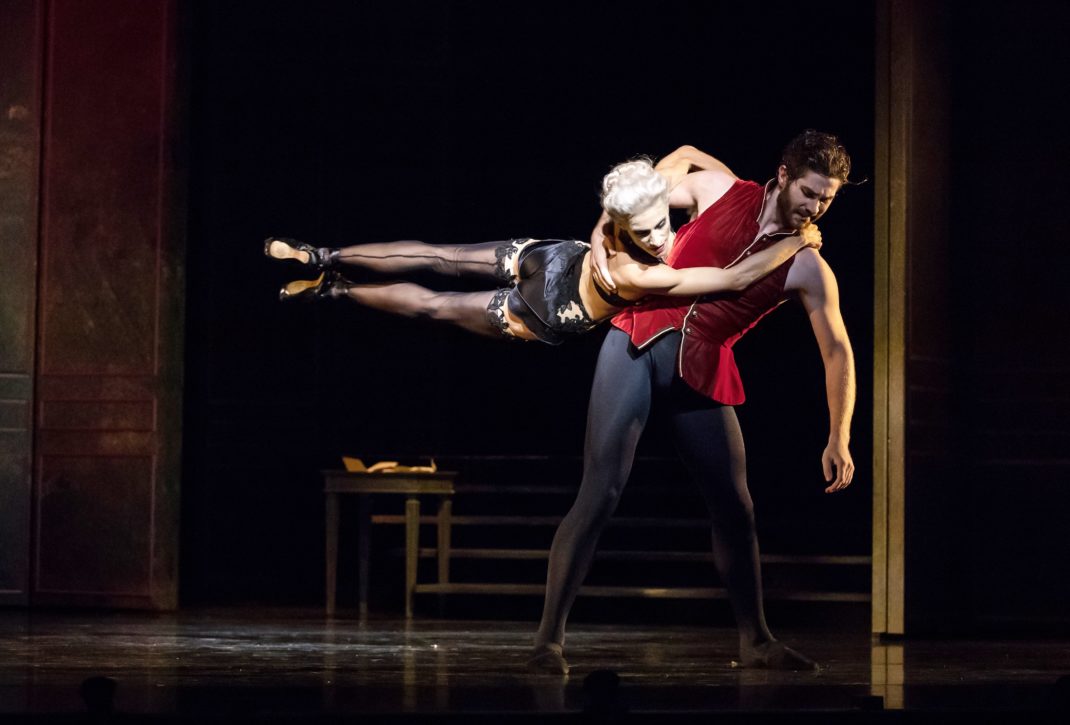
Secondly, Scarlett is truly a master choreographer who can, seemingly with ease, capture mood and character through movement. In the final scene, where Merteuil and Valmont engage in sexual activities, the partnering is spectacular, almost frightening, for the variety of positions in which the Marquise finds herself as she is thrown, swung and tossed through the air. It is vicious sex and leaves little to the imagination.
This is in stark contrast to the joyous waltzing in the scene where Cécile celebrates her social debut, or in the tender love scene between Cécile and her music teacher, Le Chevalier Raphael de Danceny (Rian Thompson), where the choreography, with its fluid, calm partnering, looked as innocent as the emerging love between Cécile and Danceny.
There were moments too when Scarlett’s wonderful ability to make abstract patterns with groups of dancers was very clear. They included a section early in the work when six dancers, servants in Merteuil household (?), had a few moments just to dance, threading their way between each other like a moving tapestry.
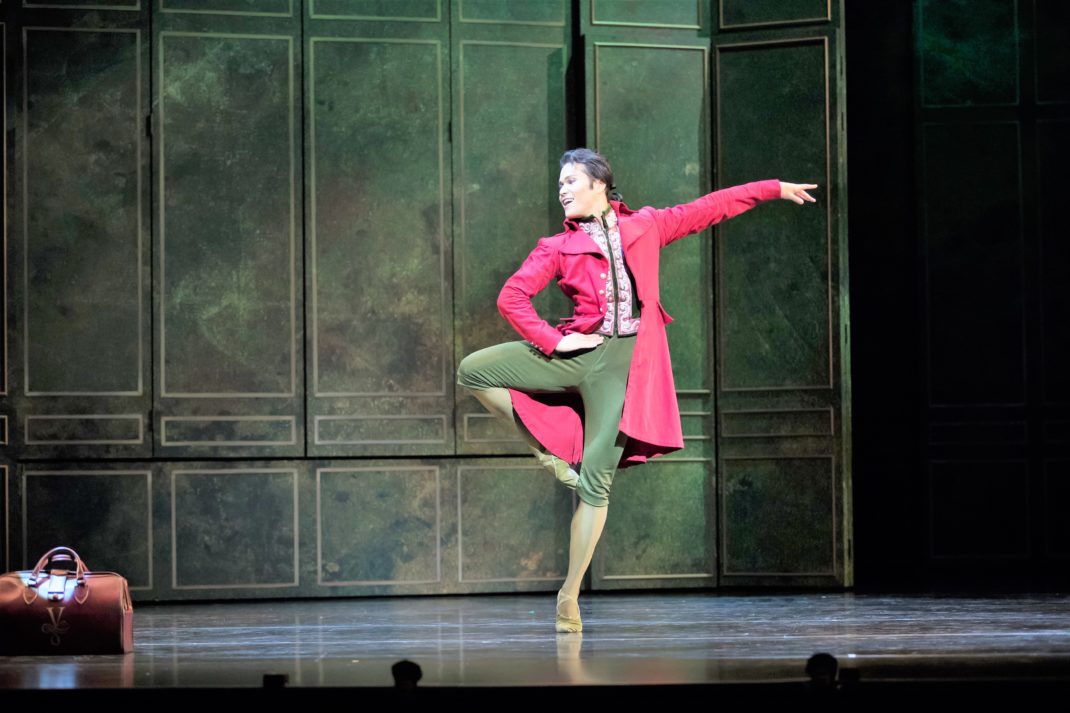
But, of all the dancers onstage on opening night, it was Kohei Iwamoto who stood out for me. He was Azolan, valet to Valmont, and his dancing was light, fluid, and technically exact. Iwamoto made every nuance of Scarlett’s choreography clearly visible, from small twirls of the wrist to larger beats and turns. And Scarlett had given him choreography that showed off his lightness, his elevation and his pleasure in dancing. It fitted well with his role as he rushed off with his bag of letters to deliver news of the next outrageous exploit of Valmont and Merteuil.
Thirdly, Scarlett, with I’m sure the assistance of a company’s coaching staff, makes sure that every dancer performs with an understanding of his or her role. I particularly liked Laura Hidalgo as the Marquise de Merteuil. Apart from those incredible feats in her duets with Valmont, which she handled so beautifully, I loved the personality she projected with every move and every step—she was imperious, superior and beyond reproach (at least in her eyes).
And finally, Scarlett’s collaborators work beautifully with him to advance the narrative. Costumes by Tracy Grant Lord were sumptuous and elegant, befitting the aristocratic strata of French society to which the characters belonged. With sexual activities a persistent feature throughout, we often saw decorative and revealing undergarments with colour indicating character, virginal white for Cécile, red and black for Merteuil. The set design, again by Tracy Grant Lord, was for the most part a simple arrangement of panels that moved, sometimes revolving, to create new spaces. Lighting by Kendall Smith gave colour to the panels as well as setting a mood.
But it was the music that added an exceptional collaborative element to Dangerous Liaisons. Scarlett had worked extensively with arranger Martin Yates and together they had gathered together (Yates refers to their actions as ‘plundering’) a variety of music by Camille Saint-Saens to create a new score. Each character had his or her own musical theme, which perhaps is another reason why the ballet held together so well. And, with a piano teacher as one of the main characters, it was no surprise that piano music featured strongly. The music was played live by Queensland’s Camerata Chamber Orchestra conducted by Nigel Gaynor with piano soloist Roger Longjie Cui.
The dancers of Queensland Ballet looked absolutely stunning throughout Dangerous Liaisons. The performance indicated quite clearly that the company is so much more than a State ballet company. QB is a national treasure, of which director Li Cunxin has every right to be proud
3 March 2019. David H Koch Theater, Lincoln Center, New York
It was Joan Acocella who wrote of Jerome Robbins in The New Yorker in 2001 that ‘…onstage his dancers act young, have young emotions, passing infatuations, passing sorrows. The picture is never adult, never this-is-what-life-is.’ Two works on the All Robbins program, Interplay and N.Y Export: Opus Jazz, fitted this categorisation. They were fun to watch and were very nicely danced. They were colourful in design and the music—Morton Gould for Interplay and Robert Prince for N.Y Export—made for interesting listening. Of the two perhaps N.Y Export was the more entertaining, with vibrant, jazz-infused movement that reminded me a little of West Side Story. But neither had much intellectual depth.
In fact, the highlight of this triple bill was the middle work, In the Night. Consisting of three pas de deux, each quite different in terms of the interrelationship between the dancers, In the Night did enter into an adult world of emotions. The first, danced by Lauren Lovette and Joseph Gordon, gave us lyricism and a soft, romantic quality. The second, with Maria Kowrowski and Russell Janzen, was more formal and even stately as it unfolded. The third, performed by Sara Mearns and Jared Angle, was the most dramatic. Mearns threw herself at Angle, angry and petulant and then pulled back, repeating this kind of action over and over. A highlight throughout was the exceptional way Robbins took the dancers off stage at the end of each pas de deux. He choreographed those exits, usually as lifts, to match the mood he established in of each pas de deux. Every exit was stunning. Then, in a coda, the six dancers reappeared, met, mixed, performed briefly with different partners, and then finally left the stage after a gentle waltz with their original partners.
In terms of dancing, there was little to fault in this program, which augurs well as the company begins a new era with recently appointed leaders Stafford and Wendy Whelan, who were appointed Artistic Director and Associate Artistic Director respectively. But, personally, in this particular program I would have preferred just one work that was characterised by an interest in youth, and two that had more adult aspects to them.
2 March 2019. 92Y, New York (Harkness Dance Festival 2019)
In 2019 the dance world is celebrating the centenary of the birth of Merce Cunningham with events across the globe. Most, not surprisingly, are being held throughout the United States. In Australia we had just one event, and I found it highly disappointing. So, it was a thrill to be in New York on a brief visit at a time when the 92nd St Y was holding a program (part of the 2019 Harkness Dance Festival) called A Feast of Cunningham. It was led by Sydney-born Melissa Toogood, a former dancer with Merce Cunningham Dance Company and a distinguished coach and teacher of Cunningham technique.
The program consisted of solos from Doubles (1984) and Loose Time (2002); Septet (1953); an excerpt from Scenario (1997); Cross Currents (1964); excerpts from Landrover (1972) and Trails (1982); and a Minevent. While all had their specific interest, for me it was Septet that gave the greatest pleasure. One of the very early works from Merce Cunningham Dance Company, which I had never seen before, it was fascinating to see choreography that had such an obvious link to the vocabulary and structure of ballet. The dancers used the upper body differently (with a bit more fluidity perhaps), and arms were more curved than is apparent in later works, with beautifully rounded fourth positions apparent at various times. I was also surprised to see one of the male dancers execute (very nicely I might add) a manѐge of turns and jumps. Quite balletic really.
While many of the dancers could be singled out for the particular qualities they exhibited, I found Melissa Toogood’s dancing exceptional. She appeared in several of the works and showed a great command of those features that characterise Cunningham technique, in particular a wonderful awareness of the space the body occupies when it moves (or takes a pose). When she faces front everything faces front, exactly. When she tilts her head to the side it goes exactly to the side, and so on. This exactness was missing from the young dancers from the New World School of the Arts who performed the Minevent that closed the program. While the enthusiasm was all there, in the end, without the exactness we saw from Toogood (and the other older, more experienced dancers), the Minevent looked a little messy to me. More rehearsal/class time needed?
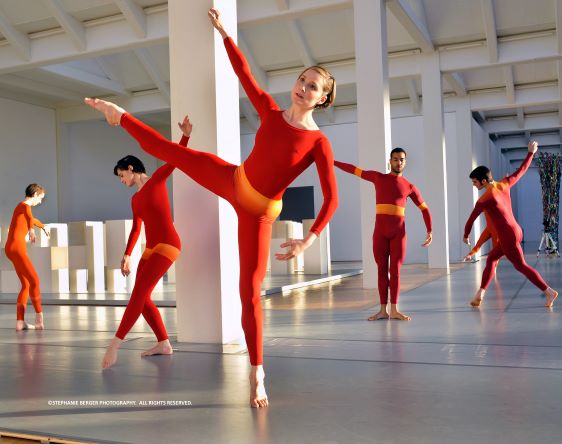
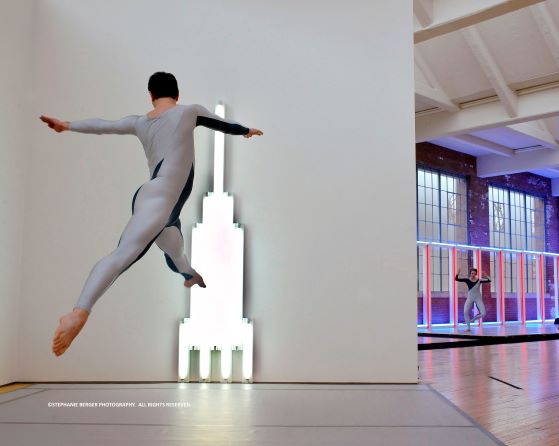
Also on show at the 92Y was an exhibition of photographs, Merce Cunningham: Passing Time 1967-2011, Photos by James Klosty and Stephanie Berger. Klosty’s images date to the 1960s and 1970s and have long been seen as the standard go-to shots for that early era of Cunningham’s work. The exhibition included many of his classic shots, including portraits of Cunningham’s collaborators of the time such as, John Cage, David Tudor, Marcel Duchamp, Jasper Johns and others. Stephanie Berger’s images are quite different and their great strength is that they show clearly the nature of Cunningham vocabulary: the tilt of bodies, the strong sense of direction and spatial awareness, the extended limbs, the typical leaps and poses, and much more. Next to Berger’s shots, Klosty’s images have a kind of mystery and an emotive quality. Berger, on the other hand, gives us a fresh and exciting look at Cunningham’s work, and her images have their own emotional appeal. The work of both photographers benefits from this joint display.
Both images used in this post are from Merce Cunningham: Passing Time 1967-2011, Photos by James Klosty and Stephanie Berger and are used with the kind permission of the photographer.
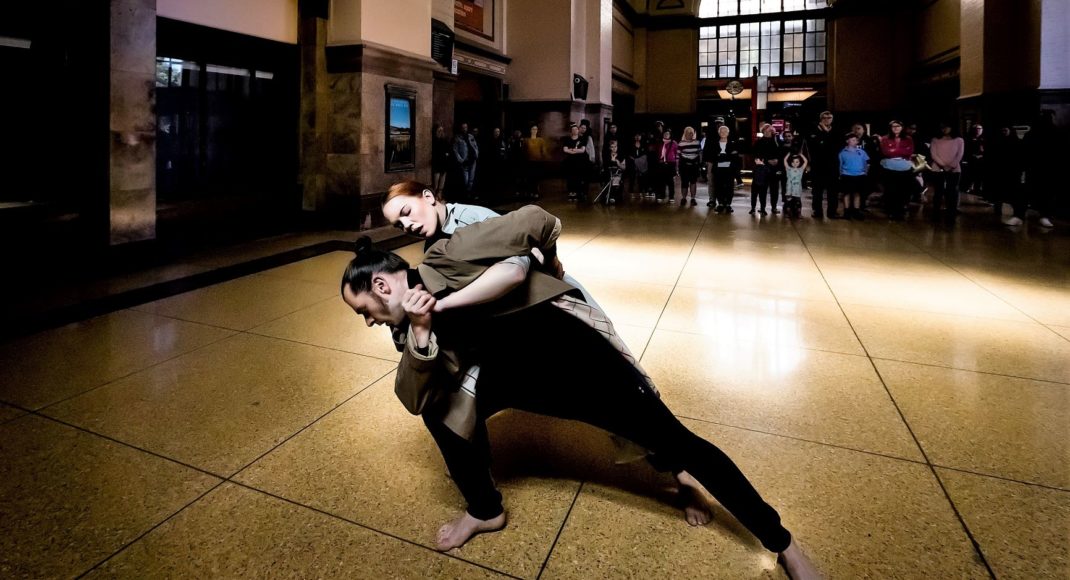
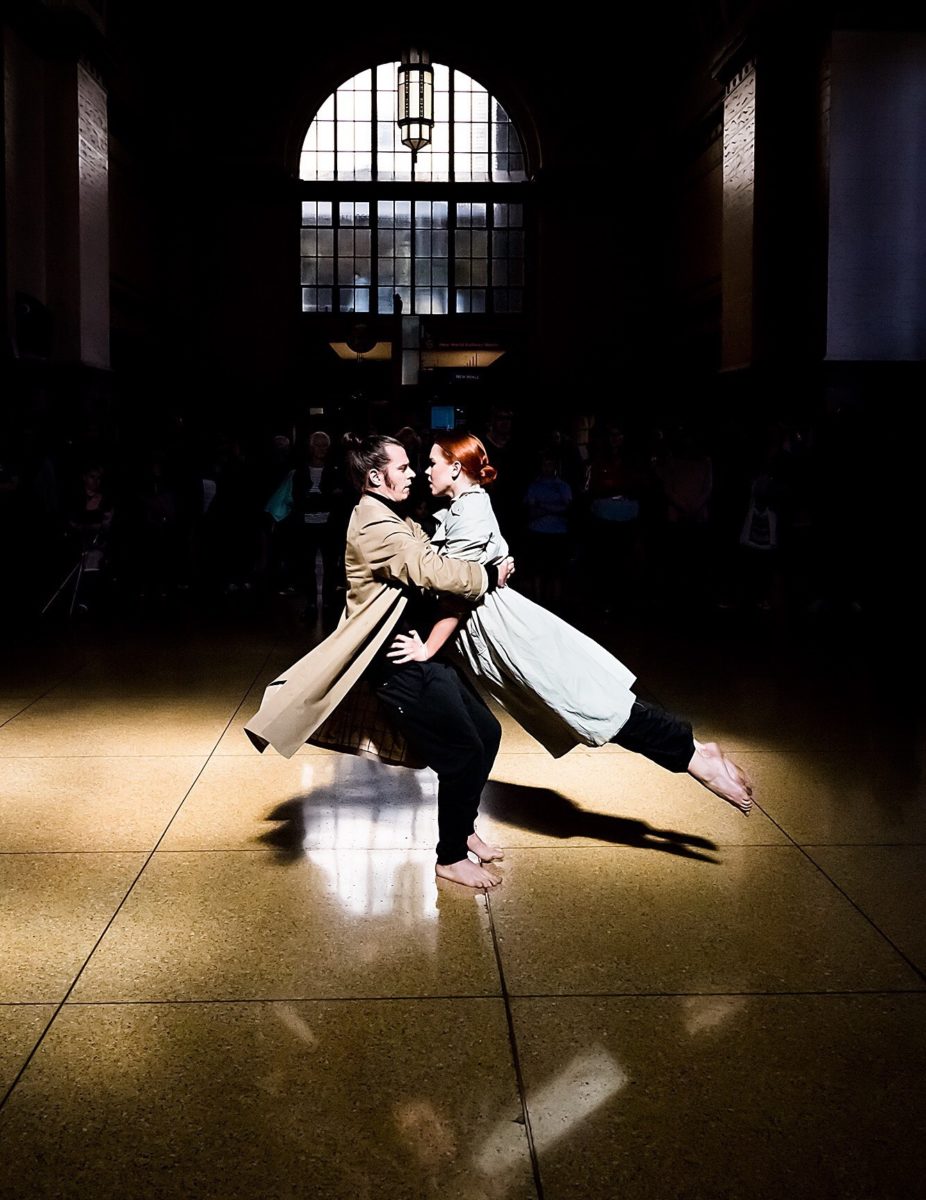
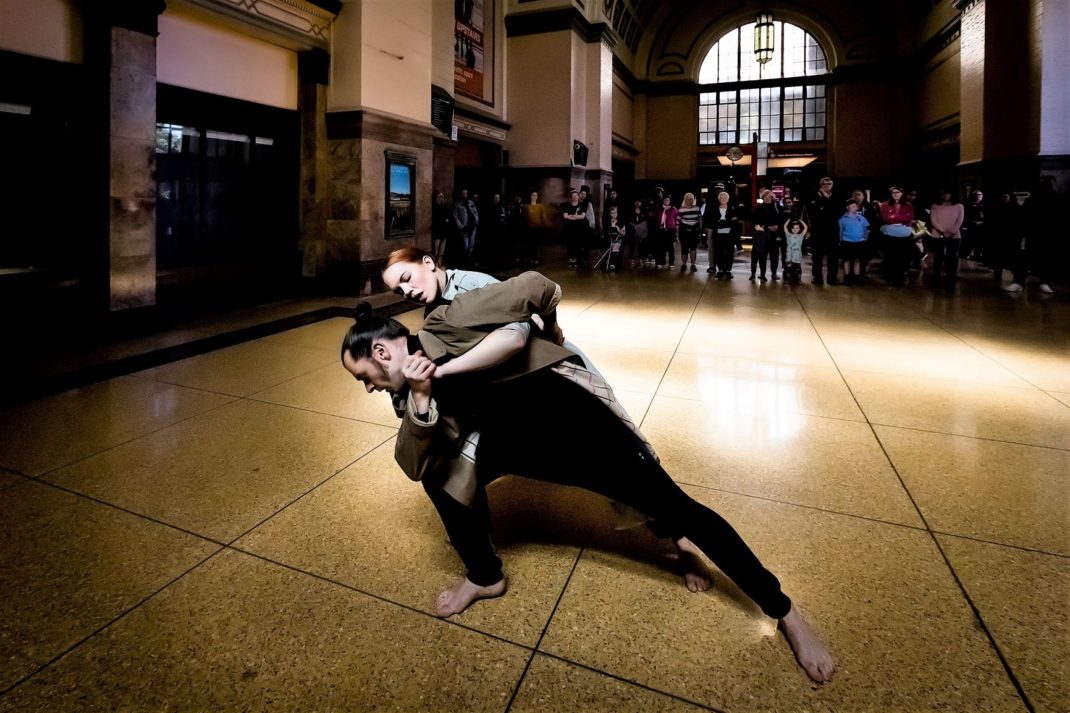
Choreography: Lucy Marinkovich/Borderline Arts Ensemble Performers: Hannah Tasker-Poland and Emmanuel Reynaud Music: Sergei Rachmaninoff, Piano Concerto No.2 (Adagio)
… after 1945 David Lean /Noel Coward film classic, Brief Encounter.
You’ve reached the Wellington Railway Station. In 15 mins your train is due to leave for Waikanae, so there’s time, no great hurry. It’s a fine day, just a bit draughty across the foyer, probably as well to keep your coat on. You stroll around a little and admire the warm pinkish-brown of carrara marble walls, the high vaulted ceiling panels painted in bright lightness. It’s all quite beautiful, must be the finest railway station in the world. The speakers are piping familiar Rachmaninoff, which is somehow comforting in such a transitory space.
Damn, something is caught in your eye and it stings, A man passing tries to help you. Whoa! Who is this? All the longing you’ve always kept inside but never voiced out loud, your secret that you could love someone till the end of time, even if there is no such actual person, or, if there is, you’ll never meet, it’s just a longing that you’ve always lived—perhaps others have it too?—but how would you know because this is not anything you can talk about. That would be unlucky and you might be overheard by strangers. There is no such person, too true to be real, too beautiful to last, to have a name, and she may not even notice you, and you’d risk losing her when you’d only just met. No, he’s just a kind man passing by, trying to help you sort your eye problem. Or let’s say it is just the thing called hope, the thing with feathers, that you nurture in the breast while reading Emily Dickinson’s poems on train journeys.
It’s not that you’re at all the type to fall carelessly and deeply in love with a stranger in a public place—for example, the man sitting in the third row of the No.14 bus that time you went to town … that was a breath-holding ride, you thought you could be together forever … but he knew nothing about you, did not even notice you, so the affair was safely over by the time you alighted at the third-section bus-stop. There was no dance, it was all in your mind, your soft head. So how come this day is different? This man does notice you, more than that—he pauses, he stops, he turns, he offers to help, he wants to meet you, he feels the same as you do. This is a film script, surely? You’re actually in this film, yet you never auditioned, and there was never any rehearsal. Who’s the choreographer here? Swan Lake is the story of a man and a woman who meet, they dance and love, but she is due to fly out that evening and he will lose her forever. This is different, it’s just a train station, remember.
A number of other travellers stop to watch the couple—and are fixed by the beautiful figures-of-eight they see traced, like infinity signs lying sideways. Small fires flicker inside those who are watching too. No one is voicing a commentary, there are no subtitles, no flyers to hand out, no powerpoint. The dance is the point of power. This is not pornography, it’s not erotic (though nearly it is…), it’s just a 13 minute love dance on the marble floor of a railway station, by a man and a woman who keep their coats on while they fall into the depths of each other’s eyes and drown there, just managing to save each other by doing beautiful things, whatever their bodies will allow— like waves and billows, like leaning and longings, with arms, and hands, with legs, feet, faces, eyes, the backs of their heads too—they don’t always need to be watching to know what the other is doing, they can just tell. He knows they will never have to argue or disagree, they will love and hold and be held forever. This is better than all the lyrics of all the love songs on all the shelves of all the music shops of the world. These are minutes of assurance that you can love someone you don’t even know by name, and still catch your train. But, hold the Rachmaninoff … the voice-over announces that the Waikanae train will be leaving in two minutes time. You both pause, you raise hands in the gesture of a farewell wave—oh no—but yes—but no, let it go without you. You walk back towards each other, hold still, hold tight. She has let the train go without her.
All the dance moves up till this point were just rehearsal, so now it’s time to do them all again, only more fully, and slower, deeper to lunge, higher to lift, wider to arc, stronger to clasp. The watching travellers are all choosing to miss their trains too. They can’t walk away from lovemaking. At the start there was a posterboard on the edge of the space that read ‘New World, special coffee & muffin offer free. Today only’ but the message has been changed while no-one was looking and now reads ‘Innocence is contagious, if you like’ which everyone knows is true, and better value than coffee and a muffin, even when that’s free.
They continue dancing and it is the
loveliest thing you ever saw in a Railway Station. Then the voice-over for the
next train to Waikanae, and oh, she must leave now, and so she does. He turns
and walks to the street, it’s his eyes that are stinging now, holding the
memory of all that just happened. Probably. Today only. In 13 minutes. And will
last forever. Surely.
————-
Lucy and partner/colleague, Lucien Johnson, will take up the year-long Harriet Friedlander Residency in New York. May they keep their coats on. while at the subway station.
This program to open 2019 has four new and contrasting works that will appeal to audiences in different ways. The dancers, as always, give their all, but the production needs to settle down yet, and the lighting effects be reduced by perhaps 50%, if it is to source the power of theatre.
Hine the first work, by Moss Paterson, opens with a strongly rendered haka fronted by males, but the following sequence for females, with the unexpected choices of pointe shoes and scantily clad dancers, is a challenge to reconcile with the evocation of a whare whakairo. The first woman in Maori mythology, Hine ahu one, has been a number of times choreographed—(I think of Louise Potiki Bryant, of Kelly Nash, and of Merenia Gray’s works, and believe they could all be considered for future possible restagings). I found the back projections for this Hine often distracting, and the aural overload a challenge. I am no fan of strobe light in the theatre at the best of times, believing it belongs to the rock concert stage or the disco bar, and often weakens the development of form in a choreography. So Hine was for me, with its various quotes from other dances we have seen recently, a work in progress.
Y(It is decades since this company performed it, but no-one forgets how Gray Veredon harnessed the ihi, wehi and wana of haka into his classic cameo work, Tell Me A Tale. Anyone wishing to choreograph Te Ao Maori onto a ballet stage needs to study that work, and Veredon, a pioneering member of this Company, would be willing to help—right now though he is impressively occupied with staging a new full-length commission at Polish National Ballet. One could also consider bringing back to their home company some of our other ex-pat choreographers and teachers who have made strong careers abroad—Cameron McMillan, Mark Baldwin, Andrew Simmons, Martin James and Patricia Rianne come to mind).
The second work is by James O’Hara, The Sky Is Not So Different From Us, Perhaps… with musician Anita Clark on stage. The work has a layered movement texture I found cumulatively mesmerising. Ceaseless pulses and undulations hint at the physics inside a human body—the rhythms of breathing and of blood circulating, as measures of life, except for one sad Pierrot figure standing in catatonic contrast until the violin vibrations thaw her out. The ever-repeating tape-loop of violin and vocals adds to the work’s atmosphere and mystery. Multi-layered costumes echo the choreographic theme, though for some of them, less would be more (and why a very tall man would wear a constricting mid-calf pink skirt I found impossible to fathom). The best of this work is very good indeed.
Shaun James Kelly’s work, The Ground Beneath our Feet, is a winner. He summons the airborne energy and élan we have always welcomed from the dancers in our Company, whatever the chosen choreographic style or aesthetic. I personally prefer to hear Bach in the scores as left to us, so the doctored treatment of the Violin Concerto, while you can do it, did not seem to me to add anything new. A galvanising pleasure though to see the commitment between partners within each dancing couple. The total frisson of the evening for me was Mayu Tanigaito. The prodigious technique of this dancer allows her to transform to a hummingbird, a diving swallow, a fairy tern. That she can do it all and more, and flash a smile the while, puts her in a class of her own. (Many of us have long wished that the superb full-length work Madame Butterfly, by Australian choreographer Stanton Welch, and stunning design by Peter Farmer, could be re-staged from our Company’s strong and richly defined repertoire, and the title role offered to this dancer as a vehicle for her talent).
This season marks the retirement, after 13 stalwart years dancing, of Abigail Boyle, a much loved and highly versatile performer with classical, dramatic and comic abilities in spades. The work Artemis Rising, choreographed for her by Sarah Foster-Sproull, was effectively a solo, with other dancers as a shadow chorus. It leaves some striking images for us to savour, and acts as tribute to Abigail’s performing, and a blessing on her future career transition (she plans to develop a teaching and coaching career).
The purest combination of technique, phrasing and line was to be seen whenever watching Abigail in class in the studio—an experience I will treasure to the end of my days. Many know and love this dancer, and wish her the very best for the coming years. (Readers may care to read the fine interview with Bess Manson published in The Dominion Post, 2 March 2019, and available online at www.stuff.co.nz—DancerAbigail Boyle, Breaking through the fourth wall).She has been given a spirited and fitting farewell.
A recent Company newsletter advised that they are also currently considering how to honour the significant contribution to ballet and theatre in New Zealand of Sir Jon Trimmer who gave his retirement performance late last year. If that turns out to be an 80th Birthday Benefit Gala in September, say, one can imagine the Opera House dome needing to be opened to let out the tsunami of excitement and gratitude that New Zealanders would want to show him by way of salute and thanks for the legendary 60+ years career with this Company. Kia ora rawa atu, he totara nui o te ao kanikani o Aotearoa. I nga ra o mua, i nga ra inaianei—he wiri mo he takahia —taonga enei. Tena koe, e hoa.
17 January 2019. The Playhouse, Canberra Theatre Centre.
Here is a slightly expanded version of my review of Coppélia in its storytime form. The review has already appeared in The Canberra Times online but is yet to appear in print.*
This Coppélia is the third production in the popular Storytime Ballet series produced for young people by the Australian Ballet. It follows storytime productions of The Sleeping Beauty and The Nutcracker. These productions are advertised as being for children aged 3 and up but I was curious to know how ‘up’ things could be. So I took along two grandchildren (both boys) aged nine and eleven.
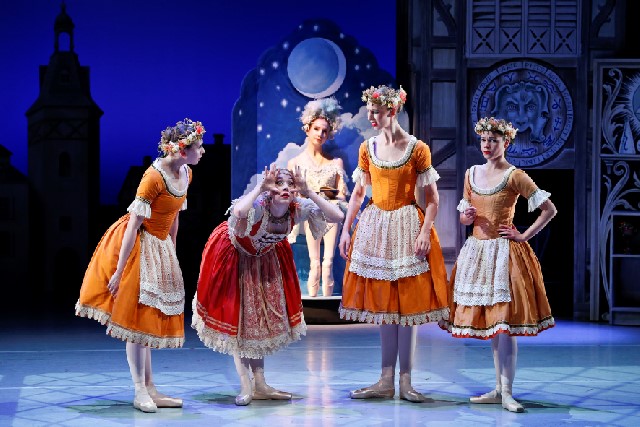
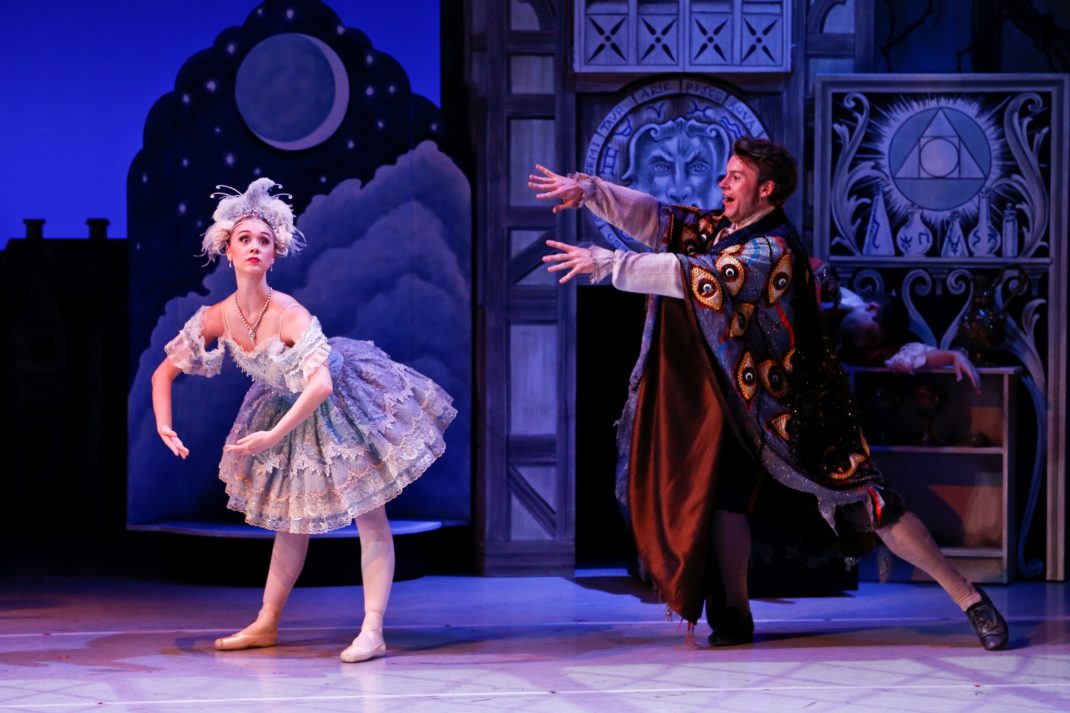
Coppélia, with its blend of humour, magic, easy to follow mime, and joyous activity, lends itself well to being rethought as an experience for the young. Its story is simple and it contains some fascinating characters. Apart from the main couple, Swanilda and Franz, who eventually resolve their problems, there is the eccentric Dr Coppélius, a toy maker who dabbles in his own brand of magic and, of course, Coppélia, the life-sized doll Dr Coppélius has created and hopes to bring to life. It is this doll we see sitting in the window of Dr Coppélius’ house and who is the cause of issues between Franz and Swanilda.
Dr Coppélius can be a formidable character but, in this production, anything alarming about him is reduced by the fact that he takes on the role of narrator. On stage narration has become a feature of the Australian Ballet’s storytime ballets and it is beautifully done on this occasion by Sean McGrath, whose acting and strong, clear voice were commented on by my young companions. The basics of his role in the full-length ballet were there. He loses his key when being jostled by the village folk thus allowing the village girls to enter his house, he reads from his book of spells to attempt to bring Coppélia to life, and so forth. But his character doesn’t really develop fully, which, although understandable, is a shame.
As far as the dancing goes, and after all it is still a ballet we are watching, the small company of just 12 artists (largely of graduates of the Australian Ballet School) does an excellent job. The main roles of Franz and Swanilda are rotated amongt company members. We saw Benjamin Obst as Franz and Jasmin Forner as Swanilda and both showed outstanding technical abilities. My companions were especially impressed with Obst’s tours en l’air and his grand pirouettes to which he added a showy jump every so often. I was impressed with Forner. Readers of The Canberra Times’ arts pages may remember a story about Forner published last year, which told of her recovery in Canberra Hospital from serious injuries sustained in a car accident. We saw her in Canberra last year as part of the Australian Ballet School’s graduation season, but she has developed more strength since then and danced beautifully. Watching her now, her recovery and return to ballet seem quite miraculous.
The ending of this Coppélia was without a wedding and its pas de deux, and we saw only the Dawn solo and not Prayer. So again there was something missing from the storyline and for me it all fell a bit flat. But nevertheless the ending was presented as celebratory occasion and the young people in the audience left feeling happy.
The full-length Coppélia is a three-act ballet with changes of set for each act. Designer Hugh Colman skilfully designed a single set for the storytime production, which with just a few moveable facades, and some fine lighting by Jon Buswell, could easily transform itself from village square to Dr Coppelius’ workshop and back to the square within the 50 minutes of this production, which had no interval at all.
The Canberra Theatre Centre’s Playhouse is a perfect venue for these storytime productions. It has a delightful intimacy that encourages participation from the very young, who made the most of the opportunity to assist Dr Coppélius with his magic, some using magic wands, others their magic fingers. My nine year old didn’t want to be part of the magic bits, although the eleven year old had no problem joining in and wiggling his fingers. I suspect, however, that for those young people who are slightly older, it was the strength of the dancing, from dancers not much older than they are, that attracted them. But there was definitely something for young people across quite a reasonable age range.
Michelle Potter, 19 January 2019
* UPDATE: Date of publication in print was 21 January 2019.
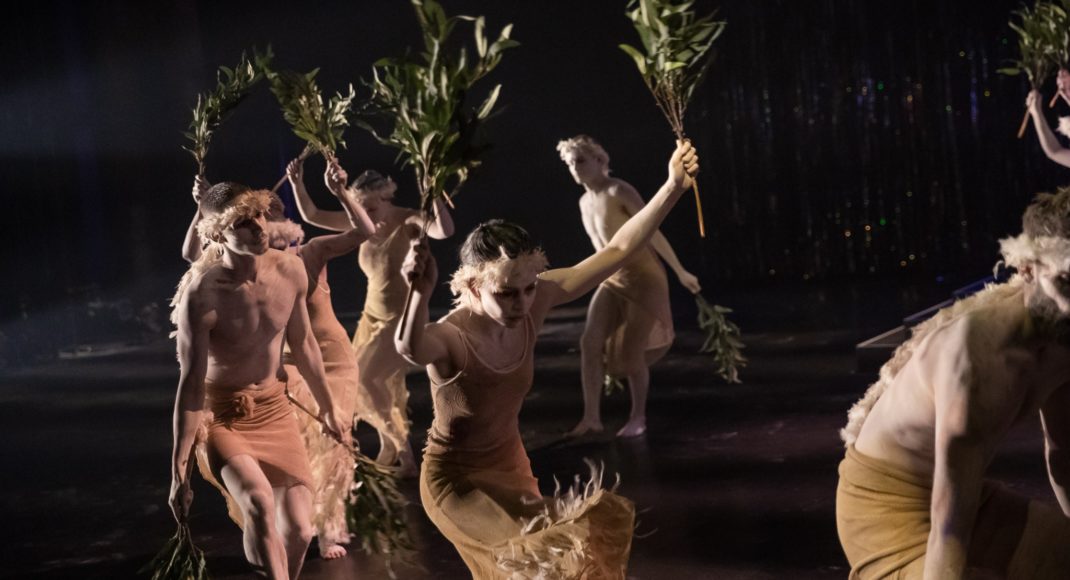
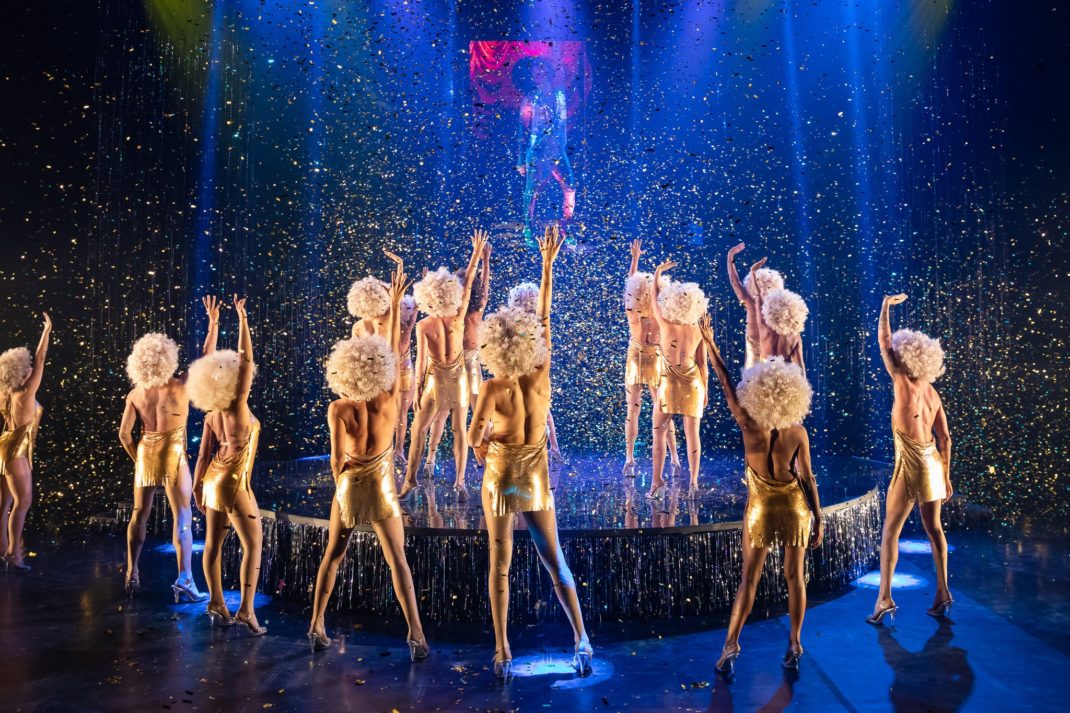
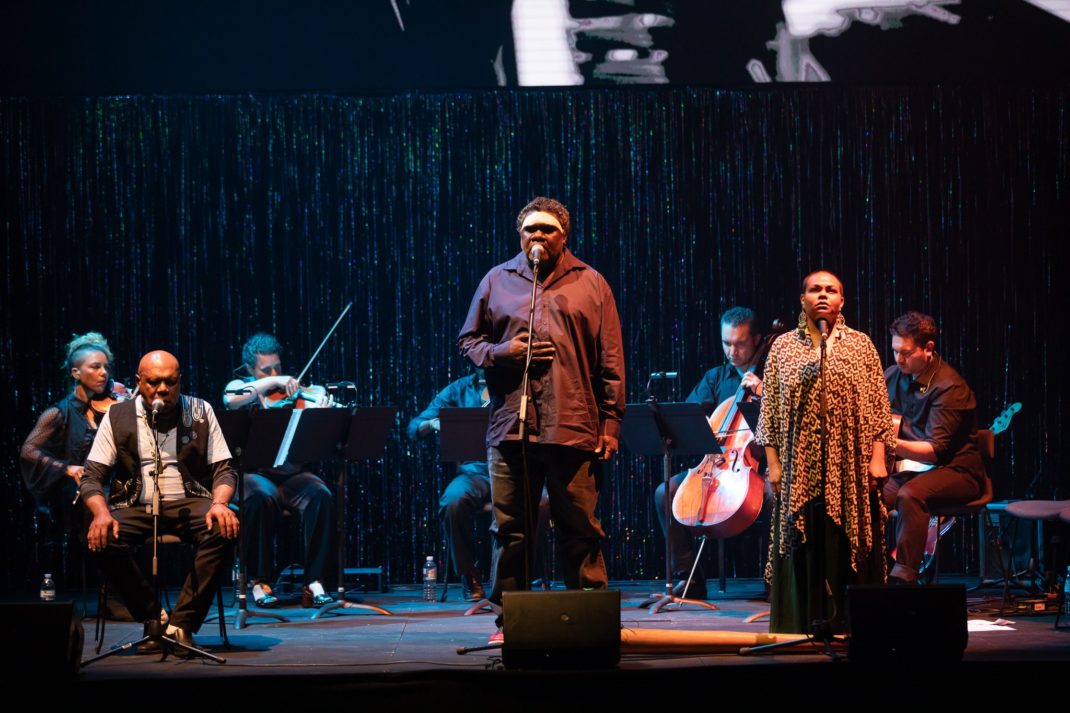
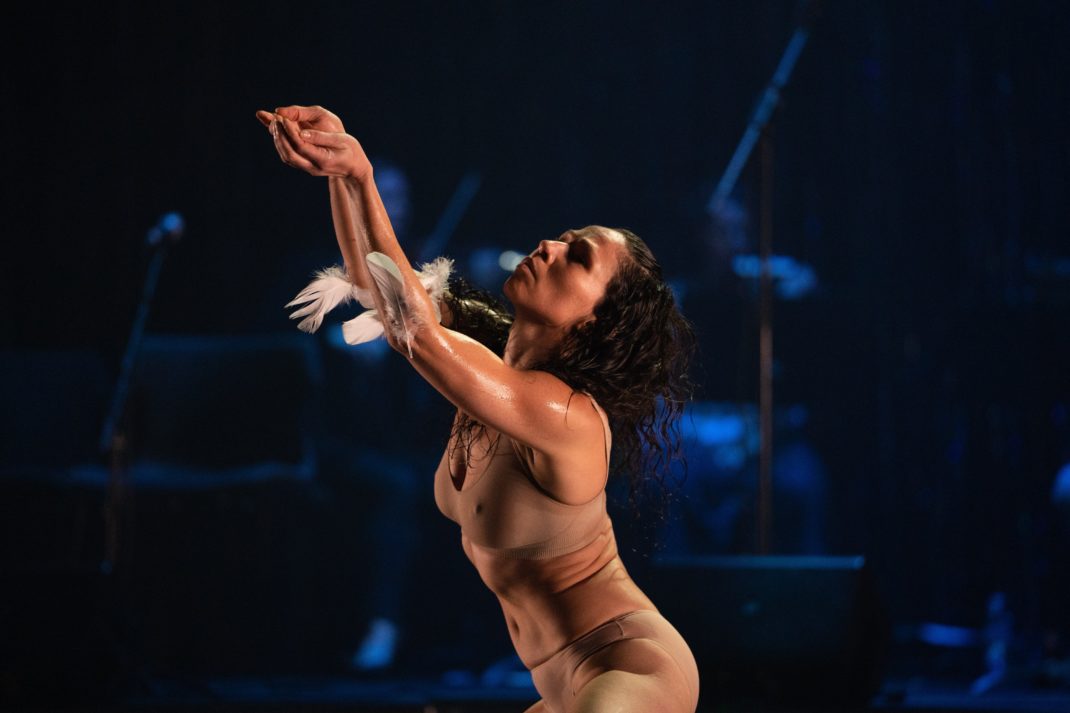
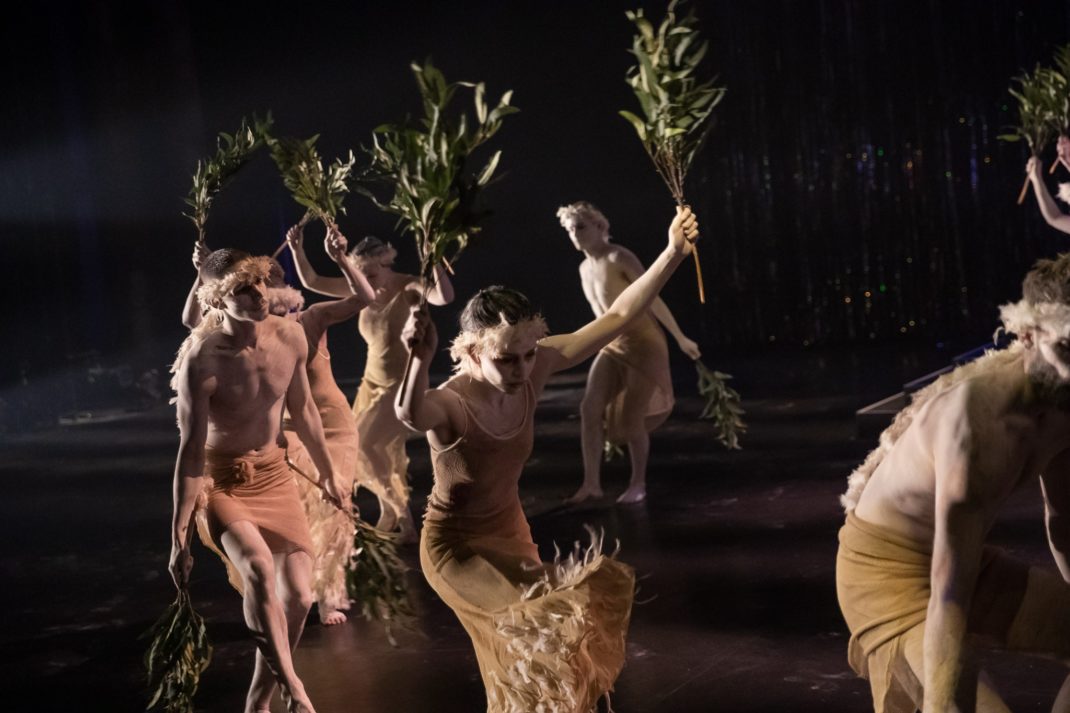
Dubboo. Life of a songman was a tribute to David Page, master musician and esteemed elder of the extended Page family, who died in 2016. Dubboo was his nickname (or one of them) and the theatrical tribute showed us much about the diversity of his life and the process by which his music came into being. It was an emotional evening of music, dance, reminiscences. projected imagery and film clips. Having said that, sadly I have to admit that unexpected circumstances meant that I was only able to stay for Act I, Dubboo: Songman. I missed Act 2: Dubboo: Showman. Looking at the Act 2 media images, clearly I missed the tribute to the extravagant side of David Page’s life—his life as an actor, as a female impersonator and a ‘drag persona’ as Alana Valentine puts it in her program tribute.
Nevertheless, there was so much to admire in Act 1. It was wonderful to see dance excerpts from some of the many works for which Page created the music. It was wonderful, too, to hear his music adapted for string quartet, and to hear spoken and sung excerpts, tributes and stories from people like Archie Roach, Djakapurra Munyarryun, Ursula Yovich and Hunter Page-Lochard, not to mention seeing film clips of Page himself explaining some of the processes he engaged in while composing.
From a dance perspective, I was moved especially by ‘Lust’ from Brolga of 2001. Its sexy choreography was stunningly danced by Waangenga Blanco and Tara Robertson, who wrapped themselves around each other with an intensity that made two bodies appear as one. A second standout was ‘Brother’ from Skin/Spear of 2000 acted and danced by the remarkable Beau Dean Riley Smith. And then there was the lightness and lyricism of Tara Gower in ‘Feather’ from Bush of 2003. But every danced excerpt was performed with power, grace and dedication.
This Graduation season offers two programs, Tradition (Ballet) and Innovation (Contemporary Dance), on alternate nights. Does this suggest that new choreography is expected only in the latter but not in the former? If anything, the opposite swing of the pendulum is needed, with a balance of heritage and newly minted work, across both streams. Students of ballet should be just as actively encouraged to explore choreography as their ‘siblings’ are, and by the same token, classics of New Zealand contemporary work need to be staged more often. There are plenty of choreographers whose works would be eminently suitable—Douglas Wright, Michael Parmenter, Raewyn Hill, Daniel Belton, Mary-Jane O’Reilly, Taiaroa Royal would be among the first to consider.
It is in fact globally recognised that ballet and contemporary dance today exist in a symbiotic relationship, and that a hard-out ballet class (minus the pointe shoes perhaps) is a daily fix for dancers of all textures. The old binary does not hold, and today’s dancers have to be able to do whatever choreographers ask for. Having said that, the Innovation program showed strong, committed performers willing to share a passion that depends less on physique than personality, more on commitment than technique.
E Tolu, the opening trio, had its premiere in Mangere in South Auckland in June, and will have been just as welcome there as it was here. Starting with the summons of putatara, there followed a range of patterns and moods from contemplative to forceful to humorous, suggesting haka, siva, fautapati with a nod to Bob Marley and Nina Simone. It brought centre stage the quick and ready wit of Maori/Pasifika dancing men in a great program opener.
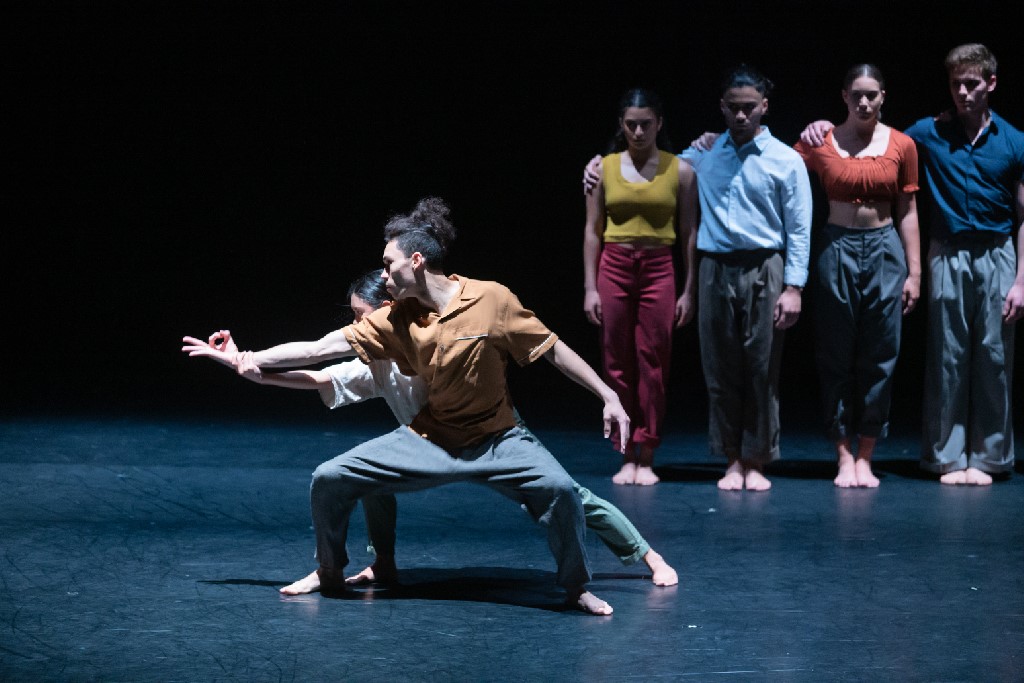
Wicked Fish, by Huang Yi of Cloud Gate Dance II, Taiwan, was an astonishing achievement. A relentless surging of bodies in both vertical and horizontal, linear in both directions, in mysterious shadowed light of silver, grey and white, it was completely mesmerising. Cloud Gate is one of the most interesting dance companies in the world today and it can only do good for young students, and all of us, to be made aware of them and their repertoire. Music by Xenakis was the water they danced in.
Huri Koaro (Inside out), by Gabrielle Thomas, assisted by Megan Adams, is a work from Atamira dance collective’s repertoire. It brought a welcome and convincing Maori female presence to the stage, with patterns suggesting taniko and kowhaiwhai, then moves to a driving pate rhythm. There was an unusual and welcome stillness and silence for some of the groupings, then poi swinging across the stage brought contrast to the solo central dancer.
It’s Written in the Walls by Adam Barruch had an atmosphere of trouble in an unidentified situation…a refugee camp perhaps, or some confined place? The dancers’ focus remained internalised, and a sense of urgency or risk was caught in the striking linear groupings of the performers.
Static by Lauren Langlois set itself a hard task in portraying the neurotic and obsessive behaviour of two dancers as the starting point, which, true to its title, seemed also to be its endpoint.
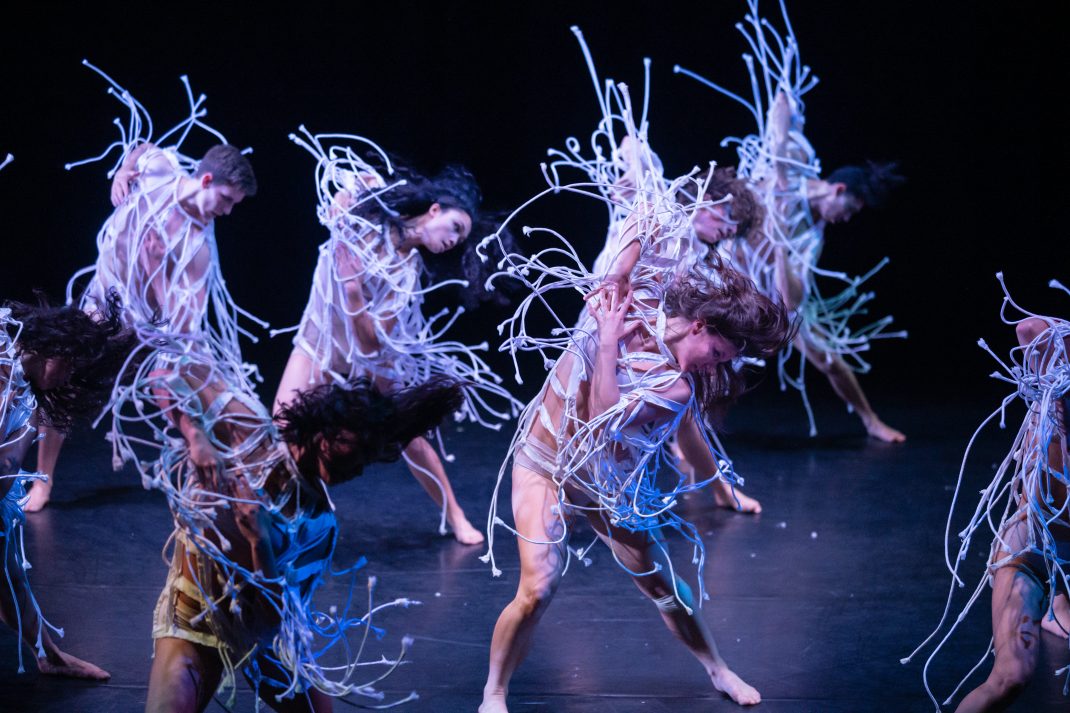
Les Méduses, a work by Damien Jalet, involved a large group of dancers in striking formations and curiously stylised costumes which occasionally suggested the weaving of spider webs. By contrast, a sound score of relentless chisel-like strikes evoked the notion of arduous work in progress of carving or sculpting from a large mass of stone or marble. It brought high energy to the closing work on the program.
All told, a spirited evening. Wicked Fish will stay long in the memory for the images and atmosphere it evoked, of dangerous and mysterious forces, of relentless drive and unstoppable momentum. It uncannily evoked history, presaged the future, and kept reminding me of the three books I am reading – Vincent O’Malley’s New Zealand Wars, Stephen Fry’s Mythos, and Douglas Wright’s Terra Incognito. That’s a big ask of a short dance, but just occasionally that’s what choreographic masterpieces can deliver.