Stephen Baynes’ Swan Lake. The Australian Ballet (2016)

9 April 2016 (matinee), Joan Sutherland Theatre, Sydney Opera House

Stephen Baynes’ Swan Lake premiered in 2012 as a ‘traditional’ Australian Ballet production to stand alongside Graeme Murphy’s rather more radical version. After almost four years it is certainly an interesting experience to see the Baynes production again, but looking back at what I wrote in 2012 I find myself wanting to say much the same.

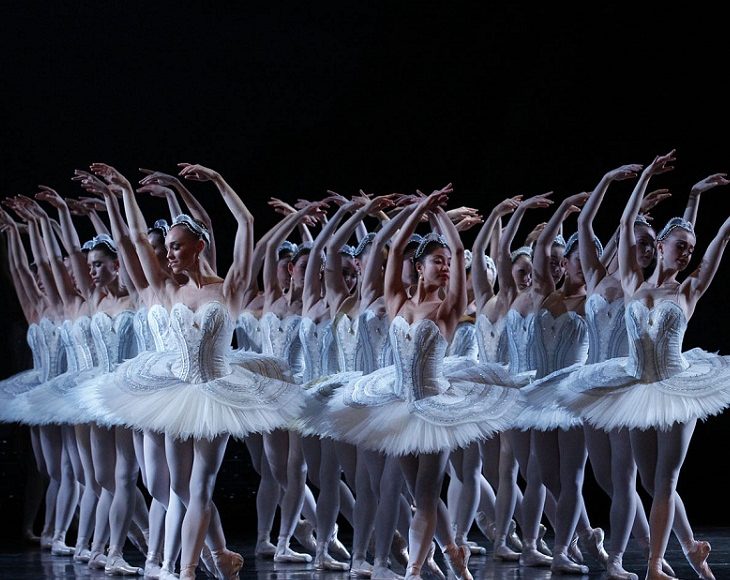
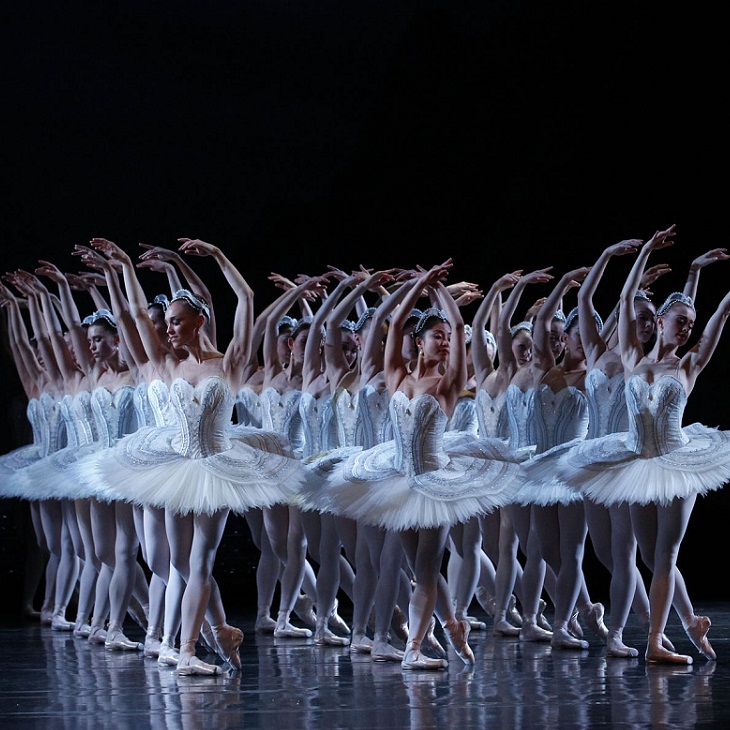
On the positive side, Hugh Colman’s costumes are still a highlight. They are so elegantly designed, especially those in Act I, where the women’s dresses not only look so stylish but move beautifully during the danced sequences. They also set the story so well in the nineteenth century, the era of Tchaikovsky. Then I was still thrilled to see such lovely, swirling choreography in so many places. I was especially taken this time with the patterns given to the swans, both when moving and when standing motionless.  I was also lucky to see a lovely performance from Miwako Kubota as Odette/Odile. She danced both roles with style and technical assurance and gave each role a distinctive characterisation.

Baynes and Colman have approached the story as a kind of psycho-drama and, in bringing out this aspect of the production, Andrew Killian as Siegfried gave a strong performance. He gave the role a brooding quality in Act I that at first made him appear not to be participating—and of course we are used to seeing Siegfried enjoying himself at his birthday celebrations before heading off to shoot swans with his mates. But slowly Killian brought us to the realisation that Siegfried was deeply unhappy with his life and at the end of Act I, as he stood before the gates that led to the lake, I couldn’t help feeling that he was thinking of drowning himself in it (which is eventually what happens).

On the not so positive side, I think this Swan Lake still badly needs the services of a dramaturg to bring out the narrative (or Baynes’ version of the story) more clearly. The psycho-drama seems to fall apart somewhat after Act I when the ballet reverts to the original storyline without enough emphasis on anything that might be called evil. Rothbart, who personifies evil in traditional productions, still remains an enigma in the Baynes version. Is he the personification of the blackness that consumes Siegfried? He seems just to hover in the background, except in Act III when he rudely sits beside the Queen, who on this occasion, surprisingly, took very little notice of him. And then Rothbart plays the violin for the the dance of the Russian Princess (beautifully performed by Rina Nemoto), which makes him a kind of Paganini figure, the Devil’s minion.  It is very difficult to reconcile exactly what role he is meant to be playing and, as a result, the production becomes unsatisfying.

Despite some very nice choreographic moments, and some strong dancing, I have to come to the conclusion that I prefer other productions of Swan Lake. I don’t want to go back to a Borovansky-style 1950s production (although it was really quite a good, straightforward one), and all credit to David McAllister for wanting to add a traditional Swan Lake to the Australian Ballet repertoire. But for preference I’d go to the Murphy production any day. It has a coherence that I think is lacking in the Baynes production.

Michelle Potter, 11 April 2016

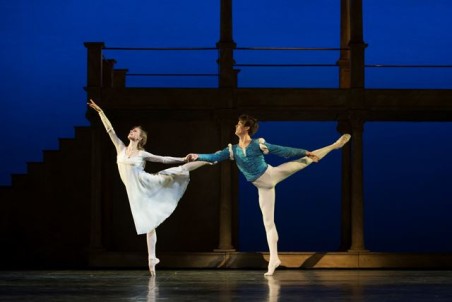
Featured image: Artists of the Australian Ballet in Stephen Baynes’ Swan Lake (2012 production). Photo: © Jeff Busby
Great Sport! Liz Lea and collaborators

7 April 2016 (World Health Day), National Museum of Australia, Canberra

Canberra’s GOLDS (joined briefly on this occasion by two Dance for Parkinsons groups) have once again surprised me. Great Sport! was a site specific production that took place in various parts of the National Museum of Australia, including outdoors in the Garden of Australian Dreams. The production was a celebration of movement and sporting history but, given that the show had its first performance on World Health Day, and given that the program also included a segment by the two Dance for Parkinsons groups, Great Sport! was also a program that focused on healthy living through movement.

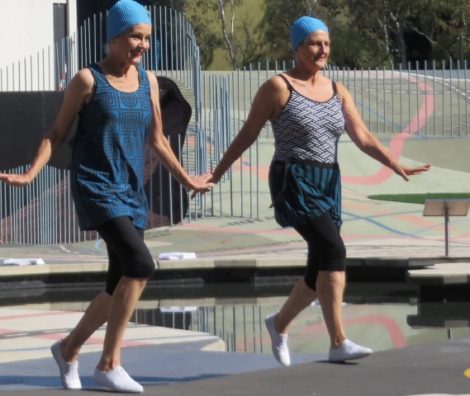
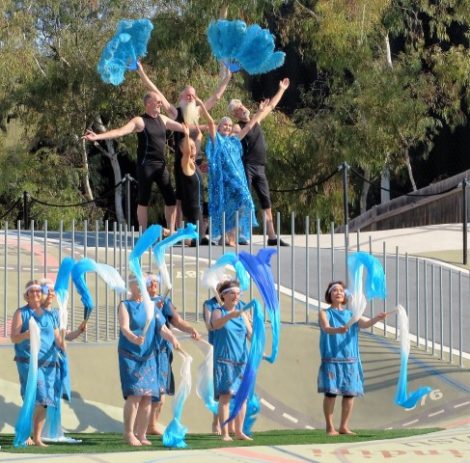
The production began with ‘Annette’, a celebration of Australian swimmer Annette Kellerman. Choreographed by Liz Lea, joint artistic director of the GOLDS, it was full of glitz and glamour, as was befitting of the subject given that Kellerman was not just a swimmer but an advocate for female issues and a star of Hollywood in the early twentieth century. We saw spangly costumes, 1900/1920s-style cozzies, lots of feathers, fans and froth, and some gorgeous, fun-filled choreography that suited these dancers so well.

Great-Sport-2-Small
Great-sport-6-Small
Great Sport! Scenes from ‘Annette’. Choreography by Liz Lea

‘Annette’, which was accompanied in part by an original musical composition/poem by Chrissie Shaw, made wonderful use of the Museum’s surrounding spaces—a pool; swirling, curving pathways; an ancient tree trunk; and soaring architecture.

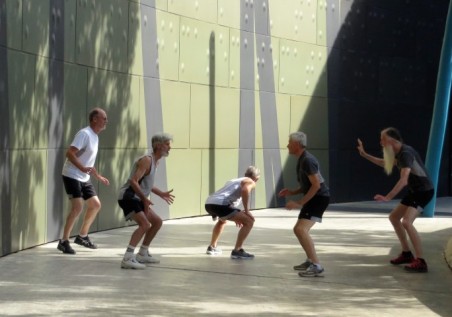
A piece by Gerard van Dyck called  ‘First and Last’ also looked good outdoors, especially against a huge, curved metal wall covered in shadows. ‘First and Last’ used the men of the GOLDS and focused on the practising of sporting activities in a non-competitive environment. The theme suited the company beautifully and the men performed with their usual commitment. There is nothing to prove. Just dance!

Great Sport! Scene from 'First and Last' , Photo: Michelle Potter, 2016
Great Sport! Scene from ‘First and Last’. Choreography by Gerard Van Dyck

We the audience moved from indoors to outdoors, from outdoors to indoors, taking our lead from Lea as compere for the event. One indoor piece, ‘I used to run marathons’, was particularly moving. Choreographed by Philip Piggin and Jane Ingall (also co-directors of the GOLDS) using people living with Parkinson’s Disease, it was performed to the well-known theme from Chariots of Fire. It took place on a circle of chairs and within the space formed by those chairs, and the circular theme was picked up by the choreography and reflected the Olympic symbol of five connecting rings. While the music had something to do with the feeling of transcendence I got, that each of the dancers had such a different capacity for movement, but that each was completely immersed, was also part of that feeling.

Another indoor section, Grand Finale, was choreographed by Martin del Amo. It was gorgeously costumed (based on a concept by del Amo) with the women garbed in long evening dresses, all different. Program notes stated that these women were ‘engaged in a mysterious game, collectively celebrating diverse individuality, on their own terms.’ And it was certainly mysterious as the ten or so women moved amongst each other, forming and reforming various patterns. As seems typical (to me anyway) of del Amo’s work, Grand Finale operates at a level that is somewhat obscure or arcane and, while I often find this aspect of del Amo’s work frustrating, that Grand Finale was meant to be mysterious, or obscure, or arcane, was made absolutely clear by the dancers. They moved through the choreography with distant looks on their faces and with no acknowledgement of each other.

But the pièce de resistance was Kate Denborough’s ‘None of us want to be in calm waters all our lives’ (a quote from Jane Austen). It was a spectacular and unexpected end to the program and showed the exceptional theatricality that is at the heart of Denborough’s work.

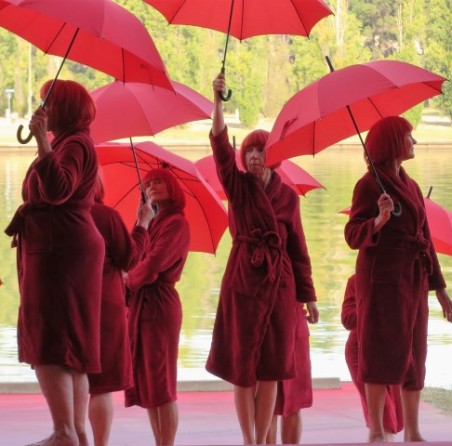
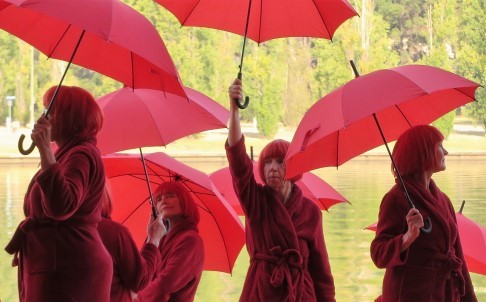
This final piece began with the women of the GOLDS dressed in scarlet dressing gowns and sporting bright red wigs. They began the piece in what initially appeared to be a narrow and quite dark cul-de-sac off the main outdoor area of the Museum. But at the end of this space was a set of double doors and, after performing together for a few moments, the dancers moved towards this door, opened it, and let in a flood of light and a water view (Lake Burley Griffin). They proceeded to open red umbrellas, and then to my surprise undid the dressing gowns to reveal a red swimming costume underneath. They then tripped the light fantastic to the water’s edge, sat down and dabbled their toes in the water, and we watched as a woman with red wig and red gown, paddled a red canoe past them. The play of light and shadow, water and land, and so many other things was breathtakingly beautiful. The canoe became a journey of life. Amazing.

Great Sport!, with its beautiful opening ‘Acknowledgement of Country’ choreographed by Tammi Gissell, was a remarkable event and continues the focus of Liz Lea on working in unusual spaces and, in particular, on using the Canberra environment and its cultural institutions as a venue, and as a backdrop to her work. But apart from the bouquets that are due to Lea for her persistent focus on Canberra as a place where dance happens, one of the most interesting aspects of Great Sport! was the way in which the choreographers, all very different in their approaches and choreographic style, were able to maintain and make visible those differences while working with a community group in which movement skills are understandably quite varied. In addition, the GOLDS get better and better in their very individual manner and responded with gusto on this occasion to the work of choreographers with the professionalism to be able to draw out the very best from a community group. The courage and commitment of the GOLDS knows no bounds, and nor does the power and understanding of the choreographers involved.

Michelle Potter, 10 August 2016

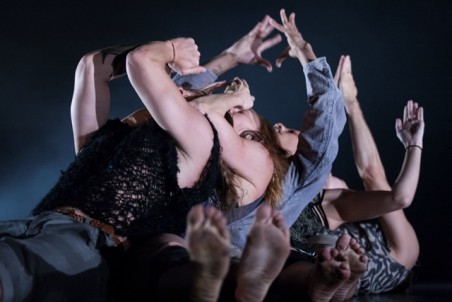
Featured image: Great Sport! Scene from ‘None of us want to be in calm waters all our lives’. Choreography by Kate Denborough

All photos: Michelle Potter, 2016

The Kiss Inside. Douglas Wright Dance Company

4 & 5 March 2016, Opera House, Wellington
Reviewed by Jennifer Shennan 

The Kiss Inside is replete with images of humans questing for the divine, for ecstasy. Agony is never far away of course, and there are numerous distractions with demons, as folk fall down and religions’ promises go bad. It’s a wild ride with music of Patti Smith, Sufi turning, throat singing, to Palestrina, and home to Bach. There’s a closing measured poem, spoken by the choreographer. (I paraphrase and summarise … ): ‘No eyes, no taste, no touch—no pain, no hate, no war—no love—no wisdom—no understanding—no way.’  The ambiguity in the last two words is quintessential Douglas Wright.  There’s no easy way. Light comes in the same package as dark, so it’s both or neither. Take both.

Te Ao Hurihuri, the turning world of Maori traditional belief, provides the striking opening image, under a mighty inverted tree, of a dancer suspended from his ankles, chanting a karakia, then spinning in and out of our hearing. A number of Maori resonances recur throughout the work.

Christianity, Hinduism, Buddhism, Islam and more, are referenced through symbols and mantras. A mimed solo conveys by signing the things that will need to be communicated. Eventually the Sign of the Cross emerges from the gestures, as though choreographed for the first time. We see it again when four dancers slowly advance, to Palestrina’s moving Kyrie. One is praying a Sign of the Cross, one makes the calm Namasde of Hindu greeting, one holds arms aloft in an urgent Maori wiri, one kneels with cupped hands catching unstoppable tears.

There’s a tender love dance that rings true, yet is free of all clichés; a duo between two blokes in camaraderie; pilgrims burdened down with the weight of book learning; an exquisite young woman hammering a stone till blood is drawn; Breugel’s blind leading the blind; a mangled poi dance by a figure in total burka, driving a young man to intravenous distraction; a gorilla offering orange cuts for refreshment at half time. They are rejected.

Soaring leaps, forward and upward, over other bodies rolling backward, on and up, over and over, forever. Other bodies lie dying in agony in the trenches, calling for Mum … then a powerful and poignant solo, breathtaking standout of the night, is danced by Sarah-Jayne Howard. Such tenderness should move enemies to delay declaring war, if only …

We recognise a string of images from Douglas’ earlier choreographies—the suspended tree from The Decay of Lying, an arc of candles from Halo, an authoritative nurse from Forever, prancing horses from A Far Cry, braying sheep from Inland, the ventriloquist voice and  the thrilling dance of creation from Black Milk, the thrusting bucking leaps from rapt. In the absence of a company that would have enabled these choreographies to be retained in a retrospective repertoire, the fragments seem like Douglas now taking leave from the legacy of his works.

The Kiss Inside  contrasts sublime with grotesque. Courageous dancers deliver rock-sure performances without faltering. For the record, they are Craig Bary, Eddie Elliott, Luke Hanna, Sarah-Jayne Howard, Simone Lapka, Tara Jade Samaya. Set design by Michael Pearce, and Jeremy Fern’s lighting, create the perfectly judged  atmosphere that carries throughout.

The Pina Bausch season here will soon show equally rich and imaginative performances, the major difference between the two companies being the level of resources their respective countries have made available to them over decades. Wim Wenders in his celebrated film, Pina, has done her  proud. Leanne Pooley in her splendid documentary, Haunting Douglas, has done the same for Douglas Wright, and us.

Jennifer Shennan, 8 April 2016

Featured image: Dancers of Douglas Wright Dance Company in The Kiss Inside. Photo: © Matt Grace. New Zealand Festival, 2016

Giselle. The Royal Ballet

28 March 2016, Royal Opera House, Covent Garden

I have been a fan of Peter Wright’s production of Giselle, which dates back to 1985, ever since I saw it in Australia in 2002 during the Royal Ballet’s tour that year. I like that Wright’s research into the historical background of the ballet has informed the work, especially in relation to character development. The current season by the Royal Ballet confirms my conviction that Wright’s production is an exceptional one.

Sarah Lamb as Giselle and Ryoichi Hirano as Albrecht perhaps don’t reach the emotional heights of others I have seen in these roles, but technically they danced beautifully: their Act II pas de deux in particular was quite breathtaking. Hirano’s partnering skills were remarkable and he made those beautiful high lifts looked effortless—Giselle became the weightless sylph she is meant to be. And the pair’s final parting in Act II, as Giselle disappeared into her grave, was as moving as one could hope for.

In addition, and thankfully, there was no emphasis on the execution of steps for the sake of steps in the course of Albrecht having to dance on and on. The choreography was used to convey the dramatic line, although of course the steps were beautifully performed. In fact I found it mightily impressive that the whole of Albrecht’s ‘dance until you drop’ section flowed on so smoothly and logically from the earlier sequence when Hilarion was sentenced to die, something that I can’t remember ever seeing so clearly before.

Being used to seeing a peasant pas de deux in other productions, the pas de six in Act I was something of a curiosity for me, which I can’t remember from 2002. But it was nicely danced and I especially admired a gentleman with dark curly hair who seemed to be someone other than those mentioned on the cast sheet. Whoever he was, he performed with wonderful attack.

The Royal Ballet’s corps danced strongly throughout. As peasants in Act I they were boisterously beautiful, as Wilis in Act II they were both mysteriously supernatural in their movements and heartlessly cold in their damnation of Hilarion and Albrecht.

John Macfarlane’s design does not pretend to be prettily peasant. The cottages in Act I are rough, the forest in Act II is wild, and it makes for just the right visual effect. And to my surprise and pleasure (I had forgotten it from previous viewings), the village folk in Act I didn’t all wear exactly the same costume.

The one thing that bothered me was that the long Act I mime scene from Berthe (Elizabeth McGorian) focused on explaining the legend of the Wilis without, to my mind, relating it enough to Giselle in particular. Berthe seemed to be talking to everyone except Giselle. On the other hand, it was interesting to see how class distinctions between the village folk and the Duke and his entourage were developed. I have never seen such a Bathilde as that of Sian Murphy who seemed positively dismissive of the peasants. And, as ever, the printed program was full of extra information including an excellent interview with Peter Wright and an explanation of the mime scene mentioned above.

All in all a very satisfying production with so much of interest that I could see it again and again.

Michelle Potter, 29 March 2016

Also as ever, this review is not accompanied by images as no one at the Royal Ballet seems inclined even to acknowledge my requests over the years for images, let alone agree to supply any.

Romeo and Juliet. The Royal Danish Ballet

11 March 2016. The Royal Theatre, Copenhagen

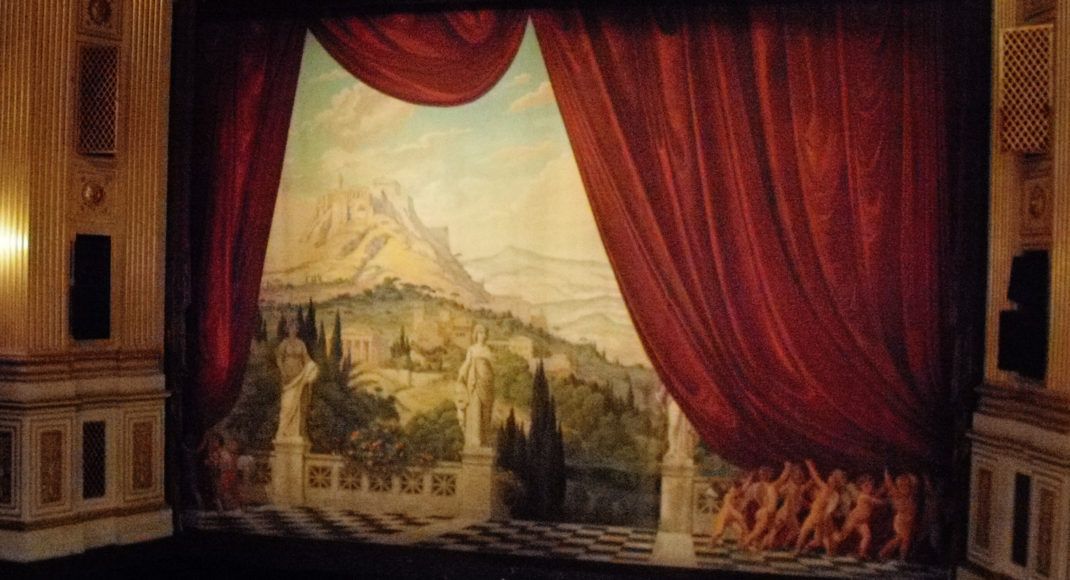
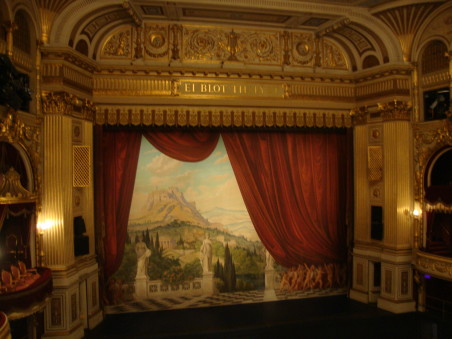
What a pleasure it was to be sitting in the auditorium of Copenhagen’s beautiful, old Royal Theatre waiting for the curtain to go up on a production of Romeo and Juliet—John Neumeier’s version too, which I had never seen: such a sense of anticipation not just because for me it was a different production, but also because it was about ten years since I last saw the Royal Danish Ballet. What a sense of occasion too because just as it was time for curtain up Queen Margrethe II of Denmark, a true balletomane, appeared in the Royal Box and the audience rose as one to welcome her.

But to the show …

The Neumeier Romeo and Juliet is said to have been partly inspired by John Cranko’s production, so well known to Australian audiences during the period of Maina Gielgud’s directorship of the Australian Ballet.  And yes, there is a spectre of Cranko somewhere there. But on the other hand, Neumeier’s production is quite distinctive. Choreographically it is absolutely fascinating, especially in the way it contrasts the movements of the elders of the Capulet and Montague families and those of the younger folk across the social strata. Both groups are given what I can only say are beautifully eccentric movements, especially for the arms and upper body. The elders often use a highly formalised vocabulary, while the young people have a freedom that sometimes verges on the wild. Gorgeous. And how beautifully did the dancers of the Royal Danish Ballet respond to this vocabulary!

Ida Praetorius as Juliet was completely entrancing. She showed off a stellar technique—the highlight for me came when she was refusing the attentions of Paris and at one point, in desperation, tossed off an amazing, perfect double turn in arabesque with arms flung upwards and body slightly tilted. But not only did she dance with such perfection, her characterisation of Juliet was brilliant. She played the role as it was written—she was a thirteen year old. She often seemed slightly awkward of limb, she often made her youth clear by seeming not to know how to behave in every situation, and her nervousness and vulnerability were clear, especially when she executed that wonderful stumble on the last few stairs as she entered the ballroom for the Capulet ball. But throughout, her youthful, slightly crazy love for Romeo was always obvious.

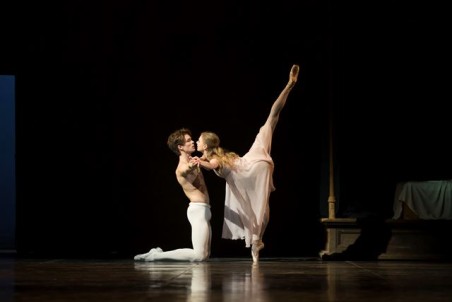
Andreas Kaas and Ida Praetorius. The Royal Danish Ballet. Photo: © 2016 Costin Radu
Andreas Kaas and Ida Praetorius in Romeo and Juliet. The Royal Danish Ballet. Photo: © 2016 Costin Radu

As Romeo, Andreas Kaas was as ardent and dramatic in love as one could hope. His enthusiasm and desire for Juliet showed in his every movement. He rushed to her. He could scarcely hold back his longing for her. Kaas and Praetorius, together, made the two characters come alive in a way I have never seen before. It seems like a partnership made in heaven from both a dancerly and dramatic point of view.

Another stand-out performance came from Sebastian Haynes as Mercutio, dashing and charismatic as a character, thrilling as a dancer. His death scene was powerfully moving and made more so by the feisty way Romeo took on Tybalt after the stabbing. I also admired Susanne Grinder as Lady Capulet. She moved with such strength and such elegance, sweeping her way through Neumeier’s formal choreography and wearing her bright orange gown with style and aplomb—a true aristocrat. And I have never taken all that much notice of the entourage that enters the square to try to restore some peace to the conflicts between the Capulets and the Montagues. But in this production Poul-Erik Hesselkilde was a towering presence as the Prince of Verona. Mostly he stood still, centre stage, but he was so in command of the role that his power spread across the stage and out into the auditorium.

There were so many magical moments, too, inserted by Neumeier to make more sense of the story. The potion that the friar gives to Juliet, for example, we know is not a deadly poison but Neumeier introduces a group of street performers who, in a commedia dell’arte manner, mime the effect the liquid will have. Juliet and the friar stand motionless, in a kind of freeze frame, in the act of giving and receiving the vial.

As is usual in Royal Danish Ballet performances, the presence of children in the crowd scenes was always noticeable. I loved the way the adult dancers in the corps de ballet interacted with them, shielding them from fight scenes, making sure they hurried off during the more gruesome moments. And as for the corps, I loved that they looked as though dancing was their life and not just their job.

Costumes and sets were by Jürgen Rose, also responsible for the design of the Cranko production. But his work for Neumeier had a very different feel and was often unusual in the way Neumeier’s choreography was unusual. His striking red wedding dress with white turban for Juliet was quite startling, for example, and the church for the wedding, which was created as plain brown flats slid beautifully and noiselessly into place, had all the simplicity of a Cistercian abbey church. Nothing was overdone but everything contributed beautifully and economically to the unfolding story.

This Romeo and Juliet was such a striking production, so beautifully danced by the entire company and musically thrilling—it just took my breath away. The evening sped by and it was by far the most exciting and captivating performance I have seen for years, anywhere in the world.

Ida Praetorius and Andreas Kaas. The Royal Danish Ballet. Photo: Costin Radu
Ida Praetorius and Andreas Kaas in Romeo and Juliet. The Royal Danish Ballet. Photo: © 2016 Costin Radu

Michelle Potter, 15 March 2016

Christopher Wheeldon triple bill. The Royal Ballet

10 March 2016, Main Stage, Royal Opera House, Covent Garden

In this triple bill of works by Christopher Wheeldon from the Royal Ballet, it was especially pleasing to see the full version of After the rain. Its visually arresting choreography for three couples in the first part, performed to Tabula rasa by Arvo Pärt, shows Wheeldon as his sculptural best as arms and legs swing from pose to pose and dancers move in unison and counterpoint. Dressed in grey practice clothes the six dancers perform in front of a geometric lighting design (59 Productions) consisting of of two squares of light. A central one, blue-ish white in colour, sits inside a larger one of grey-ish blue. Simple but effective, these two squares echo the colours of the costumes and also the formally structured choreography.

The pas de deux that follows, often danced without the opening movement, was a disappointment for me. Perhaps I needed to be sitting closer as I missed the quiet emotion that I have seen in performances by other companies? But then a seat in the theatre shouldn’t affect such things if the work is well performed. Perhaps too the physiques of Zenaida Yanowsky and Reece Clarke, who danced the pas de deux, were not far enough apart from each other to highlight what I think are the qualities of this section, danced again to Pärt, this time to the gently reflective Spiegel im Spiegel? The work was made originally for Wendy Whelan and Jock Soto of New York City Ballet and together, with their very different body shapes, they suggested an entrancing strength and frailty that was not apparent, and that I missed, with Yanowsky and Clarke. In fact I’m not sure what their performance suggested beyond a dance for two.

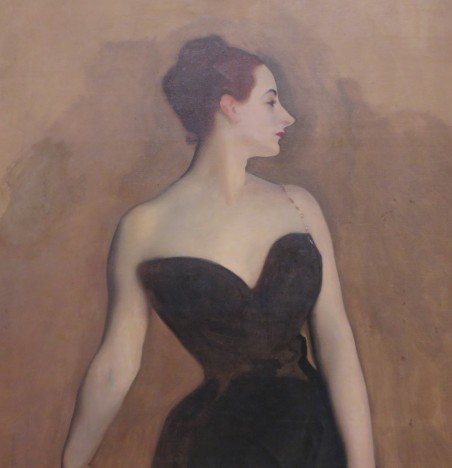
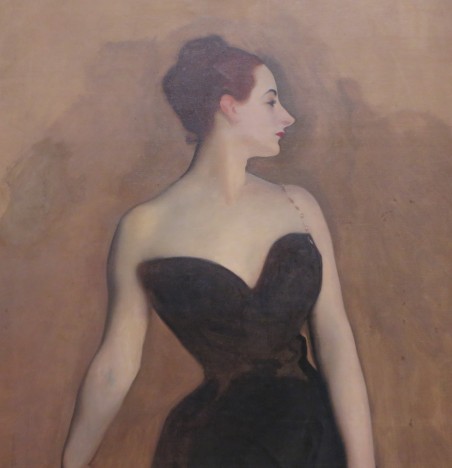
Wheeldon’s newest work, Strapless, a one act narrative ballet centring on the scandal surrounding the showing of John Singer Sargent’s portrait of Mme Gautreau in Paris at the Salon of 1884, was a mixed blessing. When the curtain went up on an empty picture frame attached to a grey-coloured screen I was consumed by curiosity. How would this work unfold? And the opening moments, as Mme Gautreau took her time choosing her wardrobe for the unveiling of Sargent’s portrait while her husband fussed at her slowness, was very nicely choreographed with movement that defined the two characters. Strapless returned in its closing scene to that opening picture frame, which this time was not empty but contained the finished portrait, although now Mme Gautreau was broken in spirit by the scandal that emerged when the portrait showed that one strap of her black gown had slipped off her shoulder. Without the trappings of her former life, and dressed only in a skin-coloured, body-hugging costume, we watched as she sought to make sense of her situation.

In between the opening and closing scenes, the work felt like a cross between a Broadway musical, with a ‘chorus’ of dancers representing Parisian society performing choreography that seemed like it had come from a Busby Berkeley show; and Agnes de Mille’s Fall River Legend when that same chorus started to look like tight-lipped parishioners. The score from Mark-Anthony Turnage didn’t help either as it hardly sounded like the era of La belle époque.

Lauren Cuthbertson as Mme Gautreau was not having one of her best nights, unfortunately, and was a little unsteady on occasions. And with so many changes of scene in a one act ballet—the work began in 1884, slipped back to 1881, came forward to 1883 and ended where it began in 1884—there was a need for moveable scenery (screens, door frames and the like), Unfortunately again, the scenery was trundled on and off very noisily and so many people (characters and scene changers) constantly slipping on and off stage was decidedly disruptive to the smooth unfolding of the storyline. I also found it hard to follow who was who among the male principals. The printed program, like all Royal Ballet programs I have encountered, was excellent, full of explanatory notes and articles, but any work for the stage needs to be easily understood, I believe, without having to resort to reading a convoluted story in a program.

Circumstances were such that I was unable to stay for the final Wheeldon work, Within the golden hour. But perhaps it was just as well. I am able to retain, as a result, an image of a work I enjoyed immensely on a previous occasion in San Francisco.

Michelle Potter, 12 March 2016

John Singer Sargent, Study of Mme Gautreau c. 1884 detail
John Singer Sargent, Study of Mme Gautreau c. 1884 (detail)

The image above is a detail of an unfinished version of the Sargent portrait, which I saw in the Tate Britain and which has no strap at all on Mme Gautreau’s right shoulder. In the version that was shown in the Salon of 1884, and which caused the scandal, the right shoulder strap was painted as having fallen off the shoulder. The final version, in which Sargent repainted the fallen strap into its regular position, is in the Metropolitan Museum of Art, New York.

CounterMove. Sydney Dance Company

29 February 2016, Rosyln Packer Theatre, Sydney

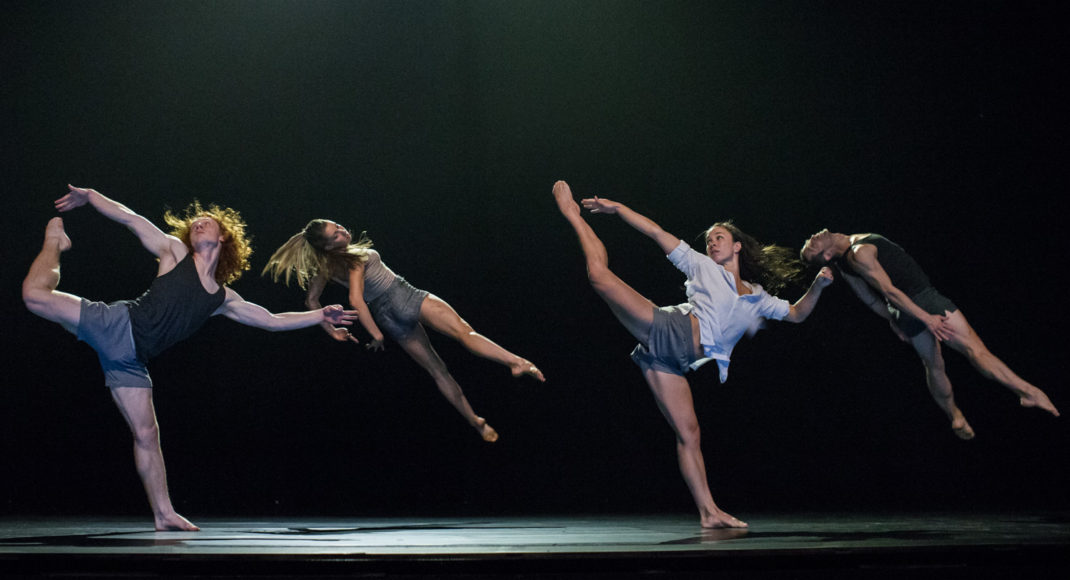
My review of Sydney Dance Company’s double bill CounterMove, comprising Alexander Ekman’s Cacti and Rafael Bonachela’s Lux Tenebris, has been published on DanceTabs at this link.

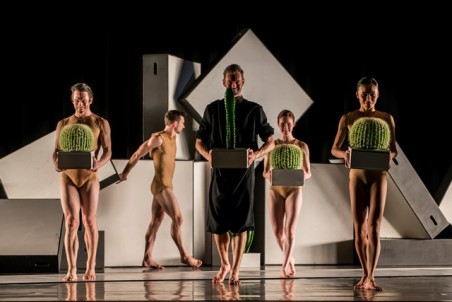
Sydney Dance Company in 'Cacti'. Photo: Peter Greig
Sydney Dance Company in Cacti, 2016. Photo: © Peter Greig

Cacti is making its second appearance in Australia. It was first seen as part of Sydney Dance Company’s De Novo season in 2013. This year, however, it will be seen in many more venues. Following the Sydney showing, which concludes on 12 March, Cacti will be seen in the following cities/venues, along with Lux Tenebris, as part of the CounterMove season:

Canberra Theatre Centre, 19–21 May
Southbank Theatre, Melbourne, 25 May–4 June

Regional tour 17 June to 27 August
New South Wales
Wollongong, 17–18 June
Orange, 22 June
Newcastle, 25 June
Port Macquarie, 29 June

Queensland
Rockhampton, 2 July
Gladstone, 6 July
Cairns, 9–10 July
Gold Coast, 15–16 July

Northern Territory
Darwin, 29 July

Western Australia
Geraldton, 3 August
Mandurah, 6 August
Albany, 9 August
Bunbury, 13 August

New South Wales
Bathurst, 20 August
Griffith, 24 August
Dubbo, 27 August

Later in the year Lux Tenebris will be set on the Dresden Frankfurt Dance Company, ahead of a premiere European season in September.

Michelle Potter, 4 March 2016

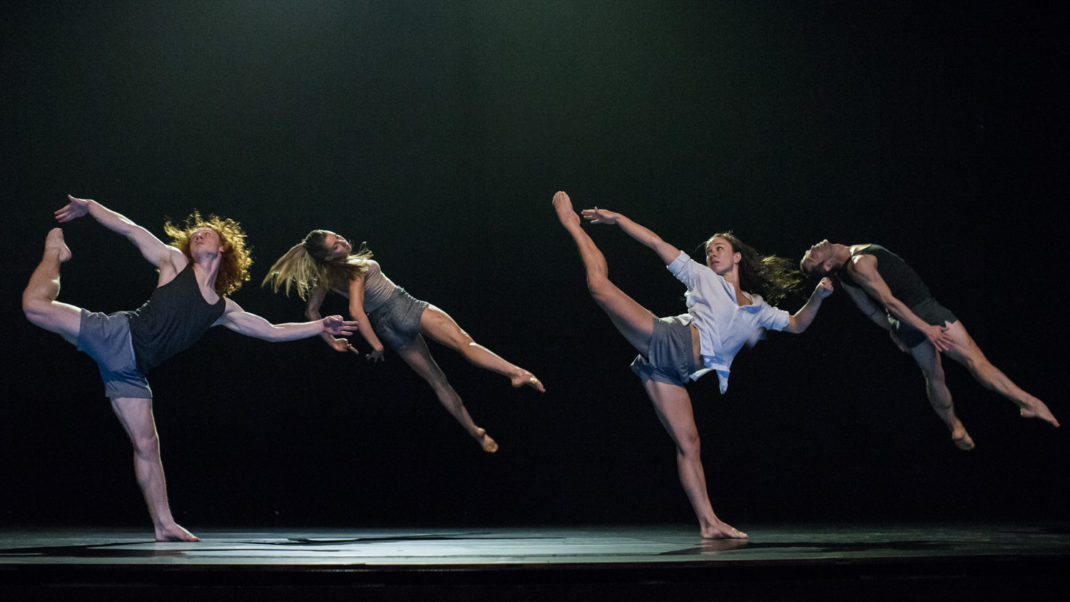
Featured image: (l-r) Nelson Earl, Holly Doyle, Fiona Jopp and David Mack in Lux Tenebris, Sydney Dance Company, 2016. Photo: © Peter Greig

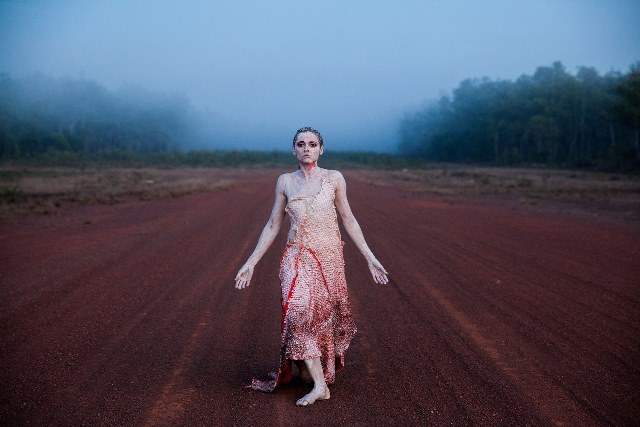
Yolande Brown as Earth Spirit in Spear. Photo Jacob Nash

Spear. A Stephen Page film

17 February 2016, preview screening, Arc Cinema, National Film and Sound Archive, Canberra

No doubt about it, Stephen Page’s Spear is a confronting film, and one in which the director’s approach is absolutely uncompromising. But it is also an incredibly beautiful film from so many points of view.

Spear centres on the spiritual journey of a young man, Djali, played by Hunter Page-Lochard, who seeks to understand what it is to be an Indigenous man suspended between two, often conflicting worlds. As he moves between those two worlds we encounter with him the pressures and problems that surround him, including substance abuse, alcoholism, suicide, and racism.

Hunter Page-Lochard with artists of Bangarra Dance Theatre in 'spear'. Photo Edward Mulvihill
Hunter Page-Lochard with artists of Bangarra Dance Theatre in Spear, 2015. Photo: © Edward Mulvihill

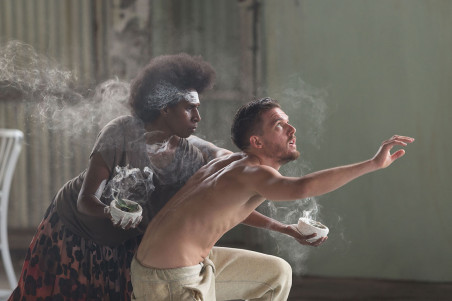
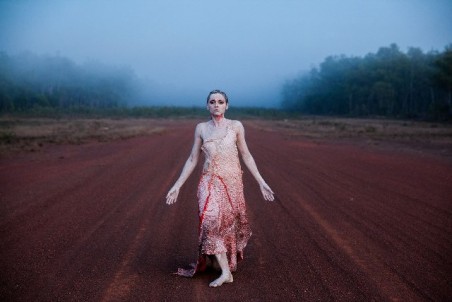
Some moments are (deliberately) quite crass—a dance to the 1960s song ‘My Boomerang Won’t Come Back’, for example. Others are immensely powerful—such as a scene where Daniel Riley as ‘Prison Man’ engages with Elma Kris as ‘Old Woman’ who brings the cleansing power of a smoking ceremony into the prison mess hall. And others are breathtaking in their use of landscape as backdrop—the view of Kaine Sultan Babij as ‘Androgynous Man’ stalking through long grass and between trees is striking, as are the scenes in which Yolande Brown as ‘Earth Spirit’ walks along a red dust road.

Elma Kris and Daniel Riley in 'Spear'. Photo Tiffany Parker
Elma Kris as ‘Old Woman’ and Daniel Riley as ‘Prison Man’ in Spear, 2015. Photo: © Tiffany Parker

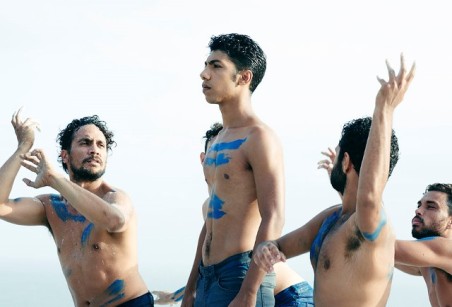
Choreographically Page has delivered some of his best movement, whether in solo work for the main members of the cast, or in group scenes. And so powerful are the performances by the cast that there is absolutely no doubt about the message being put forward. Sound is everywhere too. An original score by David Page is complemented by songs from Djakapurra Munyarryun, although spoken text in English is minimal and is mostly delivered by actor Aaron Pedersen who plays the part of ‘Suicide Man’. And there is a suicide scene, which is very deftly handled. Ochre is everywhere as well, in all its four colours. It seems to permeate the production whether as paint on bodies or dust in the air.

What makes this tough, fearless, uncompromising film so quietly beautiful? Visually it is stunning. Director of photography Bonnie Elliott has delivered some amazing shots of an incredible landscape from outback to rugged coastline, and some of the camera angles and close-up shots are just breathtaking. Even her takes on run-down interiors, under-ground spaces and alley ways are moving. And Jacob Nash’s work as production designer gives the film a particular strength. As in his sets for Bangarra’s live shows, Nash has brought to the film an understanding of the power of minimalism in design. But perhaps more than anything it is Stephen Page’s ability to deliver the ultimate message of hope that stands out. The closing scene is a ‘punch the sky’ moment. Simple, direct and moving.

Spear is Stephen Page’s debut as director of a feature-length film. It is a remarkable film. Go see it.

Yolande Brown as Earth Spirit in Spear. Photo Jacob Nash
Yolande Brown as ‘Earth Spirit’ in Spear, 2015. Photo: © Jacob Nash
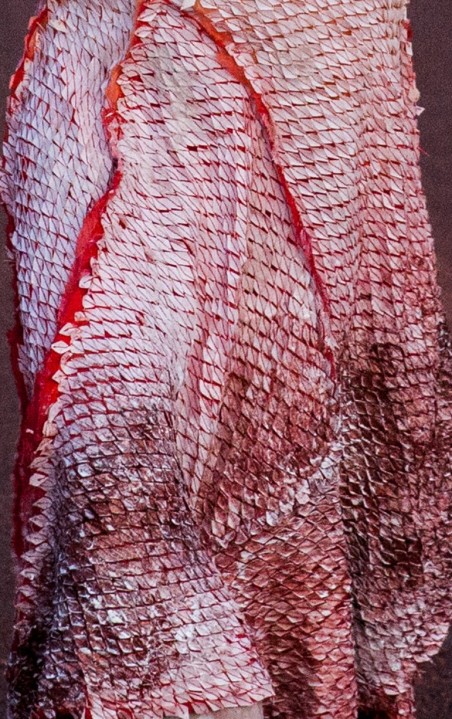
Detail of the costume for Earth Spirit in 'Spear'.
A close-up view of the ‘Earth Spirit’ costume, the work of Jennifer Irwin.

 Michelle Potter, 19 February 2016

Coppélia. Australian Conservatoire of Ballet

18 December 2015 (evening), Hamer Hall, Victorian Arts Centre, Melbourne

What a wonderful surprise this performance was! The venue was interesting—Hamer Hall is basically a venue for concerts and so the performance space is without a proscenium arch. But the unusual space was used thoughtfully and little of the theatricality that is achieved with a proscenium-style theatre was lost.

This Coppélia was staged by Maina Gielgud especially for the Australian Conservatoire of Ballet, a training establishment led by former Australian Ballet dancers Christine Walsh and Ricardo Ella. Gielgud had added some choreography and had made some changes in order to accommodate her cast, including giving Swanilda (Swanhilda in this production) a little sister called Elysia, adding two extra friends for Swanilda and, with fewer male dancers than might be available in a company, rearranging some dances slightly. Gielgud also re-imagined somewhat the character of Dr Coppélius having him make two swans, a spider, a caterpillar and other creatures, which we saw in his workshop in Act II,  in addition to his ultimate creation, the doll Coppélia. Otherwise the ballet ran as we have come to expect.

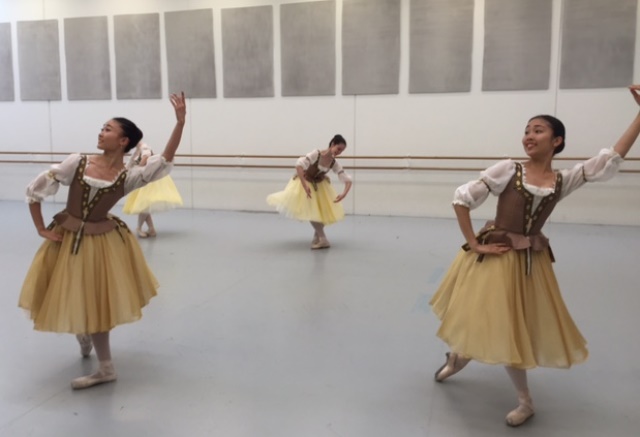
Coppelia's friends in rehearsal, Australian Conservatoire of Ballet, 2015
Coppélia’s friends in rehearsal, Australian Conservatoire of Ballet, 2015

But this was no ordinary school production. The dancers had been beautifully trained, thoroughly rehearsed and looked like professionals. It was a thrill to see such a sense of engagement among the cast throughout the show, which of course transfers across into the auditorium and gives the audience a sense of engagement as well. And this theatricality began early with a wonderful performance of the Act I Mazurka. This was not one of those staid renditions that we often see. This was real character dancing with bodies bending, faces beaming with pleasure, and steps being performed strongly. And the same can be said of the Czardas that followed later in the act

Two guest artists from Tokyo Ballet, Maria Kawantani and Arata Miyagawa, took the leading roles. Both were beautiful dancers but, in particular, Miyagawa as Franz was technically superb. Everything was so cleanly executed. His double tours were done with such perfection in the body and feet (and amazing landings in a perfectly placed demi-plié), but they also soared upwards in a way that made me gasp. Then there were the manèges of various steps, the pirouettes, his partnering—he was just brilliant. But more than that, he too had that sense of engagement with everything and everyone on stage. I just loved the way he blew kisses across the stage to Swanilda as she was about to start a variation in Act III.

Another standout performer was the young girl, Hana Glasgow-Palmer, who played Swanilda’s little sister. Too young yet to be part of the Conservatoire’s professional training program, she nevertheless gave the role real character. Her outstanding stage presence and, again, that ability to engage, augurs well for her future. I also especially enjoyed Prayer, danced calmly and serenely by Victoria Norris. But every dancer contributed beautifully to this performance and, quite honestly, in a number of ways it outshone many a professional show I have seen.

The music was played by the Australian Conservatoire of Ballet Orchestra, with some musicians seated on a dais upstage, others above the stage space. The orchestra was led by conductor Peter Tandy and there were times when the music gave me goose bumps, again something I don’t normally feel when listening to orchestral accompaniments at the ballet.

This Coppélia was a significant achievement for all concerned.

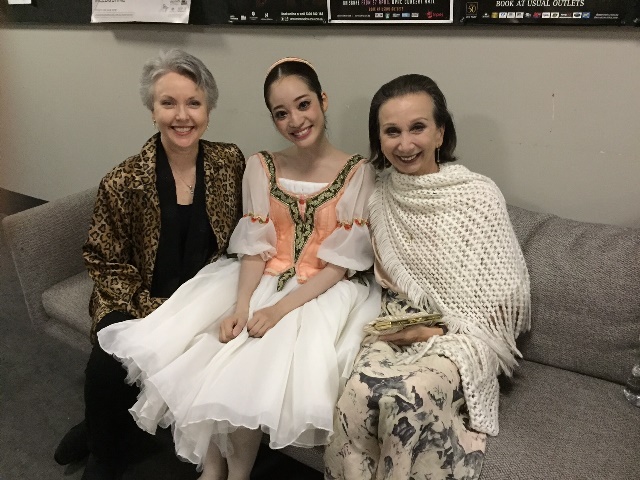
Christine Walsh, Maria Kawatani, Maina Gielgud

Michelle Potter, 22 December 2015

Janessa Dufty in Daniel Riley's 'Reign', Sydney Dance Company 2015. Photo: Peter Greig

New Breed (2015). Sydney Dance Company

8 December 2015, Carriageworks, Eveleigh (Sydney)

My review of New Breed, a program of new works from Kristina Chan, Fiona Jopp, Bernhard Knauer, and Daniel Riley, is now available on DanceTabs. I continue to ponder Riley’s work, Reign, as there is no reason why an Indigenous-style vocabulary shouldn’t be used for any theme. Perhaps, too, I am wrong to assume the theme is strongly Western. But, I still wonder…

Follow this link to the DanceTabs review.

Featured image: Janessa Dufty in Daniel Riley’s Reign. Sydney Dance Company 2015. Photo: © Peter Greig

Janessa Dufty in Daniel Riley's 'Reign', Sydney Dance Company 2015. Photo: Peter Greig

Michelle Potter, 13 December 2015