Olga Spessivtseva in Australia

Olga Spessivtseva, graduate of the St Petersburg Theatre School, famed interpreter of Giselle, star of Serge Diaghilev’s ill-fated 1921 London production of The Sleeping Princess, and legendary ballerina of the Paris Opera in the 1920s, was contracted to come to Australia in 1934 as principal dancer with the Dandré-Levitoff Russian Ballet. Spessivtseva, or Spessiva as she was officially known on the tour, joined the company in Singapore, along with her companion (the retired American businessman Leonard G. Braun), her dancing partner Anatole Vilzak, and others who were to join the company. Following the Singapore season, in which she did not perform, she travelled with the company through Java, where she did dance, and on to Australia where the company was to fulfil engagements in Brisbane, Sydney, Melbourne and eventually Perth.

The Australian component of the tour has generated a good deal of interest as a result of the fact that Spessivtseva left the tour in an apparent state of mental distress following the Sydney season, which ran from 27 October to 28 November 1934. Exactly what happened to Spessivtseva is unclear and although her performances were, on most occasions, reviewed more than favourably by the press, most other accounts present a story of wildly eccentric and delusional offstage behaviour on her part. Anton Dolin, for example, in his biography of Spessivtseva, The Sleeping Ballerina, records that she complained she was being spied upon and that she was in terrible danger from unknown forces, that on one occasion she was found wandering on a deserted highway miles from town and so on.
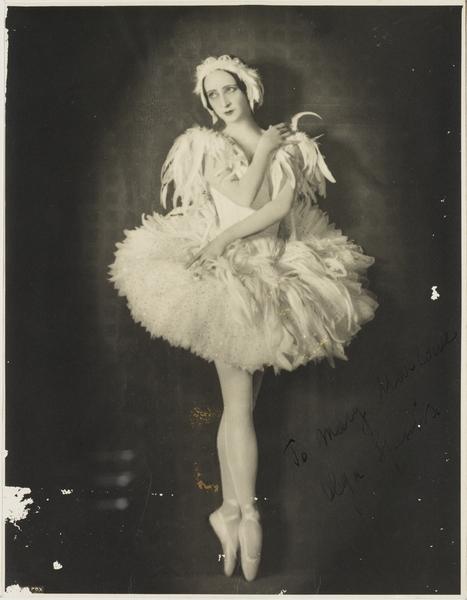
spessivtseva-swan-lake
Olga Spessivtseva in costume for Swan Lake, Sydney 1934. Sydney Fox Studio. Mitchell Library, State Library of New South Wales. Reproduced with permission

The official story as given to Australian newspapers was that Spessivtseva sprained her ankle. Melbourne’s Argus newspaper reported on 1 December 1934, the day the Melbourne season was to begin:

‘A week before the end of the Sydney season the company suffered a severe loss when the first ballerina, Olga Spessiva, sprained her ankle. Mme Spessiva is resting in Sydney and may not be able to appear again for several weeks.’

However, Harcourt Algeranoff, who also danced with the company on this tour and whose letters to his mother provide a wealth of information about the company, has a slightly different version of events. Writing from Melbourne on 2 December 1934 his inside information is that Spessivtseva had already left for Europe:

We’ve had rather a blow as Spessiva is ill and although it is no known publicly, she’s sailed for Europe. She has promised to rejoin us some months hence when she is better.’

Dolin, however, gives a quite different account of Spessivtseva’s movements. He maintains that Spessivtseva was sent to recuperate in the Blue Mountains west of Sydney for some weeks after her last performance in Sydney. Although no evidence for the Blue Mountains story, other than Dolin’s account, has yet come to light it does have a certain plausible aspect to it. In his unpublished work ‘For Olga Spessivtzeva. A memoir of loving’ Dale Fern suggests that what has not been fully recognised is that Spessivtseva was physically frail during her dancing career. He writes:

‘What was consistently overlooked, by managers and dancers alike, in 1916 [her appearances with Diaghilev’s Ballets Russes in the United States], in 1921 [her performances in Diaghilev’s Sleeping Princess], and in 1934 [her tour with the Dandré-Levitoff company], was Olga’s frail constitution, her delicate physical condition. She was not well. Tuberculosis visited her regularly.’

In the late 1800s and early 1900s, the crisp mountain air found in the Blue Mountains was promoted to Sydneysiders as a kind of health tonic for many ailments including, according to Blue Mountains Park historical information, tuberculosis, asthma, bronchitis, malaria, stress, anaemia, and heart troubles. In the early part of the twentieth century, the small town of Wentworth Falls in the heart of the Blue Mountains was the site of two very well known institutions — the Queen Victoria Home and Bodington Sanatorium — both of which cared for patients with tuberculosis. In addition, the Hydro-Majestic Hotel, located higher into the mountains at the village of Medlow Bath, was built by Mark Foy of the wealthy Australian retail family as a ‘hydropathic sanatorium’. Unlike the Wentworth Falls institutions, where conditions appear to have been spartan and somewhat unpleasant according to the patients who have reported on life there, the Hydro-Majestic and its surrounds were a prestigious and socially desirable health retreat and its guests often included those prominent in the arts. The kinds of treatments available were listed in one promotional booklet. They included electric water and massage, electric light bath, vibration massage, general vibration massage, local hot air, local general massage, and various medicated baths.

It is conceivable that Spessivtseva, if indeed she did go to the Blue Mountains, may have gone to the Hydro-Majestic. But if Algeranoff was correct, Spessivtseva had no time to recuperate in the Blue Mountains or anywhere else before boarding a ship. However, ships’ passenger lists from Sydney that include her name, or that of her companion Leonard G. Braun, that might confirm such a departure remain to be located.

With regard to the official account of a sprained ankle, it was more than likely simply a story concocted by company management to explain to Melbourne audiences the fact that Spessivtseva was not performing there as previously advertised. Her name appeared as star attraction in Melbourne advertisements up until 28 November. By 29 November all reference to stars had been removed and by 30 November it was Natasha Bojkovich whose name was being promoted in Melbourne.

Nevertheless, just exactly what happened remains a mystery at this point. Spessivtseva’s name continued to be listed in newspaper advertisements for the last Sydney shows but there is a curious absence of reviews of the last program in the Sydney season and the last mention of her name in a performance seems to have occurred in The Sydney Morning Herald on 19 November when her performance in Raymonda was thought to be ‘cold’. In a review of the new program that opened on 24 November, the weekly newspaper Truth reported:

‘Owing to a slight indisposition, Spessiva did not dance. Her place was taken by Natasha Bojkovich, second ballerina of the company … The management announced that Spessiva will appear as usual tomorrow.’

Whether she appeared at all during the last week is questionable. Edward Pask in his Enter the colonies, dancing writes that she danced on the last night of the Sydney season but he quotes as his source ‘an [unidentified] observer at that performance’. Dolin also maintains that she performed on the last evening in Sydney. But neither gives any sound documentary reference to support his claim and it has to be assumed that neither attended performances in that last week to see for himself since Dolin was not in Australia at the time and Pask had not been born. As a counter report to Pask’s and Dolin’s comments, Valerie Lawson notes in an article in Brolga in December 2000 an unidentified, undated press clipping in a privately-held scrapbook that states:

‘[Spessiva] strained her ankle during the third week of the Sydney season and was ordered a brief rest by her doctor. She struggled on bravely for a few performances but was obliged to retire from the cast during the final week of the season.’

This report does, however, sound a little like an elaboration of the explanatory story given to Melbourne audiences. But as 1935 began, a further reference to Spessivtseva appeared in The Sydney Morning Herald as part of a summary of the previous year’s theatrical highlights. It supports Algeranoff’s account that Spessivtseva returned to Europe and alludes to her ill health:

‘Spessiva, who had been billed as the leader of the company, danced at every performance at first; but made only brief appearances, and, as time passed it became apparent that she was ill at ease. Still she danced brilliantly in “Carnival” and dropped out of the cast only when she strained an ankle. Since then, it has been revealed that she was in ill-health during the whole of the Sydney season; and now she has had to return to Europe leaving Natasha Bojkovich as a highly-efficient substitute leader in Melbourne.’

The story of Spessivtseva in Australia continues to remain something of an unsolved mystery. Until further evidence emerges, her activities during and immediately after the Sydney season continue to raise questions.

© Michelle Potter, 25 August 2010

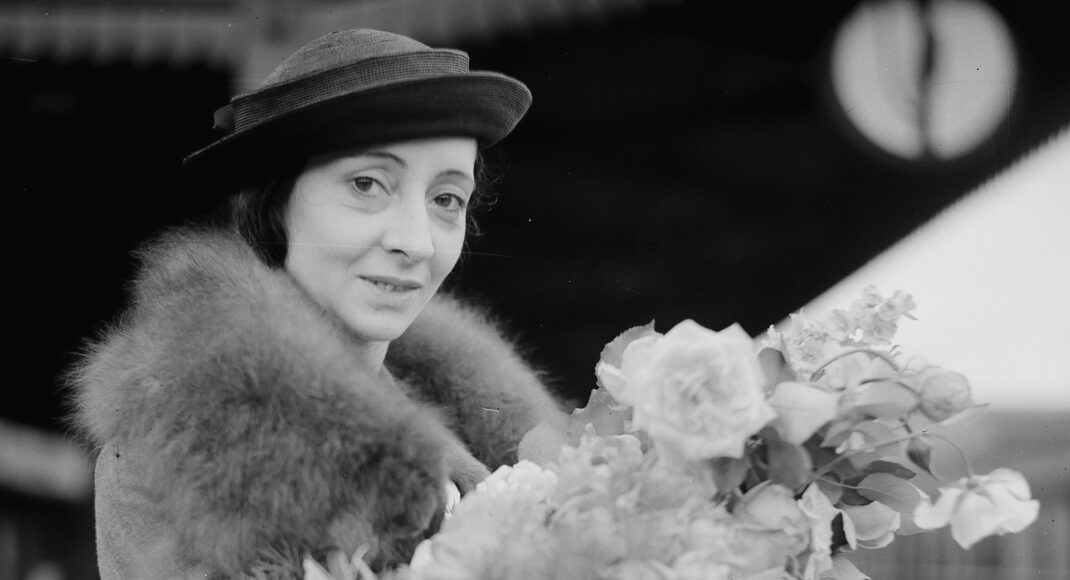
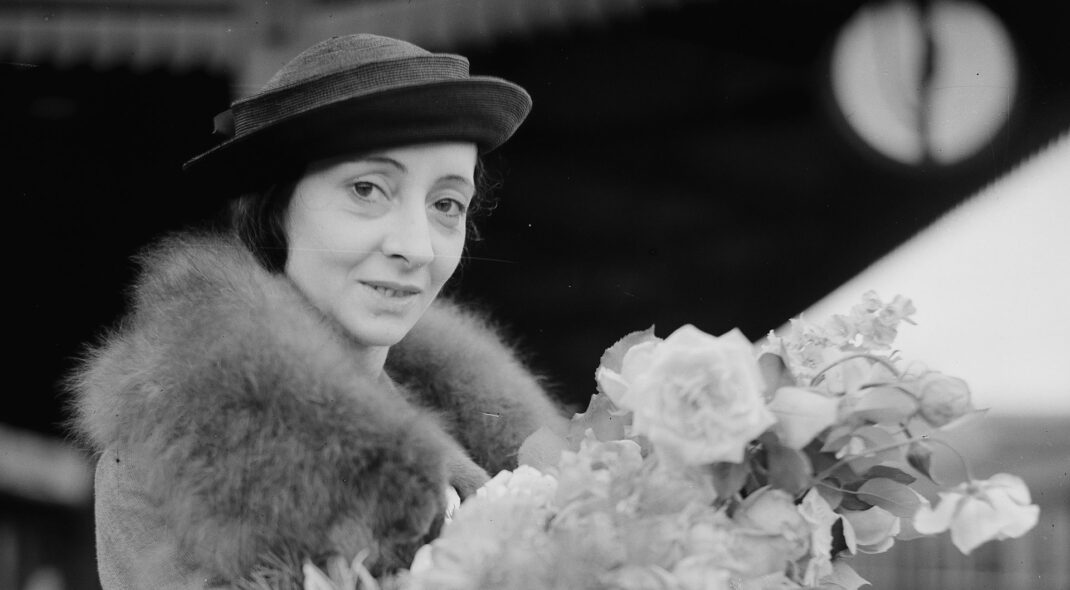
Featured image: Olga Spessivtseva at Central Station, Sydney, 1934. Photo: Sam Hood. Image in the public domain


Note: My substantial article on the Dandré-Levitoff Russian Ballet tour to South Africa, Singapore, Java, Australia, Ceylon, India and Egypt during 1934 and 1935 is currently being considered for publication by Dance Research (Edinburgh University Press).

Update 5 December 2013: The article mentioned above was published in Dance Research, 29:1, Summer 2011. See also the tag Olga Spessivtseva for further posts and ongoing comments.
Valentin Zeglovsky. Some Australian notes

Some recent correspondence with a friend of the family of the Ballets Russes dancer Valentin Zeglovsky sent me in search of further information. I was curious in the first instance about Zeglovsky’s name as it seems to have had a number of variant spellings. While this is not surprising in the context of the Ballets Russes, where names were changed for stage purposes and often Russianised for maximum theatrical effect, the Zeglovsky situation was a little different.  There is no doubt that his stage name was Valentin Zeglovsky as this name appears on programs for the Covent Garden Russian Ballet season in Australia as well as in programs for seasons by the Borovansky Ballet and the Kirsova Ballet, in which Zeglovsky danced after he elected to remain in Australian at the end of the season by the Covent Garden Russian Ballet in 1939. But online references to documents held in the National Archives of Australia consistently indicated that his name was Valentins Zeglovskis. The family, however, while acknowledging his stage name regarded Valentin Zeglovskis as his ‘real’ name and believed that Valentins was a misnomer.

zeglovsky-cropped
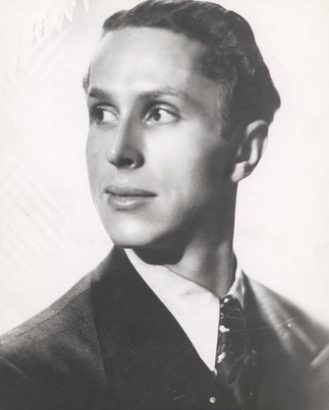
Portrait of Valentin Zeglovsky, 1940s. Photographer unknown. Courtesy National Library of Australia, Geoffrey Ingram Archive of Australian Ballet. Reproduced with permission.

Examination of the hard copy records in the Archives revealed an interesting situation. During his time in Australia, Zeglovsky spent some of his time teaching in Sydney. He set up a school in a studio in the house in which he lived in Macdonald Street, Potts Point, in the early 1940s. From there he submitted four patent applications to the Sydney office of the Commonwealth of Australia’s Registrar of Copyrights. The applications were for four ballets, The Red Poppy, Les Amoreux, Miralda and  Morning Noon and Night. They were probably never realised but the libretti were submitted and approved between late 1942 and mid 1943. On these applications the name Valentins Zeglovskis appears quite clearly both in typewritten and handwritten form, including as an official signature. Not only that, Zeglovsky applied to be naturalised in 1945 and this was achieved in 1946. On naturalisation documents held by the Archives, including copies of newspaper declarations of his intent to seek naturalisation, his name appears as Valentins Zeglovskis. It seems that this situation remained until his Australian passport, issued in 1949, was cancelled and his naturalisation certificate returned to the Department of Immigration in Canberra in 1954 from the London office of the High Commissioner for Australia. In 1954 he registered as a citizen of the United Kingdom and Colonies. So for some reason he clearly wanted to be known officially, at least in Australia, as Valentins Zeglovskis.

While names will always be somewhat capricious, especially in the situation in which Zeglovsky found himself during his years in Australia, research into those archival documents revealed other fascinations about the life of a dancer in Australia in the 1940s. They will be the subject of a future post.

© Michelle Potter, 19 August 2010

Paul Knobloch

Paul Knobloch, former soloist with the Australian Ballet, is back in Australia briefly to visit his family and conduct master classes in Canberra. Knobloch left the Australian Ballet in 2009 to join Béjart Ballet Lausanne.

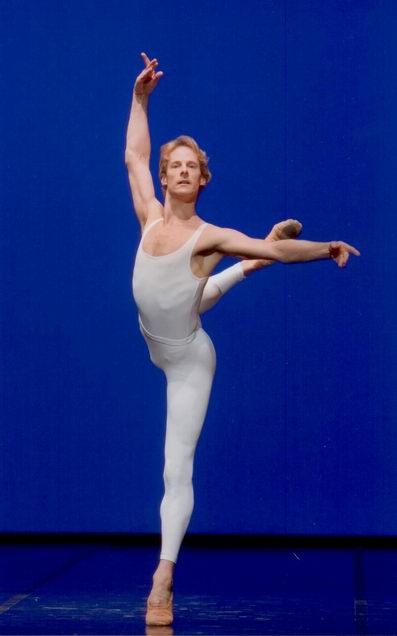
Paul Knobloch in ‘Webern Opus 5’

Knobloch counts dancing the opening night of a season in Paris, when he partnered Russian-born Daria Ivanova in Béjart’s Webern Opus 5, as the highlight of his career to date with  Béjart Ballet Lausanne. He returns to Switzerland in September when Béjart Ballet Lausanne will begin working with Tokyo Ballet on a joint staging of Béjart’s version of Rite of  Spring. Knobloch’s own work Valetta, commissioned by David McAllister for an Australian Ballet gala in 2007, will be on the program for the Australian Ballet School’s graduate exhibition in Melbourne this September.

Michelle Potter, 16 August 2010

Of earth and sky. Bangarra Dance Theatre

23 July–28 August 2010, Drama Theatre, Sydney Opera House

Bangarra Dance Theatre, which was founded by Carole Johnson in 1989, has entered its twenty-first year with a program of two works under the generic title Of earth and sky. Riley, a work by emerging choreographer Daniel Riley McKinley, represents the sky of the title, while Artefact choreographed by well established dancer and choreographer Frances Rings represents the earth. The program as a whole suggests a potential new direction for Bangarra.

The inspiration for Riley came from the work of the late indigenous photographer and film maker Michael Riley, in particular from his series of photographic prints in which an object is digitally manipulated to float against a background of a soft blue sky dotted with clouds. They are single objects, a feather, a locust, a bible, a boomerang, a broken wing, an angel, and they reflect McKinley’s own indigenous background in rural New South Wales and, at times, the conflict between Aboriginal and Christian spirituality.

Riley’s cloud photographs are projected in turn onto a screen and McKinley’s choreography grows from and is shaped by his reflections on the objects. The choreography for the boomerang image, for example, swirls and turns, while that for the locust gathers strength of movement so that it buzzes and swarms as David Page’s electronic music develops an insistent power. The highlight is a duet, Angel, danced by Waangenga Blanco and Leonard Mickelo. They carry each other shoulder high, proudly and powerfully, as a stone angel hovers as the background image.

Riley is an impressive, if occasionally unsophisticated, choreographic beginning for McKinley. With its abstraction from any form of narrative it is quite different from much of the material we have seen from Bangarra over the previous two decades.

Artefact is the latest in a string of works made for Bangarra by Rings, who has recently been appointed resident choreographer for the company. It looks at objects of the earth such as string bags, grinding stones, bodies, weaving and coolamun (an aboriginal carrying vessel) for its inspiration. The opening sequence, called Museum, sets the scene for what follows. In it Daniel Riley McKinley and Travis de Vries, the latter a dancer on secondment to Bangarra, alternately wrap, hide and present themselves in an enormous possum skin cloak, a museum artefact that resonates nevertheless with the spirituality with which it was originally imbued. Rings appears also to be moving more towards abstraction and her choreography unfolds smoothly and organically, even lyrically at times, with some arresting movement for groups of dancers.

Bangarra has always been known for the strength of its visual aesthetic and Of earth and sky is no exception. In particular its lighting by the team of Damien Cooper and Matt Cox is subtle and evocative. But perhaps what emerges most strongly from this production is the potential movement towards abstraction, or away from strongly narrative works, by its choreographers. It could be an interesting new decade.

Michelle Potter, 5 August 2010

Night. Time. Quantum Leap

‘As dusk falls, everyone chooses their moment. Snuggled in bed or out on the town, the night world is different through every window’—program note for Night. Time.

‘Night. Stir’. Photo Sarah Kaur

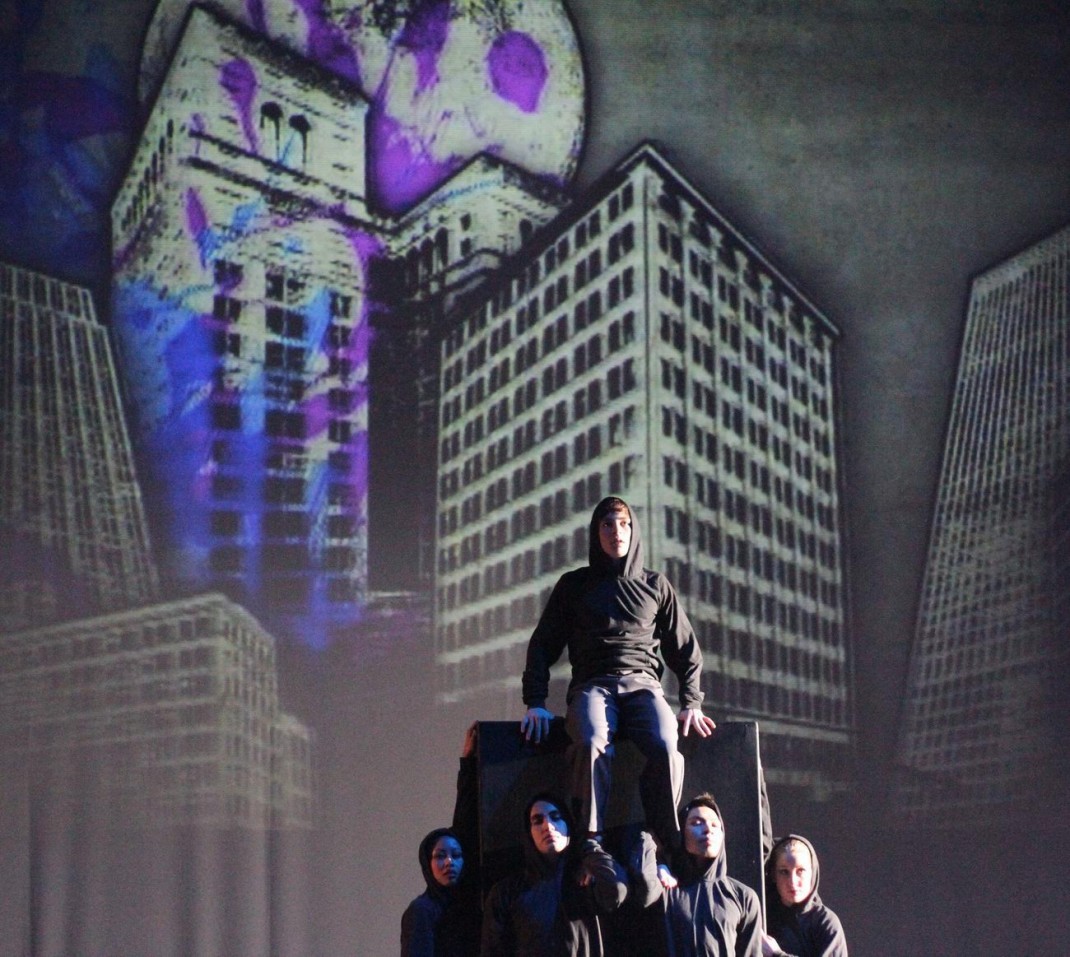
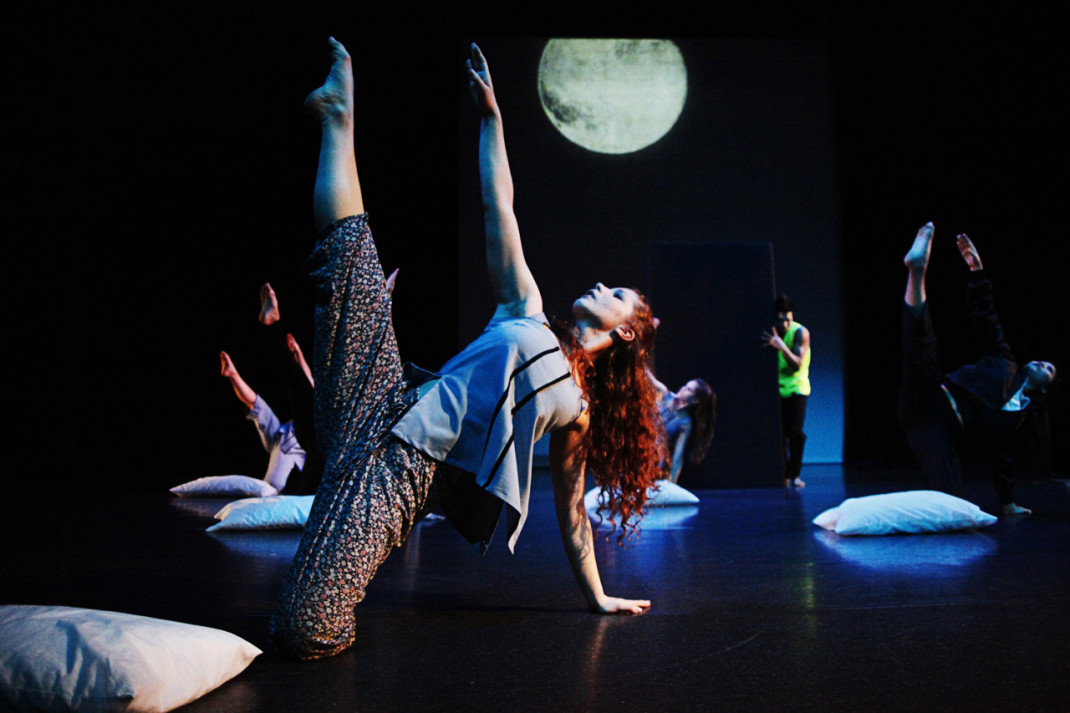
Quantum Leap’s annual full-scale performance, this year entitled Night.Time, was a step up from previous years. Consisting of five separate sections by five different choreographers—a  familiar format—two aspects of the show stood out. First, there seemed to be a greater coherence in the production so that the show seemed like one work with five parts. In large part this was a result of seamless changes from section to section rather than there being clear-cut divisions between the work of individual choreographers—well designed lighting by Guy Harding helped. I hope this kind of coherence will be pursued as a feature of future Quantum Leap productions. Secondly, we saw some adventurous choreography involving partnering on a sometimes quite daring level for the young Quantum Leapers.

For me the stand out section was Jodie Farrugia’s contribution Night. Stir, which centred on the inability to sleep. Farrugia used her background in physical theatre and circus to push the boundaries of ‘youth movement’ with a range of demanding lifts, leaps and turns. She was rewarded (as was the audience) by some strong performances by dancers who clearly relished the challenges she set them.

Following closely for the pick of the night for me was Night.Life, the section choreographed by Adam Wheeler. Like Farrugia, Wheeler had high physical expectations and the dancers responded with some outstanding, fast -paced dancing. Wheeler it seems involved the dancers in developing the theme of his section, which dealt with the activities in which the dancers imagined they might like to engage as part of their night life. No doubt their direct involvement in a highly relevant (to them) part of life added to their adrenalin charged performances. I felt they lost their sense of being onstage at times and seemed to muddle along a little, especially as the section drew to a close, but overall Night. Life was successfully and excitingly achieved. Other sections were choreographed by Marnie Palomares (Night. Light), Anton (Night. Mind) and Ruth Osborne (Night. Scape).

As in previous years extensive use was made of video material as set design. It was well integrated into the production and rarely overpowered the dancing. Adam Ventoura again provided a score, which was suitably ‘youthful’ to match the production. Costumes by Victoria Whorley were effective. A show deserving bouquets on many levels.

Quantum Leap dancers in Night. Time. Photo: © Lorna Sim

Michelle Potter, 31 July 2010