Nina Verchinina: some Australian connections

Nina Verchinina, born in Moscow in 1910 and brought up in Shanghai and Paris, began her performing career in Paris in 1929 with the company of Ida Rubinstein. Throughout the 1930s she danced extensively with the Ballets Russes de Monte Carlo under various directors including René Blum, Léonide Massine and Colonel Vassily de Basil.

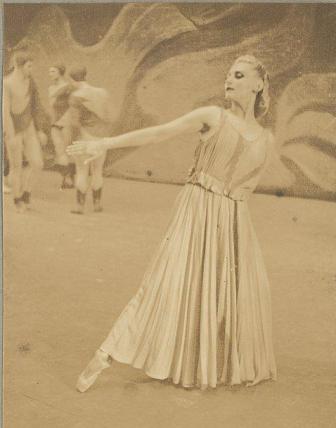
Verchinina came to Australia as a leading dancer on the 1939–1940 tour by Colonel de Basil’s Original Ballet Russe, arriving in Sydney on the Orcades on 18 December 1939. In Australia she was especially celebrated for her performances in Massine’s symphonic works, in particular as Action in Les Presages, a role she had created for Massine and had made her own following the work’s premiere in Monte Carlo in 1933. Writing in The Herald after Verchinina’s Melbourne debut in Les Presages, Basil Burdett wrote of her performance as Action:

‘Her interpretation of the role … is striking in its combination of energy and joyousness. To strong and beautifully marked rhythms she adds an emotion of delight in movement in a conception of the part which differs considerably from other versions we have seen.’
Verchinina was also the sister-in-law of de Basil—her younger sister, Olga Morosova (Olga Verchinina, born 1912), had married de Basil in 1938. As part of family business, Nina Verchinina involved herself in some of the publicity activities in which de Basil engaged while in Australia during the 1939–1940 tour. For example, photos show her with her sister, de Basil and others in Melbourne visiting Edouard Borovansky’s ballet school to watch his pupils.
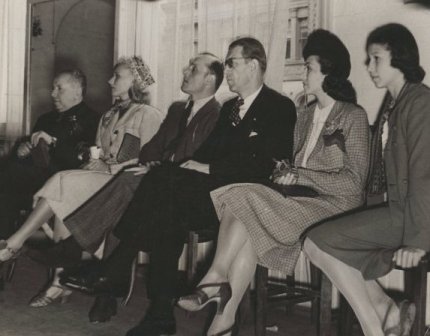
But Verchinina’s visit to Australia was also marked by two significant encounters with individual Australians—one with composer Margaret Sutherland and one with young Australian dancer Valrene Tweedie.

On 9 May 1940 the Original Ballet Russe gave a charity matinee in aid of the Royal Melbourne and Children’s Hospitals. Dithyramb, one of the divertissements on the program, was a solo choreographed and danced by Verchinina. The music, also called Dithyramb, was by Margaret Sutherland and the collaboration attracted the attention once again of Melbourne critic Basil Burdett. He wrote in The Herald on 10 May:

‘Verchinina’s number, to music by Melbourne composer, Margaret Sutherland, alternately energetic and yearning in mood, showed her forceful style, based on the modernist expressionist mode, perfectly. Miss Sutherland’s music was finely adapted to the spirit and style of Verchinina’s dancing. One would like to see these two artists collaborate in a larger work.’

In her PhD thesis, ‘Reconstructing the creative life of Australian composer Margaret Sutherland: the evidence of primary source documents’, Cherie Watters-Cowan notes the development of the collaboration between Verchinina and Sutherland. Although it is a point she does not develop in any great depth, Watters-Cowan indicates that the music was written around May 1940 and originally as a solo for Verchinina. Sutherland later transposed the music for solo piano.

Although Sutherland and Verchinina never collaborated on a longer work as suggested by Burdett, Dithyramb was presented again at a midnight performance in Sydney on 19 September 1940 in a program entitled ‘Farewell Original Ballet Russe’. At this performance, Verchinina reportedly performed in a costume designed by Loudon Sainthill in tonings of black and red. The anonymous critic for The Sydney Morning Herald wrote:

‘One of the loudest and longest receptions was accorded to Nina Verchinina … Both score and choreography proved to be uncommonly vehement, and Verchinina brought to her interpretation all the force and fire which had made her work so popular during the tour’.

The next day the dancers left Australia on the S. S. Monterey bound for the United States. As she prepared to board the ship on 20 September, Verchinina sent Sutherland a telegram, ‘DITHYRAMB GREAT SUCCESS CRITICS AND PUBLIC WARM OVATION. VERCHININA.’

Also boarding the Monterey on 20 September was Valrene Tweedie, aged 15, about to begin a professional career as Irina Lavrova with de Basil’s Ballets Russes. Although she had been accepted by de Basil for his company, Tweedie was too young to be given a work visa for the United States without having a legal guardian. It was Verchinina who took on the role. In immigration documents completed when she arrived in Australia,Verchinina gave her name as Nina Verchinina-Chase and referred to identity papers issued in Sacramento, California, by the Secretary of State in May 1939, which gave her American status. Her husband at the time apparently was the American-born composer Newell Chase. This was enough to secure the visa. Verchinina attended Tweedie’s family farewell in Sydney in June 1940.
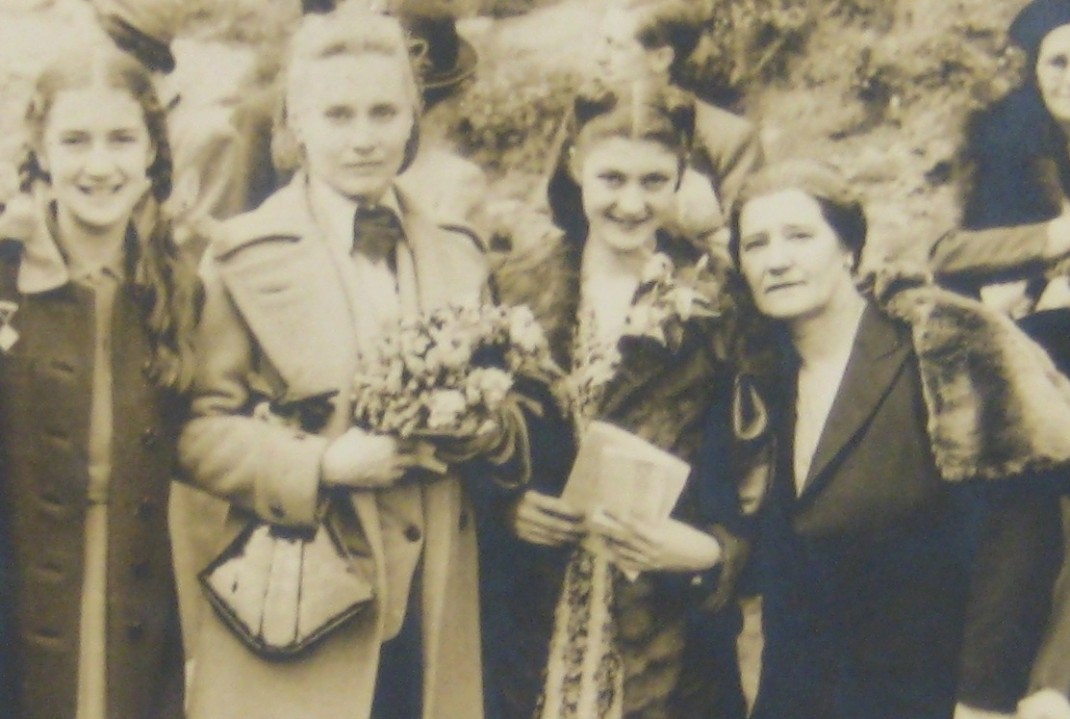
Ngaere Tweedie, Nina Verchinina, Valrene Tweedie and Renée Tweedie (left to right) at Valrene Tweedie’s family farewell, Sydney, June 1940. Papers of Valrene Tweedie, National Library of Australia.

Verchinina’s career with de Basil continued briefly until 1941 and Tweedie recalls her fondly as a guardian who never interfered but who was always available if needed.

Tweedie encountered Vechinina again in Cuba in 1943 during a period when there was little work or money for dancers. At that stage Tweedie too had left the de Basil company and with her then-husband, Luis Trapaga, performed in a small group of just four dancers, which Verchinina had established and for which she choreographed and produced small works. Tweedie recalls that they performed at the National Theatre in Havana and then toured to Matanzas and San Fuegos.

There is still much to discover about Verchinina’s Australian connections. Her collaborative endeavours with designer Loudon Sainthill are yet to be adequately researched, for example. Her connections with Tweedie and Sutherland, discussed briefly in this article, were significant highlights in the careers of those two Australians. They also deserve closer examination.

© Michelle Potter, 5 August 2009

All images published with the permission of the National Library of Australia.

Postscript to this article

BIBLIOGRAPHY:

Newspapers: Basil Burdett, ‘Melbourne ballet lovers enthralled. ‘Les Presages: a first favourite’, The Herald, 2 April 1940, p. 10;  Basil Burdett, ‘Successful ballet for hospital funds’, The Herald, 10 May 1940, p. 14; ‘New ballet tonight’, The Sydney Morning Herald, 19 September 1940, p. 19; ‘Midnight ballet. Enthusiastic audience’, The Sydney Morning Herald, 20 September 1940, p. 4.

Theses: Watters-Cowan, Cherie. ‘Reconstructing the creative life of Australian composer Margaret Sutherland: the evidence of primary source documents’, 2006. PhD Thesis, University of New South Wales, Sydney.

Other sources: Interview with Valrene Tweedie recorded by Michelle Potter, December 2004. Oral History Collection, National Library of Australia, TRC 5350; Telegram from Nina Verchinina to Margaret Sutherland, 20 September 1940. Papers of Margaret Sutherland, National Library of Australia, MS 2967, Box 1; ‘Personal statement and declaration: business visitor’, Nina Verchinina-Chase. National Archives of Australia, Item 6831038.
Select option. Quantum Leap

29 July 2009, Playhouse, Canberra Theatre Centre

The dancers of Quantum Leap, the pick-up company of QL2 Centre for Youth Dance in Canberra, are not professional although their enthusiasm for dance is palpable. But the choreographers with whom these young dancers work each year for their annual project are professional. So any review of Quantum Leap is really a review of whether the choreographers have the understanding and expertise to harness raw energy and a varying range of skills to produce a coherent piece of work that maximises what these young dancers have to offer. This year the theme of the project was choice and, although the results were, as ever, uneven, some moments were remarkably successful.

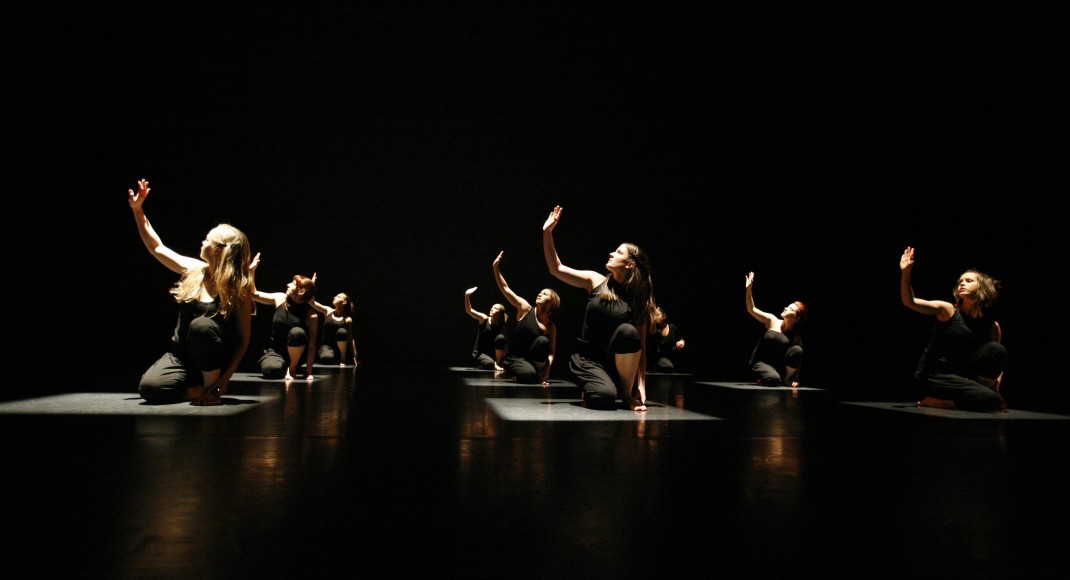
Liz Lea’s contribution, Select Red, was for me the undoubted stand out section. Lea chose to work only with female dancers and drew on the stylised movements and poses that have featured in her works about extraordinary female dancers—such as Ruth St Denis—of the early twentieth-century. The dancers needed to move in unison and yet look individualistic and even idiosyncratic and they responded beautifully. Lea’s choreography had a calmness and velvety smoothness to it and again the dancers responded. Not all the dancers, however, had the maturity and sophistication to carry off the move from this first part of the piece to the second, which showed the individual choices they had gone on to make about dress (always red), movement and general lifestyle. Nevertheless, the point was made.

The second act featured some exceptionally energetic dancing choreographed by Marko Panzic and Reed Luplau, although it was not always clear which choreographer had contributed what. Perhaps the most exhilarating section was a vignette featuring twelve male dancers, performing with what can only be described as total passion, and dancing to assorted Latin rhythms. Again the choreographer had chosen well as far as dancers were concerned. The the loose-limbed, fast and furious dancing, which largely happened in nothing more than a line across the front of the stage, was vibrant and rousing.

QL2 has a strong collaborative model at work with its annual shows. The two composers working with the company on this occasion, Nicholas Ng and Adam Ventoura, each produced an original score. Each was startlingly different from the other—a great experience for the dancers. Costumes were by Eline Martinsen and worked especially well in Select Red where small touches of red on the largely black outfits in the first section gave just a hint of what was to come later. Lighting designer Kaoru Alfonso also made an important contribution and again it was in Select Red that his designs were most effective. And for once the video footage that accompanied each piece was not intrusive but supported the works.

Michelle Potter, 2 August 2009

Featured image: Liz Lea’s Select Red. Photo: © Lorna Sim. Courtesy QL2 Centre for Youth Dance

Merce Cunningham (1919-2009)

Merce Cunningham’s death on 26 July 2009 in Manhattan brings to a close an astonishing life in dance. Cunningham once said, ‘I didn’t become a dancer, I have always been dancing.’ His remarkable career is a testament to a man who has not only always been dancing, but who has always been pushing the boundaries of dancing, including the boundaries of how it is perceived, fashioned and presented.

In 2007 I was in the exceptionally fortunate position of being co-curator of an exhibition, ‘INVENTION: Merce Cunningham and collaborators’, for the New York Public Library for the  Performing Arts. I was able to work with David Vaughan, revered archivist of the Cunningham company, to liaise with others in the company over selection of items, media activities and the creation of a new work to be performed as part of the exhibition. I also participated with Cunningham, Vaughan and the third curator, Barbara Cohen-Stratyner, in the media call, presenting to the audience on the key concepts behind the exhibition.

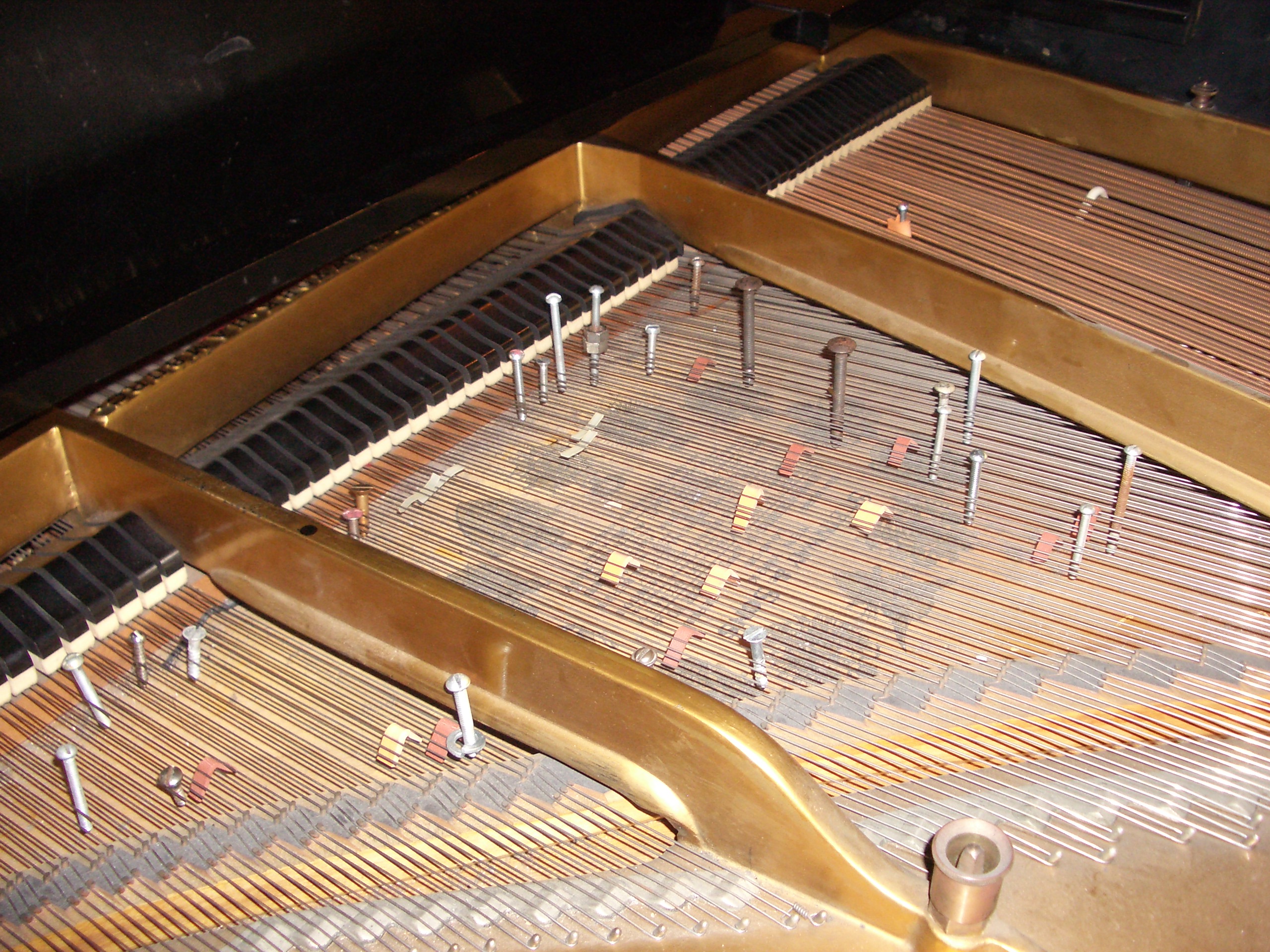
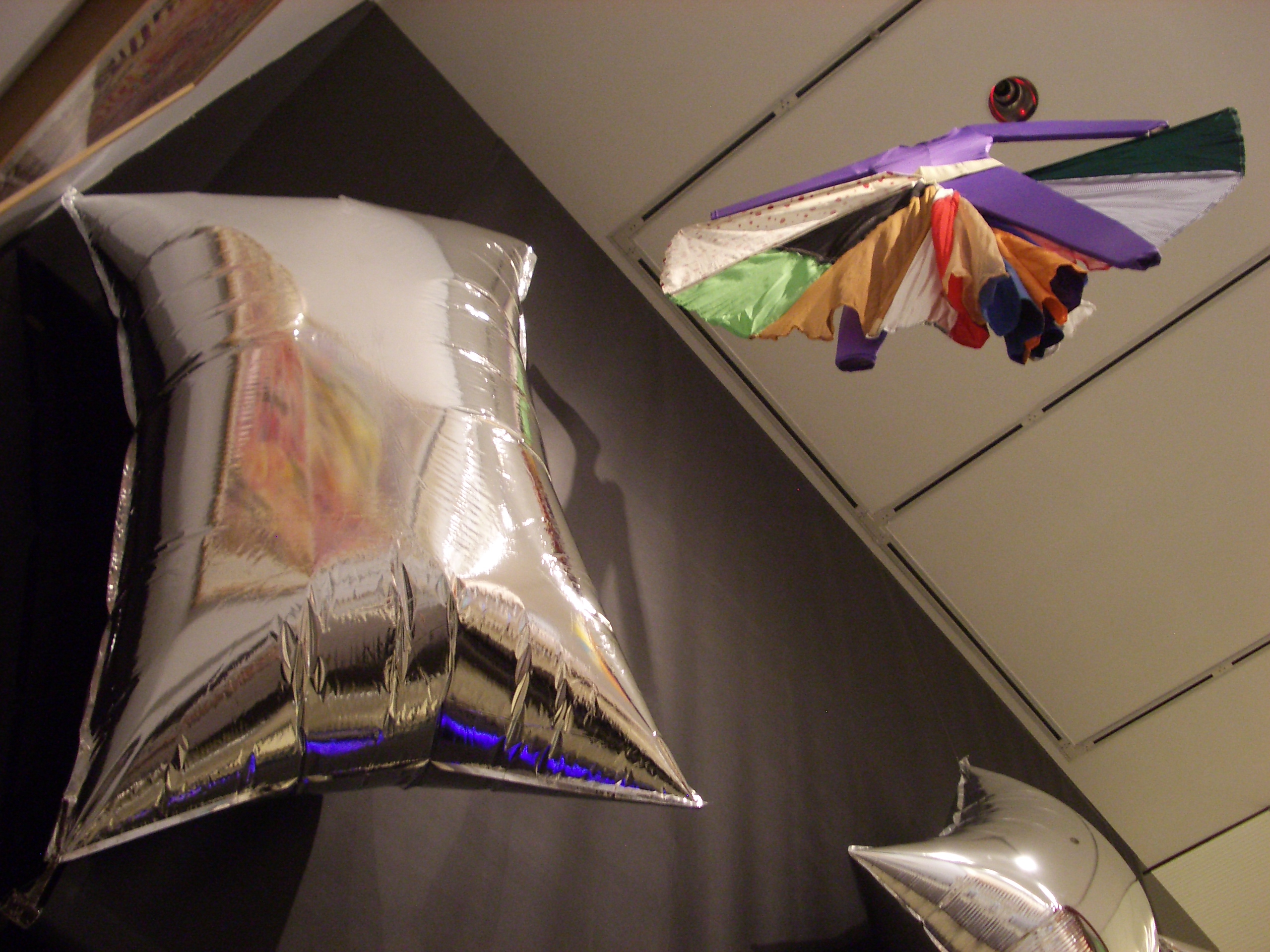
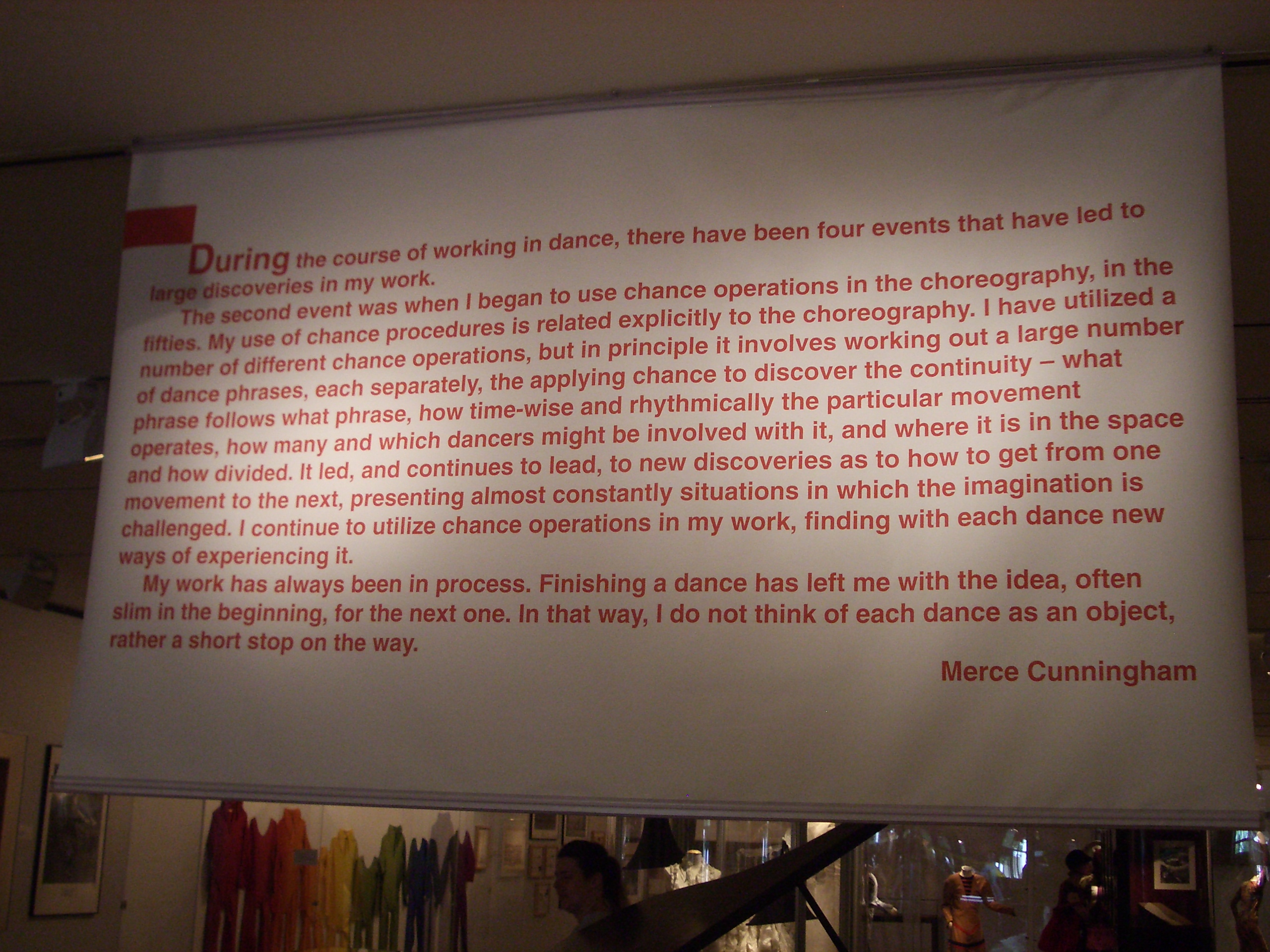
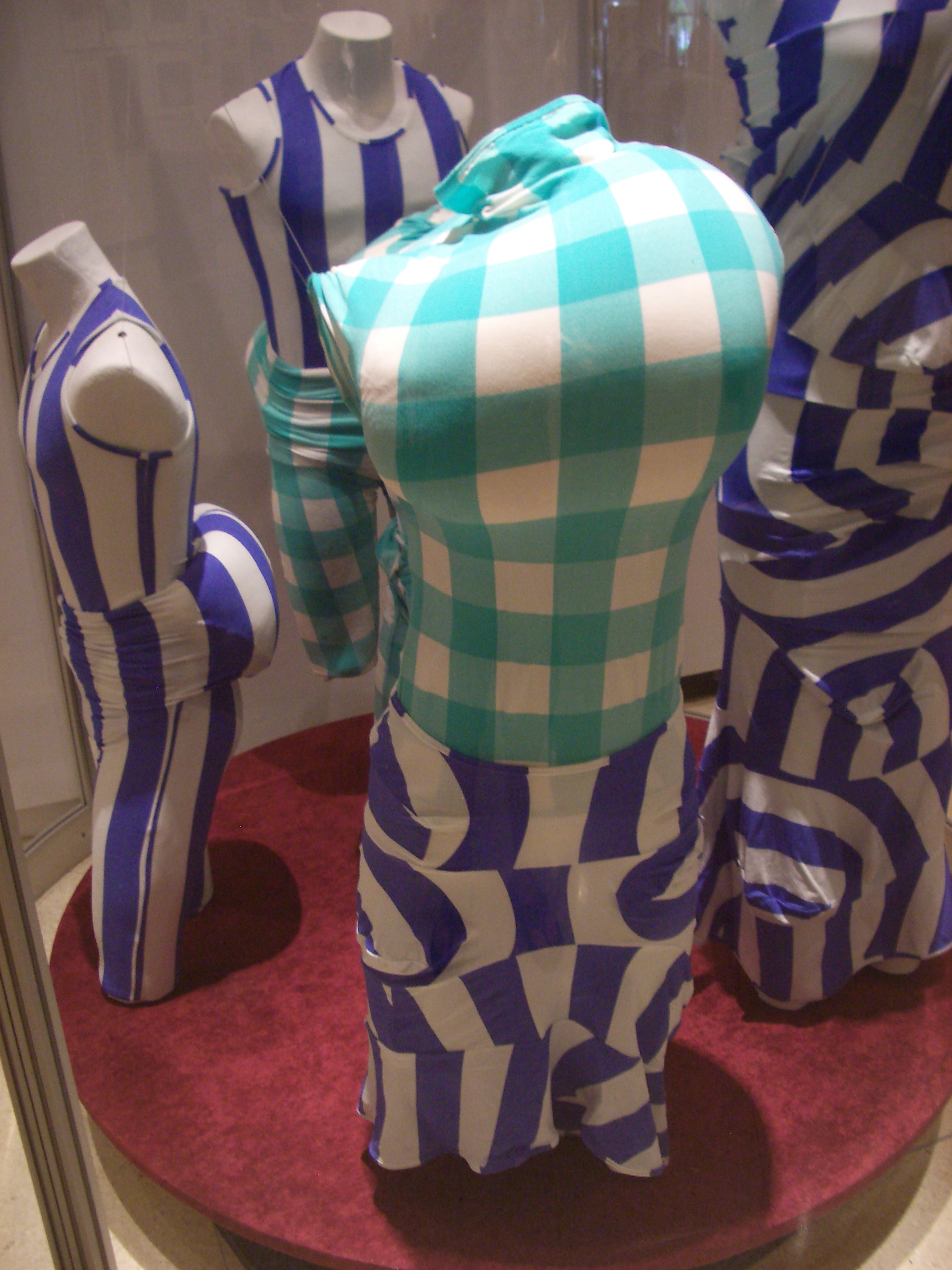
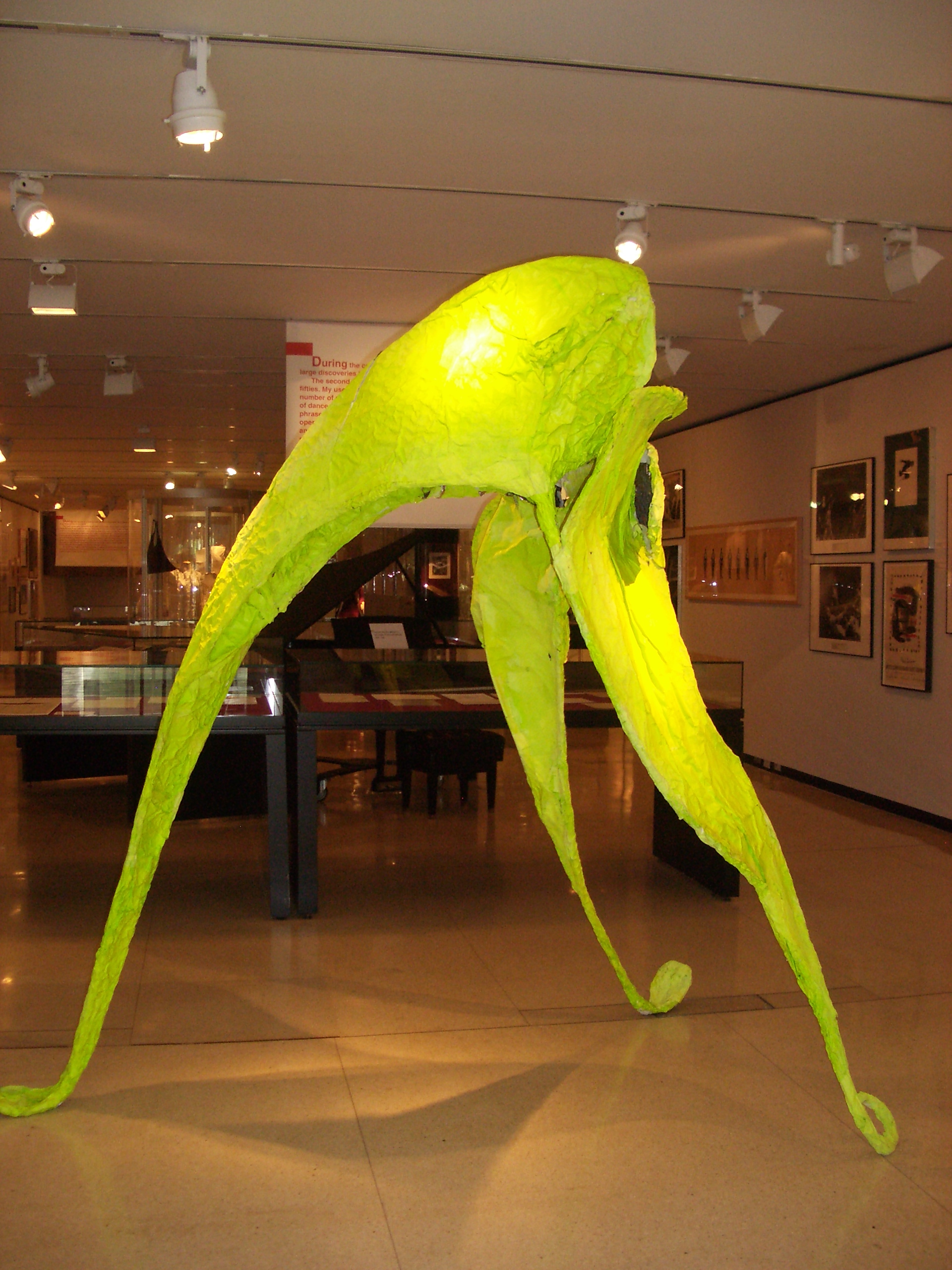
The following images are from INVENTION. They indicate in just a small way the extent of Cunningham’s engagement with artists from across a wide creative spectrum as he went about his daily activity of dancing.

Michelle Potter, 29 July 2009

Photos: Neville Potter, 2007

A Feast of Wonders

A Feast of Wonders: Serge Diaghilev and the Ballets Russes
Edited by John E. Bowlt, Zelfira Tregulova and Nathalie Rosticher Giordano (Milan: Skira, 2009)

In this very handsome volume published in conjunction with the exhibition Étonne-moi: Serge Diaghilev et les Ballets Russes, which opened in Monaco on 9 July 2009, Alexander Schouvaloff has an essay entitled ‘The Diaghilev Legend’. In it he remarks on the ‘continued fascination’ with the Ballets Russes. He writes, ‘It is puzzling. Artifacts and records remain to obsess scholars.’ Well, the contents of this book make his use of the word ‘puzzling’ a puzzling one indeed.

The publication contains, in addition to the Schouvaloff piece, eleven other essays most of which develop their topics in contexts that have not previously been widely examined in the existing English writing on the Ballets Russes. For example, Nicoletta Misler’s ‘Dance, Memory! Tracing Ethnography in Nicholas Roerich’ draws on a wide range of Russian sources to examine Roerich’s use of shamanistic and similar imagery, particularly in his designs for Le Sacre du printemps. Then, Evgenia Iliukhina traces the roles of Mikhail Larionov and Natalia Goncharova in the Diaghilev enterprise. She notes Goncharova’s sources and the influence of other artists on designs for her major pieces, including those works, such as Liturgie, which were not realised but which nevertheless were significant developments. Iliukhina also looks at Larionov’s interest in choreography and the evolution of his attitude to the role of design in ballet. The article rightly positions Goncharova and Larionov as major artists in the post 1914 period of the Ballets Russes and as more than simply successors to Bakst and Benois.

These articles, and others of equal interest, suggest that the ‘continued fascination’ will last for decades yet, especially when there is still much primary source material awaiting the attention of scholars. Despite the fact that 2009 celebrates the centenary of Diaghilev’s first Ballets Russes season in Paris, it is clear that there is still much to be discovered and written about. And to return to Schouvaloff, if one follows his instructions regarding the ‘Find a grave’ website, which he gives at the end of his piece, it is clear too that Diaghilev’s charisma has not waned.

In addition to the essays, the book contains a list of operas and ballets for which Diaghilev was responsible. The list begins in 1908 with Boris Godounov and ends in 1929 with Le Bal. Its strength, or its particular interest, is the way in which the list is illustrated – not with a single image but usually with several from a variety of sources and of different media. So we have Le Coq d’or illustrated with set designs, set models, costumes, costume designs and photographs. The illustrations for Le Spectre de la rose include swatches of fabric, paintings, posters, costume designs, designs for stage props, photographs and sketches. The list is made all the richer as a result of this diverse illustrative material. In fact illustrations throughout the book are themselves a feast of wonders and go well beyond those that have become so familiar in the current literature.

The introductory pages contain a long list of lenders to the exhibition, which will move to Moscow in October 2009. The list of lenders, private as well as institutional, is interesting in its scope as well as for the one or two major collections that are not represented.

A Feast of Wonders is a beautifully and meticulously produced book and a delight both visually and intellectually—much more than an accompanying catalogue.

Michelle Potter, 26 July 2009

Jan Fabre—beyond choreography

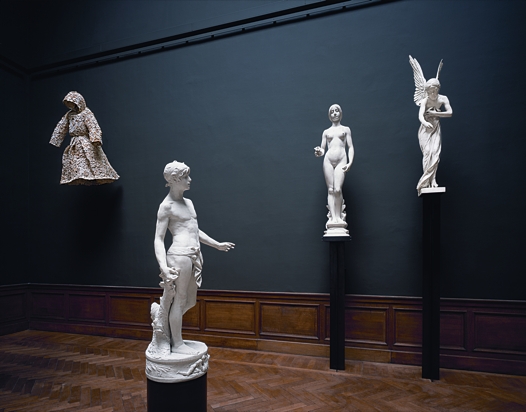
The Royal Museum of Fine Arts in Antwerp has one room devoted to sculptures that mostly allude to the past, in many cases to classical antiquity. At first glance the room appears to be simply that—a place where smooth, white marble pieces speak of a period long past.  But, suspended in one corner of the room is Bruges 3003 by Jan Fabre and when one’s eyes alight upon it one is quickly jolted out of one’s comfort zone.

Photo: Attilio Maranzano. © Angelos. Reproduced with permission.

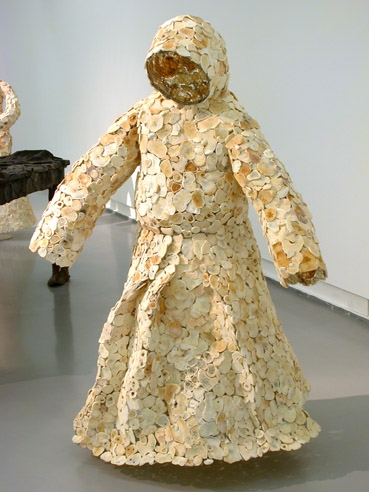
Bruges 3003 was made in 2002, and its title thus anticipates a millennium (plus a bit more). It has an alternative title—’Monk with bones’—and is made from metal wire, human bones and animal bones. One commentator has indicated that Fabre explained these monks’ robes (and there are others in addition to the one hanging now in Antwerp) as ‘representative of a spiritual body, a kind of exoskeleton’. With their use of human remains they also pursue Fabre’s long standing and ongoing interest in the body in all possible forms.

 Photo: Muriel Aussens. © Angelos. Reproduced with permission.

Fabre has installed his work in a fashion similar to the Antwerp hang on previous occasions, notably in an exhibition in the Louvre in Paris in 2008 when various of his art works were hung alongside works by artists from the Flemish and Dutch schools, including Rembrandt and Rubens. Such hangs have not always drawn positive comments, with the Parisian newspaper Le Figaro commenting of this 2008 show  ‘…. why this mania to bring this farce into classical museums, and in particular the Louvre?’

But with his juxtapositions Fabre, who is widely known to the Australian dance community as a choreographer—perhaps more so than as a visual artist, sets up a dialogue between the old and the new, between past, present and future. The room in Antwerp becomes something of a moveable and certainly a theatrical experience. It allows the mind to jump between time periods in a spontaneous way.  A viewing is a singular joy, as are the thoughts that arise from a viewing, even down to the movement back and forth contained in the numerical palindrome of the title Bruges 3003.

 Michelle Potter, 24 July 2009