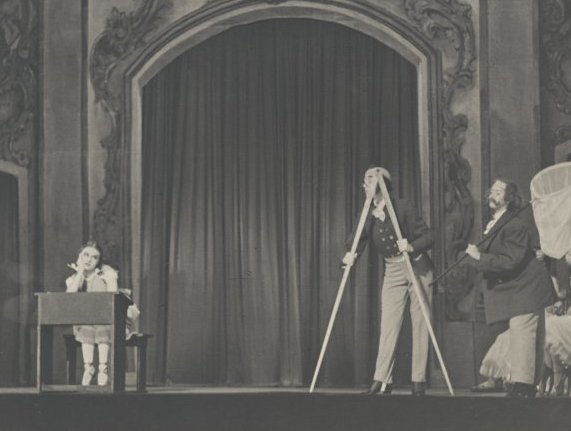
Dandré-Levitoff Russian Ballet. Perth, Australia, 1935

The visit to Australia by the Dandré-Levitoff Russian Ballet between 1934 and 1935 has largely been overlooked by Australian dance writers. Coming after the second visit by Anna Pavlova in 1929 and before the momentous Monte Carlo Russian Ballet visit of 1936 –1937, it was much shorter than either of those two tours. It lasted just three and a half months. Led by Victor Dandré, Anna Pavlova’s manager and common law husband, and the international impresario Alexander Levitoff, the company performed in Brisbane, Sydney, Melbourne and Perth.

It is the Perth season that is particularly interesting because the well known historian of early Australian ballet, Edward Pask, makes no mention of Perth. In his book, Enter the Colonies, Dancing, he writes that the company’s farewell performance in Australia was in Melbourne on 31 December 1934 and that on the following day the dancers sailed for London on the Strathnaver. So, a photograph acquired by the National Library of Australia in 2006 as part of the archive of photographer Axel Poignant raises more than one question. The photograph came with the curious title on acquisition of ‘Final curtain of Boris Godunov Ballet performed at the Perth theatre, Dandré’s company, 19 January 1935’.

Perth did indeed see the Dandré-Levitoff company. The Strathnaver left Melbourne for London on 1 January 1935 and sailed via Adelaide and Fremantle. There is no doubt the dancers were on board — on 2 January Algeranoff, a dancer with the company, wrote to his mother in London from on board the Strathnaver. That letter survives. But, when the ship docked in Fremantle early on the morning of 7 January, the dancers disembarked. Only Levitoff did not arrive in Western Australia by sea: he travelled by train taking the Great Western Express. He passed through Kalgoorlie on 3 January when it was reported that he was travelling ahead in order ‘to make arrangements for a large orchestra and prepare the stage for the ballet’s appearance in Perth’. The West Australian noted the arrival of the company at the theatre when ‘Halstead’ wrote on 8 January of  ‘a large van discharging suit-cases, cabin trunks and immense wooden boxes’ in King Street, Perth.

Advertisements, articles and reviews that appeared in The West Australian during the first few weeks of  January 1935 make it clear that the company performed for eleven nights and gave four matinee shows. It presented three separate programs beginning on 8 January and finishing on 19 January. There were program changes on 14 and 17 January. The ‘Perth theatre’ given in the title of the National Libary’s image was His Majesty’s, still in existence in King Street, and the home now of West Australian Ballet. The name of the company as it appeared on programs for the Perth season was the Russian Classical Ballet and the company was presented in Perth by entrepreneur Benjamin Fuller.

However, there was never a ballet in the Dandré-Levitoff repertoire entitled ‘Boris Godunov’ and looking closely at the National Library’s image it is clearly Michel Fokine’s Polovtsian Dances from Borodin’s opera Prince Igor. The company had already successfully staged this work in Brisbane, Sydney and Melbourne, and in Perth it was part of the second program which opened on 14 January and finished on 16 January. The West Australian critic, ‘Fidelio’, wrote of the Perth staging that it was ‘exciting and vital’. His review included the following:

‘…a camp of a savage Tartar tribe (the Polovstzians) in olden-time Russia, with tents, the red glow of a fire, and, in the distance, smoke smudging an angry evening sky … Men leap and twirl, fling their bows into the air and catch them as they fall. The gyrating lines of figures interlace [and] recede as though a human tide, to surge forward at the end in a final wild triumph of physical, rhythmic energy, arms uplifted.’

The National Library image is accompanied by a slip of paper with the handwritten inscription ‘January 19 1935, Mr Axel Poignant in remembrance of his very successful work for the Russian Ballet Company’ and is signed by Dandré and company members. The date 19 January is the last night of the Perth season when the company appears to have made a presentation to Poignant. As the inscription is on a separate slip of paper, it is not absolutely clear if the presentation was of the image from Polovtsian Dances, or even what the relationship is between the image and the slip of paper. Would the company be presenting Poignant’s own image back to him? And what was his very successful work for the Russian Ballet company? Is there an as yet undiscovered archive of Poignant images from the Dandré-Levitoff season in Perth? Questions remain.

© Michelle Potter, 3 September 2009  

Open the link to see the Axel Poignant image 

(Note – 16 September 2009: The title of this image in the National Library’s catalogue has now been changed to reflect more accurately what is represented).

BIBLIOGRAPHY

  • ‘Russian ballet. Revival of classicism’. The West Australian, 4 January 1935, p. 18.
  • ‘Halstead’, ‘Stars of the Russian ballet. Famous dancers of many lands’. The West Australian, 8 January 1935, p. 3.
  • ‘Fidelio’, ‘Russian ballet. Vivid contrasts. The classic and the barbaric’. The West Australian, 15 January 1935, p. 14.
  • ‘Letters to Alice Essex’. Papers of Harcourt Algeranoff, National Library of Australia, MS 2376, Series 1, Item 456.
  • Programs, ‘Russian Ballet Company’, National Library of Australia, PROMPT Collection.
  • Edward H. Pask, Enter the Colonies, Dancing (Melbourne: Oxford University Press, 1979).
Sydney friends of the Ballets Russes. The Repin family

It was the photographer Max Dupain who referred to the Ballets Russes dancers who toured in Australia between 1936 and 1940 as ‘very interesting people, very interesting for Australia at that stage’ and who noted that they were ‘taken into the bosom of Sydney and feted and entertained’. Even a cursory glance at newspapers of the time indicates the excitement that their visits generated and deeper investigation reveals sound artistic reasons why these artists from the other side of the world inspired so many. But what of the ‘feted and entertained’?

Each city the companies visited had its complement of Australians who made it their business to find a way to entertain the dancers on weekends. Usually they also made a significant contribution to how we now understand those tours. In Sydney there was dermatologist Dr Ewan Murray-Will, for example, who entertained many of the dancers at his beach house at Bungan Beach just north of the city, and who recorded some remarkable film footage of dancers performing on the beach. His personal photograph album also shows the dancers off duty on picnics and at animal sanctuaries enjoying an Australian look at life. There was publisher Sydney Ure Smith whose archival collection of letters indicate his many personal kindnesses to the dancers and their entourage and who published so many articles and photographs about the ballet in the various magazines and journals for which he was responsible in some way. There was lawyer Arthur Wigram Allen whose large homes, ‘Merioola’ in Woollahra and ‘Moombara’ at Port Hacking, were venues for lunches and parties, sometimes of extensive proportions. Allen’s diaries now provide an interesting background to the weekend exploits and activities of the dancers.

There was also the Repin family whose highly successful commercial coffee business is well known, but whose friendship with a group of dancers and others from the Original Ballet Russe tour of 1940 has not been so well documented. Ivan Repin, born in Novgorod province, Russia, arrived in Australia with his family via Shanghai in 1925. He opened his first coffee shop in King Street, Sydney, in 1930 and, following the success of that enterprise, quickly opened other ‘coffee inns’  in the main business area of Sydney. Ivan Repin’s entry in the Australian Dictionary of Biography notes that Repin’s coffee shops:

‘brought to predominantly tea-drinking Sydney a little of the sophistication that characterized the city of St Petersburg in Tsarist Russia. They were the antipodean counterpart of the Russian Tea Room in coffee-drinking New York and the precursors of Australia’s Italian espresso-bars’.

Repin’s coffee inns were also to some extent a home away from home for Russian speakers in Sydney, including those of the visiting Ballets Russes dancers whose first language was Russian. George Repin, Ivan Repin’s son, has noted that his father employed many Russian speakers, including Estonians and Ukrainians, in his shops. He has also explained that the head office of Repin’s Pty Ltd was at 130 King Street, just around the corner from Castlereagh Street and in close proximity to the Theatre Royal where the Ballets Russes companies performed when in Sydney. The Russian speaking dancers enjoyed coming to the Repin’s coffee shops not just to drink coffee but to speak Russian, which they did between matinee and evening performances and whenever the opportunity arose.

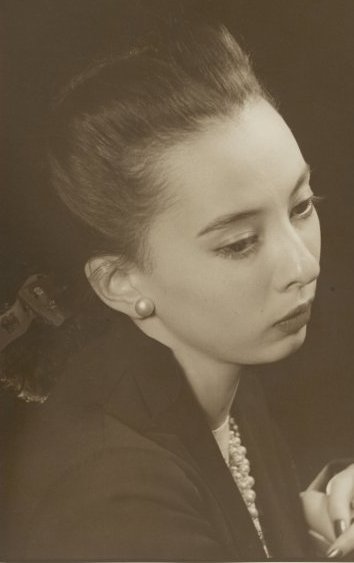
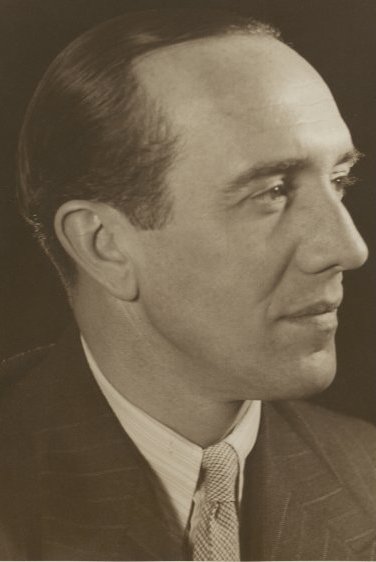
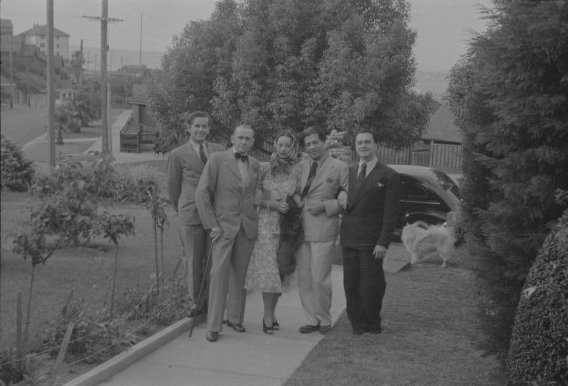
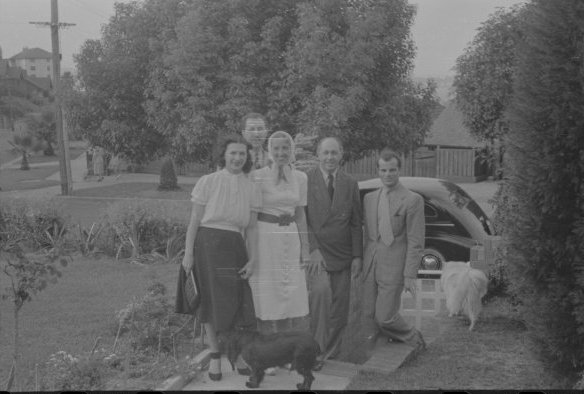
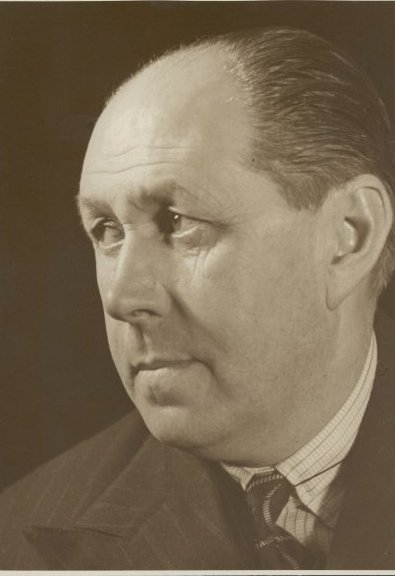
Ivan Repin and his wife also enjoyed socialising with members of the company and entertained them at their home in Bellevue Hill in the eastern suburbs of Sydney, occasionally inviting other members of Sydney’s professional Russian community to share the occasion. What now remains of those occasions is a small collection of photographic portraits taken by Ivan Repin and some casual shots of the dancers arriving at the Repin home. Those portraits of which Ivan Repin was especially proud he printed in sepia tones and framed: Sono Osato, Serge Grigorieff and Dimitri Rostoff. They are serious studies in contrast to the casual arrival scenes. But they all add to our understanding of the out-of-hours moments enjoyed by the Ballets Russes dancers.

Photos: Ivan Repin, 1940. Reproduced by permission of the National Library of Australia.

(Top row left to right) Serge Grigorieff; Sono Osato; Dimitri Rostoff
(Bottom row) Dancers arriving at Bellevue Hill: left; centre; right

© Michelle Potter 29 August 2009

Concord. The Australian Ballet

Por vos muero, Scuola di ballo & Dyad 1929, 21 August to 1 September 2009, State Theatre, Victorian Arts Centre, MelbourneJ

The Australian Ballet finally hit the jackpot! In the dying months of its four year long celebration of the Ballets Russes, Wayne McGregor arrived in Melbourne and created his Dyad 1929—a work that is truly in the adventurous spirit of the Diaghilev period.

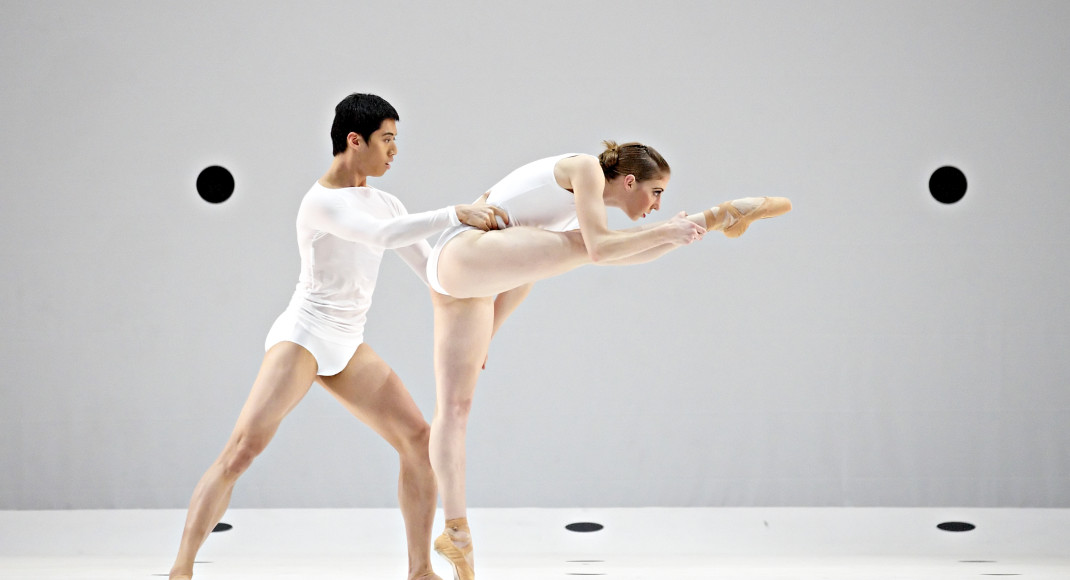
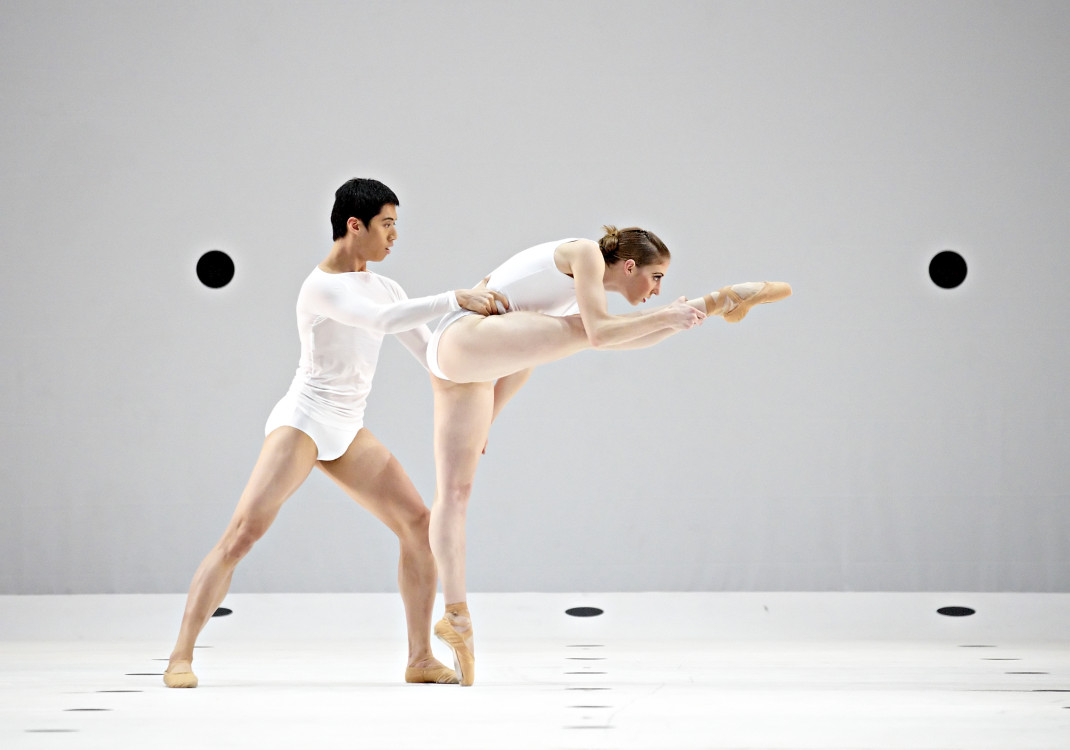
Dyad 1929 is made for a cast of twelve dancers, six women and six men. It is danced against a white backcloth, patterned all over with regular rows of black dots, which extends to a floorcloth. A thin horizontal bar of acid yellow light is raised and lowered in the extreme downstage area during the piece. Occasionally yellow light floods onto the backcloth. This ‘stage concept’ is by McGregor and the work’s lighting designer Lucy Carter. The dancers are costumed by Moritz Junge in close-fitting leotards, or all-overs, or trunks and tops in various combinations and patterns of white, black and fawn. The overall design concept is startling and exhilarating, as is the music—Double Sextet by Steve Reich.

But it is the choreography that lifts Dyad 1929 beyond the startling to the brave and the challenging. There is a matter-of-factness in the way the dancers enter and leave the stage. A la William Forsythe they walk, simply but decisively, on and off. Once on, however, their bodies become an experimental field. They are pushed, pulled and stretched. They crumple, bend and fold. Sometimes the movements look hard-edged. At other times they look more curvaceous. And what seems quite extraordinary is that often movements that are commonplace in a particular situation are put into completely new context. A stretching exercise commonly done at the barre becomes part of a duet, for example. And again extraordinarily, McGregor occasionally follows a twisted movement with a classical, centred one so that the eye can better discern what is central to each.

Standout dancers in two viewings were Lana Jones, cool and poised in a duet with Tzu-Chao Chou, and Danielle Rowe, more softly sinuous in a duet with Adam Bull—Jones a diamond, Rowe a pearl, both using their prodigious technical capacity to dance this audacious and demanding choreography. They dance purposefully, but also with what borders on ecstasy so intently and intensely do they articulate the choreography. This is what dancers crave: to be challenged to use their bodies to do the seemingly impossible, and thus to understand more about their art form.

This triple bill with the overarching name of ‘Concord’ opened with Nacho Duato’s sublime Por vos muero. Por vos remains a compelling work swinging between a stripped back look at human relationships, which we see in the three duets that open the work, to highly theatrical moments as in the scene in which six men in brocade cloaks swirl across the stage swinging censers that fill the air with incense. Daniel Gaudiello gave a particularly strong performance. It highlighted all the remarkable nuances of Duato’s choreography.

The third work on the program, also part of the Ballets Russes project, was a new production of Léonide Massine’s 1933 work, Scuola di ballo, in this case  choreographed by Alexei Ratmansky. Ratmansky adhered to the narrative and choreographic structure of Massine’s work but, in terms of movement, the work looked more like a homage to August Bournonville. Ratmansky emphasised beaten footwork for the men and his pas de deux contained very few lifts, especially big overhead lifts. In typical Bournonville style the man for the most part danced alongside his partner. This was especially noticeable in the pas de deux between the characters Rosina and Carlino, which was prettily danced by Leanne Stojmenov and Daniel Gaudiello in one cast and Danielle Rowe and Ty King-Wall in another.

Scuola‘s comic elements were a hit with the audience but I am not convinced that attempting to reproduce what was clearly not Massine’s best ballet was a worthwhile endeavour. What it did was remind me that not all ballets from the Ballets Russes era (whether from the Diaghilev period or from that of his followers) are worth recalling. Restaging or reproducing works as museum or celebratory pieces only works if the original was a piece of major importance in the first place. I don’t believe that Scuola di ballo was. Ballet has moved on. Thankfully.

And thankfully there are choreographers like Wayne McGregor to show that the way ahead can be as adventurous as it was under Diaghilev.

Michelle Potter, 23 August 2009

Featured  image: Tzu-Chao Chou & Lana Jones in Dyad 1929. Photo: © Jim McFarlane. Courtesy of the Australian Ballet

Footnote: Showing in Melbourne at the same time as ‘Concord’ is an exhibition documenting the career of Salvador Dali. Included in the show, which is at the National Gallery of Victoria, is film footage of Massine’s 1939 collaboration with Dali on the ballet Bacchanale for Sergei Denham’s Ballet Russe de Monte Carlo. It makes an interesting comparison with Scuola di ballo and comments on Bacchanale and its reception by Frederic Franklin, one of the original cast, are  easily found via any search engine and are eminently readable.

Nina Verchinina: a postscript

My article posted on 6 August 2009, Nina Verchinina: some Australian connections, has raised some issues about Verchinina’s marital status, or at least about the names of her partner or partners.

  • John Gregory, in his obituary in The Independent on 21 December 1995 states that Verchinina ‘…remained with that company [Ballet Russe de Monte Carlo] throughout the Thirties in its various guises under the directorship at different times of Rene Blum, Leonide Massine and Colonel de Basil. During that decade she acquired international fame and married Count Jean Beausacq, who later was to contribute significantly by financing her own companies.’
  • Katia Canton in the International Encyclopedia of Dance intimates that the connection with the Beausacq line is of much longer standing stating of Verchinina that ‘…she had a noble background and held the title Countess of Beausacq’. This entry also gives her year of birth as 1912, which is, according to Australian immigration documents, the year of birth of Nina’s sister Olga Verchinina, whose stage name was Olga Morosova. Nina’s birth year is recorded as 1910.
  • Beatriz Cerbino, Verchinina’s Brazilian biographer, notes in a recent communication that a Brazilian newspaper recorded Verchinina’s marriage in Rio de Janeiro to Conte Jean de Beausacq in 1946.
  • As mentioned in my original post, Verchinina very clearly indicated on her arrival in Australia in 1939 that she was married, and that her name was Nina Verchinina-Chase. She must have also provided documentary evidence of her American status since that too is recorded on Australian immigration documents.

Verchinina was, according to Cerbino, very reserved about her personal life. At this stage, and until further documentary evidence comes to light, I believe that Nina Verchinina was:

  • born in 1910;
  • married to Newell Chase, perhaps around 1939, the year her American identity papers were issued. Whether this was a marriage of convenience or not is a matter for speculation. Verchinina listed herself as stateless on Australian immigration documents but that designation was followed by (American); and
  • married for a second time in 1946 in Rio de Janeiro to Count Jean de Beausacq.

Read the original post is at this link.

© Michelle Potter, 21 August 2009

Graduation Ball. Some Australian notes

David Lichine’s light-hearted Graduation Ball, an audience favourite over many years, had its world premiere in Sydney on 1 March 1940. Vicente García-Márquez, in his 1990 publication The Ballets Russes, gives some clues to the origins of the work, including notes on the rehearsal process, the development of the musical compilation and on the designs.

An interesting slant is cast, however, on the unfolding of the design process and on Lichine’s early ideas for the storyline from an examination of the catalogue to an exhibition, Art for Theatre and Ballet: Australia. The exhibition, under the auspices of the British Council and arranged by Harry Tatlock Miller, was on display in Sydney, Melbourne and Adelaide in 1940.

Amongst the 500 or so designs in the show there were 20 by Alexandre Benois for ‘a new ballet to “Perpetuum Mobile” by Strauss’ with choreography by David Lichine. The catalogue notes that the Benois designs were ‘specially lent for the occasion by Colonel W. de Basil’. They were listed in the catalogue as:

  • 385 Le Directeur
  • 386 Convent Pupil
  • 387 Pupil
  • 388 Senior Pupil in Sunday Dress
  • 389 Senior Pupil in Sunday Dress
  • 390 Senior Pupil in Sunday Dress
  • 391 The General
  • 392 Cadet
  • 393 Cadet
  • 394 La Sylphide
  • 395 Scotchman
  • 396 The Bearded Drummer
  • 397 The Professor
  • 398 The Governess
  • 399 The Professor
  • 400 The Lover
  • 401 The Lover
  • 402 The Major Domo
  • 403 The Maid
  • 404 Marquette [sic] and Plans of Scene

Not all the characters for which Benois had made designs eventually appeared in Graduation Ball, which this ‘new ballet’ clearly became. For example, the only design that appears to have stayed in Australia — no. 398 The Governess (La Gouvernante) held by the Art Gallery of New South Wales in Sydney—does not represent one of the final characters in the ballet. The Sydney design remains of particular interest, however. Its catalogue record notes that it was a gift of ‘Col. W. de Basil’ in 1940.

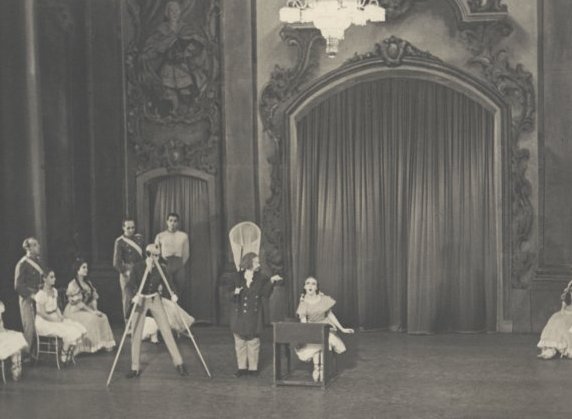
But what is especially interesting about the list is that it contains designs for one divertissement that was only ever seen in Australia. The divertissement ‘Mathematics and Natural History Lesson’ was cut from the ballet, for reasons that are not clear, once de Basil’s company reached the United States after leaving Australia in September 1940. This divertissement was performed by two ‘Professors’—Australian Alison Lee (performing under the name Helene Lineva) who danced the tall, thin professor who manipulated a large mathematical instrument, and Maria Azrova who danced the short, well-padded professor who carried a butterfly net. They instructed a single pupil, danced by Marina Svetlova. It is tempting to speculate that nos 397 and 399 in the catalogue for Art for Theatre and Ballet: Australia are those for costumes worn by Lineva and Azrova. When the original designs are more readily available (at present they appear not to have been digitised and made widely accessible) they can be compared with photographs taken during the 1940 Melbourne season of Graduation Ball by Hugh P. Hall.

Marina Svetlova as the pupil with Helene Lineva and Maria Azrova as the two professors. Photo: Hugh P Hall. National Library of Australia

The Hugh P Hall material is of significant documentary value. But in addition to his archive, some of the most charming photographs of the world premiere of Graduation Ball were taken by Sydney photographer Nanette Kuehn. Kuehn herself was obviously happy with one particular photograph of Tatiana Riabouchinska, which she autographed to Riabouchinska and which Riabouchinska kept for the rest of her life. When in 2008 the Riabouchinska/Lichine Archive was acquired by the Jerome Robbins Dance Division, New York Pubic Library for the Performing Arts, a beautiful print of the photograph above was part of the collection. It was inscribed ‘Many thanks for all the beautiful dancing. Nanette Kuehn 7-2-40’. (The image above, without an inscription, is not from NYPL, however, but from the Papers of Margaret Walker held in the National Library of Australia).

© Michelle Potter, 19 August 2009

Featured image: Marina Svetlova as the pupil with Helene Lineva and Maria Azrova as the two professors in Graduation Ball, Melbourne 1940. Photo: Hugh P Hall. National Library of Australia

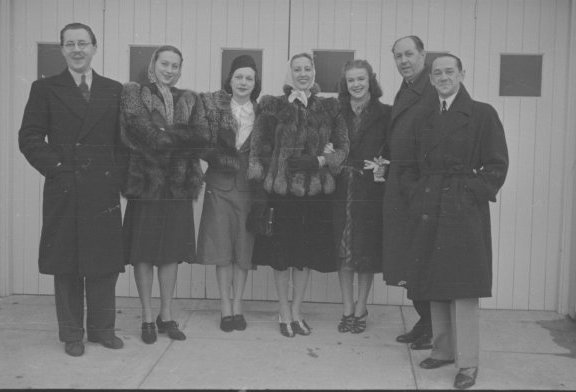
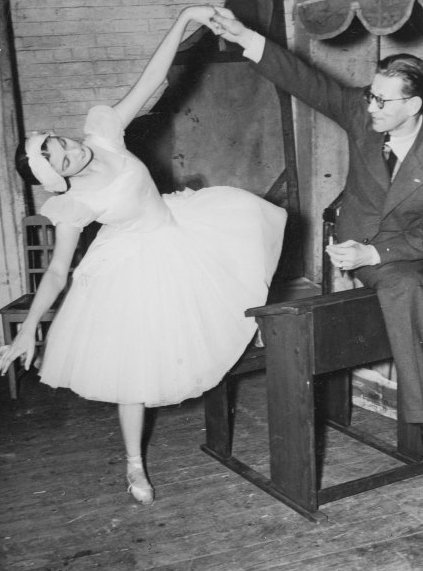
Postscript: On perhaps a less significant matter, but also relating to the ‘Mathematics and Natural History Lesson’ divertissement, it has always seemed something of an anomaly that in the well known photograph taken of Valrene Tweedie shortly after she had been accepted by de Basil into his company she has her foot resting on an old fashioned school desk. The school desk is in fact the prop used in ‘Mathematics and Natural History Lesson’, a fact confirmed by Tweedie in an oral history interview in 2004.

Valrene Tweedie with Colonel de Basil, Sydney 1940. Photo The Sun. Collection of the author.

BIBLIOGRAPHY:

  • Art Gallery of New South Wales. Alexandre-Nikolayevich Benois (Russia; France, b.1870, d.1960, Costume study for Graduation Ball, 1939. Accession no: 6935.
  • García-Márquez, Vicente. The Ballets Russes: Colonel de Basil’s Ballets Russes de Monte Carlo 1932-1952 (New York: Alfred A. Knopf, 1990).
  • Miller, H. Tatlock. An exhibition of art for theatre and ballet: Australia (London: British Council, [1939?]).
  • Tweedie, Valrene. Oral history interview recorded by Michelle Potter, 4 December 2004. Oral History Collection, National Library of Australia, TRC 5350.