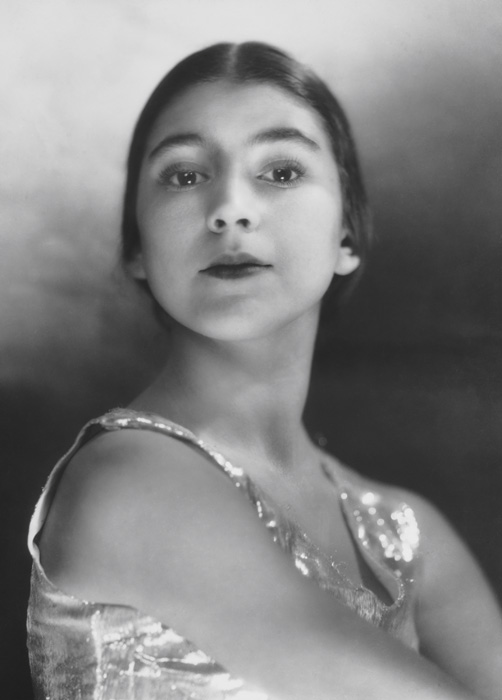
Madame Butterfly. The Australian Ballet

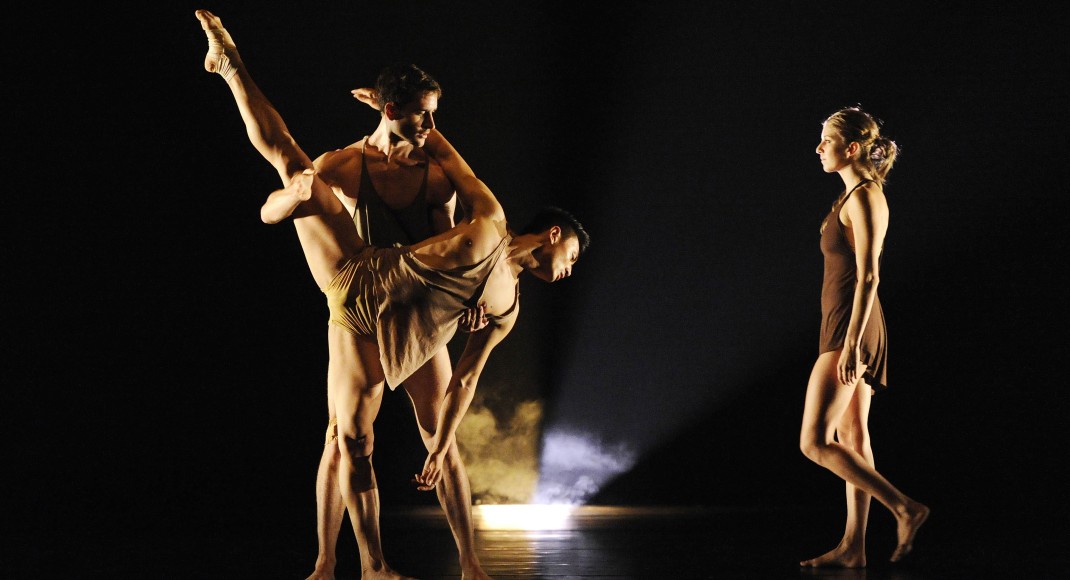
What impressed me most about this revival of Stanton Welch’s 1995 work Madame Butterfly was Welch’s ability to create a strong, dramatic effect by the simple, yet strategic placement of characters on the stage. It was especially, but not exclusively, noticeable towards the end of the work when Pinkerton returns to Nagasaki with is American wife Kate. It is then, with Sharpless, Suzuki, Butterfly and Sorrow also onstage, that the drama of what has occurred is fully realised. While various of the characters are the centre of attention at particular points during the unfolding of this part of the saga, the placement of the characters across the stage, and their attention—demanding stillness when the action is not especially focused on them—is powerfully moving. The girlish scenes between Butterfly and Suzuki are also memorable. Again it is often the placement of the two onstage in relation to the rest of the action that gives the scenes their strength, although the recurring motif of wiping away each other’s tears is also a strong device.

But despite the above, I find it hard to see a major artistic reason to justify the revival of Madame Butterfly. I can of course see that it attracts an audience and so can only imagine that the artistic team sees money as the main reason for staging a production. But no one looked comfortable in those shuffling ‘Japanese’ walking movements, heel leading in so obvious a manner. And how illogical it seems when shuffling and obsequious bowing are followed by full-on contemporary ballet, as in that long and demanding wedding night pas de deux for example. And how can one shuffle to the top of a flight of steps and then extend a beautifully arched foot, clad in a pointe shoe, and descend the stairs in balletic style. It looked just silly to me.

Madeleine Eastoe danced brilliantly as Butterfly. What a secure, fluid technique she has now. But she lacked the vulnerability needed for the role and quite honestly, with that soaringly beautiful technique, she is just not cut out to be a fifteen year old Japanese Geisha sublimating herself to a man the likes of Pinkerton. Juliet (about the same age) yes, but Butterfly—not in my opinion. But then again, maybe it’s the double-edged choreography that’s the problem?

The strongest performances to my mind came from Daniel Gaudiello as Sharpless and Reiko Hombo as Suzuki. Gaudiello had the advantage of playing a European character (the US Consul in Nagasaki) and so was not burdened by the fake Japanese movements. But that aside, his performance was impressive for the manner in which he created a distinctive character, often not so much through dancing but though small mannerisms such as the twist of a cuff or a slight movement of the head, all of which indicated a certain awkwardness at the situations in which he found himself.

Hombo as Suzuki was perfectly cast. She was ever attentive to Butterfly, sad when Butterfly was sad, happy and excited when Butterfly felt those emotions. Technically pretty much flawless too. A great job.

Sheree da Costa also gave a strong performance in the cameo role of Butterfly’s mother. But how I wish the Australian Ballet would delve into its extensive repertoire and give us some programming that is truly stimulating and forward looking. As the recent (traditional) production of Swan Lake by the English National Ballet showed, ballet isn’t dead. But sometimes it seems like it is.

Michelle Potter, 19 April 2011
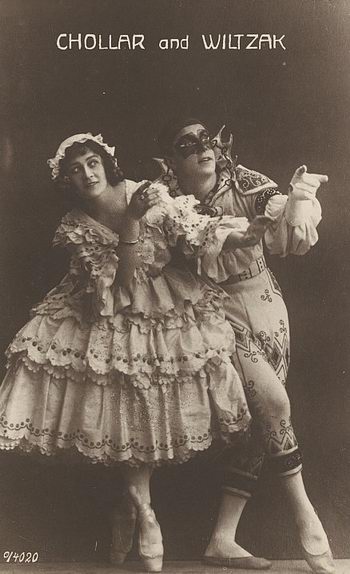
Ludmilla Schollar in Australia

In his memoir Ballet mystique, George Zoritch remarks that Ludmilla Schollar accompanied her husband, Anatole Vilzak, to Australia on the 1934–1935 tour by the Dandré-Levitoff Russian Ballet. Vilzak was the leading male dancer for a major part of that tour performing main roles in Java, Australia, Ceylon, India and Egypt. In Australia he partnered Olga Spessivtseva in Brisbane and Sydney, and then, following Spessivtseva’s departure, Natasha Bojkovich in Melbourne and Perth. But Schollar?

Schollar was a dancer of renown in her own right having graduated from the Imperial Theatre School in St Petersburg in 1906. She had danced at the Maryinsky Theatre and with Diaghilev and later with Ida Rubinstein’s company and with Bronislava Nijinska.

Ludmilla Schollar and Anatole Vilzak in ‘Carnaval’, postcard ca. 1920 National Library of Australia. Published with permission

There is no record, however, of her having performed in Australia or elsewhere on the Dandré-Levitoff tour. Other than Zoritch’s comments, the only mention of Schollar in relation to the tour that I had been able to find was on a passenger list in the issue of 27 September 1934 of the Dutch newspaper De Locomotief (published in Semarang, Java). A ‘Mrs Anatole Vilzak’  is listed as being on board the ship that was taking the Dandré-Levitoff company from Surabaya to Brisbane.

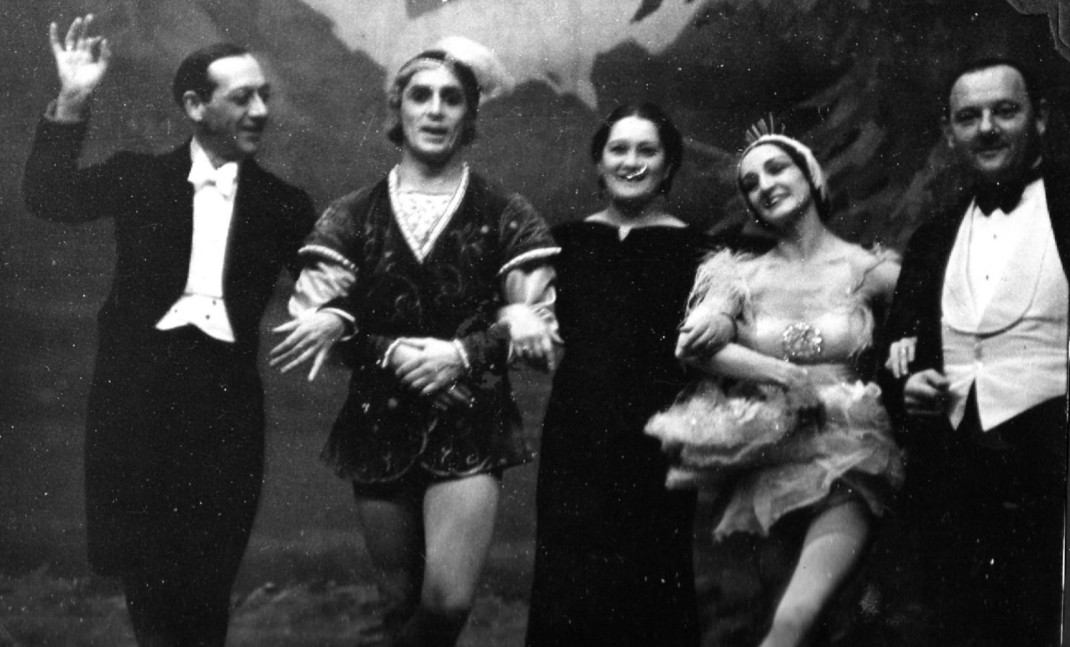
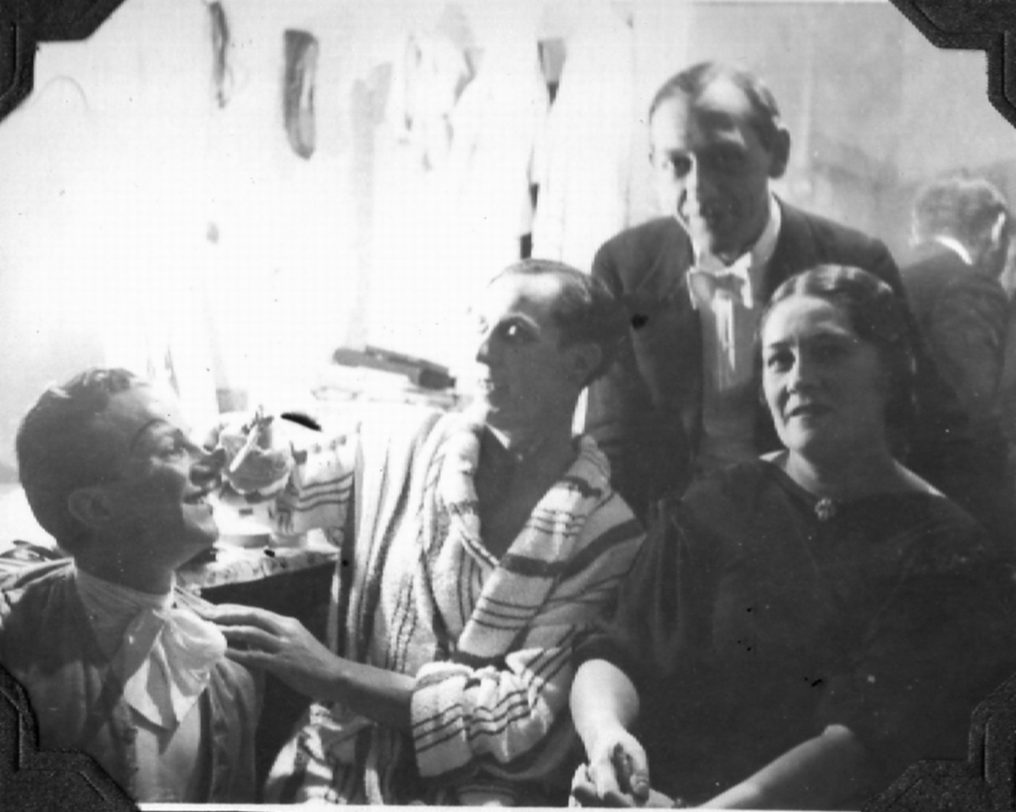
However, two photographs in the personal archive of Anna Northcote were recently brought to my attention. Neither photograph has any form of identification associated with it but they appear to show Schollar with others from the Dandré-Levitoff company. The photographs may have been taken in Australia in Melbourne or Perth. The dancers in Swan Lake costume in the line-up on stage are, I think, Vilzak and Bojkovich, which suggests that the photographs probably post-date Sydney where it was usually Spessivtseva who danced Odette. My identification of those in the photos is tentative at this stage and I would welcome any further information or comments.

l-r: Vladimir Launitz (conductor and musical director), Anatole Vilzak, Ludmilla Schollar, Natasha Bojkovich, unidentified gentleman. Personal archive, Anna Northcote (Severskaya). Private collection
Ludmilla Schollar with Vladimir Launitz standing behind her. Personal archive, Anna Northcote (Severskaya). Private collection

My extended article on the full 1934–1935 tour by the Dandré-Levitoff Russian Ballet will be published shortly in Dance Research, Vol. 29 (No. 1, Summer 2011) pp. 61–96.

Michelle Potter, 14 April 2011

Rachel Cameron Parker (1924-2011)

Rachel Cameron Parker, dancer and dance teacher who has died in London just a few weeks short of her 87th birthday, worked all her life to maintain the classical basis of ballet.

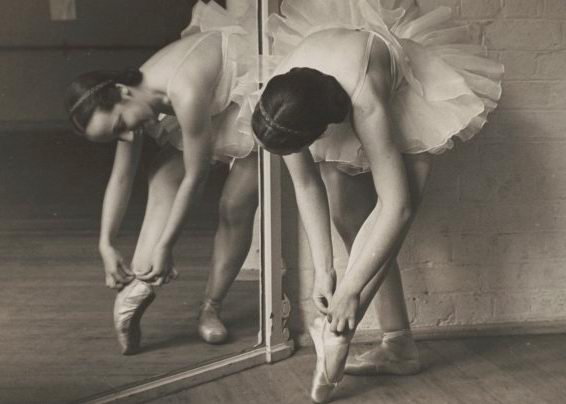
Rachel Cameron adjusting her ballet shoe, 1940s. Geoffrey Ingram Archive of Australian Ballet. With permission of the National Library of Australia. Photo by S. Alston Pearl [?]

On a trip to Australia in 1976 Cameron told oral historian Hazel de Berg:

‘I want the pure classical basis of the ballet to continue. I want it to continue in England, the whole of Europe, America, and Australia, so that we can extend and continue to build on this basis. I feel that out of 200 pupils maybe only one will grasp the real significance of this basic work. But out of 200 or 300, one person is enough for it to be handed down to future generations. I don’t want it to be lost.’

Cameron was born in Brisbane but spent her early childhood in Townsville in northern Queensland before moving to Sydney aged about 5 or 6. In Sydney she began dancing lessons with Muriel Sievers who had studied in London with Phyllis Bedells and who taught the syllabus of the Royal Academy of Dancing, as it was then called. It was with Sievers that Cameron first began teaching as Sievers quickly had her helping teach the youngest classes on Saturday morning. Sievers also insisted that Cameron take piano lessons and also lent her Tamara Karsavina’s book Theatre Street.

In the early 1940s Cameron danced with the Borovansky Australian Ballet Company, which later became the professional Borovansky Ballet and then with the Kirsova Ballet in Sydney, a company led by former star of the Monte Carlo Russian Ballet, Hélène Kirsova. There were also opportunities for Cameron to develop her teaching skills in Kirsova’s school, which was firmly grounded in what Kirsova referred to as the ‘Russian method’.

Cameron was given major roles in a number of Kirsova’s works including Revolution of the Umbrellas, Faust, A Dream…and a Fairy Tale, Harlequin, and Hansel and Gretel. She has recalled that her happiest days as a dancer were with Kirsova:

‘She was a woman who tried to mould her company in the Diaghilev tradition where music, the scenery, the dancers became part of one whole, and there it was I think that the true beginnings of Australian ballet lie.’

Moving to England with her husband Keith Parker, Cameron danced in Song of Norway and in a company directed by Molly Lake. She also studied in Paris with former stars of the Russian Imperial Ballet, Lubov Egorova and Olga Preobrajenska, and with many notable English teachers including Anna Northcote.

By her own admission one of the most exciting periods of her life came when she was asked to demonstrate for two great teachers and former ballerinas—Lydia Sokolova and Tamara Karsavina. With Karsavina she also developed a teaching syllabus for the Royal Academy of Dance.

‘Sokolova was absolutely marvellous,’ Cameron once recalled. ‘She was not content with near being good enough, it had to be exact or else.’

Of Karasavina, she has recalled: ‘I found for the first time that what I had always dreamed of was true, and that’s why, now, I am such a stickler for perfection of technique.’

Cameron was guest teacher for many companies around the world including the Australian Ballet. In December 2010 she was awarded the Queen Elizabeth II Coronation Award for a lifetime of services to dance. Rachel Cameron is survived by her brother Alister and nieces Alison, Fiona and Christine.

Rachel Cameron Parker: born 27 March 1924, died 6 March 2011

Michelle Potter, 13 April 2011

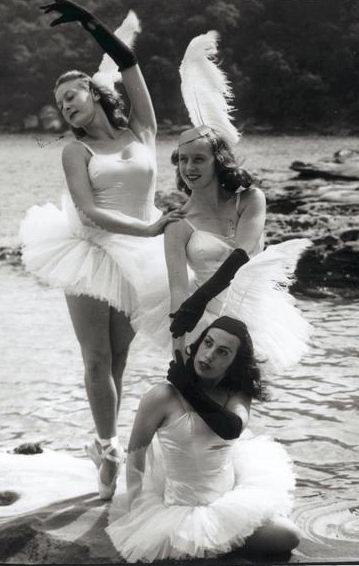
Postscript: One of the images of Cameron that has fascinated me, as much for its 1940s glamour as anything else, is that of her with her colleagues from the Kirsova Ballet, Peggy Sager and Strelsa Heckelman, posing outdoors at Taylor’s Bay close to Kirsova’s home on the northern shores of Sydney Harbour.

Clockwise from top: Peggy Sager, Strelsa Heckelman, Rachel Cameron, Taylor’s Bay, Sydney, 1943. With permission of the National Library of Australia.

Added 28 April 2011: Maina Gielgud studied with Rachel Cameron at various points in her life and they remained close friends until the end of Rachel’s life. Maina  shared this recollection:

Memories of Rachel from when she gave me private lessons when I was nine years old:   Passionate, outspoken, knowledgeable. I believe she was an excellent dancer with lots of personality and mammoth technique.

I always remember her coming to see me in Newcastle (UK) performing Swan Lake with Festival Ballet. I thought I was dancing quite well (for once!)—she said nothing, but wrote me a long letter which quite disillusioned me, but certainly made me rethink what I was up to and how I went about my work and my dancing…

She knew I knew that she only bothered because she thought I was worth it…


Shared Frequencies. Sydney Dance Company

This latest program from Sydney Dance Company featured two works: Raw models by Italian-born choreographer Jacopo Godani and LANDforms by Sydney Dance Company’s artistic director, Rafael Bonachela.

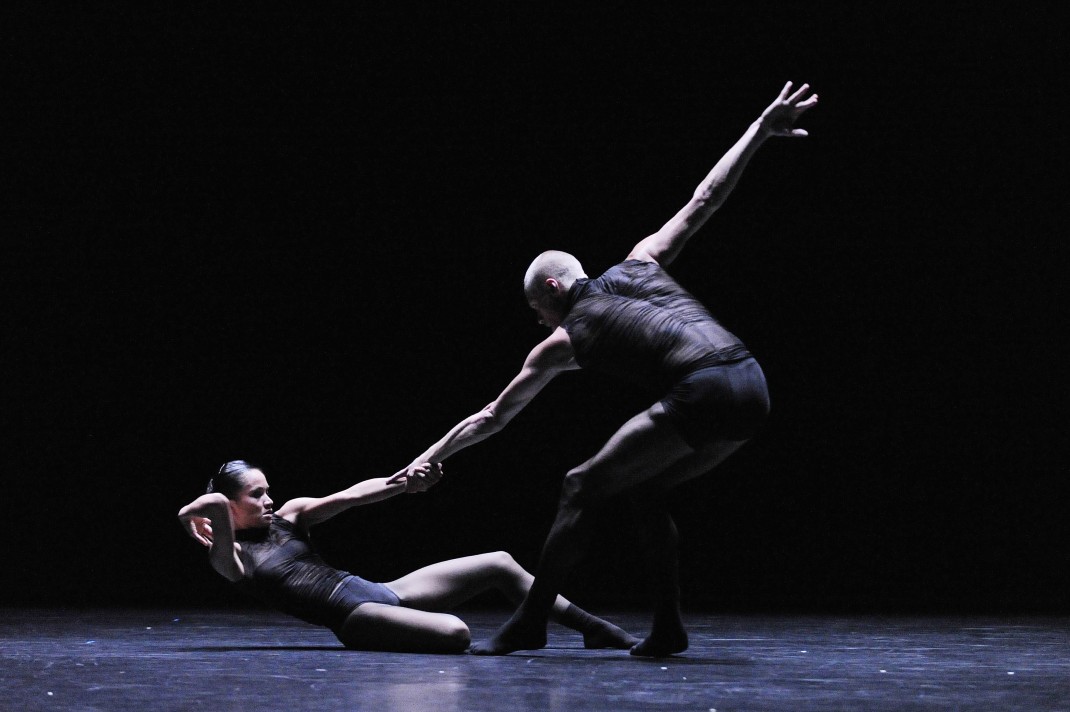
Andrew Crawford & Charmene Yap in ‘Raw models’. Courtesy Sydney Dance Company

Raw models opened the program and I have to admit that I read the choreographer’s note before the curtain went up. Bad move probably because it was a decidedly alienating note and smacked to me of meaningless, intellectual jargon. The dancing, however, was not alienating, although it would have to be described as intense or perhaps severe.

The stage was set as a black box: two black side screens and a black backdrop/screen. The dancers were dressed minimally in black lycra-style short shorts and transparent tops. They wore what I think were skin-tight, soft leather ankle boots. This footwear was interesting because the lighting (by Godani) was such that most of the time it was hard to tell until curtain call time whether the black shadows at foot/ankle level were just shadows on bare feet and legs or whether the dancers were wearing some kind of footwear. Sometimes, as a result of the lighting, the dancers looked as though they had no feet, or that their legs ended in some kind of malformation. This reminded me of  a Francis Bacon painting where bodies are distorted and contorted, not completely beyond recognition but enough to make one wonder.

In terms of choreography, Godani had the dancers moving as if they were jointless. Their arms in particular rippled and undulated, but at such a speed that at times they became blurred. Bacon and his distorted bodies again slipped into my mind. Most of the movement was performed with the dancers bunched tightly together so not only did the bodies look distorted they seemed not able to separate themselves from each other. But the work was very slick, very shiny, although despite the coupling of bodies throughout to me it looked a-sexual.

Production photographs from Raw models are interesting. They show off the dancers and the costumes beautifully but give no idea really of what the piece looked like as a moving canvas of bodies. While this is the case most of the time with dance, it seems even more of an issue with Raw models given the effects on the eye that Godani’s work has. Nothing like being there in the end.

Raw models was performed to a commissioned electronic score by Ulrich Mueller and Siegfried Roessert of the German experimental group 48nord, which added to the bleakness of the work (and again to my feeling that Bacon was overseeing its unfolding).

After all the gloom and blackness, Bonachela’s LANDforms seemed like it came from another planet. It opened with a solo by Juliette Barton whose dancing and understanding of Bonachela’s movement style just gets better and better. Bathed in a warm golden light (lighting by Mark Dyson) she moved through Bonachela’s flowing, intricate choreographic phrases as if she were born to do so.

Bonachela has spoken elsewhere about the development of this work with composer Ezio Bosso, and about its genesis in ideas about the weather and the landscape. But what struck me more than anything was the manner in which Bonachela had structured this work. I loved the variety and dynamics of the patterns he developed throughoout. There were times when the pace was serene, others when it was more frenetic. And in the most frenetic section of all bodies hurtled across the stage space from all directions. Here the athletic Chen Wen was a standout as he threw himself into one leap and turn after another. The second section, composed entirely of duets, was also particularly impressive. Here we saw some duets for two men, some for two women and some for a man and woman. Each had a different expressive quality and gained yet another texture if it were the only duet on stage or if it were just one among several happening at the same time.

Bosso’s luscious score for piano, violin, cello and voice was played live in the pit with Bosso directing from the piano. Towards the end Katie Noonan slipped in to add her distinctive voice to the piano trio.

Sydney Dance Company is looking brilliant and its repertoire, whether bleak or passionate, is receiving great audience response. Cheering, whistling, stamping, and the drumming of heels greet the fall of the curtain.

Michelle Potter, 10 April 2011

Featured image: Juliette Barton, Chen Wen and Richard Cilli in LANDforms. Courtesy Sydney Dance Company

Dance portraits by E. O. Hoppé

The name E. O. Hoppé is familiar to anyone who has put in any time researching the history of the Ballets Russes under Serge Diaghilev. Hoppé, who was born in Germany but who spent much of his professional life in England, secured the exclusive right to photograph the Diaghilev dancers when they first came to London in 1911. Some of these photographs are well known in Australia and are currently on display in the National Gallery of Australia’s exhibition, Ballets Russes: the art of costume—the well-known image of Tamara Karsavina and Adolph Bolm in Firebird, for example. But a current exhibition at the National Portrait Gallery in London, Hoppé portraits: society, studio & street, has on show some exceptional dance portraits that are not quite as well known.

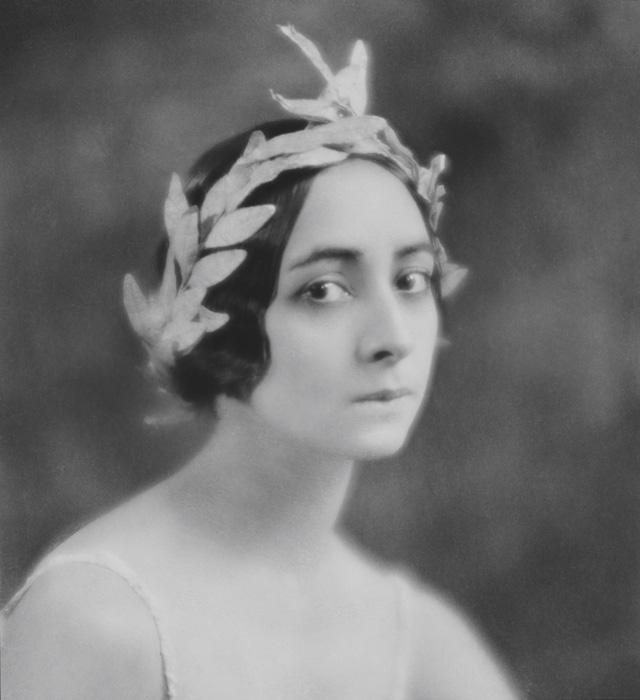
E. O. Hoppé, Olga Spessivtseva as Aurora in The Sleeping Princess, 1921. Courtesy National Portrait Gallery, London

Given my recent research into the 1934-1935 tour by the Dandré-Levitoff Russian Ballet and Olga Spessivtseva‘s role in it, I was especially interested in a portrait of Spessivtseva as Aurora in The Sleeping Princess. It was taken by Hoppé in 1921, the year of the premiere of Diaghilev’s ill-fated production of that ballet. Spessivtseva does not face the camera full on and her subdued eyes are turned to the front with a gaze that asks us to consider her as someone quite fragile. Her pale lips seem almost cold and the overall effect is haunting. Is it because we know that Spessivtseva would suffer some kind of mental illness that we read the portrait in this way? Or did Hoppé capture the essence of this enigmatic woman?

E. O. Hoppé, Portrait of Margot Fonteyn, 1935. Courtesy National Portrait Gallery, London

By contrast, a magnificent portrait of a young Margot Fonteyn taken in 1935 (she would have been 16) shows her looking straight at us. With lustrous eyes and full, red lips she is sensuous and confident, even slightly haughty,  and definitely ready to take on the world. Again Hoppé appears to have had a remarkable eye for capturing the essence of his sitter.

There are a number of other fascinating dance portraits in this exhibition including a great shot of Martha Graham with Ted Shawn in a tango-style pose taken in 1922 just as Graham was completing her study at the Denishawn school before joining the Greenwich Village Follies. And of course many of the Russian Ballet shots are on show. All are reproduced in the exhibition book, along with many non-dance portraits and a collection of remarkable documentary studies of day-to-day life in Britain between the wars.

Michelle Potter, 4 April 2011

Hoppé portraits: society, studio & street runs until 30 May 2011 at the National Portrait Gallery, St Martin’s Place, London.

Exhibition book: Hoppé portraits: society, studio & street (London: National Portrait Gallery, 2011) ISBN 978 85514 4217