The Merry Widow. The Australian Ballet (2011)

19 November 2011, Opera Theatre, Sydney Opera House

Ronald Hynd’s Merry Widow has never been my favourite ballet. I dislike its nature as balletic operetta, with emphasis on the ‘etta’, and its stock comic characters and its silly story line with people hiding in and escaping from pavilions and so forth. And as I took my seat at the Sydney Opera House my companion said, from the perspective of someone whose parents were brought up in 1920s and 1930s Vienna, that she wasn’t looking forward to ‘Viennese schmaltz’, referring in particular to the Franz Lehar music. So I was surprised and delighted to discover that I actually enjoyed the performance (and so did my companion).

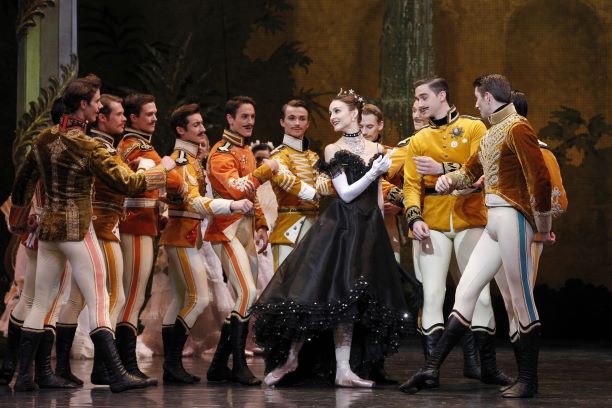
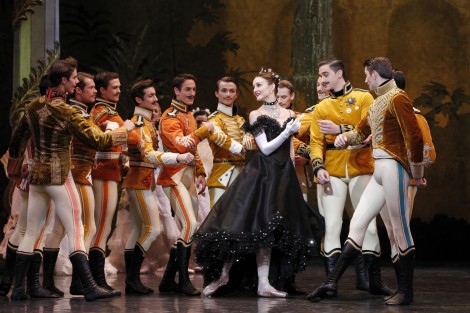
Much credit for the way the production sped along goes to the corps de ballet, who were dancing beautifully, and as an ensemble, which doesn’t always happen these days. The Pontevedrian dancers in Act II, especially the men, were outstanding and it was an absolute delight to see everyone engaging with the action even when standing on the sidelines at balls, soirees, and other occasions.

Madeleine Eastoe was delicious as Valencienne. She danced pretty much faultlessly, and what an expressive back she has, which was very much on show in Desmond Heeley’s ball gowns with their deeply cut backs. She gave the role such warmth and charm as she flashed her eyes at a dashing Camille (Andrew Killian), or showed attentiveness to her aged husband Baron Zeta (Colin Peasley).

Colin Peasley’s performance as Baron Zeta had some truly poignant moments. In particular I was moved by his resignation at the close of the ballet to the fact that Valencienne is in love with Camille. It made me wish that he didn’t always have to dance the comic roles—those where his knees always give way when he tries to dance! He has a bit more to offer I think.

On a downside, however, I was disappointed by the performance of Jin Yao, guest artist from the Hong Kong Ballet, as Hanna Glawari. She has beautifully long limbs and carries herself with elegance and her final pas de deux with Count Danilo (Brett Simon) was charming and flowed smoothly. But in general I thought her portrayal of Hanna lacked any warmth. Just a glimmer of what might have been came at the end of the show as she took her curtain call. A little too late unfortunately! Nor was there much strength of characterisation in the scene where Hanna and Danilo realise they are sweethearts from some years earlier and that important scene (important to the storyline) fell a little flat.

I was also disappointed with Matthew Donnelly’s portrayal of Njegus. Donnelly doesn’t seem to have a stage presence that is strong enough to sustain such roles. Or perhaps he needs better coaching or a role model to learn from. His apparent grooming to take on cameo roles of this kind just isn’t working at the moment.

All in all, despite some reservations, which also included for me some jarring aspects in the design, especially in relation to choice of colours, this production of The Merry Widow was a pleasurable experience. Perhaps thanks are due to John Meehan who was guest repetiteur for this production?

Michelle Potter, 20 November 2011

Featured image: Artists of the Australian Ballet in The Merry Widow, 2011. Photo: © Jeff Busby. Courtesy of the Australian Ballet
American Ballet Theatre. Fall season 2011

12–13 November 2011, City Center, New York

New York City’s newly refurbished City Center theatre was the venue for American Ballet Theatre’s Fall season, a program of nine, one-act works by contemporary choreographers presented over a short period of a few days. Just three of those works, Alexei Ratmansky’s Seven Sonatas, Demis Volpi’s Private Light and The Garden of Villandry choreographed by Martha Clarke, Robby Barnett and Felix Blaska, were accompanied by live music. This music was played on stage in each case: a grand piano for Seven Sonatas, four guitars played alternately by one musician for Private Light and a piano trio for The Garden of Villandry. The remaining works were performed to taped music.

The highlight for me was Ratmansky’s Seven Sonatas, about which I have written separately. But I was also pleased to see Merce Cunningham’s Duets, originally made in 1980. In this work for six couples Cunningham’s inventiveness was patently clear, especially in the complex partnering that was an essential feature of the work. But there were also moments when his choreography showed its modernist qualities, movement stripped back to essentials with an emphasis on clear shapes filling the space around the body, and with a strong sense of focus and line, albeit often set off centre. There were jarring moments, however, when the dancers seemed unable to detach themselves from a balletic need to project emotion through the face and via bodily embellishments to the choreography. Paloma Herrera, for example, dancing the second duet with Eric Tamm looked a little too much like a swan queen at one stage as she nestled into her partner’s shoulder and wrapped an arm around him at hip level. As beautiful as she looked, it was not quite Cunningham.

Paul Taylor had two works in the season, the classic Company B, always enjoyable, and a new work choreographed in 2011 called Black Tuesday. This latter work, danced to songs from the era of the Great Depression, provided a great showcase for some of the company’s soloists. Misty Copeland for example danced with verve and panache from beginning to end and especially in a solo, ‘The boulevard of broken dreams’, while Gemma Bond gave a gutsy, crowd-pleasing performance in her solo ‘I went hunting and the big bad wolf was dead’. Santo Loquasto dressed the dancers for Black Tuesday in brown, black and grey outfits in 1930s style with an eye catching assortment of fabrics and patterns and a range of accessories: hats, caps, stockings, gaiters, suspenders and the like. While perhaps not world-shattering choreographically with its mix of musical comedy routines and 1930s jitterbug-style movements, it was a fun work, well structured and full of interest from start to finish.

Twyla Tharp had three works on the program. Sadly I missed Sinatra Suite on this occasion but caught two performances of In the Upper Room and one of a duet entitled Known by Heart (‘Junk’) Duet. In the Upper Room was something of a disappointment. I have seen it danced better in Australia and it was unfortunate that the first cast I saw seemed not to be able to last the distance let alone look as though they were dancing together in the same ballet. In the end the remarkable Herman Cornejo looked quite idiosyncratic without a strong backup from his colleagues.

The second performance was, however, distinguished by a spectacular performance from Paloma Herrera as the main pointe girl. She had such assertiveness, such control of those slow turns, and such powerful technique as she handled slides into splits followed by a lift from the floor into a fish dive pose, or when hurling her body through space to be caught in some astonishing position. Misty Copeland danced strongly as the third sneaker girl (a role I can’t help but identify with the former Australian Ballet dancer Katie Ripley). Sascha Radetsky, Blaine Hoven and Patrick Ogle showed how they had lasted the distance when they came on for their curtain calls and each reprised a step from the work.

Known by Heart was new to me. Dating to 1998 and danced to selections from Donald Knaack’s Junk Music, it was performed by an ebullient Gillian Murphy partnered by Blaine Hoven. Basically the work is a variation on the traditional format of the pas de deux with duet, variations and coda, and the scene was set with an explosive opening as a diagonal shaft of light highlighted a generous grand jete from Murphy, who was supported by a finger tip hold from Hoven. There followed a battery of fast paced movements. Murphy at times even seemed to be tap dancing on pointe. Both Murphy and Hoven stylishly carried off the mixed nature of the choreography—a bit of ballroom, a bit of musical comedy, a bit of classical while all the time maintaining a somewhat cheeky partnership.

The Garden of Villandry, a work made in 1979 was very pretty but was without a huge amount of depth, although it was beautifully expressive of the Schubert Trio No 1 in B Flat, Opus 99 to which it was danced. I admired the lilting movements of bodies and the intertwining of arms throughout. As a kind of Edwardian love triangle it was understated and lingeringly melancholic as two men vied for the attentions of one woman. It was given a pleasant performance by a lovely Veronika Part partnered by Roddy Doble and Gennadi Saveliev.

I was least impressed by the Volpi work, Private Light, especially the sections where the choreography seemed to be more classically oriented. Then the dancers seemed almost to be engaging in centre practice and centre practice with little choreographic interest. And there was a lot of lining up and breaking out of line, huddling together and kissing in the dark. Volpi seemed too to be unable to choreograph for the arms, which were often left hanging unimaginatively at the dancer’s side. But one dancer, Simone Messmer, stood out for her beautifully articulated body and her ability to use her chest to project emotion. It was  a shame that the lighting was so dark that it was almost impossible to see her until the lights were raised for curtain calls. Perhaps the darkness was the source of the title?

It is always a pleasure to see a strong company performing a range of works that challenge the dancers stylistically. And is an equal pleasure to be challenged oneself by such a range of contemporary choreography as ABT presented in this short season.

Michelle Potter, 17 November 2011

Alexei Ratmansky. ‘The real thing’

12–13 November 2011, City Center, New York

When I wrote unaffectionately about Alexei Ratmansky’s 2009 work for the Australian Ballet, a new version of the 1933 Massine ballet Scuola di ballo, I received some feedback from friend and colleague David Vaughan. David wrote that he wished I could see work made by Ratmansky for New York City Ballet and American Ballet Theatre. ‘I am sure you would realize’, he wrote ‘that he is the real thing’.

It has been interesting, too, over the two years since I wrote that review to hear comments from dancers and others who worked with Ratmansky on that Australian production. They all found it a huge pleasure and had nothing but praise for Ratmansky. But nothing changes my opinion of his Scuola di ballo, and I had nothing to go on other than what I saw on stage, which is as it should be for any reviewer.

However, I now believe that David was right, at least in the wider scheme of things. I recently had the good fortune to see two performances of Ratmansky’s Seven Sonatas during American Ballet Theatre’s recent Fall season at City Center, New York.

Seven Sonatas, also first made in 2009, is danced to keyboard sonatas by Domencio Scarlatti. The work is for three couples who engage with each other in a variety of combinations. They dance with and for each other. At the heart of the work, and centrally in the structure, are three pas de deux. The first and the longest had a note of anguish to it. Maria Riccetto and Blaine Hoven, in the first cast I saw, danced an intense and emotive pas de deux. Was this couple breaking apart? The woman seemed to be wanting to end the relationship as she extended her body away from the man. But it was never clear cut and Ratmansky’s gift to us was to leave us wondering.

The second pas de deux was also the shortest. It was full of unabashed pleasure, in life, dancing and partnership. Of the two casts I saw Xiomara Reyes and Herman Cornejo best managed the spectacular choreography with its sudden changes of direction and its difficult turns. The third was a teasing game in which Julie Kent and Alexandre Hammoudi excelled. I loved Kent’s expressions, both facial and bodily, as she played with Hammoudi’s emotions, leading him on all the time. At one stage he was left alone briefly to dance a solo hoping Kent was watching from the wings. And she no doubt was as she re-entered the game to bring it to a satisfying conclusion with a leap into his arms.

Before and after these pas de deux we were treated to such lyrical movement in which the arms and upper body played a major role. Sometimes the arms and hands seemed very natural—clasped in front or behind the body, although clearly choreographed to be that way. Other times, rather than the palms facing each other in classical mode, the arms were held with the palms facing outwards and the arms opened as if pushing the air away. Sometimes the arm and hand movements were just totally surprising. At one stage Julie Kent executed a set of turns with arms in fifth position. But a closer look revealed that her fists were clenched and her wrists crossed. But diversity and surprise were features across every aspect of the work, especially in the way steps were combined and conceived as part of the work’s structure.

This work also presented every one of the six dancers as individuals. Individuality extended beyond the choreography even to the women’s hairstyles—beautifully braided in some cases but always drawn well off the face showing the elegance of the neck. And mention should be made of Holly Hynes’ costumes. The women wore soft white dresses, reaching well below the knee and with bodices decorated with pinkish brown trimmings, each slightly different. The men were costumed in white tights and short white jackets, again each slightly different in cut and trimming.

Seven Sonatas is a ballet for all. If you want to see a delicious work, which is also somehow very calming, then this is it. You don’t have to work hard to be given a special experience. But if you want more then it’s all there too. It could be watched multiple times and would always keep giving. But perhaps best of all, Ratmansky has made a work that speaks of, and asks questions about life and love through movement. I can think of nothing better or more admirable.

Michelle Potter, 15 November 2011

And to the Australian Ballet: give us the real thing please!

Vicki Attard. A new role

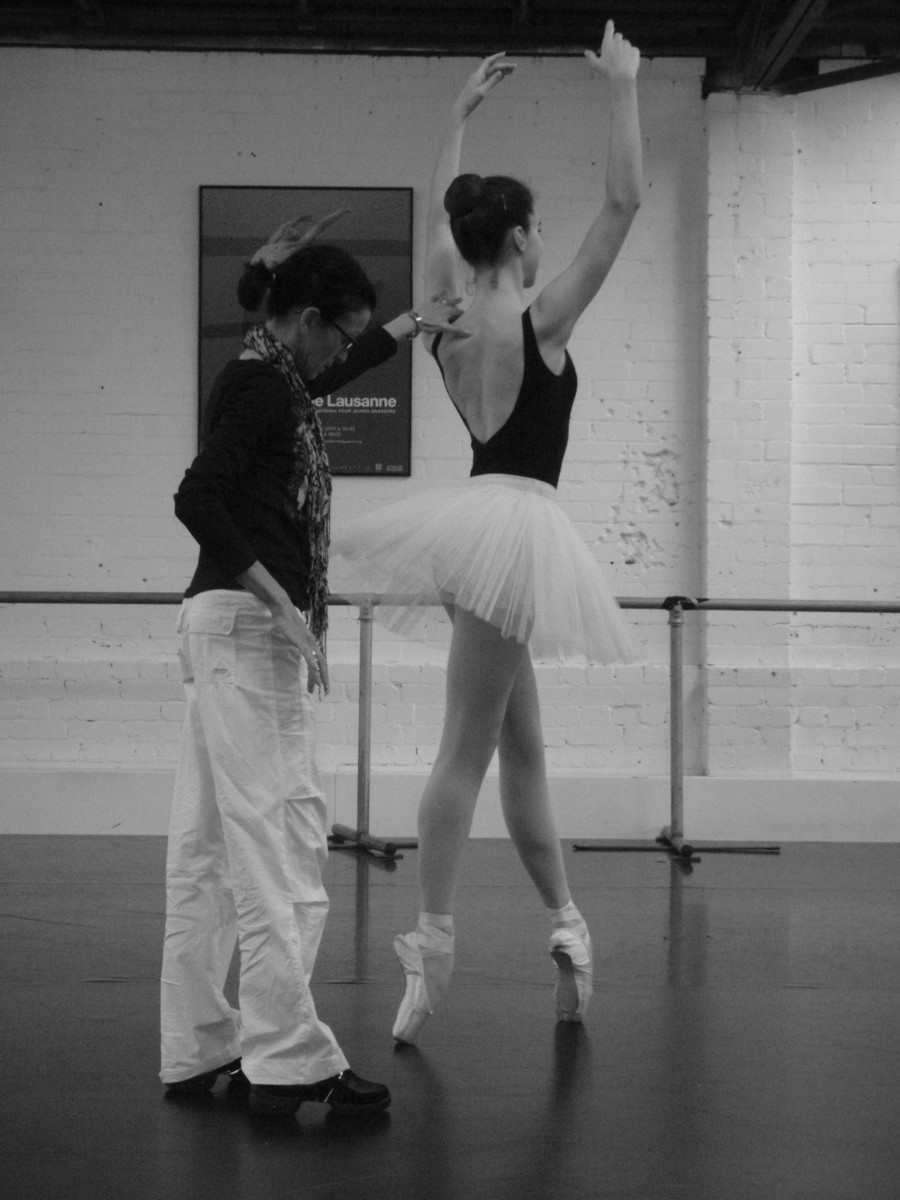
Vicki Attard at work

It was a real pleasure catching up, if only by email, with Vicki Attard, former and much admired principal of the Australian Ballet during the 1990s. Vicki was in Canberra over the past weekend to give master classes at the Canberra Dance Development Centre.

Below is the text of a Canberra Times article I wrote, which was published on 9 November. It was accompanied by a great image, shot by Canberra-based photographer Ross Gould, of Vicki in what became a signature role, that of Cio Cio San in Stanton Welch’s Madame Butterfly, which can be accessed on the National Library’s website.

Vicki Attard was one of Australia’s favourite ballerinas during the 1990s. As a principal artist with the Australia Ballet throughout that decade she danced leading roles in all the best known classics as well as creating roles in contemporary works. She travelled widely with the company and counts amongst the highlights of her performing career dancing the leading role of Kitri in Don Quixote on the opening night of an Australian Ballet season in Washington DC and the title role in Manon in Tokyo, also on opening night.

Fans of the film maker Paul Cox may remember her in Cox’s film The Diaries of Vaslav Nijinsky. Attard was the girl returning from a ball who dances with the spirit of a rose in the short work entitled Le Spectre de la rose. Spectre was first performed in 1911 with Vaslav Nijinsky dancing the Rose. Attard, who was partnered by David McAllister in the film, cannot speak highly enough of Cox.’Paul Cox was so easy to work with’, she says. ‘He has an incredible respect for artists and he is a remarkable one himself.’

Attard also spent a year performing with Sydney Dance Company in 1989. Memorably she danced the role of Chloe in Graeme Muphy’s Daphnis and Chloe. She seemed especially suited to Murphy’s choreography and later, on rejoining the Australian Ballet, danced the leading role of Clara the Ballerina in Nutcracker, again partnered by McAllister, with whom she enjoyed an exceptional artistic partnership throughout her career.

But Attard may well be best known for her performances as Cio Cio San in Stanton Welch’s production of Madame Butterfly, a role she created with the Australian Ballet in 1995. The delicacy of her performance left a lasting impression on those who saw her in this role. Attard has since staged Butterfly around the world for Welch, including in Canada for the National Ballet of Canada, in Atlanta for Atlanta Ballet, in Boston for Boston Ballet and in even in Houston for Houston Ballet where Welch is currently artistic director. Most recently she assisted Welch in reviving the work for the Australian Ballet in 2010.

After she retired from performing Attard gained a graduate diploma in dance instruction and has been teaching in a freelance capacity since then. She now heads up a special program at Academy Ballet in Sydney for students aiming for a professional career.

‘It is s small group of just eight students’, she says. ‘It’s very personal and I love working in this way. The young dancers respond beautifully to this way of working.’

Attard will be in Canberra on November 13 to conduct master classes for the Canberra Dance Development Centre. It is the final session in the school’s master class series, a program master-minded by the school’s principal, Jackie Hallahan. Attard knows that it is not so easy for east coast students in centres outside Sydney, Melbourne and Brisbane to have access to the kinds of experiences available in larger centres.

‘I love the idea of sharing the knowledge that took me so many years to accumulate—the hard way’, she says. ‘I very much enjoy teaching in centres where students don’t have access to all that students in bigger cities might have. I grew up in a small town called Mackay in North Queensland, so I remember what it was like.’

Attard will bring her exceptional professional experience to Canberra for this workshop series. Not only does she have sound dance knowledge and her own incomparable artistry to share, she has recently launched a program called My Pointe. She realised that it was not always possible for dance teachers to spend as much time as was needed on the specialised teaching of pointe work for girls and so began to develop a series of tutorial exercises for this very purpose. After 10 years of fine tuning My Pointe was released on DVD with an introductory section by Attard and demonstrations of the exercises by two students.

Attard has two young sons, George aged eight and Nick almost six, who keep her busy.

‘I used to think that a dance life was hard,’ she says, ‘but motherhood, plus working almost full time, rivals it.’ But despite the claims of motherhood, Attard has carved a new niche for herself in the Australian dance world and she is more than delighted to be sharing her knowledge with the Canberra community.

Michelle Potter, 14 November 2011

Dance diary. October 2011

  • Texas Ballet Theater

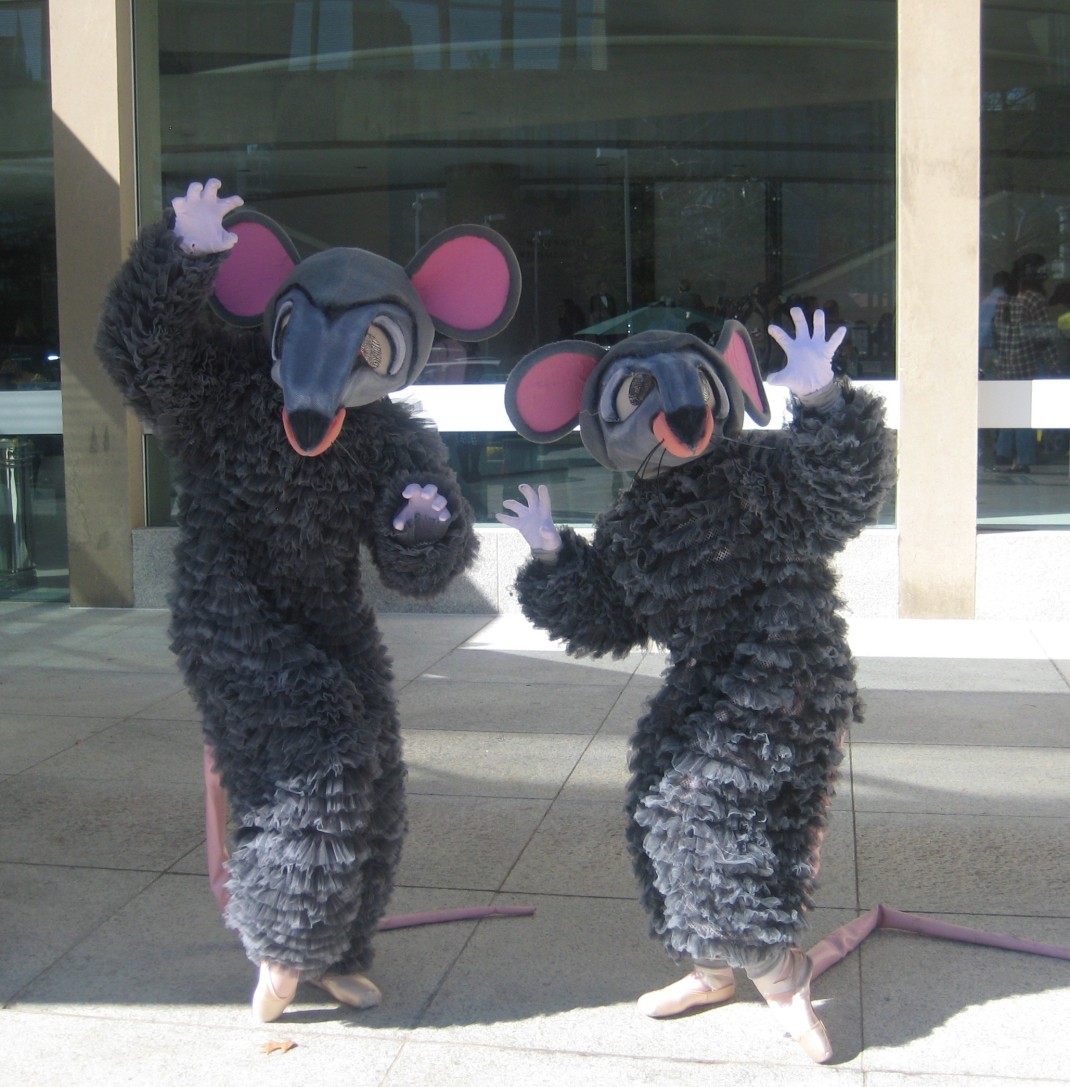
It’s surprising whom one meets walking down a Dallas street on a sunny Sunday afternoon. Two somewhat frilly mice from Nutcracker for example—perhaps not dressed for combat despite the menacing gestures!
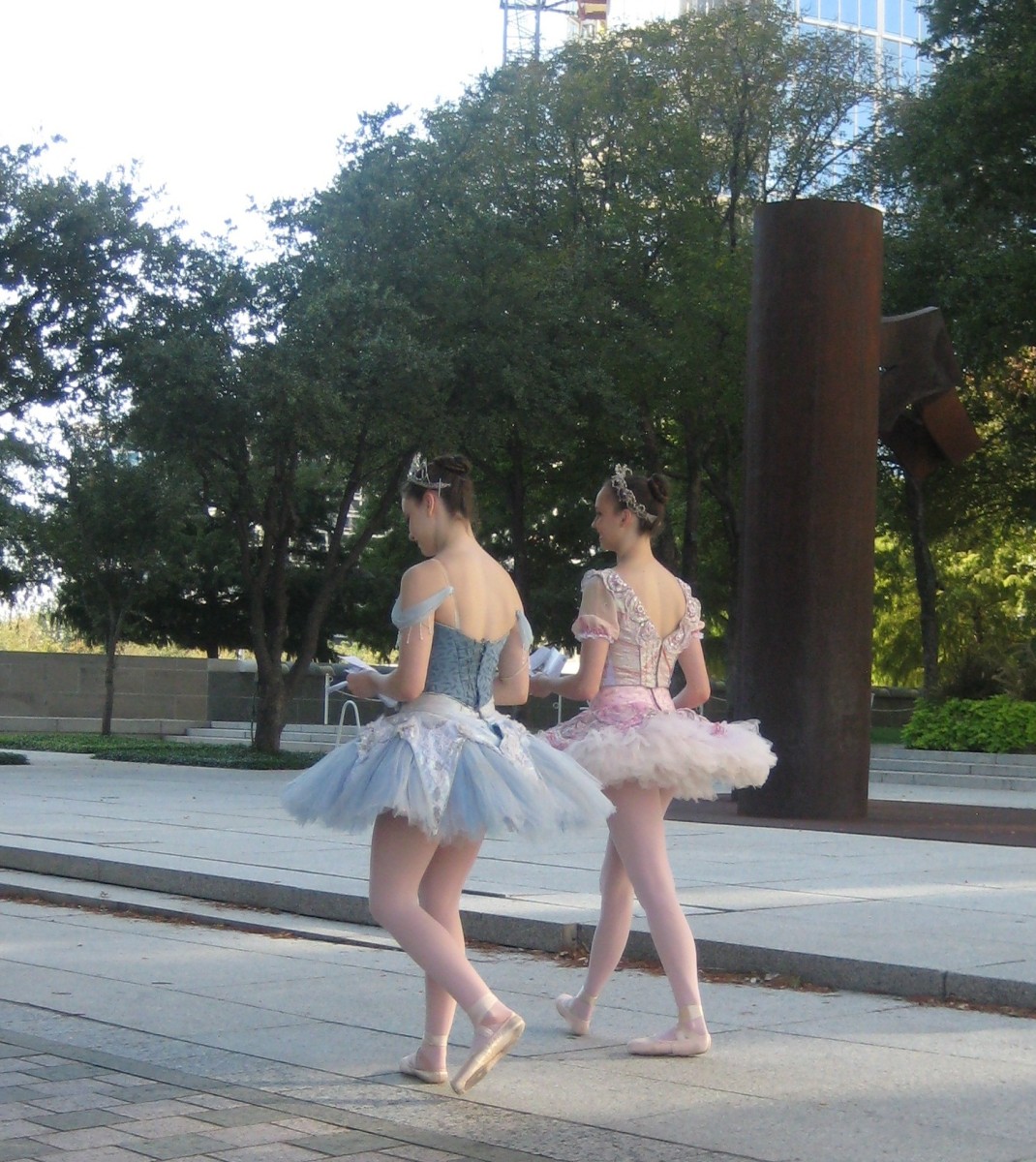
Or two young dancers dressed in tutus.

Texas Ballet Theater, currently directed by Ben Stevenson, was promoting its forthcoming Nutcracker season. The appearance of dancers on this occasion was part of the last day of ‘Art in October’, a celebration of the Dallas arts district with its top class museums and theatres.

  • it’s all good
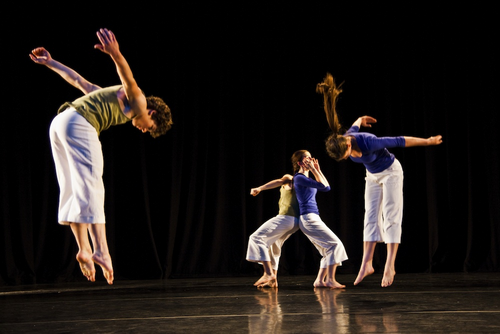
It’s all good, QL2Dance, 2011

I was impressed by QL2’s annual performance for younger dancers, this year entitled it’s all good and being an examination through movement of the notions of language and truth. It was not so much the choreography that impressed me: it was fairly basic, perhaps a little of necessity, and somewhat unimaginative in my opinion. But I was impressed by the production values that were in play. The young cast (they ranged in age from 8 to 17) knew a fair bit about stage techniques and behaved largely in a very professional manner. For this their director, Ruth Osborne, deserves praise as does whoever designed the simple, easy to dance in costumes. One or two of the younger of the young performers looked as though they had the potential to go on to a professional career.

  • Ballets Russes publication

A number of visitors to this site have asked me to post a review of the recent Ballets Russes publication. This review was published last month by The Canberra Times. Here is the link.

Michelle Potter, 31 October 2011